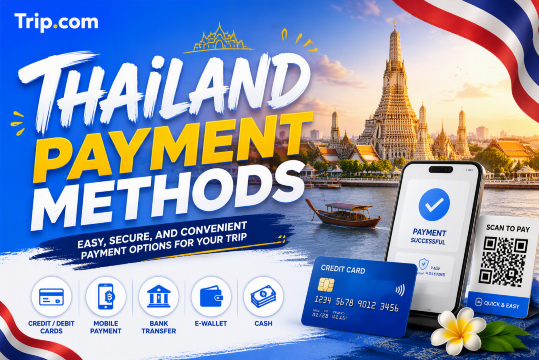
Paying in Thailand is fairly easy once you know which payment method works where. Thai baht cash is still very useful, while credit cards, PromptPay QR payments, tourist e-wallets, and GCash are available in many places. For most travelers, the easiest setup is to carry some cash, one international card, and a mobile payment option.
Thailand Payment Methods at a Glance
Payment Method | Good for Travelers? | Best Used For |
|---|---|---|
Cash (THB) | Yes | Street food, markets, small shops, local transport |
Credit/Debit Cards | Yes | Hotels, malls, restaurants, attractions |
PromptPay QR | Limited directly | Shops, cafés, restaurants and local merchants |
TAGTHAi Easy Pay | Yes | Thai QR and PromptPay payments |
GCash | Yes, where supported | Alipay+ merchants |
ATM Withdrawal | Yes | Getting Thai baht during your trip |
For Filipino travelers, a practical combination is Thai baht cash + an international debit or credit card + GCash or TAGTHAi Easy Pay.


What Currency Is Used in Thailand?
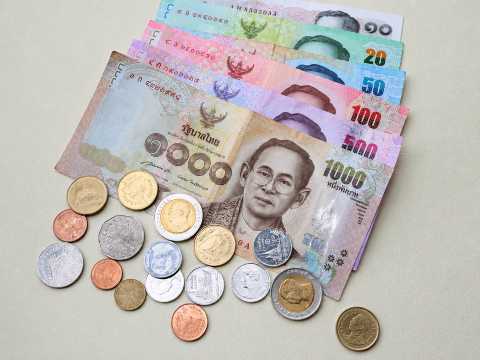
Thailand's official currency is the Thai Baht, commonly written as ฿ and internationally coded as THB. One baht is divided into 100 satang under Thailand's Currency Act.
Common Thai banknotes include:
- ฿20
- ฿50
- ฿100
- ฿500
- ฿1,000
The Bank of Thailand issues these main denominations for everyday circulation.
Common coins include:
- ฿10
- ฿5
- ฿2
- ฿1
- 50 satang
- 25 satang
Thailand's Treasury Department confirms that these six denominations are actively circulated in the economy. Smaller 10, 5 and 1 satang coins exist but are mainly used for accounting purposes rather than normal daily purchases.
💡 Travel Tip: Keep some ฿20, ฿50 and ฿100 notes with you. Smaller notes are much easier when paying for street food, markets, taxis and small purchases.
Cash in Thailand: Do You Still Need It?
Yes. Cash is still important when traveling in Thailand.
Thailand has a strong digital payment system, but cash remains useful, especially when dealing with smaller merchants. Research published by the Bank of Thailand and Visa found that cash continues to play an important role in tourist spending, particularly for local transport and places where card acceptance is limited.
Where Cash Is Useful
Keep some Thai baht for:
- Street food stalls
- Night markets
- Local markets
- Small restaurants
- Independent shops
- Some taxis and local transport
- Small entrance fees
- Backup when QR or card payments do not work
You do not need to carry your full travel budget in cash. A combination of cash and digital payment is usually more convenient.
💡 Tip: Separate your cash into different places instead of keeping everything in one wallet.
*Rates are for reference only and may vary
Credit and Debit Cards in Thailand
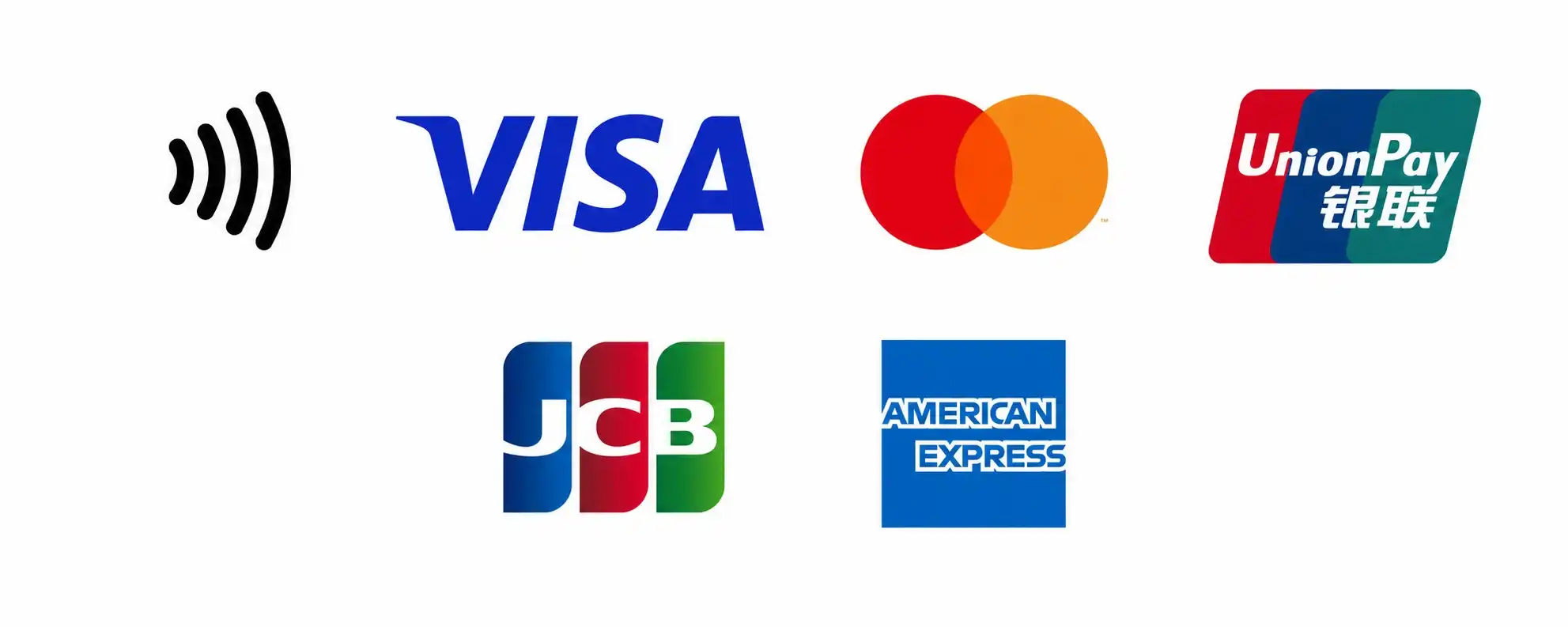
International credit and debit cards are useful in Thailand, particularly in major tourist areas.
Cards are commonly useful at:
- Hotels
- Shopping malls
- Department stores
- Larger restaurants
- Supermarkets
- Tourist attractions
- Airports
- Online booking platforms
Visa also works with Thailand's tourism sector to expand digital payment acceptance for international visitors.
However, you should not depend only on your card. Smaller food stalls, markets and independent businesses may still prefer cash or Thai QR payments.
Tips for Using Philippine Cards in Thailand
Before your trip:
- Check that your card allows international transactions.
- Check your bank's foreign transaction fee.
- Make sure you remember your ATM PIN.
- Keep your banking app available for transaction approvals.
- Bring a second card or another payment method as backup.
- Check the amount in Thai baht before confirming payment.
Should You Pay in THB or PHP?
If a card terminal asks whether you want to pay in Thai Baht (THB) or your home currency, check the exchange rate carefully.
Visa explains that Dynamic Currency Conversion, or DCC, allows an overseas merchant to convert the payment into your home currency, but the exchange rate may include an additional service fee. Choosing the local currency lets your card network or issuer handle the conversion instead.
💳 Card Tip: Check the screen before tapping your card and make sure you know which currency you are being charged in.
PromptPay QR in Thailand
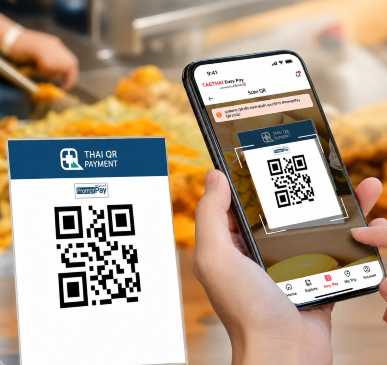
PromptPay is one of Thailand's main digital payment systems.
The Bank of Thailand launched PromptPay in 2016. It allows transfers and payments through connected bank accounts, mobile numbers and other registered identifiers. Thai QR Payment also allows customers to scan merchant QR codes through supported banking applications.
You will see PromptPay QR codes at many places, including:
- Restaurants
- Cafés
- Street food stalls
- Shops
- Markets
- Convenience stores
- Tourist businesses
- Small local merchants
How PromptPay QR Normally Works
For a supported user:
- Open the banking or payment app.
- Select the QR scanner.
- Scan the merchant's PromptPay QR.
- Enter the amount if required.
- Check the merchant name and amount.
- Confirm the payment.
The payment is normally completed almost immediately.
Can Filipino Travelers Use PromptPay?
This is where travelers need to be careful.
Thailand has connected PromptPay with payment systems in several other markets through cross-border QR payment agreements. The Bank of Thailand's published cross-border payment information includes markets such as Malaysia, Singapore, Indonesia, Hong Kong and others.
However, the Bank of Thailand's May 2026 cross-border payment information does not list the Philippines as a direct PromptPay cross-border QR linkage.
This means Filipino travelers should not assume that a Philippine banking app or e-wallet can scan every PromptPay QR code in Thailand.
Instead, use:
- Thai baht cash
- An international credit or debit card
- TAGTHAi Easy Pay for supported Thai QR payments
- GCash at participating Alipay+ merchants
⚠️ Important: Seeing a PromptPay QR does not automatically mean your GCash or Philippine banking app can scan it.
Explore More Hotels in Thailand
 NO.1
NO.1














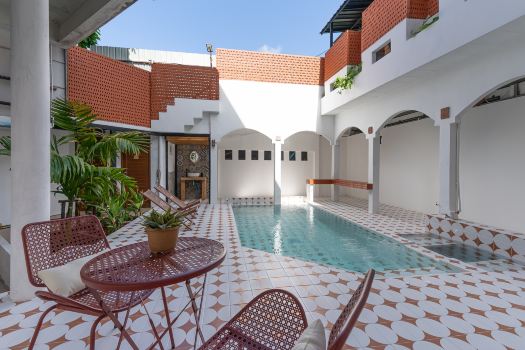



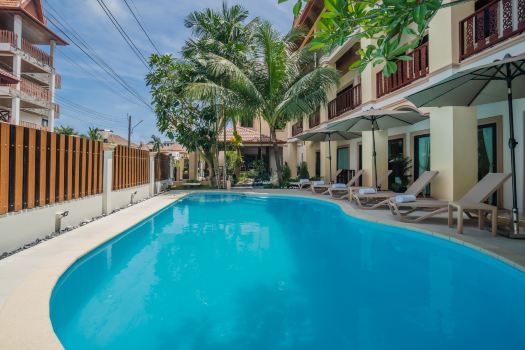





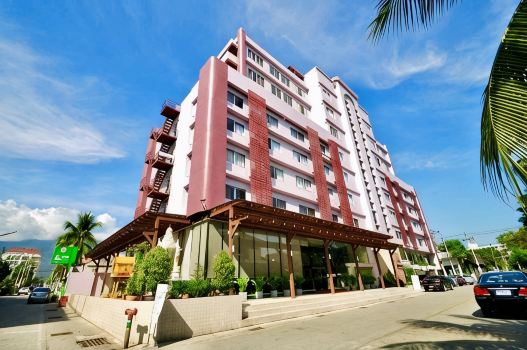


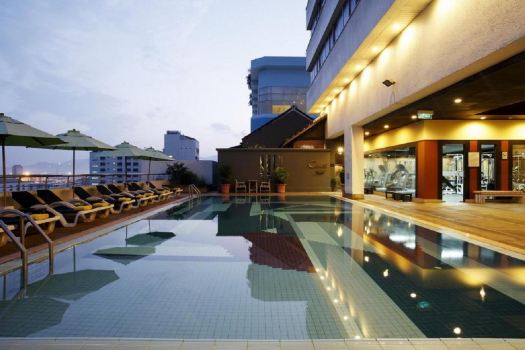
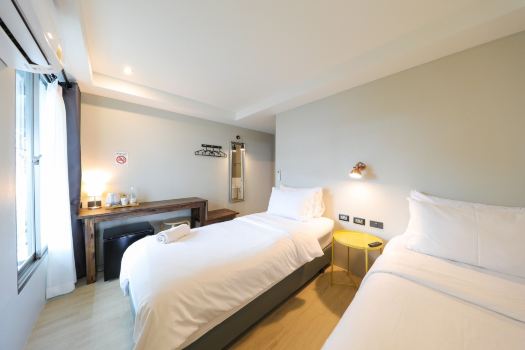

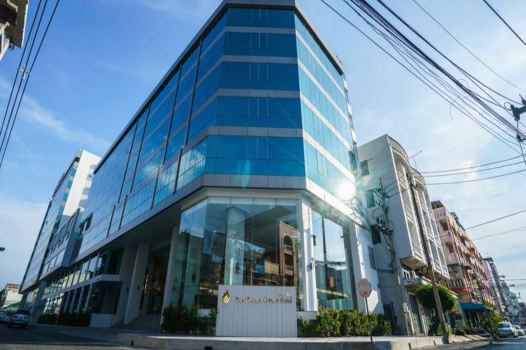
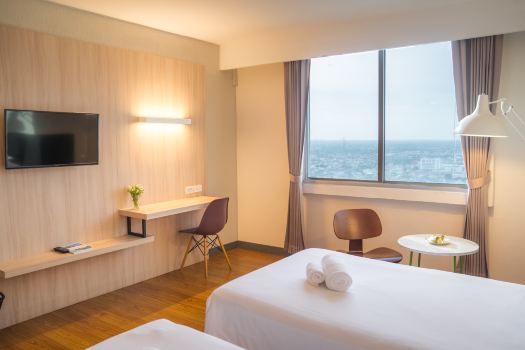

TAGTHAi Easy Pay for Foreign Tourists
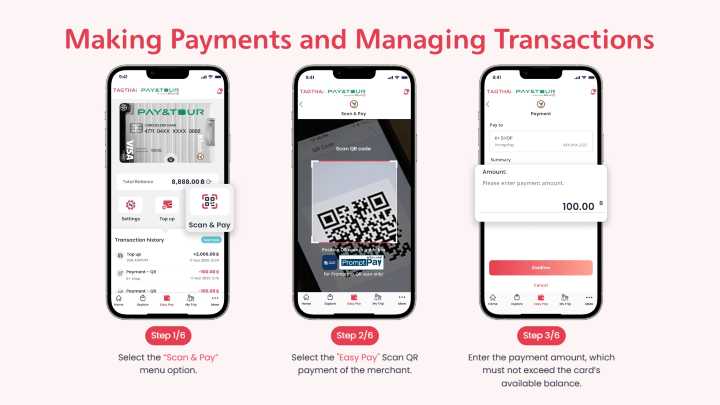
One of the most useful options for international visitors is TAGTHAi Easy Pay.
It is a tourist e-wallet designed specifically for foreign travelers in Thailand and allows users to make payments through Thailand's PromptPay QR system. Tourism Authority of Thailand has also promoted the service as a payment option for foreign tourists.
Once activated, it can be useful for paying at participating:
- Restaurants
- Shops
- Markets
- Shopping areas
- Attractions
- Other merchants accepting Thai QR payments
How TAGTHAi Easy Pay Works
The service operates through the TAGTHAi app. Travelers complete the required registration and identity verification before using the wallet.
TAGTHAi announced that from August 2026, the Easy Pay service is being simplified so travelers will no longer need the previous physical prepaid-card setup. Because the onboarding process is changing, travelers should follow the latest instructions shown in the TAGTHAi app when registering.
After activation, users can scan supported Thai PromptPay QR codes directly through the app.
📱 Payment Tip: TAGTHAi Easy Pay can be useful if you want easier access to Thailand's local QR payment system without opening a Thai bank account.
Can You Use GCash in Thailand?
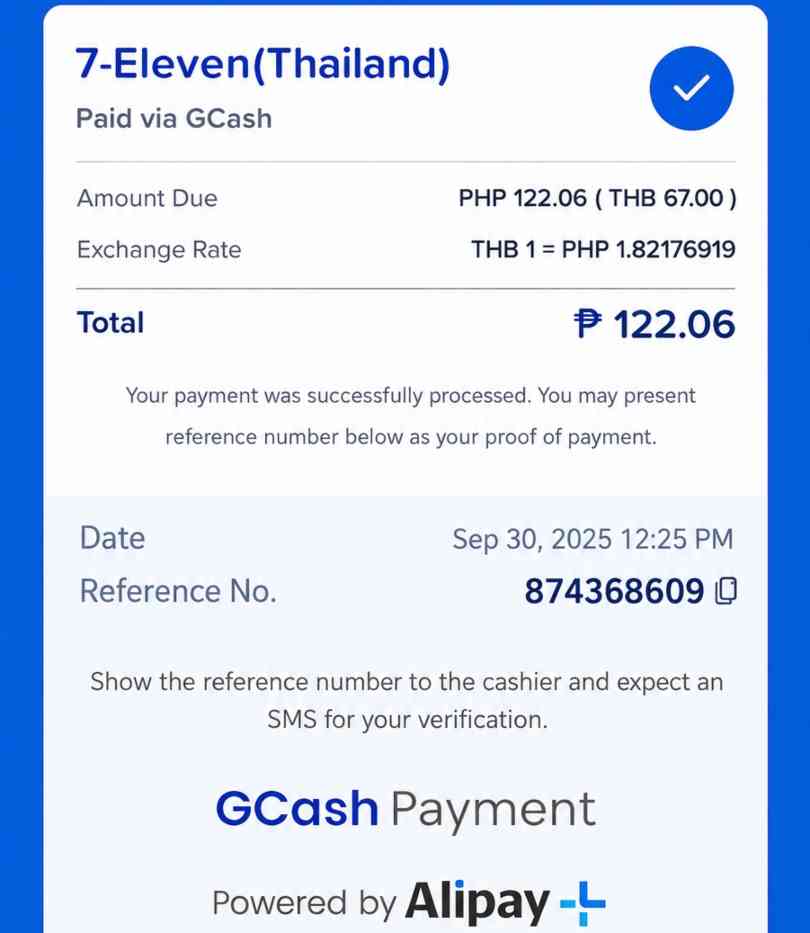
Yes, GCash can be used in Thailand at supported Alipay+ merchants.
GCash Global Pay allows fully verified GCash users to scan and pay at participating Alipay+ merchants overseas. Thailand is included among the markets supported by GCash Global Pay.
Look for the Alipay+ logo or a supported payment QR at the merchant.
How to Pay with GCash in Thailand
- Open your GCash app.
- Select the QR payment feature.
- Scan the supported merchant QR code.
- Check the amount and currency.
- Review the conversion amount.
- Confirm the payment.
GCash shows payments in the local currency and Philippine peso, making it easier to see how much you are spending.
Where Can You Use GCash?
GCash may work at participating:
- Restaurants
- Shops
- Retail stores
- Tourist businesses
- Shopping malls
- Selected transport services
- Alipay+ partner merchants
Availability depends on the individual merchant.
⚠️ Important: GCash Global Pay and PromptPay are not the same payment system. Do not scan a normal PromptPay QR unless GCash clearly recognizes it as a supported payment.


Using ATMs in Thailand
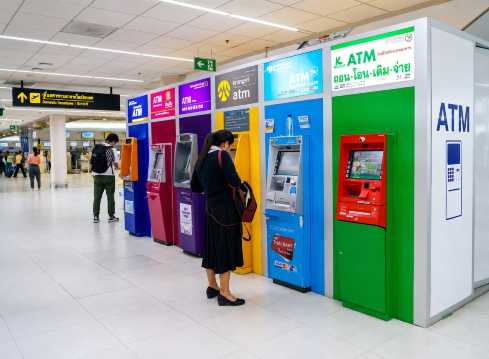
ATMs are widely available in major cities and tourist areas, making them another convenient way to get Thai baht.
International Visa cards displaying the PLUS network logo can be used at compatible ATMs to withdraw local currency.
You can commonly find ATMs around:
- Airports
- Shopping malls
- Convenience stores
- Banks
- Tourist areas
- Train and transport hubs
ATM Tips for Travelers
- Check the withdrawal fee before confirming.
- Your Philippine bank may also charge an overseas ATM fee.
- Withdraw a reasonable amount each time instead of making many small withdrawals.
- Choose Thai baht if the ATM offers currency conversion options and compare the rate carefully.
- Use ATMs in secure, well-lit locations.
- Keep your card and cash before leaving the machine.
💡 Tip: Always bring more than one way to access money in case your main card is blocked or an ATM does not accept it.
- One way
- Round-trip
- direct cheapest
 MNL9:25 PM3h 35mNonstopBKK12:00 AMManila - Bangkok|Tue, Nov 3|Cebu PacificVND 2,908,000VND 7,285,00060% offSearch60% offVND 7,285,000VND 2,908,000
 - MNL9:25 PM3h 35mNonstopBKK12:00 AMManila - Bangkok|Wed, Nov 11|Cebu PacificVND 3,744,000VND 7,285,00049% offSearch49% offVND 7,285,000VND 3,744,000
- MNL7:25 AM3h 35mNonstopBKK10:00 AMManila - Bangkok|Mon, Nov 2|Cebu PacificVND 5,172,000VND 7,285,00028% offSearch28% offVND 7,285,000VND 5,172,000
 MNL13:003h 35mNonstopBKK14:00Manila - City|Mon, Sep 6|Normal AirlineFind more flightsFind more flights
Cash vs Card vs QR: Which Is Best in Thailand?
There is no single payment method that works everywhere.
Situation | Recommended Payment |
|---|---|
Street food | Cash or supported Thai QR |
Night markets | Cash or PromptPay-compatible payment |
Hotels | Credit/debit card |
Shopping malls | Card, GCash or other supported digital payment |
Restaurants | Card, cash or QR |
Small local shops | Cash or Thai QR |
Tourist attractions | Card or cash |
Online bookings | Credit/debit card |
Backup payment | Thai baht cash |
For most travelers, carrying two or three payment options is more reliable than depending on only one.
Best Payment Setup for Filipino Travelers
A simple setup for a Thailand trip is:
1. Thai Baht Cash
Keep enough for street food, small shops, markets and emergencies.
2. International Debit or Credit Card
Use it for hotels, malls, restaurants and larger purchases.
3. GCash
Use Global Pay when you see a supported Alipay+ merchant.
4. TAGTHAi Easy Pay
Consider setting it up if you expect to use Thai PromptPay QR frequently during your trip.
This gives you several alternatives if one payment method is unavailable.
Recommended eSIMs Options for Thailand





Tips for Paying in Thailand
- Keep some Thai baht with you every day.
- Carry smaller notes whenever possible.
- Do not rely only on credit cards.
- Check whether your bank charges foreign transaction fees.
- Look for the Alipay+ sign before using GCash.
- Do not assume every PromptPay QR accepts foreign e-wallets.
- Check the merchant name before confirming any QR payment.
- Keep mobile data available when using QR or e-wallet payments.
- Bring a backup card.
- Check the currency before approving a card transaction.
- Avoid carrying large amounts of cash in one place.
FAQs: Thailand Payment Methods
-
Is Thailand mostly cashless?
-
Can I use GCash in Thailand?
-
Should I bring cash to Thailand?
-
Are credit cards widely accepted in Thailand?
-
What currency should I choose when paying by card?