

China Taxi Guide: Fares, Apps, Payment Methods & Travel Tips


Compare China taxi apps like DiDi and regular street taxis before your trip. This guide helps Filipino travelers book rides, check estimated fares, pay with QR codes, avoid language problems, and stay safe while exploring China’s cities with less stress and more confidence every day.
Why Taking a Taxi in China Is a Smart Choice
Taking a taxi in China is a convenient option for Filipino travelers, especially if it is your first time visiting. China’s metro and train systems are fast, but some stations are huge, exits can be confusing, and language can be a challenge.
A taxi is helpful when you are:
- Carrying luggage
- Traveling with kids or elderly family members
- Arriving late at night
- Going to places far from the metro
- Visiting several spots in one day
In cities like Beijing, Shanghai, Guangzhou, Shenzhen, and Chengdu, you can book rides through DiDi or take an official street taxi from airports, malls, hotels, and tourist areas. Most taxis use meters, so fares are usually clear and budget-friendly.
Types of Taxi Services Available in China

China has a few taxi options, so Filipino travelers can choose what feels easiest. You can take a regular metered taxi, book through DiDi, or use ride-hailing inside apps like Alipay and WeChat. For first-time visitors, DiDi is usually the easiest because you can enter your destination, check the fare estimate, and avoid too much language confusion. DiDi also supports an English interface and bilingual messages between passengers and drivers.
Traditional Metered Taxis in China
Traditional taxis are common in big cities like Beijing, Shanghai, Guangzhou, Shenzhen, Chengdu, and Hangzhou. You can usually find them at airports, train stations, hotels, malls, and official taxi queues.
What to expect:
- Most official taxis use meters
- Drivers usually speak Mandarin, not English
- Cash, Alipay, and WeChat Pay are commonly used
- You should show your destination in Chinese or use a map pin
- At airports and stations, always use the official taxi line
Avoid drivers who approach you inside arrival halls or outside train stations offering a fixed price. These unofficial taxis may charge tourists more.
DiDi: China’s Top Ride-Hailing App
DiDi is China’s main ride-hailing app, similar to Grab in the Philippines. It is a good choice for Filipino tourists because you do not need to explain your destination face to face. You can set your pickup point, choose your destination, see the estimated fare, and track the route in the app.
Why DiDi is useful:
- Easier for non-Chinese speakers
- Fare estimate shown before booking
- Cashless payment is available
- Route tracking helps you feel safer
- Good for hotel, airport, train station, and attraction transfers
DiDi also has different ride options. Express is usually the standard budget choice, Premier is more comfortable, and Taxi lets you book a regular taxi through the app. Ride names and options may change depending on the city.
Other China Taxi Apps Worth Knowing
Aside from DiDi, Filipino travelers can also use other apps for taxis and ride-hailing:
- Alipay Taxi: You can open Alipay, tap Transport or Taxi, then book a ride without downloading too many apps. Foreign travelers can use Alipay, WeChat, or DiDi Rider to book ride-hailing services in China.
- WeChat Ride-Hailing: Useful if you already use WeChat for payments and messaging.
- Amap / Gaode Map: Good for maps, routes, and ride-hailing in China.
- Meituan Dache: Another local ride-hailing option, but it may feel less beginner-friendly for tourists.
China Taxi Fares and Rates
Taxi fares in China are usually affordable for Filipino travelers. For easy budgeting, use around CNY 1 = ₱9 as a rough guide, but check the latest rate before your trip.
City | Starting Fare | Approx. PHP |
|---|---|---|
Beijing | CNY 13 for first 3 km | Around ₱118 |
Shanghai | CNY 14 to 16 for first 3 km | Around ₱127 to ₱145 |
Guangzhou | CNY 12 for first 3 km | Around ₱109 |
Chengdu | CNY 8 to 9 for first 2 km | Around ₱72 to ₱82 |
Xi’an | CNY 8.5 for first 3 km | Around ₱77 |
For most city rides, tourists usually spend around CNY 20 to 60, or about ₱180 to ₱545, depending on distance and traffic.
Common Extra Fees
Your fare may be higher because of:
- Night surcharge
- Traffic or waiting time
- Airport or highway tolls
- Long-distance surcharge
- Peak-hour pricing on DiDi
Airport Ride Estimates
- Beijing Capital Airport to downtown: CNY 100 to 140, around ₱900 to ₱1,270
- Shanghai Pudong Airport to The Bund: CNY 170 to 220, around ₱1,540 to ₱2,000
- Guangzhou Baiyun Airport to downtown: Around CNY 120, around ₱1,090
Explore More Flights to China


Traditional Metered Taxis in China
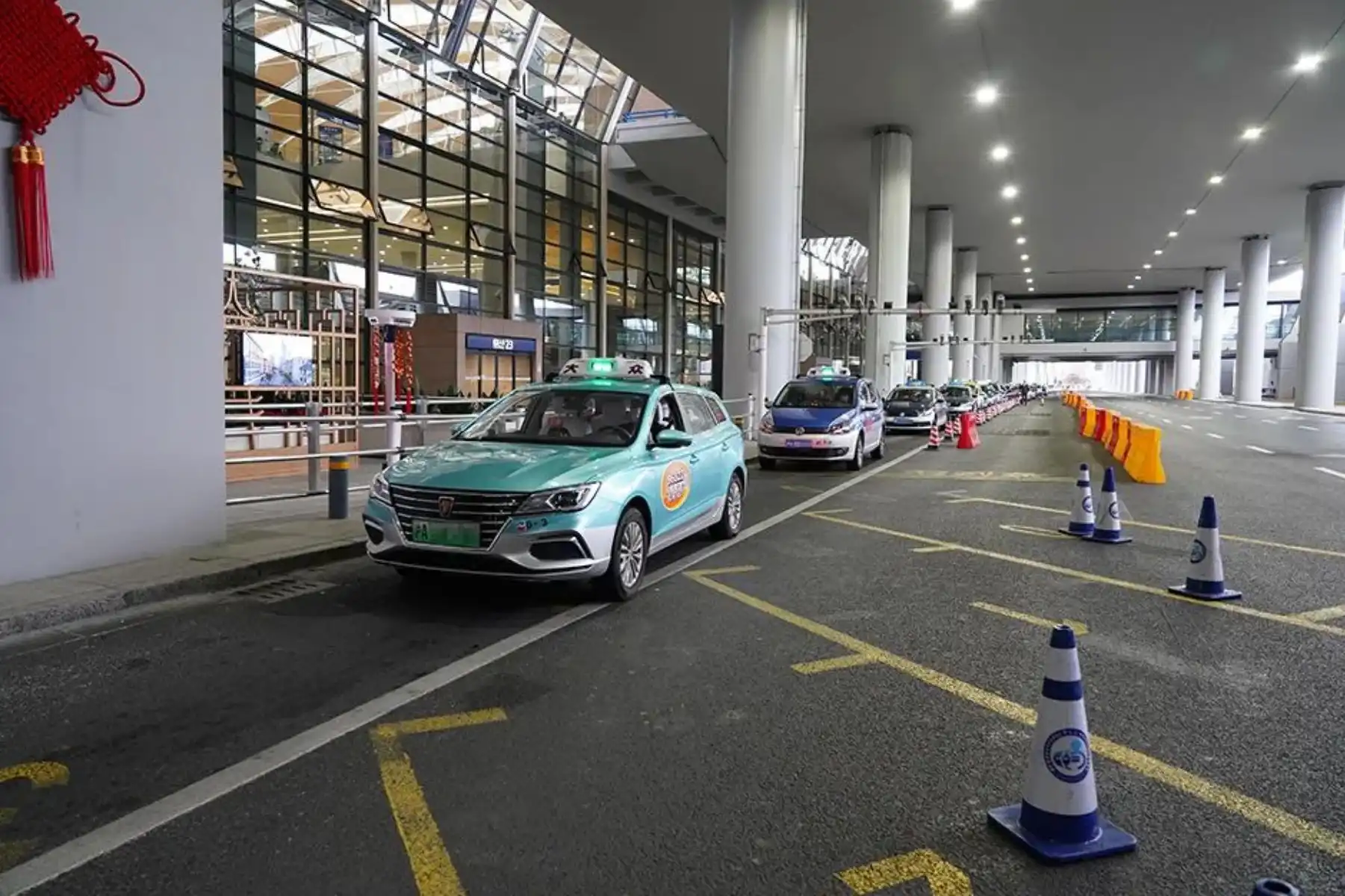
Traditional metered taxis are still common in China, especially in big cities like Beijing, Shanghai, Guangzhou, Chengdu, and Xi’an. They are useful for Filipino travelers who need a quick ride from airports, train stations, hotels, malls, or tourist areas.
You can usually find taxis at:
- Official taxi queues
- Airport arrival areas
- Train station exits
- Hotel entrances
- Mall pickup points
- Busy tourist spots
Most official taxis use a meter, so the fare depends on distance, traffic, and waiting time. Drivers usually speak Mandarin, so prepare your destination in Chinese before getting in. You can show your hotel address, attraction name, or map pin on your phone.
Tips for Filipino Travelers
- Always use official taxi queues at airports and stations
- Avoid drivers offering fixed-price rides
- Check that the meter is running
- Prepare Alipay, WeChat Pay, or small cash
- Save your hotel address in Chinese
- Take a photo of the taxi plate if needed
Traditional taxis are good for quick rides, but if you want easier booking, fare estimates, and route tracking, DiDi is usually more tourist-friendly.
How to Pay for Traditional Taxis in China
Traditional taxis in China usually accept Alipay, WeChat Pay, and RMB cash. Payment may vary by city, so Filipino travelers should prepare more than one option.
Payment Method | How It Works | Best For |
|---|---|---|
Alipay | Scan the driver’s QR code or taxi QR code | Most tourists |
WeChat Pay | Scan the QR code and pay from your WeChat wallet | Travelers using WeChat |
RMB Cash | Pay in Chinese yuan after the ride | Backup option |
International Card | Only accepted in some taxis or cities | Not reliable as main payment |
Transport Card | Some cities allow local transport cards | Useful for repeat visitors |
Tips for Filipino Travelers
- Set up Alipay or WeChat Pay before your trip.
- Keep small cash like CNY 10, 20, or 50.
- Do not expect every taxi to accept Visa, Mastercard, or PH bank cards.
- Ask for a receipt, called fapiao (发票), in case you leave something inside the taxi.
Best setup: Alipay or WeChat Pay plus small RMB cash. Digital payment is easier, but cash is useful as a backup.
How to Book a Ride with DiDi Chuxing
DiDi is China’s main taxi app, similar to Grab in the Philippines. It is useful for Filipino travelers because you can book a ride, choose your pickup and drop-off point, check the fare estimate, and pay through the app.
Step 1: Download or Open DiDi

Search DiDi or 滴滴出行 on the App Store or Google Play. You can also use DiDi through Alipay or WeChat if available.
Step 2: Register or Log In
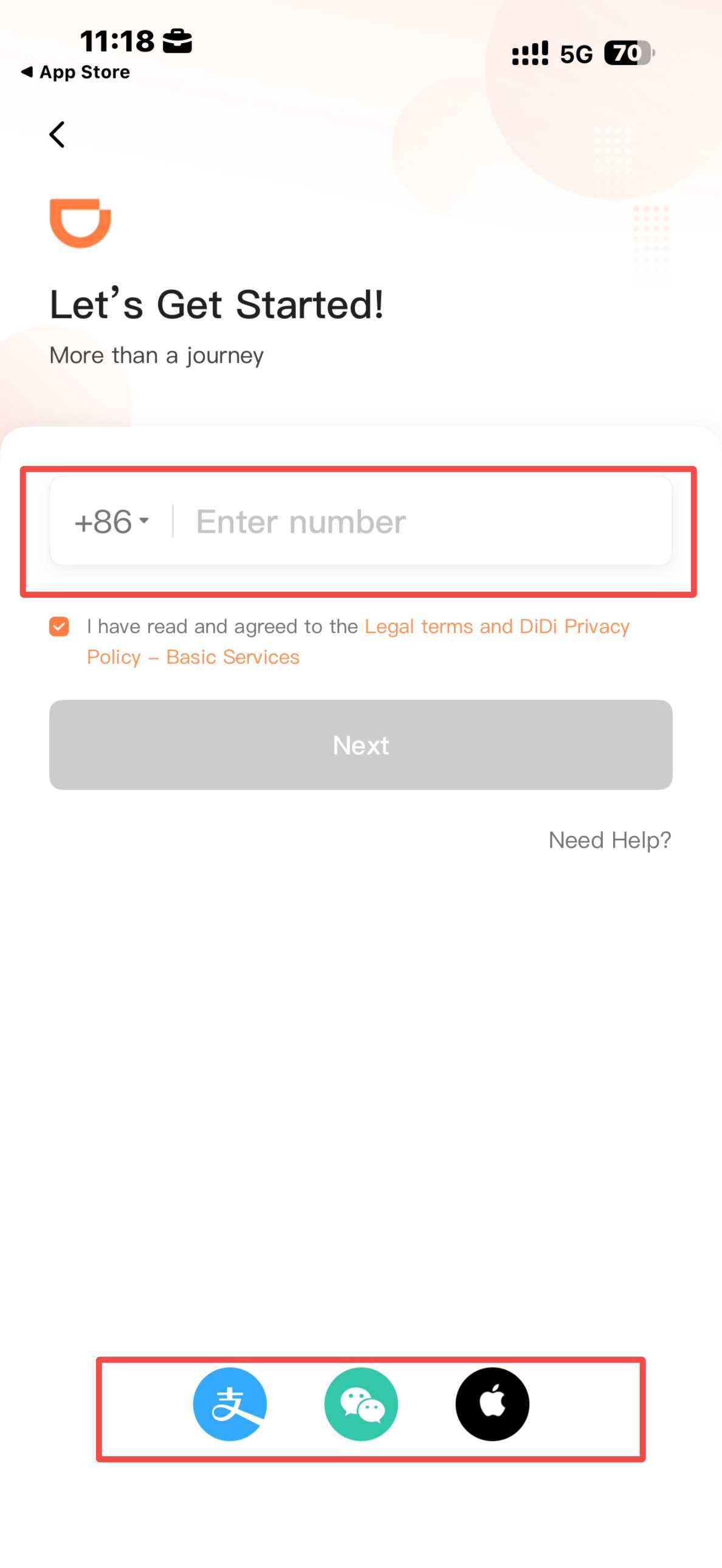
You can sign up using your Philippine or international phone number. Change the country code first, then enter your mobile number and verify it with the SMS code.
You can also log in using:
- Alipay
- Apple ID
For Filipino travelers, using a phone number is simple, but Alipay or WeChat login can be more convenient if you already use these apps for payments in China.
Step 3: Set Pickup and Destination
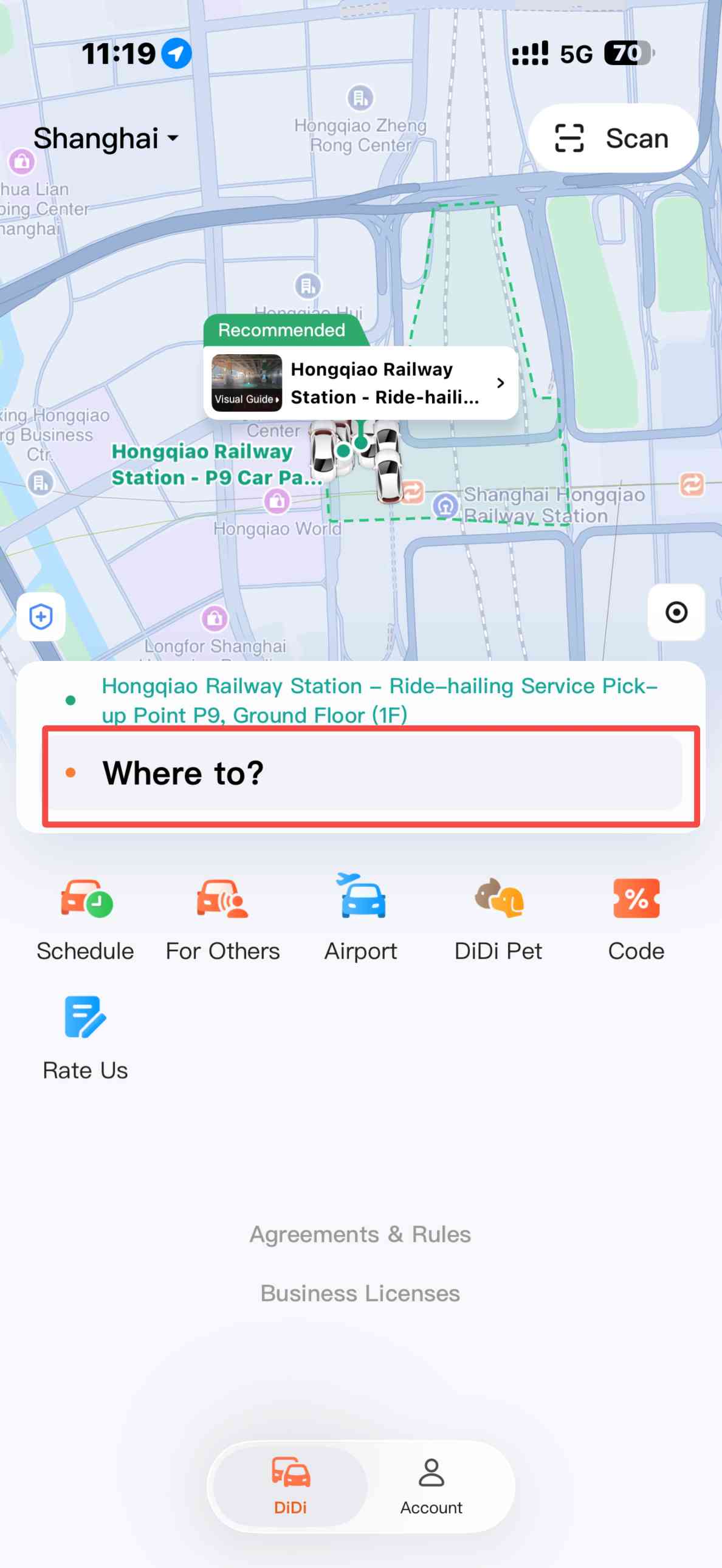
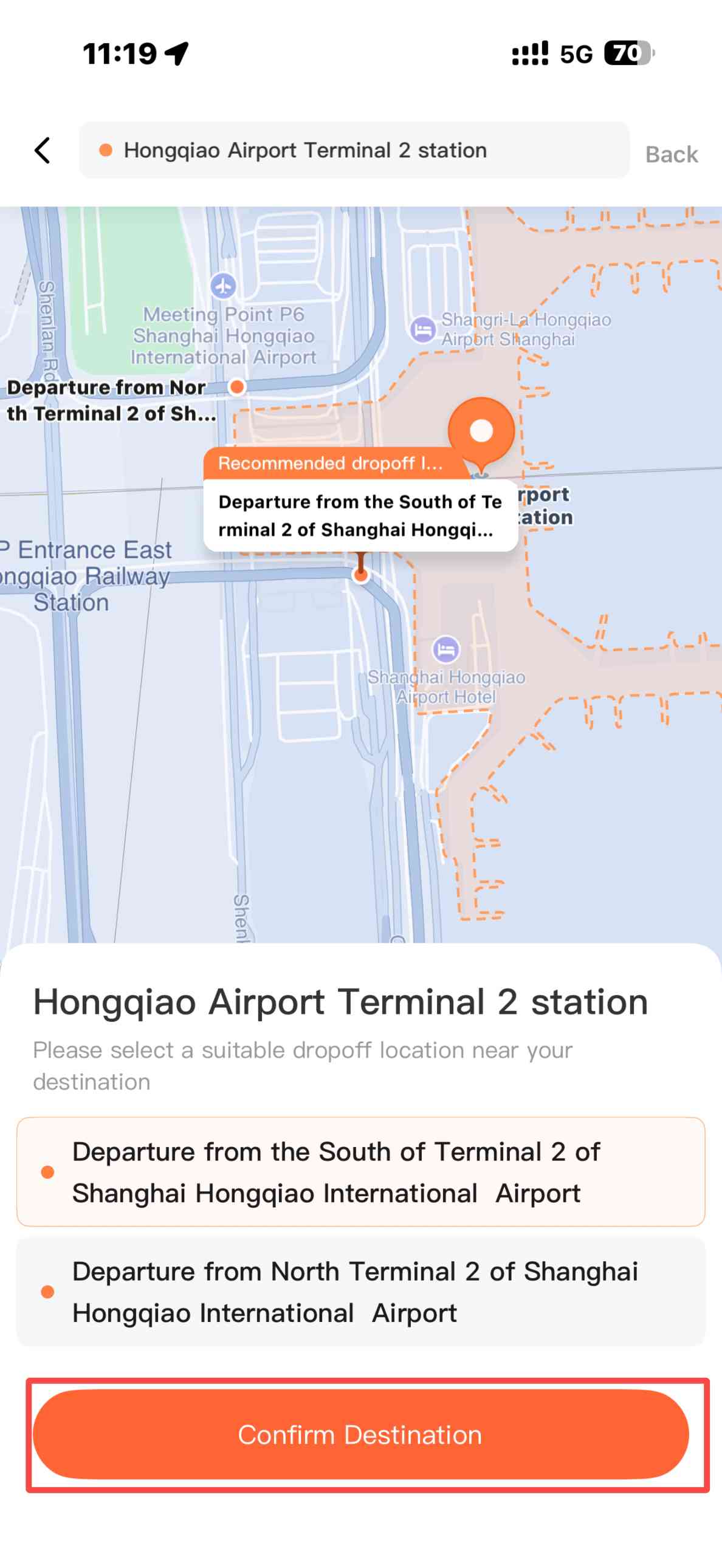
Tap Where to? and enter your destination. For airports, train stations, or big malls, the app may ask you to choose a specific pickup or drop-off area.
Helpful tips:
- Save your hotel address in Chinese
- Use map pins for pickup points
- Choose clear spots like hotel lobby, mall entrance, or station exit
Step 4: Choose Your Ride Type
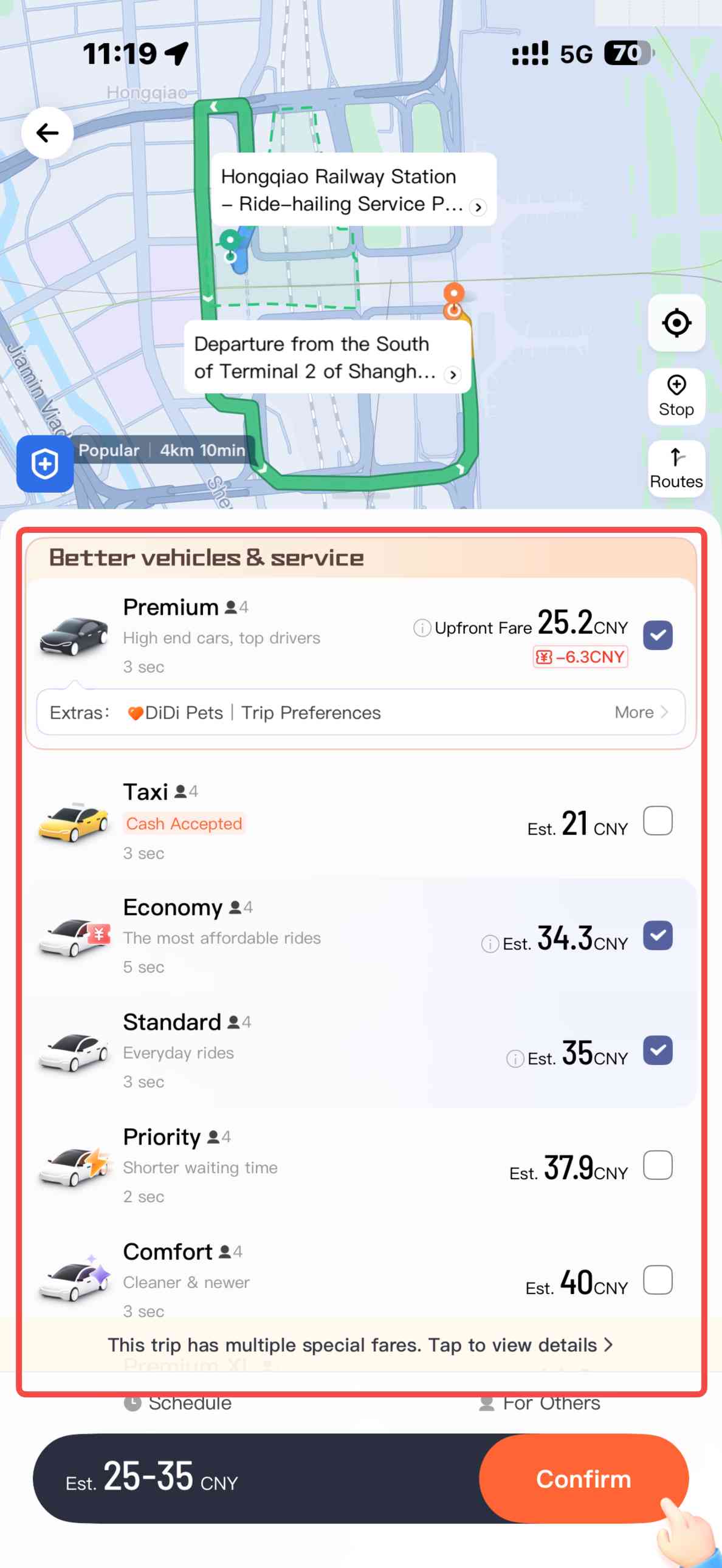
DiDi will show different ride options with estimated prices.
Common options include:
- Taxi: Regular taxi, sometimes cash accepted
- Economy: More affordable rides
- Standard: Everyday rides
- Premium: Higher-end cars and better service
- Priority: Shorter waiting time
- Comfort: Cleaner and newer cars
Choose the option that fits your budget, then tap Confirm.
Step 5: Pay the Estimated Fare
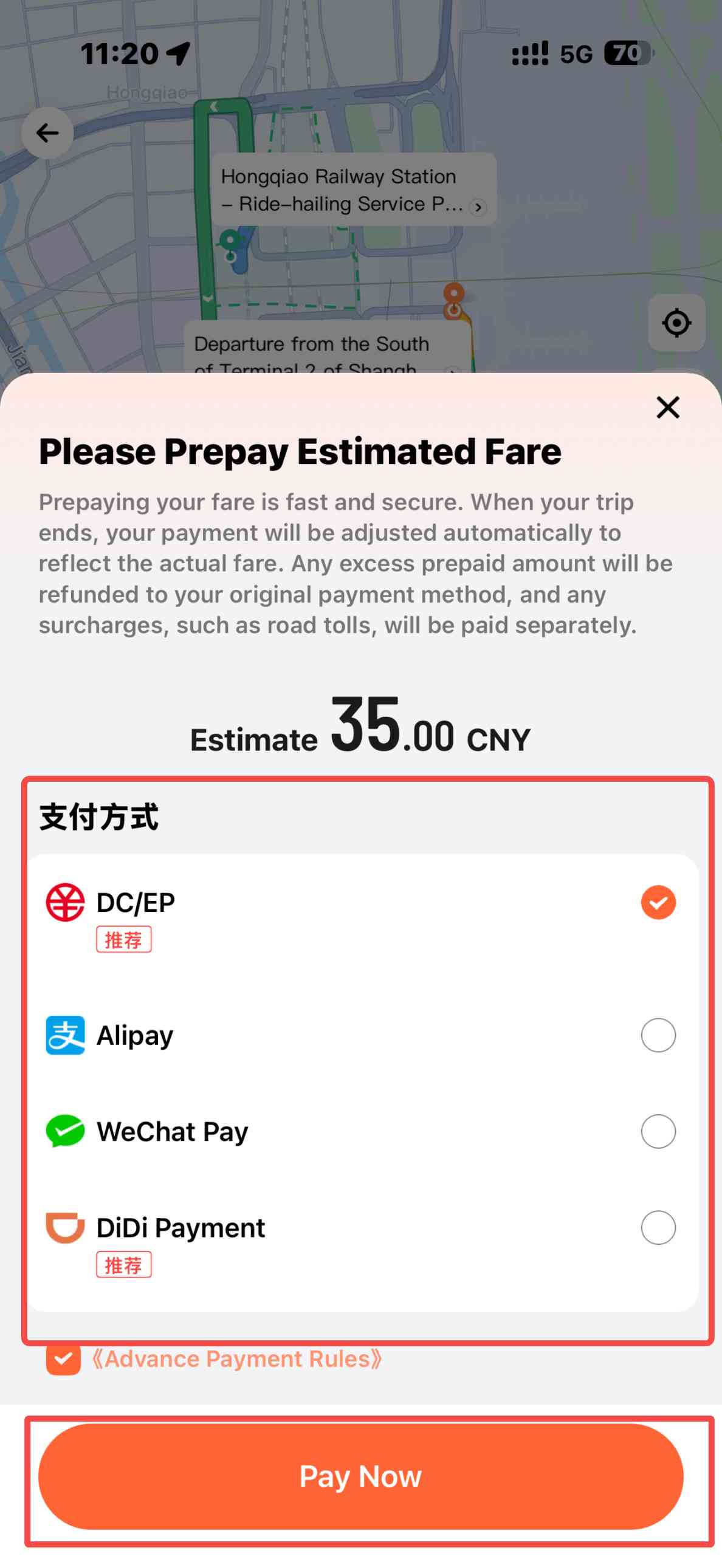
Some rides may ask you to prepay the estimated fare before the driver accepts the booking. Do not worry, the final amount will adjust after the ride. If you paid too much, the extra amount should be refunded to your original payment method. Extra charges like toll fees may be paid separately.
Payment options may include:
- Alipay
- WeChat Pay
- DiDi Payment
- DC/EP, if available
Step 6: Check Safety Before Getting In
Before entering the car, check:
- Plate number
- Car model
- Driver details
- Pickup point
- Route shown in the app
In busy places like airports or train stations, the app may show extra pickup instructions. Follow the app carefully so you do not enter the wrong car.
Step 7: End the Ride and Check the Fare
After the trip, check the final fare in the app. If you linked a payment method, the fare is usually deducted automatically. For Filipino travelers, it is still smart to keep Alipay, WeChat Pay, and some cash as backup
Find the Best Hotels in China
 NO.1
NO.1






















































DiDi Chuxing Taxi Types
DiDi Chuxing is China’s main ride-hailing app, similar to Grab in the Philippines. Ride names may vary by city, but most Filipino tourists can use Economy, Standard, Taxi, or Comfort for daily travel.
Ride Type | What It Means | Best For |
|---|---|---|
Taxi | A regular metered taxi booked through DiDi. Some taxis may accept cash. | Travelers who prefer official taxi pricing |
Economy / Express | Budget-friendly private car option. Usually one of the cheapest choices. | Simple city rides and short trips |
Standard | Regular private car for everyday rides. | Hotels, malls, train stations, and tourist spots |
Priority | Higher chance of faster pickup, but may cost more. | Rush hour, rainy days, or crowded areas |
Comfort | Cleaner or newer cars with better comfort. | Families, luggage, or longer rides |
Premium | Higher-end cars with better service. | Business trips, airport rides, or special occasions |
Other DiDi Services You May See
Some cities may also show extra options, but they are not always useful for tourists:
- Hitch: A carpool-style ride. It can be cheaper, but pickup time and route may be less convenient.
- Designated Driver: A driver takes over your own car. Most tourists will not need this.
- Bus or Group Ride: Better for group travel, company trips, or larger families.
Tip for Filipino Travelers
Before booking, check the fare, pickup time, ride type, and pickup point. During rush hour, around 7 AM to 9 AM and 5 PM to 7 PM, fares may be higher and waiting time may be longer. At airports or train stations, follow the app’s pickup point carefully.
How to Pay for DiDi Chuxing Rides
DiDi is mostly cashless, so Filipino travelers should set up payment before going to China. The easiest options are Alipay, WeChat Pay, or an international Visa/Mastercard.
Payment Method | How It Works | Best For |
|---|---|---|
Alipay | Link your card to Alipay, then use DiDi inside Alipay or pay through the app | Most tourists |
WeChat Pay | Link your international card to WeChat Pay for cashless payment | Travelers already using WeChat |
Credit / Debit Card | Add a Visa, Mastercard, UnionPay, or other supported card | Filipino travelers with PH bank cards |
DiDi Payment | Pay through DiDi’s own in-app payment option, if available | App users who want auto-payment |
Apple Pay | May appear for some iPhone users | Backup option, if supported |
Cash | Sometimes accepted for regular taxis | Backup only |
GCash and Maya Tip for Filipinos
GCash and Maya can be useful in China because they are connected with Alipay+. However, for DiDi rides, it is safer to prepare Alipay, WeChat Pay, or an international card, since not all ride-hailing payments can deduct directly from GCash or Maya.
Important Payment Tips
- Set up payment before your flight.
- Make sure your card allows international transactions.
- Small payments under CNY 200 usually avoid the 3% service fee on Alipay or WeChat Pay.
- Enable auto-payment or password-free payment for easier rides.
- Keep small cash like CNY 10, 20, or 50 as backup.
Tip: Do not rely on cash only. DiDi and most taxi apps work better with digital payment.
Recommended eSIMs Options for China

![[Mainland China] 5G | eSIM Internet Card | China Mobile CMLink | 3-15 days optional | Ready to use | Hotspot supported | QR Code](https://ak-d.tripcdn.com/images/0356l12000u7jp518BE61_C_568_320.jpg)
Best China Taxi Options for Filipino Travelers
China Taxi Option | Best For | Payment Methods | Pros | Things to Watch Out For |
|---|---|---|---|---|
Traditional Metered Taxis | Airport queues, train stations, hotels, and quick street rides | Alipay, WeChat Pay, RMB cash | Easy to find at official taxi lines, no app needed | Drivers may not speak English, so prepare your destination in Chinese |
DiDi | Daily rides, airport transfers, hotel trips, and tourist spots | Alipay, WeChat Pay, card, DiDi payment | Most tourist-friendly, fare estimate, route tracking, driver details | Prices may increase during rush hour, rain, or holidays |
Alipay Taxi | Travelers already using Alipay in China | Alipay or linked card | No need to download another app, easy for cashless payment | You need to set up Alipay first |
WeChat Ride-Hailing | Travelers using WeChat Pay | WeChat Pay or linked card | Convenient if you already use WeChat for chat and payments | Interface may be harder for first-time tourists |
Meituan Taxi | Backup when DiDi is busy or expensive | Alipay, WeChat Pay, linked card | Useful during rush hour, rainy days, or busy holidays | Mostly in Chinese, less beginner-friendly |
Best Option for Filipino Travelers
For most first-time visitors, DiDi is the easiest taxi option in China. It works like Grab, so you can check the fare, route, driver details, and pickup point before the ride.
Still, it is better to prepare backup options:
- Use DiDi for most daily rides
- Use Alipay Taxi if you already use Alipay
- Use WeChat Ride-Hailing if you rely on WeChat Pay
- Use Meituan Taxi when DiDi has long waiting times
- Use traditional taxis at official airport, train station, or hotel taxi queues
Tips for Riding a Taxi in China
Here are simple taxi tips for Filipino travelers in China:
- Use official taxis only: At airports and train stations, follow the official Taxi / 出租车 signs.
- Avoid fixed-price offers: Do not ride with random drivers offering a “special price.” They may overcharge.
- Prepare your destination in Chinese: Save your hotel name, address, or attraction name in Chinese characters.
- Use a map pin: Show the driver the exact location on your phone to avoid confusion.
- Check the meter: For street taxis, make sure the driver uses the meter before the ride starts.
- Prepare digital payment: Alipay and WeChat Pay are commonly used.
- Keep small cash: Bring CNY 10, 20, or 50 as backup.
- Ask for a receipt: Say fapiao (发票). It helps if you leave something in the taxi.
- Check the car details: For DiDi or Meituan, match the plate number and car model before getting in.
- Avoid rush hour if possible: Morning and evening traffic can make rides slower and more expensive.
Tip: For first-time visitors, DiDi is usually easier than street taxis because you can see the fare estimate, route, and driver details in the app.
FAQs About China Taxi
-
What is the best taxi app in China for Filipino travelers?
-
Can I use Grab in China?
-
Do taxi drivers in China speak English?
-
Can I pay cash for taxis in China?
-
Is DiDi safe for tourists?
Trending Searches
-
Featured guides
-
Trip.com links
- Mothers Day Gifts
- eSIM
- Hong Kong International Airport
- International Driving Permit
- Toronto Pearson International Airport
- Universal Studios Singapore
- Great Wall of China
- UK ETA
- Narita International Airport
- China Currency
- Changi Airport
- Schengen Visa
- Singapore MRT Map
- France Visa
- Ninoy Aquino International Airport