
China High-Speed Train Seat Map: Classes, Layout and Travel Tips
Confused about China train seats? This simple guide helps Filipino travelers understand G, D, C, Z, T, and K trains, seat classes like business, first, and second class, plus basic seat map tips, so you can choose the right train ticket for your budget, comfort, and travel time.
About China High Speed Rail
China has the biggest high-speed rail network in the world, making it a fast and easy way to travel between cities. For Filipino travelers, China bullet trains are usually on time, comfortable, and can run up to 350 km/h.
Here are the main train types you will often see in China:
Category | Train Type | Best For | Key Point |
|---|---|---|---|
High-speed train | G Trains | Long-distance trips between major cities | Fastest option, can run up to 350 km/h |
D Trains | Regional trips and some overnight routes | Slightly slower but often cheaper than G trains | |
C Trains | Short trips between nearby cities or airport routes | Good for quick intercity travel | |
Regular train | Z Trains | Direct long-distance trips | Fastest regular train, usually with fewer stops |
T Trains | Trips between major stations | Express regular train with selected stops | |
K Trains | Budget trips to smaller cities | Slower, older, and usually cheaper |
For first-time travelers, G, D, or C trains are the easiest choices. For overnight or cheaper trips, Z, T, or K trains can work better.
China Train Seat Map (High-Speed & Regular)
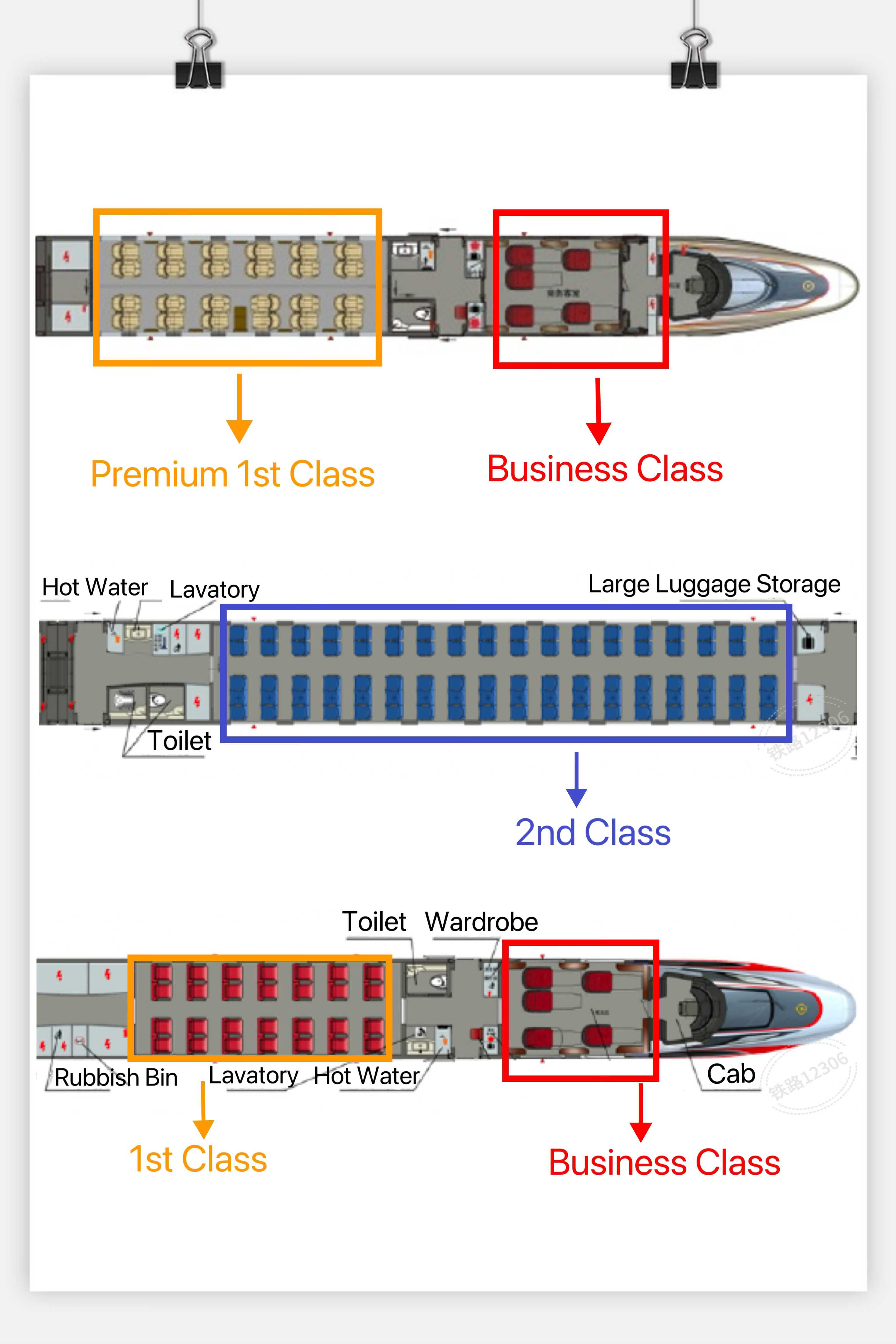
Choosing the right seat or bunk can make your China train trip more comfortable, especially if it is your first time booking. Seat layouts are different for high-speed trains and regular overnight trains, so it is good to know what each option means before you pay.
China High-Speed Train Seat Map (G, D, C Trains)
High-speed trains in China are modern, clean, and easy to ride. The seats are arranged by class:
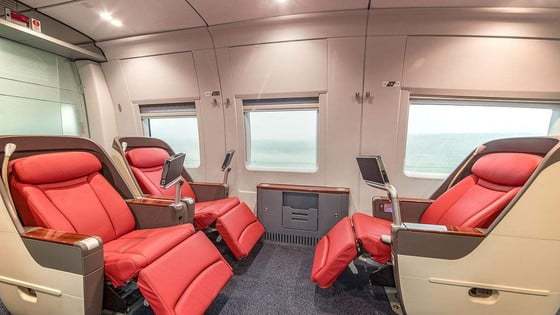
- Business Class: The most spacious and premium option. It usually has a 1-2 layout, with wider seats, more privacy, and no middle seat. On many G trains, the seat can recline deeply or turn into a flat bed.
- First Class: A comfortable upgrade with a 2-2 layout. It has more legroom than Second Class and no middle seat.
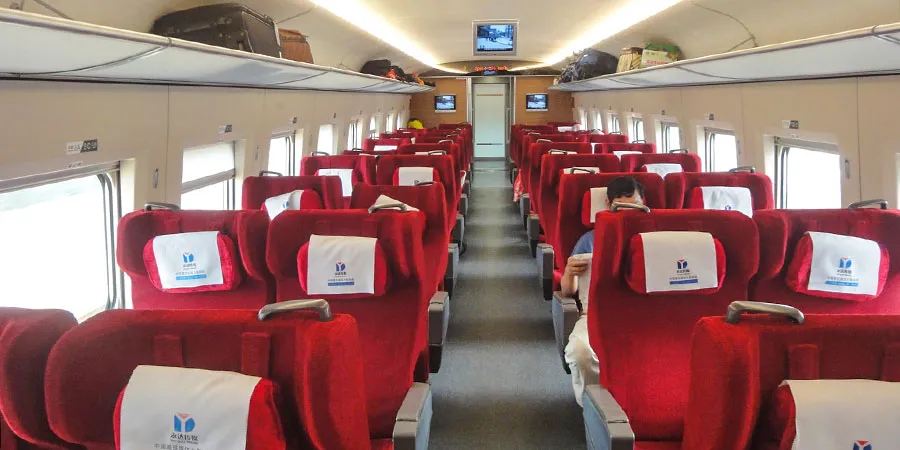
- Second Class: The most popular and budget-friendly choice. It usually has a 3-2 layout, good for short and medium trips.
Seat letters are usually arranged like this:
- A and F: Window seats
- C and D: Aisle seats
- B: Middle seat, usually only in Second Class
China Regular Train Seat Map (Z, T, K Trains)
Regular trains are slower than high-speed trains, but they are useful for long-distance or overnight travel. These trains often have sleeper options:
- Hard Sleeper: The cheapest bed option. It has 6 bunks in an open area, with upper, middle, and lower beds. Lower bunks are easier to access but usually cost more.
- Soft Sleeper: A more comfortable choice with 4 bunks in a private compartment. It has upper and lower beds, plus a door for more privacy.
- Deluxe Soft Sleeper: A more premium option, usually with 2 bunks in a private room. Some rooms may have a small table, sofa, or private washing area, depending on the train.
Tip: For short trips, Second Class is enough. For overnight rides, Soft Sleeper is more comfortable.
China High-Speed Train Seat Interiors by Class
If you are a Filipino traveler planning to explore China, taking the high-speed train is one of the easiest and most comfortable ways to move between cities. Trains are usually clean, fast, and well-organized, but the seat experience can be different depending on the class you book. Here is a simple guide to help you choose the right seat.
1. Business Class, The Most Premium Choice
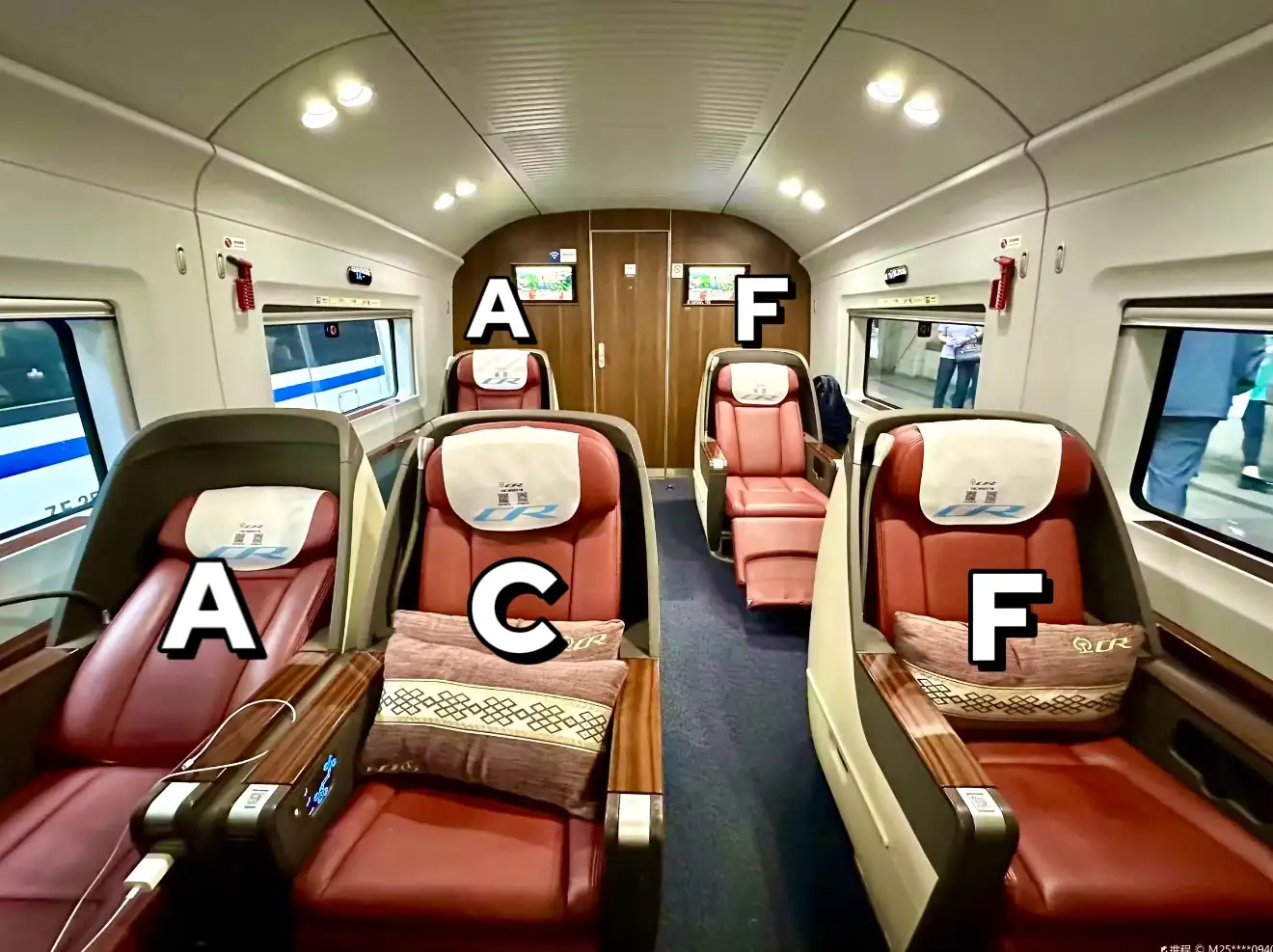
Business Class is the most luxurious seat option on China high-speed trains. It is usually available on selected G trains, especially on major long-distance routes.
- Seat layout: Usually 1-2 seats per row, so the cabin feels more private and less crowded.
- Comfort: Seats are wide, soft, and can recline deeply. On many trains, they can recline almost flat, which is great for resting during a long trip.
- Facilities: You usually get a large fold-out table, power outlet, reading light, and plenty of legroom.
- Extra service: Some trains may offer bottled water, snacks, or a blanket, but this can depend on the train route.
- Best for: Filipino travelers who want a quiet, premium ride and do not mind paying more for comfort.
Business Class is a good choice if you have a long train ride, heavy travel plans after arrival, or you simply want a more relaxing experience.
2. First Class, The Comfortable Upgrade
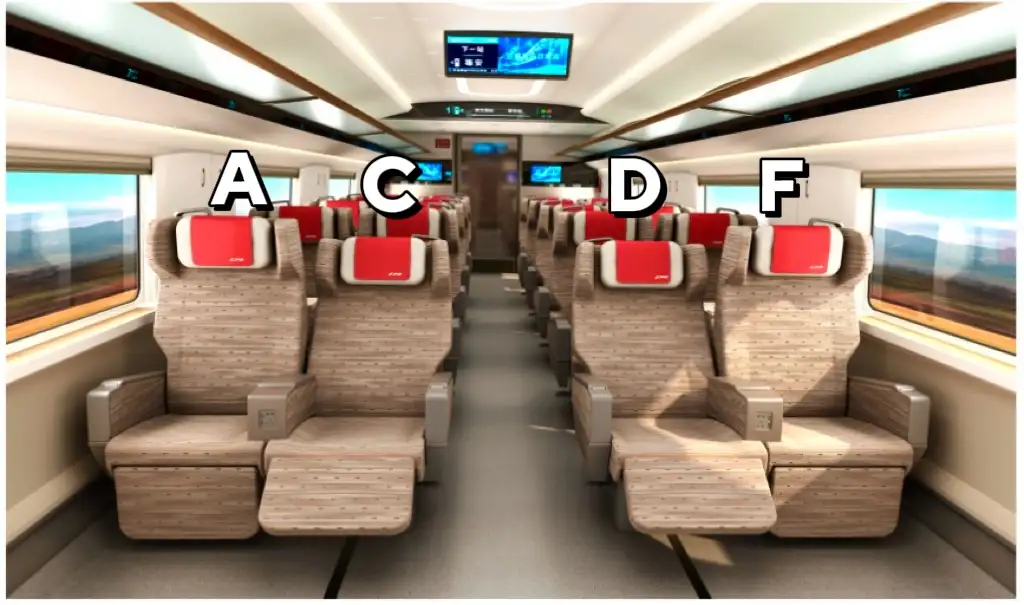
First Class is a good middle option between Business Class and Second Class. It is more spacious than Second Class but usually much cheaper than Business Class.
- Seat layout: Usually 2-2 seats per row, with no middle seat.
- Comfort: Seats are wider and softer than Second Class, with more space to stretch your legs.
- Facilities: Most seats have a fold-out table and a power socket, useful for charging your phone, laptop, or power bank.
- Cabin feel: The cabin is usually quieter and less crowded compared with Second Class.
- Best for: Couples, families, and travelers who want extra comfort without spending too much.
First Class is worth considering for trips longer than 3 hours, especially if you want a more relaxed ride.
3. Second Class, The Budget-Friendly Standard
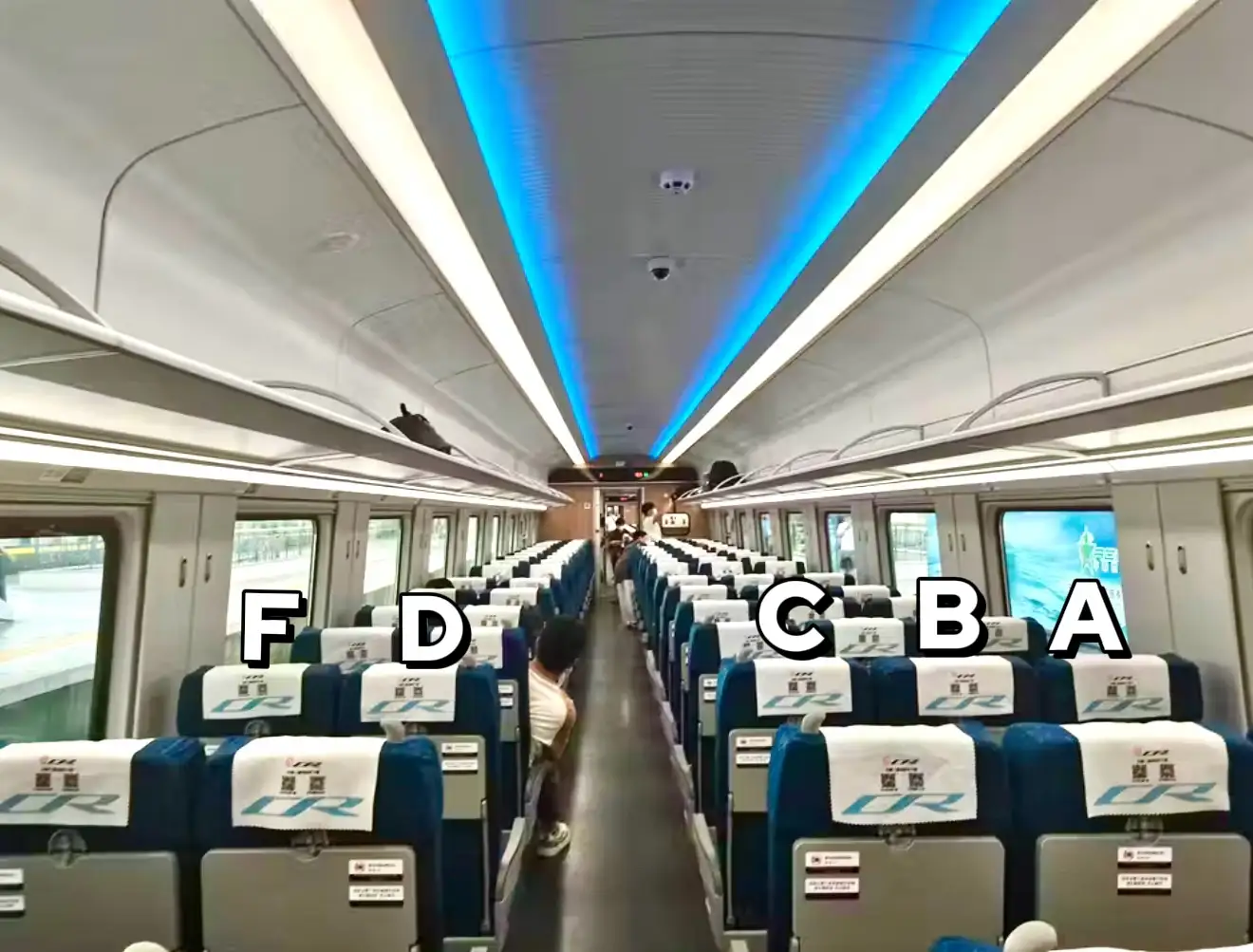
Second Class is the most common and affordable seat on China high-speed trains. It is available on almost all G, D, and C trains, making it the easiest option to book.
- Seat layout: Usually 3-2 seats per row, which means there are middle seats.
- Comfort: Seats are simple but still comfortable enough for short and medium-distance trips.
- Facilities: Most trains have a small tray table and power outlets, though the socket location may vary. You can check under the seat or near the armrest.
- Cabin feel: It can be busy, especially during weekends, school breaks, and Chinese public holidays.
- Best for: Solo travelers, budget travelers, and anyone who wants a fast and practical ride.
Second Class is usually enough for short trips like Shanghai to Hangzhou, Guangzhou to Shenzhen, or Beijing to Tianjin.
Explore More Flights to China


China Train Classes, Differences and Facilities
China trains are easy to use once you understand the train letters and seat classes. For Filipino travelers, high-speed trains are best for comfort and speed, while regular trains are better for budget or overnight trips.
High-Speed Train Seat Classes: G, D, C
Seat Class | Layout | Best For |
|---|---|---|
Business Class | Usually 1-2 | Long trips, privacy, extra comfort |
First Class | 2-2 | More space and legroom |
Second Class | 3-2 | Budget-friendly and practical |
Regular Train Seat Classes: Z, T, K
Seat Class | Key Point | Best For |
|---|---|---|
Hard Seat | Cheapest but less comfortable | Short budget trips |
Soft Seat | More comfortable than Hard Seat | Short or medium trips |
Hard Sleeper | 6 bunks in an open area | Budget overnight trips |
Soft Sleeper | 4 bunks in a compartment | Overnight trips with more privacy |
Deluxe Sleeper | 2 bunks in a private room | More comfortable overnight travel |
China Train Facilities
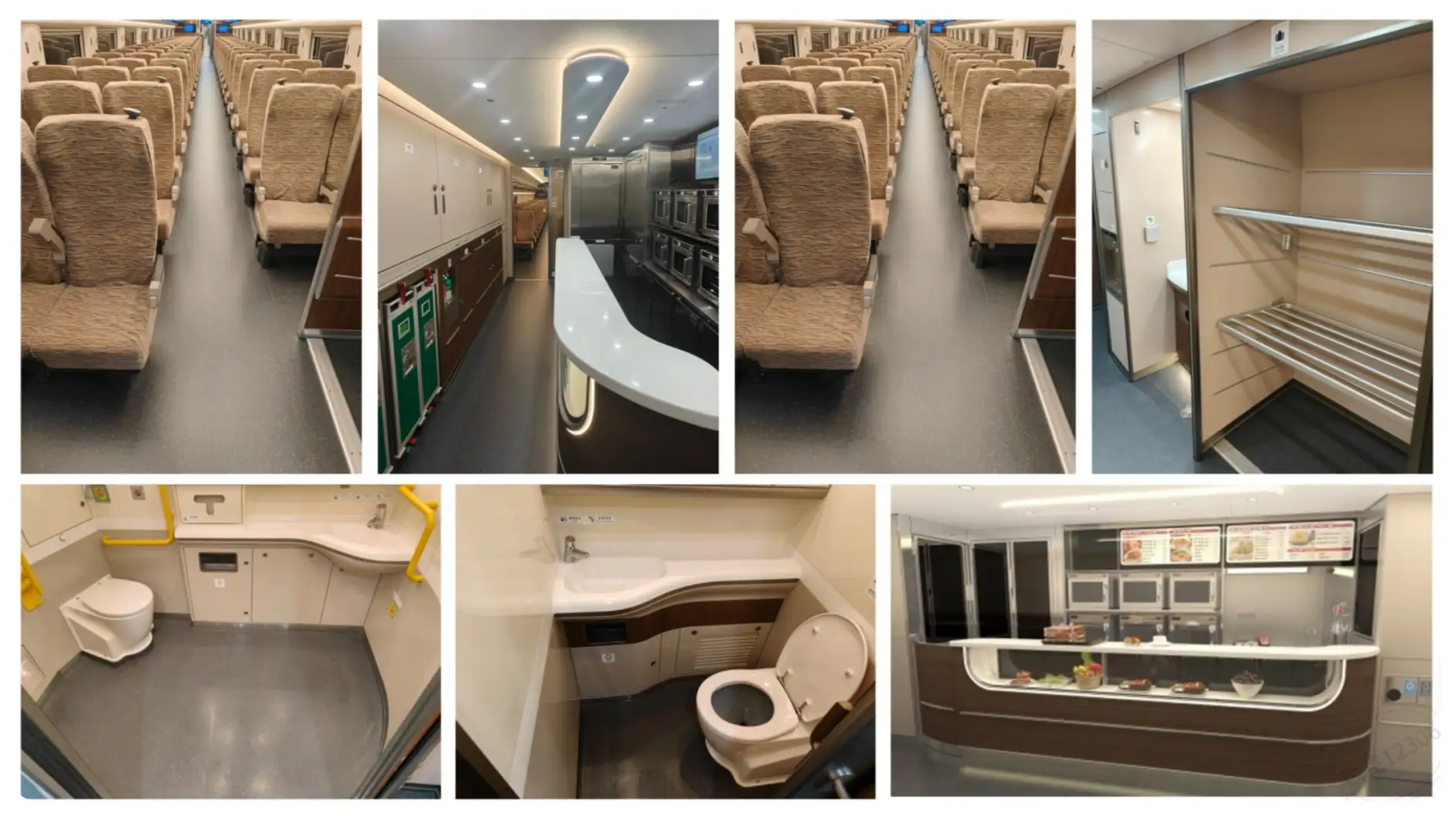
High-speed trains usually have toilets, hot water dispensers, snack carts, luggage racks, and power outlets. Some trains may have Wi-Fi, but it is not always stable.
Regular trains are more basic. Toilets may be squat-style, food choices can be limited, and power outlets may not always be available. Bring tissue, wet wipes, snacks, and a power bank.
Find the Best Hotels in China
 NO.1
NO.1












How to Choose China Train Seats & Types
Choosing a China train depends on your travel time, budget, and comfort level.
How to Choose China Train Types
- G Trains: Best for fast long-distance trips, such as Beijing to Shanghai.
- D Trains: Good for regional trips and some overnight routes.
- C Trains: Best for short intercity trips, such as Beijing to Tianjin.
- Z, T, K Trains: Better for budget or overnight trips.
How to Choose China Train Seats
If You Want | Best Choice |
|---|---|
Fast and comfortable travel | G, D, or C train |
Lowest price | Second Class or Hard Seat |
More space | First Class |
Best comfort | Business Class |
Overnight budget trip | Hard Sleeper |
Overnight trip with privacy | Soft Sleeper |
Simple recommendation: For most Filipino travelers, choose Second Class on G, D, or C trains for short and medium trips. For overnight regular trains, choose Soft Sleeper if you want better rest.
How to Book China Train Tickets with Trip.com
Filipino travelers can book China train tickets through Trip.com China Train because it is in English and accepts foreign passports.
Step 1: Open Trip.com Trains
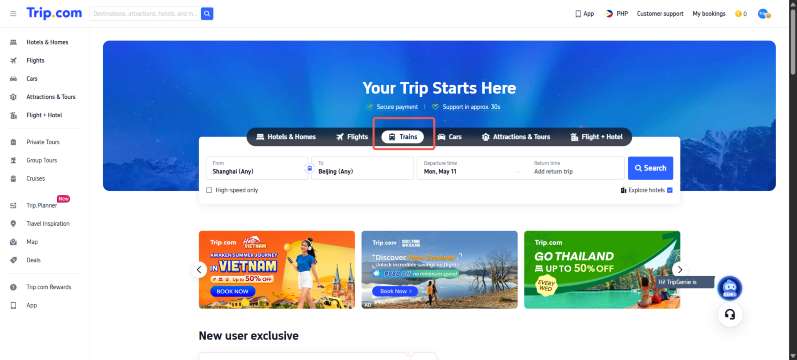
Go to the Trip.com app or website and choose Trains.
Step 2: Search Your Route
Enter your departure city, arrival city, travel date, and number of passengers.
Step 3: Choose Your Train
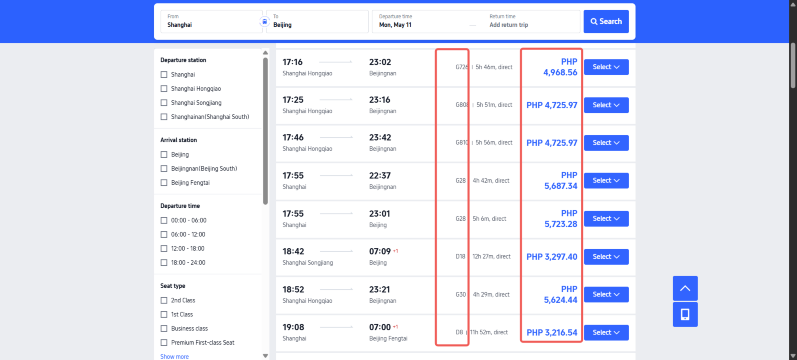
Pick your train type based on your travel plan:
- G, D, C trains: Faster high-speed trains
- Z, T, K trains: Cheaper regular trains, better for budget or overnight trips
Step 4: Select Your Seat Class
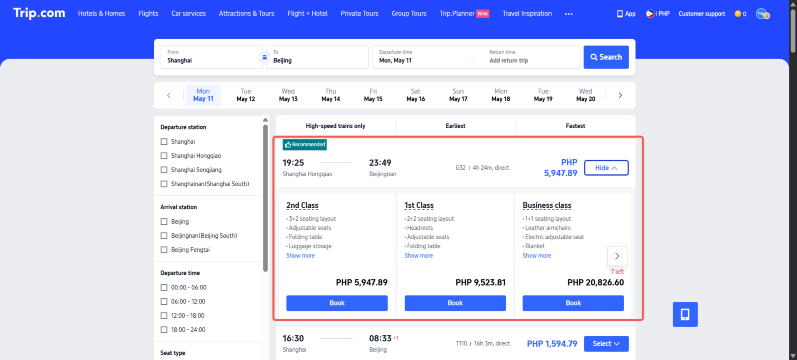
Choose your seat class. For most Filipino travelers, Second Class is already clean, comfortable, and budget-friendly.
Step 5: Enter Passport Details
Type your full name and passport number exactly as shown on your passport. Do not use nicknames.
Step 6: Select Your Preferred Seat
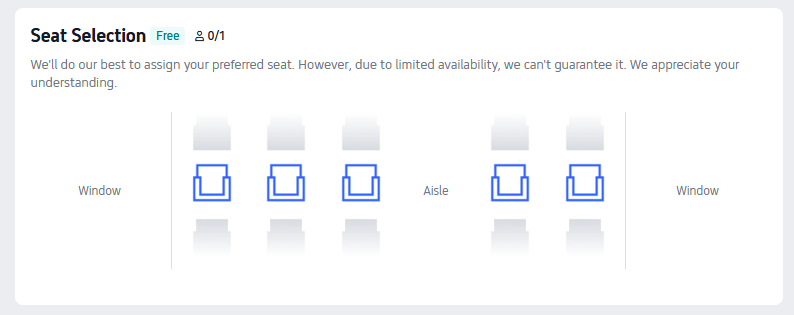
After entering your passport details, you can choose your preferred seat. Seat selection is usually free, but it is not 100% guaranteed because it depends on availability. Trip.com will do its best to assign the seat you picked.
For example, you can choose:
- Window seat if you want a better view
- Aisle seat if you want easier access
- Seats close to your travel companion, if available
Step 7: Pay Online
Pay using Visa, Mastercard, GCash, or other available payment methods.
Step 8: Check Your E-Ticket
After booking, check your confirmation in your email or Trip.com app.
Step 9: Bring Your Passport to the Station
At the train station, use your original passport for entry and boarding. China mostly uses e-tickets, so you usually do not need a paper ticket.
Pinoy tip: Arrive at least 1 hour early because China train stations are big and security checks can take time.
Tips for China Train Seat Selection
- Know the seat letters: On most China high-speed trains, A and F are window seats, C and D are aisle seats, and B is the middle seat in Second Class.
- Choose a window seat if you want better views during the trip.
- Choose an aisle seat if you want easier access to the toilet, luggage area, or train aisle.
- Second Class is enough for most Filipino travelers. It is clean, comfortable, and more budget-friendly.
- Upgrade if you need more space: First Class has more legroom, while Business Class is best for extra comfort.
- Seat selection is free but not guaranteed: Trip.com will try to assign your preferred seat, but it still depends on availability.
- Book early if you travel with family or friends, so you have a better chance of sitting together.
- Avoid “No Seat” tickets for long trips because it means you can board, but you may need to stand.
Recommended eSIMs Options for China

![[Mainland China] 5G | eSIM Internet Card | China Mobile CMLink | 3-15 days optional | Ready to use | Hotspot supported | QR Code](https://ak-d.tripcdn.com/images//0580j12000n1ddzf21240_C_568_320.jpg)
China Train Travel Reminders
1. Use the Manual Lane
Foreign passports may not always work at the automatic gates. Look for the Manual Lane and show your original passport to the staff.
2. Prepare for Security Checks
China train stations have X-ray checks, similar to airports.
Avoid bringing:
- Pocket knives
- Large aerosol cans
- Flammable items
- Restricted items
Small bags can go on the overhead rack. Bigger luggage can be placed near the carriage doors.
3. Bring Tissue and Wet Wipes
High-speed trains are usually clean, but toilets may not always have tissue. Bring tissue, wet wipes, and hand sanitizer, especially for long trips.
Pinoy tip: Keep your passport, phone, and ticket confirmation easy to reach because you may need them several times inside the station.
FAQs about China High-Speed Train Seat Map
-
Are you allowed to rotate seats in China trains?
-
What happens if I miss my train in China?
-
Can I sit in first class if the China train is full?
-
Do you need a passport to go on the train in China?
-
Can you bring water on a train in China?
-
Can I use a credit card to buy a train ticket in China?
-
Can I choose a specific seat when booking on Trip.com?