Japan Taxi Guide: Fares, Apps & Easy Ride Tips

Taking a taxi in Japan is convenient when you have heavy luggage, are traveling with children or elderly family members, or need to reach a place far from the train station. This guide covers Japan taxi fares, booking apps, payment options, and simple tips to help Filipino travelers ride with confidence.
Why Take a Taxi in Japan?
Japan has one of the best public transport systems in the world, but taxis are still useful in many travel situations.
Consider taking a taxi when you are:
- Carrying large luggage
- Traveling with children or elderly family members
- Arriving after the last train
- Going to a hotel far from the station
- Visiting rural areas with limited buses or trains
- Traveling in a group and splitting the fare
- Heading to the airport early in the morning
- Traveling during heavy rain or snow
Taxis are easy to find in major cities such as Tokyo, Osaka, Kyoto, Fukuoka, Sapporo, Nagoya, and Naha. You can take one from a taxi stand, flag one down on the street, or book through an app.
Unlock the Best Flights to Japan


How to Spot a Legal Taxi in Japan
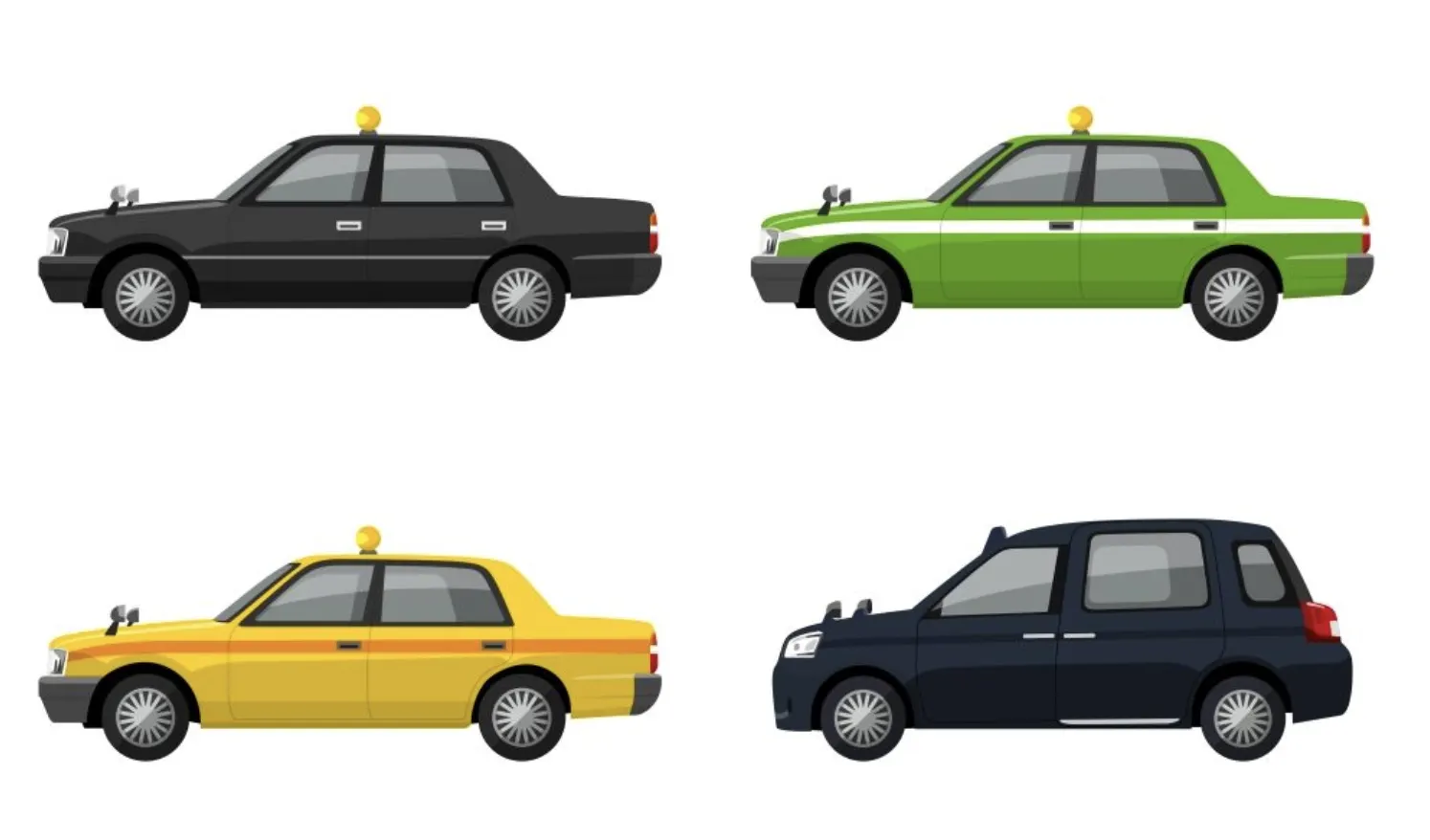
Before taking a taxi in Japan, make sure it is a licensed taxi. Illegal, unlicensed taxis are often called shiro-taku or “white taxis” because they use private vehicle white license plates.
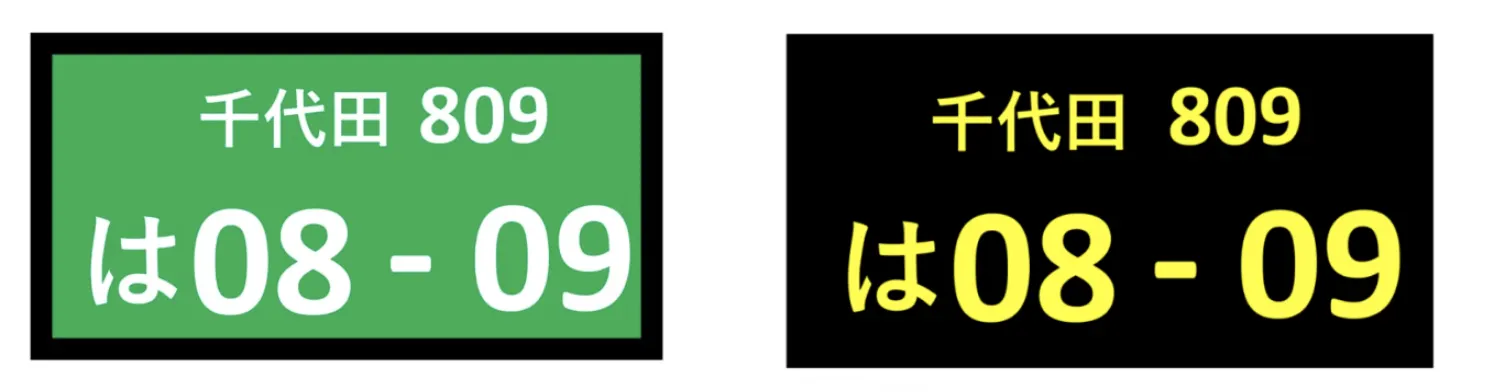
Legal taxis usually have a green license plate with white characters. Some smaller commercial vehicles, such as certain light vehicles, may have a black plate with yellow characters.
Avoid paid rides from private cars with a white license plate, especially if someone offers you a cheap fixed-rate ride outside airports, train stations, or tourist spots. These cars may not have proper commercial insurance, which can be risky if an accident happens.
Filipino travelers should also check for:
- Taxi roof light or company sign
- Taxi meter inside the car
- Official taxi queue at airports or stations
- Booking through trusted apps like GO, Uber, Grab, DiDi, or S.RIDE
- Assistance from hotel concierge or official airport taxi counters
Note: In Okinawa, you may occasionally see legal local vehicles with yellow plates, especially for smaller vehicle categories. However, the green license plate remains the easiest and safest sign of a legal taxi in major areas like Tokyo, Osaka, Kyoto, and most of mainland Japan.
Tip: If the vehicle looks like a private car and has a white plate, do not ride. Use an official taxi stand or book through a trusted app instead.
Types of Taxi Services in Japan
Filipino travelers can choose from different taxi services depending on location, luggage, group size, and budget.
Regular Metered Taxis
Regular taxis are easy to find outside airports, train stations, hotels, malls, and tourist spots. They charge by meter, and the final fare depends on distance, travel time, traffic, and local taxi rates.
Most regular taxis can carry up to four passengers, but large luggage may reduce the available space.
App-Booked Taxis
Taxi apps are helpful if you do not speak Japanese because you can enter your pickup point and destination in advance.
Popular taxi apps in Japan include:
- GO
- Uber
- Grab
- DiDi
- S.RIDE
Apps may show the estimated fare, taxi location, car number, and payment options. Some bookings may include extra pickup or service fees.
Airport Transfer Taxis
Airport transfer taxis can be booked in advance for direct rides between the airport and your hotel.
They are useful for:
- Early morning or late-night flights
- Families with several bags
- Groups needing a bigger vehicle
- Travelers who prefer a fixed fare
- Passengers who want a direct hotel transfer
NearMe Airport provides shared and private transfers at selected airports, including Haneda, Narita, Kansai, Itami, New Chitose, Chubu Centrair, and Fukuoka. Service areas can change, so check the app or official booking page before your trip.
Sightseeing Taxis
Some cities offer sightseeing taxis for several hours. The driver follows a planned route and brings passengers to different attractions.
They are useful in places with limited public transport, such as parts of Kyoto, Hokkaido, Okinawa, and rural Japan. English-speaking drivers may be available in selected areas, but advance booking is recommended.
Japan Taxi Fares
Taxi fares in Japan vary by city, taxi company, vehicle type, and time of day. For simple budgeting, you can use around ¥100 = ₱37 to ₱38, but exchange rates change, so check your banking app for the live rate.
| Area | Approximate Starting Fare | Quick PHP Estimate |
|---|---|---|
Tokyo 23 wards, Musashino, Mitaka | ¥500 for the first 1.0 km | Around ₱185 to ₱190 |
Osaka City area | Around ¥600 for the first 1.3 km | Around ₱222 to ₱228 |
Kyoto | Around ¥500 to ¥700 for the first 1 to 2 km | Around ₱185 to ₱266 |
Fukuoka | Around ¥600 to ¥750 for the first 1 to 2 km | Around ₱222 to ₱285 |
Sapporo | Around ¥600 to ¥750 for the first 1 to 2 km | Around ₱222 to ₱285 |
Okinawa | Around ¥550 to ¥700 for the first 1 to 2 km | Around ₱204 to ₱266 |
The final fare depends on distance, traffic, waiting time, route, local rates, and extra charges. For the most accurate estimate, check a taxi app or local taxi fare calculator before riding.
Extra Taxi Charges in Japan
Japan taxi fares are not only based on distance. Extra charges may apply depending on your ride.
- Late-night surcharge: Most major cities add around 20% from 10:00 PM to 5:00 AM. Some areas may have slightly different rules.
- Traffic and waiting time: The meter may increase when the taxi is moving slowly or stopped in traffic.
- Pickup fee: App bookings or phone bookings may add a pickup fee.
- App service fee: Some apps may charge an extra booking or service fee.
- Tolls and parking: Expressway tolls, airport fees, and parking charges are usually paid by the passenger.
How to Take a Taxi in Japan
1. Use a Taxi Stand
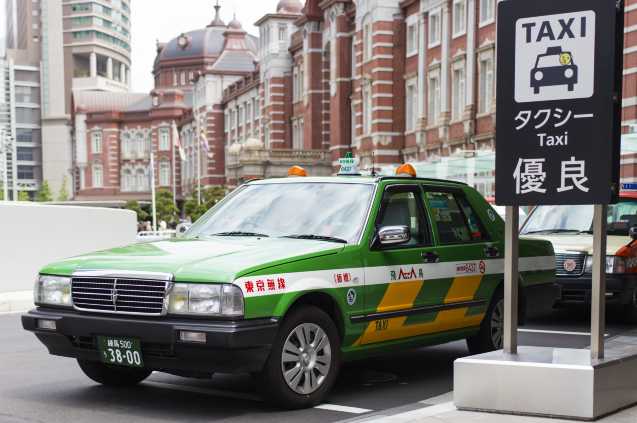
Taxi stands are commonly found outside:
- Airports
- Major train stations
- Hotels
- Shopping centers
- Tourist attractions
- Entertainment districts
Join the queue and take the first available taxi. Avoid choosing a different car farther back in the line unless staff direct you to it.
2. Hail a Taxi on the Street
Stand in a safe place where the taxi can stop without blocking traffic. Raise your hand when you see an available taxi.
Check the sign displayed near the windshield.
Japanese Sign | Meaning | Can You Take It? |
|---|---|---|
空車 | Available taxi | Yes |
割増 | Available with late-night surcharge | Yes, but night rates apply |
賃走 | Carrying a passenger | No |
予約車 | Reserved | No |
迎車 | Picking up another passenger | No |
回送 | Out of service | No |
Tip: If you see 割増, the taxi is usually available, but late-night rates apply.
The exact display style may differ between taxi companies.
3. Book Through an App
Taxi apps are often the easiest choice for first-time visitors.
Enter your pickup point and destination, select a ride option, check the estimated fare, and confirm the booking. Make sure the taxi’s plate number or vehicle number matches the information in the app.
Find the Best Hotels in Japan
 NO.1
NO.1













































Best Japan Taxi Apps for Filipino Travelers
GO Taxi

GO is one of the most useful taxi apps in Japan. It has wide service coverage across Japan and is available in all 47 prefectures, but exact pickup availability can still vary by area, road location, taxi supply, and time of day.
It is a good choice for Filipino travelers because it offers an English-friendly interface and accepts selected international credit cards and Apple Pay.
Why GO is useful:
- Wide service coverage across Japan
- English-friendly interface
- International card support
- Pickup and destination entered in advance
- Vehicle and booking details shown in the app
- Estimated fare available for many trips
- Advance reservation available in selected areas
Additional pickup and app fees may apply. Review the complete price breakdown before booking.
Best for: Travelers visiting several Japanese cities.
Grab

Filipino travelers may be able to use their existing Grab account to request local taxis in selected Japanese cities.
Open the Transport section after arriving in Japan and check whether the service is available in your location.
Why Grab is useful:
- Familiar app for Filipino travelers
- No need to learn a completely new interface
- Destination can be entered in English
- Ride and payment information shown in the app
Coverage is more limited than GO, so prepare another taxi app as backup.
Best for: Filipinos who already have an active Grab account.
Uber

Uber works with licensed taxi operators and other approved transport providers in several Japanese cities.
The app is available in major destinations such as Tokyo, Osaka, Kyoto, Fukuoka, Nagoya, Hiroshima, Yokohama, and Okinawa.
Why Uber is useful:
- Familiar international app
- English-language booking
- Cashless payment
- Vehicle tracking
- Estimated or upfront pricing for eligible rides
- Advance reservations available in selected areas
Available ride types and prices depend on the city.
Best for: Travelers who already use Uber in other destinations.
DiDi

DiDi allows passengers to request local taxis in selected areas of Japan, including parts of Tokyo, Kansai, Kyushu, Hokkaido, and Okinawa.
Why DiDi is useful:
- English interface available
- Cashless payment options
- Fare estimate before booking
- Driver and vehicle information shown
- Useful when other apps have long waiting times
Coverage varies, so check whether DiDi operates at your destination before your trip.
Best for: Travelers visiting Osaka, Kyoto, Fukuoka, or Okinawa.
S.RIDE

S.RIDE is mainly useful in Tokyo and nearby urban areas.
The app allows users to request a taxi and use cashless payment. In supported taxis, passengers can also scan the QR code inside the vehicle to pay through S.RIDE WALLET.
Why S.RIDE is useful:
- English interface
- Quick taxi request
- Cashless payment
- Useful in Tokyo and nearby areas
- Can be used for some street-hailed taxis
Best for: Travelers spending most of their trip in Tokyo.
NearMe Airport

NearMe provides shared and private airport transfers between selected airports and hotels or designated pickup points.
Why NearMe is useful:
- Door-to-door airport transfer
- Shared rides may cost less than a private taxi
- Fixed pricing
- Advance booking
- Spacious vehicles for luggage
- No need to transfer between trains
Selected airport coverage includes Haneda, Narita, Kansai, Itami, New Chitose, Chubu Centrair, and Fukuoka. Availability can change, so check your exact airport and hotel area before booking.
Because shared rides may collect other passengers, travel time can be longer than a private taxi.
Best for: Airport transfers with luggage.
Japan Taxi App Comparison
Taxi App | Best For | Payment Options | Main Advantage |
|---|---|---|---|
GO | Travel across Japan | International cards, Apple Pay and other supported methods | Widest coverage |
Grab | Existing Grab users | Payment options shown in the app | Familiar to Filipinos |
Uber | Major tourist cities | In-app card payment and supported digital methods | Easy English booking |
DiDi | Selected cities and backup bookings | Card, in-app payment or other available methods | Useful alternative |
S.RIDE | Tokyo and nearby areas | S.RIDE WALLET and supported cashless payments | Convenient in Tokyo |
NearMe | Airport transfers | Online payment | Fixed-price transfer options |
Payment methods and service coverage can change. Check the latest details in the app before your ride.
How to Pay for a Taxi in Japan
Common payment methods include:
- Cash: Japanese yen is widely accepted and is the safest backup.
- Credit cards: Many city taxis accept Visa, Mastercard, JCB, and American Express.
- Digital or physical IC cards: Some taxis accept Suica, PASMO, ICOCA, and other transport cards. Tourists can use Digital Suica or PASMO on mobile wallets, or Welcome Suica physical cards.
- Mobile payments: Some taxis accept Apple Pay, Google Pay, PayPay, and other digital payments.
- In-app payment: Apps like GO, Uber, Grab, DiDi, and S.RIDE may support cashless payment.
Not all taxis accept cards or IC cards, especially outside major cities. Always carry some cash.
Japan Taxi Etiquette and Tips
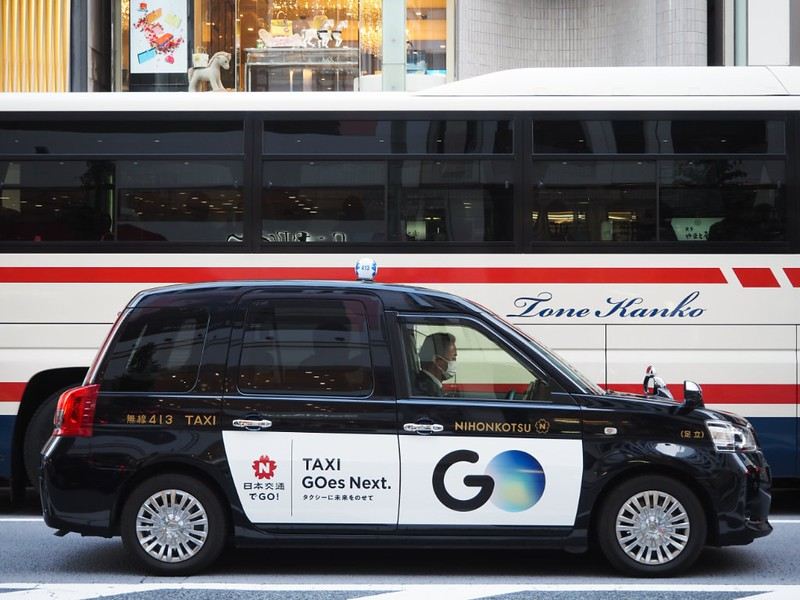
Japanese taxis are clean, quiet, and well-organized. To avoid awkward situations, Filipino travelers should follow these simple etiquette rules.
- Wait for the door to open automatically. The driver usually controls the rear passenger door, so do not pull it open or close it yourself.
- Sit properly and avoid loud conversations. Keep your voice low, especially during late-night rides or business areas.
- Show your destination clearly. Use a Japanese address, hotel booking page, or map pin so the driver can understand quickly.
- Do not eat or drink inside the taxi. Keep the car clean and avoid spilling food or drinks.
- Do not bargain with the driver. Japan taxis use regulated meters, so the fare is not negotiable.
- Do not tip. Tipping is not part of Japanese taxi culture. Just pay the amount shown on the meter or app.
- Wear your seatbelt. Back-seat passengers should also fasten their seatbelts.
- Keep your belongings together. Check your phone, wallet, passport, and bags before leaving the taxi.
- Enter and exit from the safe side. Let the driver stop properly before getting out, especially on busy streets.
- Be polite. A simple “Arigato gozaimasu” after the ride is enough.
Recommended eSIMs Options for Japan






Useful Japanese Taxi Phrases
Japanese | Pronunciation | Meaning |
|---|---|---|
ここまでお願いします | Koko made onegaishimasu | Please take me here |
この住所までお願いします | Kono jusho made onegaishimasu | Please take me to this address |
駅までお願いします | Eki made onegaishimasu | Please take me to the station |
空港までお願いします | Kuko made onegaishimasu | Please take me to the airport |
カードは使えますか? | Kado wa tsukaemasu ka? | Can I use a card? |
領収書をお願いします | Ryoshusho o onegaishimasu | May I have a receipt? |
ここで大丈夫です | Koko de daijobu desu | Here is fine |
ありがとうございます | Arigato gozaimasu | Thank you |
You can politely address the driver as untenshu-san, which means “Mr. or Ms. Driver.”
Japan Taxi Tips Filipino Travelers Must Know
- Prepare Japanese yen. Cash is still the safest backup, especially outside major cities.
- Download GO before your trip. GO is one of the most useful taxi apps in Japan, and it helps avoid language problems.
- Keep one backup app. Grab, Uber, DiDi, or S.RIDE can help if GO has no available taxis nearby.
- Check extra fees before booking. App rides may include pickup fees, service fees, tolls, or late-night charges.
- Expect higher fares at night. Most taxis add around 20% surcharge from 10:00 PM to 5:00 AM.
- Know the sign 割増. It means the taxi is available, but late-night rates apply.
- Do not open the taxi door yourself. In Japan, the driver usually opens and closes the rear door automatically.
- Show your destination in Japanese. Save your hotel name, address, or Google Maps pin to avoid confusion.
- Do not tip the driver. Tipping is not expected in Japan.
- Wear your seatbelt. Passengers in the back seat should also wear seatbelts.
- Check if cards or IC cards are accepted. Some taxis accept credit cards, Suica, PASMO, or ICOCA, but not all do.
- Keep your receipt. It can help if you forget your phone, wallet, or luggage inside the taxi.
- Use official taxi stands. At airports and train stations, follow the taxi queue and avoid unofficial ride offers.
- Avoid long rides during rush hour. Traffic can make the meter increase faster and the fare more expensive.
- Check luggage space. A regular taxi may fit four passengers, but not always four large suitcases.
FAQs About Japan Taxi
-
What is the best taxi app in Japan for Filipino travelers?
-
Can I use Grab in Japan?
-
Are taxis expensive in Japan?
-
Do Japanese taxi drivers speak English?
-
Can I pay cash for a taxi in Japan?
Popular Content
-
Featured guides
-
Trip.com links
- Mothers Day Gifts
- eSIM
- Hong Kong International Airport
- International Driving Permit
- Toronto Pearson International Airport
- Universal Studios Singapore
- Great Wall of China
- UK ETA
- Narita International Airport
- China Currency
- Changi Airport
- Schengen Visa
- Singapore MRT Map
- France Visa
- Ninoy Aquino International Airport