
Things to do in Dingnan
Explore top experiences
Top 10 attractions in Dingnan


Guanxi Xinwei Scenic Area
Guanxiwei Attraction is located in Guanxi Town, Longnan County, Jiangxi Province. It is a typical Hakka dwelling in southern Jiangxi. It consists of eight Hakka enclosures of different styles, including Guanxi Xinwei, Xichangwei, Tianxinwei, and Penggaowei. Among them, Guanxi Xinwei is a national AAAA-level tourist Attraction and a "national key cultural relic protection unit". It has a history of more than 200 years. It is known as the "Eastern Roman Castle" and "the Forbidden City scattered among the people". It is famous for its complete preservation, unique style, large scale and complete functions. It is unique in traditional Chinese ancient residential architecture. Guanxiwei Attraction is close to the stream, magnificent and well-arranged, and forms a colorful and beautiful picture with green mountains, green waters, pavilions, arch bridges and orchards.Longnan · 10.8 km from Dingnan

Chan Town
When the sorghum emits a rich and mellow aroma under the warm autumn sun, red peppers, green beans and big corns are placed on large and small winnowing baskets. The sunlight gives them warmth and dryness, and they are full of love. Qianxin Town in late autumn is a dream place that photographers have been looking for for a long time, and a place that outdoor sports enthusiasts yearn for. They hike along the scenic road full of autumn colors, see the carefully created autumn scenery, and enjoy the fireworks fun in the deep mountains. They enjoy the leisure fun like a paradise in nature, and they take practical actions to shoot and spread the rural tourism brand. Don't miss the unique “Show Your Life, Show Your Culture, Show Your Happiness” event. The opening ceremony will also feature a rural creative SHOW for you to watch, which is closely integrated with crops, farmers drying crops, farming fun and working scenes, etc., with many wonderful shows taking turns. Pick up your camera and feel their unique charm! As you can see, everyone in the town is a sunbathing person, and you can sunbathe anywhere. We invite you to enjoy the autumn colors and “sunbathe” with Qianxin Town, sharing rural stories, artistic poetry, nostalgia for the hometown, graceful dances, rural night scenes, and fun sports... Five major theme sub-activities will bloom like flowers in the tea mountains and bamboo sea.Longnan · 18.9 km from Dingnan

South Wudang Mountion
South Wudang Mountain Scenic AreaIt is located in Wudang Town, Longnan County, Ganzhou City, Jiangxi Province, straddling the border between Jiangxi and Guangdong. The main peak is 864 meters above sea level. It is a scenic spot integrating Danxia scenery and Buddhist culture.South Wudang Mountain Scenic AreaIt is a typical Danxia landform, characterized by Danxia peaks and peak forests. Ninety-nine Danxia peaks stand out from the plain, with beautiful rocks and solitary peaks standing tall and straight, like sharp swords pointing straight to the sky. The various peaks form a magnificent landscape painting, which is known as the "Ten-mile Gallery" and slowly unfolds along National Highway 105.Longnan · 36.5 km from Dingnan

Guangzhou Chimelong Tourist Resort
Guangzhou Chimelong Tourist Resort features Chimelong Safari Park, Chimelong Happy World, Guangzhou Chimelong International Circus, Chimelong Water Park, Chimelong Birds Park andChimelong Hotel, Chimelong Panda HotelAnd multiple theme parks and premium resort hotels. Chimelong Safari Park is home to the giant panda triplets "Meng, Shuai, Ku," and has successfully bred 10 surviving pandas across 7 litters to date. It also houses a koala population second only to that in Australia, as well as nearly 500 species and over 20,000 rare animals from around the world, including white tigers that account for more than half of the global population. Chimelong Happy World and Chimelong Water Park have been in operation for over 10 years, and Chimelong Water Park has received the TEA "Outstanding Achievement Award" for its innovative "Rocking Tug" ride. Chimelong Happy World and Chimelong Water Park have cultivated several well-known entertainment brands such as "Happy Halloween" and "Water Electronic Music Festival," becoming trendy landmarks for young people's leisure and entertainment. After 20 years of continuous innovation, Guangzhou Chimelong International Circus, together with Zhuhai Hengqin Chimelong International Circus, has welcomed nearly 500 circus artists from over 20 countries to perform in Guangzhou and Zhuhai, creating a "world circus stage that never stops." Chimelong Birds Park is a theme park integrating bird watching, science education, and precious wetland plants—"a place to truly see birds fly"—featuring hundreds of species and tens of thousands of rare birds and amphibians. The resort is vast in scale, with a single park typically requiring half a day to a full day to explore. For those wanting to visit multiple parks, staying at an on-site themed hotel eliminates the need for round-trip travel. Family-friendly groups often prefer the animal world and bird park, while travelers seeking thrills are better suited for the amusement park. Don't forget the water park during summer.China · Guangzhou

Yangming Heart Valley Scenic Area
Yangming Heart Valley Attraction is located in the northern suburbs of Longnan City, separated from the city by only one river. The total planned area of the Attraction is about 1,695 mu, and the first phase of the Attraction currently open covers an area of about 500 mu. The first phase of the Attraction is built according to 4A standards, with Yushixianyan as the main scenery and Yangming Xinxue as the core, focusing on Wang Yangming's "three establishments" in Longnan. At the same time, it makes full use of the advantages of Yushixianyan's rich cultural relics and strong historical events, deeply explores cultural context and scene resources, scientifically sets up scenic spots and tour lines, and creates a product system that integrates cultural experience, research and exhibition, suburban leisure and night tour, natural ecological landscape and other natural and cultural resource functions, and constructs a Yangming cultural experience tour line with a clear narrative context. The Attraction adopts the planning concept of "pan-museum" cultural display to create a cultural landscape of "Xianyan Sacred Heart·One Line and Eight Scenes", which not only shows the historical authentic, but also spreads the wisdom of Xinxue to tourists. Yangming Heart Valley Attraction has added a highly recognizable cultural landmark to the thousand-year-old city of Longnan, with extremely high tourism value.Longnan · 28.7 km from Dingnan

Canton Tower
Guangzhou Tower, a landmark of Guangzhou, stands at a towering 600 meters including its antenna, making it one of the most famous towers in China. From its top, you can enjoy a breathtaking view of Guangzhou. Its slender and elegant shape has earned it the nickname "Slim Waist." At night, the tower lights up, making it a perfect spot for photography, even if you don't go inside. The tower is divided into five functional zones from A to E. Zone A at the base showcases Guangzhou's history, culture, economy, and tourist attractions, along with providing tourist services. Zone E at the top offers dining, entertainment, and an observation deck. It's recommended to arrive at the tower by 3:30 PM, queue for security and tickets, and reach the top by 4:30-5:00 PM to catch the sunset. This schedule allows you to experience Guangzhou's panorama during the day, at dusk, and at night. In summer, adjust your visit by two hours later due to longer daylight. Visiting between 7-8 PM is ideal as the tower is less crowded. ▲Pearl River Photography Viewing Platform:Located on the 2nd floor, this platform offers a broad view along the river, perfect for capturing the city's central axis and memorable shots with the tower ▲Landmark α: Features three main thrilling activities—Cloud Walk, Sky Drop, and Alpha Exploration ▲Baiyun/Starry Sky Sightseeing Hall:Situated at 428m and 433m, these themed halls offer stunning views of Guangzhou's new central axis and the Pearl River under blue skies and starry nights ▲Science Exploration Hall: On the 109th and 110th floors, this hall reveals how the 600-meter tower withstands strong winds and earthquakes ▲460m Bubble Tram:With 16 transparent cabins, each holding six visitors, a full rotation takes about 20 minutes. Enjoy the romantic starry sky and the feeling of timeless beauty from above ▲488m Outdoor Observation Deck: At the antenna mast, this is the highest point accessible to visitors, offering a 360-degree unobstructed view of Guangzhou ▲480m Sky Drop: Located between 455-485m on the antenna mast, this thrilling ride includes both seated and free-fall experiences, perfect for those seeking an extreme high-altitude challengeChina · Guangzhou

Window of the World
Window of the World in Shenzhen lives up to its name as a theme park showcasing world-famous attractions through miniature replicas. Additionally, it features cultural performances from around the globe, including Japanese tea ceremonies and African dance shows, awaiting your enjoyment. The attraction is divided into world square, Asia zone, Oceania zone, Europe zone, Africa zone, America zone, sculpture garden and international street based on global geographical structure and sightseeing activities. The general visiting route is world square (entrance) - Asia area - Oceania area - Africa area - Americas area - Europe area - sculpture garden area - international street area - world square (exit). You can take photos of various architectural structures while selecting performances that interest you to watch. World square The main attraction is the variety of styled gates and relief walls, which serve as the entrance to Window of the World in Shenzhen, marking the start of the journey. Most visitors begin their itinerary at the Zhonghua Gate, designed to resemble the gate of Yonghe Temple in China. Asia, Oceania, Europe, Africa, Americas In these different park areas, you can see world-famous landmarks replicated at various scales like 1:1, 1:5, and 1:15, such as Thailand's grand palace, India's taj mahal, Sydney opera house, Paris' arc de triomphe, leaning tower of pisa, Egypt's pyramids, temple of amun, Cambodia's angkor wat, and the grand canyon. The replicas are incredibly lifelike. Here, you'll find miniature versions of numerous renowned sights. It's a small world perfect for photography and helps you discover sceneries from around the globe. If any place catches your interest, why not plan next year's trip to experience the real thing? Here you can also enjoy cultural performances from around the world, which you may choose to watch. Performance schedules are available on the official website. Please note that some shows require an extra charge, and other paid services within the park can also be checked on the official website. International street Similar to places where you eat and buy souvenirs in general amusement parks, you can taste international cuisine like German beer and Hawaiian ice cream, as well as purchase handicrafts from various countries.China · Shenzhen

Gaoyiling Tourist Area
Gaoyiling Tourist Area lies on the border between Qiaokou Town, Suxian District, Chenzhou City and Zixing City, Hunan Province. It is adjacent to Feitian Mountain and connects with Bian River in Yongxing County. It is near Dongjiang Lake, a famous scenic spot. Gaoyiling has mountain forest with picturesque scenery and large areas of forest. It has unique landscape with of bodies of water, red rocks and turquoise lakes.China · Chenzhou

Pearl River Night Cruise
The Pearl River, including the Dongjiang, Xijiang, and Beijiang tributaries, converges in the Guangzhou section. At night, the water is crystal clear, adorned with dazzling lights, creating a charming scenery. Taking a night cruise on the Pearl River allows you to admire the beautiful landscapes of the Pearl River's heart, Canton Tower, and the autumn moon over the Pearl River. You can also see cultural and historical landmarks such as the Southern Building, Aiqun Building, Guangzhou Hotel, Huaxia Hotel, Jiangwan Hotel, Ersha Haizhu Square Garden, and Shamian's Western-style buildings. The customs and traditions of Guangzhou are right before your eyes.China · Guangzhou

Liyuanwei Scenic Area
Liyuanwei Scenic Area is located in Longnan, Ganzhou, Jiangxi Province. This historic Hakka walled village covers over 45,000 square meters and was first built in 1501. Famous for its Bagua (Eight Trigrams) layout, the compound features farming and cultural recreation areas that showcase Hakka lifestyle. As a AAA-rated tourist attraction, Liyuanwei draws visitors with its unique architectural style and rich cultural heritage, making it an excellent destination to explore Hakka culture.Longnan · 20.8 km from Dingnan
Experiences you can't miss in Dingnan
Featured Day tours in Dingnan
View all Day tours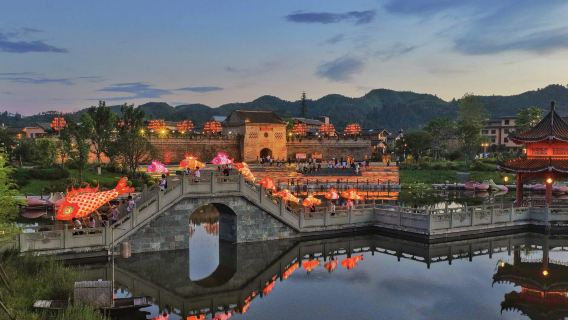
5% off
Limited-time sale
FromCAD 325.58CAD 342.72
5% off
Limited-time sale
FromCAD 325.58CAD 342.72

5% off
Limited-time sale
FromCAD 275.89CAD 290.42
5% off
Limited-time sale
FromCAD 325.58CAD 342.72
Free things to do in Dingnan
Guanxi Xinwei Scenic Area
Longnan · 10.8 km from DingnanImmediate access, Book now for today, Cancel anytimeChan Town
Longnan · 18.9 km from DingnanImmediate access, Book now for today, Cancel anytimeSouth Wudang Mountion
Longnan · 36.5 km from DingnanImmediate access, Book now for today, Cancel anytimeGuangzhou Chimelong Tourist Resort
China · GuangzhouImmediate access, Book now for todayYangming Heart Valley Scenic Area
Longnan · 28.7 km from DingnanBook now for tomorrow, Cancel anytimeCanton Tower
China · GuangzhouImmediate access, Book now for today, Cancel anytimeWindow of the World
China · ShenzhenImmediate access, Book now for today, Cancel anytimeGaoyiling Tourist Area
China · ChenzhouBook now for today, Cancel anytimePearl River Night Cruise
China · GuangzhouImmediate access, Book now for todayLiyuanwei Scenic Area
Longnan · 20.8 km from Dingnan
What travelers say about Dingnan

LUYIQU…August 10, 2026
4.0
Guansiwei Hakka Tulou is a relatively niche tourist attraction, somewhat similar to the Tulou in Fujian. It's not crowded, but the scenery is indeed quite nice. While not particularly spectacular, I think it would be a good choice for a long-stay stay. It really could be better promoted!
Guanxi Xinwei Scenic Area

Anonymous userNovember 11, 2025
5.0
This trip to Laojun Mountain was perfect. The bus was comfortable, and the tour guide was both funny and professional. Reaching the Golden Summit, the Taoist temples were majestic, bathed in the glow of the setting sun, giving a profound sense of the vastness of the world. It was definitely worth the trip.
Chan Town

红艳_29September 25, 2026
5.0
Longnan Wudang Mountain, with an altitude of over 500 meters, has a sightseeing ladder that leads directly up the mountain, making it friendly for the elderly and those who prefer a leisurely pace. If you want to experience the climb, it takes about 3 hours round trip, which is manageable.
You'll pass by Tuntian Cave (Figure 7), a natural stone gate, and walk along the cliffside glass walkway – perfect for taking photos.
South Wudang Mountion

_We***98October 8, 2026
5.0
We entered from the South Gate. Although there were many people, it wasn't chaotic at all. The signs were very clear, and the staff were very responsible. It was a very enjoyable trip for the kids; Guangzhou is beautiful and delicious. It was our first time seeing a rhinoceros and our first time riding a cable car—a great experience!
Guangzhou Chimelong Tourist Resort

一只爱玩的山羊September 13, 2026
5.0
Located only a ten-minute drive from Longnan city, the scenic area is relatively small and less crowded. Yuxu Cave and Yangming Pavilion are particularly nice and worth a visit. The view from Yangming Pavilion is excellent, and on the way down, you'll pass a mineral lake, perfect for taking photos. There are also several indoor venues nearby.
Yangming Heart Valley Scenic Area
Anonymous userOctober 12, 2026
4.0
We brought our family to visit the Canton Tower, and everyone was very satisfied. The scenic area was well-organized, the staff were patient and helpful, and the security check and tower climbing processes were orderly. The observation deck offered a wide view, making it easy for both the elderly and children to explore without long walks. From the top, you could enjoy panoramic views of both sides of the Pearl River, where the river breeze, skyscrapers, and the ancient tower blended seamlessly with the new city. At night, the lights were dazzling, and every snapshot looked like a masterpiece, making it a perfect place for the whole family to experience the charm of Guangzhou.
Canton Tower

205***10October 8, 2026
5.0
I visited 20 years ago, and it's still so much fun now. The park is well-maintained, all the miniature landscapes are beautiful, and there aren't too many tourists. They've also added many NPCs to interact with visitors, handing out cards that you can collect to exchange for prizes. There are also some free rides, a haunted house, a 4D movie—it has everything you could want. You could easily spend a whole day there and still not have enough.
Window of the World

M55***58October 13, 2026
5.0
Gaoyiling in Chenzhou is definitely worth a special trip! The unique Danxia landform is breathtaking, with red cliffs paired with emerald lakes—a masterpiece of nature. The Longjibei (Dragon's Backbone) is a must-visit; hiking along the ridge offers expansive views, and the Giant Lizard Lake is stunning—every snapshot is a masterpiece, no filters needed. The scenic trails are well-maintained, clearly marked, and have rest areas along the way. You can enjoy the thrill of hiking in the mountains while admiring the magnificent scenery—a thrilling yet therapeutic experience. The staff is attentive, and the facilities are comprehensive. It's perfect for outdoor enthusiasts and photography lovers; a must-do when visiting Chenzhou—highly recommended!
Gaoyiling Tourist Area
Anonymous userOctober 10, 2026
5.0
Cruise is comfortable and clean but view is okay. Entertainment onboard too
Pearl River Night Cruise

135***16May 23, 2025
4.0
Liyuanwei is a Hakka walled house in Longnan City, located in Xinyuan Village, Liren Town, Longnan City, Jiangxi Province. Because there were hundreds of acres of chestnut trees planted near the walled house in ancient times, it is also called Lishuwei. Liyuanwei was built in the 14th year of Hongzhi in the Ming Dynasty, covering an area of 45,330 square meters. It is the largest existing village-type Hakka walled house in southern Jiangxi.
The walled house has a large scale, scientific and reasonable functional layout, and complete living facilities. According to the layout of Yin and Yang Bagua, there are gates in the four directions of southeast, northwest, and northeast, so it is also called "Baguawei". The perimeter of the walled house is 789 meters, with 12 turrets in the four corners and hundreds of blast holes along the wall. The walled house is divided into residential area and fishing and farming area. There are three ponds and a school in the fishing and farming area. The main building layout in the wall is centered on "one ancestral hall and three halls", namely Ji Jin's ancestral hall, Lishuxia Hall, Longxiang Hall, and Xinzaoxia Hall. There are 8 residential areas built to the north, with a total of more than 400 houses. There are three connected ponds in front of Ji Jin's ancestral hall, covering an area of about 2,000 square meters.
The ancient Liyuanwei is a county-level cultural relic protection unit and a 4A-level rural tourist spot in Jiangxi Province.
Liyuanwei Scenic Area


