
Things to do in Jiangxi
Explore top experiences
Top 10 attractions in Jiangxi


Wangxian Valley
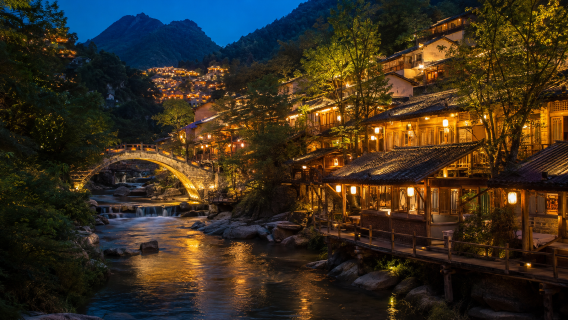
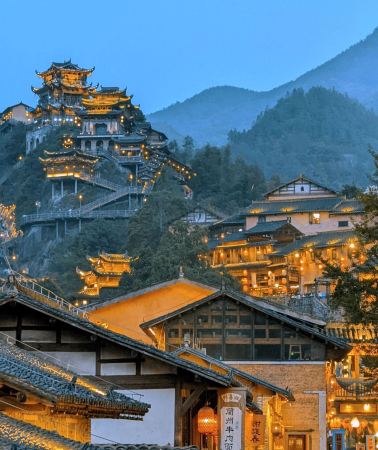
Vagoo is located in Wangxian Township, Guangxin District, Shangrao City, Jiangxi Province. It is a national AAAA-level scenic spot. It belongs to the Lingshan Mountains, just at the foot of the seventy-two peaks of Lingshan. The valley is remote and quiet, the stream is jubilant, and the pebbles are flying waterfalls. There are rammed earth walls, bluestone roads, yellow walls and black tiles, and original village houses unique to Jiangxi folk houses; there are also pines and bamboo seas and the unique Ganjia market. In the Vagoo, you can enjoy the folk customs, landscape and humanities of the Gan family, experience the long farming culture of our country, taste delicious food, and live a slow life for a few days. It is a good place for leisure, vacation, and parent-child study.China · Shangrao

Wuyuan Huangling Scenic Area
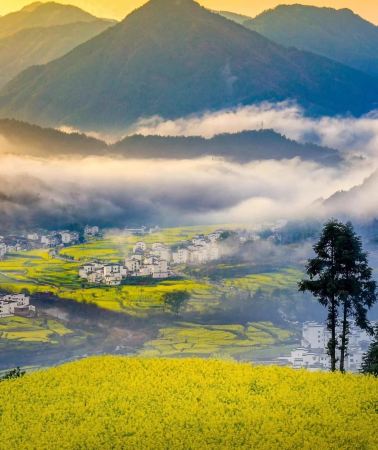
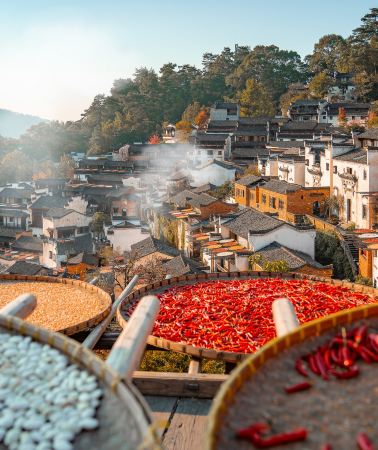
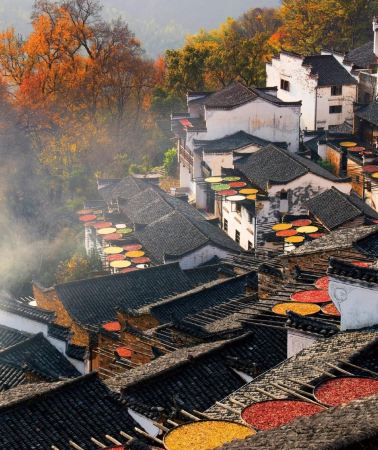
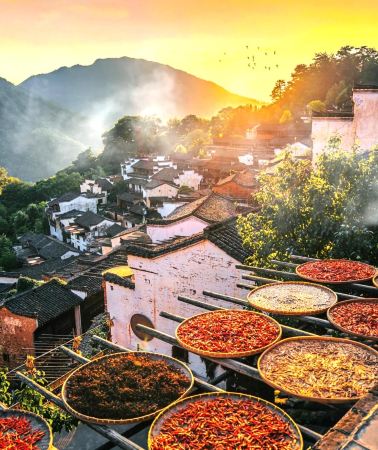
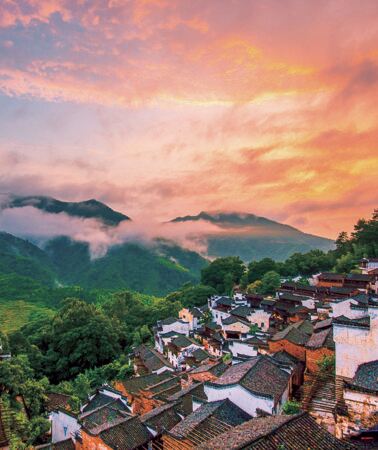
Huangling Ancient Village is a typical mountain village, Souvenir by thousands of ancient trees and tens of thousands of acres of terraced fields, creating a idyllic mountain life like a paradise. It has a beautiful natural environment and rich history and culture. It is a famous historical and cultural village in ancient Huizhou. The ancient village of Huangling hangs on the cliff, and the ground is not flat for three feet. For hundreds of years, the villagers have been accustomed to "communicating" with the rugged terrain with a peaceful mentality, painting a picture of "people drying their crops in the sun in autumn". In March, rapeflowers are in full bloom on tens of thousands of acres of terraced fields in Huangling, dotted with pink peach blossoms and snow-white pear blossoms, forming a beautiful ink painting. Here, you can become one with nature and have close contact with the sea of flowers. At the end of March, the second phase of Huangrapeling Gaoling Terraced Fields Flower Sea came online. Due to the large altitude difference, low temperature, and late-maturing rapeseed varieties, the flowering period is relatively late, and the second phase of the flower sea can last until mid-April. Come to Huangling in summer and start a wonderful summer night trip. Take a look at the night view of the ancient village, feel the sunset glow of Huangling, the lights of thousands of houses, walk on the country road with the dancing and circling 100-meter-long dragon, stroll in the quaint streets with a lantern, feel the romance of the magic forest, watch a retro old movie at the entrance of the village, and visit the cool market in the countryside. As soon as the beginning of autumn arrives, the ancient village of Huangling becomes a drying field. Come to the people who dry autumn leaves to admire the red maple leaves, enjoy the autumn leaves drying on the roof, the maple forest is dyed red, experience the folk customs, hand-cranked windmills, pumpkin traps, etc., and feel the nostalgic charm of the people who dry autumn leaves. In winter, every household in Huangling is busy drying and processing traditional local specialties for New Year's goods. The roofs are full of preserved meat customs, "drying" folk customs and "celebrating" the harvest, which means a bumper harvest in the New Year. With the arrival of the Winter Solstice, the Huangling Folk Culture Festival begins and lasts until the Lantern Festival next year. Here, you can listen to operas, visit the market, taste food, and taste the folk customs of the New Year; bask in the warm sun, cook tea around the stove, enjoy the elegant winter things, invite family and friends to take a health-preserving warm soup, and enjoy a winter-limited snow scene. In Huangling, you can enjoy the beautiful rural scenery and experience the modern urban life. You can see the exquisite and simple Huizhou century-old houses as well as the fashion and elegance of star-rated hotels. In Huangling, tourists can not only taste authentic folk snacks such as steamed cakes, Qingming fruit, gray juice fruit, etc., but also participate in the whole process of making folk snacks and handicrafts.China · Wuyuan

Tengwang Pavilion Tourist Area
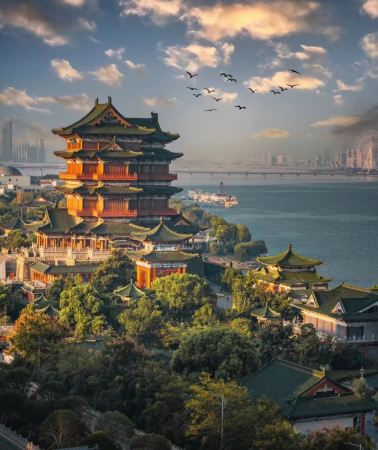
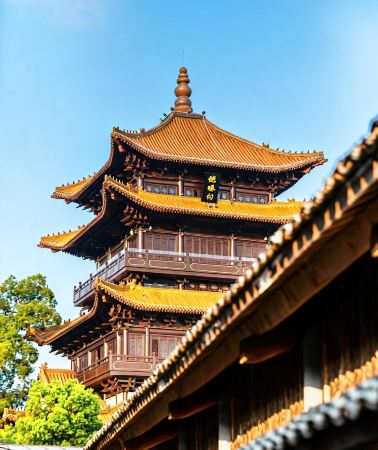
Tengwang Pavilion Tourist Area is located on the east bank of the Gan River in Nanchang, with the riverside Tengwang Pavilion as its centerpiece. Originally built in the fourth year of the Yonghui era of the Tang Dynasty by Li Yuanying, Prince of Teng and son of Emperor Gaozu of Tang, it gained eternal fame through Wang Bo's "Preface to Tengwang Pavilion." Alongside the Yellow Crane Tower and Yueyang Tower, it is hailed as one of the "Three Great Towers of Jiangnan." Historically destroyed and rebuilt nearly thirty times, the current structure is a Song-style replica completed in 1989, designed based on Liang Sicheng's reconstruction sketches. With its green tiles and layered eaves, it remains a landmark of Nanchang to this day. The main pavilion follows a "three visible, seven concealed" layout: appearing as a three-story structure with encircling corridors from the outside, while actually containing seven interior floors—nine levels including the two-tiered base symbolizing ancient city walls. Turquoise-roofed galleries extend north and south from the base's flanks, connecting at their ends to auxiliary pavilions named "River-taming" and "Greenery-embracing," forming a mountain-shaped silhouette with the main tower. Below, an artificial lake and the nine-bend wind-and-rain bridge add classical garden charm to the majestic architecture. Each floor of the pavilion offers something remarkable. The white marble relief "A timely wind delivers Tengwang Pavilion" in the first-floor preface hall depicts the legend of Wang Bo riding the wind to compose his famous preface. The second-floor mezzanine features the long scroll painting "Gallery of eminent figures," gathering Jiangxi's historical luminaries like Tao Yuanming, Ouyang Xiu, Wang Anshi, and Tang Xianzu in one artwork. The third-floor mural "Linchuan dream" recreates Tang Xianzu's staging of "The peony pavilion" here. The fourth-floor "Land of wonders" painting compresses Jiangxi's iconic landscapes—Mount Lu, Sanqing Mountain, Dragon-Tiger Mountain, and Poyang Lake—into a single masterpiece. The fifth floor is the highlight for panoramic views: its central hall displays a bronze tablet inscribed with Su Dongpo's calligraphic version of "Preface to Tengwang Pavilion," while the east hall exhibits a scale model of the pavilion. Strolling the veranda offers sweeping views of the Gan River and modern skyline across the water. The top floor bears the plaque "Ninth heaven," with its west hall housing an antique-style theater flanked by replica ancient instruments like chime bells and stone chimes. Above, spiral-arranged bracket sets adorn the caisson ceiling, and between the double eaves hangs Su Dongpo's gilded "Tengwang Pavilion" plaque. After descending from the main pavilion, take time to explore the garden area: the square in front of the pavilion, the grand Song-style archway, the antique street lined with calligraphy and antique shops, and the small Suzhou-style garden Fuchang Garden with its lake reflections and bridge views—perfect for slowing your pace. To experience the poetic scene of "a solitary wild duck flying with the sunset glow, while the autumn water blends with the vast sky," an evening ascent to the pavilion is ideal. The fifth-floor corridor offers an expansive view, making it a prime spot to admire the sunset over the Gan River.China · Nanchang

Lushan National Park
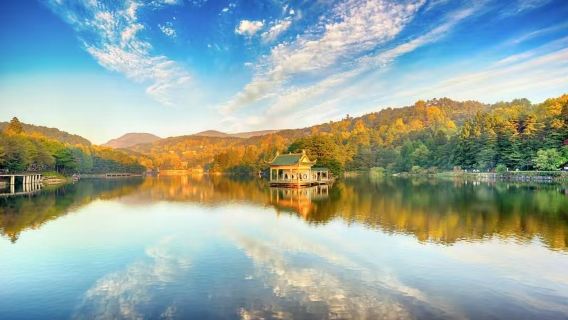
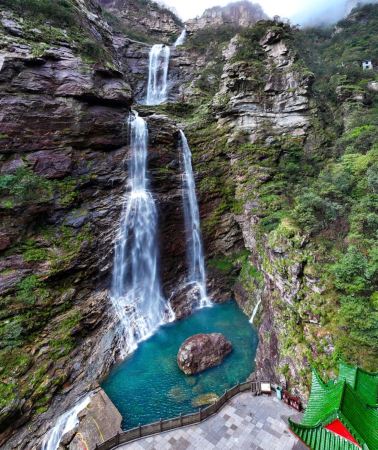
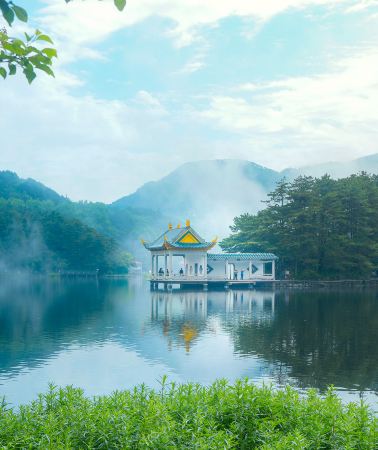
Mount Lu is known as one of China's “four great summer retreats,” together with Jigongshan, Beidaihe, and Mount Mogan. Mountain peaks, waterfalls, unique views of “cloud oceans,” and garden architecture all lend Mount Lu its rich charm. The mountain climate allows visitors to feel the cool and comfortable feel of spring even in the summertime, and has secured Mount Lu's position as a famous scenic area and historic vacation spot and retreat.China · Lushan City

Sanqingshan Mount Scenic Area
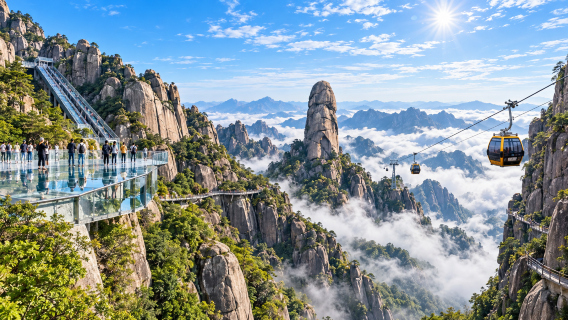
Located in the northeastern part of Shangrao City, Sanqingshan Scenic Area is a national-level geological park and a world natural heritage. Sanqingshan Scenic Area is a famous Taoist mountain. It is known as the “Little Huangshan Mountain” and includes three peaks: Yujing, Yuxu and Yuhua. Their shapes resemble three Taoist gods, Yuqing, Shangqing and Taiqing, sitting on top of the mountain. In Sanqingshan, you can watch the beautiful sunrise amid the sea of clouds, admire the peculiar stones in the mountains, and walk the high-altitude plank path. The scenery is even more beautiful when the azaleas are in bloom during May and June.China · Yushan

Taoyangli Historical and Cultural District
Taoyangli Historical and Cultural District is located in the heart of Jingdezhen's old town, a historic neighborhood that grew around the ruins of the imperial kiln from the Ming and Qing dynasties. The old saying "Taoyang thirteen li, with tens of thousands of households" refers to this area. The imperial porcelain used by the royal families of the Ming and Qing dynasties was exclusively produced by the imperial kiln here, while rejected tribute items were shattered and buried on-site. The layers of underground porcelain fragments share the same origin as the collections in the Palace Museum, making this place often referred to as the key to understanding the porcelain capital. The core attractions of the district are concentrated around the ruins of the Taoyangli Historical and Cultural District and the imperial kiln museum. The ruins of the Taoyangli Historical and Cultural District have now been transformed into an archaeological site park, preserving relics such as kilns and workshops. The Longzhu pavilion, perched atop Zhushan hill, has been the iconic structure of the imperial kiln since the Ming dynasty and later became the symbol of Jingdezhen. The Zhushan hill beneath it was formed by layers of discarded porcelain fragments from imperial kilns throughout history. Nearby, the imperial kiln museum draws inspiration from traditional egg-shaped wood-fired kilns, featuring multiple brick arches arranged in a staggered layout. Many exhibits in the museum are restored from porcelain fragments unearthed at the site, including the Ming dynasty blue-and-white dragon jar—a signature exhibit pieced together from tons of discarded dragon jar fragments. Adjacent to the museum, the Xu family kiln, an old wood-fired kiln, still operates periodic firings. During kiln openings, the gate is wide open, allowing visitors to watch artisans retrieve freshly fired porcelain from saggars. The district also features winding alleyways lined with kiln-brick residences, guild halls, porcelain shops, and remnants of modern ceramic industry. The restored South goods street and Red shop street now host old teahouses, taverns, music bars, and craft workshops where you can observe traditional processes like clay throwing and porcelain painting, with some workshops offering hands-on experiences. It's recommended to set aside half a day for the visit—start with the kiln site and museum, then meander through the streets around Zhongshan north road and Longgang lane, where many historic courtyard houses hidden in deep alleys await patient discovery.China · Jingdezhen

Wunvzhou Resort
The resort is centered on the legend of the Wu girl flying to the sky, featuring the new Huizhou architectural style, and is a comprehensive holiday destination integrating sightseeing, leisure and vacation, parent-child entertainment, conferences and exhibitions. The park covers seven business types including "Encounter·Wuyuan", Huiyi culture, intangible cultural heritage experience, night tour experience, leisure and vacation, gourmet shopping, conference and exhibition, etc. , meeting, leisure and all-round travel needs......China · Wuyuan

The National Archaeological Site Park of Nanchang Han Dynasty Haihun Marquis
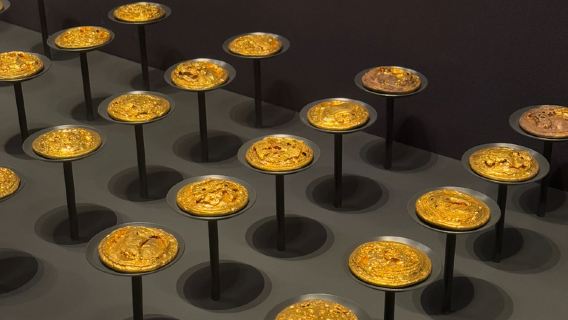
The National Archaeological Site Park of Nanchang Han Dynasty Haihun Marquis was developed based on the capital city ruins of Zijingcheng from the Western Han Dynasty Haihun Marquisate, the mausoleum of its first marquise Liu He, and the burial clusters to the west and south of the city. It represents the most well-preserved and structurally intact settlement ruins of a Han Dynasty marquise state capital discovered in China to date. Liu He, the tomb's occupant, was Emperor Wu's grandson who was deposed after merely 27 days on the throne, later becoming the Haihun marquise and moving south before being buried here. Since archaeological excavations began in 2011, over 10,000 artifacts including goldware, bronzes, jades, lacquerware, and bamboo slips have been unearthed, bringing this historically obscure "deposed Han emperor" back into public view with remarkable completeness. The park is divided into six functional zones: the ruins museum area, tomb exhibition area, Zijingcheng exhibition area, archaeological reserve area, entrance service area, and historical experience & ecological leisure area. The visitor center at the entrance adopts the shape of a jade bi disk—its white circular structure resembles a jade button when viewed from above, symbolizing "offering jade to heaven." The ruins museum takes its design inspiration from the dragon-shaped jade artifact unearthed from Liu He's tomb, appearing like a coiled dragon resting between mountains and waters. Permanent exhibitions such as "Golden Haihun," "Scholarly Haihun," and "Vermilion Lacquer Haihun" are housed here, alongside the interactive "Encountering Haihun" gallery. Among the over 1,000 displayed artifacts, gold items like cakes, horse-hoof ingots, unicorn-toe ingots, and plates are arranged in rows—their quantity and variety being exceptionally rare among excavated Han tombs. A complete set of bianzhong bells and bianqing stone chimes shares the stage with a bronze goose-fish lamp, whose curved neck holds a fish; rotating its dish adjusts brightness while smoke filters through water in the goose's belly without escaping, mirroring the ingenuity of the Changxin Palace lamp. A bronze lamp inscribed with "Nanchang" stands as a rare Han-dynasty physical testament to the city's name. Among the over 5,000 bamboo slips unearthed from the tomb of Liu He, the long-lost "Qi version of the Analects" was discovered after being missing for more than 1,800 years. The restoration achievements are showcased in the "Fragrance of Haichun" bamboo slips exhibition, where over a hundred newly restored original slips are displayed alongside Han Dynasty manuscripts like the "Book of Songs." Travelers who appreciate ancient texts and calligraphy will find it worth a closer look. The wooden back of the lacquered mirror depicting Confucius and his disciples features portraits and biographical accounts. While the original is still under restoration, the museum presents a full-scale replica with enlarged images to highlight details—another exhibit not to be missed. Beyond the museum, the Liu He Mausoleum at Guodun Mountain is another key attraction. The mausoleum complex features a trapezoidal layout, with the two main tombs of Liu He and his marquise wife sharing the same burial ground but in separate chambers at the central elevated platform. Surrounding them are auxiliary burial sites and remnants of ritual structures such as ancestral halls, resting chambers, garden walls, and gate towers. Outside the complex lies a rare chariot-and-horse burial pit seldom seen south of the Yangtze River. The Guodun Yuan ruins exhibition area built atop the mausoleum offers a panoramic view of the main tombs' wooden chamber structure from an encircling observation deck, while a 360-degree suspended screen recreates the mausoleum's construction process and Han Dynasty marquise funeral rites. The chariot pit preserves its original excavated state, with a restored quadriga carriage model showcasing the grandeur of Han nobility's travels. The park is planned around the grand heritage site, covering a vast area with its core visitable zones concentrated at the traveler center, ruins museum, and Liu He's tomb complex. The Zijingcheng city site is primarily preserved in its original state, so focus your visit on the museum and tomb area. As distances between zones are considerable, shuttle services are available—we recommend allocating half a day. The Han-style gate towers and golden imperial carriage at the entrance are popular photo spots. Throughout the park, Han cultural activities like costume parades and themed markets occasionally take place; keep an eye out while exploring the exhibitions.China · Nanchang

Ge's Fairy Village
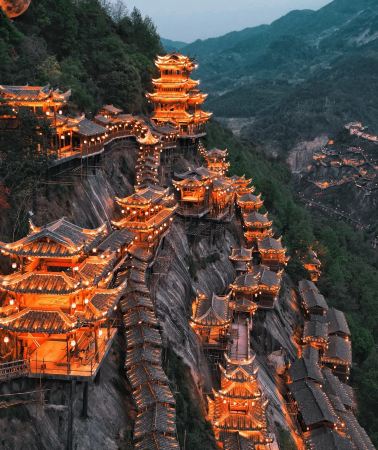
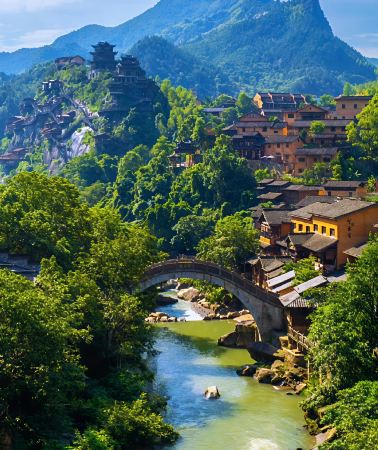
Ge's fairy village is located in Yanshan County, Shangrao City, Jiangxi Province. It was invested and constructed by Xinbang Group in June 2016, with a total investment exceeding 1.569 billion yuan. Backed by the thousand-year-old Taoist mountain Ge's Fairy Mountain, it aims to become "a new landmark of Jiangxi tourism." The project is divided into two phases, with a planned construction area of approx. 300,000 square meters. The core attraction area covers 650 mu, including three main sections: the distribution center area, Ge's Fairy Village resort, and the Tianjing Terrace attraction. Future development will continue to expand outward along the valley. Ge's fairy village is developed around the Ge's fairy mountain attraction, inspired by the cultivation stories of immortal Ge Xuan on the mountain. It integrates the cultural essence of Taoism with classical landscape painting aesthetics, recreating the mountain village scene where Ge Xuan lived and practiced during the late Han dynasty. Using water, bamboo, and village as creative elements, it aims to create a natural sanctuary and fairy village combining eco-tourism, leisure vacations, business conferences, and Taoist cultural experiences. Introduction to attractions in Ge's fairy village Yuánfāng - Heaven and earth hidden in the mountains and forests The name "Elements" is derived from the Taoist concept of "the sky is round and the earth is square." The bronze compass within Elements, meticulously crafted by renowned artists, embodies the Taoist understanding and profound mastery of the universe's principles. The overall design follows the concept of a "vanishing building," featuring a facade of glass mirrors and bamboo. From a distance, the glass mirrors reflect the natural scenery of the mountains, making the structure appear hidden within the forest. Without careful observation, one might easily overlook the building and the hidden paradise behind it. Zhongmiao pavilion - profound and mysterious, both real and illusory Zhongmiao pavilion is the highest point of the attraction, featuring an ancient architectural structure. The main building stands 26 m tall with a three-story, four-pillar pure wood design. Pavilions are typically used for storing books or enshrining deities, which adds more cultural significance to this structure. In the evening, the solemn and magnificent Zhongmiao Pavilion show takes place here, where the combination of modern technological lighting and ancient architecture creates a dreamlike and visually stunning experience. Culture has a long history The ancestral hall square mainly consists of the jiao altar at the center and the Ge Weng ancestral hall. The jiao altar is a place for capping, wedding, and sacrificial ceremonies. It served as the venue for ancient capping rites, wedding ceremonies, and rituals praying to deities. Traditional folk cultural performances are staged in the central area of the ancestral hall square. Dust-washing gate·Emerald pool - Wash away the mundane Under the moonlight, seekers perform the traditional Taoist greeting, embracing the path of Taoism. The "gate of purification," crafted with mist curtain installations, presents a mesmerizing interplay of light and shadow amidst ethereal fog, cleansing worldly dust from those who journey from afar. Water curtain film - magnificent and breathtaking The water stage at Zhongmiao Pavilion presents a grand live-action water screen movie every evening, where the fusion of water screens and light creates a dazzling visual feast. Performers dance to the rhythm of alternately intense and soothing music, bringing to life a series of dramatic legendary tales from a flourishing era. China town artifact culture museum - A long history of town artifact culture The China town artifact culture museum is located at the entrance of Lingbao Fairy Street, featuring horse-head walls that showcase the distinctive Huizhou architectural style. Inside, visitors can explore China's ancient town artifact culture through exhibition areas, retail zones, and workshop sections, gaining a deeper understanding of this cultural heritage while admiring historical artifacts.China · Yanshan

Jiangxi WuGong Mountain Scenic Area
Jiangxi Wugong Mountain is located in the west of Jiangxi, spanning the three cities of Pingxiang, Yichun, and Ji'an. It has scenic spots such as Pingxiang Wugong Mountain, Yichun Mingyue Mountain, Anfu Wugong Mountain, and Anfu Yangshimu. It is a large-scale mountain type integrating human landscape and natural landscape. Scenic spot; Jiangxi Wugong Mountain-Pingxiang Wugong Mountain Scenic Spot is located in the southeast of Pingxiang City, belonging to the northern section of the Luoxiao Mountains on the border between Hunan and Jiangxi. It is a large-scale mountain-type scenic spot with the most abundant tourism resources in western Jiangxi Province. In history, it was once known as the three famous mountains in the south of the Yangtze River together with Lushan Mountain and Hengshan Mountain, and it is known as "the first martial arts in Hengshou and Luwei". Baihe Peak (Golden Summit), the main peak of Wugong Mountain, is 1918.3 meters above sea level. Jiangxi Wugong Mountain-Yichun Mingyue Mountain Scenic Spot is located 15 kilometers southwest of the central city of Yichun, with a total area of 389 square kilometers. Mingyue Mountain has four major resources of "mountain, spring, Zen, and agriculture". It is a scenic spot featuring "sightseeing, leisure and vacation, health care and religious tourism" as a whole. Jiangxi Wugong Mountain-Anfu Wugong Mountain is located in Taishan Township, Anfu County, Jiangxi Province. The depth of the scenic spot is about 150 kilometers. It is the highest mountain in Jiangxi. In history, Wugong Mountain was once known as the three famous mountains in the south of the Yangtze River together with Hengshan Mountain and Lushan Mountain, and was named "the first of Hengshan and Luwei in martial arts". Wugong Mountain is a scenic spot integrating human landscape and natural landscape. It is a mountain under development among the famous mountains in the south of the Yangtze River. , and natural landscape and intact original ecological environment, with charm. Jiangxi Wugong Mountain-Anfu Yangshimu Scenic Area is located in the northwest of Wugong Mountain in Anfu County, Jiangxi Province, a scenic spot, a national natural heritage site, a national forest park, and a national geological park. The scenic spot is dominated by granite peak forest landforms, which are majestic and majestic in various poses and with different expressions.China · Luxi
Experiences you can't miss in Jiangxi
Featured Day tours in Jiangxi
View all Day tours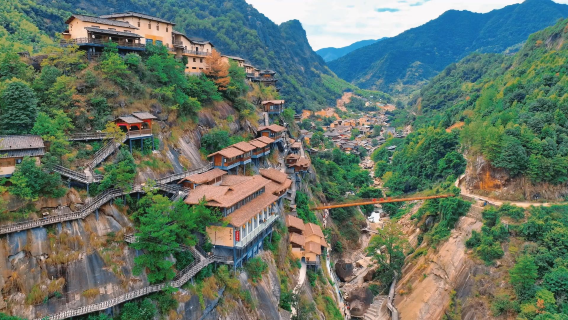
5.0/5
· 1 reviewFree cancellation
Instant confirmation
Book now for tomorrow
9% off
Limited-time sale
FromBRL 375.98BRL 417.75
4.9/5
· 161 reviews· 642 bookedFree cancellation
Book now for tomorrow
100 consecutive positive reviews
FromBRL 104.03

Free cancellation
Instant confirmation
FromBRL 156.86
Free cancellation
Instant confirmation
Book now for tomorrow
FromBRL 189.54
Free cancellation
Instant confirmation
Book now for tomorrow
FromBRL 271.42
![One-Day Tour from Wuyuan, Jiangxi to Vagoo Scenic Area - A Real-Life Fairy Tale World [Private Car + Tickets Included]](https://ak-d.tripcdn.com/images/0352g12000rzf6egh7FBB_C_568_320.jpg?_fr=wc)
Free cancellation
Instant confirmation
Book now for tomorrow
FromBRL 345.97

Free cancellation
Instant confirmation
FromBRL 479.30
![Shangrao, Jiangxi: Vagoo Scenic Area + Wuyuan Huangling [Private Charter | Chinese/English Guide | Adjustable Attractions]](https://ak-d.tripcdn.com/images/0352g12000kw6wscj2470_C_568_320.jpg?_fr=wc)
FromBRL 2,135.03
Featured Cultural experiences in Jiangxi
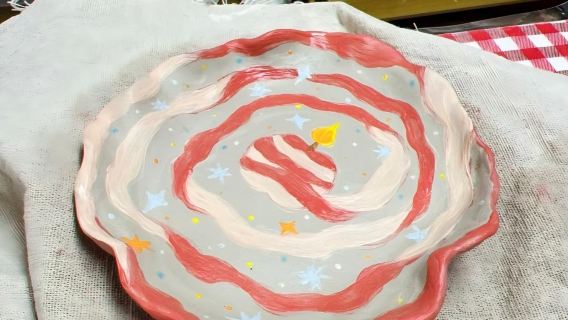
View all Cultural experiences![Jingdezhen, Jiangxi Taotaoguai DIY pottery experience [Pottery making | Plain bisque painting]](https://ak-d.tripcdn.com/images/0351f12000q8l8mf072A5_C_568_320.jpg?_fr=wc)
Free cancellation
Instant confirmation
Book now for today
FromBRL 36.40
5.0/5
· 1 reviewFree cancellation
Instant confirmation
Book now for today
FromBRL 56.87
![Jingdezhen, Jiangxi Fangxun pottery glass intangible cultural heritage [Four stores applicable | Glass firing | Pottery experience]](https://ak-d.tripcdn.com/images/0351f12000q8dv9xpE169_C_568_320.jpg?_fr=wc)
5.0/5
· 1 reviewFree cancellation
Instant confirmation
Book now for today
FromBRL 59.14

FromBRL 1,099.32

Free things to do in Jiangxi
Wangxian Valley
China · ShangraoImmediate access, Book now for today, Cancel anytimeWuyuan Huangling Scenic Area
China · WuyuanImmediate access, Book now for today, Cancel anytimeTengwang Pavilion Tourist Area
China · NanchangImmediate access, Book now for today, Cancel anytimeLushan National Park
China · Lushan CityImmediate access, Book now for today, Cancel anytimeSanqingshan Mount Scenic Area
China · YushanImmediate access, Book now for today, Cancel anytimeTaoyangli Historical and Cultural District
China · JingdezhenImmediate access, Book now for today, Cancel anytimeWunvzhou Resort
China · WuyuanImmediate access, Book now for today, Cancel anytimeThe National Archaeological Site Park of Nanchang Han Dynasty Haihun Marquis
China · NanchangImmediate access, Book now for today, Cancel anytimeGe's Fairy Village
China · YanshanImmediate access, Book now for today, Cancel anytimeJiangxi WuGong Mountain Scenic Area
China · Luxi
More ways to travel from Jiangxi
Private Tours in Jiangxi
View More Private Tours in Jiangxi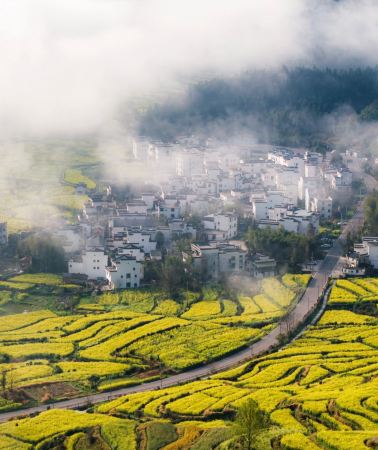


Group Tours in Jiangxi
View More Group Tours in Jiangxi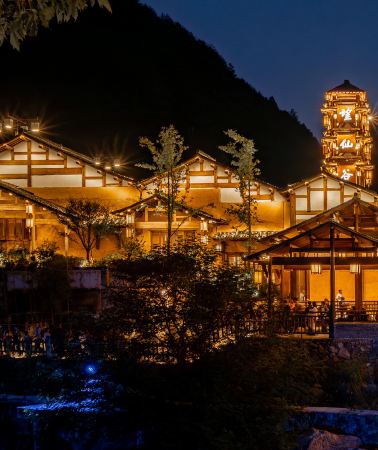
What travelers say about Jiangxi

Anonymous userOctober 17, 2026
5.0
Start around 4 pm and stayed in the small town about 5 mins drive away from entrance. Wander around and wait till around 6.30pm where the lights start to lit up. Unreal! The night view is absolutely the main event - daytime is just the warm up.
Wangxian Valley

zxjzycOctober 17, 2026
4.0
The autumn harvest celebrations were truly spectacular, and the local activities were plentiful. Aside from the crowds, everything was perfect – delicious food, wonderful drinks, beautiful sights, and a great time. I stayed on the mountain for two days, experiencing the post-rain mist and the ancient houses under a clear sky; each was breathtaking.
Wuyuan Huangling Scenic Area

Raikkonen71October 15, 2026
5.0
Climbing to the top of Tengwang Pavilion and overlooking the Gan River, one is struck by its magnificent grandeur. Its upturned eaves and corners exude a timeless charm. The saying "The setting sun and the lone wild goose fly together" is truly fitting; as the premier pavilion in Jiangnan, this trip was well worth it!
Tengwang Pavilion Tourist Area

_We***90October 15, 2026
4.0
Perhaps it's because you can't see anything on a rainy day, so I don't dare to say much about the scenery. You can usually see colorful birds in this season, but there's nothing happening now. However, I feel that the scenic area's management is still a bit lacking.
Lushan National Park

某某公子October 16, 2026
5.0
The scenery was beautiful, and the cable car was very convenient. It truly lived up to its reputation as a place where one can see all five sacred mountains, with the most breathtaking views at Sanqing Mountain. I spent the night on the mountain and woke up early the next morning to see the sunrise at Yutai. It was definitely worth the trip.
Sanqingshan Mount Scenic Area

心静如水927October 17, 2026
5.0
Taoyangli is the heart of Jingdezhen's porcelain culture, home to the ruins of the Ming and Qing imperial kilns. The red-brick arched kiln building of the Imperial Kiln Museum is itself a work of art. Ancient alleys, old kilns, and remnants of porcelain from the ruins intertwine, blending the old and the new. During the day, visitors can admire the cultural relics and historical sites, while the atmosphere is superb when the lights are on in the evening. There are also many small ceramic shops in the alleys, making it well worth a visit when in Jingdezhen.
Taoyangli Historical and Cultural District
Anonymous userOctober 18, 2026
4.0
The excitement only starts during the blue hour especially the amazing iron melting fireworks.
Wunvzhou Resort

伊始末_October 17, 2026
4.0
Many people come here for the gold from the Marquis of Haihun, right? 😂 And it certainly didn't disappoint—so much gold! 😍 Upon entering the museum, you're greeted by a spacious hall. A statue of Liu He stands alone, with the grandeur of the Han Dynasty behind him—quite moving.
The exhibits inside are excellent; once again, I marvel at the exquisite craftsmanship of the ancients.
The Haihunhou site is quite far from the city center, but it's easily accessible by a dedicated bus line. The journey takes about an hour and a half (approximately). The ticket price is only 10 yuan.
The National Archaeological Site Park of Nanchang Han Dynasty Haihun Marquis

TohnetOctober 13, 2026
5.0
Our tickets were bought online through Trip.com and thus made convenient for us. We left our hotel in Shangrao City at 1530hrs and at almost 1700hrs, we arrived at Ge's Fairy Village.When the place lit up after the sun went down, the village gradually transformed into a magical realm, thus why it's called a fairy village. With most visitors decorating themselves in the traditional outfits, your mind was let to wander what it was like in the past could have been: tranquil despite the crowd, beautiful, vibrant and perhaps that explained why ever since the ancient time, visitors over the world that came for trade or visit to China - could have been mesmerized by her beauty.Our visit ended with a grand finale of fireworks and fiesta & dance. It was indeed a memory to treasure!!A highly recommended place for a visit if you ever come to Shangrao."🥰🥰🥰🥰
Ge's Fairy Village

夜空星城July 6, 2026
5.0
The experience of visiting Wugong Mountain was quite good. The hiking route was of moderate difficulty and not strenuous. The view from the summit was expansive, overlooking vast meadows. The breeze was pleasant and refreshing. There were also ample supply points along the way, so I didn't need to bring too much with me. It was a very relaxing trip.
Jiangxi WuGong Mountain Scenic Area
Frequently asked questions
What are the must-do things in Jiangxi?
Don't miss these attractions in Jiangxi: Wangxian Valley, Wuyuan Huangling Scenic Area, and Tengwang Pavilion Tourist Area. If you like Food & drink, try Nanchang, Jiangxi ancient Chinese banquet (traditional makeup + 90 min performance + 8 exquisite dishes + market check-in) "Yuzhang banquet" - a feast across millennia. If you enjoy Day tours, try 1-day tour from Shanghai to Wangxian Valley by train (with private transfers).
What are the must-try foods and restaurants in Jiangxi?
You can give Nanchang, Jiangxi ancient Chinese banquet (traditional makeup + 90 min performance + 8 exquisite dishes + market check-in) "Yuzhang banquet" - a feast across millennia and Nanchang Aged-Liquor Museum Private Guide & Six-Aroma Baijiu Tasting Flight a try. Before you go, please check their opening hours and menus online. Reservations are recommended, especially during peak hours.
What are the recommended tours and excursions in Jiangxi?
When choosing a tour, start with how much time you have and the kind of experience you're looking for. Trending options right now include 1-day tour from Shanghai to Wangxian Valley by train (with private transfers), Moon Bay + Shangtan Village + Longwei Village + Three-Eyed Bridge Scenic Area + Chaguan Village + Hongguan + Fengshan Village + Zhangcun Village 1-day tour, and Unique to Jingdezhen! Group Day Tour to Yaoli Ancient Town+Hanxi Village+Porcelain Palace. Check the real-time availability and itinerary before you book.
What's the typical cost of day tours and activities in Jiangxi?
As of October 19, 2026, the reference price for day tours and activities in Jiangxi is around BRL 104.03 – BRL 2,135.03. Rates vary by duration, group size, transportation, tickets, meals, and any special admission requirements. Before you book, please confirm the billing currency and whether the price is quoted per person or per group.
How can I contact Trip.com customer support?
Get help anytime, anywhere within 30 secondsContact customer support
Can I change or cancel my booking?
Change and cancellation policies vary by attractions and tours. Please check the product details page for more information.
How can I get discounted prices?
Ticket prices may vary between weekdays and weekends, as well as during peak and off-peak seasons. When booking with Trip.com, you can also use Trip Coins to get extra savings. For more tips on booking discounted tickets, please visit Trip.com for the latest information.
Trip.com picks
Popular cities in China
Best Jiangxi Experiences
Recommended Car Rentals in China
Things to do in ShanghaiThings to do in QingdaoThings to do in GuangzhouThings to do in JiuzhaigouThings to do in ChinaThings to do in YangshuoThings to do in SanyaThings to do in ShenzhenThings to do in ChongqingThings to do in SuzhouThings to do in TaipeiThings to do in BeijingThings to do in HangzhouThings to do in MacauThings to do in Zhangjiajie
Jiangxi SIM CardJiangxi Day ToursJiangxi Connectivity SolutionsJiangxi ActivitiesCar rentals in Hong KongCar rentals in ShanghaiCar rentals in BeijingCar rentals in Taipei