Yichuan

Things to do in Yichuan

Search attractions or local attractions & tours
Search

Explore top experiences

Top 10 attractions in Yichuan

View all Attractions
Longmen Grottoes
2026 Asia 100 - Best Things to Do

Longmen Grottoes

8.9
4.7/5
62.2k reviews
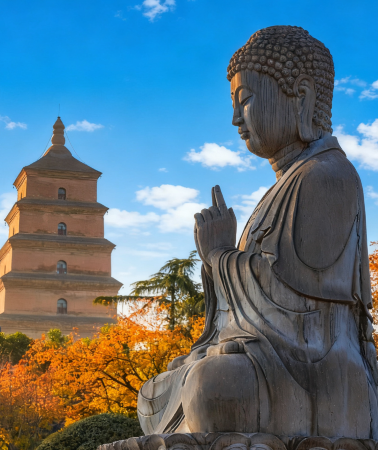
Longmen Grottoes are located in the southern suburbs of Luoyang, Henan Province, on the cliffs along both banks of the Yi River. As one of China's three major grotto art treasures, they were inscribed on the World Cultural Heritage list in 2000. The grottoes were first carved when Emperor Xiaowen of Northern Wei moved the capital to Luoyang, and construction continued through the Eastern Wei, Western Wei, Northern Qi, Sui, and Tang dynasties, with the vast majority of niches and statues left from the Northern Wei and Tang periods. Today, more than 2,000 niches and over 100,000 statues remain, along with a large number of inscriptions and steles, making the site an important representative of Chinese stone carving art. The attraction is divided by the Yi River into two parts: West Hill and East Hill. The West Hill Grottoes are the essence of the site, carved from the Northern Dynasties through the Sui and Tang periods. Famous caves include Guyang Cave, Binyang Cave, Lotus Cave, Wanfo Cave, and Fengxian Temple. The Lushena Buddha at Fengxian Temple stands about 17 m tall, making it one of the larger Buddha statues at Longmen Grottoes. Its face is dignified and serene, with a faint smile, and legend holds that it was modeled on the appearance of Wu Zetian, earning it the name "Oriental Mona Lisa." The inner walls of Wanfo Cave are densely covered with about 15,000 small Buddha statues, each only a few cm tall, neatly arranged and finely crafted. Guyang Cave is the earliest cave carved at Longmen, and its inscription calligraphy is exquisite; the selected "Twenty Masterpieces of Longmen" are representative works of Wei stele calligraphy. Binyang Cave consists of the South, Middle, and North caves and took more than twenty years to complete. Its original reliefs depicting emperors and empresses worshipping the Buddha were looted and lost overseas in the 1930s. In Binyang North Cave, a Buddha statue has a distinctive hand gesture, with the right index and middle fingers raised in a shape resembling the modern "scissors hand," though it is actually a Buddhist mudra, and it once sparked heated discussion online. The East Hill Grottoes are mostly Tang dynasty works and are smaller in scale than those on West Hill, but from the opposite bank visitors can enjoy panoramic views of West Hill from different angles, especially distant views of the Lushena Buddha. The attraction also includes Xiangshan Temple and Bai Juyi Memorial Park (Bai Garden). The Tang dynasty poet Bai Juyi lived in Luoyang in his later years and once praised it, saying, "Of the scenic splendors of Luoyang's surrounding mountains and waters, Longmen ranks first." When visiting, simply follow the route West Hill—East Hill—Xiangshan Temple—Bai Garden, proceeding in one direction without backtracking. The West Hill Grottoes are densely packed with content, so it is advisable to set aside ample time for a closer look; East Hill is quieter and more secluded, suitable for a brief visit and gazing across the river when energy is limited.Luoyang · 15.1 km from Yichuan
Luoyang Museum
2025 Asia 100 - Family-friendly Attractions

Luoyang Museum

8.2
4.7/5
3.8k reviews
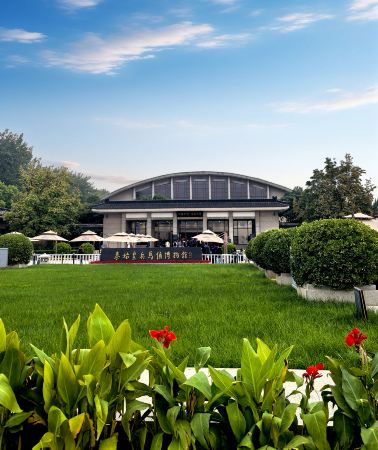
Founded in 1958 and fully opened to the public on April 16, 2011, the Luoyang Museum is a comprehensive institution integrating cultural relic collection, exhibitions, and public education, with a collection that spans the long history of Luoyang as a capital of thirteen dynasties. The main building stands like a giant ding, drawing on the meaning of "establishing the capital at Luoyi," and its solemn and imposing facade is itself a popular backdrop for photos. The museum's large permanent exhibition "Civilization of the Yellow River and Luo River" unfolds along the sequence of prehistoric times, the Xia, Shang, and Zhou dynasties, the Han and Wei dynasties, the Sui and Tang dynasties, and the Five Dynasties and Northern Song, stringing together Luoyang's millennia-long history as a capital into a complete viewing route. Among the exhibits, the Northern Wei painted pottery figurines of two women holding hands, affectionately called the "best friend figurines" by visitors, are especially eye-catching—two young girls holding hands side by side with lively expressions, and visitors often come specially to take photos with them. On the second floor, the Treasures Gallery rotates representative artifacts from the collection, and the Cao Wei white jade cup and the Northern Wei clay Buddha face statue are both worth pausing to examine closely; in the Tang Sancai Gallery, the entirely black-glazed sancai horse is vigorous and rarely seen. The Court Artifacts Gallery displays Qing dynasty court artifacts transferred from the Forbidden City, and the golden nanmu pagoda carved from a single piece of wood and covered with small gilded Buddhas has a distinctly royal air; the Wang Xiu Peony Art Exhibition, meanwhile, brings Luoyang's peonies into paintings, offering a softness that contrasts with the weighty antiquity of the stone carvings, each with its own flavor. Start your visit with the "Civilization of the Yellow River and Luo River" exhibition and the Stone Carving Gallery on the first floor, then go up to the second floor to savor the Treasures Gallery, the Tang Sancai Gallery, and the Court Artifacts Gallery in detail; the Treasures Gallery features rotating exhibitions, so the specific exhibits on display are subject to what is shown on site. A careful full visit usually takes two to three hours, so it is advisable to set aside ample time.Luoyang · 24.8 km from Yichuan
Sui And Tang Dynasties Luoyang City Yingtian Gate Site
No. 9 of Best Things to Do in Henan

Sui And Tang Dynasties Luoyang City Yingtian Gate Site

7.7
4.5/5
4.5k reviews
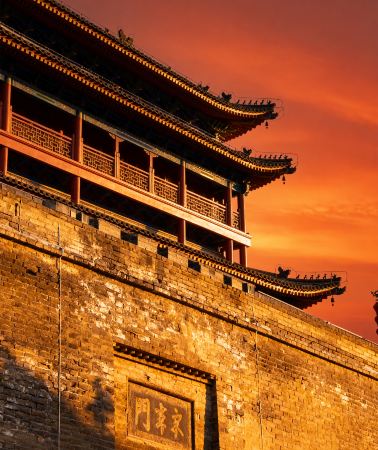
Yingtianmen is the south gate of Luoyang City Palace City in Sui and Tang Dynasties. It was built in the first year of Daye in Sui Dynasty, that is, in AD 605. It has gone through four periods of Sui, Tang, Five Dynasties and Northern Song Dynasty successively. The Jinbing was burnt and used for 523 years. Yingtianmen was an important place for holding major state celebrations and diplomatic activities at that time. If Yuanzheng, Winter Solstice, Chenle, banquets, pardoning sins, removing the old and clothing the new, when the tributary messengers of all countries, the guests of the four barbarians and other important celebrations, the emperors all came to listen to the government. Similar to the current Beijing Meridian Gate. This city gate has witnessed the prosperity of the dynasty when Emperor Yang Guang of Sui Dynasty entered the Eastern Capital, Emperor Gaozong of Tang Dynasty released King Fuyu of Baekje, the queen ascended the throne and became emperor, and Emperor Xuanzong of Tang received the eighth envoy from Japan to the Tang Dynasty. Every Shangyuan Festival, Yingtianmen Square will also hold a grand Baixi performance. When it is grand, the performance team will stretch from here to the main south gate of Guocheng, which is 4 kilometers away. Yingtianmen has different names in different periods: it was built in the early Sui Dynasty, according to the "Analects of Confucius", "Only the sky is the greatest, only Yao is the rule", taking the meaning of "taking the sky as the rule", so it is called "Zetianmen"; the first year of Tang Shenlong 705 During the reign of Emperor Zhongzong Li Xian of Tang Dynasty, after avoiding Wu, he was honored as "The Great Sage Emperor Zetian" and renamed Yingtianmen. During the Kaiyuan period of Emperor Xuanzong of the Tang Dynasty, this building was renamed Wufeng Building, and Wufeng Building was used until the Five Dynasties and Northern Song Dynasty. At the end of the Northern Song Dynasty, Jinbing invaded the Central Plains, Luoyang became a battlefield and was severely damaged. Jinbing burned down the building. The city of Luoyang in the Sui and Tang Dynasties, which was prosperous for more than 530 years, gradually faded out of people's sight. Yingtianmen is one of the buildings that can show identity and status in the Chinese etiquette system. "Yuan·Henan Chronicle" records: the main gate of the palace city is called Zetianmen, the gate has two views, the upper one is called Ziwei microscopic, the left and right are connected with the ques, and the ques are 120 feet high. Calculated at 29.4 centimeters per foot in the Tang Dynasty, equivalent to about 36 meters today, this magnificent tower is almost twelve or three stories high today. The Tang Dynasty poet Bai Juyi once looked south on Yingtianmen and wrote a poem: "Longmen Cui Dai Mei is opposite, Yishui Golden Line is a line". From Yingtianmen, you can see Longmen Yique, which is 15 kilometers away, showing the majesty of Yingtianmen.Luoyang · 28.6 km from Yichuan
Guanlin Temple
No. 11 of Global Traveller-Picked Attractions in Luoyang

Guanlin Temple

6.3
4.5/5
1.8k reviews
Located approx. 7 km south of Luoyang city, Guanlin Temple is modest in size but attracts countless worshippers, as it houses the head of Guan Yu, a renowned general of the Shu Han state. According to ancient feudal rites, emperors' tombs were called "mausoleums," those of nobles and generals were termed "tombs," and only sages' burial sites could be named "lin" (grove). Over two millennia, Guan Yu's status rose from a noble to a martial sage. The only comparable site is the Confucius Forest in Qufu, Shandong.Confucius ForestIn the 24th year of the Wanli era of the Ming Dynasty (1596), construction began on the original site of the Han Dynasty Guan Temple, with the planting of cypress trees. During the Qianlong period of the Qing Dynasty (1735–1799), it was expanded, forming the basic scale of the present-day Guanlin Temple. The architectural specifications of Guanlin Temple follow the traditional palace style. Visitors entering the main gate of Guanlin can walk along the central axis to explore, successively seeing the main gate of Guanlin Temple,Ceremonial gate, the corridor, worship hall, main hall, second hall, third hall, stone archway, octagonal pavilion, and other temple sections. Behind the temple lies the burial mound (ground) where Guan Yu's head is interred. When you visit here, aside from paying respects to the martial sage Lord Guan, there are many highlights worth exploring. Built during the Ming DynastyCeremonial gateThe 49 door nails on the gate reflect the status of Guan Yu at the level of a prince during the Ming Dynasty, while the 81 door nails on the gate built during the Qing Dynasty indicate his elevation to the status of an emperor. When you arrive atCeremonial gateWhen visiting the second hall, don't forget to look up at the plaques above: "Majesty spreading across the land" and "Glory illuminating the sun and moon" – two plaques inscribed by Empress Dowager Cixi and Emperor Guangxu respectively. As you pass throughCeremonial gateWhen approaching the worship hall, you can see over a hundred "stone lions carved on pillar tops" on both sides. Each little lion is round and lively, without any sense of rigidity, representing the high standard of Central Plains stone carving during the Qianlong era. Inside the main hall and the second hall, there are many wood carvings and statues related to Guan Yu, such as: the oath of the peach garden, the three heroes fighting against Lü Bu, and Guan Yu reading the spring and autumn annals at night. Every September, Guanlin Temple hosts a grand international ceremony, during which pilgrimage groups from home and abroad come to worship the saint Guan Yu. During the spring festival each year, it also holds a large temple fair, sometimes with folk performances to assist in the worship, creating a very lively atmosphere. Guanlin Temple is locatedLongmen GrottoesNot far away, travelers usually visit both together.Luoyang · 21.4 km from Yichuan
Sui and Tang Dynasty Town Botanic Gardens
No. 9 of Family-friendly Attractions in Henan

Sui and Tang Dynasty Town Botanic Gardens

6.6
4.6/5
5.3k reviews
The Sui and Tang Dynasty Town Botanic Gardens was first established in 2005, built on the site of the Li-fang ward area of the Sui and Tang dynasty Luoyang City, integrating the zonal plants of the western Henan region with the cultural heritage of the Sui and Tang dynasty town ruins. The garden features over ten specialized areas, including the Thousand Varieties Peony Garden, the Wild Water Scenery Garden, the Magnolia and Crabapple Garden, the Hundred Herbs Garden, the Plum Garden, the Bamboo Garden, and the Osmanthus Garden, with more than two thousand plant species. Each season offers its own highlights — peonies in spring, lotus ponds in summer, red leaves in fall, and plum blossoms in winter. The Thousand Varieties Peony Garden is the centerpiece of the entire park, consisting of four sections: the Hundred Flowers Garden, the Nine Colors Garden, the Specialty Garden, and the Science and Technology Demonstration Garden. It brings together over a thousand peony varieties spanning a wide range of colors. Through rock arrangements and garden features, the garden displays peony-related poems and historical anecdotes in the form of couplets and carvings, adding a layer of cultural depth to the floral scenery. The Wild Water Scenery Garden is themed around lakes and wetlands, where aquatic plants and reed beds are occasionally visited by waterfowl, and wooden boardwalks wind through the area, making it ideal for strolling, sightseeing, and photography. The park is quite large, so taking two to three hours to stroll around at a leisurely pace is more relaxed. During the peony blooming season in spring, there are more visitors. In the Qianzi Peony Garden, the flowers are especially vivid in the morning light, making it a great time for photos. If you want to avoid the crowds, you can focus on relatively quieter areas such as the Wild Water Garden and the Herb Garden to enjoy a different kind of botanical beauty.Luoyang · 23.9 km from Yichuan
China National Flower Garden
2026 Global 50 - Spring Outings

China National Flower Garden

6.9
4.6/5
8.1k reviews
Situated on the ruins of the Sui and Tang dynasty Luoyang City and bordered by the Luo River to the south, the China National Flower Garden is a specialized ornamental garden themed around peony culture. The park is divided into multiple scenic areas from west to east and cultivates over a thousand peony varieties spanning nine major color series, making it one of the larger peony-viewing gardens in Luoyang. During the spring peony bloom, early-, mid-, and late-blooming varieties of each color series follow one another in succession, allowing for an extended viewing period. A century-old peony known as the "Flower Goddess" is a particular highlight — a tall specimen with multiple main branches spreading upward and outward from the base in a radial pattern, forming an impressive canopy that bursts into a spectacular mass of blooms at peak season. The garden also houses the Luoyang Inscriptions and Stone Carvings Museum, which displays inscribed bricks, tiles, and rubbing reproductions of steles from the Han, Wei, and Jin dynasties and other periods, offering a place to learn about ancient calligraphic art after enjoying the flowers. The park spans a considerable distance from east to west; the riverside viewing area along the Luo River embankment features a scenic corridor where strolling visitors can take in both the sea of flowers and the river scenery at once. It is recommended to set aside ample time for a visit.Luoyang · 26.2 km from Yichuan

Experiences you can't miss in Yichuan

Featured Food & drink in Yichuan

View all Food & drink
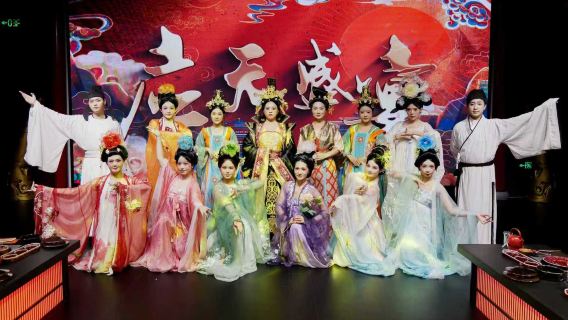
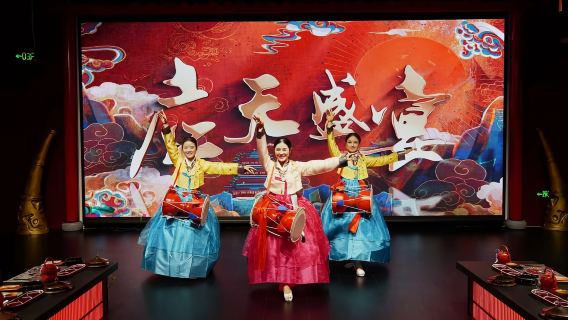
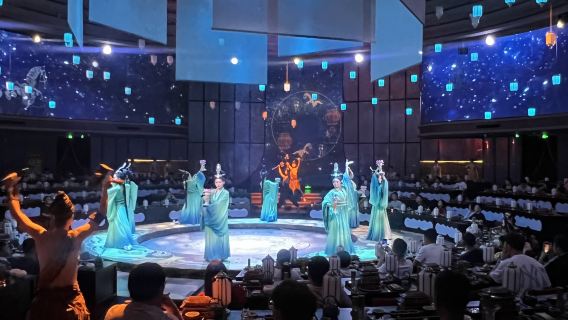
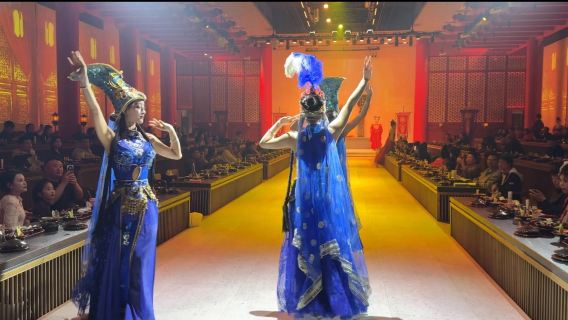
Luoyang Palace Banquet • A Feast Through the Centuries [Yingtianmen Branch] (Immersive Imperial Feast + Audiovisual Extravaganza + Ancient-style Music and Dance)
󱌍
FromIDR 535,136
Luoyang Tang dynasty palace feast - enjoy 12 exquisite dishes while watching a performance - Yingtian grand banquet
󱌍
4.8/5
· 4 reviews· 28 booked
Duration: 2 hrs
English
Free cancellation
Instant confirmation
Book now for today
FromIDR 508,109
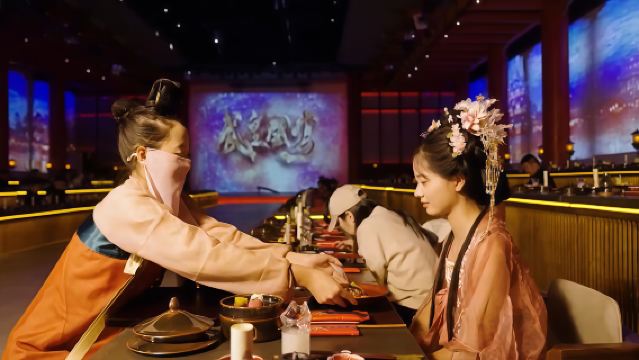
Luoyang Wu Huang Feast: Immerse in the Splendor of the Wuzhou Era
󱌍
Duration: 1.5 hrs
Filipino
Free cancellation
Instant confirmation
Book now for tomorrow
FromIDR 1,021,622
Luoyang grand harmony • Yingtian feast (immersive experience of an emperor + palace delicacies)
󱌍
FromIDR 616,217
Luoyang Yanle | Ancient Costume Makeover, 360° Holographic Show & Heluo Royal Banquet
󱌍
Duration: 1.6 hrs
English
Free cancellation
Instant confirmation
Book now for tomorrow
FromIDR 427,028
Wu Huang Feast in Luoyang, Henan (Dingdingmen Branch) [Imperial Cuisine + Court Music and Dance + Immersive Imperial Banquet Experience]
󱌍
FromIDR 535,136

Featured Day tours in Yichuan

View all Day tours
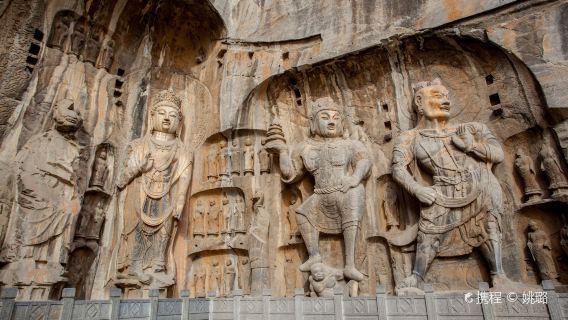
Luoyang  Shaolin Temple and Longmen Grottoes Day Tour(Optional Group Tour)
󱌍
4.4/5
· 26 reviews· 299 booked
Duration: 6 hrs
English
Instant confirmation
Book now for tomorrow
FromIDR 1,242,623
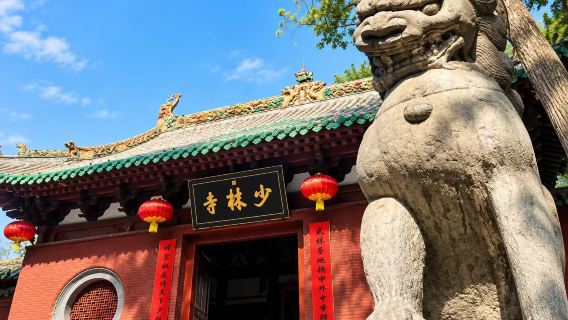
Luoyang Songshan Shaolin Temple + Longmen Grottoes Day Trip including martial arts performance / Small group or English-speaking guide optional
󱌍
5.0/5
· 17 reviews· 208 booked
Duration: 7.7 hrs
English
Free cancellation
Instant confirmation
Book now for tomorrow
59 travelers saved
FromIDR 913,514
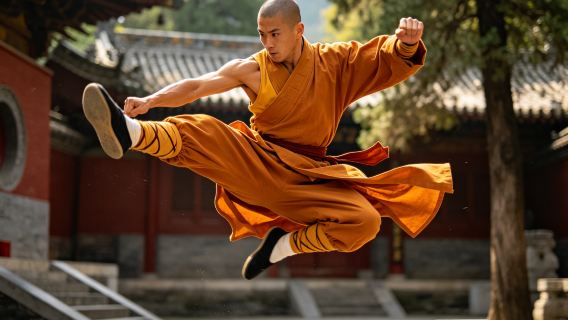
Luoyang Shaolin Temple & Pagoda Forest Day Tour from Luoyang/Zhengzhou | Kung Fu Show Included, Optional Kung Fu Class or English-Speaking Guide
󱌍
4.8/5
· 9 reviews· 109 booked
Duration: 5 hrs
English
Free cancellation
Instant confirmation
Book now for tomorrow
FromIDR 1,075,676
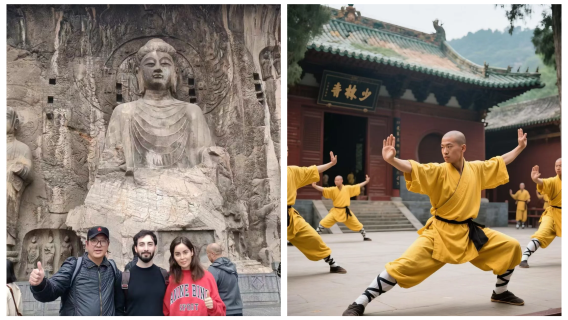
 Luoyang Private Day Tour to Longmen Grottoes & Shaolin Temple
Trip.Select
󱌍
4.9/5
· 13 reviews· 96 booked
Duration: 9 hrs
English
Free cancellation
Instant confirmation
Book now for tomorrow
FromIDR 1,345,139
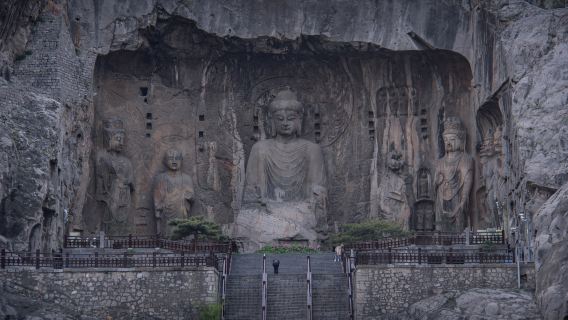
1-Day Tour: Longmen Grottoes, Shaolin Temple & Songyang Academy from Luoyang
Trip.Select
󱌍
4.8/5
· 13 reviews· 73 booked
Duration: 6.6 hrs
English
Free cancellation
FromIDR 2,516,310
Longmen Grottoes & Shaolin Temple from Luoyang Day Tour (with Kung Fu Show) |CITS × ZANBUS
󱌍
4.8/5
· 12 reviews· 44 booked
Duration: 9 hrs
English
Free cancellation
Instant confirmation
FromIDR 2,994,719
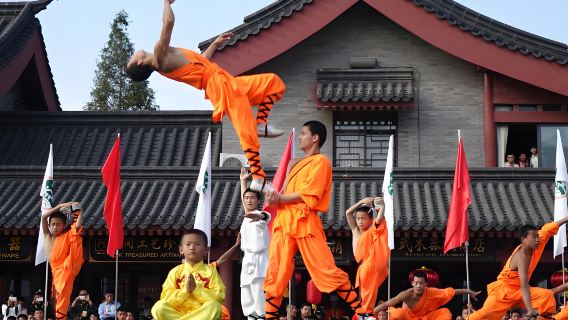
Zhengzhou Departure: Songshan Shaolin Scenic + Martial Arts Hall + Pagoda Forest + Sanhuang Village Group Day Tour
󱌍
4.4/5
· 5 reviews· 42 booked
Duration: 6.6 hrs
English
Free cancellation
Instant confirmation
FromIDR 1,180,492
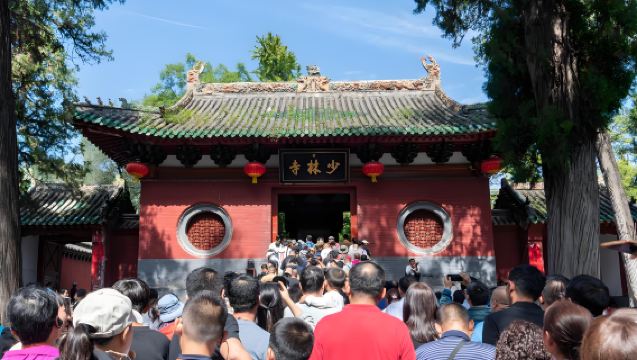
Luoyang Day Trip to Songshan Shaolin Scenic - Visit the Birthplace of Zen Buddhism and the Ancient Temple with a Millennium of History!
󱌍
4.3/5
· 3 reviews· 34 booked
Duration: 3.5 hrs
English
Free cancellation
Instant confirmation
Book now for tomorrow
FromIDR 1,087,295

More things to do

Private Tours in Yichuan

View More Private Tours in Yichuan
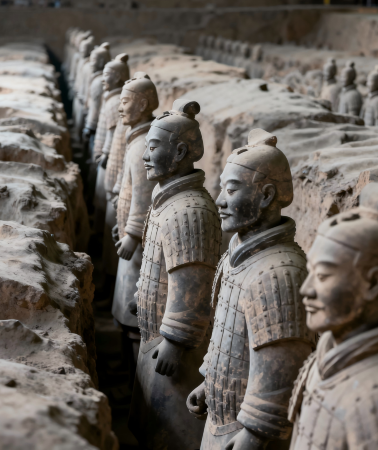
Group Tours in Yichuan

View More Group Tours in Yichuan
Yichuan Today's weatherFoggy 7-21℃
Yichuan weather for the next 2 days11/5: 5-19℃, 11/6: 8-12℃

Free things to do in Yichuan

What travelers say about Yichuan

user-avatar
NicangNovember 3, 2026
5.0
It is worth visiting. The place is huge but I find the number of visitors huge. It's kinda hard to see the grottoes up cup close. There are other things to see aside from the grottoes like the temple (forgot the name though), river viewing and of course you can also ride the boats with extra charge. Thus, the amount you pay is actually worth it.

Longmen Grottoes

user-avatar
M25***53October 19, 2026
5.0
There was a slight unpleasantness with the merchant's customer service when making the reservation, as I had booked a guided tour of the Longmen Grottoes, but the merchant's page description was incorrect and I requested a refund, which they refused. I only got a refund after contacting the platform's customer service. Because of this unpleasant experience, I didn't have high expectations for the tour. However, once inside the museum, Mr. Pei's explanation was truly dedicated, and he was a very kind person; it was clear he genuinely loved the experience. Special praise! 👍 He made up for the merchant's shortcomings! 👍

Luoyang Museum

user-avatar
还在路上的人January 4, 2026
5.0
The Vairocana Buddha is one of the iconic Buddha statues in the Longmen Grottoes scenic area of ​​Luoyang. Located in Fengxian Temple, it is grand in scale and graceful in appearance. It has a history of more than 1,300 years. It is said that its appearance was sculpted based on the face of Empress Wu Zetian.

Vairocana Buddha

user-avatar
_TI***obOctober 29, 2026
4.0
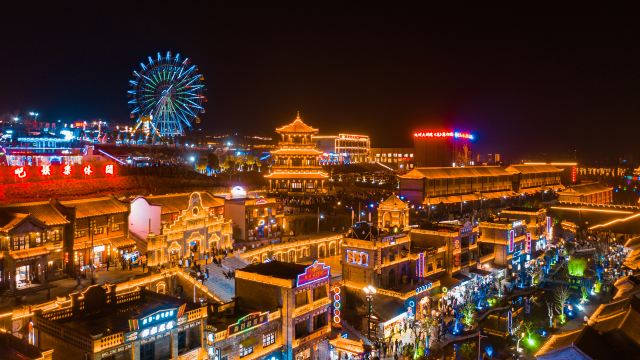
Beautiful place to make photoes and enjoy old Luoyang atmosphere. Recommended to visit at 18 and later to see lights and lanterns. It is necessary to raise up the gates, view is really nice. But be aware a lot of people that want your money to dress you and make photoes. Or may be you will like this experience.

Sui And Tang Dynasties Luoyang City Yingtian Gate Site

user-avatar
Clarke KOctober 25, 2026
4.0
This temple was quite busy when we visited. It's historical significance is on full display, including the tomb of Guan Lin. Right at the entry right hand side door way to the temple is a stone tablet carving of Guanlin on his horse by Yue-fei. This is not just a historical attraction, but also a living temple with many worshippers praying and burning incense filling the air and giving it a very authentic and lively religious ceremonial atmosphere. There are some plaque displayed along the path to the main Hall and inside some of the halls, indicating association and/ or contributions by Guan-gong Temples in foreign countries like Malaysia and Australia. There were also quite some people paying their respect at the tomb and walking around the huge mound. Overall, it's an attraction worth visiting. Hiring a guide at the service office in the temple may provide a better in depth narration of the temple and it's history.

Guanlin Temple

user-avatar
tb漂流October 18, 2026
5.0
In April, as spring warmed and flowers bloomed, I had the privilege of accompanying my mother to the Peony Garden at the Luoyang Sui and Tang Dynasty City Ruins, fulfilling a springtime rendezvous with peonies. The ancient charm of the Sui and Tang dynasties permeated the garden with spring colors. A gentle breeze stirred, and peonies of all colors burst into bloom, vibrant and elegant, their petals unfurling and swaying, releasing a subtle fragrance that softened the entire spring day. Beneath our feet lay the ancient soil of the Sui and Tang dynasties, and before us, a breathtaking spectacle of peonies, where ancient and modern elegance gently blended. Strolling slowly through the garden with my mother, we admired the blossoms, chatted about everyday life, and quietly captured these tender and beautiful moments. Shedding the hustle and bustle of daily life, we didn't rush; we simply wanted to quietly accompany her, feeling the fragrance of flowers and the gentle passage of time. Flowers bloom in their season, but time is gentle; the most beautiful scenery is never limited to a garden full of spring colors. Before, I was always busy with life, neglecting time with my family. At this moment, I deeply understand that the most precious happiness in the world is the health and well-being of my parents, and their companionship year after year. May every year bring spring sunshine and blooming flowers, may I always be by my mother's side, cherishing every moment of warmth and companionship, living up to the beauty of the flowers and the warmth of her love.

Sui and Tang Dynasty Town Botanic Gardens

user-avatar
陌染MMOctober 17, 2026
5.0
The ruins of Luoyang City during the Sui and Tang Dynasties are located in the suburbs of Luoyang City. Construction began during the reign of Emperor Yang of Sui, and its layout was modeled after the Sui Dynasty's Daxing City. At that time, it was known as the Eastern Capital or Tokyo. It served through the Sui, Tang, Five Dynasties, and Northern Song Dynasties, lasting for over 500 years, acting as the Eastern Capital of the Sui and Tang Dynasties and the Western Capital of the Northern Song Dynasty. During the reign of Emperor Yang of Sui, the palace city, imperial city, and outer city were built successively. Five wards were established south of the outer city, and three more were opened to the northeast. In the second year of the Qianfeng era of Emperor Gaozong of Tang (667 AD), the Yang Palace was built southwest of the imperial city.

Sui and Tang Luoyang City National Heritage Park

user-avatar
sunlei000October 31, 2026
4.0
The garden is quite large. There's an air-conditioned room where you can see peonies during the May Day holiday, but you need to buy a ticket. There are electric scooters inside the garden for a fee. There's a beef soup restaurant across the street; you can eat there! This is the only place where peonies are still blooming during the May Day holiday; they won't be available anywhere else.

China National Flower Garden

user-avatar
Soh Kien PengSeptember 23, 2026
5.0
From Yuntaishan, we boarded a bus bound for Luoyang. The journey was long — more than four hours on the road. We left at 2:30 pm and only arrived close to 7:00 pm, which meant our first day in Luoyang was largely consumed by travel. That evening, drained from the ride, I managed only a brief visit to Yingtianmen, illuminated against the night sky.The following day was devoted entirely to two of Luoyang’s most iconic sites: the Longmen Grottoes and the White Horse Temple. After exploring the temple, we caught bus no. 58 directly to Luoyi Ancient City. By then, the hours of walking through grottoes and temple grounds had left us physically exhausted. Still, the ancient city welcomed us with free admission and a promise of cultural immersion.Dinner was taken at a basement food court along Minzhu Street. By the time we finished, night had fallen, and Luoyi Ancient City had transformed. The streets glittered with lanterns, music pulsed through the air, and the atmosphere was electric. Crowds gathered near the lake to watch 天女散花 — the “Fairy Scattering Flowers” dance performance — though we chose not to linger.Luoyi Ancient City (洛邑古城) remains one of China’s most authentic living historic districts. Here, 3,000 years of dynastic history — from the Zhou to the Ming — can still be felt in its preserved city walls, pagodas, canals, and performances. It is not simply a relic of the past, but a vibrant cultural stage where history and daily life coexist.

Luoyi Ancient City

user-avatar
山在穷游November 10, 2024
5.0
Many tourists write about the beautiful night view of Longfengshan Ancient Town. I stayed here for a night and felt the beauty of the morning. The greatest beauty of the morning is that there are no people. I am the only one wandering around the ancient town and taking beautiful photos. There are also some photos I like.

Luoyang Longfeng Mountain Scenic Area

Trip Moments in Yichuan

Popular cities near Yichuan

Frequently asked questions

You can give Luoyang Palace Banquet • A Feast Through the Centuries [Yingtianmen Branch] (Immersive Imperial Feast + Audiovisual Extravaganza + Ancient-style Music and Dance) and Luoyang Tang dynasty palace feast - enjoy 12 exquisite dishes while watching a performance - Yingtian grand banquet a try. Before you go, please check their opening hours and menus online. Reservations are recommended, especially during peak hours.

When choosing a tour, start with how much time you have and the kind of experience you're looking for. Trending options right now include Luoyang Shaolin Temple and Longmen Grottoes Day Tour(Optional Group Tour), Luoyang Songshan Shaolin Temple + Longmen Grottoes Day Trip including martial arts performance / Small group or English-speaking guide optional, and Luoyang Shaolin Temple & Pagoda Forest Day Tour from Luoyang/Zhengzhou | Kung Fu Show Included, Optional Kung Fu Class or English-Speaking Guide. Check the real-time availability and itinerary before you book.

As of November 5, 2026, the reference price for day tours and activities in Yichuan is around IDR 913,514 – IDR 2,994,719. Rates vary by duration, group size, transportation, tickets, meals, and any special admission requirements. Before you book, please confirm the billing currency and whether the price is quoted per person or per group.

Get help anytime, anywhere within 30 secondsContact customer support

Change and cancellation policies vary by attractions and tours. Please check the product details page for more information.

Ticket prices may vary between weekdays and weekends, as well as during peak and off-peak seasons. When booking with Trip.com, you can also use Trip Coins to get extra savings. For more tips on booking discounted tickets, please visit Trip.com for the latest information.