Wudang Mountains

Things to do in Wudang Mountains

Search attractions or local attractions & tours
Search

Explore top experiences

Top 10 attractions in Wudang Mountains

View all Attractions
Wudang Mountain Scenic Area
No. 5 of Best Things to Do in Hubei

Wudang Mountain Scenic Area

8.1
4.6/5
15.6k reviews

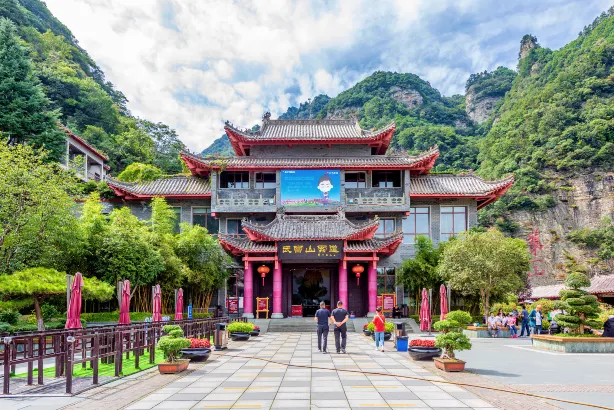
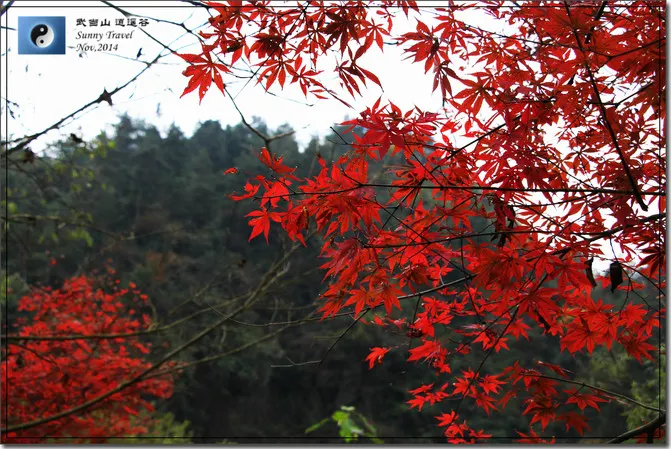
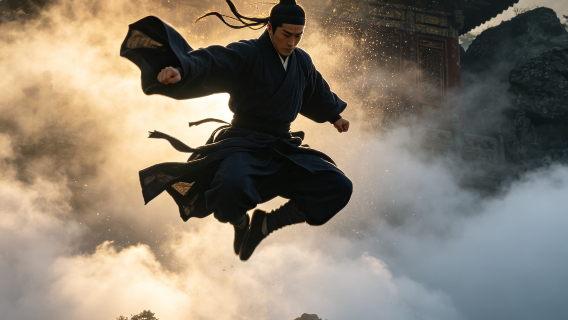
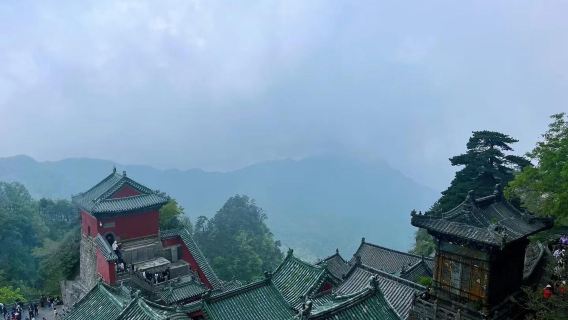
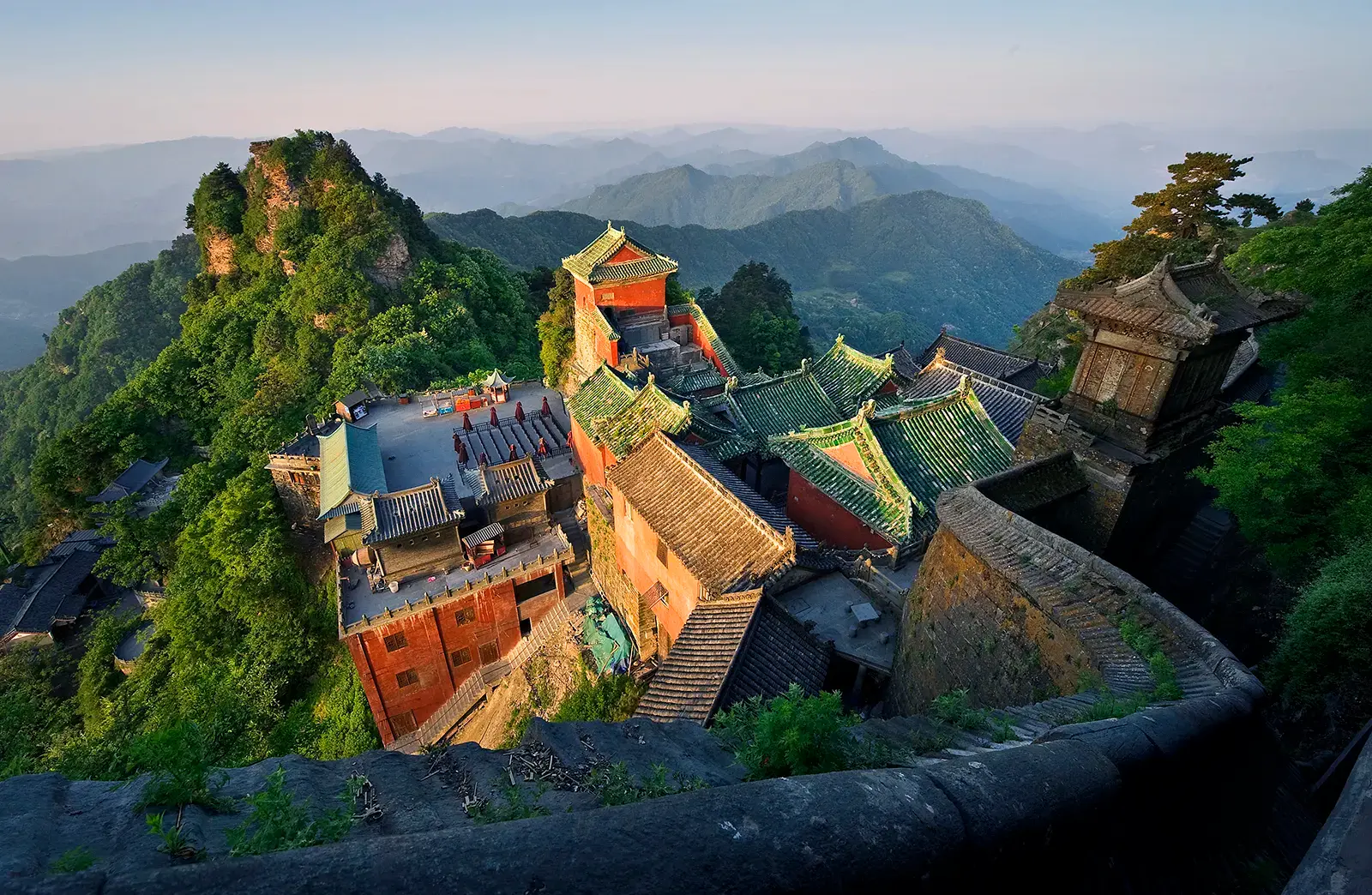
The Wudang Mountains are located in Shiyan, northwestern Hubei province. Its main peak, Tianzhu Peak, stands at an elevation of over 1,600 m. Legend has it that Emperor Zhenwu cultivated and ascended to immortality here, while Taoist Zhang Sanfeng further synthesized the essence of martial arts during the late Yuan and early Ming dynasties, making this the birthplace of Wudang martial arts. During the Yongle era of the Ming dynasty, the imperial court launched the monumental project of "constructing the Forbidden City in the north and building the Wudang Mountains in the south." The mountain temples were built according to royal standards, with their layout unfolding layer by layer following the mythological narrative of Zhenwu's spiritual cultivation. The palaces blend harmoniously with the peaks, cliffs, and streams, creating an ethereal and mystical atmosphere befitting a sacred mountain. The attractions unfold along the mountain terrain from the base to the summit, connecting key areas like Taizi Slope, Zixiao Palace, Nanyan Palace, and Taihe Palace. At Taizi Slope, the undulating Nine-bend Yellow River Wall follows the mountain contours, while Wuyun Tower's "one pillar supporting twelve beams" remains an architectural marvel. Zixiao Palace, a well-preserved imperial Taoist temple, features the stately Zixiao Hall with its double-eaved, nine-ridged roof. Nanyan Palace clings dramatically to a cliff face, offering vertiginous views of the valley below. Ascending the stone-paved ancient path to Tianzhu Peak's summit reveals the gilded bronze Golden Hall—the architectural masterpiece of the entire complex. As the birthplace of Wudang martial arts, this place attracts enthusiasts from home and abroad who come to seek masters and practice martial arts. The Taizi Slope on the mountain and the Xuantian Yuxu Palace at the foot serve as daily training grounds for practitioners. If you happen to encounter Taoist priests or students demonstrating Wudang boxing techniques, take a moment to quietly observe and appreciate the centuries-old martial arts heritage. A two-day visit is recommended: On the first day, enter from the mountain gate to visit Taizi slope and Zixiao palace, then stay overnight near Wuyaling. On the second morning, first visit Nanyan palace, then ascend to the golden summit before hiking down or taking the cableway at Qiongtai. After exiting the mountain gate, you may also visit Xuantian Yuxu palace. The attraction's shuttle buses connect all major core attractions, allowing flexible combinations of hiking and riding. Most dining and lodging options are concentrated around Nanyan, convenient for rest during the climb. From late October to November each year, when the forests are ablaze with color and red leaves cover the mountains, it's the perfect time to enjoy the fall scenery in the mountains.

Danjiangkou · 43 km from downtown
From DKK 245.23
Wudang Mountain  Cableway

Wudang Mountain Cableway

5.9
4.8/5
187 reviews

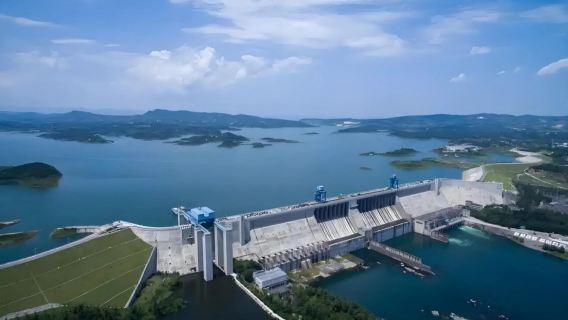
The Wudang Mountain Taihe Cableway is the only transportation to the Golden Summit attraction in the Wudang Mountain scenic area, providing visitors with a convenient and efficient mountain-climbing experience. The cableway goes directly near the Golden Summit at Tianzhu Peak, and it takes about 20 min to reach the top after getting off the cableway. The cable car is designed with a focus on ecological preservation and seamless integration with the views. Featuring panoramic windows, visitors can enjoy breathtaking vistas of Wudang Mountain's towering peaks and misty landscapes. Along the route, ancient architectural complexes harmoniously blend with natural terrain. As the transportation cable car to the Golden Summit, its terminal at Qiongtai Zhongguan serves as both a starting point for hiking and a significant part of Ming Dynasty royal architecture, surrounded by classic scenic spots. Wudang Mountain, a sacred site of Taoism in China, is also known as Taihe Mountain, Xieluo Mountain, Canshang Mountain, and Xianshi Mountain. Historically referred to as "Taiyue," "Xuanyue," and "Dayue," it is located in Danjiangkou City, Shiyan, northwestern Hubei Province. Bordering Xiangyang to the east, Shiyan to the west, Shennongjia to the south, and the Danjiangkou Reservoir—the source of the central route of the South-to-North Water Diversion Project—to the north, Wudang Mountain's Golden Summit, also called the Dayue Taihe Palace, stands atop Tianzhu Peak, the highest pinnacle of Wudang, towering above the surrounding peaks and piercing the clouds.

Danjiangkou · 49.7 km from downtown
Wudang Mountain Scenic Area - Golden Summit
No. 1 of Best Things to Do in Wudang Mountains

Wudang Mountain Scenic Area - Golden Summit

5.2
4.5/5
11 reviews

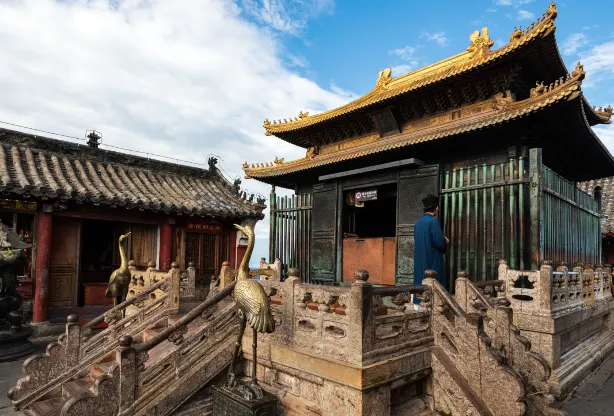
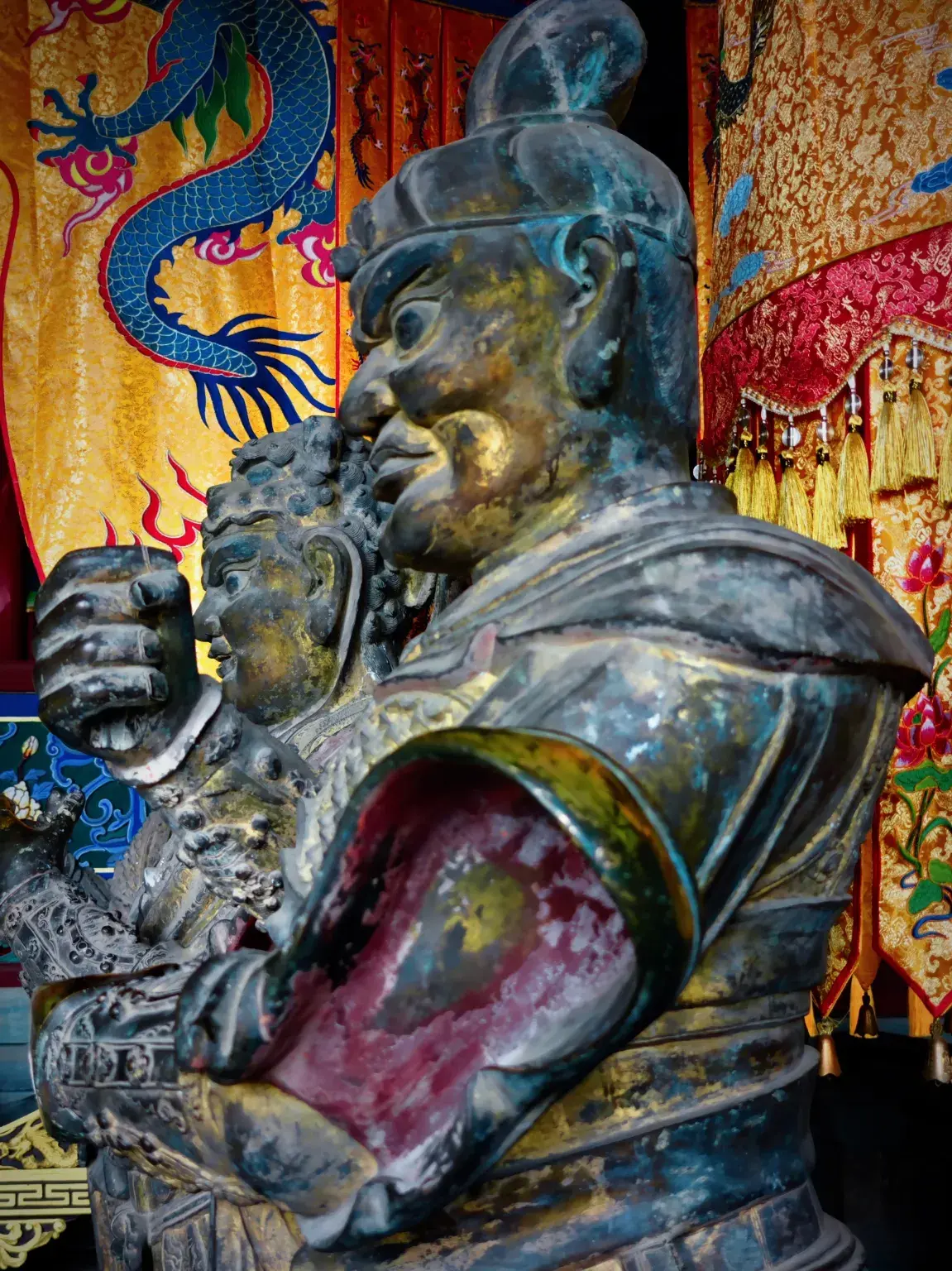
Wudang Mountain Scenic Area - Golden Summit is located at the summit of the master of Tianzhu Peak, the main peak of the Wudang Mountains, at an altitude of over 1,600 m, and is the final destination for pilgrims throughout history. During the Yongle reign of the Ming Dynasty, the imperial court "built the Forbidden City in the north and renovated Wudang in the south," casting the Golden Hall at the summit. The hall is made entirely of gilded bronze. After the components were cast in Beijing, they were transported by water via the Grand Canal, the Yangtze River, and the Han River to the foot of the mountain, then carried up the mountain and assembled. It has remained gleaming for hundreds of years despite the elements. Inside the hall is a gilded bronze statue of Emperor Zhenwu, depicted with disheveled hair and bare feet, dressed in imperial robes. Flanked by the Golden Boy and Jade Maiden, as well as the Water and Fire Generals, this place is therefore regarded as the core of the Zhenwu faith. The climb to the summit is a pilgrimage in itself. Ascending the ancient sacred path, you pass through Yitian Gate, the Second Heavenly Gate, the Three Heavenly Gates, and Chaotian Palace in turn, before arriving at Taihe Palace and passing through the stone walls of Zijin City that surround the summit. Standing at the summit and looking around, the surrounding peaks guard the main peak, embodying what the ancients called the "seventy-two peaks bowing to the Great Summit." Clouds and mist in the mountains gather and disperse unpredictably. On clear days, you can overlook the layered ridges, and when the clouds rise, the peaks are half-hidden, as if floating above a sea of clouds. In the Zhuan Yun Hall on Xiaolian Peak, there is a small Yuan Dynasty bronze hall that predates the Golden Hall. It is easily overlooked but worth a special visit.

Danjiangkou · 49.8 km from downtown
Nanyan Palace

Nanyan Palace

4.2
4.7/5
217 reviews

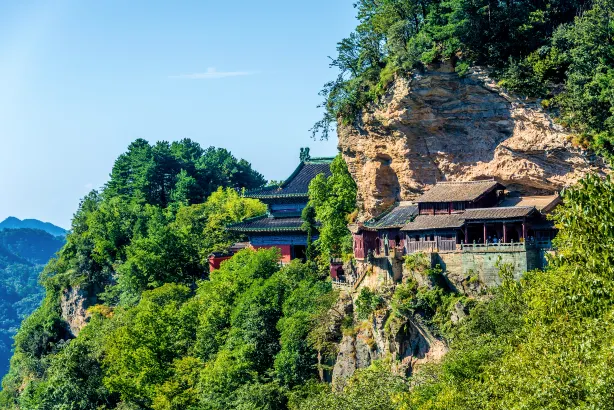
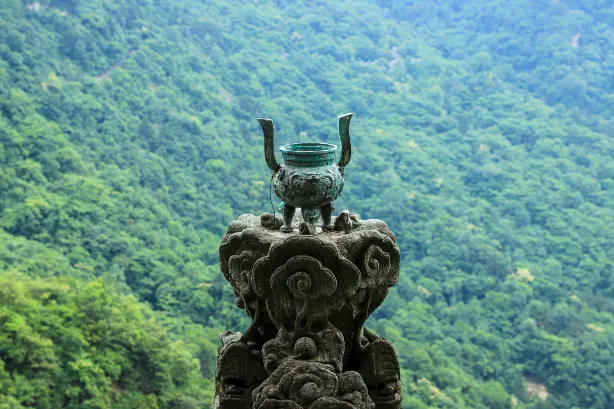
Nanyan Palace is situated on the cliffs of Nanyan in the Wudang Mountain Scenic Area. Its full name is Nanyan Palace, and its existing structures were built during the Yuan and Ming dynasties. The entire complex is embedded into the sheer cliffs, following the natural terrain. On the northern slope, you will find structures such as the South Heavenly Gate, Imperial Stele Pavilion, and Dragon and Tiger Hall. Along the southern cliff face are halls including the Huangjing Hall, Liangyi Hall, and the stone Tianyi Zhenqing Palace. The palace also preserves dozens of historical steles and numerous cliff inscriptions. Legend has it that the Great Emperor Zhenwu practiced Taoism and ascended to heaven in the Nanyan area, making this one of the most important sites for the Zhenwu legends in the Wudang Mountain Scenic Area. The stone Tianyi Zhenqing Palace within the complex is particularly worth a close look. Built during the Yuan Dynasty, this stone hall features a wood-mimicking structure where beams, columns, doors, windows, and plaques were all carved from bluestone and assembled using mortise-and-tenon joints. From a distance, it looks as if a wooden hall was entirely "translated" into stone. The hall stands tightly against the cliff face; the difficulty of constructing such an all-stone structure on a precipice is unimaginable, and it has long been regarded as a treasure of ancient Chinese stone architecture. On the cliff outside Liangyi Hall, a stone beam carved with a dragon extends into the air, with a small incense burner perched on the dragon's head. This is the famous "Dragon Head Incense." The stone beam extends more than 2 m over the cliff, with a width only enough for one person to move sideways, with a deep valley below. In ancient times, pilgrims would often risk their lives by crawling on their knees to the dragon's head to offer incense, and many fell to their deaths, leading to an official ban. Today, the Dragon Head Incense is surrounded by railings, and visitors may only view and photograph it from behind the barrier; do not climb over. Standing on the cliff edge in front of the palace, you can look out at the Wudang Mountain Scenic Area - Golden Summit, the main peak of the Wudang Mountain Scenic Area, surrounded by mountains. When shrouded in mist, it feels as if it is floating in the air. Near the palace area, Feisheng Cliff is surrounded by cliffs on 3 sides, and you can take a small path to the top of the cliff to look out over the mountains. Legend says that the Great Emperor Zhenwu practiced here for many years before ascending to heaven. A giant rock extending into the air on the cliff is called the Qixingzhai Scenic Area - Shixin Stone (Test-Heart Stone), where it is said Zhenwu leaped to achieve enlightenment and ascend to heaven. The giant rock overlooks a deep abyss, so please only view it from a distance and do not step on it. When visiting, it is common to take the scenic area shuttle bus to Crow Ridge, then walk down an ancient path through the South Heavenly Gate to enter the palace area. The fork in the road to Feisheng Cliff is nearby and easy to miss, so it is recommended to allow enough time.

Danjiangkou · 48.1 km from downtown
Yuxu Palace
No. 2 of Night Attractions in Shiyan

Yuxu Palace

4.3
4.5/5
118 reviews

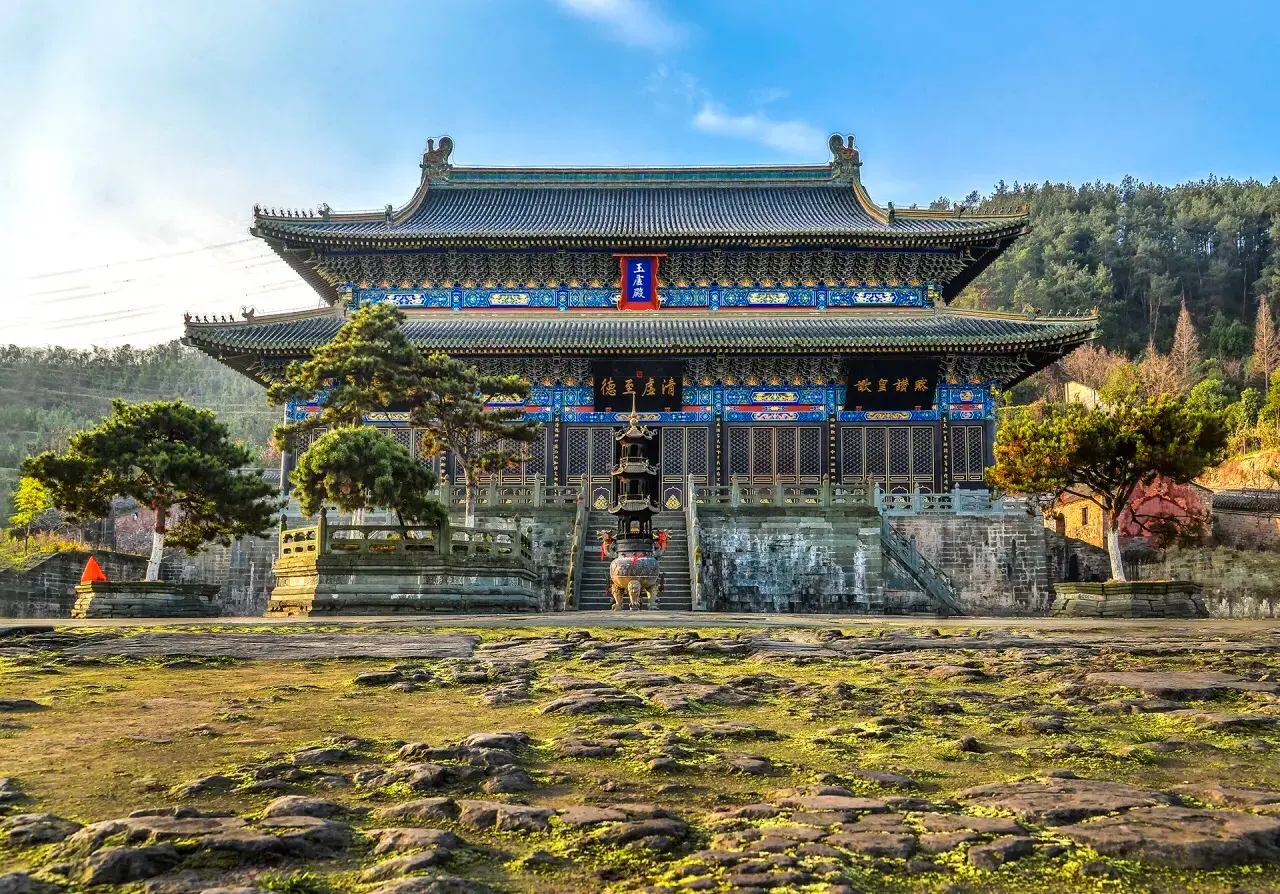
Yuxu Palace is located on the flat ground at the northern foot of the Wudang Mountain Scenic Area. It is an important palace complex left at the foot of the mountain as part of the Ming Dynasty project of "building the Forbidden City in the north and renovating Wudang in the south." It was built by imperial decree in the 11th year of the Yongle reign (1413) and expanded on a large scale during the Jiajing reign. At its peak, it had over 2,000 halls and rooms. Because the laborers and craftsmen who built Wudang once camped here, it is popularly known as "Laoying" (Old Camp). The imperial court's headquarters for managing the Wudang Mountain Scenic Area was located within the palace, with a 6th-rank "Tidian" (superintendent) Taoist official personally selected by the emperor stationed here to oversee all the temples and Taoists on the mountain. The palace's name was decreed by the Yongle Emperor, derived from the title "Yuxu Shixiang" bestowed upon the Zhenwu Great Emperor. The fate of this palace complex has been quite turbulent: a fire in the 7th year of the Tianqi reign of the Ming Dynasty (1627) destroyed the main hall on the central axis, and it was subsequently ravaged by repeated fires and flash floods, leaving large areas of the palace in ruins. Today, the palace preserves two palace walls about 1 km long, two stele pavilions, five hall foundations, and the ruins of the East Heavenly Gate, West Heavenly Gate, and North Heavenly Gate, with a few Qing Dynasty reconstructed buildings such as the Parents Hall and Yuntang interspersed among them. Inside the stele pavilions, giant bixi (mythical tortoise-like creatures) carry imperial steles from the Yongle and Jiajing reigns. The coiled dragon reliefs on the stele tops are magnificent and imposing, well worth stopping to admire. After years of protective restoration, the palace gate, Dragon and Tiger Hall, Jade Hall, and Jade Belt River have been restored to their original appearance. They coexist in the same courtyard with large areas of Ming Dynasty rammed-earth foundations, creating a unique visual experience where the ruined and the restored exist side by side. Unlike the temples on the mountain that are built according to the cliffs and terrain, Yuxu Palace is spread out on a flat, open basin, with courtyards unfolding in layers and a wide, clear view. Because of this open courtyard, one can see people practicing Wudang martial arts all year round, including many foreign martial arts enthusiasts who have come specifically to learn. The flash of swords against the backdrop of mottled palace walls and centuries-old foundations creates a scene rarely seen elsewhere.

Danjiangkou · 40.4 km from downtown

Experiences you can't miss in Wudang Mountains

More things to do

Wudang Mountains Today's weatherClear 6-21℃
Wudang Mountains weather for the next 2 days11/28: 5-17℃, 11/29: 5-18℃

Free things to do in Wudang Mountains
What travelers say about Wudang Mountains
user-avatar
Yanni777November 26, 2026
5.0
A truly delightful trip to Wudang Mountain, exceeding all expectations! The scenic area's facilities are exceptionally well-designed, with the shuttle bus being a major highlight. There were ample services, efficient scheduling, clear transfer instructions, and smooth driving, saving the fatigue of driving on the winding mountain roads and making the ascent and descent effortless. The Qiongtan Cableway is incredibly convenient, a perfect choice for older visitors or those who prefer a less strenuous hike, significantly conserving energy while offering breathtaking panoramic views of the layered mountains from the air. The Golden Summit was undoubtedly the highlight of the trip. Standing atop the summit, overlooking the surrounding mountains shrouded in mist, created a truly immersive atmosphere. The ancient architecture blended seamlessly with the landscape, exuding a profound Taoist culture – a sight well worth visiting. The trails along the way were well-maintained and clearly marked. The only cavernous area to note is the unpredictable weather on the mountain, with significant temperature differences between day and night. Overall, the scenic area offers mature services and a well-planned, energy-saving route. I highly recommend combining the cable car and shuttle bus for a truly unique and magnificent experience of Wudang Mountain!

Wudang Mountain Scenic Area

user-avatar
lulu20070503November 1, 2026
4.0
On the first morning of the National Day holiday, there weren't too many people, but there was only one path to the mountaintop, and it got congested shortly after getting off the cable car. You can imagine how bad the congestion would be later. It was raining at the summit, so there was practically nothing to see, and with the traffic jam, I think there could be a sign below the cable car station clearly explaining the situation at the top; that might have reduced the congestion. However, the cafes and shops in the plaza before the cable car station deserve praise; beautiful scenery and delicious coffee made for a great experience.

Wudang Mountain Cableway

user-avatar
M31***95October 10, 2026
5.0
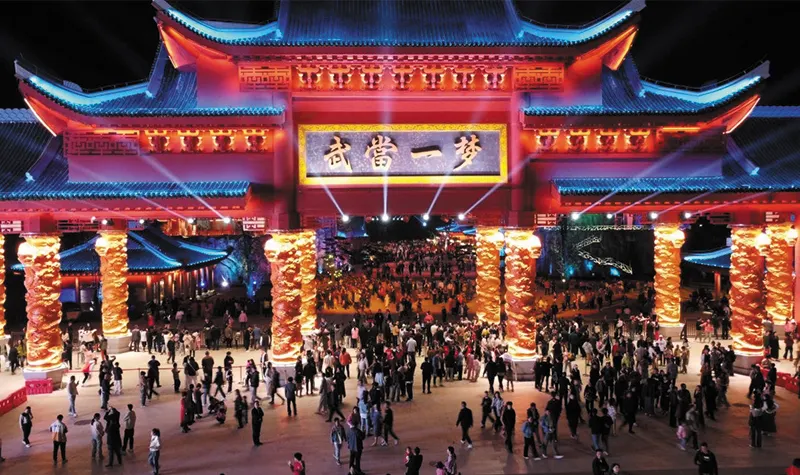
Visit the immersive performance "A Dream of Wudang" during the National Day holiday! The stage design and special effects are stunning, with high-altitude wire work and Tai Chi performances creating a truly immersive atmosphere. The story recounts the history of Wudang's construction. The only downside is the crowds during the holiday; early arrival is recommended.

Wudang Yimeng Scenic Area

user-avatar
山风小甜饼August 13, 2025
5.0
Wudang Golden Summit is the most worthwhile place to visit in Wudang Mountain. Especially after climbing the steep stairs with trembling legs, listening to the crows' calls, and seeing the small house on the top of the mountain, you will feel emotional. What's more, the Golden Summit is built with oriental aesthetics, very beautiful and noble.

Wudang Mountain Scenic Area - Golden Summit
user-avatar
涧松听雨July 8, 2025
5.0
Nanyan Palace is an extremely important and distinctive part of the ancient buildings in Wudang Mountain. It enjoys a high reputation, mainly based on the following points: ​ ​1. Excellent geographical location and breathtaking architectural wonders: • "Hanging Temple"-like steepness: The biggest charm of Nanyan Palace is that it is built on a cliff. Its main building is built on the mountain and embedded between the cliffs. In particular, the famous "Dragon Head Incense" (also known as Dragon Head Stone) extends about 3 meters from the cliff and overlooks the deep valley. It is extremely breathtaking and is one of the most iconic landscapes in Wudang Mountain. This "fairy mountain and pavilion"-like architectural art embodies the ancient people's philosophical thought of "harmony between man and nature" and extraordinary engineering technology. • Magnificent natural scenery: Located at the southern foot of Wudang Mountain, it has a wide view. From here, you can see the Golden Summit (Tianzhu Peak) from a distance, overlooking the mountains and valleys. When surrounded by clouds and mist, it is like a fairyland.​ 2. Profound Taoist cultural heritage and historical value: •The core place of Zhenwu Emperor belief: It is said to be the "holy land" where Zhenwu Emperor attained enlightenment and ascended to heaven, and it has a high status in Taoist legends. The Liangyi Hall and Tianyi Zhenqing Palace Stone Hall in the palace are important places for Taoist activities. ​ •Royal style: As a Taoist palace built by the royal family of the Ming Dynasty (built by imperial order in the 10th year of Yongle), its architectural regulations are not as grand as Taihe Palace and Zixiao Palace due to terrain restrictions, but it still reflects the solemnity and style of royal architecture. ​ •World Cultural Heritage: As a core component of the "Wudang Mountain Ancient Buildings", it was listed in the "World Heritage List" by UNESCO in 1994. ​ 3. Exquisite architectural art and stone carvings: •Stonework model: Tianyi Zhenqing Palace is a stone hall with an imitation wooden structure, all made of stone carving and mortise and tenon joints, with exquisite craftsmanship. It is a masterpiece of stone structure architecture in the Yuan Dynasty and has great historical and artistic value.​ •Rich Taoist stone carvings: There are many exquisite cliff carvings, steles, and stone carvings related to legendary stories such as "Prince Lying on the Dragon Bed" preserved inside and outside the palace, which are rich in cultural connotations. ​ •Unique palace layout: Due to the terrain restrictions, its layout is not the traditional central axis symmetry, but cleverly follows the mountain terrain, with a unique style. ​ 4. Important pilgrimage and tourism nodes: •Important starting point/passing point for climbing the Golden Summit: For tourists who hike to the Golden Summit, Nanyan Palace is a must-go place and an important rest and supply station. ​ •Core attractions are concentrated: In addition to Longtouxiang and Tianyi Zhenqing Palace, there are also Nantianmen, Xuandi Temple Ruins, Feisheng Rock, Dressing Table, Langmei Temple and other attractions densely distributed with rich content. ​ ​Some aspects that need attention (not negative, but objective reminders): ​ •The terrain is steep and you need to be cautious when visiting: Especially the road to Longtouxiang is narrow and steep, and you need to pay attention to safety when there are many people. In order to protect the cultural relics and tourists' safety, it is now forbidden to burn incense on the Dragon Head Stone (you can burn incense in the newly built incense burner next to it). ​ • Some buildings are ruins: They have been damaged in history (such as thunder and fire, war), and some buildings (such as the Xuan Emperor Hall) are now ruins, but you can still feel the scale and atmosphere of the past.

Nanyan Palace

user-avatar
浪漫的追August 8, 2025
5.0
玉虚宫,隐匿在武当山脚下的宫殿,真的太震撼了!​玉虚宫保存着永乐年间的“三朝五门”建制。玉宫门的门钉多为横九路、竖九路,九路门钉是皇家宫殿独有的标识,象征着皇权的至高无上。据说武当山总共就12座御碑亭,玉虚宫就有4座。

Yuxu Palace

user-avatar
鲲哥爱旅游July 19, 2024
5.0
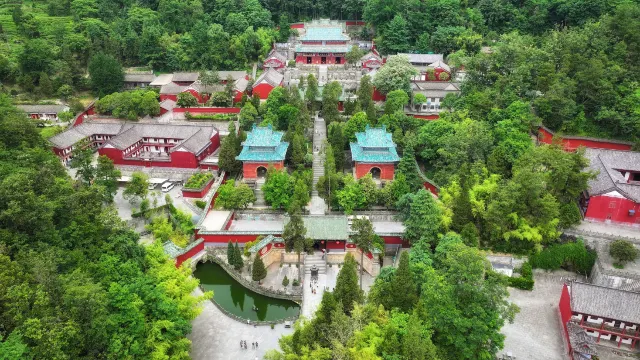
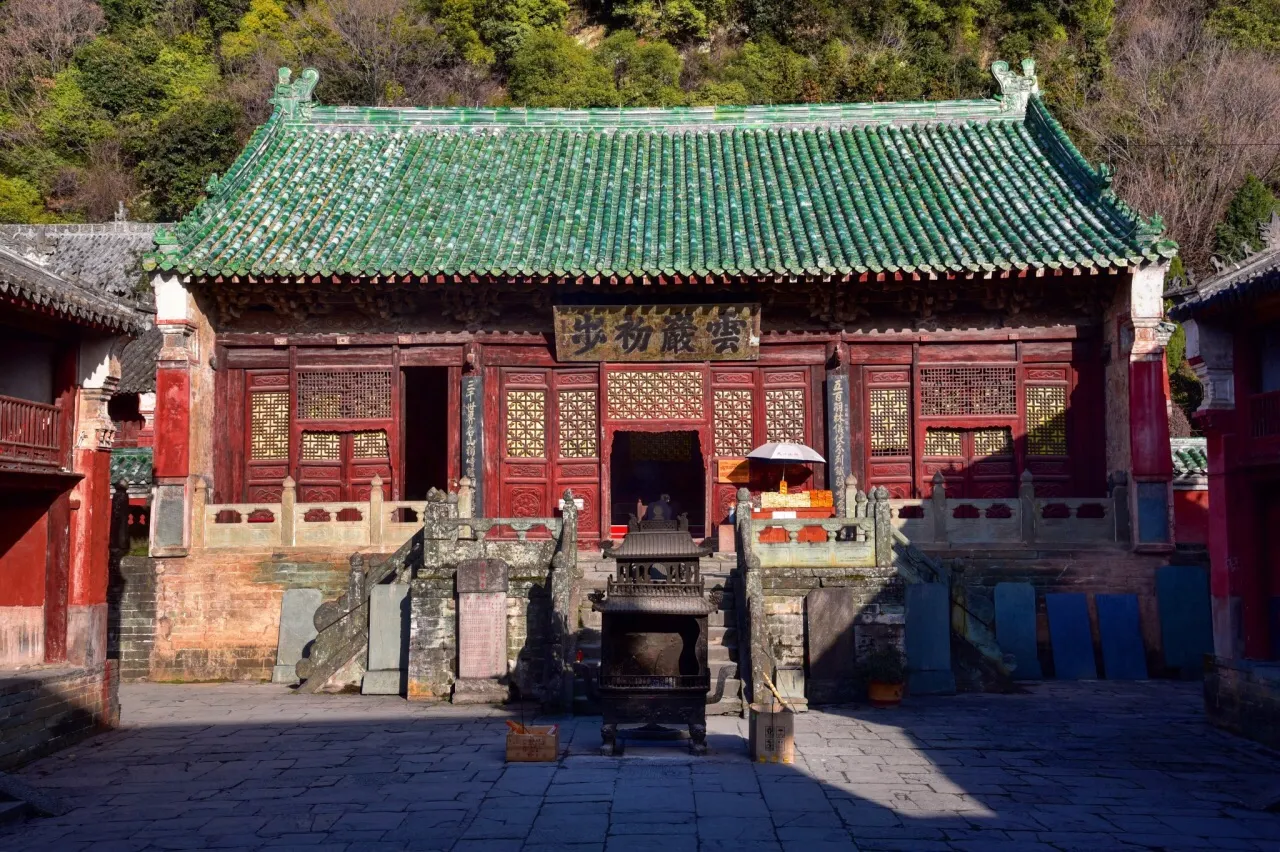
The Purple Sky Palace is one of the most complete existing palaces in Wudang Mountain. It is located at the foot of Zhanqi Peak, northeast of Tianzhu Peak, the main peak of Wudang Mountain. It was first built during the Xuanhe period of the Song Dynasty. After being rebuilt and expanded during the Yuan, Ming and Qing dynasties, it has formed its current size. The Purple Sky Palace is not only famous for its exquisite architecture and profound cultural connotations, but also for its unique geographical location, and is known as a Feng Shui treasure land. The surrounding peaks naturally form a throne shaped like two dragons playing with a pearl, making the Purple Sky Palace particularly sacred and solemn.

Zixiao Palace

user-avatar
水漫三楼January 21, 2026
5.0
The first major transfer point for the internal shuttle bus service within the Wudang Mountain Scenic Area is Taizipo, whose core attraction is Fuzhen Temple. Legend has it that when Emperor Yongle (Zhu Di) of the Ming Dynasty was building the Forbidden City in the north and constructing the Wudang Mountains in the south, he revered Zhenwu the Great as the place where he practiced as a prince. The Nine-Bend Yellow River Wall, the Patriarch Hall, and the Five Clouds Tower are must-see attractions in the Taizipo Scenic Area. The Five Clouds Tower's top floor, with its unique twelve-beam pillar structure, is particularly remarkable and rarely seen in the world, leaving visitors in awe.

Taizi Slope

user-avatar
云石雨September 3, 2023
4.0
The Dragon Head Incense is a stone beam with a dragon carving beside the cliff outside the "Tianyi Zhenqing Wanshou Palace Stone Hall" in Nanyan. The stone beam is suspended 2.9 meters in the air and is about 30 centimeters wide. There is a coiled dragon carved on it, and an incense burner is carved on the top of the dragon head. Therefore, it is known as "the best incense in the world - Dragon Head Incense". This is one of the most beautiful landscapes in Wudang Mountain. You must go and see it.

Dragon Head Incense

user-avatar
勇猛十温柔March 16, 2020
5.0
Xiaoyao Valley. Xiaoyao Valley is commonly known as the Monkey Valley. The valley is shaded by green trees, with birds singing and flowers blooming, and there are many kinds of animals. In particular, the monkeys in Xiaoyao Valley are the most representative attractions among the "Eight Scenic Spots" of Wudang Mountain. Children like it very much.

Xiao Yao Valley, Wudang

Trip Moments in Wudang Mountains

Popular cities near Wudang Mountains

Frequently asked questions

What are the recommended tours and excursions in Wudang Mountains?

When choosing a tour, start with how much time you have and the kind of experience you're looking for. Trending options right now include Private tour|Wudang Mountain 1-day tour to Taoist holy sites Zixiao Palace + Taizi Slope + Kung Fu show, 1-day tour to Wudang Scenic Spot + Taizi Slope + Zixiao Palace in Shiyan, Hubei with bilingual service, and Shiyan, Hubei: Private customized 1-day tour | Flexible itinerary | Private charter | Exclusive group | Worry-free journey. Check the real-time availability and itinerary before you book.

As of November 27, 2026, the reference price for day tours and activities in Wudang Mountains is around DKK 1,174.45 – DKK 1,826.92. Rates vary by duration, group size, transportation, tickets, meals, and any special admission requirements. Before you book, please confirm the billing currency and whether the price is quoted per person or per group.

Get help anytime, anywhere within 30 secondsContact customer support

Change and cancellation policies vary by attractions and tours. Please check the product details page for more information.

Ticket prices may vary between weekdays and weekends, as well as during peak and off-peak seasons. When booking with Trip.com, you can also use Trip Coins to get extra savings. For more tips on booking discounted tickets, please visit Trip.com for the latest information.