Singapore Plug Type, Voltage & Power Outlets Explained
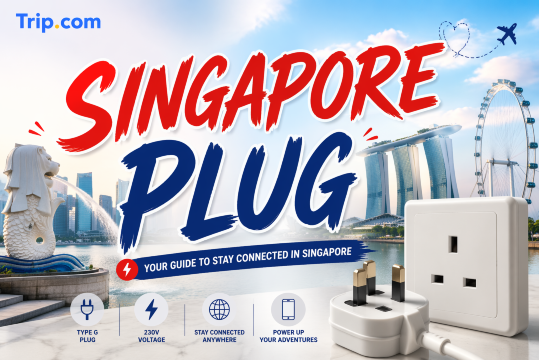
Flying to Singapore from the Philippines? Before packing your charger, power bank, or hair tools, check the plug rules first. Singapore uses Type G sockets with three rectangular pins. Filipino travelers usually need a Type G travel adapter, but most phone and laptop chargers do not need a voltage converter.
Do You Need a Plug Adapter in Singapore?
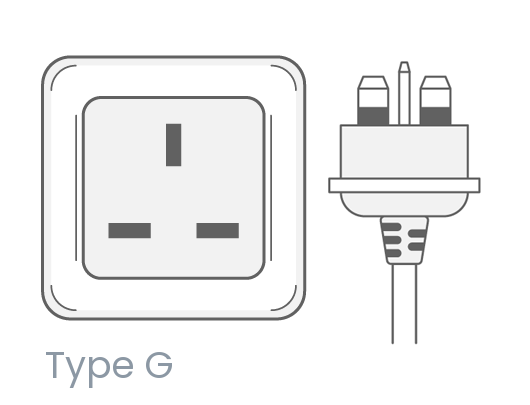
Yes, most Filipino travelers need a plug adapter in Singapore. Singapore uses Type G power sockets, which have three rectangular pins in a triangle shape. This is the same plug style used in the UK, Malaysia, and Hong Kong.
In the Philippines, many chargers use Type A, Type B, or Type C plugs, so they may not fit directly into Singapore outlets. If your charger has a flat two-pin plug or round two-pin plug, bring a Type G adapter before your trip.
| Item | Singapore |
|---|---|
Plug type | Type G |
Pin shape | Three rectangular pins |
Voltage | 220 to 240V |
Frequency | 50Hz |
Adapter needed for Filipino travelers | Usually yes |
Voltage converter needed | Usually no for phones and laptops |
You will usually see Type G sockets in hotels, serviced apartments, shopping malls, Changi Airport, cafes, offices, and tourist attractions. Some hotels may have USB ports or universal sockets, but you should not depend on them. It is still safer to bring your own Type G adapter.
Unlock the Best Flights to Singapore


Can Filipino Travelers Use Their Chargers in Singapore?
Yes, most Filipino travelers can use their chargers in Singapore, as long as they have the correct plug adapter. Since the country utilizes Type G outlets, standard Philippine plugs will not fit directly.
Most phone chargers, laptop chargers, camera chargers, tablet chargers, and power bank chargers are dual voltage. This means they can usually work with different voltage levels, from 100V to 240V.
Before plugging in your device, check the small label on your charger. If it says Input: 100-240V, 50/60Hz, you can usually use it safely in Singapore with a Type G adapter.
If your device only says 110V or does not support 220 to 240V, do not plug it in directly. You may need a voltage converter, especially for older devices or high-power appliances.
Singapore Voltage and Frequency
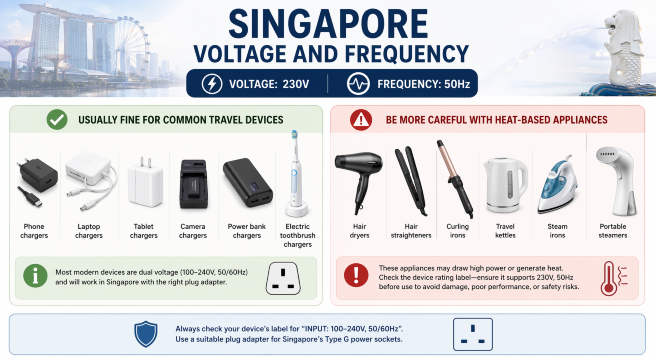
Singapore uses 220 to 240V electricity with a 50Hz frequency. For most Filipino travelers, this is usually not a big problem because the Philippines also uses around 220V. The main difference is the plug shape and frequency.
For common travel devices, this is usually fine:
- Phone chargers
- Laptop chargers
- Tablet chargers
- Camera chargers
- Power bank chargers
- Electric toothbrush chargers
Be more careful with heat-based appliances, such as:
- Hair dryers
- Hair straighteners
- Curling irons
- Travel kettles
- Steam irons
- Portable steamers
For electric shavers and electric toothbrush chargers, check the voltage label before use. If your appliance only supports one voltage, do not plug it in directly. You may need a voltage converter, or it may be safer to use the hotel’s hair dryer instead.
Adapter vs Voltage Converter
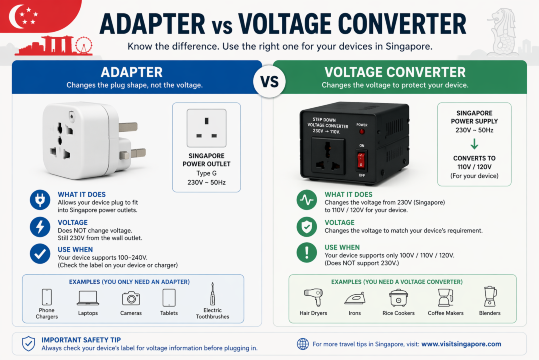
**Adapter vs Converter**
A plug adapter and a voltage converter are not the same. A plug adapter only helps your plug fit the socket. A voltage converter changes the electricity voltage for devices that cannot support Singapore’s voltage.
Item | What It Does | When You Need It |
|---|---|---|
Plug adapter | Changes the plug shape so it can fit the socket | Needed if your plug is not Type G |
Voltage converter | Changes the electricity voltage | Needed if your device cannot support 220 to 240V |
For most travelers, a Type G adapter is enough. But if you are bringing hair tools, travel kettles, steamers, or older electronics, check the voltage label carefully before using them.
Secure Your Stay in Singapore
 NO.1
NO.1

What Adapter Should You Bring to Singapore?
For Singapore, the most important adapter to bring is a Type G travel adapter. This is the standard plug type used in Singapore. It has three rectangular pins and is also commonly used in places like Malaysia, Hong Kong, and the UK.
For a short Singapore trip, one Type G adapter may be enough if you only need to charge one device at a time. For family trips, business trips, or longer stays, bring extra charging items so you do not need to wait for one device to finish charging.
A good travel adapter should have:
- Type G support
- USB-A and USB-C ports
- Safety fuse
- Compact size
- Strong fit for hotel sockets
- Enough ports for your phone, power bank, and camera
- Universal support if you travel to other countries often
It is also useful to bring:
- A universal travel adapter
- A Type G adapter with USB ports
- A multi-port charger
- A power bank
- Extra charging cables
If you are traveling with family or friends, bring at least two adapters. Everyone will need to charge phones, cameras, tablets, and power banks after a full day outside. For Filipino travelers, it is better to buy an adapter before your flight. You can find one online, in malls, or at airport shops, but airport prices are usually higher.
Where to Buy a Singapore Plug Adapter
You can buy a Type G adapter before your flight or after you arrive in Singapore.
Place | Good For |
|---|---|
Electronics stores in the Philippines | Buying before your trip |
Online shops | Cheaper options and more choices |
Airport shops | Last-minute buying |
Changi Airport | Emergency adapter purchase after arrival |
Singapore convenience stores | Quick basic adapters |
Shopping malls in Singapore | Better brands and more options |
It is better to buy before you travel because airport prices may be higher. After a long flight, you may not want to search for an adapter, especially if your phone battery is already low and you need maps, hotel details, or ride-hailing apps.
Recommended eSIMs Options for Singapore
Global Electrical Standards Overview
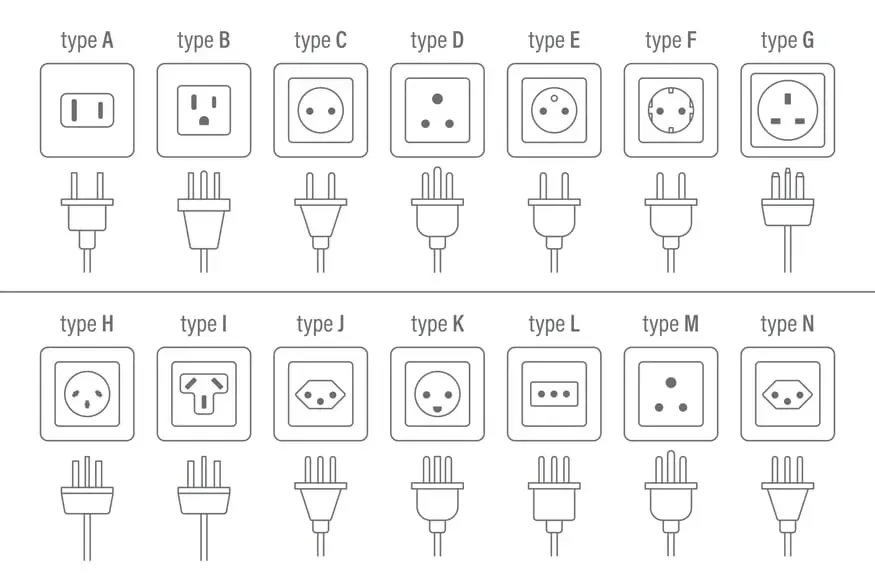
Source: world-power-plugs.com
Here is a simple guide to help travelers understand plug types, voltage, and frequency in different places. Before you travel, always check your charger label and bring the right adapter. Most phone and laptop chargers support international voltage, but hair tools may need extra care.
Asia and Oceania Electrical Standards
Destination / Region | Voltage | Frequency | Common Plug Types |
|---|---|---|---|
China | 220V | 50Hz | A, C, I |
Taiwan, China | 110V | 60Hz | A, B |
Hong Kong, China | 220V | 50Hz | G |
Japan | 100V | 50Hz / 60Hz | A, B |
South Korea | 220V | 60Hz | C, F |
Philippines | 220V | 60Hz | A, B, C |
Thailand | 220V | 50Hz | A, B, C, F, O |
Australia | 230V | 50Hz | I |
New Zealand | 230V | 50Hz | I |
North America and South America Electrical Standards
Destination / Region | Voltage | Frequency | Common Plug Types |
|---|---|---|---|
United States | 120V | 60Hz | A, B |
Canada | 120V | 60Hz | A, B |
Mexico | 127V | 60Hz | A, B |
Brazil | 127V / 220V | 60Hz | C, N |
Argentina | 220V | 50Hz | C, I |
Europe Electrical Standards
Destination / Region | Voltage | Frequency | Common Plug Types |
|---|---|---|---|
United Kingdom | 230V | 50Hz | G |
Germany | 230V | 50Hz | C, F |
France | 230V | 50Hz | C, E |
Italy | 230V | 50Hz | C, F, L |
Spain | 230V | 50Hz | C, F |
Netherlands | 230V | 50Hz | C, F |
What Travelers Should Do
Bring a universal travel adapter if you visit different countries. Check if your device supports 100V to 240V before plugging it in. If your appliance only supports 100V or 110V, you may need a voltage converter in places that use 220V or 230V.
Singapore Plug Tips for Filipino Travelers
Before flying to Singapore, Filipino travelers should prepare their charging items properly. This helps avoid low-battery problems when using maps, hotel bookings, MRT routes, eSIM, and ride-hailing apps.
- Bring a Type G adapter because Singapore uses three rectangular-pin sockets.
- Check your charger label. If it says Input: 100-240V, you can usually use it safely.
- Bring a power bank, especially if you will be outside the whole day.
- Keep your charger and power bank in your hand carry for easy access.
- Bring extra cables if you are traveling with family or friends.
- Do not depend on hotel adapters because they may be limited.
- Buy your adapter before your flight because airport prices can be higher.
- Use the hotel hair dryer if your own hair tool is not dual voltage.
- Prepare your SG Arrival Card and eTravel Philippines before departure for smoother airport processing.
FAQs About Singapore Plug
-
What plug is used in Singapore?
-
Can I use my Philippine charger in Singapore?
-
Do I need a voltage converter in Singapore?
-
Can I charge my phone in Singapore hotels?
-
Can I use a hair dryer or hair straightener in Singapore?