

Child Seat on Plane: Rules, Types & Airline Policies

Travelling with a baby or toddler? You may be wondering whether you can bring a child seat on a plane or if your little one needs their own seat. Most airlines allow approved child car seats, but there are rules about safety certification, seat size and installation.
For Filipino travellers flying with Philippine Airlines, Cebu Pacific or international airlines, here is what you need to know about using a child seat on a plane, booking a separate seat and keeping your child safe during the flight.
Can You Bring a Child Seat on a Plane?
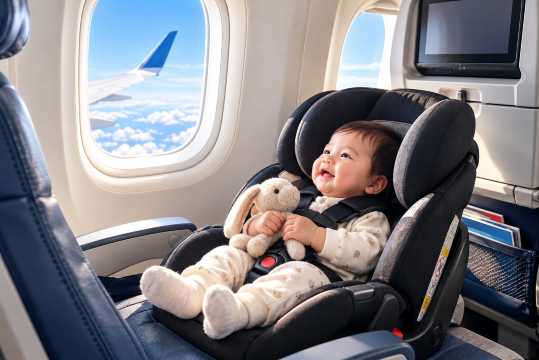
Yes, you can bring an approved child car seat on a plane, provided it meets the airline's safety requirements and fits the aircraft seat.
A child seat used on an aircraft is known as a Child Restraint System (CRS). It helps keep babies and young children securely seated during take-off, landing and unexpected turbulence.
The US Federal Aviation Administration (FAA) recommends using an approved child restraint system for young children instead of carrying them on an adult's lap.
Here are the main rules to know:
| Child Seat Rules | Requirements |
|---|---|
Is a child seat allowed on a plane? | Yes, if approved for aircraft use and accepted by the airline |
Do babies need their own seat? | A separate seat is required to install a child car seat |
Can babies under 2 sit on an adult's lap? | Yes, on airlines that permit lap infants |
Do children aged 2 and above need a seat? | Yes, they generally need their own booked seat |
Can you use a regular car seat? | Only if it meets the applicable aircraft safety requirements |
Are booster seats allowed? | Generally not permitted as an in-flight safety restraint |
Do airlines provide child car seats? | Do not assume they do; check before travelling |
⚠️ Important: Airlines may have different rules depending on the aircraft, route and type of child restraint system. Confirm the requirements before booking or bringing your car seat.


Child Seat on Plane Rules by Age
The rules for using a child seat on a plane depend on your child's age and whether they have a separate seat.
| Child's Age | Seating Rules | Child Seat Recommendation |
|---|---|---|
Under 2 years | May travel on an adult's lap or in a purchased seat, depending on airline policy | Approved car seat recommended |
2 to 3 years | Must occupy their own seat | Approved child restraint recommended when suitable |
4 to 7 years | Must occupy their own seat | Child seat or approved harness if suitable for their size |
8 years and above | Must occupy their own seat | Standard aircraft seat belt is generally suitable; follow airline guidance |
Babies Under 2 Years Old
Most airlines allow babies under two years old to travel on a parent's lap, subject to their infant travel policies.
However, the FAA recommends using an approved child restraint system in a separate seat because an adult may be unable to hold a baby securely during sudden turbulence.
Parents who want to use a child car seat during the flight should book a separate seat for their baby and confirm the airline's requirements.
Children Aged 2 Years and Above
Children who have reached their second birthday generally need their own aircraft seat.
Young children may continue using an approved car seat or aviation harness if they meet the device's height and weight limits.
Older children who can sit properly with the aircraft seat belt may not need an additional child restraint.
Types of Child Seats Allowed on Planes
Not every baby seat or car seat can be used during a flight. Airlines generally require child restraint systems that are approved for aircraft use.
| Child Seat Type | Allowed on Plane? | Important Information |
|---|---|---|
Rear-facing car seat | Yes, subject to airline approval | Suitable for babies and smaller children within the manufacturer's limits |
Forward-facing car seat | Yes, subject to airline approval | Must fit the aircraft seat and meet safety requirements |
FAA-approved CARES harness | Accepted by airlines that permit it | Suitable for eligible children who can sit upright independently |
Booster seat | Generally not allowed as an in-flight restraint | Not approved for use during taxi, take-off or landing under FAA rules |
Baby carrier or sling | Not approved as a CRS | Cannot replace an approved restraint during take-off or landing under FAA rules |
Baby bassinet | Available on selected flights | Cannot be used during taxi, take-off, landing or turbulence |
Rear-Facing Child Car Seats
Rear-facing car seats are designed for babies and smaller children. They support the child's head, neck and back while keeping them securely restrained during the flight.
Some airlines allow rear-facing car seats if the device is aircraft-approved and can be installed safely without blocking nearby passengers.
💡 Travel Tip: Check the manufacturer's instructions and airline requirements before bringing a rear-facing car seat, as some aircraft seats may not have enough space for installation.
Forward-Facing Child Car Seats
Forward-facing car seats can be used by children who meet the manufacturer's age, height and weight requirements.
The seat must be secured using an approved installation method, usually the aircraft lap belt. It must also fit properly without blocking other passengers.
📝 Note: Not all forward-facing car seats are approved for aircraft use. Check the safety certification label and confirm with your airline before departure.
CARES Child Aviation Restraint System
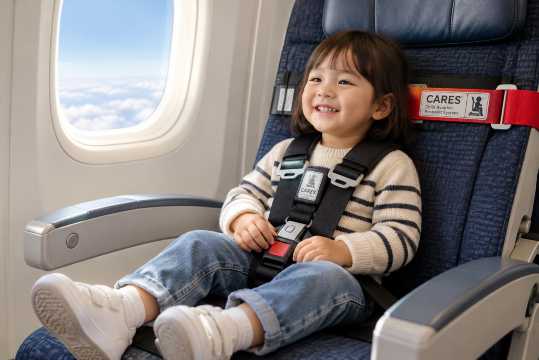
The Child Aviation Restraint System (CARES) is a lightweight harness that can be used instead of a traditional car seat on participating airlines.
According to the FAA, the approved CARES device is designed for children who:
- Weigh between 10 and 20 kg (22 to 44 lb).
- Are no taller than approximately 100 cm (40 inches).
- Can sit upright independently.
- Have their own aircraft seat.
The CARES harness works with the aircraft seat belt to help keep children securely seated during the flight.
⚠️ Important: The CARES harness is approved for aircraft use only and cannot replace a car seat in a motor vehicle. Check that your airline accepts the device before travelling.
Baby Bassinet
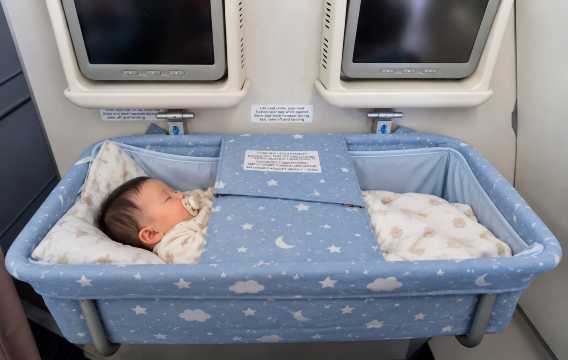
A baby bassinet is a small bed attached to the aircraft bulkhead, allowing infants to rest or sleep during the flight. Some airlines, including Singapore Airlines and Emirates, provide bassinets on selected flights.
Bassinets have specific weight and size limits, which vary by airline. They are usually available in limited numbers, so parents should request one when booking their flight.
⚠️ Important: Baby bassinets cannot be used during taxi, take-off, landing or turbulence. Parents must remove their baby and secure them according to cabin crew instructions. A bassinet is not a replacement for an approved child car seat.
 NO.1

















































How to Know if Your Child Car Seat Is Airplane-Approved
Before travelling, check whether your child's car seat has the correct aircraft certification.
For US-standard car seats, look for a label stating:
"This restraint is certified for use in motor vehicles and aircraft."
Car seats approved under other recognised aviation safety standards may have different labels.
Check the following before your flight:
- Safety certification: Confirm that the seat is approved for aircraft use.
- Height and weight limits: Your child must be within the manufacturer's specified range.
- Seat dimensions: The car seat must fit the airline's aircraft seat.
- Installation instructions: The car seat must be compatible with the aircraft seat belt.
- Airline approval: Confirm that your airline accepts the particular car seat.
⚠️ Important: A car seat approved for road travel is not automatically approved for aircraft use.
Child Seat Policies on Popular Airlines
Different airlines have their own requirements for using child car seats on board. Check the child seat rules before booking your flight, especially when travelling with an infant or toddler.
| Airline | Child Seat Allowed? | Child Seat Requirements | Official Policy |
|---|---|---|---|
Philippine Airlines | Yes | Approved CRS required. Infants using a car seat must have a separate purchased seat. Approved CARES harnesses are also accepted for eligible children. Booster seats are not permitted. | |
Cebu Pacific | Yes | Infants with a separate seat must use an approved CRS. Maximum CRS width is 17 inches. Parents must bring their own child seat. | |
AirAsia | Yes | Approved child car seats are accepted for eligible infants with a purchased seat. Advance arrangements and safety certification requirements apply. | |
Singapore Airlines | Yes | Approved car seats and safety harnesses may be used for eligible children with their own seats. The restraint must meet safety and installation requirements. | |
Cathay Pacific | Yes | Approved child restraint seats are accepted for eligible infants and young children. A separate seat is required, and aircraft compatibility must be confirmed. | |
Emirates | Yes | Approved car seats and certain safety harnesses are accepted for children with their own seats. Certification and installation requirements apply. |
⚠️ Important: Not all car seats are approved for aircraft use. Check the manufacturer's certification label, seat dimensions and airline requirements before departure.
💡 Travel Tip: If you are flying with more than one airline, check each carrier's child seat policy. A car seat accepted on one flight may not be allowed on another.
📝 Note: Infants under two may travel on an adult's lap where airline rules permit. However, a separate purchased aircraft seat is required if you want to install an approved child car seat during the flight.
How to Book a Child Seat on a Plane
If you want your baby to travel in an approved car seat, arrange the separate aircraft seat before departure.
Step 1: Check the Airline's Child Seat Rules
Visit the airline's official website and review its child restraint requirements.
Confirm whether your car seat is accepted and whether there are aircraft seating restrictions.
Step 2: Book a Separate Seat for Your Child
If your baby is under two years old, contact the airline to arrange an infant ticket with a separate seat.
Children aged two and above normally need their own tickets and seats.
Step 3: Confirm Your Car Seat Is Approved
Check the car seat's certification label, dimensions and manufacturer instructions.
If necessary, provide the airline with the car seat model and measurements.
Step 4: Arrange Suitable Seats
Request a seat location where the child restraint can be installed safely.
Window seats are commonly preferred because they reduce the risk of blocking another passenger's exit.
Child restraint systems should not be installed in emergency exit rows or locations where they obstruct evacuation.
Step 5: Bring the Car Seat to the Airport
Arrive with enough time for check-in and boarding.
Keep the car seat's instruction manual or installation guide accessible in case airline staff need to check it.
How to Install a Child Car Seat on a Plane
Installing a child seat on a plane may differ from installing one in a car.
Always follow the manufacturer's aircraft installation instructions and any directions from the cabin crew.
- Place the approved car seat on the assigned aircraft seat.
- Position it forward-facing or rear-facing according to its approved instructions.
- Route the aircraft seat belt through the designated belt path.
- Fasten and tighten the aircraft seat belt.
- Check that the child seat is securely installed.
- Secure your child using the car seat's harness.
- Keep your child properly restrained whenever seated, especially during turbulence.
⚠️ Important: Do not assume that ISOFIX connectors can be used on an aircraft. Most aircraft seats do not provide standard car ISOFIX anchorages. Use only the installation method approved for the restraint and aircraft seat.







Can You Bring a Child Car Seat as Checked Baggage?
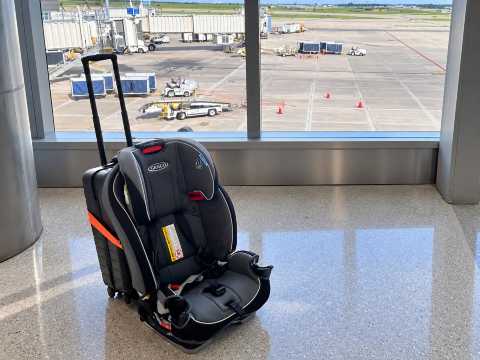
Yes, airlines may allow passengers to transport child car seats as checked baggage even when they are not being used during the flight.
However, whether the car seat is carried free of charge depends on the airline's baggage policy.
Before travelling, check whether:
- The airline allows free check-in of child car seats.
- A protective car seat travel bag is recommended.
- The car seat can be checked at the boarding gate.
- The item counts towards your baggage allowance.
- Your car seat can be collected at the baggage carousel or oversized baggage area.
Avoid placing loose objects inside the car seat before checking it in.
- One way
- Round-trip
- direct cheapest
 MNL6:15 PM1h 25mNonstopTAC7:40 PMManila - Tacloban|Mon, Nov 2|Cebu PacificPKR 7,397PKR 16,24954% offSearch54% offPKR 16,249PKR 7,397
- MNL7:50 AM1h 30mNonstopTAC9:20 AMManila - Tacloban|Sun, Nov 8|Cebu PacificPKR 10,139PKR 16,24938% offSearch38% offPKR 16,249PKR 10,139
- MNL7:50 AM1h 30mNonstopTAC9:20 AMManila - Tacloban|Wed, Nov 4|Cebu PacificPKR 14,461PKR 16,24911% offSearch11% offPKR 16,249PKR 14,461
 MNL13:001h 30mNonstopTAC14:00Manila - City|Mon, Sep 6|Normal AirlineFind more flightsFind more flights
Tips for Flying with a Baby or Toddler
Flying with a baby or toddler can be easier with a little preparation. Here are some useful tips to make your journey more comfortable.
| Travel Tips | What to Do |
|---|---|
Choose the Right Flight Time | Book a flight around your child's usual nap or bedtime to help them rest during the journey. |
Pack Baby Essentials | Keep nappies, wipes, milk, snacks and spare clothes in your hand luggage for easy access. |
Check Car Seat Measurements | Measure your child car seat and confirm it fits the aircraft seat before departure. |
Check Connecting Flight Rules | If travelling with different airlines, check each airline's child seat requirements. |
Book Your Flight Early | Reserve your child's seat in advance, especially if you plan to use an approved car seat on board. |
FAQs About Child Seats on Planes
-
Is a child car seat required on a plane?
-
Do I need to buy a separate plane ticket for my baby's car seat?
-
Can I use a child car seat in business class?
-
Can a child car seat be installed in an emergency exit row?
-
Can I bring both a stroller and a car seat on a plane?