OverviewReviewsWin PrizesTrip MomentsNearby
Share to
Show all
Delphi
Δελφοί
4.5
4.3/5
4 reviews
Opening hours of Delphi
Recommended sightseeing time: 3–5 hours
Address:
Delphi 330 54, Greece
Map
Delphi attraction highlights
Some information may have been translated by Google Translate
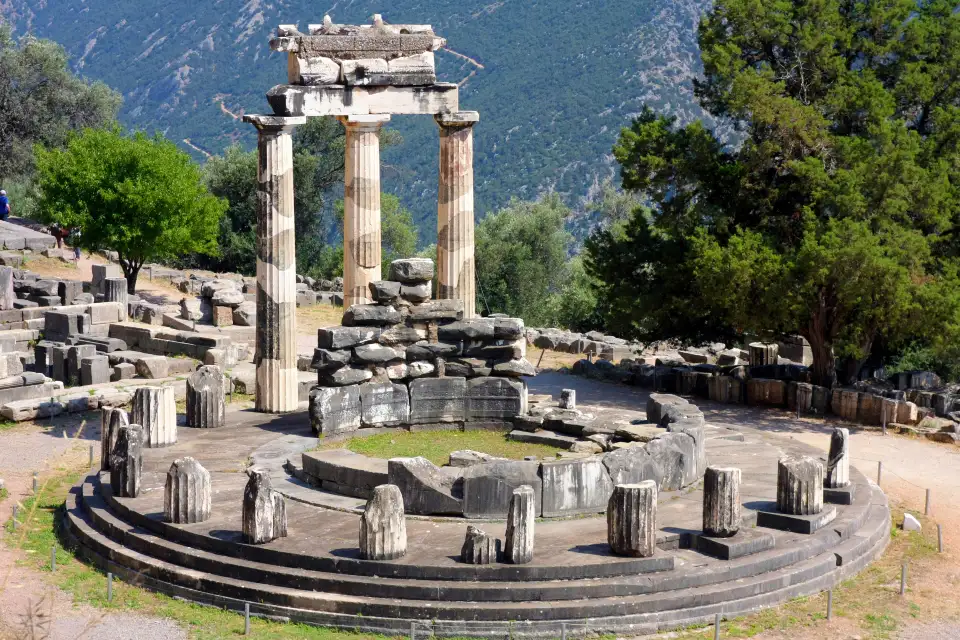
Delphi, a two-hour drive from Athens, is a mysterious place in ancient Greece. The ruins of ancient Delphi, located about 8 kilometers away under the cliffs, are more attractive to tourists. Since its development in the late 19th century, tourists have been coming in an endless stream.It is said that this place was once the center of spiritual civilization in the ancient world. For the Greek gods, Delphi is the most important temple among all the famous Greek places. The temple is dedicated to the sun god Apollo. In the beliefs of the ancient Greeks, Apollo is the god of knowledge, light, music and medicine. Visitors can feel the greatness of Apollo here.At the site, only seven columns of different lengths remain of the Temple of Apollo. Among the broken columns and tiles, the square center of the temple and the Z-shaped "Sacred Road" along the hillside can be seen. On both sides of the Sacred Road are stables, gift warehouses and monuments praising holy relics, followed by colonnades and altars, as well as a semicircular open-air theater and stadium that can accommodate 5,000 people.
Delphi Reviews: Insider Insights and Visitor Experiences
Write a review
Surrounding area map of Delphi
More recommendations
Popular Types of Attractions in Delphi
Nature and wildlife | Beaches and shores | Natural scenery | Mountain climbing | Historical attractions | Sightseeing tours | Boat tour | Night view | Cultural institutions | Museums | Themed exhibition halls | Exhibitions & events | Performances | Concerts | Outdoor activities | Leisure activities | Farms and pastures | Spa/massage
Popular Restaurants in Delphi
Agora Cafe | Delfikon | Ta Skalakia | Astra Cafe Restaurant | PHIVOS RESTAURANT - ΕΣΤΙΑΤΟΡΙΟ ΦΟΙΒΟΣ | Cafe Melopoleio | "To Patriko Mas" | Greek Mediterranean Restaurant | Epikouros Restaurant - Delphi | Telescope | Apollon Cafe food and view | Tavern DION | Elia Restaurant Delphi | Mr.Rose Cocktail Bar
Recommended attractions at popular destinations
Popular Attractions in Bangkok | Popular Attractions in City of Manila | Popular Attractions in Tokyo | Popular Attractions in Taipei | Popular Attractions in Hong Kong | Popular Attractions in Seoul | Popular Attractions in Kuala Lumpur | Popular Attractions in Los Angeles | Popular Attractions in Shanghai | Popular Attractions in New York | Popular Attractions in Shenzhen | Popular Attractions in Osaka | Popular Attractions in Singapore | Popular Attractions in London | Popular Attractions in Guangzhou | Popular Attractions in San Francisco | Popular Attractions in Beijing | Popular Attractions in Macau | Popular Attractions in Bali | Popular Attractions in Jakarta | Popular Attractions in Paris | Popular Attractions in Ho Chi Minh City | Popular Attractions in Istanbul | Popular Attractions in Phuket | Popular Attractions in Chicago | Popular Attractions in Seattle | Popular Attractions in Toronto | Popular Attractions in Orlando | Popular Attractions in Cebu | Popular Attractions in Chiang Mai
Popular Ranked Lists
Top 20 Must-Visit Restaurants in Reykjavik | Top 20 Must-Visit Restaurants in Lucerne | Popular Best Things to Do in Addis Ababa | Top 50 Global Traveller-Picked Hotels in Xi'an | Top 20 Best Things to Do in Dallas | Top 20 Global Traveller-Picked Hotels in Fuzhou | Top 10 Premium Hotels in Lhasa | Top 20 Best Things to Do in Xuzhou | Top 20 Must-Visit Restaurants in Nice | Top 20 Must-Visit Restaurants in Naha | Top 20 Global Traveller-Picked Hotels in Zhongshan | Top 20 Must-Visit Restaurants in Surfers Paradise | Top 50 Global Traveller-Picked Restaurants in Changsha | Top 50 Global Traveller-Picked Attractions in Shanghai | Top 20 Premium Hotels in Haikou | Top 20 Must-Visit Restaurants in Stockholm | Top 50 Global Traveller-Picked Hotels in Shanghai | Top 50 Global Traveller-Picked Hotels in Chongqing | Popular Best Things to Do in Liyang | Top 20 Global Traveller-Picked Hotels in Nanjing | Top 50 Global Traveller-Picked Restaurants in Shenzhen | Popular Best Things to Do in Incheon | Top 10 Best Things to Do in Guangyuan | Top 20 Premium Hotels in Shenyang | Top 50 Global Traveller-Picked Restaurants in Zhuhai | Top 50 Global Traveller-Picked Hotels in Hangzhou | Popular Best Things to Do in Shilin | Top 50 Global Traveller-Picked Attractions in Sanya | Popular Best Things to Do in Liaocheng | Top 10 Local Restaurants in Lushan National Park
Popular Trip Moments
Greece Destinations | Budget Travel Tips | Recommended Packages | Greece Isn’t Just Santorini 🇬🇷 Here Are 11 Places Worth Visiting | A one-day wandering guide to the hidden mountain town of Arachova in Greece | The Castalia Hotel in Delphi is a must-stay in Greece – its beauty is beyond words. | Hidden mountain routes in Greece! A stunning self-drive from Delphi to Arachova | Athens Is So Much More Than the Acropolis — Here’s How to Experience It Properly | Delphi Archaeological Site, Greece|World Heritage Check-in, Explore the Mysterious Center of Ancient Greece | Stay at a divine hotel in Greece, the millennia-old civilization is truly breathtaking | Travel through the millennia in the city of gods to experience a romantic epic of the Aegean Sea | Fall into the blue and white fairy tale land of Greece! Write romance into the years of mountains and seas | Rome, the Capital | The ultimate romance of blue and white in Greece travel guide|Save this and you're set! | Greece + Turkey 15-day tour | cross two countries of romantic myths and adventure | 🏛️ Delphi, Greece: where myths feel real | [Greece/Delphi] A Stylish Town Stroll. | Greece 2-Day Tour Budget Guide at 2k Per Person is Here | Half is lemon, half is sea, Amalfi maxed out my romance threshold | Complete 7-Day Greece Travel Guide All in One | Greece 1-Day Private Car Tour: Worry-Free and Enjoyable | Greece Travel Guide | The Romance and Depth of the Cradle of Western Civilization | Greek Ancient Civilization Site Tour | Back from Greece, after a week of travel, my views on spending have collapsed… | Athens Departure Delphi Arachova Meteora 2-Day Tour Guide | Delphi, Greece – The Whispers of the Gods and the Serenity of the Mountains | 🏛️ Delphi – The Navel of the Ancient World 🌿✨ | 🏔️ Arachova: Mountain Charm and Greek Traditions | Delphi, the Legendary Center of the World | Delphi view | The Timeless Temple of Apollo
More Things To Do in Delphi
Greece Delphi + Arachova 1-Day Tour | Round-Trip from Athens | Multiple Packages Optional | Trip Moments in Delphi, Greece[Photography Services: Engagement, Wedding, Street, Candid, Aerial / Multilingual Translation / Pose Guidance] | Thermopylae, Meteora and Delphi Private Full Day Tour | European universal 5G/4G eSIM | Multi-network support, supports All AI & TikTok | 500MB/day - 50GB total | 1-90 days | 24-hour billing | QR code | Global (77 Countries) 5G/4G eSIM | Supports Google Maps/TikTok/ChatGPT | Data Plan | 24-Hour Billing | 1–7 Days | QR code | Europe 4G/5G eSIM | TikTok & ChatGPT Available | Day Pass/Total Data Package | 24-Hour Billing | QR Code | Europe (41 Countries) | 5G/4G eSIM | Supports TikTok / Google Maps / Chat GPT | Daily / Total Plans | Calendar Day Billing | 1–90 Days | QR Code | Europe 45 Countries 5G eSIM | All AI & TikTok | 1–30 Days | QR Code | Orange World 4G/LTE eSIM | Calls + SMS | 31 Days Total 50MB–20GB | Calendar-Day Billing | QR code | Europe 5G eSIM | Fully Supports AI & TikTok | Daily/Total Data Package | 1–30 Days | 24-Hour Billing | QR Code | Europe Orange 4G/5G eSIM | Total 20GB–500GB | French number with calls & SMS | 7–30 days | 24-hour billing | QR code | Balkans 11 Countries 5G eSIM | All AI & TikTok | 1–30 Days | QR Code | Europe Orange 4G/5G eSIM | Calls + SMS | French phone number | 24-hour billing | QR code | Orange World eSIM | 4G/LTE | 1GB-20GB total for 30 days | 24-hour billing | QR code | Global 77 Countries 4G/5G eSIM | Day Pass/Total Data Package | 24-Hour Billing | QR Code | Greece Athens Peloponnese 1-day tour (Corinth Canal + Archaeological site of Mycenae + Nafplion) | Mercedes Private Tour to Delphi and Arachova | Europe Orange native eSIM | Supports TikTok & ChatGPT | Includes SMS & calls | Data package | 24-hr billing | 7-90 days | Athens day tour to Corinth Canal, Archaeological site of Mycenae, Epidaurus, and Nafplion | Athens Delphi Day Tour (Including Lunch · English-speaking Group) | Mycenae, Epidaurus & Nafplio Full-Day V.R audio guided Tour | Delphi Private Day Tour from Athens | Delphi Guided Small Group Day Tour from Athens | Epidaurus, Mycenae and Nafplio Small-Group Tour from Athens | Historical Delphi One Day Tour with Arachova Stop & Expert Guide | Greece 5G eSIM | Daily package/Data package | 24-hr billing | QR code | A world of wine-tasting in Nemea | An exciting exploration of Peloponnese at ancient Corinth, Mycenae and Nafplio | Thermopylae and Delphi Private Full-Day Tour from Athens | From Athens: 1-day tour to Archaeological site of Mycenae, Epidaurus and Nafplion
Other visitors' reviews of Delphi
Show More ReviewsThe "Pan-Hellenic Sanctuary" is a complex structure outside the city-state politics, providing all Greeks with the only way to know themselves in a religious sense. It is said that the entrance to the Temple of Apollo is engraved with the motto "Know yourself". During the period from the middle of the 8th century BC to the middle of the 7th century BC, the worship of Apollo gained a high reputation because he was the patron saint of the colonial cause that was in full swing at the time. In 373 BC, an earthquake severely damaged the buildings of the sanctuary, which played a decisive role in its fate. It was in the second half of the 4th century BC that, while it was undergoing arduous restoration, Greece experienced political turmoil, and the sanctuary gradually declined. Since the Roman rule in the 1st century AD, no new buildings have appeared in the sanctuary. In 392 AD, the Roman Emperor Theodosius I issued an edict prohibiting pagan beliefs. The oracle was worshiped in the 15th century, marking the end of the worship of Apollo. The site of the sanctuary was occupied by a village in the early AD and was rediscovered in the 15th century. The operation of the oracle has undergone many changes in history. According to one of the most authoritative witnesses, Plutarch, who was once a priest of the temple, in his time (1st century AD) there was only one prophetess in the temple, who was requested once a month; earlier, during the heyday of the ritual, three priestesses were required to take turns to cope with the long queue of requests. In another temple of Apollo, the oracle was transmitted to the prophet's spirit only through thoughts, which allowed him/her to play more freely. In the Christian era, John Chrysostom believed that Pythia was a woman possessed by the devil, which drilled into the prophetess from the depths of the earth under the tripod. Every year, when Apollo left, there was no oracle, which resulted in countless believers waiting for the oracle to reopen. Therefore, the temple priests had the right to arrange priority for participating in the ceremony (Προμαντεία / promanteia). Participants first presented appropriate gifts to the god, and then the priests poured some cold water on a goat. If it did not tremble, it was considered a bad omen and the ceremony would not proceed; if the worshiper was accepted, the goat would be offered, and he could enter the temple to ask the prophetess a question. Of course, whether the question was answered or not depended on the will of the god.