Zhumadian

Things to do in Zhumadian

Search attractions or local attractions & tours
Search

Explore top experiences

Top 10 attractions in Zhumadian

View all Attractions
Qingchuan Pavilion
No. 4 of Best Things to Do in Hubei

Qingchuan Pavilion

8.4
4.7/5
7.7k reviews

Qingchuan Pavilion stands on Yugong Rock at the eastern foot of Tortoise Hill in Hanyang, facing the Han River to the north and the Yangtze River to the east, gazing across the river at Yellow Crane Tower in Wuchang on the opposite bank. The pavilion's name is taken from the line "the clear river reflects the trees of Hanyang" by the Tang dynasty poet Cui Hao, and it was initiated for construction by Fan Zhizhen, the Ming dynasty prefect of Hanyang. First built during the Jiajing era of the Ming dynasty, it has a history of more than four hundred years. Throughout history, Qingchuan Pavilion was destroyed and rebuilt as many as six or seven times, the last destruction caused by a windstorm; the existing structure was rebuilt in the 1980s following the style of the Guangxu era of the Qing dynasty. Long known as one of the "finest sights of the Three Chu regions" and a "grand vista through the ages," Qingchuan Pavilion echoes Yellow Crane Tower across the river and stands out distinctly along the banks of the Yangtze. The attraction is composed of three main structures—Qingchuan Pavilion, Yuji Xinggong (Yu and Ji Ancestral Hall), and Tiemen Pass—along with auxiliary structures such as the ancient archway, Chubo Pavilion, Chaozong Pavilion, Yu Stele Pavilion, Jingchu Heroic Spirit Stele, and the poetry stele corridor, forming a complex of ancient and pseudo-classical buildings standing by the river. Among them, Yuji Xinggong was first built during the Shaoxing era of the Southern Song dynasty under the original name Yu Wang Temple; during the Tianqi era of the Ming dynasty, it was renamed "Yuji Xinggong" after its worship was changed to Houji and other former sages, and it has been an important site in Wuhan for successive generations to pay homage to Yu the Great. Tiemen Pass was first built during the Three Kingdoms period and has been a strategic location contested by military strategists since ancient times; it was restored in the 1990s. Ascending Qingchuan Pavilion offers a panoramic view of the expansive river scenery where the Yangtze River and the Han River converge. Inside the pavilion, permanent exhibitions such as "Traces of Yu Across the Nine Provinces" and "Historical Paintings of Qingchuan" present Yu the Great culture and the historical heritage of Qingchuan Pavilion from multiple perspectives, ranging from water-control culture to poetry and couplets. The attraction nestles between the hills and the river, with pavilions and terraces scattered in graceful arrangement. The poetry stele corridor preserves inscribed stones bearing verses by literati and poets of successive dynasties, and strolling through it allows visitors to feel the rich historical and cultural atmosphere.

China · Wuhan
Henan Museum
No. 2 of Family-friendly Attractions in Henan

Henan Museum

8.1
4.8/5
10k reviews

[Henan MuseumIntroduction Founded in 1927, it is one of the earlier-established museums in China. The museum covers an area of 126 mu, with a building area of 55,000 square m. The museum currently has a collection of approximately 250,000 artifacts (sets), with particular strengths in prehistoric artifacts, Shang and Zhou bronzes, ceramics from successive dynasties, jade objects, and stone carvings. The fine artifacts are numerous in quantity, comprehensive in variety, high in quality, and great in value, making this a cultural and artistic treasury that bears witness to the trajectory of Chinese civilization and showcases the course of China's historical development. Currently open are the permanent exhibition "Great China: Building the Capital at the Center" and the thematic exhibitions "Henan in the Ming and Qing Dynasties," "Ancient Stone Carving Art of the Central Plains," "Auspicious Bronzes from Dan and Xi: Chu Bronze Art of the Central Plains," "Treasures of Craftsmanship: Ming and Qing Treasures from the Museum Collection," and "Special Exhibition of National Treasures," among others. The "Social Education Experience Hall" and the "Hall of Ancient Chinese Music," which complement the exhibitions, are also open for use. With the mission of "carrying forward inherent culture, promoting academic research, enhancing public knowledge, and advancing social civilization," it meticulously builds a public welfare cultural service brand, serving as an important window to appreciate Central Plains culture, Yellow River culture, and the Chinese cultural lineage, an important front for promoting core values, and an important platform for enhancing cultural exchange and cooperation. [Existing exhibition guide] Permanent exhibition "The Great Chinese Civilization: Choosing the Center to Build the Capital" The permanent exhibition "The Great Chinese Civilization: Choosing the Center to Build the Capital" takes the history of capital establishment in the Central Plains as its main thread, the development history of Central Plains civilization as its outline, and the backdrop of world civilizations as its reference. It integrates the cultural relic advantages of the Henan region, captures the highlights of ancient development in the Central Plains, showcases the trajectory of the Chinese nation's civilizational development, and recreates the long-standing splendor of Central Plains culture as well as its influence and radiating power. At the same time, from a global perspective, it presents the similarities and differences between Central Plains culture and cultures of other regions, and initiates a dialogue between this civilization and other civilizations. The permanent exhibition is located on floors 1, 2, and 3 of the main exhibition hall and is divided into 10 galleries, consisting of seven sections: the Neolithic Age, Xia and Shang, Western Zhou, Eastern Zhou, Qin, Han, Wei, Jin, and Northern and Southern Dynasties, Sui and Tang, and Song, Jin, and Yuan. It interprets the capital culture of the Central Plains and the cultural life within the capitals across various historical periods. [Henan MuseumHuaxia Ancient Music Orchestra] Henan is located in the Central Plains and has been a land of rites and music since ancient times, enjoying exceptional advantages for the development of musical culture. From the bone flutes of eight thousand years ago, to the bells, drums, chimes, and zithers, as well as the pipes, flutes, and mouth organs of the Xia, Shang, and Zhou dynasties, and to the music and dance, hundred entertainments, and banquet music and grand suites of the Han and Tang dynasties, the ancient music of the Central Plains is like a long river of history, surging endlessly and magnificent. Since its establishment in 2000, it has conducted restoration research on Central Plains musical artifacts, restored and reconstructed ancient musical scores, costumes, and performance scenes, and launched concerts with different themes, which have been highly praised by audiences at home and abroad. Millennia-old music, passed down through generations, the Huaxia Ancient Music Orchestra is resounding with the ceaseless spiritual voice of the Chinese nation... [Henan MuseumCultural and creative area] "Yubo Cultural Creativity" actively cooperates with enterprises both within and outside the province. By absorbing the creative concepts, design styles, and product characteristics of various enterprises, it has sorted out more than 300 cultural relic elements (sets) suitable for development. Adhering to the development principle of "highlighting originality," it has cumulatively produced nearly 800 cultural and creative products, covering categories such as stationery, toys, daily necessities, apparel, and food. Among them, a series of cultural and creative products developed with the museum's treasured artifacts and star relics as themes have achieved excellent results in various cultural and creative competitions across the country and have represented our province on the exhibition stages of major cultural and creative themes on multiple occasions. Currently, Yubo Cultural Creativity has focused on building physical product brands such as "Zhuozhen Cultural Relic Coffee," "Lost Treasures — Archaeological Blind Box," and "Cup of Light," as well as event brands such as "Museum Elegance Hall" and "Cultural Creativity Competition." At the same time, it is actively exploring the deep integration of cultural creativity and scientific research, collaborating with multiple universities to establish cultural creativity talent training and practice bases, and accelerating the training of cultural creativity talent. "The movement of the great Peng bird does not rely on the lightness of a single feather; the speed of a fine steed does not depend on the strength of a single foot." In the future, Yubo Cultural and Creative will continue to draw on more social forces to jointly explore the charm of history and culture, create more cultural and creative works, and make due contributions to the high-quality development of our province's cultural and creative industry. Location: Boutique on the west side of the first-floor lobby, book café on the third floor, pop-up store at the west exit [Henan MuseumSocial education experience hall] When visiting the Henan Museum, besides seeing exhibitions, listening to ancient music, and shopping for cultural creative products, there is one more place you must experience. Located on the first floor of the East Annex Building, it is a brand-new comprehensive practice experience area of over 1,400 square meters that can accommodate up to 500 people participating in activities at the same time. This place endows museum education with new dimensions of development; it is a national research and study education base for primary and secondary schools; it is a family-friendly museum classroom where education meets fun; and it also offers an immersive way to perceive the profoundness of culture. It features seven distinct zones, including an ancient technology experience area, a field archaeology experience area, a cultural relic restoration and conservation observation area, a visitor self-directed learning area, a research and study practice education area, a 3D national treasure magic wall experience area, and a 5G + 360° real-time panoramic experience area, all offering excellent experiences and visual effects. The social education experience hall of the Henan Museum adopts a "demographic-specific, menu-based" service model to target service groups. In educating underage visitors, it focuses on creating educational projects such as "special guided tours," develops thematic learning courses, and optimizes popular educational courses including the series on the nine treasures of the museum, "How Much Do You Know About Archaeology," "Guardians of National Treasures," and idioms and allusions, thereby enriching the education system and sharing educational projects. The newly opened museum comprehensive practice experience center showcases the new dimensions of museum education development with a high starting point, three-dimensional approach, and immersive presentation.

China · Zhengzhou
Wudang Mountains
No. 5 of Best Things to Do in Hubei

Wudang Mountains

8.1
4.6/5
15.4k reviews

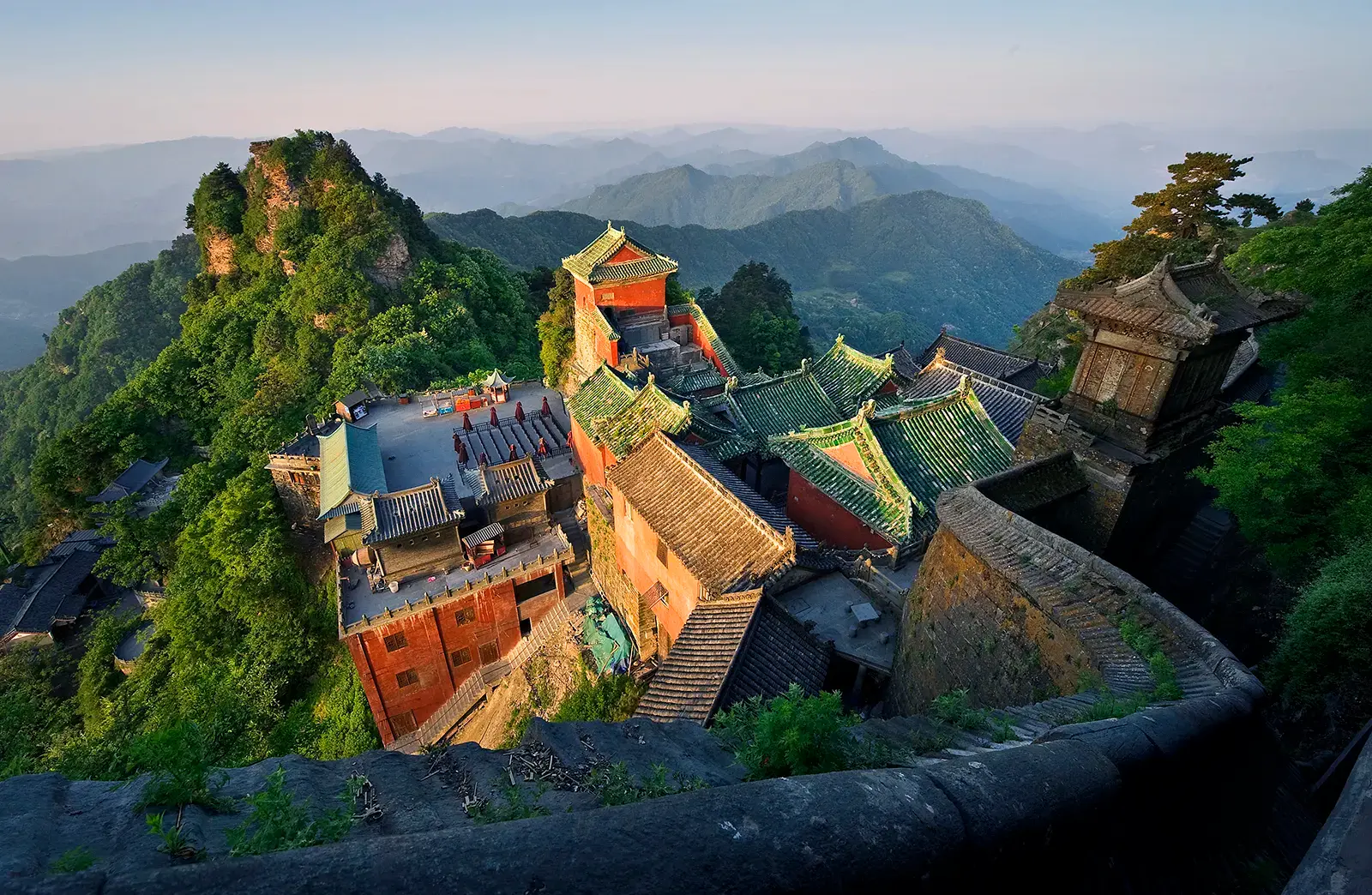
The Wudang Mountains are located in Shiyan, northwestern Hubei province. Its main peak, Tianzhu Peak, stands at an elevation of over 1,600 m. Legend has it that Emperor Zhenwu cultivated and ascended to immortality here, while Taoist Zhang Sanfeng further synthesized the essence of martial arts during the late Yuan and early Ming dynasties, making this the birthplace of Wudang martial arts. During the Yongle era of the Ming dynasty, the imperial court launched the monumental project of "constructing the Forbidden City in the north and building the Wudang Mountains in the south." The mountain temples were built according to royal standards, with their layout unfolding layer by layer following the mythological narrative of Zhenwu's spiritual cultivation. The palaces blend harmoniously with the peaks, cliffs, and streams, creating an ethereal and mystical atmosphere befitting a sacred mountain. The attractions unfold along the mountain terrain from the base to the summit, connecting key areas like Taizi Slope, Zixiao Palace, Nanyan Palace, and Taihe Palace. At Taizi Slope, the undulating Nine-bend Yellow River Wall follows the mountain contours, while Wuyun Tower's "one pillar supporting twelve beams" remains an architectural marvel. Zixiao Palace, a well-preserved imperial Taoist temple, features the stately Zixiao Hall with its double-eaved, nine-ridged roof. Nanyan Palace clings dramatically to a cliff face, offering vertiginous views of the valley below. Ascending the stone-paved ancient path to Tianzhu Peak's summit reveals the gilded bronze Golden Hall—the architectural masterpiece of the entire complex. As the birthplace of Wudang martial arts, this place attracts enthusiasts from home and abroad who come to seek masters and practice martial arts. The Taizi Slope on the mountain and the Xuantian Yuxu Palace at the foot serve as daily training grounds for practitioners. If you happen to encounter Taoist priests or students demonstrating Wudang boxing techniques, take a moment to quietly observe and appreciate the centuries-old martial arts heritage. A two-day visit is recommended: On the first day, enter from the mountain gate to visit Taizi slope and Zixiao palace, then stay overnight near Wuyaling. On the second morning, first visit Nanyan palace, then ascend to the golden summit before hiking down or taking the cableway at Qiongtai. After exiting the mountain gate, you may also visit Xuantian Yuxu palace. The attraction's shuttle buses connect all major core attractions, allowing flexible combinations of hiking and riding. Most dining and lodging options are concentrated around Nanyan, convenient for rest during the climb. From late October to November each year, when the forests are ablaze with color and red leaves cover the mountains, it's the perfect time to enjoy the fall scenery in the mountains.

China · Danjiangkou
Luoyang Museum
2025 Asia 100 - Family-friendly Attractions

Luoyang Museum

8.1
4.7/5
3.8k reviews

Founded in 1958 and fully opened to the public on April 16, 2011, the Luoyang Museum is a comprehensive institution integrating cultural relic collection, exhibitions, and public education, with a collection that spans the long history of Luoyang as a capital of thirteen dynasties. The main building stands like a giant ding, drawing on the meaning of "establishing the capital at Luoyi," and its solemn and imposing facade is itself a popular backdrop for photos. The museum's large permanent exhibition "Civilization of the Yellow River and Luo River" unfolds along the sequence of prehistoric times, the Xia, Shang, and Zhou dynasties, the Han and Wei dynasties, the Sui and Tang dynasties, and the Five Dynasties and Northern Song, stringing together Luoyang's millennia-long history as a capital into a complete viewing route. Among the exhibits, the Northern Wei painted pottery figurines of two women holding hands, affectionately called the "best friend figurines" by visitors, are especially eye-catching—two young girls holding hands side by side with lively expressions, and visitors often come specially to take photos with them. On the second floor, the Treasures Gallery rotates representative artifacts from the collection, and the Cao Wei white jade cup and the Northern Wei clay Buddha face statue are both worth pausing to examine closely; in the Tang Sancai Gallery, the entirely black-glazed sancai horse is vigorous and rarely seen. The Court Artifacts Gallery displays Qing dynasty court artifacts transferred from the Forbidden City, and the golden nanmu pagoda carved from a single piece of wood and covered with small gilded Buddhas has a distinctly royal air; the Wang Xiu Peony Art Exhibition, meanwhile, brings Luoyang's peonies into paintings, offering a softness that contrasts with the weighty antiquity of the stone carvings, each with its own flavor. Start your visit with the "Civilization of the Yellow River and Luo River" exhibition and the Stone Carving Gallery on the first floor, then go up to the second floor to savor the Treasures Gallery, the Tang Sancai Gallery, and the Court Artifacts Gallery in detail; the Treasures Gallery features rotating exhibitions, so the specific exhibits on display are subject to what is shown on site. A careful full visit usually takes two to three hours, so it is advisable to set aside ample time.

China · Luoyang
Boshan Lake

Boshan Lake

2.5
2.3/5
57 reviews

Boshan Lake Scenic Area is located 40 kilometers south of Zhumadian City. Around the lake, surrounded by mountains, looming peaks, vertical and horizontal canyons, pines and green bamboos, lakes and mountains, the scenery is changeable in one day, and the four seasons are different. The lake is meandering for nearly 40 kilometers. The lake surface is vast and vast, and the water and sky meet. From west to east, it is like a dragon playing with pearls. Therefore, it is also called "Dragon Lake". Boshan Lake consists of four parts: Langling Scenic Spot, Dam Scenic Spot, Dongda Mountain Scenic Spot and Jiuzigou Scenic Spot. There are more than 30 famous scenic spots such as the God Camel Playing in the Water, the Tiger Roaring in the Sky, the Lake Island, the Wild Boar Ridge, the Golden Pheasant Peak, the General Wall, the Dagou Lake, the Cuizhu Stream, and the Monkey Cliff. The Boshan Lake Scenic Area has rich cultural connotations. Ming Taizu Zhu Yuanzhang once threw his army and stationed in Boshan, and slept on the foil (thin) at night. He wrote "Boshan" by the emperor's imperial pen; the ancient Yu passed by here, cured the flood, dredged the Qintou River, and benefited the people. The Temple of King Yu still exists to this day; Jiang Taigong assisted King Cheng in destroying Shang and Zhou after he descended from the Diaoyutai Mountain in Boshan and established the Zhou Dynasty; there is also the well-preserved Great Wall of Chu on the mountain, winding for hundreds of kilometers; Bawangtai and Tunbin Cave Monuments such as the Tomb of the Three Kings and the Tomb of the Three Kings have been lying quietly in the jungle for more than a thousand years; modern artists have discerning eyes and treasures, and the crew of CCTV's "Journey to the West" and "Long March Drama" have all used this location as a location.

Queshan · 20.2 km from downtown
Kaifeng Fu (Kaifeng Palace)
No. 6 of Best Things to Do in Henan

Kaifeng Fu (Kaifeng Palace)

7.9
4.5/5
16.4k reviews

Kaifeng Fu (Kaifeng Palace) was first built during the Later Liang period of the Five Dynasties. During the Northern Song Dynasty, it was grand in scale and served as an important institution for managing the capital and the surrounding metropolitan region. Famous officials such as Bao Zheng, Ouyang Xiu, Fan Zhongyan, and Su Shi all once held posts here. The Kaifeng Fu of the Song Dynasty, having endured wars and floods, no longer exists. What visitors see today is a reconstructed imitation ancient attraction built according to the Northern Song architectural treatise "Yingzao Fashi." The gate of the palace faces south. The attraction is centered on an axis formed by the main hall (grand hall), the council hall, and the Plum Blossom Hall, with various halls of different sizes distributed on both sides, including Tianqing Temple, Mingli Courtyard, Hidden Dragon Palace, Qingxin Tower, the prison, Yingwu Tower, and Yinbin Guesthouse. The main hall on the central axis replicates the appearance of the case-hearing venue of the Kaifeng Fu (Kaifeng Palace) magistrate in the Northern Song Dynasty. In front of the hall are displayed three bronze guillotines with dragon, tiger, and dog heads, which are widely known furnishings of Lord Bao culture. The council hall restores the office scene of the Northern Song Dynasty government office. The Plum Blossom Hall in the northern part of the attraction features a wax figure scene of Lord Bao hearing cases while "sitting facing south" at the southern government office. In the Hidden Dragon Palace east of the central axis, the Hidden Dragon Hall enshrines statues of three emperors — Emperor Taizong, Emperor Zhenzong, and Emperor Qinzong of Song — all of whom served in Kaifeng Fu before ascending the throne. The adjacent Qingxin Tower is a high-rise building within the attraction, with a large bronze statue of Lord Bao on the ground floor and exhibitions of the life stories of successive Kaifeng Fu magistrates of the Northern Song Dynasty inside. The West Prison of the Fu Office on the southwest side of the palace gate includes a warden's room, a prison god temple, death cells, and male and female prison cells, furnished with sculptures, torture instruments, and scenes reflecting the prison administration of the Northern Song period. The attraction also stages ancient-style live performances such as "The Opening Ceremony of the Government Office" and "Lord Bao Judges Cases," offering an immersive visiting experience.

China · Kaifeng
Songshan Shaolin Scenic Area
No. 1 of Best Things to Do in Songshan Scenic Area

Songshan Shaolin Scenic Area

7.8
4.5/5
17.7k reviews

It is said that "all martial arts originate fromShaolinNot only Chinese people who grew up deeply influenced by Shaolin kung fu, but also many international friends visiting Henan will go to see Shaolin temple. It is not only a sacred place for martial arts worldwide, but also the ancestral temple of Zen Buddhism. Striking some classic martial arts poses for photos at Shaolin temple makes the swords and shadows of the martial world seem to flash before your eyes. AboutShaolin TempleTwo keywords 1. The founder of Zen Buddhism The Shaolin Temple is a sacred Buddhist site in China and the ancestral temple of Chan Buddhism. In 527 AD, the renowned Indian monk Bodhidharma (known as the founder of Zen) traveled by sea to southern China, crossed the Yangtze River northward into the Central Plains, and arrived at Shaolin. He meditated and taught dharma in the mountains behind the Shaolin Temple, first advocating the Chan teaching of "mind-to-mind transmission," thereby establishing the temple's revered status as the ancestral home of Chan Buddhism. Nowadays, many visitors come to Shaolin Temple to pray for blessings and peace. The origin of martial arts After the "Thirteen monks with staffs rescued Li Shimin" incident in the early Tang Dynasty, Shaolin Temple became renowned worldwide for its exquisite "Shaolin Kung Fu," and since thenShaolinMonks practicing martial arts has become a common tradition passed down through generations. The Shaolin Temple is the birthplace of Shaolin kung fu, andShaolinThe pai school is a martial arts sect with a wide influence, long history, and numerous boxing styles in the wulin (martial arts world). Since ancient times, it has been regarded as "the foremost martial arts sect in the world" and the supreme authority of martial arts by Chinese people. The Shaolin Temple scenic area - pagoda forest is the burial ground of Shaolin Temple's successive abbots, serene and solemn. You might even catch glimpses of the movie "Shaolin Temple" here. Travel tips What to do? How long to stay? Recommended self-guided tour activities: Half-day tour:Shaolin Temple- Pagoda forest - Chuzu nunnery - Damo cave - Songshan Shaolin scenic area -Songshan Shaolin scenic area - Shaolin temple martial arts hallPerformance The Shaolin Temple complex mainly consists of three parts: the Changzhu Yuan Pagoda Forest, the Chuzu Nunnery, and the Songshan Shaolin attraction - Damo Cave. Most visitors traveling to Shaolin Temple from Luoyang or Zhengzhou choose this route. The layout of Shaolin Temple is typical of Han Chinese Buddhist temples, featuring central axis symmetry. After entering the mountain gate, you can walk straight ahead. The temple is not large, and the visit can be completed within an hour. The Shaolin Temple scenic area - pagoda forest is located approx. 400 m west of Shaolin Temple, serving as the burial ground for the temple's eminent monks throughout history. As the Buddhist saying goes: "Saving one life is better than building a seven-story pagoda." Here, you can learn about the life stories of Shaolin Temple's eminent monks across different dynasties. The Chuzu Temple and Songshan Shaolin attraction - Damo Cave are also near the Shaolin Temple, accessible by walking. The Chuzu Temple was built by people of the Song Dynasty to commemorate Bodhidharma's wall-gazing meditation, while the Songshan Shaolin attraction - Damo Cave is the very place where Patriarch Bodhidharma meditated facing a wall for nine years. 1-day tour:Shaolin Temple-Tallinn-Sanhuangzhai In the morning, follow the half-day tour itinerary to visit Shaolin Temple first, then proceed to the Shaolin Temple attraction - Pagoda Forest. The location is approx. 5 min walking distance from the Shaolin Temple attraction - Pagoda Forest.Shaolin cablewayAfter taking the cable car to Sanhuangzhai station, it takes about 30 minutes to reach the destination on foot.Sanhuangzhai scenic areaPortal. ActivitiesSanhuangzhai scenic areaIt takes at least 3-4 hours to explore the attraction, which features many unique geological views. The Sanhuangzhai cliffside plank walk is a must-see. Walking along the cliffside path with towering cliffs on one side and a sheer drop on the other is both a physical and mental challenge. 2-day tour:Shaolin Temple- Songyang scenic area - Zhongyue scenic area Shaolin Temple andSongyang academy, Mount SongLocated in Dengfeng, visitors with ample time can purchase a combo ticket for all three sites and explore them over two days. On the first day, visitShaolin scenic areaIn the evening, watch the live performance of "Zen Shaolin Music Ceremony", and the next day, head to Songyang, which is far from downtown Dengfeng.Zhongyue scenic area. Where can I see authentic Shaolin kung fu? Nowadays, it is difficult for ordinary visitors to witness the martial arts training of Shaolin monks at Shaolin temple. However, visitors can use the Shaolin temple combo ticket to watch the Shaolin kung fu performance at the Shaolin martial arts hall in Songshan Shaolin scenic area, approx. 700 m east of Shaolin temple. Performance time: The performance time at Songshan Shaolin scenic area - Shaolin temple martial arts hall is subject to the on-site announcement. Each performance lasts 30 minutes. The cost is included in the admission ticket. Where is a good place to stay?There are some farmhouse inns and guesthouses around Shaolin Temple, but the conditions are average. If you're not in a hurry, it's not recommended to stay here. If you need to stay overnight, Dengfeng city center is a good choice, as it offers convenient access to the three major attractions of Songshan Mountain. Shaolin TempleIs vegetarian food available?Since you're visiting Shaolin Temple, don't miss the vegetarian cuisine. The vegetarian restaurant inside Shaolin Temple is called "Huanxidi" and is worth trying. Shaolin story The most stubborn holdout in history: When it comes to stubborn holdouts, they didn't just appear in modern times. As early as the Tang dynasty, the Shaolin Temple emerged as such a case. Emperor Li Yuan of Tang issued an order for its demolition but failed. When Li Shimin came to power, not only was the Shaolin Temple spared from punishment, but it also received generous rewards. Compared to today's holdouts, the Shaolin Temple can be called the most legendary stubborn holdout in history. The origin of the matter was an imperial edict issued by Li Yuan, ordering the demolition of all temples within Henan province, including the Shaolin Temple. After receiving the imperial decree, hundreds of monks at Shaolin Temple refused to comply, standing united and resolute in collective defiance. Li Yuan had no choice, as the Tang dynasty was newly established and could not afford to gain a reputation for cruelty. He tacitly allowed the temple's "retention" but revoked the 4,000 acres of temple land previously granted by the Prince of Qin. Later, when Li Shimin became emperor, he granted Shaolin Temple an additional 4,000 mu of land, permitted the temple to train monk soldiers, lift the prohibition against killing, and consume alcohol and meat. Inside the temple, there is a stele titled "Emperor Taizong of Tang's decree to the Shaolin Temple abbot," which records this historical event. You may want to see it when visiting the Shaolin Temple.

China · Dengfeng
Zhumadian Today's weatherFoggy 11-18℃
Zhumadian weather for the next 2 days11/8: 2-14℃, 11/9: 1-13℃

Free things to do in Zhumadian

What travelers say about Zhumadian

user-avatar
一袭青衫³January 18, 2025
4.0
Cai Ming Garden is a theme park located in Shangcai County, Henan Province, named in memory of Li Si. The scenery is rather ordinary during the day, but at night, under the light, the unique charm of the thousand-year-old county is more prominent. The New Year is approaching, and people returning home can bring a rich atmosphere to it.

Caiming Park

user-avatar
沅大王September 30, 2026
5.0
The scenic area is filled with the fragrance of osmanthus blossoms. From the top, you can enjoy panoramic views of the Yangtze River Bridge and the Yellow Crane Tower. At the very top, watching the ships on the Yangtze and the cars and trains on the bridge, with the breeze blowing, is very pleasant, and it's not too crowded. The scenic area isn't large; a leisurely hour is about right to appreciate the scenery. Qingchuan Pavilion and Guishan Scenic Area are directly connected by the Iron Gate Pass, which leads to the West Gate of Guishan. Climbing the mountain and enjoying the breeze and osmanthus fragrance is a wonderful experience.

Qingchuan Pavilion

user-avatar
Anonymous userNovember 1, 2026
5.0
The tour guide was incredibly professional, and the few hours flew by. She even piqued my mom's interest, as she doesn't usually enjoy museums, and listened attentively the whole time.

Henan Museum

user-avatar
爱家小胡November 4, 2026
5.0
Wudang Mountain is a place of great beauty. The 80-kilometer winding mountain road from the visitor center to the scenic area is served by shuttle buses – a service that deserves praise, as the drivers are highly skilled. This Taoist holy site boasts a rich cultural heritage and is well worth a visit.

Wudang Mountains

user-avatar
M25***53October 19, 2026
5.0
There was a slight unpleasantness with the merchant's customer service when making the reservation, as I had booked a guided tour of the Longmen Grottoes, but the merchant's page description was incorrect and I requested a refund, which they refused. I only got a refund after contacting the platform's customer service. Because of this unpleasant experience, I didn't have high expectations for the tour. However, once inside the museum, Mr. Pei's explanation was truly dedicated, and he was a very kind person; it was clear he genuinely loved the experience. Special praise! 👍 He made up for the merchant's shortcomings! 👍

Luoyang Museum

user-avatar
ljswg168January 1, 2023
2.0
The water surface is wide, the water is clear, there are green mountains and trees, and the natural scenery is beautiful.

Boshan Lake

user-avatar
有态度的拍拍February 1, 2021
4.0
Tongshan Lake Forest Park is rich in animal and plant resources, which are extremely rare in Henan Province. It is known as the "plant specimen bank" of Henan Province. The forest park integrates mountains, rocks, forests, water and cultural landscapes, and is characterized by "majestic, strange, beautiful, luxuriant and secluded", combining northern style with Jiangnan flavor.

Tongshanhu Forest Park

user-avatar
李灬大白November 2, 2026
5.0
YYDS is a less-visited attraction with good sightseeing potential. While it can't compare to Qingming Festival or Wansui Mountain, it's still a good place to spend half a day strolling and eating. It would be even better if more performances were added. The best time to visit is from 4 pm to evening for a night tour, where you can climb Qingxin Tower for a panoramic view of the entire scenic area! Come to Kaifeng and visit Kaifeng Prefecture! 🫶

Kaifeng Fu (Kaifeng Palace)

user-avatar
AmaliaCampanaNovember 1, 2026
5.0
I really loved the presentación, and the walk to the Chuz temple is definitely worth it if you want to avoid the crowds of the main shaoling temple. And i recommend to be at least 20 min before the show starts to find a good spot

Songshan Shaolin Scenic Area

Trip Moments in Zhumadian

Popular cities near Zhumadian

Frequently asked questions

How can I contact Trip.com customer support?

Get help anytime, anywhere within 30 secondsContact customer support

Change and cancellation policies vary by attractions and tours. Please check the product details page for more information.

Ticket prices may vary between weekdays and weekends, as well as during peak and off-peak seasons. When booking with Trip.com, you can also use Trip Coins to get extra savings. For more tips on booking discounted tickets, please visit Trip.com for the latest information.