Xinhe

Things to do in Xinhe

Search attractions or local attractions & tours
Search

Explore top experiences

Top 10 attractions in Xinhe

View all Attractions
The Palace Museum
2026 Global 100 - Best Things to Do

The Palace Museum

10
4.9/5
205.1k reviews

The Forbidden City, also known as the Imperial Palace, was the imperial palace of the Ming and Qing dynasties, and is also the symbol of ancient China. When you are in the majestic and orderly high walls and deep courtyards, you can truly feel its former glory. ▲The long history has left behind large-scale precious buildings and countless cultural relics, which have also become the main attraction of visiting the Forbidden City today. ▲Classic attractions: The Forbidden City Corner Tower is a polygonal building with a convex plane on all four sides. It is located in Dongcheng District, Beijing. The roof has three layers. The upper layer is a hip roof with vertical and horizontal intersections. It is composed of a gable roof with flowing water on two slopes and a hip roof with four slopes. Because there are nine main ridges on this roof, it is called the Nine-ridge Hall. ▲Sundials are divided into two types according to their installation principle: equatorial and horizontal. The sundial installed using the equatorial principle is called an equatorial sundial. The key points of its production are that it must have a time plate, a latitude arc and a gnomon. When operating, the time plate must be parallel to the equatorial plane of the earth, the gnomon must be in the same direction as the earth's axis, and the shadow cast by the gnomon on the gnomon is the desired time. ▲The Treasure House is located in the Ningshou Palace area. It has a rich collection of treasures, including Buddhist supplies, ornaments, daily utensils, and treasures for appreciation. Among them, the red coral lion about 14 cm high, the Dongzhu court beads about 130 cm long, and the gold "Fengtianzhibao" seal are all rare treasures. ▲The Clock and Watch Museum is located in the Fengxian Hall in the palace. Most of the clocks on display are British products, but there are also clocks from other countries such as France and Switzerland. In addition to the timing function, these clocks are decorated with figures, birds, beasts, flowers, etc., which can also make various different movements. They are very delicately made. Among them, the copper-plated gilded writing clock, the copper-plated gilded enamel gourd-top fishing and woodcutting farming clock, and the copper-plated gilded rotating flower running man rhinoceros carrying clock are very rare.

China · Beijing
Universal Beijing Resort
2026 Global 100 - Best Things to Do

Universal Beijing Resort

10
4.6/5
82k reviews

Beijing Universal Studios is a highly anticipated theme park destination, including Universal Theme Park, Beijing Universal CityWalk, and two resort hotels. It features brand new selected Attraction and includes popular entertainment facilities and attractions from Universal Theme Parks around the world. ▲Universal Studios Beijing: Blending Chinese cultural elements to create a unique experience, it has seven theme Attraction, 37 rides and entertainment facilities and landmark attractions, 24 performances, 80 Dining and 30 retail stores.  ▲Minion Land: It is a colorful world full of joy! At this moment, these naughty Minions are walking around the streets, ports and city centers, having fun all over the world without restraint! At the same time, Gru is also recruiting soldiers for the Minions Army, so hurry up and sign up at Gru's house! ▲The Wizarding World of Harry Potter™: Here you can leave the ordinary world behind and experience the wonderful rides and endless magical adventures, which will lead you step by step into a thrilling and interesting magical world! ▲Transformers Metrobase: This is a Cybertron-style base, which is transformed by Transformers the size of a city. If you are ready to become an agent, then accept Optimus Prime's recruitment, join the Beijing Nest Force, fight side by side with the Autobots, and fight against the Decepticons to protect the earth! ▲Kung Fu Panda Land of Awesomeness: This is an ancient place like a paradise, and also a legendary place that combines the beauty of nature and craftsmanship. Come here to explore your own Kung Fu! There's also Jurassic World Isla Nublar, Hollywood, and Waterworld waiting for you to explore! ▲The Universal Studios Grand Hotel The Universal Studios Grand Hotel is located at the entrance of Universal Studios Beijing and offers Hollywood-themed accommodation and the privilege of Early Park Admission via the Universal Studios Beijing VIP Experience entrance; NUO Resort Hotel is a 5-minute walk from the entrance. Guests can enjoy a well-equipped fitness center, indoor swimming pool, and spa center (NUO SPA). Guests can also enjoy Early Park Admission via the Universal Studios Beijing VIP Experience entrance. Both hotels combine themed features with high-end facilities to create an immersive vacation experience.

China · Beijing
National Museum of China
2026 Asia 100 - Best Things to Do

National Museum of China

9.5
4.8/5
14.1k reviews

The National Museum of China is located on the east side of Tiananmen Square and was formed by merging the former Museum of Chinese History and the Museum of the Chinese Revolution. The building is one of the ten great structures built for the tenth anniversary of the founding of the People's Republic of China in 1959. The museum holds over 1.4 million items, covering categories such as ancient artifacts, modern and contemporary artifacts, rare books and ancient texts, and artworks, among which the number of Grade One cultural relics is substantial. The three permanent exhibitions are the core of any visit. The "Ancient China" exhibition, located in the basement-level galleries, follows the succession of dynasties and is divided into eight sections from remote antiquity to the Ming and Qing dynasties, displaying heavyweight artifacts such as the painted pottery basin with human-face and fish design, the four-ram zun vessel, the Houmuwu ding, the drum-beating storyteller figurine, and the jade burial suit sewn with gold thread, several of which are listed as cultural relics prohibited from being exhibited abroad; this exhibition is also the most artifact-dense area in the museum and is worth spending time examining closely. The "Road to Rejuvenation" and "Road to Rejuvenation: New Era" exhibitions, located in the northern galleries, review the Chinese nation's journey of rejuvenation since the Opium War of 1840, with exhibits including the oil painting The Founding Ceremony of the Nation and the Shenzhou 5 return capsule, among other landmark artifacts. In addition to the permanent exhibitions, the museum regularly hosts thematic exhibitions on ancient Chinese Buddhist statues, coins, porcelain, and painting and calligraphy, and periodically presents special exhibitions and international exchange exhibitions covering history and culture, archaeological discoveries, and classic fine art. With numerous galleries spread across multiple floors, visitors are advised to plan their route in advance and allow ample time.

China · Beijing
Mount Taishan
2026 Asia 100 - Best Things to Do

Mount Taishan

9
4.7/5
63k reviews

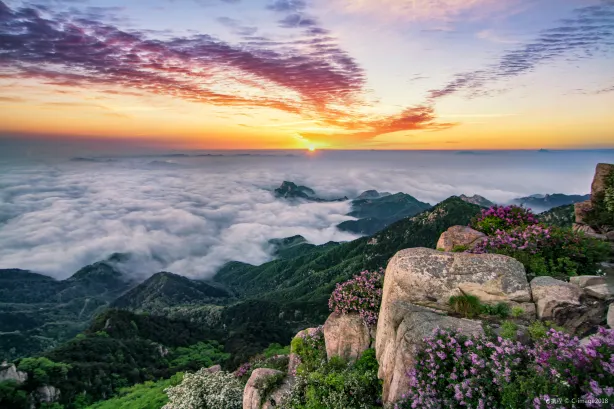
Mount Taishan is centered around Mount Taishan, the first of the Five Great Mountains, with steep and towering peaks, and the views of sunrise and sunset from the summit are breathtaking. Sea of clouds often appear among the mountains, and in winter there are spectacular rime ice views. In addition to natural scenery, the mountain also has numerous historical sites, stone inscriptions, religious temples, and other cultural views, with cliff inscriptions and steles scattered throughout the mountain, which is a major feature of Mount Taishan. Mount Taishan has its own highlights in each of the four seasons: in spring, peach and pear blossoms bloom across the mountains; in summer, the mountaintop is lush green and cool, making it a great summer retreat; in fall, the leaves are a mix of red and yellow, dyeing the layered forests in brilliant colors. There are multiple routes to the summit of Mount Taishan. The hiking trail at the Hongmen entrance is the traditional route opened during Emperor Qin Shi Huang's Fengshan ceremony, consisting mainly of stone steps. Walking from Hongmen to Zhongtianmen, you will pass by numerous attractions along the way, including Wanxian Tower, Doumu Palace, Huima Ridge, and Hutiange. This area is also where stone inscriptions are concentrated. After reaching Zhongtianmen, you can take a cable car or walk to Nantianmen and the summit area, where you can see attractions such as Eighteen Bends, Shengxian Archway, Duisong Mountain, Chaoyang Cave, and Wudafu Pines. The Tianwaicun route is a road leading from Tianwaicun to Zhongtianmen, accessible by tour bus, passing by Heilong Pool, Fanzhi Cliff, and Feng Yuxiang's Tomb. After reaching Zhongtianmen, it merges with the latter half of the Hongmen route. Travelers who prefer not to hike can choose this route. The Tianzhufeng route is relatively steep with few visitors, and is a hiking route often taken by outdoor enthusiasts. It features beautiful mountain scenery, including attractions such as Liyu Back, and at the starting point there is also the large-scale live performance "Chinese Mount Taishan: Grand Ceremony of Fengshan." The Taohuayu route is mostly chosen by travelers when descending the mountain. From Tianjie at the summit, take the ropeway to the mountainside, then transfer to a tour bus down to Taohuayu at the foot of the mountain. Along the way, you can enjoy the Colorful Stone Stream scenic area, where the colorful stone patterns at the bottom of the stream are quite magical. Dongyudao is also a walking hiking route, with attractions such as Qingyang Hall, Hanque Gate, and Dongtianmen along the way. Each route ultimately leads to the Daiding tourist area at the summit. Daiding features the main peak of Mount Taishan, Jade Emperor Peak, the Tianjie Scenic Area, as well as attractions such as Sun Viewing Peak, Daguan Peak, Zhanlu Terrace, Bixia Temple, and Confucius Temple. On clear days at the summit, you can gaze at the Yellow River in the distance and admire the wonder of the "Golden Belt of the Yellow River." The Houshiwu area is rich in varied pines and rocks, and there is a cableway leading to the North Heavenly Gate. Many visitors who want to watch the sunrise choose to climb Mount Taishan at night, usually setting off from the Hongmen route, and it is advisable to depart around 11 pm. This route is well lit at night, and a hike of about seven to eight hours will allow you to reach Sun Viewing Peak or Jade Emperor Peak at the summit before sunrise, which are ideal spots for watching the sunrise.

China · Tai'an
Jinci Temple Museum
2026 Asia 100 - Family-friendly Attractions

Jinci Temple Museum

8.7
4.8/5
21k reviews

Jinci Temple Museum is located at the foot of Xuanweng Mountain by the banks of the Jin River. It is an ancestral temple built to commemorate Tang Shuyu, the founding feudal lord of the State of Jin, and is also one of the earlier surviving royal sacrificial gardens in China. There is a saying that "you have not truly visited Taiyuan until you have visited Jinci." The ancient buildings in the museum are arranged in sequence along the central axis, among which the Xian Hall, the Flying Bridge over the Fish Pond, and the Hall of the Holy Mother are known as the "three treasures," while the Zhou Cypress, the Never-Aging Spring, and the Song dynasty attendant statues are known as the "three wonders"—these are the core highlights of any visit. The "Three Treasures" are located on the central axis and can be visited together. Xian Hall is the place where sacrificial offerings are placed. The hall is surrounded by railings instead of walls, making it well-ventilated and bright, and its beam structure is simple and lightweight. The Flying Bridge Across Fish Pond is on the west side of Xian Hall. It is a cross-shaped ancient bridge built over a square pond, resembling a modern overpass in form, and this type of bridge structure is extremely rare among surviving ancient buildings. The west end of the bridge connects to Shengmu Hall, the oldest surviving building in the museum. Wooden carved dragons coil around the porch columns in front of the hall, making them relatively early surviving examples of wooden coiled dragons. The hall interior was built using the reduced-column method, creating a rather spacious interior. It houses dozens of Song Dynasty colored sculptures, with the main statue of Shengmu seated in the shrine and the remaining attendants arranged on both sides with varied expressions. One attendant statue is half joyful and half sorrowful, vividly lifelike and moving. With Shengmu Hall as the center, you can also seek out the "Three Wonders." The Zhou Cypress is located on the north side of Shengmu Hall. It is said to have been planted in the Western Zhou Dynasty, and its trunk leans south like a reclining dragon, full of ancient majesty. The Never-Aging Spring is located on the south side of Shengmu Hall and is the main source of the Jin River. The museum also houses the Stele of the Inscription and Preface to Jinci, composed and handwritten by Emperor Taizong of Tang, Li Shimin, whose running-script calligraphy is vigorous and forceful. In the southern part is the Shifang Fengsheng Zen Temple, said to have originally been the villa of the Tang Dynasty general Yuchi Gong. In the Futu Courtyard, the Sarira ShengSheng Pagoda can be climbed for a distant view. The Jinci temple fair has been passed down to the present day and has been included in the national-level intangible cultural heritage list. The Water Mirror Stage, an ancient theater stage in the museum, is an important venue for activities during the temple fair.

China · Taiyuan
Prince Kung's Palace Museum
2026 Asia 100 - Best Things to Do

Prince Kung's Palace Museum

8.6
4.8/5
38.3k reviews

Prince Kung's Palace Museum is located by the Shichahai lakeside and stands as one of the best-preserved princely mansions from the Qing dynasty in Beijing. It originally served as the residence of Heshen, a powerful official during Emperor Qianlong's reign. After Heshen's downfall, the property was granted to Prince Qing Yonglin, and later to Prince Gong Yixin during the Xianfeng era, hence the name "Prince Kung's Palace." This mansion witnessed the entire decline of the Qing dynasty, earning the saying "One Prince Kung's Palace, half the history of the Qing dynasty." The complex features a mansion in the front and a garden at the rear, both laid out along central, eastern, and western axes with meticulous order and grandeur. The mansion consists of multiple siheyuan courtyards connected along a central axis: The central Yinan Hall, roofed with green glazed tiles, follows the specifications of a prince's main hall. On the eastern route, the two-courtyard complex of Ledao Hall and Duofu Pavilion once served as the residence of Heshen's son Fengshen Yinde and Princess Hexiao of the Gulun rank, with Ledao Hall later becoming Prince Gong's living quarters. The western route features delicate refinement, with Xijin Study standing out particularly – its partitions are entirely made of exquisitely carved nanmu wood, modeled after the Ning Shou Palace in the Forbidden City. This extravagant construction later became one of Heshen's listed crimes. At the mansion's end stands a two-story elongated building commonly called "Ninety-nine and a half rooms," its rear wall punctuated by a row of variously shaped decorative windows. Legend claims this was the treasure vault and marks the boundary between mansion and garden. The garden, named Cuijin Garden, was reconstructed by Prince Gong's commissioned artisans, blending the charm of Jiangnan landscapes with northern architectural layouts. Its three marvels are the Western-style gate carved from white marble, the stele inscribed with the character "Fu" (blessing) by Emperor Kangxi, and the grand all-wood theater. Hidden in the Secret Cloud Cave within rockeries, the "Fu" stele conceals wishes for numerous descendants, abundant harvests, talent, longevity, and blessings in its strokes—easily missed if one isn't attentive. The theater, an enclosed wooden structure, reportedly projects vocals throughout without amplification. Bat motifs dominate the garden's "blessing" theme: the Bat Pool, Bat Hall, and painted beams interplay harmoniously. From the Moon-Inviting Platform, visitors overlook the entire garden, while the Winding Stream Pavilion preserves the refined legacy of ancient floating wine cup poetry. When touring, you may first follow the central axis to see the mansion, then pass through the western gate to enter and appreciate the garden in detail. There are usually more travelers visiting during holidays, so it's advisable to start early and allow enough time to slowly savor the history and details of this princely mansion.

China · Beijing
Yingxian Wooden Pagoda
No. 3 of Best Things to Do in Shanxi

Yingxian Wooden Pagoda

8.6
4.8/5
25.8k reviews

Yingxian Wooden Pagoda is centered on the Sakyamuni Pagoda of Fogong Temple. This pure wooden pavilion-style pagoda was first built in the second year of Qingning of the Liao Dynasty (1056) and later expanded and completed during the Mingchang period of the Jin Dynasty. It is the oldest surviving wooden pagoda in China. The pagoda has five visible stories, with concealed stories inserted between them, making nine stories in total, and stands about 67 m tall. Apart from the stone platform base on the first story, the main body of the pagoda is built entirely of wood, connected using traditional mortise-and-tenon craftsmanship, and the whole pagoda uses more than 50 types of bracket sets, demonstrating exquisite structural design. For more than nine hundred years, the pagoda has withstood many major earthquakes and modern artillery bombardment and still stands today. Due to the need for cultural relic protection, visitors may only visit the first floor inside the pagoda. There is a door on each of the north and south sides of the first floor. In the center of the inner chamber is a seated statue of Shakyamuni about 10 m tall, with a dignified face and a solemn expression. Looking up, you can see the exquisite coffered ceiling at the top. On the walls of the inner chamber are painted six Buddha images of Tathagata, and on the walls on both sides of the doorway are painted Liao Dynasty-style murals featuring Vajra, disciples, and offering figures, with bright colors and lifelike figures. Multiple plaques from various dynasties hang under the eaves of each story of the wooden pagoda, two of which were written by Ming emperors and are particularly striking. Under the south eaves of the fifth story hangs the plaque "Supreme Divine Craftsmanship," written by Zhu Di, Emperor Chengzu of Ming, when he climbed the pagoda during a northern military campaign in the Yongle era; under the south eaves of the fourth story hangs the plaque "Wonder of the World," written by Zhu Houzhao, Emperor Wuzong of Ming, when he ascended the pagoda to feast and reward his ministers after the Yingzhou victory in the Zhengde era. These plaques are not only calligraphic treasures but also record the intersection of the wooden pagoda with historical figures, together with the architecture itself forming a distinctive cultural view of the attraction.

China · Ying County
Baotu Spring
No. 4 of Best Things to Do in Shandong

Baotu Spring

8.5
4.6/5
59.3k reviews

Baotu Spring is located in the bustling downtown area of Jinan, with Thousand Buddha Mountain to the south, Daming Lake attraction to the north, and Quancheng Square to the east. It is a distinctive garden themed around springs, renowned as "the finest spring under heaven" and ranked first among Jinan's "72 famous springs," with a history spanning over 2,000 years. It has also appeared in literary works many times, most notably in Lao She's essay "Baotu Spring." Visitors come here to witness the magnificent sight of the three springs erupting. The main spring is the centerpiece of the park. The spring water splits into three streams, clear and crisp, gushing day and night, and reaching several feet high when the flow is abundant. Around the spring are large stone blocks with railings, where visitors can look down at the spectacular sight of the three springs surging in the pool. Beside the spring stands a stone tablet inscribed with "First Spring" in dark green, written by Emperor Qianlong himself. In addition, nearby are scattered more than thirty famous springs, including Golden Thread Spring, Shuyu Spring, Xibo Spring, Liuxu Spring, Huanghua Spring, and Dukang Spring. Due to the abundant local rainfall in July and August, this is a good season to come and admire the spring water. In midsummer, visitors can have an intimate encounter with the spring water in the park. Some springs have no railings around them, and there are stone paths in the pools with spring water flowing over them. Visitors can step down into the pools to get close to the water, and walking on the stone paths, their feet will be splashed by the spring water, giving a cool sensation. Besides getting close to the water, there are also springs beside the pools that visitors can drink from directly. To the east of the spring is the Wanghe Pavilion Teahouse, which offers visitors specially preparedThis springFragrant tea brewed with water. In addition to the springs, another sight worth seeing in the park is the South Gate. It is magnificently and elegantly decorated. The horizontal plaque above the gate, with the words "Baotu Spring" in golden characters on a blue background, was written by Emperor Qianlong of the Qing Dynasty and is acclaimed as the "first gate" of Chinese gardens. In addition, the attraction frequently hosts various cultural activities. Every year during the first lunar month, a lantern festival is held in the park, lasting 20 days. There is also the Spring Water Culture Festival, during which the park features various folk activities, calligraphy and painting exhibitions, and opera performances for visitors to enjoy. The park also hosts a chrysanthemum exhibition; in the golden fall season, when the springs all surge forth and chrysanthemums and spring water complement each other beautifully, it is well worth a visit. In addition, the attraction has also launched a cruise route. After touring the attraction, visitors who are interested can board a boat at the boat station and sail through the West Gate Bridge in Jinan's old city area, passing by the East Gate of Wulongtan Park and entering Wulongtan Lock, Jinan's first passenger lock in history, where they can experience a drop of more than 2 m. Sitting on the east side of the boat, visitors can also see the relief sculptures of the "Eight Views of Jinan." Along the way, there are many aquatic plants on the banks, and the river water is so clear that the bottom is visible.

China · Jinan

Experiences you can't miss in Xinhe

Featured Day tours in Xinhe

View all Day tours
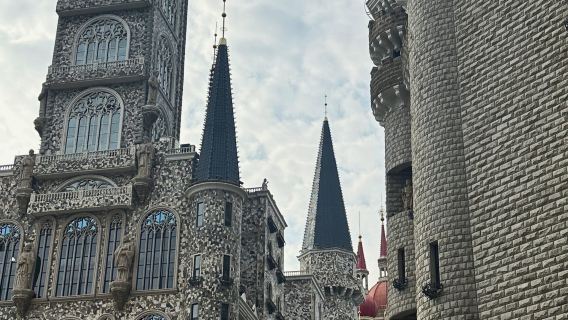
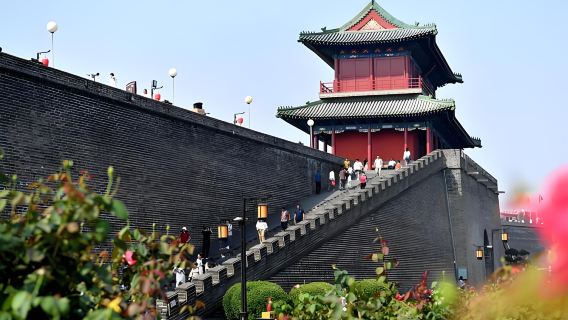
One-day tour of Zhengding Ancient City + Longxing Temple + Rongguo Mansion + Zhaozhou Bridge in Shijiazhuang, Hebei: Chartered car + admission
󱌍
FromPHP 2,439.48
One-day private tour of Zhengding Ancient City + Longxing Temple + Rongguo Mansion + Zhaozhou Bridge in Shijiazhuang, Hebei
󱌍
Duration: 3.8 hrs
English
Free cancellation
Instant confirmation
Book now for tomorrow
FromPHP 4,508.40
Xinhe Today's weatherFoggy 2-17℃
Xinhe weather for the next 2 days11/12: 3-16℃, 11/13: 3-16℃

Free things to do in Xinhe

What travelers say about Xinhe

user-avatar
M41***31November 11, 2026
5.0
Sister Wang's explanations are incredibly down-to-earth and detailed. Her voice is loud and clear, easy to understand, and she's adept at creating a lively atmosphere. She's approachable and her entry points are very engaging, making the 3-hour lecture anything but boring. She even teaches photography angles and techniques, what to photograph and what not to. Highly recommended!

The Palace Museum

user-avatar
XiaoLong (Serge)November 11, 2026
5.0
Absolutely amazing experience at Universal Studios Beijing! This was my third visit, and every time feels just as exciting as the first! I bring tour groups to Beijing, and we always love visiting this incredible park. So many unforgettable moments and fantastic attractions! One day is definitely not enough to explore everything. We’ll keep coming back again and again! ⭐⭐⭐⭐⭐

Universal Beijing Resort

user-avatar
E43***44October 13, 2026
5.0
张洋导游讲解的非常好!All visitors should book the national Museum of China trip. It is not easy to book on your own, book through Trip.com and have a guide to share the history with you..

National Museum of China

user-avatar
Anonymous userNovember 10, 2026
5.0
Taking the Zhongtianmen Cableway on Mount Tai is a time-saving, effortless, and worry-free option. It only takes about 10 minutes to get from Zhongtianmen to Nantianmen, and you don't even need to climb the 18 bends – truly a blessing for lazy people!

Mount Taishan

user-avatar
Ye735November 10, 2026
5.0
Having visited Jinci Temple twice, I personally believe it's absolutely the most worthwhile tourist attraction in Taiyuan. Hiring a professional guide is essential for a better understanding of this historically significant royal sacrificial garden. The exquisite carvings of dragons on the pillars of the Holy Mother Hall and the intricate details of the statues inspire genuine admiration for the wisdom and craftsmanship of the ancients. The 3,000-year-old Zhou Cypress is truly awe-inspiring up close! Every fold in its trunk tells a story spanning the Shang and Zhou dynasties. In the Zhenguan Baohan Pavilion, Li Shimin's self-written and inscribed "Inscription and Preface of Jinci" stands silently. The bluestone is silent, yet the ink flows, the spirit of a thousand years ago still vividly present.

Jinci Temple Museum

user-avatar
_TI***fmNovember 11, 2026
5.0
Came here from 还珠格格 but my tour guide make this place more interesting. So much history here!

Prince Kung's Palace Museum

user-avatar
320***57November 11, 2026
5.0
I came specifically to keep a thousand-year-old promise: the Yingxian Wooden Pagoda, the Sakyamuni Pagoda of Fogong Temple. Without a single iron nail, thousands of wooden components, joined together by mortise and tenon joints, have stood silently on the land of northern Shanxi for nearly a millennium. Looking up at the layers of gracefully unfolding brackets, the wind chimes on the eaves tinkle gently in the breeze, and swallows circle around the pagoda. It turns out that the romance and wisdom of the ancients are hidden in the cracks of the wood. It has waited for me for over nine hundred years; I finally stand at its foot, gazing upon the time of the Liao Dynasty.

Yingxian Wooden Pagoda

user-avatar
ImmzieNovember 11, 2026
5.0
Well worth a visit. The garden areas are massive and there's loads to see. Just be aware that the area with the famous blue temple is completely packed and you'll struggle to get close up.

Temple of Heaven

user-avatar
verazheNovember 7, 2026
5.0
A must-see attraction in Jinan, the chrysanthemum exhibition is also very beautiful recently. The continuous gushing of Baotu Spring is quite amazing, and it gets really crowded. Going early is better. The spring water is incredibly clear when the weather is good.

Baotu Spring

user-avatar
Jimothy BaldcockNovember 11, 2026
5.0
The driver was exceptional. Careful, smooth and relaxing drive. At every stop he explained everything and accompanied us to help buy tickets etc which is particularly helpful to non-Chinese speakers. He was friendly, patient and kind. The smaller temples and pagodas were especially nice, quiet and in some interesting surroundings. Hanging Temple was impressive but may be hard going at busy periods (we arrived early morning in winter, -2 degrees so particularly quiet. Not for those with a fear of heights, or claustrophobia!

Xuankong Temple

Popular cities near Xinhe

Frequently asked questions

What are the recommended tours and excursions in Xinhe?

When choosing a tour, start with how much time you have and the kind of experience you're looking for. Trending options right now include 1-day tour to Hebei Academy of Fine Arts, Berlin Zen Temple and Zhaozhou Bridge in Shijiazhuang with Chinese and English services, One-day tour of Zhengding Ancient City + Longxing Temple + Rongguo Mansion + Zhaozhou Bridge in Shijiazhuang, Hebei: Chartered car + admission, and One-day private tour of Zhengding Ancient City + Longxing Temple + Rongguo Mansion + Zhaozhou Bridge in Shijiazhuang, Hebei. Check the real-time availability and itinerary before you book.

As of November 12, 2026, the reference price for day tours and activities in Xinhe is around PHP 2,439.48 – PHP 12,913.23. Rates vary by duration, group size, transportation, tickets, meals, and any special admission requirements. Before you book, please confirm the billing currency and whether the price is quoted per person or per group.

Get help anytime, anywhere within 30 secondsContact customer support

Change and cancellation policies vary by attractions and tours. Please check the product details page for more information.

Ticket prices may vary between weekdays and weekends, as well as during peak and off-peak seasons. When booking with Trip.com, you can also use Trip Coins to get extra savings. For more tips on booking discounted tickets, please visit Trip.com for the latest information.