
Things to do in Xiangyuan
Explore top experiences
Top 10 attractions in Xiangyuan


Xiantang Mountain
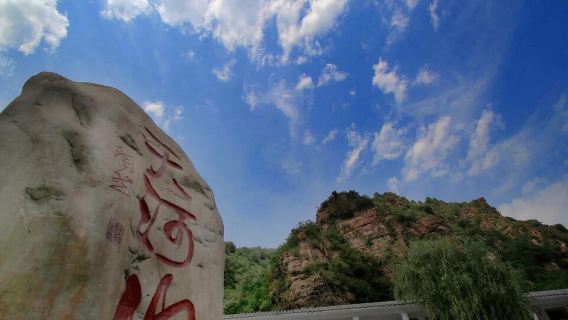
Xiantang Mountain is a national AAAA-level tourist attraction, national forest park, China low-carbon tourism demonstration site, provincial scenic spot in Shanxi, moral education base in Shanxi Province, provincial civilized and harmonious scenic area, and education base in Changzhi City. Xiantang Mountain is located in Xiangyuan County, Shanxi Province, at the western foot of the Taihang Mountains and north of the Shangdang Basin, covering an area of 21 km². Xiantang Mountain, known as the "Sacred Mountain of Taihang," stands at an elevation of 1,100–1,750m. It boasts over 360 species of flora with 90% forest coverage. The air and surface water quality meet national standards, while environmental noise levels remain at zero, earning it the reputation of a "natural oxygen bar." The attraction features over 30 scenic spots including Xiantang Temple, Wa Huang Palace, Guanyin Cave, the ancient architectural complex of Liuli Rock, Faxian Memorial Garden, Xiantang Bahe Garden, the Temple of Wealth, and Guanyin Hall. Among these, Xiantang Temple stands as the crown jewel, with a celestial ladder at its entrance, towering peaks behind it, and springs winding through its halls. Surrounded by mountains on all sides, it's a breathtaking spectacle historically praised as "encircled by nine dragons, a place of outstanding people and spiritual energy." Each season offers unique charm: spring brings blooming wildflowers, summer offers dense forest shade, fall paints the mountains in red foliage, and winter transforms the landscape into a pristine icy wonder. As Ming Dynasty scholar Li Jun poetically described: "This is the true realm of Penglai—where else could one seek such celestial halls?" Trace the footsteps of Faxian and explore the sacred Xiantang Mountain. During the Eastern Jin Dynasty, the eminent monk Faxian practiced and preached Buddhism here. As the first Chinese monk in recorded history to reach India for Buddhist scriptures—230 years before Xuanzang of the Tang Dynasty—he became a cultural envoy and pioneer of the ancient Silk Road, honored by Lu Xun as "the backbone of China." The activities held during festivals like the Spring Festival and Red Leaf Festival each year are spectacular, attracting countless visitors to explore the serene beauty and find inner peace. The scenic cable car in the attraction offers an effortless way to reach the summit, where you can overlook the mountain ranges and enjoy breathtaking panoramic views. Xiantang Mountain is a comprehensive tourist destination offering mountain climbing adventures, sightseeing tours, summer retreats, and cultural exchanges. Introduction to Xiantang Mountain petting zoo: The Xiantang Mountain Petting Zoo is an immersive forest-themed animal park created by Shanxi Xiantang Mountain Tourism Development Co., Ltd. The park has introduced hundreds of species and thousands of rare, adorable animals, including lions, black bears, wolves, and other wild creatures. Here, visitors can not only observe various cute animals up close and watch sea lion shows and pet performances, but also engage in hands-on activities like feeding, petting, and interactive photo sessions. Immerse yourself in this kingdom of adorable creatures and experience the charm of nature.Xiangyuan · 18.2 km from downtown

Huangyadong Scenic Area
Huangyadong Cultural Tourism Area is located in the hinterland of the Central Taihang Mountains, Licheng County, Changzhi City, Shanxi Province, with a total area of 6.7 square kilometers. It consists of the Huangyadong Red Classic Area, Tianwaitian Leisure Experience Area and the Entrance Service Area. During the Anti-Japanese War, this was an ordnance base behind enemy lines in North China. The earliest arsenal established by the Eighth Route Army was born here, and it was known as the "Cradle of People's Military Industry". In November 1941, the Huangyadong Defense War that shocked China and the world took place. Our army defeated the enemy with fewer troops and the weak with stronger ones, creating an unprecedented record of 6:1 enemy and our casualties in the Sino-Japanese war. Huangyadong (material warehouse), the former site of the arsenal, the martyrs' cemetery, the carved fort group and other sites and relics are scattered throughout. It is a relatively well-preserved red anti-Japanese war site and is known as the "anti-Japanese war museum without walls". It integrates the magnificent scenery of Taihang Mountains, the geological wonders of Zhangshiyan, the red military industry culture, and the historical sites of the War of Resistance Against Japanese Aggression. It is a cultural tourism area with the main functions of resource protection, cultural promotion, party and government training, study and team building, sightseeing and vacation, summer health care, and outdoor expansion.Licheng · 41.3 km from Xiangyuan

Longmen Grottoes
One of the four major grottoes of China and a UNESCO World Heritage Site, the Longmen Grottoes are a trove of 1000 years of Buddhist art treasures. Bounded by the Yi River, the caverns are divided into two sections at East Hill and West Hill. The caverns at East Hill contain mostly Tang dynasty (618-907) works, while the caverns at West Hill were cut out during the Northern, Sui, and Tang dynasties and contain the carvings that are most representative of the site. The Buddha and bodhisattva sculptures that inhabit the caverns are carved into an endless variety of poses and expressions of mercy and kindness, while the caves themselves lend a stately and dignified atmosphere. The artistry of these sculptures is truly a priceless inheritance of Buddhist art.China · Luoyang

Millennium City Park
Millennium City Park is located by the Longting Lake in Kaifeng, a large-scale historical and cultural theme park that faithfully recreates the Northern Song Dynasty's capital based on the famous painting "Along the River During the Qingming Festival" by artist Zhang Zeduan, following the original layout at a 1:1 scale. The park is divided into two sections by the Shuangting Bridge: the southern area recreates the bustling urban life of Bianjing, with taverns, teahouses, pawnshops, and artisan workshops lining the streets, where peddlers with shoulder poles and shouting shop assistants move about; while the northern area features imperial gardens, with lakeside halls and quadrangular courtyards standing by the water. Staff and vendors throughout the park wear Song-style attire, accompanied by ancient music and the rhythmic sounds of bells and drums, creating the illusion of "stepping into a painting and traveling back a thousand years in a single day." The architecture here offers visually striking highlights: the Rainbow Bridge spanning the Bian River replicates the famous bridge from ancient paintings, arching like a rainbow—watching grain barges pass beneath recreates the painting's ambiance. Fuyun Pavilion towers above all other structures with its crimson facade and golden-roofed eaves, offering panoramic garden views. The reconstructed Shangshan Gate mirrors Kaifeng's Northern Song dynasty city gates, standing majestic with resplendent paintings as the garden's most imposing structure. Waterside pavilions like Shuixin Xie, Double Pavilion Bridge, and Nine Dragons Bridge dot the emerald waters in picturesque harmony. The daytime highlight is the scattered live performances throughout the park: "Judge Bao inspecting the Bian River grain transport" unfolds on the water by Rainbow Bridge, "Squire Wang's daughter seeking a husband" brings the embroidered ball tossing matchmaking to the streets, and "Yue Fei unhorsing Prince Xiao Liang" stirs up dust with galloping hooves in the drill ground. Folk performances like cockfighting, stilt walking, cuju (ancient football), and pan drumming are interspersed throughout. Families with children can visit Fun Garden and Great Song Games to try archery, dart throwing, rope climbing, and hoop diving—experiencing every Song dynasty game from a thousand years ago—or dress in period costumes at Square Courtyard to take mock imperial exams. Street-side workshops showcase folk crafts like Bian embroidery, Zhuxian Town woodblock prints, official kiln porcelain, and dough figurines, where visitors can watch artisans at work. The park takes on a different face after nightfall: red lanterns light up one after another, and the streets are ablaze with lights, making it seem like a completely different place from daytime. The large-scale water show "Northern Song Dynasty: Splendid Dreams of Dongjing" is performed on Jinglong Lake. The entire show is connected by eight classic Song Dynasty poems and a scroll of "Along the River During the Qingming Festival," transporting the audience back to Dongjing of the Northern Song Dynasty a thousand years ago. The performance lasts approx. 70 minutes, and many travelers specifically reserve their itinerary for the evening to wait for this show. After the performance, you might as well climb the Shangshan Gate tower to overlook the park scenery and the night view of Kaifeng under the lights. Dining in the park is also convenient: the snack street and night market around the Dongjing food area gather Kaifeng snacks like soup dumplings and mutton pancake, perfect for eating while strolling; for a proper sit-down meal, head to Sunyang Restaurant, a recreation of the "main shop" depicted in paintings, and try traditional Henan dishes such as soup dumplings and carp with noodles.China · Kaifeng

Jinci Temple Museum
Jinci Temple is located on the banks of the Jin River at the foot of Xuanweng Mountain, 25 km southwest of Taiyuan. It was built by later generations to commemorate Tang Shuyu, the founding feudal lord of the Jin State, and served as the ancestral temple of the Jin State. It is often said that "a visit to Taiyuan is incomplete without seeingJinci Templethe saying "a wasted trip to Taiyuan". After getting off at Jinci Temple, the first place you'll reach isJinci MuseumThis is a free park with a pleasant environment, perfect for casual strolling. After about a 10-minute walk through the park, you'll reach the main area of Jinci. Inside Jinci Museum,Jinci TempleThe "Three Treasures" (Xian Hall, Flying Bridge Across Fish Pond, and Shengmu Hall) and "Three Wonders" (Zhou-bai, Nanlao Spring Pavilion, and painted clay sculptures) are must-sees for every visitor toJinci Templeview that everyone must see. Jinci TempleThe "Three Treasures" are connected and located atJinci Templeon the central axis, allowing for a combined visit. Xian Hall is a place for offering sacrifices, with fence-like walls on all four sides, providing good ventilation and coolness. Notably, not a single iron nail was used in the beams and pillars throughout the hall. The Flying Bridge Across Fish Pond is located in front of Xian Hall and was built during the Song Dynasty. The entire view resembles a modern overpass, making it the only existing example among ancient bridges in China. One end of the "Flying Bridge" connects to Shengmu Hall, which is the earliest existing main building in Jinci Museum. The main hall is spacious, and a major highlight is its beam-and-pillar structure without internal columns. Eight wooden carved coiled dragons, appearing ready to fly, are carved on the eight corridor pillars in front of the hall, which, together with the "Flying Bridge Across Fish Pond," present a magnificent sight. Centered around the Hall of the Holy Mother, it's easy to find the "Three Wonders." The painted clay figurines are located inside the Hall of the Holy Mother, with the main statue of the Holy Mother seated majestically in a wooden shrine, dignified and resplendent, while the other 42 attendant statues stand on either side. These figurines are dressed in vibrant colors with varied expressions, including one maidservant dressed as a flower-dan (young female role in Chinese opera), her face half joyful and half sorrowful, evoking complex emotions in viewers. Master Mei Lanfang once stood before this maidservant statue for a long time, carefully studying her posture and inner emotions, and praised it highly. The Zhou Cypress, located north of the Hall of the Holy Mother, was planted during the Western Zhou Dynasty and is over 3,000 years old. The Pavilion of the Never-Aging Spring stands south of the Hall of the Holy Mother, where the source of the Jin River flows continuously year-round. In addition,Jinci TempleInside, there is also the extremely precious "Jinci Inscription" stele, personally composed and handwritten by Emperor Taizong of Tang, Li Shimin. At the southernmost part, you can find the Shifang Fengsheng Zen Temple, which is said to have originally been the villa of Yuchi Gong, a founding general of the Tang Dynasty. In the northern part of the temple complex, the Futu Courtyard houses the Sheli Shengsheng Pagoda. Climbing the pagoda offers a panoramic view.Jinci TempleThe panoramic view is clearly visible.China · Taiyuan

Wansuishan Martial Arts City
Wansui Mountain Martial Arts City is located in the Wansui Mountain tourist area in the northwest of Kaifeng city. It is a large tourist area built with the background of Song Dynasty culture and martial arts culture. There are antique and charming Song Dynasty garden streets and alleys in the scenic area. There are wonderful martial arts and ancient costume performances all year round, as well as rich entertainment facilities. It is a good place for relaxation and entertainment Souvenir Kaifeng, Zhengzhou and other places. When visiting the Wansui Mountain Martial Arts City, the first thing you feel is the beautiful scenery of the scenic spot. The entire martial arts city has created the atmosphere of the Song Dynasty, including the Wansui Temple, which reproduces the glory of the thousand-year-old ancient temple in the Song Dynasty, the Dragon Altar that embodies the spirit of Buddhism, Confucianism and Taoism, the intact ancient city wall ruins of the Ming and Qing Dynasties that have been preserved in the world, and one of the largest man-made streams and waterfalls in China. Many landscapes such as "Jiulong Waterfall" are very eye-catching. What's rare is that there is also a very large forest and green space in the scenic area, which is quiet and quiet. There are flowers in bloom every suitable season, which is very suitable for photography. After that, tourists will notice the unique martial arts features in the scenic spot. There are 36 martial arts-themed plays performed here year round (about 60 per day), such as "Cross Slope", "Wu Song Drunk Beats Chiang Menshen", "Wild Boar Forest" and so on. The themed drama is quite exciting and must not be missed when you come here; and interactive performances such as "Martial Arts Film and Television Experience Hall", "Wu Zhuangyuan" and "Li Kui's Case" can also allow tourists to participate in martial arts stories, which is full of fun. There are also many elements of martial arts in the architectural design of the scenic spot, such as the martial arts road with large weapons such as the "Yitian Sword" and the "Bawang Sword", the "Knight's Picture" of the Song Dynasty Martial Arts Hall, the "Sword Altar" on the cross slope, and the "Sword Altar" on the cross slope. Xianzhuang, Wulin venue and other places are unique. In addition, during the Spring Festival every year, Wansui Mountain holds a large-scale temple fair, with grand performances, rich snacks, dazzling handicrafts and unique entertainment activities. The atmosphere is warm and it has become one of the most popular temple fairs in the Central Plains. one.China · Kaifeng

Song Du Huangcheng Cultural Tourism Resort
Song Du Huangcheng Cultural Tourism Resort is located in the northern part of the old city of Kaifeng, precisely on the site of the imperial palace of the Northern Song Dynasty's Dongjing city. The millennium-old central axis of Kaifeng runs through this area, making it the core zone of the royal culture of the Song Dynasty. Here, you can find the Song-style imperial architecture of the Longting attraction, the tales of the Yang Family Generals at Tianbo Yang's residence, and the calligraphic steles of Han Yuan Stele Forest. The Shuanglong Lane historical and cultural block, 960 Cultural and Creative Park, and Qisheng Corner have transformed old streets and courtyards into Song-style blocks perfect for leisurely exploration. The resort also connects a series of Song culture attractions: Wansui Mountain Great Song Martial Arts City stages year-round martial arts live shows and intangible cultural heritage iron fireworks, while historic sites like the Iron Pagoda, Kaifeng city wall, Zhouqiao and Bian River ruins, Shanshangan Guild Hall, Yanqing Taoist Temple, and Fan Pagoda are scattered across the old city, along with niche spots like the underground wartime grain storage. These places are hard to cover in one day, so we recommend focusing on two or three key sites. After dark, a different experience awaits as the attractions light up in unison. Boarding a painted pleasure boat on the Great Song Imperial River to watch the illuminated pavilions and towers sway with the rippling water is a popular nightlife option here.China · Kaifeng

Pingyao Ancient City
Pingyao Ancient City is approx. 85 km from Taiyuan. The streets, shops, and residences within the ancient city still maintain their traditional layout and appearance, making it one of the best-preserved ancient cities in China. It is also the only ancient county town in China that has successfully been listed as a UNESCO World Heritage Site as an entire city. Pingyao was once the financial center of China during the late Qing Dynasty. Walking through this once-prosperous ancient city, you can feel the essence of Shanxi merchant culture everywhere. The ancient city has six gates in total, with the north gate near Pingyao bus station and the west gate nearPingyao train stationThe south gate and west gate are places with many travelers. Entering the ancient town does not require an admission ticket, but if you want to climb the city wall or visit attractions like the ticket number, you need to purchase a pass for the ancient town. The ancient town is not very large, and walking is enough to explore it all. If you prefer not to walk, you can also take electric bikes. The streets of the entire ancient city are laid out in the shape of the Chinese character "土" (earth). When visiting, you usually enter the city from the West Gate and walk along West Street to Rishengchang Draft Bank, known as the "ancestor of modern Chinese banking". Here you can not only learn about the development history of ancient banking, but also have the old manager in a long robe and mandarin jacket write a draft for you using the early draft method, which is particularly historical. Moving forward is the north-south spanningSouth street, it is the central axis of the ancient city. During the Ming and Qing dynasties,South streetControlling over half of the nation's financial institutions, it was hailed as the "Wall Street of China" in its heyday. Today, it remains a bustling area of the ancient city, known as the Ming-Qing Ancient Street. Most attractions in Pingyao Ancient City are concentrated here, centered around the landmark structure, the Ancient City Tower. Surrounding it are attractions like Xie Tong Qing ticket number (China Banking Museum) and Wei Tai Hou (Ticket number museumAttractions such as Baichuantong, China Escort Museum, Tongxinggong Escort, Weishengchang, China Rare Newspaper Exhibition Hall, and Tianjixiang are available, along with restaurants, musical instrument stores, cafes, and bars. After strolling along the street, you can dine here, buy some souvenirs, and then continue south for more sightseeing. At the Pingyao Ancient City's county government office on the south side of the ancient city, you can see a large number of ancient documents and torture instruments, with daily performances of court sessions; near the Shangdong Gate are the Pingyao Ancient City's Chenghuang Temple andConfucian templeIt is quite grand and meticulously built, with thriving incense offerings where you can burn joss sticks. The Pingyao Ancient City wall is also one of the highlights of the ancient city, being not only majestic but also remarkably well-preserved. Climbing the wall offers a panoramic view of the entire ancient city. Among the gates, the tower of the south gate (Yingxun Gate of Pingyao Ancient City wall) is exquisitely crafted, and this area is close to residential buildings, allowing visitors to observe the daily life of the locals. If time permits, you can walk around the ancient city along the wall to fully appreciate its charm, which takes about an hour. Watching the sunset from the wall in the evening presents a beautiful scene. Besides the ancient town itself, Pingyao has two other major attractions: Zhenguo Temple and Shuanglin Temple. Zhenguo Temple was built without a single nail, with all structures joined by interlocking wooden components. Shuanglin Temple houses over 10 halls containing exquisitely crafted painted sculptures dating from the Yuan to Ming dynasties. It is highly recommended to stay overnight in the ancient town to enjoy its night view. You can also rent a bicycle to explore the small alleys and experience the authentic Pingyao, where the local culture and customs or photography make excellent subjects. Especially during the Chinese New Year, Pingyao is full of festive atmosphere. The town features old courtyards converted into inns, which are usually affordable, with clean and tidy accommodations available for just a few dozen yuan. Additionally, Pingyao is renowned for its beef. In the late Qing Dynasty, Empress Dowager Cixi passed through Pingyao and was so fond of the local beef after tasting it that she designated it as a royal tribute. Shops bearing the name "Guanyun beef" can be seen everywhere in the ancient town, making it hard to distinguish authenticity, and prices are generally high. You may consider buying some outside the town to try or give as gifts to friends and relatives.China · Pingyao County

The Hukou Waterfall Scenic Area
The Hukou Waterfall is a famous waterfall on the Yellow River. The roiling water of the Yellow River roars downward here with great power. The Hukou Waterfall area is divided by the Yellow River. On the west side is Yichuan County, Shaanxi, and on the east side is Ji County, Shanxi. The waterfall is also divided into the Hukou Waterfall (the part of the falls in Shaanxi) and the Shanxi Hukou Waterfall (the part of the falls in Shanxi). Separate tickets are sold for each area. The Shanxi section of the Hukou Waterfall is located 45 kilometers west of the seat of Ji County in Linfen City, Shanxi.China · Ji County

Wahuang Palace
Wahuang Palace is a compound of palaces and temples built to honor the Chinese goddess Nüwa. It was built into the side of a steep cliff during the Northern Qi dynasty (550-577). Most of the buildings that remain today were built in the Ming and Qing dynasties, although visitors can still see the remains of Northern Qi dynasty stone engravings and Buddhist grottoes. The palace complex covers a large area – visitors can explore the buildings at the bottom of the mountain before ascending the cliff to visit the hillside temples.She County · 52 km from Xiangyuan
Experiences you can't miss in Xiangyuan
Featured Day tours in Xiangyuan
View all Day tours


FromAED 749.42


Free things to do in Xiangyuan
Xiantang Mountain
Xiangyuan · 18.2 km from downtownHuangyadong Scenic Area
Licheng · 41.3 km from XiangyuanImmediate access, Book now for today, Cancel anytimeLongmen Grottoes
China · LuoyangImmediate access, Book now for today, Cancel anytimeMillennium City Park
China · KaifengImmediate access, Book now for today, Cancel anytimeJinci Temple Museum
China · TaiyuanImmediate access, Book now for today, Cancel anytimeWansuishan Martial Arts City
China · KaifengImmediate access, Book now for today, Cancel anytimeSong Du Huangcheng Cultural Tourism Resort
China · KaifengPingyao Ancient City
China · Pingyao CountyImmediate access, Book now for today, Cancel anytimeThe Hukou Waterfall Scenic Area
China · Ji CountyImmediate access, Book now for today, Cancel anytimeWahuang Palace
She County · 52 km from XiangyuanImmediate access, Book now for today, Cancel anytime
What travelers say about Xiangyuan

Anonymous userNovember 13, 2025
5.0
Finally, I've arrived at Xiantang Mountain!
Xiantang Mountain is located in Qiangji Township, 25 kilometers north of Xiangyuan County. It gets its name from Xiantang Temple, which is built halfway up the mountain. Originally named "Jiulong Mountain," the main peak is 1700 meters above sea level, covering an area of over 20 square kilometers. From the summit, one can see layer upon layer of peaks, shrouded in mist, resembling nine dragons gathering. Xiantang Temple, ancient, solemn, and magnificent, is nestled halfway up the mountain, with Duxiu Peak (Cuiwei Peak) rising abruptly from the surrounding mountains beside it.
Xiantang Mountain

武卫偃October 18, 2026
5.0
This scenic spot exceeded my expectations; I'd never heard of it before. While visiting Changzhi to see ancient architecture, I unexpectedly discovered this hidden gem – a delightful surprise! It boasts both the beautiful scenery of the Taihang Mountains and the rich revolutionary history. The route is well-planned, and the service is excellent. Although the combined ticket is a bit pricey, it connects all the highlights, preventing backtracking and making the trip less tiring. In terms of scenery, service, and facilities, it surpasses many 5A-level scenic areas.
Huangyadong Scenic Area

_TI***1pOctober 19, 2026
5.0
Beautiful view. We went there in the evening and it looked amazing with all the lights. I highly recommend 👌
Longmen Grottoes

盼望明天October 19, 2026
5.0
Pavilions stand by the water, green trees surround the streets, and houses stretch endlessly. Without excessive hustle and bustle, it is a vivid scene of bustling city life unfolding from the scroll of "Along the River During the Qingming Festival" right before our eyes, with the gentle smoke of cooking fires and the charm of ancient times.
Millennium City Park

星星岩October 20, 2026
5.0
This is a very nice attraction. The ancient buildings are well-preserved. I recommend hiring a guide for a more in-depth understanding. A guided tour takes about 1.5 hours. The area is quite large, so you can explore at your own pace if you have time.
Jinci Temple Museum

楊小肥October 16, 2026
5.0
It was really fun! Even though it was outside the National Day holiday, it was still quite crowded. The NPC interactions were great. The iron flower display is a must-see. The music and parade at night were especially exciting. It's a place I would definitely fly back to.
Wansuishan Martial Arts City

M55***20August 18, 2026
5.0
It's very worthwhile, but it's also very crowded, which might slightly detract from the overall experience. However, the people are incredibly welcoming, and there are many beautiful spots for taking photos. The food is also affordable and inexpensive, which kids enjoy. I'll definitely go back when it's less crowded.
Song Du Huangcheng Cultural Tourism Resort

M65***99October 19, 2026
5.0
It's said that you can enter all 22 attractions. Many of the smaller attractions are quite similar, so if you have time, visit them all; if not, just focus on a few key ones. These include the Prefectural Government Office, Xie Tong Qing, Ri Sheng Chang, Ma Family Courtyard, and the City Gate Tower.
Pingyao Ancient City

yangliaopanOctober 15, 2026
5.0
We got a combined ticket for Shanxi and Shaanxi, and we went to the Shanxi section first.
We experienced the majesty of the Mother River, there were stage performances,
we had photo opportunities with little donkeys (suitable for children), and
we could drive to the other side of the Shanxi section.
The Hukou Waterfall Scenic Area

jyayoiOctober 11, 2026
5.0
The ticket booth lady was incredibly responsible: she explained the transportation options up and down the mountain in detail and genuinely suggested we decide whether to take the cable car down after we got up (the extra fare was the same as the round-trip fare). Taking my parents, both over 70, up the mountain was painless, haha! I recommend taking the sightseeing bus and cable car up and then walking down. The walk from the cable car station to Wa Huang Pavilion is a gentle descent (including a long flight of stairs!). You can take beautiful photos of the cliffside at Wa Huang Pavilion during the cable car ride; the walk from the cable car station to Wa Huang Pavilion takes about 30 to 40 minutes (depending on your pace) and offers a panoramic view of the valley. The autumn foliage is currently turning red and yellow.
Wahuang Palace


