Things to do in Ningwu
Explore top experiences
Top 10 attractions in Ningwu


Luya Mountain Scenic Area
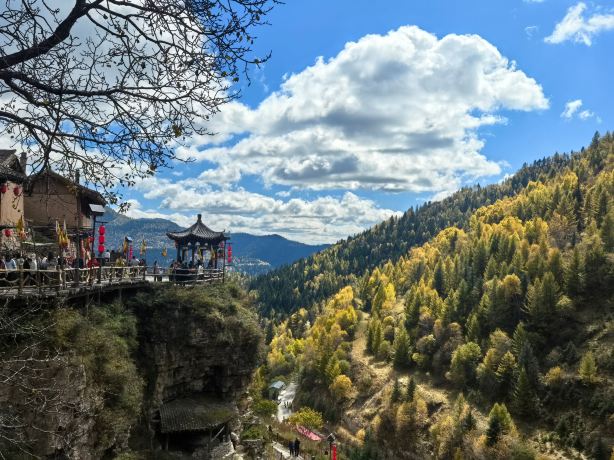
Known for its "asparagus" shape, Luya Mountain is a towering peak among high mountains. There are mountains and waterfalls, as well as odd-looking rocks and lush trees. During the sunrise after rain, the green Luya Mountain turns fire red and a colorful chakra-shaped "Luya Buddha's light" is occasionally seen.Ningwu · 27.1 km from downtown

Wannian Ice Cave
The Wannian Ice Cave National Geopark is located in Chunjingqi Town, not far from Ningwu County, Shanxi. The cave was formed in the quaternary glaciation, three million years ago and thus named the Million-year Ice Cave National Geopark. There is a strong cooling mechanism within the cave, leading to ice reserves that are nearly 100 meters deep. There is a volcano beside the ice cave, and together they form a natural wonder.Ningwu · 14.3 km from downtown

Xuankong Village
There are two suspended villages deep in Guancen Mountain, one is Wanghuagou and the other is Wuhuashan. The two villages are about 2.5 kilometers apart and are both built on cliffs hundreds of meters high. Most of these houses are built with stone and wood. A wooden plank road is the main street of the village. People walking on the plank road feel like they are in mid-air. Looking up from the bottom of the cliff, it looks like a castle in the sky. Most of the people in these mountains have small attics. Standing in the attic, you can see the endless greenery through the window and the sea of clouds through the door. Behind the village are towering mountains and in front of it is a deep ditch. Originally, you could only enter the village along the steep mountain road. In recent years, cement roads have been built for tourism development, and cars can drive to the parking lot under the village.Ningwu · 23.7 km from downtown

Malun Grassland
Malun Grassland is 2,721 meters above sea level and covers an area of more than 6,000 mu. It was formed during the Quaternary glacial period of the Cenozoic Era 750,000 years ago. It faces Luya Mountain from north to south and is one of the largest subalpine meadows in North China. The pasture here is fertile and it is the base for emperors of all dynasties to raise war horses. Malun Grassland is called the flower grassland hanging in the air by netizens. The grassland integrates meadows, forests, mountains, canyons, strange pines, strange rocks, the Great Wall, the general platform, and the base tower. In late spring and early summer, the grassland is covered with small flowers, which makes it look like a flower blanket spread in the air, and free-range cattle and horses wander leisurely here.Ningwu · 42.1 km from downtown

Cliff Plank Road
Ningwu Cliff Plank Road was built between the cliffs of Xiangfeng Mountain, facing the vast forest. Its creation can be traced back to the Zhenyuan period of the Tang Dynasty. The plank road was originally built to connect temples on multiple peaks, and later it was built for tourists to visit. Go up the plank road from Xiaoshimen Village, pass the iron cable suspension bridge, Shimen Natural Moat, and see scenic spots such as hanging coffins, hanging temples, and Dragon King Temple. Standing on the plank road, you can also overlook the tomb of Liu Jinding in Zangwa and the primitive tranquility of the forest village.Ningwu · 21.9 km from downtown

Source of Fenhe River
The source of the Fen River is located about 1 kilometer northwest of Dongzhai Town, Ningwu County. According to the "Classic of Mountains and Seas", "The Fen River originates from the Guancen Mountain", so later generations believe that this is the source of the Fen River. It is the mother river of Shanxi people. There is a pond at the source, with the four characters "Fenyuan Lingzhao" engraved on the stone wall. It has been known as the first holy place in Shanxi since ancient times. The ancient temple Leiming Temple in northern Shanxi got its name because the sound of Fenshui gushing out from the dragon's mouth under the stone cliff is like thunder. The temple is built on the mountain and is grand and majestic. The ancient temple fair is held on the eighth day of April every year, which is unprecedented.Ningwu · 26.9 km from downtown

Shimen Hanging Coffins
The Shimen Hanging Coffins are located in a very secluded valley west of Xiaoshimen Village, 70 kilometers west of Ningwu City. There is a secluded alley in the depths of the canyon. The stone wall at the entrance is like a door, and the trees in the alley are lush. The Shimen Hanging Coffins are the earliest cliff burial group discovered north of the Yangtze River so far, and are of great archaeological research value. Looking around the stone walls in the Shimen, they are not towering dangerous rocks, but are 10 to 20 meters high. They are all steep and smooth, and the top of the wall is covered with green trees and bushes. The wooden coffins hanging on the stone walls are embedded in the caves, and some are exposed outside the stone walls. Some are supported by wooden stakes, and some are tied with iron chains. There are both single coffins hanging and double coffins side by side. The heights from the ground are different, but they can all be seen very clearly. There are as many as 11. In addition, there are sporadic hanging coffins on the mountain walls around Shimen. Most of the hanging coffins are in stone cliffs and caves, etc., where they are sheltered from water, cool and dry. The heights from the ground vary, ranging from nearly 100 meters, tens of meters, and dozens of meters. The hanging burial methods of Shimen hanging coffins can be roughly divided into cave type, suspension type, hanging pile type, and plank road type. The cave type is to place the coffin in a natural stone cave or artificial stone cave high on the cliff; the suspension type is to hang the coffin with an iron chain high on the cliff; the hanging pile type is to drill a hole in the cliff, insert a wooden stake flat, and place the coffin on the stake; the plank road type is to drill a hole in the middle of the cliff and insert a stake, paving a miniature plank road, and placing the coffin on the plank road. If the Matangba hanging coffin group in Gong County, Sichuan Province ranks first in terms of quantity with more than 200 coffins, the Shimen hanging coffins are ranked first in China in terms of variety because they include plank roads, cliff cracks, pile cliffs, suspensions, caves and other types.Ningwu · 20.7 km from downtown

Valley of Lovers - Luya Mountain
Lover's Valley, also known as Maluntan, is an elegant and quiet valley. It is said that a pair of loyal lovers finally got married here. A spring that never dries up flows out of the valley, "carving" out dozens of fascinating stone pools and small waterfalls on the granite in the valley for several kilometers. In winter, a glacier with a thickness of two or three meters is formed, which can still be seen until April. The valley is winding, with strange rocks and excellent vegetation. Peach Blossom Garden, Apricot Blossom Cave, Red Birch Lake, and Spruce Cliff are full of green mountains and trees, exotic flowers and moss, and small creatures such as pheasants and squirrels can be seen crossing them. The whole valley forms many "S" shapes, and at the end of each "S" shape is a wonderful scene of "a new village after dark willows and flowers". In spring, the slopes of Apricot Blossom Garden are all white, quiet and elegant; in summer, Spruce Garden is emerald green and thick; in autumn, the trees in Frost Leaf Garden are red, like fire; in winter, the birch bark in Birch Clothes Garden is dancing, covered in silver. This is a paradise for returning to nature.Ningwu · 32.4 km from downtown

Luyashan National Nature Reserve
Ningwu · 45 km from downtown

Yanmenguan
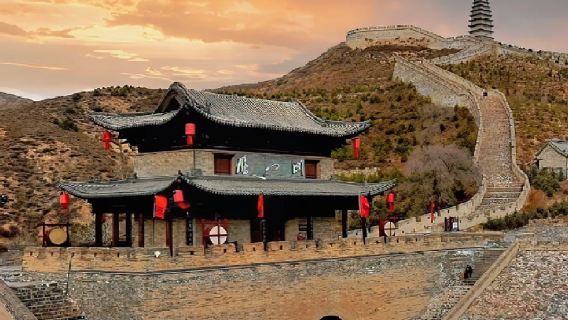
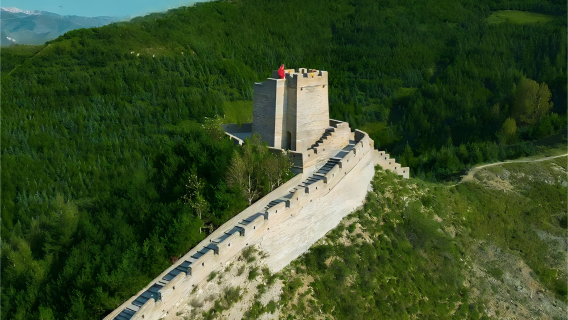
Yanmenguan, located approx. 30 km northwest of Dai County in Xinzhou, is a pass on the inner Great Wall of the Ming Dynasty, andNingwu Pass, together with Pianguan, they are known as the "three outer passes". There is no public transportation from Dai County town to the attraction, so you can only get there by private charter. Inside the attraction, you have to rely entirely on walking.YanmenguanSince ancient times, it has been a crucial pass for the Central Plains dynasties to defend against invasions from northern nomadic tribes. Its earliest history can be traced back to the Warring States period when King Wuling of Zhao fought against the Xiongnu here. Han Dynasty generals Li Guang, Wei Qing, and Huo Qubing once led troops to battle the Xiongnu in this area. During the Northern Song Dynasty,YanmenguanIt became the main battlefield between the Song and Liao dynasties, and the prototype of the well-known story of the Yang family generals took place here. A statue of Yang Liulang stands in the attraction. ExistingYanmenguanIt was built in the seventh year of the Hongwu era of the Ming Dynasty (1374) (with multiple reconstructions in recent years). Currently, there are three gates (east gate, west gate, and small north gate). A wild goose tower stands atop the east gate, and the lintel of the small north gate (i.e., the barbican gate) is inscribed with "Yanmenguan"Three large characters flanked by brick-carved couplets: 'Foremost strategic pass in three frontiers, most revered fortress among nine passes,' both inscribed by the great calligrapher Fu Shan of the late Ming and early Qing dynasties. You can visit the ruins of Ming and Qing military barracks on the hill north of the fortress. To the right outside the west gate areGuan Yu templeOutside the east gate stands the Jingbian Temple, dedicated to Li Mu, a renowned general of the Zhao state during the Warring States period. If you are a fan of the Great Wall, when you visit Yanmenguan, you can walk along the ancient pass trail here. The ancient pass trail in the attraction is built along the local mountain terrain, winding through the peaks. Climbing this section of the trail may be slightly tiring for those who usually work in offices, but when you ascend a peak along the ancient path and gaze at the vast expanse of withered grass outside the pass, quietly feeling the weight of history, you'll find the physical effort well worth it. There are some farmhouse inns near Yanmenguan that can provide food and stay, but most visitors return to Dai County or go to other counties or cities for accommodation. Walking the ancient pass consumes a lot of energy, so you can bring some dry food and drinking water.Dai County · 53.5 km from Ningwu
Experiences you can't miss in Ningwu
Featured Day tours in Ningwu
View all Day tours
5.0/5
· 12 reviews· 52 bookedFree cancellation
Instant confirmation
Book now for tomorrow
FromRUB 2,485.37
5.0/5
· 4 reviewsFree cancellation
Instant confirmation
FromRUB 4,142.28

5.0/5
· 1 reviewInstant confirmation
FromRUB 4,211.32

5.0/5
· 2 reviewsInstant confirmation
FromRUB 5,191.66
5.0/5
· 1 reviewFree cancellation
Instant confirmation
FromRUB 5,467.81
Instant confirmation
Book now for tomorrow
FromRUB 3,589.98

Free cancellation
Instant confirmation
FromRUB 6,558.61
5.0/5
· 1 reviewFree cancellation
Instant confirmation
Book now for tomorrow
FromRUB 4,142.28
Free things to do in Ningwu
Source of Fenhe River
Ningwu · 26.9 km from downtown
Xinzhou Ancient City
Xinzhou · 77.1 km from Ningwu
Shanxi Museum
China · Taiyuan
Datong Ancient City
China · Datong
Taiyuan Ancient County
China · Taiyuan
Zhengding Ancient City
China · Zhengding
Donghu Vinegar Garden
China · Taiyuan
Hebei Museum
China · Shijiazhuang
What travelers say about Ningwu

tinghai84October 15, 2026
4.0
I went on October 4th. It was already frosty in the morning and very cold. Wearing a down jacket wouldn't be excessive. After crossing the Malun Grassland, you can go to the summit of Luyashan Mountain, which is quite nice.
Luya Mountain Scenic Area

_We***59October 3, 2026
4.0
The ice cave is only somewhat beautiful towards the end. The path leading out after the ice has been frozen is also lovely. Overall, it's not good value for money, really not good. A sightseeing bus is available for 10 yuan round trip.
Wannian Ice Cave

且行且看且归来August 9, 2026
5.0
A very unique ancient village, perched halfway up the mountain. I made a point of experiencing its sunrise and sunset! A wonderful experience, the tranquil coolness of the mountain nights and the captivating scenery during the day.
Xuankong Village

D78***88August 19, 2026
4.0
The northern route of Luyashan Mountain includes Malun Grassland and Luyashan Mountain. There are two bus stops on the same road: the visitor center and Gaoqiaowa. The bus from the visitor center is 15 kilometers past Gaoqiaowa, and the ticket is 15 yuan more expensive. You need to transfer at Gaoqiaowa. After getting off the bus, it's a 30-minute hike to Malun Grassland. There are sedan chairs available, costing around 200 yuan. The grassland is all flat, and 2 hours is enough. The summit of Luyashan Mountain is opposite the grassland, and most people avoid it because they're afraid of the hike. Just visiting the grassland and the bus ride takes more than 5 hours.
Malun Grassland

M48***69May 5, 2025
5.0
This attraction was a pleasant surprise during our trip to Shanxi! Although the climb was very tiring and dangerous, the fun was incomparable, especially after reaching the plank road, where many places required drilling holes, and the children had a lot of fun. This place is not recommended for the elderly or people with poor legs and feet.
Cliff Plank Road

亮点liangpointJuly 26, 2022
4.0
According to the Classic of Mountains and Seas, "Fen River flows out from Guancen Mountain". Later generations believed that this was the source of the Fen River. There is a pond at the source, and four characters "Fenyuan Lingzhao" are engraved on the stone wall above the pond. The Jellyfish Cave at the source is a pond, and there is a dragon head carved in the stone wall. A clear spring gushes out of the dragon's mouth, flowing all year round. The ancient monument of "Fenyuan Lingzhao" has been preserved as a key cultural relic, and the shrine for worshiping jellyfish has been replaced by the "Fenyuan Pavilion" built in 1995 in front of us.
Source of Fenhe River
M85***71November 5, 2024
5.0
It is located in Dongzhai Town, Ningwu County, Xinzhou City, Shanxi Province, China. It is located 1 kilometer due north of the traffic light of Siyuan Street and in an extremely secluded valley west of Xiaoshimen Village, 70 kilometers west of Ningwu City. The canyons here are deep and the forests are lush, providing a unique natural environment for the hanging coffins. The valley where the Shimen Hanging Coffin is located is surrounded by mountains on three sides, and one side is open like a door, forming a semi-enclosed gourd-shaped space, making this a good burial place to hide the wind and gather energy. Shimen Hanging Coffin is famous for its unique burial customs and precipitous geographical location. There are various ways of hanging coffins, including cave type, hanging type, hanging pile type, plank road type, etc. Each of them shows the ancient people's attitude towards death. A unique imagination of the post-world and the ultimate use of the natural environment.
Shimen Hanging Coffins

多梅讷刘邦July 15, 2021
5.0
The scenery is pleasant, the plant species are rich, there are small bridges and waterfalls, which are suitable for playing. There are different routes up and down the mountain, and there are a few steep sections. The toilet facilities in the scenic area are a bit poor, and the hygiene should be better.
Valley of Lovers - Luya Mountain

招财猫&小幸运旅行记October 14, 2024
5.0
The highlights of Luya Mountain Scenic Area are as follows:
1. Beautiful natural scenery:
- Steep peaks: Luya Mountain is steep, with unique peaks and forests. The main peak is towering into the clouds, shaped like a reed bud. When the clouds and mist rise between the mountains, the scenery is magnificent, and it is known as the "Zhangjiajie of the North".
- Alpine meadows: Malun Grassland is one of the largest subalpine meadows in North China. The grassland is vast and the pasture is lush. It contrasts with the surrounding forests, mountains, canyons and other landscapes, and the scenery is picturesque.
- Magical ice caves: The Thousand-Year Ice Cave is frozen all year round. The ice shoots, icicles, ice waterfalls and other landscapes in the cave are in various shapes and forms. It is a magical masterpiece of nature. It was formed in the Quaternary glacial period of the Cenozoic Era and has a history of 3 million years.
- Beautiful lakes: There are lakes such as Tianchi and Fenhe Source. Tianchi is a group of alpine lakes with clear water, surrounded by mountains and lush trees; Fenhe Source is the birthplace of Fenhe River, which has important ecological and cultural significance.
2. Unique cultural landscape:
- Ancient temples: With a long history, temples such as the Prince's Hall are simple and solemn, carrying a profound religious culture, with a unique architectural style, and high artistic and historical and cultural value.
- Mysterious hanging coffins: The Shimen hanging coffins are the earliest cliff burials north of the Yangtze River. The hanging burial methods are diverse and are of great value for studying the local tomb history.
- Cliff plank road: The longest and most intact horizontal cave-type Buddhist plank road in China, connecting many scenic spots, with exquisite architectural craftsmanship, is amazing.
3. Rich biological resources: The scenic area has a high vegetation coverage rate, a wide variety of wild plants, and many rare and endangered protected plants; there are rich species of wild animals, such as the world's rare bird brown pheasant.
4. Profound cultural heritage: During the Sui and Tang Dynasties, it has become a famous Buddhist holy place with a long Buddhist cultural heritage, and many emperors have visited here.
Luyashan National Nature Reserve

M25***57October 20, 2026
5.0
My favorite attraction—Yanmen Pass—I highly recommend hiring a local guide. Many of the defensive fortifications are difficult to understand on your own, especially the distinctive barbican of Yanmen Pass. Its layout differs from ordinary passes; after a guide explains the defensive logic of "catching a turtle in a jar," the experience of walking inside is completely different.
The most striking impression is how the pass separates two climates. Standing in the fortress and looking towards the inside and outside, the difference in the state of the trees is very obvious. Inside the pass is relatively warm and humid with more lush vegetation; outside, it's windy, cold, and the vegetation is withered. Seeing it with your own eyes, you truly understand why the ancients said Yanmen Pass divides north and south—it wasn't an exaggeration.
The entire scenic area stretches along the mountain ridge. Just looking at the stone tablets can be overwhelming. A guide will connect the historical battles and the changes in the ancient road, explaining the function of each point. To truly understand this first pass of China, a guided tour is essential; I recommend allowing ample time to explore at your own pace.
Yanmenguan


