Jingyuan

Things to do in Jingyuan

Search attractions or local attractions & tours
Search

Explore top experiences

Top 10 attractions in Jingyuan

View all Attractions
Kongtong Mountain
No. 6 of Fall Viewing Attractions in Gansu

Kongtong Mountain

6.8
4.5/5
2.7k reviews

Kongtong Mountain has a long history and rich cultural connotations. It is the holy place where the ancestor of humanities, Xuanyuan Huangdi, climbed the mountain and asked questions. According to legend, Emperor Xuanyuan visited the western frontier after his achievements and personally visited Kongtong Mountain to ask Guangchengzi, who lived in seclusion in Kongtong Mountain, for advice on how to govern the country and maintain health. Kongtong became famous forever. Kongtong is the cradle of religion where the three religions unite and respect and prosper together. According to Taoist classics, the predecessor of Laozi, the founder of Taoism, was Guangchengzi who practiced in Kongtong, and Guangchengzi was the teacher of the Yellow Emperor. Therefore, Kongtong Mountain is known as "the first Taoist mountain in the world." In addition, Buddhism and Confucianism have made great progress in Kongtong Mountain. Kongtong Mountain is the birthplace of the Kongtong School, the five major martial arts schools in China. Kongtong martial arts is one of the five major martial arts schools along with Shaolin, Wudang, Emei and Kunlun. Kongtong martial arts is closely connected with Taoist culture. It is mysterious and strange, with unique characteristics. It is a wonder of Chinese martial arts. Kongtong Mountain belongs to the Danxia landform in high-altitude areas, which has extremely high scientific research value and extremely beautiful natural scenery. The ancients commented that "Kongtong's mountains and rivers are the best in Guansai", and another commented that "it has the majesty of the mountains in the north and the beauty of the mountains in the south." Kongtong Mountain is one of the country's first batch of 5A-level tourist attractions, a national geological park, one of the "50 Places Worth Visiting for Foreigners in China", and one of the first batch of "Chinese Tourism Culture Demonstration Sites". It is a natural kingdom of animals and plants, with various species of animals and plants. There are more than 1,300 species, and the forest coverage rate reaches more than 90%.

Pingliang · 18.8 km from Jingyuan
Emperor Qinshihuang's Mausoleum Site Museum
2026 Global 100 - Best Things to Do

Emperor Qinshihuang's Mausoleum Site Museum

10
4.7/5
150.6k reviews

Emperor Qinshihuang's Mausoleum Site Museum is a large site museum built on the site of the Terracotta Army pits, which are located approx. 1.5 km east of the mound of Emperor Qinshihuang's Mausoleum. In March 1974, farmers from Xiyang Village accidentally unearthed fragments of terracotta figures while digging a well, and archaeological exploration confirmed Pit 1; in 1976, Pits 2 and 3 were successively discovered to the north of Pit 1. This army, which had slumbered for over 2,000 years, was thus brought back to light, and the discovery of the Terracotta Army has been hailed as "one of the great discoveries in the history of 20th-century archaeology." Pit 1 is the main military formation among the three pits, stretching over 200 m from east to west, with an estimated 6,000 pottery figurines and horses buried inside. Standing at the edge and looking down, armored warrior figurines, war chariots, and pottery horses are arrayed eastward in battle formation. A closer look at each figure reveals different facial shapes, hairstyles, beards, and even hand gestures. The figurines were originally painted all over, but most of the paint has peeled off and discolored due to fire and long burial. Pit 2 is L-shaped, with crossbowmen, cavalry, and charioteers arranged in a mixed formation; the vividly expressive kneeling archer was unearthed here. Pit 3 is small in scale, and scholars believe the ceremonial guard figurines and war chariots unearthed there indicate it served as the command center—known in ancient times as a "military tent"—directing the formations in Pits 1 and 2. The bronze swords, pi halberds, spears, crossbow triggers, and large quantities of arrowheads unearthed from the pits—many still sharp after more than 2,000 years—demonstrate the sophistication of Qin dynasty metallurgy. The Emperor Qinshihuang's Mausoleum Site Museum and the Qin Shi Huang Mausoleum at the foot of Mount Li were originally one integrated whole. After Qin Shi Huang ascended the throne at the age of 13, he began constructing the mausoleum, conscripting hundreds of thousands of laborers over a period spanning more than 30 years; the terracotta army, which replaced human sacrifice with figurines, served as the underground guard for this imperial mausoleum. To avoid the crowds during your visit, you might want to see Pit 3 and Pit 2 first, and then take your time to experience the awe-inspiring scene of Pit 1 last. After viewing the terracotta pits, you can also take the attraction's shuttle bus to Lishan Garden, where Emperor Qinshihuang's mausoleum is located; the Acrobats Pit, the Civil Officials Pit, and the Bronze Chariots and Horses Museum are all within the garden. The two painted bronze chariots and horses, cast at half the scale of real chariots, are exquisitely crafted with brilliantly gleaming gold and silver fittings, and are well worth a special trip to see.

China · Xi'an
Shaanxi History Museum
2026 Asia 100 - Family-friendly Attractions

Shaanxi History Museum

9.5
4.8/5
35.3k reviews

Shaanxi History Museum is a large modern museum built after China's reform and opening up and officially opened in 1991. The building was designed by architect Zhang Jinqiu and adopts a Tang-style architectural layout of "central hall and four corner towers," with a symmetrical central axis and a clear hierarchy of primary and secondary structures; in 2016 it was included in the first batch of the "Chinese Architectural Heritage of the 20th Century" list. Shaanxi was once the political center of dynasties such as the Zhou, Qin, Han, and Tang, and the museum's collection spans a million years of history, covering categories such as Shang and Zhou bronzes, pottery figurines of successive dynasties, Han and Tang gold and silver wares, and Tang tomb murals, with a total of over one million items. The permanent exhibition "Ancient Civilization of Shaanxi" follows a chronological main line and presents the historical process from prehistoric Lantian Man to the eve of the Opium War across three galleries, with the Zhou, Qin, Han, and Tang periods as the focus. The east and west sides of the central hall each host a thematic exhibition: on the west side, "Treasures of the Great Tang: Hejiacun Hoard Unearthed Artifacts Exhibition" concentrates on fine gold and silver wares of the High Tang, while on the east side, the "Tang Dynasty Mural Treasures Gallery" displays authentic murals removed from Tang tombs, with subjects covering figures, architecture, ceremonial guards, and more, making it a uniquely distinctive category of the museum's collection. Among the many artifacts in the museum, several are particularly notable. The agate cup with gold-inlaid beast head, from the Hejiacun hoard, is carved from a single piece of banded agate into the form of a curved-horn beast head, resembling Central Asian rhyton cups, and is one of the first batch of cultural relics prohibited from being exhibited abroad. The tri-color glazed camel carrying musicians figurine vividly recreates the lively scene of musicians playing and singers performing on a camel's back, with bright glaze colors and figures with distinct expressions. The Empress's Seal is made of Western Han Hetian mutton-fat jade and carved with a chi-tiger knob, and is the only known actual jade seal of a Han dynasty empress discovered to date. In addition, the gilt silver flask with a dancing horse holding a cup design, the celadon ewer with an overhead handle and bottom-filling design, and the black-glazed oil-spot bowl each have their own distinctive features. The gold and silver wares unearthed from the Hejiacun hoard are concentrated in the thematic gallery and are a highlight of any visit; visitors are advised to allow time to examine them closely.

China · Xi'an

More things to do

Group Tours in Jingyuan

View More Group Tours in Jingyuan
Jingyuan Today's weatherClear -1-10℃
Jingyuan weather for the next 2 days11/11: 1-10℃, 11/12: 1-10℃

Free things to do in Jingyuan

What travelers say about Jingyuan

user-avatar
Anonymous userSeptember 29, 2026
4.0
A great place for hiking, with tons of negative ions! Currently, three areas are open to the public, with Xiaonanchuan as the core attraction. The botanical garden is still under construction and not recommended for now. Liangdianxia is Genghis Khan's summer retreat and doesn't require a long visit. PS: A thorough visit to Xiaonanchuan takes about an hour. It's recommended to enter by water. After reaching the end of the path, climb a short flight of stairs and then hike a little further. You can take a shuttle bus back to the bus stop (ticket price is 10 yuan). The walk down to the bus stop without the shuttle bus is 3km. It's best to visit in the morning.

Liupan Mountain National Forest Park

user-avatar
Anonymous userOctober 21, 2026
5.0
This is the premier Taoist site and definitely worth a visit. The mountain is very high, and the steep steps are difficult to climb up and even more difficult to descend. We took the scenic area bus to Zhongtai, climbed the Imperial City, and then walked to Xiangshan. We took the scenic area bus down the mountain in 40 minutes.

Kongtong Mountain

user-avatar
135***16October 4, 2026
5.0
The canyon where the Lotus Garden Scenic Area is located is also known as "Fragrant Water Canyon," "Wild Lotus Valley," or "Lotus Garden." Located west of Jingyuan County, the canyon is lush with vegetation, including pines, cypresses, red willows, and birches. The wild lotus, botanically known as *Ligustrum lucidum*, is commonly called wild lotus because its leaves resemble lotus leaves. The abundant wild lotus and flowing streams surrounding Fragrant Water Mountain give it a majestic and beautiful appearance. The grassy gully, about 4 kilometers long, is expansive and spectacular, with lush wild lotus growth and towering, opposing peaks.

Wild Lotus Valley

user-avatar
M42***81September 14, 2020
5.0
I went there during the May Day holiday. The scenery was nice, with green mountains and clear water. It was a good place to escape the summer heat. The Vienna 3 Hotel where I stayed at night was also very good. The room was very clean and the service was very good. It is in the new district, next to Guyuan No. 1 Middle School. It is worth recommending!

Laolongtan

user-avatar
小蕾带你去旅行September 12, 2025
5.0
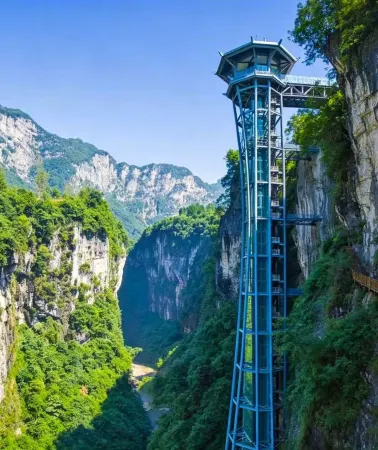
It is worth a visit here, there are glass plank roads and tall jungles

Liupan Mountain

user-avatar
M36***16December 30, 2019
5.0
Great value experience, alpine skiing, take the cable car up and rush down! It's so cool, you must come! A ski resort not to be missed! It's very large! It's worthy of being the premier ski resort in the Northwest!

NING XIA YA HAO HUA XUE DU JIA QU

user-avatar
E52***13November 10, 2026
5.0
An absolutely fascinating and unforgettable experience!Visiting the Terracotta Army was truly incredible. Seeing thousands of life-sized warriors, each with unique facial features and details, is simply mind-blowing. It’s hard to imagine the scale of this archaeological discovery and the craftsmanship behind it, dating back more than 2,000 years.Walking through the exhibition halls and seeing this incredible army standing in formation makes you appreciate just how extraordinary ancient Chinese civilisation was.A fascinating journey through history and one of those places that leaves you speechless. Definitely a must-see when visiting Xi’an!

Emperor Qinshihuang's Mausoleum Site Museum

user-avatar
juventusloverAugust 31, 2023
5.0
The sky is high and the clouds are light, I can see the geese flying south. If you don't reach the Great Wall, you are not a hero, I have traveled 20,000 kilometers. On the top of Liupan Mountain, the red flag is fluttering in the west wind. Today, I have the long rope in my hand, when will I tie up the blue dragon? --Mao Zedong's "Qingpingle·Liupan Mountain" Travel with poetry, follow the red footprints, walk the Long March again, and check in the last mountain that the Red Army crossed during the Long March, "Mountain of Victory" Liupan Mountain

Liupan Mountain Red Army Long March Tourist Area
user-avatar
嗨-卡卡November 8, 2026
5.0
Thanks to Xiao Guo for his earnest and humorous explanation. His logic was clear, and he took an unconventional route, which helped us avoid overcrowding. After the trip, we gained a deeper understanding of the history behind the cultural relics.

Shaanxi History Museum

user-avatar
非你不渴June 27, 2021
5.0
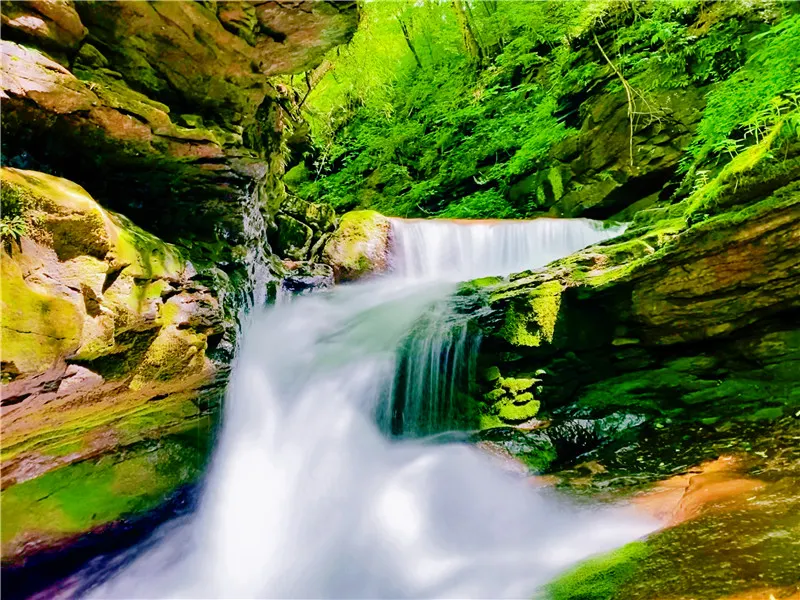
Xiaonanchuan is the place with the most waterfalls in Liupanshan National Forest Park. It is so clear and undulating that it is called Little Jiuzhaigou. There is also a saying that if you don't visit Xiaonanchuan, you have wasted your trip to Liupanshan.

Xiaonanchuan

Trip Moments in Jingyuan

Popular cities near Jingyuan

Frequently asked questions

How can I contact Trip.com customer support?

Get help anytime, anywhere within 30 secondsContact customer support

Change and cancellation policies vary by attractions and tours. Please check the product details page for more information.

Ticket prices may vary between weekdays and weekends, as well as during peak and off-peak seasons. When booking with Trip.com, you can also use Trip Coins to get extra savings. For more tips on booking discounted tickets, please visit Trip.com for the latest information.