Jingbian County

Things to do in Jingbian County

Search attractions or local attractions & tours
Search

Explore top experiences

Top 10 attractions in Jingbian County

View all Attractions
Tongwancheng Archaeological Site Park
No. 7 of Best Things to Do in Yulin

Tongwancheng Archaeological Site Park

5.2
4.1/5
262 reviews

Tongwancheng is located about 60 kilometers north of Jingbian County, Yulin City. Because the city wall is made of large sand, clay and lime, the walls are white, and the locals call it Baichengzi. And because it was built by the Southern Xiongnu "Helian Bobo" during the Eastern Jin Dynasty (founded in 413 AD), it is also known as Helian City. Most of this 1,600-year-old ancient city has been buried by yellow sand. What tourists see is only the ruins, and the public transportation to get here is not very convenient, so most of the people who can come here to play are Tourists very interested in history and frontiers. If you are also interested in historical attractions or frontier attractions, you can take the shuttle bus bound for Batu Bay in Inner Mongolia from Jingbian County, get off at Baicheng and walk for 15-20 minutes to reach the scenic spot. It should be noted that Baicheng probably did not have a shuttle bus back to the county seat in the afternoon (the bus back to the county seat in the afternoon would sometimes be cancelled), and only the next morning would there be a shuttle bus back to Jingbian County. Tongwancheng is the only relic of the capital of the Huns in history. The whole city consists of the inner city and the outer city, and the inner city is divided into the east city and the west city. All the existing ruins are the remains of rammed earth buildings. At that time, the materials for building the city were mainly three-compound soil composed of large sand, clay, lime and glutinous rice water. According to legend, the city of Tongwan was in charge of Gugan Ali, who was very brutal. If he could use an awl to penetrate the city wall by an inch, he would kill the builders. The city built with these raw materials has already stood in the Mu Us Desert in Saibei. for over a thousand years. When tourists come here, they can circle the city from the southeast corner, with a total length of about 5 kilometers. At present, the part that is higher than the ground and has not been buried by yellow sand is mostly in the southern section of the city wall. In the southern section of the city wall, if you walk from east to west, you can see the ruins of many enemy platforms. There is a high platform near these enemy platforms. This is the commanding height of the city, and it is also the Yong'an platform where "Helian Bobo" handled the state affairs. Going west from Yong'an Terrace, you can see a pier. The pier is about 30 meters high. It has become a paradise for birds. Many birds build their nests on the pier. It is said that the application for the World Cultural Heritage has already begun, and the Xiongnu Cultural Square is also planned to be built. If you like the original Tongwan City, it is recommended to visit it as soon as possible. There are no decent hotels near Tongwan City, you can stay in the homes of the surrounding villagers. The service facilities around the scenic spot are not very complete, and tourists can bring some drinking water and dry food by themselves.

Jingbian County · 43.5 km from downtown
Maowusu Desert
No. 3 of Night Attractions in Yulin

Maowusu Desert

4.5
4.4/5
55 reviews

The Maowusu Desert is located between Yulin City, Shaanxi Province and Ordos (Ikezhao League), Inner Mongolia Autonomous Region, covering an area of 42,200 square kilometers. The Great Wall runs through the southern edge of the desert from east to west. According to research, in ancient times, this area was a good pasture with fertile water plants and pleasant scenery. Later, due to climate change and war, the ground vegetation was completely lost, and sand was formed on the spot, forming the later desert (sand). There was a story of "Three Relocations to Yulin". Today is not what it used to be, and now Yulin has become a "famous city". There has been sand accumulation since the Tang Dynasty, and a vast desert has been formed in the Ming and Qing Dynasties. One of the big sand areas in China. It is located at 37°27.5′~39°22.5′ north latitude and 107°20′~111°30′ east longitude. It includes southern Ordos in Inner Mongolia Autonomous Region, northern sandy area in Yulin City, Shaanxi Province, and northeastern Yanchi County in Ningxia Hui Autonomous Region, with a total area of 39,800 square kilometers. The place name originated from Maowusu Village, Haizetan Township, Jingbian County, northern Shaanxi. The continuous sand belt from Mengjiashawo in Dingbian to Gaojiagou Township in Jingbian is called the small Mu Us sand belt, which is the range of Mu Us at the beginning. Since the sandy land along the Great Wall in northern Shaanxi is continuously distributed with the sandy land in the south of Ordos (Ikezhao League) in Inner Mongolia, the sandy land in the southeastern Ordos Plateau and along the Great Wall in northern Shaanxi is collectively referred to as "Mu Us Sand Land".

Jingbian County · 10.1 km from downtown
The Hukou Waterfall Scenic Area
No. 4 of Best Things to Do in Shanxi

The Hukou Waterfall Scenic Area

8.5
4.7/5
22.7k reviews

The Hukou Waterfall Scenic Area is located in the Jin-Shaan Grand Canyon in the middle reaches of the Yellow River and is the Shanxi-side section for viewing Hukou Waterfall. As the Yellow River rushes here, its surface suddenly narrows from several hundred meters wide to just a few dozen meters. The water, laden with silt, churns and pours down like water being poured into a giant kettle, which is how the name "Hukou" (Kettle Mouth) came to be. This is a rare yellow waterfall on the Yellow River, with muddy waves surging skyward and a roar like thunder, displaying magnificent momentum. The attraction is located on the east side of the waterfall, where the bank is relatively low, allowing visitors to look up and take in the full panorama of the Yellow River plunging downward. Below the waterfall, mist rises and fills the air, appearing like smoke or clouds from afar and creating the wondrous sight known as "smoke rising from the water"; on clear days, sunlight refracts through the mist to form a rainbow arching across the river, called "rainbow reaching the heavens." Within the attraction, Dragon Cave is a natural stone cave; following the stone steps down leads to a viewing platform close to the waterfall, where you can look up as the river pours down from above—an ideal spot to feel the force of the waterfall up close. Downstream from the waterfall, the Ten-Mile Dragon Trough is a deep channel formed by the river's long-term erosion of the riverbed; in the dry season, the trough floor is wide and flat, and ancients once used this terrain to haul boats along the bank, leaving behind the unique scene known as "sailing on dry land." Further downstream is Mengmen Mountain, where two huge rocks in the river split the Yellow River in two before the streams merge again; carved on the rock face are the four characters "Wo Zhen Kuang Liu" (Resting Here, Quelling the Raging Flow). The view of Hukou Waterfall is distinctive in each of the four seasons. Every year between April and May, peach blossoms bloom and the ice melts, coinciding with the "March peach blossom flood," when the abundant water volume makes the waterfall particularly spectacular. From September to November, the air is crisp in fall, and rainbows often appear in the mist, a phenomenon known as the "Hukou fall wind." Water volume is greater in spring and fall, and the sound of the water striking the rocks is like thunder, making these the best periods to admire the waterfall. The image of Hukou Waterfall once appeared on the CNY 50 banknote of the fourth series of the renminbi, making it a widely recognized classic symbol of Yellow River culture.

China · Ji County
Hukou Waterfall tourist area of the Yellow River
No. 8 of Best Things to Do in Shaanxi

Hukou Waterfall tourist area of the Yellow River

8.3
4.6/5
18.1k reviews

The Hukou Waterfall tourist area of the Yellow River is located on the riverbed of the Yellow River in the Qin-Jin Grand Canyon, where the provinces of Shanxi and Shaanxi face each other across the river. The main stream of the Yellow River, originally hundreds of m wide, suddenly narrows to dozens of m and plunges into a deep trough with a drop of 20–30 m, resembling water being poured from a giant pot—hence the name "Hukou" (Pot Mouth). Due to the large amount of sediment carried by the river, the waterfall presents a rare golden-yellow view: the turbid waves roar down with a sound like distant thunder rolling through the valley, while the rising mist lingers before the cliff, earning the nickname "smoke rising from the water." On sunny days, sunlight casts a rainbow over the waterfall, known as "a rainbow playing in the water." The mist may drench visitors even without wind or rain, creating the wonder called "rainfall under a clear sky." Hukou waterfall is regarded as the symbol of the "soul of the Yellow River" and the spirit of the Chinese nation. In 1938, when poet Guang Weiran crossed the Yellow River, he witnessed the roaring waves of Hukou and the boatmen's chants, which inspired him to create the now-legendary Yellow River Cantata. Liang Heng's essay of the same name was selected for middle school Chinese textbooks, and the back of the fourth series CNY 50 banknote also features this scene. Many first learned about it through textbooks and currency before visiting in person. In the past, cargo ships had to leave the water and bypass the waterfall here, leaving behind the maritime memory of "sailing on dry land." The scenery here varies with the seasons: In early spring, the upstream ice melts and the water level rises sharply, coinciding with the blooming of mountain peach blossoms on both banks, known as the "March peach blossom flood." In midsummer, the rainy season brings abundant water, with muddy waves towering into the sky. After fall begins, the rainy season subsides, and the water becomes high and steady. As the fall breeze sweeps by, rainbows often appear, earning the name "Hukou autumn breeze." In deep winter, layers of ice form along the banks, and overflow freezes into inverted ice peaks, glistening under the sunlight, creating the spectacular "upside-down ice peaks." The viewing platform on the Shaanxi side stretches along the cliff top on the western bank, offering a commanding view of the "thousand-mile Yellow River funneled into one pot" and the ten-mile-long Dragon Trough below the waterfall. During high-water seasons, the mist is heavy, and clothes get soaked quickly, so remember to protect your camera and phone; the boardwalk is slippery, so watch your step while walking and taking photos.

China · Yichuan

Traveler favorites curated for you

More things to do

Jingbian County Today's weatherClear -7-2℃
Jingbian County weather for the next 2 days11/9: -6-7℃, 11/10: 2-11℃

Free things to do in Jingbian County

What travelers say about Jingbian County

user-avatar
Xave EdisonNovember 5, 2026
5.0
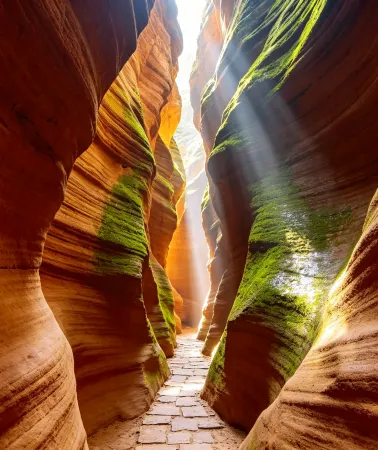
Absolutely stunning! The journey begins by crossing a glass bridge before descending into the valley, surrounded by spectacular wave formations. The entire park takes around 3–4 hours to explore, depending on your pace.It is fascinating how Mother Nature has sculpted the Danxia landscape into magnificent wave-like formations. The park is well-developed, with wooden walkways allowing visitors to admire these natural wonders up close.The hike is relatively easy, except for the final climb out of the valley, which is manageable for most fitness levels.Visiting in November was a great decision, with fewer local tourists. I practically had the entire place to myself, allowing me to enjoy the scenery and take photos at my own pace.One of the highlights is One Line Sky (一线天), a narrow passage surrounded by breathtaking wave formations. Absolutely mesmerising!Overall, Bolang Valley is a spectacular natural wonder worth visiting!

The Wave Valley Scenic Area

user-avatar
cocoliu4139July 9, 2026
5.0
The museum was very well done; although small, it was very well-designed. The children had a great time interacting with the exhibits. The shuttle bus took us to the ruins to experience the grandeur of Baicheng.

Tongwancheng Archaeological Site Park

user-avatar
扶疏子December 29, 2019
5.0
The Maowusu Desert is one of the four major sandy areas in China. It is located between Yulin, Shaanxi Province and Ordos City, Inner Mongolia Autonomous Region, with an area of ​​42,200 square kilometers. It is located at 37°27.5′-39°22.5′ north latitude and 107°20′-111°30′ east longitude. It includes the southern part of Ordos in Inner Mongolia Autonomous Region, the northern sandy area of ​​Yulin City, Shaanxi Province, and the northeastern part of Yanchi County, Ningxia Hui Autonomous Region. It has a lot of precipitation, which is conducive to plant growth. It was originally a relatively developed animal husbandry area, with a large area of ​​fixed and semi-fixed sand dunes. The Great Wall passes through the southern edge of the desert from east to west.

Maowusu Desert

user-avatar
蓝天之旅途January 26, 2025
5.0
The following is a review of the Danxia Water in Wave Valley: Is it worth going? The Danxia Water in Wave Valley is very worth a visit. It is a rare wave-shaped Danxia landform in the world, with a unique landscape type, which is very similar to the Antelope Valley and Wave Valley in the United States. Here, tourists can appreciate the geological wonders carved by nature for billions of years and feel the ingenuity of nature. Whether it is photography enthusiasts who want to find unique shooting materials, or ordinary tourists who are eager to appreciate the magnificent natural scenery and explore the mysteries of nature, they can get a good experience. Highlights - Unique landform: formed in the Cretaceous period 96 million years ago, it is formed by red sandstone after long-term wind and water erosion. It has smooth wavy textures, like red ice hanging or frozen magma, which is in sharp contrast with the surrounding environment. - Blending of mountains and water: There is a wide water surface in the Danxia Water area. The red Danxia landform and the green or blue lake water complement each other. The peaks are reflected in the lake, and the Danxia stands on the shore, which is poetic and picturesque. - Rich landscape: There are natural resources such as streams, sand, reed marshes, and geological relics such as valleys, alley valleys, and cliffs. You can enjoy the rugged and beautiful style gallery by boat. - Changing light and shadow: The light and shadow effects are different at different times and seasons. Under the sunlight on sunny days, the red sandstone is bright and dazzling; the sunset glow in the evening adds a mysterious color to it; in spring and autumn, the color changes of vegetation make the scenery more gorgeous.

Wave Valley Water Danxia

user-avatar
布晓呆February 27, 2023
5.0
Jingbian Danxia was formed 96 million years ago. The sand dunes here were continuously infiltrated by groundwater, deposited layer by layer, and condensed into sandstone. Through the natural carving of crustal movement, flowing water and wind, various wavy Danxia landforms such as linear valleys, lane valleys, and red cliffs were formed. This landform has attracted domestic and foreign tourists, photographers, and media to check in and express their opinions here.

Danxia Landform Shiguang Rock

user-avatar
蓬松彤宝儿November 6, 2026
4.0
I traveled a long way just to see Hukou Waterfall! It evokes Li Bai's famous lines: "Have you not seen the Yellow River's waters come from the sky, rushing to the sea never to return?" Besides the entrance ticket, you also need to purchase a separate ticket for the scenic area's shuttle bus. If you want to get closer and see the more spectacular views, you have to pay an additional 20 yuan to go to the Dragon Cave. Overall, the scenic area is definitely worth visiting; it's magnificent and beautiful! But I really don't understand this multi-ticket system. A higher one-time fee would be more acceptable.

The Hukou Waterfall Scenic Area

user-avatar
吻太阳November 6, 2026
5.0
The guesthouse is very close to the scenic area, only a ten-minute drive away. There was a short stretch of road under construction when I arrived, but the owner called ahead to let me know. Upon arrival, the owner also helped with my luggage – the service was excellent! The rooms were clean and hygienic, the facilities were complete, and the food was delicious. I would definitely come again and recommend it to family and friends. I wish the owner and their family great success in their business!

Hukou Waterfall tourist area of the Yellow River

user-avatar
行摄九州September 12, 2020
5.0
Shenshujian in Jingbian is a very distinctive natural attraction. The willow trees here are called hairy willows, or willows with sweat. There are no tall forks on the tops of the willows, but only many separate branches. There are more than 100 such trees, some of which are as old as 370 years old. Coming here is like entering a pastoral scenery. There are also many crops such as old corn, potatoes, and watermelons nearby, allowing you to fully enjoy the beauty of nature.

Shenshu Jian

Trip Moments in Jingbian County

Popular cities near Jingbian County

Frequently asked questions

How can I contact Trip.com customer support?

Get help anytime, anywhere within 30 secondsContact customer support

Change and cancellation policies vary by attractions and tours. Please check the product details page for more information.

Ticket prices may vary between weekdays and weekends, as well as during peak and off-peak seasons. When booking with Trip.com, you can also use Trip Coins to get extra savings. For more tips on booking discounted tickets, please visit Trip.com for the latest information.