
Things to do in Haidong
Explore top experiences
Top 10 attractions in Haidong

Qutan Temple
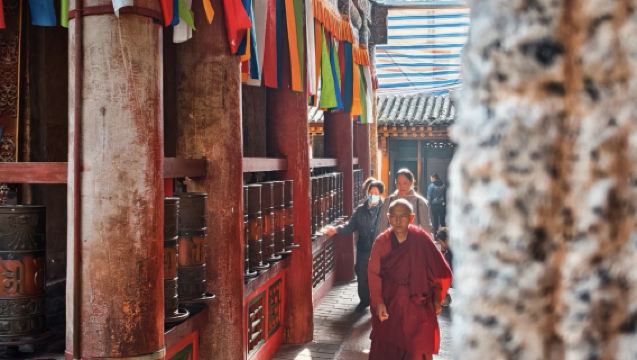
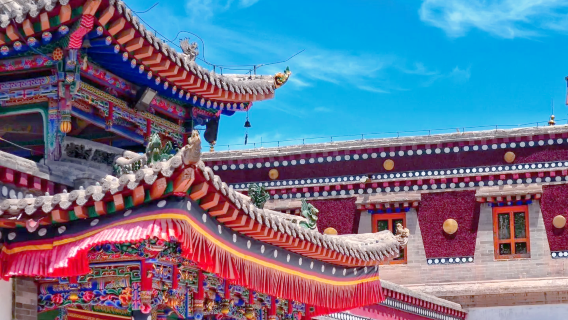
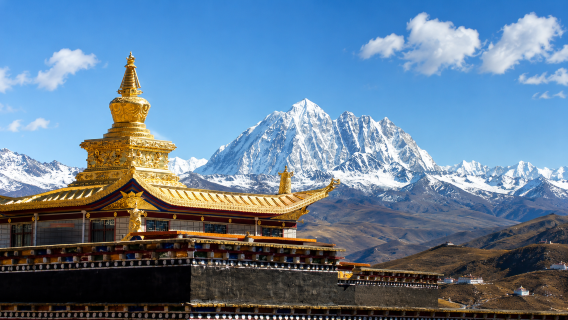
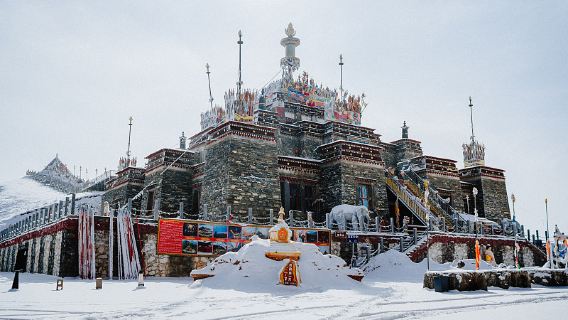
Qutan Temple, known in Tibetan as "Zhuocang Laguo Dande" or "Zhuocang Duojie Qiang," meaning "Ledu Vajradhara Temple." The temple is nestled against mountains and by water, with a rectangular overall layout covering 1.5 hectares. It is a surprising anomaly among the many Tibetan Buddhist temples in the Amdo region, reminiscent of the Han-style Tibetan Buddhist temples in Beijing and Chengde. If you only have time to visit one temple in eastern Qinghai and are interested in ancient architecture and mural art, then Qutan Temple is your best choice. The temple is one of the larger ones in the Ledu Nanshan area and is also one of the best-preserved Ming Dynasty architectural complexes in Northwest China. Its overall structural layout is similar toThe Palace Museum, which is why it is known as the "Little Forbidden City." Qutan Temple has stood for over 600 years since its founding during the Hongwu era of the Ming Dynasty. This temple is famous throughout the Northwest for its majestic simplicity, precious cultural relics, and massive, highly artistic colored murals. It is revered as a sacred Buddhist site by Tibetan, Mongolian, Tu, and other ethnic groups who practice Tibetan Buddhism, drawing pilgrims from afar to offer incense and worship. It is also one of the famous venues for the Hua'er Festival in Qinghai Province.Haidong · 16.6 km from downtown


Beishan National Forest Park
Huzhu Beishan National Forest Park can be said to be the back garden of Xining City. It has beautiful mountains, dense forests, lakes, rivers and waterfalls in the mountains, and the scenery is warm and beautiful. In the northwest where there are dry Gobi deserts everywhere, such scenery is very rare. Therefore, Beishan National Forest Park has become a good place for Xining to cool off, play, and enjoy the scenery in summer. The National Forest Park currently consists of two main Attraction, Langshidang and Zhalonggou. Tickets for the two Attraction are sold separately. Most tourists only need to visit one Attraction each time they come here, and they can choose to visit according to their personal interests. Langshidang Scenic Attraction is the core of the forest park. You can drive in here (but you still need to buy a section ticket) and enjoy it slowly. There are spectacular Shenlongtan Waterfall, the sacred and clean Shengmu Tianchi, and a large and quiet birch forest in the Attraction area. The scenery is very beautiful and there are good places to take pictures everywhere. There is also a Cailunduo Holiday Manor in the Attraction. It is a small castle designed by a local Tu painter. It is very distinctive. You may wish to stay here for a night to feel the freshness and beauty of nature. The Zhalonggou Attraction is also dominated by rivers, waterfalls and forests. The waterfalls here are smaller, but more dense. The scenery of the waterfalls is also very pleasant. In spring and summer, there will be wild flowers blooming in the ditch, which is very beautiful.Huzhu · 50.9 km from downtown

White Horse Temple
In ancient times, Baima Temple was called King Kongya Temple, and in Tibetan it was called Mizang Temple. Founded in the tenth century AD, it is said that its creation is related to the founder of the Buddhist revival activity called "Xialu Hongzhuan" in the history of Tibetan Buddhism - Laqin Gongba Raosai. Legend has it that his body was smeared with medicinal mud and then offered to a grotto. Baima Temple is built on the half-mountain on the east side of the mouth of Hongyazigou. The whole monastery consists of scripture halls, monks' houses, grottoes, Vajra Buddha statues and great pagodas living on the cliff. There is a stone Buddha statue under the cliff, which is called "Maitreya Wanghe" in Tibetan. The white pagoda in the green shade and the ancient stone Buddha statues complement each other and are self-contained.Huzhu · 38.5 km from downtown

Xiaqiong Temple
Founded in 1394, Xiaqiong Temple is one of the oldest Tibetan Buddhist temples in Qinghai and the birthplace of Zongkoba, the founder of Tibetan Buddhism Gelug. The terrain of the temple is unusual, elegant and beautiful, and the cliff behind the temple is shaped like a vulture bird spreading its wings, so it is named "Xiaqiong Temple". Since its establishment, Xiaqiong Temple has successively built Miaoyin Bodhisattva Hall, Maitreya Hall, Jinding Hall, Atisha Hall, King Kong Buddha Hall, Zhizha Buddha Hall, Simmering Sang Hall, Ksitigarbha Bodhisattva Hall, Jianhe Maitreya Hall, and Mountains. The Buddhist Hall constitutes an ancient building complex combining Han and Tibetan artistic styles. In 1788, Emperor Qianlong gave it the name "Fajing Temple", and gave him a plaque with four inscriptions, including Han, Tibetan, Mongolian and Manchu, with the inscription "The Prosperous Land of Mahayana".Hualong · 35.2 km from downtown

Zhalonggou Scenic Area
The Zhalonggou Attraction in Beishan, Huzhu is famous for its unique scenery. Here, the mountains are greener, the forests are more secluded, the pines are lush, the azaleas are in full bloom, and the streams are gurgling. It is a good place to explore the secluded and strange. Going upstream, the mountain steps with a total length of 2,000 meters go through the forest and lead directly to the Yaoshuiquan Waterfall. Along the way, there are cold ponds and clear water, winding paths, and the vivid Xiongbao Mountain, the solemn mother and son worshiping Buddha, the wonderful scenery of the Seniors collecting herbs, and the lifelike Lying Cow Stone. The perfect combination of nature's uncanny craftsmanship and human's brilliant writing will make you feel relaxed and happy, and have a lot of associations.Huzhu · 50.8 km from downtown

Minhe Qili Flower Sea Scenic Area
Qili Flower Sea attraction welcomes a continuous stream of visitors who come to admire the blossoms, enjoy the scenery, and relax. With white clouds drifting across blue skies, picturesque valleys, refreshing cool air by the medicinal springs, and fragrant floral fields, it's a rare summer retreat. The pristine mountains, crystal-clear waters, and azure skies create a seamless harmony between the flower sea and nature, offering a uniquely delightful experience for flower viewing and scenic appreciation. Step away from the bustling city and immerse yourself in this enchanting sea of flowers. Bathed in the gentle autumn sunshine, leave behind work stress and life's worries as you free yourself from worldly distractions. Quietly blend with the sky, the clouds, and the floral expanse—letting your heart dance with the blooms and your body move with the mood, experiencing rare carefree freedom. This leisure destination not only offers breathtaking floral views but also the joy of outdoor barbecues, making it an ideal getaway for relaxation.Minhe · 28.8 km from downtown

Mengda Heavenly Lake
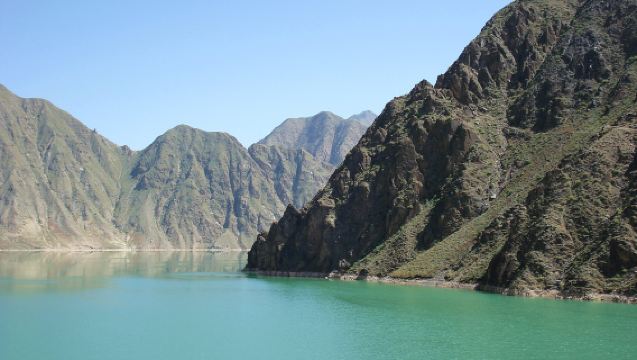
Mengda Heavenly Lake is located in the eastern part of Mengda Township, Xunhua Salar Autonomous County, about 180 km from Xining and about 90 km from Linxia city center. It is a highland lake surrounded by mountains, with dense forests and a tranquil environment. Visitors can hike and stroll here, view and photographHeavenly Lakeand the beautiful scenery around it, and experience a fresh landscape rarely seen in the Northwest, making it a great choice for those touring Qinghai and Gannan. Mengda Heavenly Lake covers a large area, and there are electric shuttles available within the scenic area. The visitor route involves taking a shuttle from the scenic area entrance to the foot of the mountain, then hiking or riding a horse up to theHeavenly Lakearea on the mountainside. After exploring aroundHeavenly Lake, you can head down the mountain and return to the entrance. The entire visit takes about 3-4 hours. Most visitors stop by while passing through, and will head to Tongren, Linxia, or Gannan to stay for the night. When visiting Mengda Heavenly Lake, the first thing to note is the scenery along the way. Whether you are coming from Xining or Linxia, you can see the spectacular crimson Danxia landforms along the road. Furthermore, theYellow Riveralong the way is clear and emerald green, creating a beautiful contrast with the fiery red Danxia, perfect for photography and sightseeing during the journey. Upon arriving at the scenic area, you can purchase a ticket to enter. You can take a sightseeing shuttle inside the scenic area or drive your own vehicle, though you still need to purchase a full-price ticket if driving. The distance from the scenic area entrance to theHeavenly Lakeparking lot at the foot of the mountain is about 3-4 km. The route is filled with dense forest scenery, a rare sight in the Northwest, making you feel as if you have entered a lush forest oxygen bar in the Jiangnan region. After getting off at theHeavenly Lakeparking lot, you can hike up the mountain. There are over 1,200 steps, and it generally takes over 1 hour to reach the edge ofHeavenly Lake. Due to the slightly high altitude (approx. 2,400-2,500 m), hiking can be relatively tiring, so be sure to walk slowly and avoid strenuous exercise. If you lack the energy, you can also choose to ride a horse up the mountain. Locals provide horses at the parking lot, and a one-way ride costs approx. 50 yuan. On the way up, you can see an ancient forest with many sturdy, centuries-old trees, which is quite amazing and worth a stroll. Upon reaching the mountainside, you will see the beautiful lake surrounded by mountains. Mengda Heavenly Lake is about several hundred meters long and wide. The lake water is emerald green, and the surrounding mountains and forests are dense, creating a very quiet and beautiful environment, perfect for photography. There is a wooden boardwalk aroundHeavenly Lake. Visitors can stroll along the boardwalk to view the lake, photograph the lake surface from various angles, and see the trees and cliffs on the hillsides by the lake. The boardwalk takes about 1 hour to complete. After exploring the boardwalk, you can walk or ride a horse down the mountain (you can negotiate the price for riding down, which is approx. 20 yuan), and then take a shuttle back to the scenic area entrance.Xunhua · 18.2 km from downtown

Gönlung Jampa Ling monastery
Youning Temple, the full name in Tibetan is "Guolong Mile Island Temple", referred to as "Guolong Temple". This place was the passage from Tibet to various parts of Inner Mongolia via Qinghai during the Ming and Qing Dynasties, and there were mixed people of various ethnic groups including Tu, Tibetan, Mongolian and Han who believed in Tibetan Buddhism. The monastery occupies a hillside at the southern foot of Daban Mountain. The status of Youning Temple among the Buddhist temples in Qinghai is unusual. Due to the large number of famous monks in the temple and the high religious status of the five living Buddhas such as Zhangjia, its scale in history once surpassed that of the Ta'er Temple and was known as "" The mother of the monasteries in Huangbei". Therefore, many scholars at home and abroad still visit and investigate the Youning Temple. It is a pity that the temple was destroyed for the third time during the Cultural Revolution. Although the three halls have been restored, the scale is far less than before. As for the cultural relics, almost nothing remains.Huzhu · 21.7 km from downtown

Ping'an Post · Hehuang Folk Culture Experience Site
Haidong · 23.6 km from downtown

Shi'erpan Slope
Huzhu · 33.2 km from downtown
Experiences you can't miss in Haidong
Featured Day tours in Haidong
View all Day tours
4.0/5
· 2 reviewsFree cancellation
Instant confirmation
Book now for tomorrow
Save PHP 37.42
FromPHP 3,704.14PHP 3,741.56
Free cancellation
Instant confirmation
Save PHP 187.07
FromPHP 3,554.49PHP 3,741.56
4.0/5
· 1 reviewFree cancellation
Instant confirmation
Book now for tomorrow
FromPHP 4,797.75
Free cancellation
Instant confirmation
Book now for tomorrow
Save PHP 32.08
FromPHP 3,174.97PHP 3,207.05
Free cancellation
Instant confirmation
Book now for tomorrow
Save PHP 136.87
FromPHP 2,600.67PHP 2,737.54
5.0/5
· 1 reviewInstant confirmation
Book now for tomorrow
Save PHP 69.16
FromPHP 6,847.38PHP 6,916.54
Instant confirmation
Book now for tomorrow
Save PHP 65.96
FromPHP 6,529.87PHP 6,595.83
5.0/5
· 1 reviewFree cancellation
Instant confirmation
Book now for tomorrow
FromPHP 4,666.04
Featured Outdoor experiences in Haidong
View all Outdoor experiences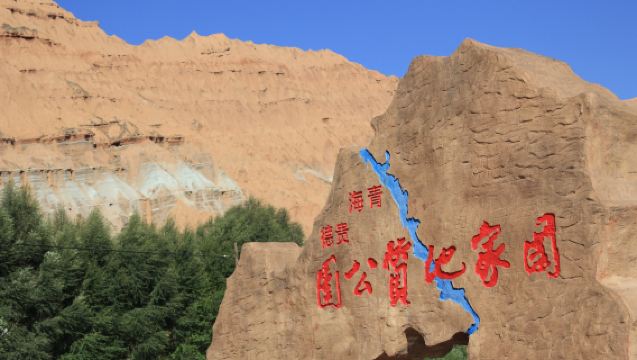
Free cancellation
Instant confirmation
Book now for tomorrow
Save PHP 136.87
FromPHP 2,600.67PHP 2,737.54
5.0/5
· 1 reviewFree cancellation
Instant confirmation
Book now for tomorrow
FromPHP 4,797.75
FromPHP 30,466.95
Instant confirmation
Book now for tomorrow
Save PHP 58.05
FromPHP 5,746.71PHP 5,804.76
Instant confirmation
Book now for tomorrow
Save PHP 99.3
FromPHP 9,830.67PHP 9,929.97
Free things to do in Haidong
Qutan Temple
Haidong · 16.6 km from downtownBeishan National Forest Park
Huzhu · 50.9 km from downtownWhite Horse Temple
Huzhu · 38.5 km from downtownXiaqiong Temple
Hualong · 35.2 km from downtownZhalonggou Scenic Area
Huzhu · 50.8 km from downtownMinhe Qili Flower Sea Scenic Area
Minhe · 28.8 km from downtownMengda Heavenly Lake
Xunhua · 18.2 km from downtownGönlung Jampa Ling monastery
Huzhu · 21.7 km from downtownPing'an Post · Hehuang Folk Culture Experience Site
Haidong · 23.6 km from downtownShi'erpan Slope
Huzhu · 33.2 km from downtown
What travelers say about Haidong

M49***27July 18, 2021
4.0
In the mountains 20 kilometers south of Ledu City, an ordinary Lama temple on the Qinghai-Tibet Plateau won the favor of Zhu Yuanzhang. Compared with the Taer Temple, which was established earlier, spontaneously planned and built by believers, and had no influence in the Ming Dynasty, the Qutan Temple is particularly prominent.
During the Hongwu period of the Ming Dynasty, the country had been settled, but there were occasional riots on the border. The abbot of the temple, Sanluo Zang, came forward to persuade the various tribes in the area to submit to the Ming Dynasty and was granted by the emperor: Sanluo Zang was the chief of the Xining Seng Gang, in charge of 13 tribes, and was granted a golden plaque of Qutan (Qutan, meaning Gautama in Tibetan). Since then, successive emperors of the Ming Dynasty have been rewarded, and the temple has become more prosperous.
The temple basically adopts the Han-style temple system, and the stele pavilion, bell and drum tower and treasure hall constitute a typical official building complex in the early Ming Dynasty. Although it is located in the mountains, the landscape is excellent - it is backed by Luohan Mountain and faces the Qutan River. The Han-style central axis is symmetrically arranged, which is rare in Tibetan Buddhism. Based on the royal bloodline, the overall pattern is calm and majestic, imitating the royal architectural style and main pattern, which is a great gift and status symbol in the class-strict imperial society.
Today, the temple presents the ancient building as its original appearance, with a strong sense of time. The two wings are arched upwards and connected with the unique corridors. The treasure is the huge colorful murals - 2,300 square meters of Ming and Qing murals with rich and gorgeous colors, delicate and vivid brushwork, clear and natural layers, and a strong sense of realism, which is extremely precious.
Qutan Temple

粉红色的猴January 14, 2022
5.0
Twelve Pan Slope is located on the Huangyahuo Highway in Dabanshan, Huzhu County, Qinghai Province. It is a must-go road from Xining to Huzhu Beishan National Forest Park. There is an observation deck at the top of the mountain where you can stop and enjoy the view. Twelve Pan Slope is named after its twelve turns. The entire road is narrow, with sharp turns and steep slopes, making it extremely difficult to travel. It has become a unique landscape in Huzhu, Qinghai Province.
Beishan National Forest Park

漱石枕流者February 6, 2025
5.0
The winter charm of the ancient city of Henan is sung in "Red Dust Inn"
Winter is a season full of surprises. When I walked into Luoyang, Henan, this ancient city was gently wrapped in a layer of thin snow, and instantly had the poetic feeling of the rivers and lakes described in Jay Chou's "Red Dust Inn".
As soon as I got off the car, the cold wind blew with the unique heavy breath of the ancient capital. On the way to the White Horse Temple, the branches on the street were hung with crystal icicles, flashing in the sunlight. "The sound of horse hooves echoed outside the mountains and the ancient road", I seemed to be able to see the hooves of horses thousands of years ago, leaving the traces of history on this Central Plains.
In the White Horse Temple, there are red walls and white snow, and bursts of Buddhist chants. The white snow fell on the eaves and brackets of the temple, and every step seemed to step into the rivers and lakes in the song. "People come and go in the inn, he carries his luggage, in the years of smoke and grass, even breaking up is very silent", the ancient temple in front of me, like the Red Dust Inn, carries the stories of countless people.
When you are tired, go and try the water banquet in Luoyang. Each dish is exquisite and delicious. In the afternoon, in the teahouse in Luoyi Ancient City, order a cup of hot tea, look at the snow outside the window, the fragrance of tea wafts, and thoughts drift away.
This trip to Luoyang is like a wonderful date with music and history. Have you ever embarked on an unforgettable journey because of a song? Share it in the comment area, remember to like and collect it, maybe the inspiration for the next destination comes from here!
White Horse Temple

水漫三楼September 3, 2026
5.0
Xiaqiong Monastery, located in Chafu Township, northwest of Hualong Hui Autonomous County, Haidong City, Qinghai Province, was first built in 1349 (the ninth year of the Yuan Dynasty's Zhizheng era). It was the place where Tsongkhapa, the founder of the Gelug school of Tibetan Buddhism, studied and discussed Buddhist scriptures as a child, and is one of the most famous Gelug monasteries in Qinghai.
Built against the mountainside, Xiaqiong Monastery covers a total area of 270,000 square meters, comprising 27 building complexes of varying sizes, more than 2,260 halls and monks' quarters, and 26 wooden buildings. Since its founding, eleven halls have been built, including the Hall of the Bodhisattva of Wonderful Sound, the Maitreya Hall, the Golden Roof Hall, the Atisha Hall, the Vajra Buddha Hall, the Supporting Buddha Hall, the Incense Offering Hall, the Ksitigarbha Bodhisattva Hall, the River-Watching Maitreya Hall, the Mountain Buddha Hall, and the Protector Deity Hall, forming an ancient architectural complex combining Han and Tibetan artistic styles.
On March 5, 2013, Xiaqiong Monastery was designated as a National Key Cultural Relics Protection Unit (seventh batch) by the State Council of the People's Republic of China.
Xiaqiong Monastery was founded by Chokyi Gyaltsen, the mentor of Tsongkhapa. Originally a Kadampa monastery, it converted to the Gelug school after Tsongkhapa founded it, along with other Kadampa monasteries. Due to its connection with Tsongkhapa, it is often referred to as the "Source of the Gelug School."
Xiaqiong Monastery is situated with Babaoshan Mountain to the north, resembling a yellow tortoise crouching behind; the Yellow River to the south, like a blue dragon swimming in front; Jiangru Mountain to the east, like a gray tiger lying on its left; and Dorfu Mountain to the west, like a red bird soaring on its right. The east, west, and north sides are surrounded by overlapping peaks, with the Iron Rope Ridge running north-south, resembling a camel caravan winding southwards. The southern cliff is hundreds of feet high and exceptionally precipitous… Because the cliff behind the monastery resembles a vulture spreading its wings, it is called "Xiaqiong Monastery."
The Living Buddha of Xiaqiong Monastery, Choktsang Hutuktu, is considered the reincarnation of Chokyi Dondrup Rinchen. According to the *History of Politics and Religion in Amdo*, when Choktsang Rinpoche Awang Thubten Shih-shu first visited the monastery, he said in the Great Buddha Hall, "I have placed a vajra and a bell here." He then plucked the vajra and bell from the lotus stem in the hand of a Bodhisattva statue; these had originally been placed there by Chokyi Dondrup Rinchen. Subsequently, successive Choktsang Hutuktu were revered as the abbots of Xiaqiong Monastery, becoming the highest-ranking Living Buddha in the area. Emperor Qianlong personally conferred this title and bestowed a golden seal upon them.
Xiaqiong Monastery integrates the Yellow River landscape, natural scenery, and Tibetan Buddhist culture; it not only allows visitors to appreciate the grandeur of the "Nine Bends of the Yellow River" and the beauty of nature, but also to understand and appreciate the profound depth of Tibetan Buddhism.
Xiaqiong Temple

_We***86June 26, 2024
5.0
It takes more than two hours to drive to Altay, Qinghai Fentai from Xining. It is recommended to go there for fun on weekends. The scenery is still very good. In fact, the scenery outside the gate is also very good, but there is a waterfall when entering the scenic area.
Zhalonggou Scenic Area

CCB***YFSeptember 13, 2024
5.0
Qili Flower Sea is the best in Qinghai. It is a world of dahlias, flowers of various colors blooming, and endless verbena. The scenery is absolutely beautiful. It's just that the weather is not good. It's a bit chilly under the drizzle.
Minhe Qili Flower Sea Scenic Area

Invisible WindMay 27, 2025
5.0
孟达天池被誉为“高原西双版纳,天域香格里拉”,面积约300亩,池水清澈碧澄与蓝天一色,群峰倒影,随波微动。湖中水鸟飞翔,鱼儿舒然游动。区内森林覆盖面积14万余亩,有亚热带、暖温带植物,林中栖息苏门羚、林麝、狍鹿、岩羊、狐狸、雪鸡、马鸡等珍禽异兽。去循化赏秋,首先要去的一定是孟达天池,秋季的天池是一年中最美的,那层林尽染的孟达山林与微波荡漾的一汪池水,足以满足你对秋景所有的向往。尤其是天池的彩虹瀑布,在秋叶灿灿中释放出所有的激情。
Mengda Heavenly Lake

bluecraneAugust 10, 2021
5.0
[Transportation] Charter a car from Ping'an District, 60 kilometers round trip, 160 yuan, and waited for two hours.
2021.8.8.
Youning Temple, also known as Guolong Temple, is located in Wushi Township, Huzhu Tu Autonomous County (Master Tsongkhapa's home is also here). It was first built in the Ming Dynasty, and only a few carved beams and painted buildings remain. They may have been painted during the reign of Emperor Kangxi, and most of the rest were destroyed in the 1960s and 1970s. This place was once very beautiful, and even surpassed Ta'er Temple to become the first Tibetan Buddhism in Qinghai, known as the "Mother of Temples on the North Bank of Huangshui River". There are now 13 living Buddhas.
Youning Temple, built on the mountain, gives me a particularly quiet feeling. The main hall is similar to the main hall of Ta'er Temple, but there is no one coming and going. I was alone in a daze facing the main hall where only three or five believers walked by, and the sentence in "July and Ansheng" flashed: Do they know that I like you?
At the back of the main hall are the Hall of the Goddess of Fortune and the Hall of the Goddess of Fortune. On the nearby Wusang platform, we saw the process of Wusang: spreading "Wusang Wonderful Medicine Amrita" (now prepared for 10,000 mulberries per bag), and spreading Wusang wine (barley wine).
It is said that when a living Buddha in the temple was eight or nine years old, he saw Lhasa, two thousand kilometers away, from the opposite mountain. So the living Buddha is a human body in the eyes of mortals, but he is actually a treasure.
Living Buddha Palace: Living Buddhas in their eighties stay here for a month at most in summer.
Sakya Hall: When I left the Maitreya Hall, there was a sudden sun shower, accompanying me into the Sakya Hall.
It is said that there is a "Lutian Great Bodhisattva of the Green Tara Mountain" on the mountain, but now a hall has been built for the Lutian Great Bodhisattva. I once thought that the Taqin on the distant mountaintop was the side of the great Bodhisattva, and then I pushed aside the thorns, climbed over the stone road, avoided the deer horse (not called "wind horse" here), and finally came to the top of Taqin Mountain. The scenery is so beautiful that it purifies the mind and makes speech ineffective.
The Tara Mountain behind me also shows spirits. Two living Buddhas in the temple have seen Tara appear in the mountain, which is invisible to ordinary people.
I thought I could finish the tour in an hour, but it took more than two hours. The altitude of 2700+ gave me the feeling of going to Drepung Monastery - nothing but panting.
There are two Vajra masks on the lintel of the Guanyin Guardian Hall. Every year on the 13th and 14th day of the lunar calendar and the 9th day of the sixth lunar month, religious dances such as Vajra dance are performed here.
The monks here rely on the believers to support them with an average of 30,000 to 40,000 per person, and with the rituals outside, their annual income can reach 100,000.
Youning Temple in the Jialong Mountain is hidden in the mountains and unknown to people.
With a pure heart and quiet desire to leave the world, one heart to Buddha and return to paradise.
Gönlung Jampa Ling monastery

M30***93January 16, 2020
5.0
I went there when the park just opened. There were dragon and lion lanterns, money-making lanterns, etc., which were very beautiful. The statues in front of the God of Wealth, Zhu Bajie, and Sun Wukong were all real people, which was very good! The most attractive thing might be the slide on the lights, which was very creative. My children and I played it several times...
Ping'an Post · Hehuang Folk Culture Experience Site

chenweiwenDecember 15, 2020
5.0
A picturesque plateau canyon road, from Menyuan in Haibei Prefecture, Qinghai, along the Gangqing Highway in the Datong River Canyon, winding all the way east, passing through the mountains and canyons of the Xianmi Forest Farm of Huzhu Beishan National Forest Park in the Qilian Mountains, passing through the famous Twelve Panslopes, the most beautiful winding mountain road, crossing the Daban Mountain, passing through the Huzhu Tu Autonomous County of Haidong City and returning to the provincial capital Xining. Twelve Panslopes is located on the Huangyahuo Highway of Daban Mountain in Huzhu County, Qinghai. From Xining to Huzhu Beishan National Forest Park, Twelve Panslopes is the only way. There is an observation deck on the top of the mountain where you can stop and enjoy the view. Twelve Panslopes is named after its twelve sharp turns. The entire section of the road is narrow, with sharp turns and steep slopes, making it extremely difficult to travel. It has become a unique landscape in Huzhu County, Qinghai.
Shi'erpan Slope


