Fangshan

Things to do in Fangshan

Search attractions or local attractions & tours
Search

Explore top experiences

Top 10 attractions in Fangshan
View all Attractions
North Wudang Mountain
Selected for Fall Viewing Attractions in Shanxi

North Wudang Mountain

5.6
4.1/5
230 reviews

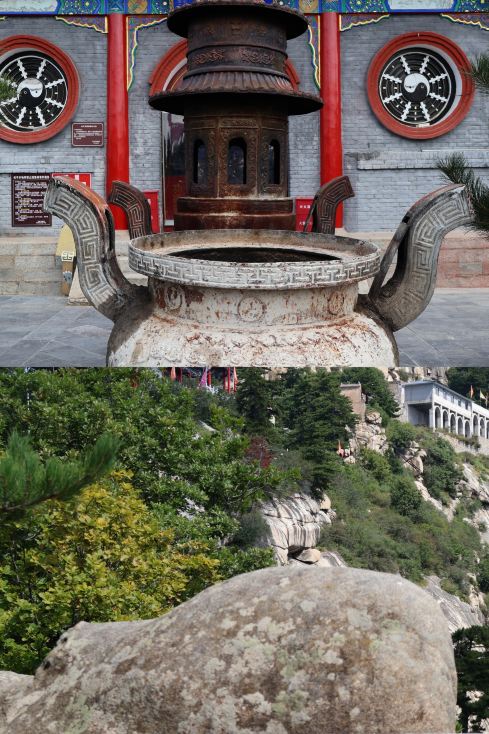
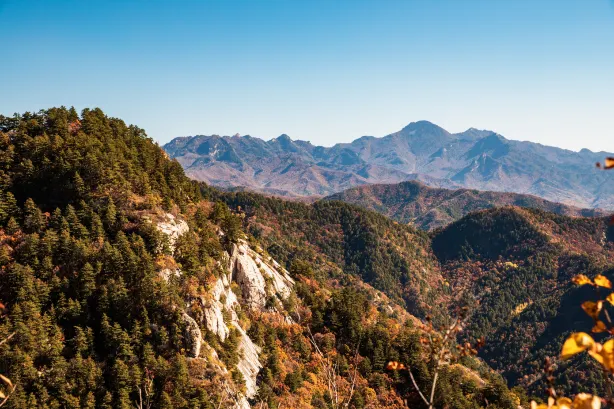
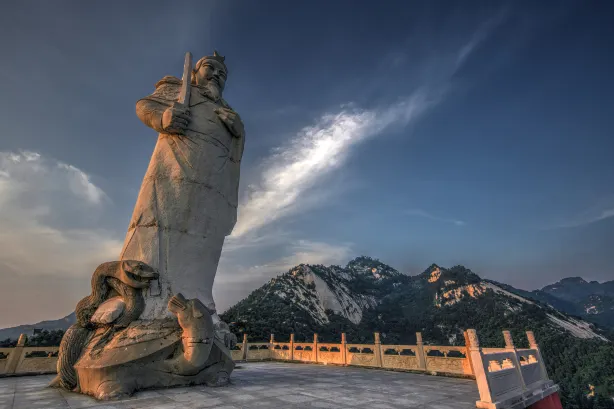
North Wudang Mountain, known as Longwang Mountain in ancient times, is a Taoist holy place in my country. North Wudang Mountain has both the hero of Mount Tai, the wonder of Mount Huang, the danger of Mount Hua, the beauty of Emei and the serenity of Mount Qingcheng. The main peak is almost surrounded by cliffs, and there is only one artificial ladder to climb. The ladder has more than 1,450 steps. There are railings and iron cables in the steep places. Tourists can hear the melodious "stone sound" every step of the way. There are many strange rocks in the mountains, ten thousand catties of "tortoise stones" stand steeply on the edge of the cliff, and when pushed hard or blown by the wind, it will crumble, making people tremble, so it is also called wind-moving stone, which is one of the rare landscapes in our country. Many experts believe that the "tortoise and snake stone" on the North Wudang Mountain should be regarded as a first-class treasure among the natural zodiac stones of nearly a thousand famous mountains in my country. It is not easy to climb North Wudang Mountain, but it is even more difficult to go down North Wudang Mountain. Some tourists sighed that Huashan Mountain and Taishan Mountain could not be difficult for him. He should not be planted here. There are more than ten Taoists in the North Wudang Mountain Taoist Temple, and there are clay sculptures and murals in the temple. , stone tablets and other cultural relics, with precious historical research value. There is a Zhenwu Temple on the top of the peak. According to the ancient stele, it was founded in the Tang Dynasty and rebuilt in the Ming season. From the first to the third day of the third month of the lunar calendar, it is the period of the ancient temple fair.

Fangshan · 16.1 km from downtown
From €35.44
Jinci Temple Museum
No. 1 of Family-friendly Attractions in Shanxi

Jinci Temple Museum

8.8
4.8/5
21.2k reviews

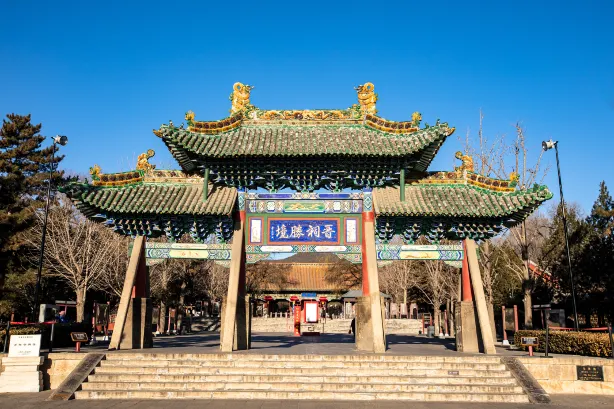
Jinci Temple Museum is located at the foot of Xuanweng Mountain by the banks of the Jin River. It is an ancestral temple built to commemorate Tang Shuyu, the founding feudal lord of the State of Jin, and is also one of the earlier surviving royal sacrificial gardens in China. There is a saying that "you have not truly visited Taiyuan until you have visited Jinci." The ancient buildings in the museum are arranged in sequence along the central axis, among which the Xian Hall, the Flying Bridge over the Fish Pond, and the Hall of the Holy Mother are known as the "three treasures," while the Zhou Cypress, the Never-Aging Spring, and the Song dynasty attendant statues are known as the "three wonders"—these are the core highlights of any visit. The "Three Treasures" are located on the central axis and can be visited together. Xian Hall is the place where sacrificial offerings are placed. The hall is surrounded by railings instead of walls, making it well-ventilated and bright, and its beam structure is simple and lightweight. The Flying Bridge Across Fish Pond is on the west side of Xian Hall. It is a cross-shaped ancient bridge built over a square pond, resembling a modern overpass in form, and this type of bridge structure is extremely rare among surviving ancient buildings. The west end of the bridge connects to Shengmu Hall, the oldest surviving building in the museum. Wooden carved dragons coil around the porch columns in front of the hall, making them relatively early surviving examples of wooden coiled dragons. The hall interior was built using the reduced-column method, creating a rather spacious interior. It houses dozens of Song Dynasty colored sculptures, with the main statue of Shengmu seated in the shrine and the remaining attendants arranged on both sides with varied expressions. One attendant statue is half joyful and half sorrowful, vividly lifelike and moving. With Shengmu Hall as the center, you can also seek out the "Three Wonders." The Zhou Cypress is located on the north side of Shengmu Hall. It is said to have been planted in the Western Zhou Dynasty, and its trunk leans south like a reclining dragon, full of ancient majesty. The Never-Aging Spring is located on the south side of Shengmu Hall and is the main source of the Jin River. The museum also houses the Stele of the Inscription and Preface to Jinci, composed and handwritten by Emperor Taizong of Tang, Li Shimin, whose running-script calligraphy is vigorous and forceful. In the southern part is the Shifang Fengsheng Zen Temple, said to have originally been the villa of the Tang Dynasty general Yuchi Gong. In the Futu Courtyard, the Sarira ShengSheng Pagoda can be climbed for a distant view. The Jinci temple fair has been passed down to the present day and has been included in the national-level intangible cultural heritage list. The Water Mirror Stage, an ancient theater stage in the museum, is an important venue for activities during the temple fair.

China · Taiyuan
From €10.99
Yingxian Wooden Pagoda
No. 3 of Best Things to Do in Shanxi

Yingxian Wooden Pagoda

8.6
4.8/5
26.1k reviews

Yingxian Wooden Pagoda is centered on the Sakyamuni Pagoda of Fogong Temple. This pure wooden pavilion-style pagoda was first built in the second year of Qingning of the Liao Dynasty (1056) and later expanded and completed during the Mingchang period of the Jin Dynasty. It is the oldest surviving wooden pagoda in China. The pagoda has five visible stories, with concealed stories inserted between them, making nine stories in total, and stands about 67 m tall. Apart from the stone platform base on the first story, the main body of the pagoda is built entirely of wood, connected using traditional mortise-and-tenon craftsmanship, and the whole pagoda uses more than 50 types of bracket sets, demonstrating exquisite structural design. For more than nine hundred years, the pagoda has withstood many major earthquakes and modern artillery bombardment and still stands today. Due to the need for cultural relic protection, visitors may only visit the first floor inside the pagoda. There is a door on each of the north and south sides of the first floor. In the center of the inner chamber is a seated statue of Shakyamuni about 10 m tall, with a dignified face and a solemn expression. Looking up, you can see the exquisite coffered ceiling at the top. On the walls of the inner chamber are painted six Buddha images of Tathagata, and on the walls on both sides of the doorway are painted Liao Dynasty-style murals featuring Vajra, disciples, and offering figures, with bright colors and lifelike figures. Multiple plaques from various dynasties hang under the eaves of each story of the wooden pagoda, two of which were written by Ming emperors and are particularly striking. Under the south eaves of the fifth story hangs the plaque "Supreme Divine Craftsmanship," written by Zhu Di, Emperor Chengzu of Ming, when he climbed the pagoda during a northern military campaign in the Yongle era; under the south eaves of the fourth story hangs the plaque "Wonder of the World," written by Zhu Houzhao, Emperor Wuzong of Ming, when he ascended the pagoda to feast and reward his ministers after the Yingzhou victory in the Zhengde era. These plaques are not only calligraphic treasures but also record the intersection of the wooden pagoda with historical figures, together with the architecture itself forming a distinctive cultural view of the attraction.

China · Ying County
Save €0.27From €6.60
Pingyao Ancient City
2027 Asia 100 - Night Attractions

Pingyao Ancient City

8.4
4.6/5
27.5k reviews

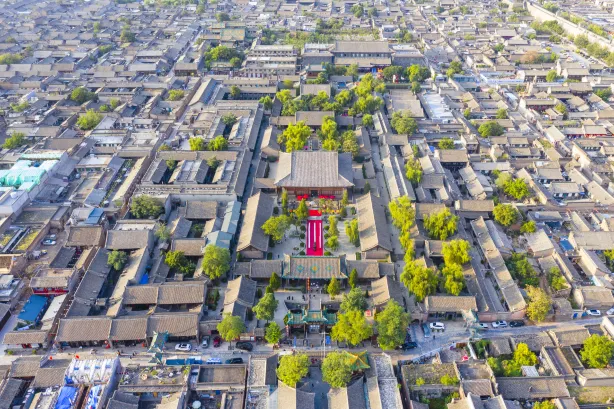
Pingyao Ancient City is one of the best-preserved ancient cities in China and, along with Lijiang Ancient City, is one of the two ancient cities in China to have successfully been designated as a World Cultural Heritage site in its entirety. Pingyao was once the financial center of China during the late Qing dynasty. Walking into this once-prosperous ancient city, you can feel the atmosphere of Shanxi merchant culture everywhere. The streets, shops, and residences within the ancient city still maintain their traditional layout and appearance. The overall street pattern is in the shape of the Chinese character 'tu', consisting of four main streets, eight small streets, and seventy-two lanes. The ancient city has six city gates in total, and the areas around the south gate and west gate are where visitors are concentrated. When touring, you usually enter the city through the lower west gate and walk along West Street to Rishengchang Exchange Shop, where you can learn about the development history of ancient banking and experience the legend of Shanxi merchants conducting business across the world. South Street, which runs north-south through the city, is the central axis of the ancient city. During the Ming and Qing dynasties, South Street gathered more than half of the country's financial institutions and was known as the "Wall Street of China" at the time. Today this street is called the Ming and Qing Ancient Street, and most of the ancient city's attractions are concentrated here. Centered on the landmark Market Tower, attractions such as Xietongqing Exchange Shop, Weitaihou Exchange Shop Museum, and the Chinese Escort Agency Museum are distributed around it, and a large number of shop buildings from the Ming and Qing periods are preserved along the street. At the Pingyao County Government Office in the south of the ancient city, you can see a large number of ancient documents and instruments of torture, and there is a daily performance of the county magistrate holding court; the City God Temple and the Confucian Temple in the east of the city have grand and refined architecture. The ancient city wall is very well preserved, and climbing the wall offers a panoramic view of the ancient city. The gate tower of Yingxun Gate at the south gate is especially exquisite, and watching the sunset from the city wall in the evening is a magnificent sight. In addition to the ancient city itself, the Zhenguo Temple and Shuanglin Temple outside the city are also part of the World Cultural Heritage. The Ten Thousand Buddha Hall of Zhenguo Temple is entirely made of wood, assembled with mortise and tenon joints without a single nail; Shuanglin Temple preserves painted sculptures from the Yuan to Ming dynasties, which are exquisite in form and renowned as a "treasure house of Eastern painted sculpture art."

China · Pingyao County
Save €0.69From €16.48
The Hukou Waterfall Scenic Area
No. 4 of Best Things to Do in Shanxi

The Hukou Waterfall Scenic Area

8.5
4.7/5
22.9k reviews

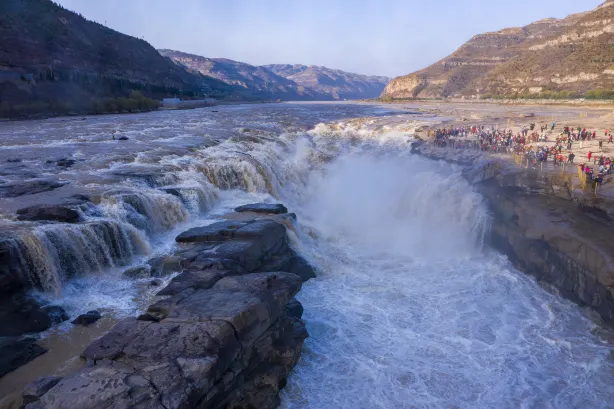
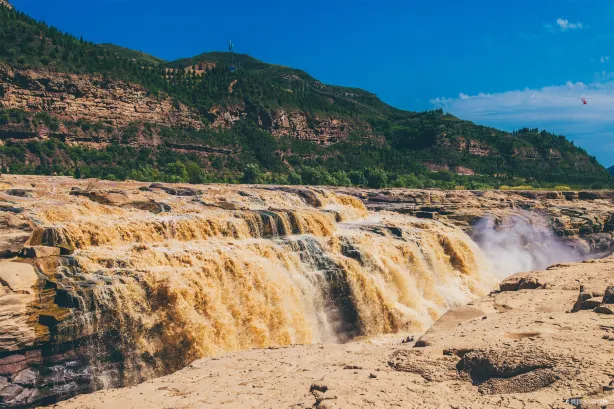
The Hukou Waterfall Scenic Area is located in the Jin-Shaan Grand Canyon in the middle reaches of the Yellow River and is the Shanxi-side section for viewing Hukou Waterfall. As the Yellow River rushes here, its surface suddenly narrows from several hundred meters wide to just a few dozen meters. The water, laden with silt, churns and pours down like water being poured into a giant kettle, which is how the name "Hukou" (Kettle Mouth) came to be. This is a rare yellow waterfall on the Yellow River, with muddy waves surging skyward and a roar like thunder, displaying magnificent momentum. The attraction is located on the east side of the waterfall, where the bank is relatively low, allowing visitors to look up and take in the full panorama of the Yellow River plunging downward. Below the waterfall, mist rises and fills the air, appearing like smoke or clouds from afar and creating the wondrous sight known as "smoke rising from the water"; on clear days, sunlight refracts through the mist to form a rainbow arching across the river, called "rainbow reaching the heavens." Within the attraction, Dragon Cave is a natural stone cave; following the stone steps down leads to a viewing platform close to the waterfall, where you can look up as the river pours down from above—an ideal spot to feel the force of the waterfall up close. Downstream from the waterfall, the Ten-Mile Dragon Trough is a deep channel formed by the river's long-term erosion of the riverbed; in the dry season, the trough floor is wide and flat, and ancients once used this terrain to haul boats along the bank, leaving behind the unique scene known as "sailing on dry land." Further downstream is Mengmen Mountain, where two huge rocks in the river split the Yellow River in two before the streams merge again; carved on the rock face are the four characters "Wo Zhen Kuang Liu" (Resting Here, Quelling the Raging Flow). The view of Hukou Waterfall is distinctive in each of the four seasons. Every year between April and May, peach blossoms bloom and the ice melts, coinciding with the "March peach blossom flood," when the abundant water volume makes the waterfall particularly spectacular. From September to November, the air is crisp in fall, and rainbows often appear in the mist, a phenomenon known as the "Hukou fall wind." Water volume is greater in spring and fall, and the sound of the water striking the rocks is like thunder, making these the best periods to admire the waterfall. The image of Hukou Waterfall once appeared on the CNY 50 banknote of the fourth series of the renminbi, making it a widely recognized classic symbol of Yellow River culture.

China · Ji County
From €10.99
Hukou Waterfall tourist area of the Yellow River
No. 8 of Best Things to Do in Shaanxi

Hukou Waterfall tourist area of the Yellow River

8.3
4.6/5
18.3k reviews

The Hukou Waterfall tourist area of the Yellow River is located on the riverbed of the Yellow River in the Qin-Jin Grand Canyon, where the provinces of Shanxi and Shaanxi face each other across the river. The main stream of the Yellow River, originally hundreds of m wide, suddenly narrows to dozens of m and plunges into a deep trough with a drop of 20–30 m, resembling water being poured from a giant pot—hence the name "Hukou" (Pot Mouth). Due to the large amount of sediment carried by the river, the waterfall presents a rare golden-yellow view: the turbid waves roar down with a sound like distant thunder rolling through the valley, while the rising mist lingers before the cliff, earning the nickname "smoke rising from the water." On sunny days, sunlight casts a rainbow over the waterfall, known as "a rainbow playing in the water." The mist may drench visitors even without wind or rain, creating the wonder called "rainfall under a clear sky." Hukou waterfall is regarded as the symbol of the "soul of the Yellow River" and the spirit of the Chinese nation. In 1938, when poet Guang Weiran crossed the Yellow River, he witnessed the roaring waves of Hukou and the boatmen's chants, which inspired him to create the now-legendary Yellow River Cantata. Liang Heng's essay of the same name was selected for middle school Chinese textbooks, and the back of the fourth series CNY 50 banknote also features this scene. Many first learned about it through textbooks and currency before visiting in person. In the past, cargo ships had to leave the water and bypass the waterfall here, leaving behind the maritime memory of "sailing on dry land." The scenery here varies with the seasons: In early spring, the upstream ice melts and the water level rises sharply, coinciding with the blooming of mountain peach blossoms on both banks, known as the "March peach blossom flood." In midsummer, the rainy season brings abundant water, with muddy waves towering into the sky. After fall begins, the rainy season subsides, and the water becomes high and steady. As the fall breeze sweeps by, rainbows often appear, earning the name "Hukou autumn breeze." In deep winter, layers of ice form along the banks, and overflow freezes into inverted ice peaks, glistening under the sunlight, creating the spectacular "upside-down ice peaks." The viewing platform on the Shaanxi side stretches along the cliff top on the western bank, offering a commanding view of the "thousand-mile Yellow River funneled into one pot" and the ten-mile-long Dragon Trough below the waterfall. During high-water seasons, the mist is heavy, and clothes get soaked quickly, so remember to protect your camera and phone; the boardwalk is slippery, so watch your step while walking and taking photos.

China · Yichuan
25% offFrom €10.30
Little Western Paradise
No. 8 of Best Things to Do in Shanxi

Little Western Paradise

8.2
4.8/5
7.1k reviews

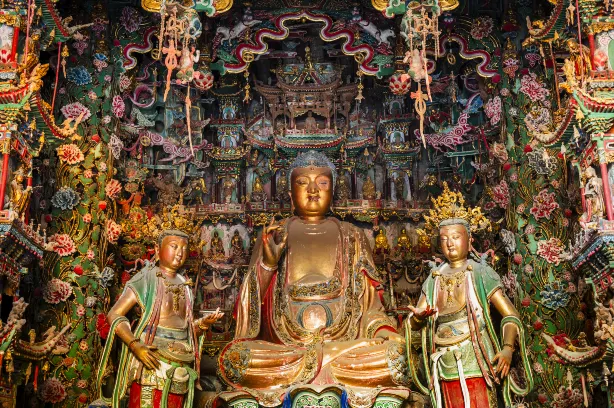
Little Western Paradise is perched atop Phoenix Mountain in Xi County, Linfen, Shanxi Province. This Buddhist temple, originally named the Thousand Buddha Nunnery, was established during the Chongzhen era of the Ming Dynasty. It earned its initial name from the thousand Buddha statues enshrined in its Main Hall of the Great Hero. Later, it was renamed due to the inscription "Entering the Western Paradise" above its gate and to distinguish it from another ancient temple, "Great Western Paradise," located south of the city. Surrounded by mountains on three sides and facing a river in front, the temple is compact yet ingeniously laid out across its upper and lower courtyards. Ascending the stone steps and passing through the secluded "Heavenly Grotto" corridor evokes a sense of gradually entering a Buddhist paradise. The upper courtyard centers around the Main Hall of the Great Hero, flanked by the Manjusri Hall and Samantabhadra Hall. The Main Hall is the temple's crowning jewel: within its modest 100-square-meter space, nearly 2,000 suspended sculptures adorn niches, gables, beams, and rafters, transforming the hall into a museum of suspended sculpture art. Five interconnected niches dominate the rear wall, housing the Medicine Buddha, Amitabha, Sakyamuni, Vairocana, and Maitreya seated on lotus thrones, with ten principal disciples standing beside them. The southern wall depicts Buddhist narratives featuring the Four Sages and Four Heavenly Kings, while the northern wall portrays the 33 celestial palaces of Mount Sumeru. Flying apsaras, divine birds, and musician bodhisattvas dance among clouds on the beams, their gilded polychrome surfaces retaining vibrant hues after centuries. This rare collection of late Ming to early Qing suspended sculptures has gained wider recognition since the temple became a filming location for the popular game Black Myth: Wukong, attracting many travelers for dedicated visits. The lower courtyard also rewards exploration: the Immeasurable Hall faces east, where dozens of bronze Buddha statues interplay with wooden celestial palaces in what was once the monks' meditation hall. Opposite stands the Skanda Hall, housing a single nanmu-carved statue of Skanda. The temple also preserves thousands of volumes from the Yongle Northern Canon, a Ming imperial gift. Visitors are advised to spend extra time in the Main Hall—dim lighting requires slow, upward gazes to appreciate the intricate details of the high-placed sculptures. After exploring both courtyards, one can ascend Solitary Paulownia Peak via the "Seemingly No Path" route behind Skanda Hall, where the Cloud-Touching Pavilion offers panoramic views of the rural landscape below.

China · Xi County
From €4.81
Fangshan Today's weatherClear -7-3℃
Fangshan weather for the next 2 days11/28: -7-4℃, 11/29: -4-10℃

Free things to do in Fangshan
What travelers say about Fangshan

user-avatar
M25***42December 11, 2025
4.0
Climbing to a high vantage point offers panoramic views, and hiking is a delightful experience. It's good for your health and brings immense joy. The only regret is that on the way down, we passed by the former residence of Yu Chenglong in Fangshan County, only to realize it was near Beiwudang Mountain…

North Wudang Mountain

user-avatar
迎园小区November 7, 2024
5.0
It is a very old town. It is convenient to drive here. There are many ancient buildings from the Ming and Qing dynasties in the town.

Zhangjiata Village

user-avatar
Anonymous userNovember 27, 2026
5.0
It's exactly as described by the seller, I'm very satisfied, I really like it, it completely exceeded my expectations, the shipping speed was very fast, the packaging was very careful and secure, the logistics company's service attitude was very good, and the delivery speed was very fast. It was a very satisfying shopping experience.

Yungang Grottoes

user-avatar
dangdangdangdangdangdangNovember 25, 2026
5.0
Just as described in the textbook years ago, Jinci Temple can be described as the soul of the Jin State, the pearl of Taiyuan, and the treasure of Shanxi. Furthermore, through the exploration of more background information, a thorough understanding of the important historical significance and value of Jinci Temple was gained.

Jinci Temple Museum

user-avatar
M38***44November 26, 2026
5.0
Having long yearned to see the Yingxian Wooden Pagoda, I finally made a special trip to Shuozhou to witness this nearly thousand-year-old wonder with my own eyes, leaving me deeply awestruck. The Sakyamuni Pagoda of Fogong Temple, commonly known as the Yingxian Wooden Pagoda, is the world's tallest and oldest existing pure wooden pavilion-style pagoda. The entire pagoda was constructed without a single iron nail, relying entirely on the interlocking of wooden components. Having withstood wind, rain, and earthquakes, it still stands firmly. The wisdom of the ancient builders can only be truly appreciated standing beneath the pagoda. Entry to the scenic area is very convenient; electronic passes allow direct entry. Upon entering the courtyard, the wooden pagoda immediately captivates the eye. From afar, it appears majestic and solemn; up close, the layers of brackets are rich and exquisite, each mortise and tenon joint revealing ingenuity. Inside the pagoda are also precious Buddhist statues and murals, imbued with the rich ancient charm of the Liao Dynasty. It's worthwhile to listen attentively to the guided tour; many details are easily missed without understanding the historical context. The guided tour will explain the wooden pagoda's construction background, its history of repairs, and the structural principles behind its earthquake-resistant construction. After hearing the explanation, the experience of seeing the pagoda in person is completely different. The park isn't particularly large, allowing for a leisurely pace, making it suitable for enthusiasts of ancient architecture and history buffs. Standing beneath the pagoda and looking up, the wind rustling through the wooden components feels like touching a thousand years ago. It's not overly commercialized; it's quiet and peaceful, perfect for appreciating the beauty of ancient architecture.

Yingxian Wooden Pagoda

user-avatar
ApMarinaNovember 26, 2026
5.0
Этот город стоит того, чтобы приехать сюда и увидеть его вечером и днём. Останавливайтесь на ночлег в старом городе, выбор отелей большой, как в современном интерьере но в старых стенах, так и в интерьере под старину. Посещение всех музеев происходит по единому билету. Это очень удобно. Ты просто идешь и заходишь в любой музей по вкусу. Конечно, лучше избегать времени праздников, когда улочки города просто забиты туристами практически круглосуточно. Здания и их декор хочется рассматривать не спеша, разглядывая декор из дерева, керамики или камня. Там где здания не отреставрированы, это смотрится даже более интересно и аутентично. У города многовековая история, он жемчужина, которую нужно беречь. Не забудьте посмотреть вечернее Свето-музыкальное шоу- проекция на городских стенах у южных ворот. Туда нужно прибыть заранее, чтобы занять хорошее место для представления.

Pingyao Ancient City

user-avatar
Anonymous userNovember 27, 2026
5.0
As China's second largest waterfall and the world's largest yellow waterfall, Hukou Waterfall is renowned for its magnificent spectacle, described as "the Yellow River flowing for a thousand miles, all contained in a single pot." A visit here is definitely worthwhile!

The Hukou Waterfall Scenic Area

user-avatar
Eng sze huiNovember 27, 2026
5.0
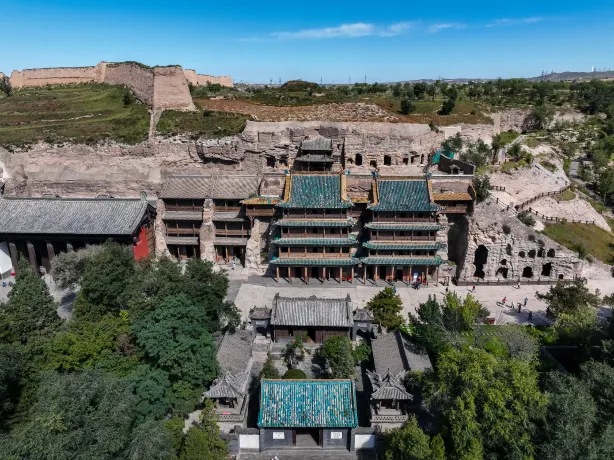
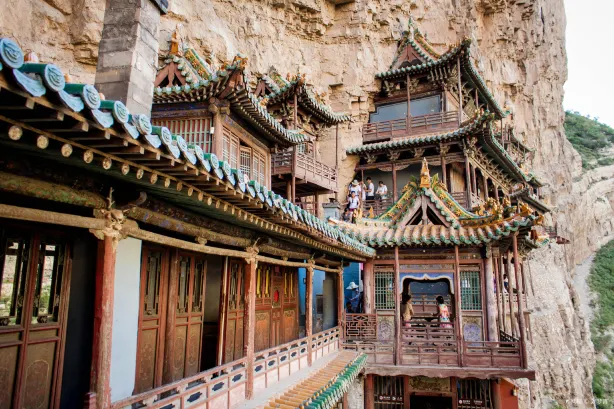
Worth going and the climb is definitely something one should experience, however may not be suitable for the faint hearted. Went during winter season and its comfortable cos there werent much tourists and we can walk slower to look around.

Xuankong Temple

user-avatar
100***81November 26, 2026
5.0
You don't need to walk much, as there are shuttle buses in the scenic area that go directly to the attractions. I went during off-season, so it wasn't too crowded. The scenery was truly spectacular and definitely worth a visit.

Hukou Waterfall tourist area of the Yellow River

user-avatar
Anonymous userNovember 7, 2026
5.0
Although the suspended sculptures at Xiaoxitian are only works from the late Ming and early Qing dynasties, they are still breathtaking when you visit in person. I entered the hall in the morning and saw the sunlight shining on the sculptures, making the trip worthwhile. I recommend visiting when there are fewer people and more sunshine, so you can take your time to appreciate them. The experience is definitely different from that during peak season.

Little Western Paradise

Trip Moments in Fangshan

Popular cities near Fangshan

Frequently asked questions

How can I contact Trip.com customer support?

Get help anytime, anywhere within 30 secondsContact customer support

Change and cancellation policies vary by attractions and tours. Please check the product details page for more information.

Ticket prices may vary between weekdays and weekends, as well as during peak and off-peak seasons. When booking with Trip.com, you can also use Trip Coins to get extra savings. For more tips on booking discounted tickets, please visit Trip.com for the latest information.