


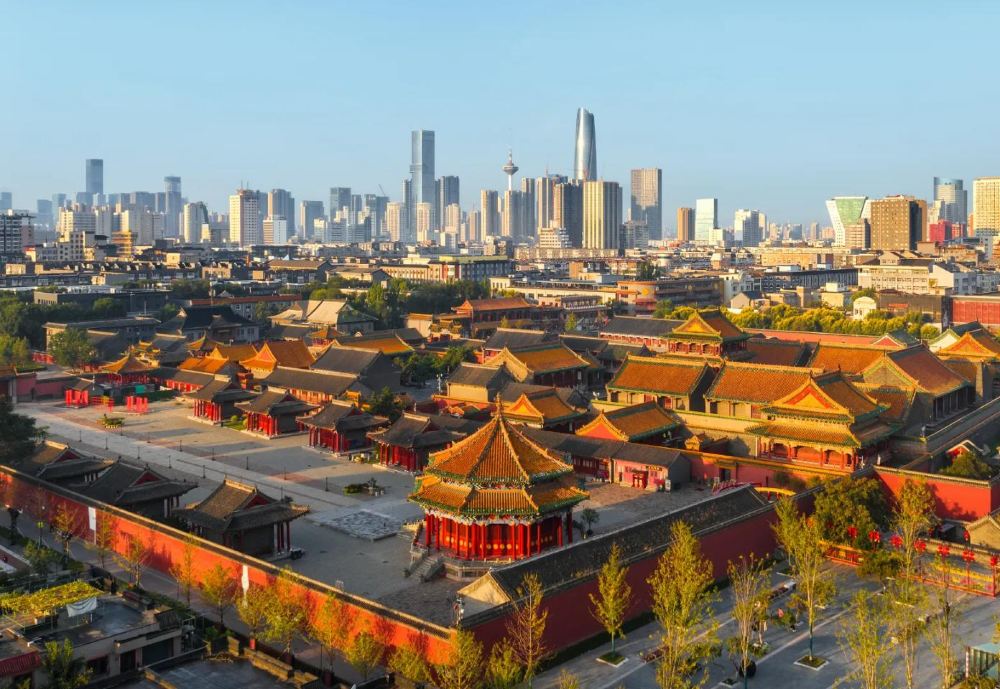
▲ The Shenyang imperial palace is located in Shenhe district, Shenyang, and is one of the two existing complete palace complexes in China. It served as the imperial palace before the Later Jin dynasty entered the Great Wall and became the Shengjing temporary palace (also known as the Fengtian temporary palace) after the Qing dynasty moved its capital to Beijing. This site features not only exquisite ancient palace architecture but is also renowned worldwide for its rich collection of treasures. The palace houses numerous imperial artifacts preserved from the old palace, and visitors can admire these precious treasures in various exhibition halls throughout the complex.
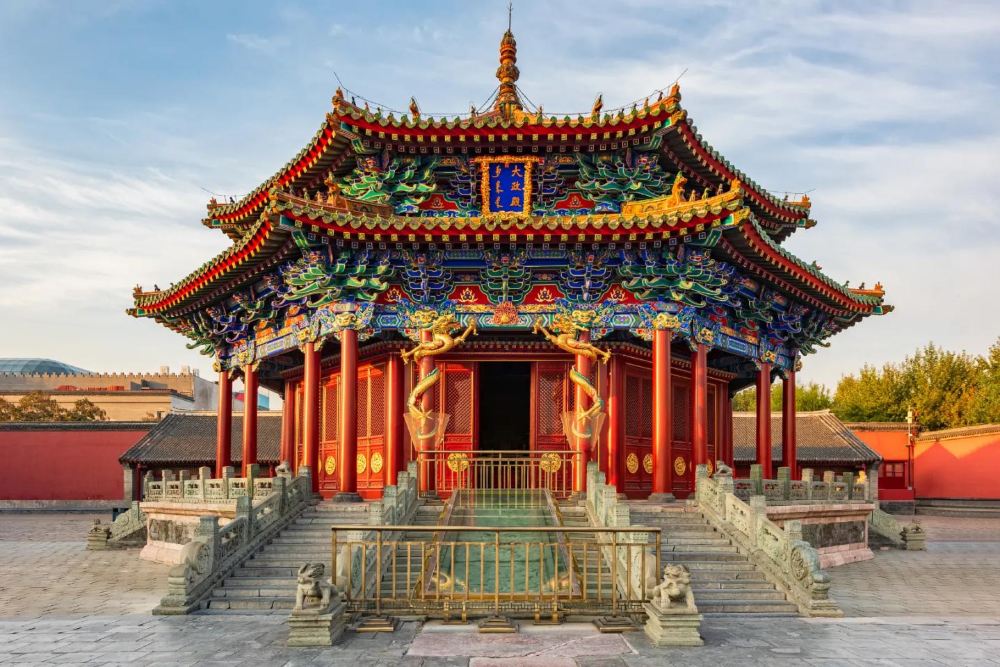
▲ The great Qing gate is the main entrance of the Shenyang imperial palace, commonly known as the meridian gate. It is a five-bay gable-roofed structure with a roof fully covered in glazed tiles and adorned with green trimmed edges. The decorative patterns feature raised sea waves, clouds, dragons, and various auspicious animals, all exquisitely crafted and vividly lifelike. The great Qing gate is majestic and splendid, harmoniously integrated with the entire palace complex.

▲ The Shenyang imperial palace is divided into three sections based on architectural layout and construction chronology: the eastern section features the Shenyang imperial palace - Dazheng hall and Shenyang imperial palace museum - Ten princes pavilions built during Nurhaci's reign; the central section includes the expanded Da Zhong Que complex from Emperor Taizong's era, comprising the Daqing gate, Chongzheng hall, Phoenix tower, as well as Qingning palace, Guansu palace, Yanqing palace and Yongfu palace; the western section contains later additions like the Wensu pavilion built during Emperor Qianlong's reign. The entire palace complex presents a magnificent spectacle with numerous towers, majestic halls, and exquisitely carved beams and painted rafters.

▲ The Shenyang imperial palace museum - Manchu Qing street are two major historical and cultural landmarks in Shenyang, Liaoning province, jointly showcasing the unique charm of early Qing dynasty history and Manchu culture. Historical significance: The Shenyang imperial palace (also known as the Shengjing imperial palace) served as the royal palace before the Qing dynasty entered the Great Wall. Construction began in 1625 (the 10th year of Later Jin's Tianming era) and served as the residence for Qing founder Nurhaci and his successor Hong Taiji. It was inscribed on the world heritage list in 2004 and is one of China's two major imperial palace complexes (the other being the Beijing imperial palace).
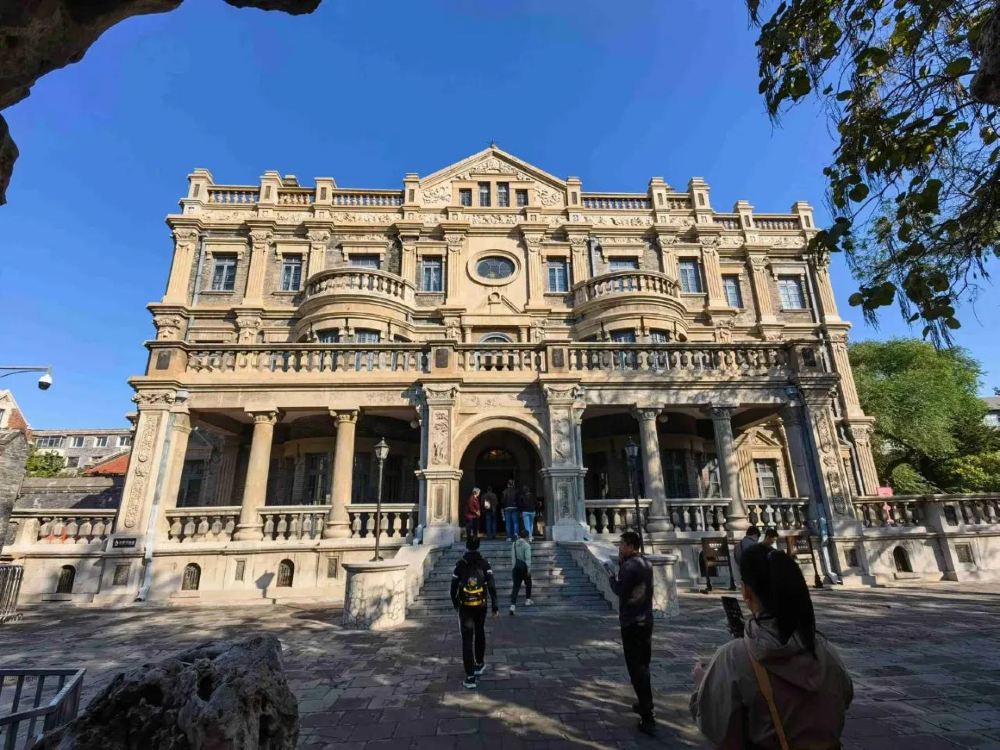
▲ Marshal Zhang's mansion museum was established in 1914, covering an area of 53,000 m². It includes multiple heritage buildings such as a three-section courtyard house, Marshal Zhang's mansion museum - the grand blue building, small blue building, Marshal Zhang's mansion museum exhibition hall - Guandi temple, red buildings complex, Zhao Yidi former residence, and the former sites of Frontier bank and its office. It is designated as a national key cultural relics protection unit.

▲ Zhao Yidi former residence, commonly known as "Miss Zhao's building", is an important component of the national key cultural relics protection unit Marshal Zhang's mansion museum. Between 1928 and 1931, General Zhang Xueliang and female Zhao Yidi lived here and gave birth to their beloved son Zhang Lulin.

▲ The governor's house of northeast China (Zhang Xueliang's official residence) served as the headquarters of important military and political institutions in northeast China during the late Qing and early Republic periods. It became another renowned large-scale government office complex in Shenyang after the Qing imperial palace.

▲ The governor's house of Northeast China has witnessed and carried the historical process of Shenyang and even the entire Northeast region during the turbulent years of modern China over a century, holding significant historical, cultural, and architectural value. The former site of the governor's house of Northeast China has now been designated as a provincial-level cultural relic protection unit and is open to the public as a museum.

▲ Zhongjie street is one of the earliest commercial streets in Shenyang, with a history spanning several hundred years.