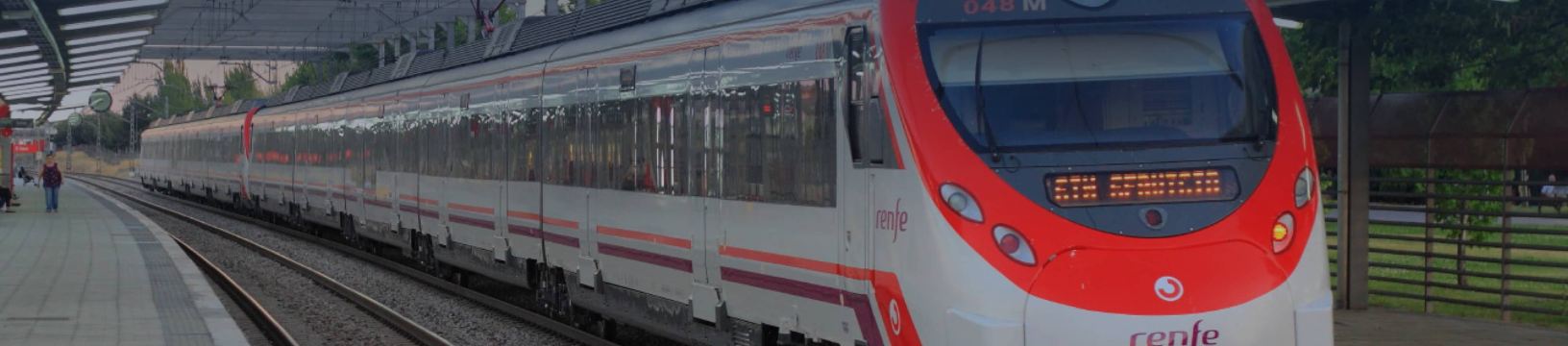
With 12 suburban rail serving areas such as Madrid, Barcelona, Valencia, Bilbao, Seville and Málaga, as well as smaller hubs like León, Cádiz, and Asturias, the Cercanías networks form the backbone of commuter travel across Spain’s largest cities and regions. In several cities, the Cercanías lines, which are owned and operated by Renfe, integrate with local metro systems too for smooth, quick connections across the city.
So, whether you’re commuting into the city for work or heading out of town, Spain’s Cercanías networks offer a quick, reliable, and affordable way to travel. With frequent departures, low fares, and seamless connectivity, they help you skip the traffic for a smoother, more enjoyable journey. You can check the Cercanías schedules and book tickets easily with Trip.com, an official Renfe partner.
What is Cercanías?
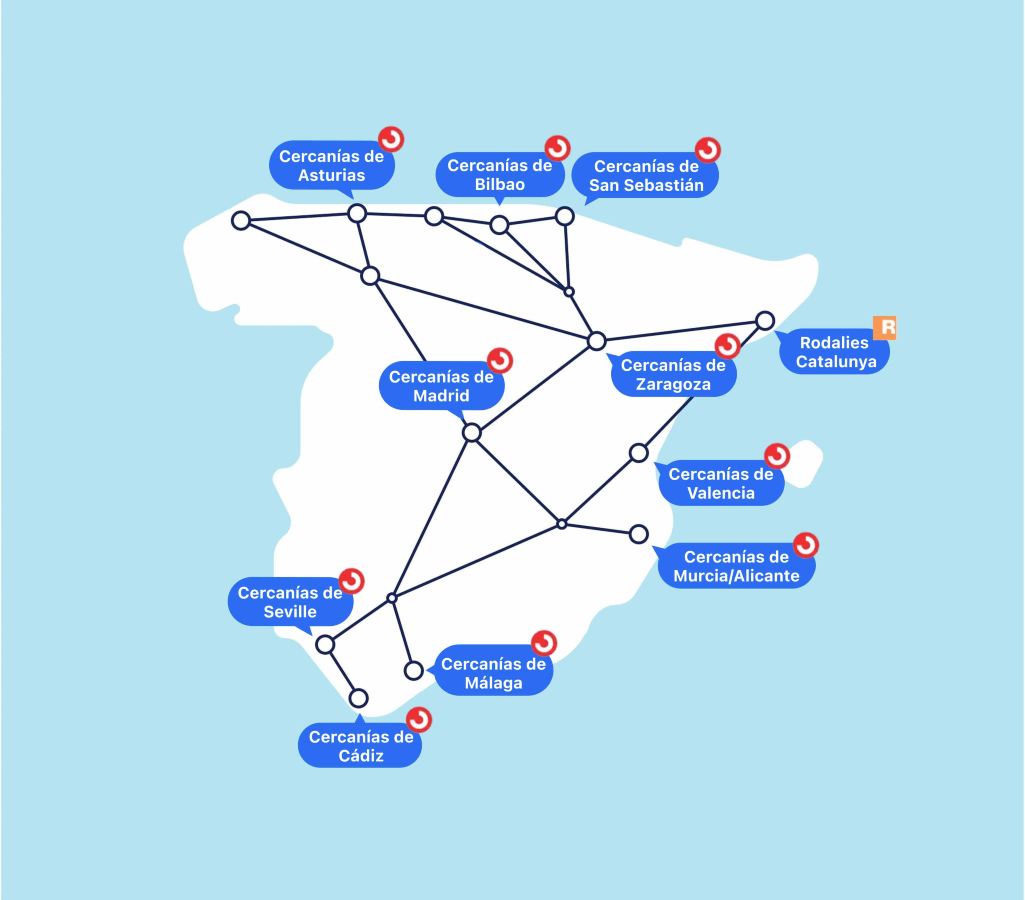
Centered around major cities and rail hubs, Cercanías are Spain’s commuter rail networks – operated by Renfe and designed to connect urban centers with their metropolitan areas and nearby towns. Located around 12 main Cercanías stations, including Asturias, Barcelona, Bilbao, Cádiz, Cantabria, Madrid, Málaga, Murcia-Alicante, San Sebastián, Seville, Valencia, and Zaragoza, the Cercanías networks provide essential connections to many travelers throughout Spain, with more than one million people traveling with Cercanías trains every day.
With transport generating nearly 27% of all carbon emissions in the European Union, the Cercanías network offers a greener way to travel, helping to reduce both individual and collective carbon footprints, thus actively contributing to a more sustainable kind of travel and allowing bigger cities to become both cleaner and more livable. Not only is traveling with Cercanías trains in Spain a greener alternative to road transport, it’s also quick, convenient and affordable.
Avoiding traffic jams and significantly reducing travel times, the Cercanías network combines affordable fares with frequent services, especially during rush hour. With stations strategically located for easy onward travel with other urban and regional buses and trains, as well as Cercanías metro connections, the network provides quick and convenient transportation links between some of Spain’s most populous city centers and outlying towns.
Main Cercanías Networks in Spain
Operated by Renfe, Cercanías are Spain’s fast and affordable commuter rail networks, connecting major cities with their suburbs, towns and surrounding regions. Spread across 12 hubs – including Madrid, Barcelona, Valencia, Bilbao, Seville and Málaga – they offer one of the most convenient and budget-friendly ways to move around Spain’s cities and beyond.

Cercanías Asturias
Connecting key cities like Oviedo, Gijón and Avilés with dozens of nearby towns and villages, the Cercanías Asturias network makes traveling around Asturias quick and convenient. The Cercanías Asturias network offers eight main lines, covering most of the Asturian metropolitan area:
- C1: Gijón/Oviedo - Puente de los Fierros
- C2: Oviedo - El Entrego
- C3: Llamaquique/Oviedo - San Juan de Nieva
- C4: Gijón - Cudillero
- C5: Gijón - Laviana
- C5a: El Berrón - Oviedo
- C6: Oviedo - Infiesto
- C7: Gijón - San Esteban de Pravia
- C8: Baiña - Collanzo
With the Cercanías Asturias network, it’s easy to travel between Asturias' major urban centers of Oviedo, Gijón and Avilés and a wide variety of interesting cultural destinations. From the beaches of San Juan de Nieva and Cudillero to the breathtaking inland vistas of Infiesto, Laviana and Mieres, both coastal and mountain destinations are within reach. With high-speed stations at both Oviedo and Gijón, you can also connect with medium and long-distance trains to the rest of Spain.
With frequent departures throughout the day, especially during peak hours, as well as affordable fares, the Cercanías Asturias train network is ideal for both those who live and work locally and international visitors. Take the stress out of traveling the region with Cercanías – the convenient and sustainable way to travel through the heart of Asturias.
Cercanías Bilbao
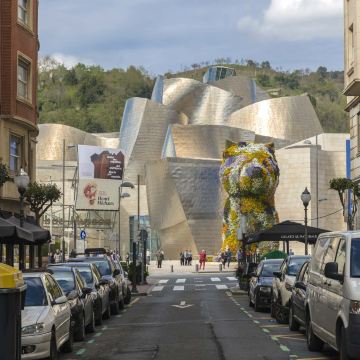
Traveling around Bilbao and its metropolitan area is much easier with the Cercanías train network. Departing from Bilbao city center, you can reach the Guggenheim Museum or the Nervión River in just a few minutes without having to contend with traffic jams or look for parking. Explore Bilbao quickly, comfortably and more sustainably with Bilbao’s Cercanías trains.
Bilbao’s Cercanías network has four main lines departing from the Abando Indalecio Prieto station in the heart of the city:
- C1: Abando Indalecio Prieto - Santurtzi
- C2: Abando Indalecio Prieto - Muskiz
- C3: Abando Indalecio Prieto - Orduña
- C4: Bilbao - La Calzada
From La Iberia to Euskalduna, you can travel all across the city with Cercanías Bilbao, and discover industrial areas and docks along the river that showcase the city’s unique blend of tradition and modernity in neighborhoods that have been recently transformed into cultural spaces. Traveling further afield, you can also easily reach key locations on the Left Bank, such as Barakaldo, Portugalete, Santurtzi and Muskiz, as well as the charming exclave of Orduña in the Basque mountains.
Connecting with local metro, tram and bus services as well as medium and long-distance trains from Abando, Bilbao’s Cercanías stations are easily accessible via both public transport and by car. With frequent departures throughout the day and affordable ticket prices, Cercanías trains are one of the best ways to get around Bilbao and discover every corner of this fascinating city in northern Spain.
Cercanías Cadiz
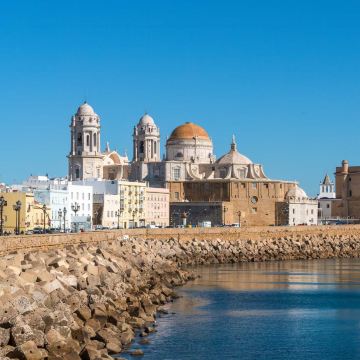
A small network consisting of one tram-train line around the city and one main rail line to Jerez, the Cadiz Cercanías train network stretches around the entire Bay of Cadiz for quick and easy, stress-free travel. From the historic center of this ancient port town to the open beaches of the Atlantic and the sherry wineries of Jerez, it’s easy to reach anywhere in and around Cadiz with Cercanías trains.
Cadiz’s Cercanías network is made up of one main rail line and an additional tram-train service:
- C1: Cadiz - Jerez de la Frontera - Jerez Airport
- C1a: Las Aletas – University
- T1: Trambahía: Cadiz - Pelagatos
Running along the coast of the Bay of Cadiz and up to Jerez airport, the C1 Line forms the backbone of the Cádiz Cercanías, connecting the city with San Fernando, Puerto Real, El Puerto de Santa María and Jerez, as well as medium-distance train stations along the way. For students, the C1a branch line also offers a fast service between Las Aletas and the university campus. For more frequent stops between Cádiz, San Fernando and Chiclana, you can also take the modern T1 Trambahía tram-train, crossing from one side of the bay to the other.
With frequent departures and affordable fares, the Cercanías Cádiz network makes getting around the city and surrounding area easy. And with the entire bay within easy reach, there are always more lively cities, quiet towns and wide dune-backed beaches to explore.
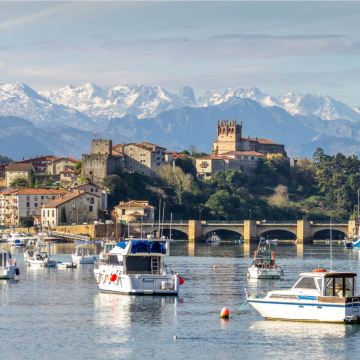
Cercanías Cantabria
Connecting Santander with towns along the coast, Cantabria’s green valleys and historic villages, the Cercanías network makes traveling Spain’s Community on the northern coast easy. So, whether you’re heading into Santander from further afield, or looking to escape the city for a weekend in the country, you can just hop on a Cercanías train for a stress-free ride.
There are three main lines that depart from Santander station:
- C1: Santander - Reinosa
- C2: Santander - Cabezón de la Sal
- C3: Santander – Liérganes
With just these three lines, much of the region becomes easily accessible; the C1 line crosses the mountainous interior of Cantabria to Reinosa, passing through Torrelavega and Los Corrales de Buelna, the C2 line runs along the coast from Santander to Cabezón de la Sal, connecting Bezana, Torrelavega and Reocín, while the C3 line takes you to Liérganes, named as one of Spain’s most beautiful villages.
In addition to connecting with medium- and long-distance trains in Santander, the Cercanías stations have excellent connections to urban and intercity bus lines, making travel throughout the metropolitan area convenient. With frequent services and affordable fares, Cercanías provides a sustainable and practical transportation option for daily travel in Cantabria.

Cercanías Madrid
The largest Cercanías train network in Spain, Cercanías Madrid serves hundreds of thousands of passengers every day. Not only are the Cercanías lines in Madrid key for commuters from across the region, the Madrid network also connects dozens of municipalities within the metropolitan area, cities in nearby provinces and Madrid Airport’s Terminal 4, allowing both locals and visitors alike to travel the region quickly and easily without the stress of travelling by road.
With a dense network that covers the entire Community of Madrid and some neighboring provinces, the below Cercanías lines depart from the capital:
- C1: Chamartín - Airport Terminal 4
- C2: Guadalajara - Alcalá de Henares - Atocha - Chamartín
- C3: Aranjuez - Atocha - Sol - Chamartín
- C4: Atocha - Sol - Chamartín - Cantoblanco
- C4a: Parla - Atocha - Sol - Chamartín - Cantoblanco - Alcobendas/San Sebastian de los Reyes
- C4b: Parla - Atocha - Sol - Chamartín - Cantoblanco - Colmenar Viejo
- C5: Móstoles El Soto - Atocha - Fuenlabrada - Humanes
- C7: Alcalá de Henares - Atocha - Chamartín - Padre Pio
- C8: Guadalajara - Alcalá de Henares - Atocha - Chamartín - Villalba
- C8a: Atocha - Santa Maria de la Alameda
- C8b: Guadalajara - Alcalá de Henares - Atocha - Chamartín - Villalba - Cercedilla
- C9: Cercedilla - Cotos
- C10: Villalba - Príncipe Pío - Atocha - Recoletos – Chamartín
Within the city, major stations such as Atocha, Sol, Chamartín and Príncipe Pío connect with metro services, city buses, medium- and long-distance trains.
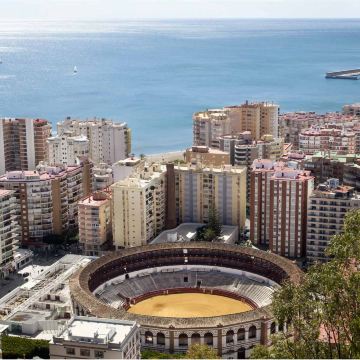
Cercanías Málaga
With the Cercanías train network, you can enjoy everything the city and the Costa del Sol have to offer, traveling from Málaga’s historic center to the beaches of Fuengirola in around an hour. With direct Cercanías from Málaga airport, the city‘s train network is undoubtedly one of the fastest and most convenient ways to get around, whether you’re exploring the coast or discovering the province's interior.
The city center has two main lines that depart from Málaga Centro-Alameda station:
Line C1 runs along the coast west of the city, connecting Málaga with Torremolinos, Benalmádena and Fuengirola, also passing through Málaga-Costa del Sol Airport station, making it ideal for arriving in Andalusia, heading into the city for study or work, or for lazy days at the beach. Line C2, meanwhile, heads inland to Álora, passing through towns like Pizarra and Cártama, and is a quick and easy way to access Málaga from the Guadalhorce Valley.
At Málaga María Zambrano, you can also easily transfer to medium- and long-distance trains, or connect with the metro at several stations. Frequent commuter train services with affordable fares enable seamless travel around Málaga city, the coast, and the interior. Enjoy efficient and cost-effective transportation to maximize your time in Málaga province.

Cercanías Murcia/Alicante
Stretching between Sant Vicent in the north and Águilas in the south, this Cercanías network covers much of the small community of Murcia, reaching from Valencia to the border with Andalusia and covering the Costa Blanca’s two greatest cities, Murcia and Alicante. Cercanías lines connect thousands of people each day from both cities and their metropolitan areas with coastal towns, inland sierras and university campuses.
The Murcia/Alicante hub is made up of three main lines that connect the stations of Murcia del Carmen and Alicante Terminal:
Forming the backbone of this Cercanías network, Line C1 runs between Murcia and Alicante (with stops in Orihuela, Callosa de Segura and Elche), while with Murcia as its hub, Line C2 takes you southwest, crossing the Guadalentín Valley, from Murcia to Águilas – from here you can connect to other nearby towns, such as Lorca, Totana, and Mazarrón. Line C3, meanwhile, connects Alicante Terminal station with the municipality of San Vicente del Raspeig – ideal for students traveling to the university campus there.
Most stations on the Murcia/Alicante Cercanías network offer direct connections to urban and regional bus lines, as well as medium- and long-distance trains, so you can arrive by train and travel around easily without the stress of driving.

Rodalia Barcelona
Formerly known as Cercanías Barcelona, the train network changed its name in 2010 to the Catalan Rodalies de Catalunya. With Barcelona at its center, the Rodalies network stretches all the way from Puigcerdà, Girona and Portbou in the north to Tarragona, Reus and Tortosa in the south. The network also connects major cities inland with Barcelona and the rest of Catalonia, including Lleida, Manresa and Vic, as well as offering frequent services to Barcelona Airport.
With over 17 lines, the Rodalies network consists of eight main lines departing from Barcelona as well as two other lines departing from Tarragona and one line from Girona. There are another six regional services, stretching out even further beyond the immediate vicinity of the Catalan capital. The main eight lines centered around Barcelona depart from key stations such as Barcelona-Sants, Plaça de Catalunya, Arc de Triomf and Estació de França. Here you can find out more about each one:
- R1: Molins de Rei - Maçanet-Massanes via Mataró
- R2: Castelldefels - Granollers
- R2 Nord: Aeroport - Maçanet-Massanes via Granollers
- R2 Sud: Barcelona Estació de França - Sant Vicenç de Calders via Vilanova i la Geltrú
- R3: L’Hospitalet de Llobregat – Puigcerdà via Vic
- R4: Sant Vicenç de Calders – Manresa via Vilafranca del Penedès
- R7: Barcelona-Fabra i Puig - Cerdanyola Universitat
- R8: Martorell Central - Granollers Centre via Cerdanyola Universitat
Transporting over 100 million passengers each year, Rodalies de Catalunya is a busy network that covers much of Catalonia – from the French border to its southern frontier with neighboring Community of Valencia. So, whether you’re heading out of the city, inland or up or down the coast, the Rodalies de Catalunya offers quick and frequent services with low fares.
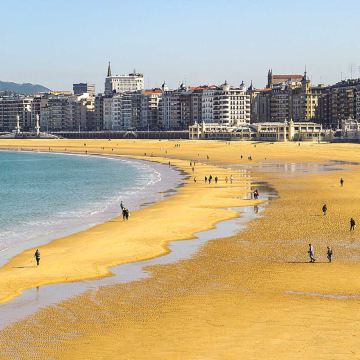
Cercanías San Sebastián
The smallest province in Spain, Gipuzkoa in the Basque Country offers easy links across the Bay of San Sebastián, from Irun on the French border in one direction to Brínkola in the other. Connecting the coast with the interior and linking key towns and cities, Cercanías San Sebastián provides easy links into the city, along the Bay of Biscay and into the peaks and forests of the Aizkorri-Aratz Natural Park.
Cercanías San Sebastián has one single line that crosses Gipuzkoa east-west:
- C1: Irún - Brínkola
This line connects iconic cities and towns such as Irún, Hondarribia, Pasaia, San Sebastián, Lasarte-Oria, Andoain, Tolosa, Beasain, and Ordizia, all the way to Brínkola, also connecting Gipuzkoa’s rural areas and industrial zones with the vibrant city of Donostia – as San Sebastián is known locally in the Basque.
From San Sebastián station (Donostia), you can also transfer to medium and long-distance trains, as well as buses and the hybrid metropolitan rail system known as "El Topo." Cercanías trains run frequently throughout the day, and with affordable fares, Cercanías San Sebastián is a great way to get around this small province in the Basque Country.
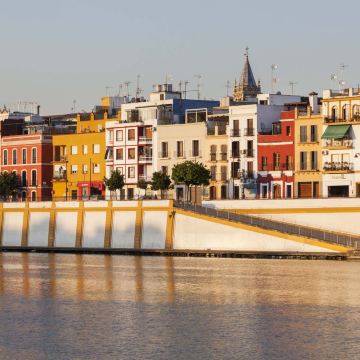
Cercanías Sevilla
Made up of five lines, including one circular line around the city center, the Cercanías Sevilla network connects the Andalusian capital with numerous nearby towns, allowing you to explore nearby towns and villages steeped in flamenco and Moorish history without having to rely on a car or wasting time in traffic.
The Cercanías Sevilla network has five main lines that all depart from Sevilla Santa Justa station, located very close to the city center.
- C1: Lora del Río - Sevilla Santa Justa - Utrera - Lebrija
- C2: Sevilla Santa Justa - Cartuja
- C3: Sevilla Santa Justa - Cazalla
- C4: Sevilla Santa Justa - Palacio de Congresos - Padre Pío - Santa Justa
- C5: Benacazón - Sevilla Santa Justa - Dos Hermanas
Thanks to Cercanías Sevilla, it’s easy to get around Seville –from its historic heart to the university district of Cartuja and vibrant neighborhoods filled with cafes and bars, or head out of the Andalusian capital to discover charming towns such as Dos Hermanas, Utrera, Lebrija and Lora del Río.
If you’re arriving into Seville by train, you can easily connect with the Cercanías network upon arrival into Santa Justa station, or transfer to medium-distance trains further afield to discover more of Andalusia. Not only are Seville's Cercanías both frequent and affordable, they’re also a quick, practical and sustainable way to get around Seville while still enjoying all the charm of the Andalusian capital.

Cercanías Valencia
Stretching up and down the Costa de Valencia, the Cercanías Valencia network not only connects the Valencian capital with coastal destinations north and south, but also heads inland into the region’s winelands, known for its sweet and sparkling wines. So, whether you’re visiting Valencia and looking to explore the surrounding areas, or commuting to work or traveling to university, Cercanías Valencia allows quick and convenient connections all around the region.
From its hub in Valencia, the Cercanías Valencia network has six main lines that leave from the city’s main stations, including València-Estació del Nord and València Sant Isidre:
- C1: Valencia Estació del Nord - Gandía
- C2: Valencia Estació del Nord - Xàtiva - Moixent
- C3: Valencia Sant Isidre - Buñol – Utiel
- C5: Valencia Estació del Nord - Caudiel
- C6: Valencia Estació del Nord - Castelló
- ER02: Castelló - Vinaròs
With line C1, you can travel from Valencia to coastal towns such as Cullera, Tavernes de la Valldigna or Gandía – popular summer destinations well known for their beaches. Line C2 travels inland to Moixent, passing through the historic town of Xàtiva, where you can visit its famous castle, while line C3 heads inland to Utiel, a wine-producing region famous for its Bobal red, and the perfect destination for a gastronomic getaway. Line C5 connects with Caudiel in the north, while line C6 connects Valencia with the historic town of Castelló, from where line ER02 extends further to Vinaròs.
So, if you’re exploring Spain by train, you can transfer to or from Valencia’s local Cercanías network quickly and easily – from either of its hubs at Estació del Nord or Valencia Sant Isidre station. With frequent and affordable trains, Cercanías Valencia offers a quick, practical and sustainable way to explore the beaches, towns and winelands beyond the city, all while soaking up the culture, history and Mediterranean charm of Spain’s third-largest city.

Cercanías Zaragoza
Covering only 18 km and featuring just a single line, Cercanías Zaragoza runs along the Ebro River valley connecting residential neighborhoods and university campuses with the city center quickly and efficiently. With easy onward connections across the country from Zaragoza’s central train station Zaragoza-Delicias and across the city from downtown Zaragoza-Goya, Cercanías Zaragoza is an ideal alternative to traveling by road in the Aragonese capital.
The Cercanías Zaragoza network consists of one line crossing the city east to west:
Connecting the Casetas neighborhood with Miraflores and stopping at stations along the way such as Utebo, Zaragoza-Delicias, Goya and El Portillo, the C1 line makes travelling between work and home, getting to university or just heading into the city for shopping or a night out both quick and convenient.
Cercanías Zaragoza runs a fixed schedule of one train per hour, allowing you to conveniently plan your journey on the C1 line in advance. Stations like Zaragoza-Goya and Zaragoza-Delicias are also well connected with both tram and various city bus lines, making it easy to transfer and travel throughout the city with just a single ticket.

Cercanías AM (FEVE)
Formerly known as FEVE (Ferrocarriles de Vía Estrecha), Renfe also operates several narrow gauge Cercanías AM services in addition to the main Cercanías networks, connecting coastal, rural and inland areas across different regions of Spain. Although these networks are smaller, they provide essential links for thousands of people, allowing frequent and easy travel between towns not served by other means of transport.
There are currently three main Cercanías AM hubs:
Cercanías Cartagena
- C1: Cartagena - Los Nietos
Running along the Mar Menor coast, this service connects downtown Cartagena with towns such as El Estrecho, Los Urrutias and Los Nietos. So, if you work or study in the city, it's a quick and convenient option, and also perfect for day trips to the beach.
Cercanías Ferrol
- C1: Ferrol - Ortigueira
Connecting Ferrol with Ortigueira and passing through towns such as Moeche, Cerdido and Cariño, this service runs along the northern Galician coast, providing easy travel links between the urban area of Ferrol and the coastal towns of northern A Coruña.
Cercanías León
- C1: León - Guardo Station
Winding through the eastern mountains of León and passing towns like La Robla, Cistierna and Guardo, this line links León with northern Palencia. Offering striking mountain scenery and a stress-free ride, it’s an affordable and practical alternative to driving into the heart of León.
How to Use Cercanías Trains: Tickets and Passes
Whether you’re a regular commuter or new to traveling Spain’s Cercanías networks, take a look at this step-by-step guide to Cercanías ticket fares, fare zones and passes, so you can travel comfortably and with confidence.
Single and return tickets
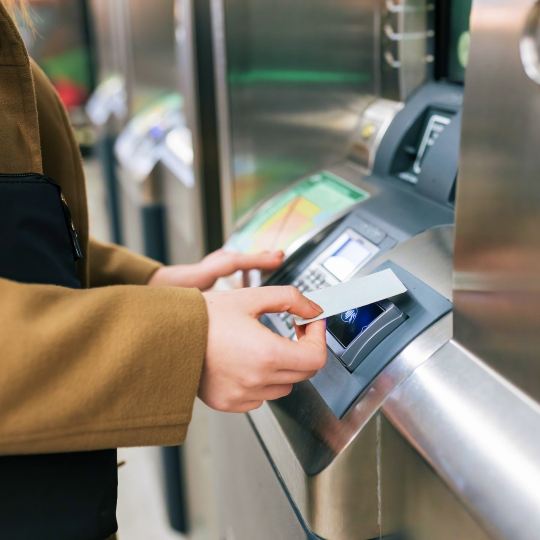
Whether you choose a single ticket (billetes sencillos) or a return ticket (billete de ida y vuelta), you've gotta use them on the day you buy them. Also, the trip outward must be taken within two hours of purchase. Hang onto that ticket until you're completely done with your trip. You'll need it to scan in or to get out through the turnstiles.
Instead of buying at the station, a much more convenient option is to get your tickets from the official Renfe reseller, Trip.com, either on their website or their app. Simply use the Train Finder to select both departure and destination stations, choose the ticket type (one-way or round-trip) and select the number of passengers.
Trip.com is available in several languages (English, Spanish, German, Italian, French and many more) and accepts payments by credit/debit card, PayPal and digital wallets, such as Apple Pay. After completing your purchase, you will receive an e-ticket, which you can either print or store on your mobile device. Scan the QR code to pass through the station’s turnstile or exchange for a paper ticket at a ticket machine.

Cercanías Passes and Multi-Trip Tickets
Frequent Cercanías train travelers might find season tickets or multi-trip passes more cost-effective than day tickets. Cercanías passes are designed for travelers riding the same route several times a week and offer significant savings compared to standard day fares. You can purchase them online via the Trip.com website or app.
Depending on your Cercanías network, a 10-trip pass (a bono de 10 viajes) is valid for travel between two stations or two fare zones, deducting one trip per use. Cercanías passes are valid for one year, offering a 40% savings on standard fares. The 10-trip pass must be validated each time you board the train, just like a standard ticket.
There are also monthly and annual passes (abonos mensuales or abonos anuales) available for unlimited travel on Cercanías networks within the purchased zones for a month or a year. If you use the system every day, these are the most economical options, optimizing your commute with unlimited travel and avoiding the hassle of buying tickets each day.
For larger cities, such as Madrid or Barcelona, these monthly and annual passes are usually integrated into the city’s public transport card. For example, on Cercanías lines in Madrid, you can use the Tarjeta de Transporte Público transport card to combine Cercanías, metro and bus services without the need for separate tickets. In Barcelona, the T-mobilitat card allows pass holders to travel across the local transport networks, making city travel more convenient and cost-effective.
Fare Zones
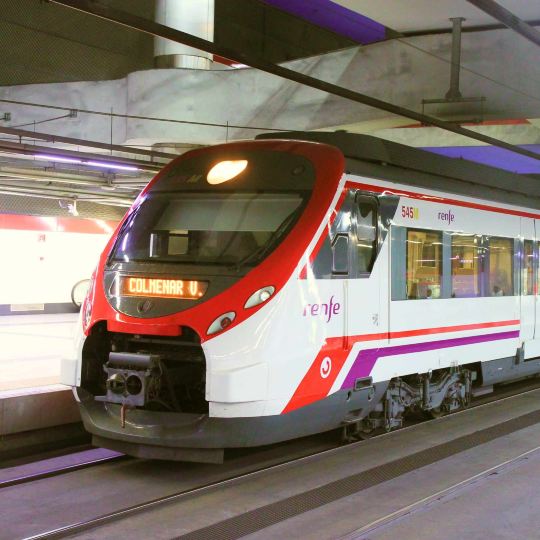
The price of Cercanías train tickets is structured around the number of fare zones you pass through between your departure and arrival stations, rather than the number of stations. Each Cercanías hub is divided into multiple concentric zones, meaning the more zones you travel through, the more your ticket price increases.
In Madrid, for example, there are eight fare zones: six within the Community of Madrid and two in Castilla-La Mancha. In general, each fare zone automatically includes the more central zones, meaning if you buy a Zone B2 pass, you can also travel through Zones A and B1 at no additional cost. The only exception is some interzone passes (B1-B2, B2-B3, B3-C1, and C1-C2), which allow travel only between those two specific zones. So, if you're in Madrid and traveling from Atocha (Zone 0) to Móstoles (Zone B2), you'll cross three zones and the price will be higher than if you travel a shorter distance within the same zone, such as from Atocha to Chamartín, both in Zone 0.
Before you purchase your ticket or pass, it’s worth checking how many zones your journey includes. To do this, you can use the Cercanías map or Trip.com's Train Finder, which automatically calculates the price of your tickets based on the number of fare zones you'll travel through. This way, you can avoid any additional fares or last-minute surprises.
Cercanías Schedules and Frequencies
While traveling with Cercanías trains is a quick, green and affordable alternative to traveling by car, one of the biggest advantages of Cercanías trains is their frequency. On major routes, services run every few minutes during peak hours, while longer or less busy lines typically see trains every 15-30 minutes, or about once an hour on smaller networks. With real-time Cercanías schedules integrated on Trip.com, it’s easy to check the latest times before you travel on the app.
Connections with Other Transport
Cercanías trains are a vital gateway to Spain’s national Renfe network, linking towns and suburbs with major cities and beyond. Many stations double as transport hubs, offering seamless connections to metro, tram, city buses, and even medium and long-distance trains, making it easy to continue your journey wherever you’re headed.
In Madrid, for example, stations such as Atocha, Chamartín, Nuevos Ministerios, and Príncipe Pío connect to several metro lines and numerous city and intercity bus lines. In Barcelona, stations such as Sants, Plaça de Catalunya and Arc de Triomf allow transfers to the metro, the Ferrocarrils de la Generalitat (FGC) railway, and the city bus network. Cities such as Valencia, Seville and Málaga also have interchange stations that facilitate connections between Cercanías trains and other local public transport services.
FAQ about Cercanías Spain
How do I buy Renfe Cercanías tickets?
You can book Cercanías train tickets on the Trip.com website or app, or at ticket machines and ticket offices at Cercanías train stations.
Do I have to validate my ticket before boarding the train?
Yes, you must validate it at the designated machines in the originating station, and keep it for the entire journey until you arrive at your destination.
What are 10-trip passes?
Some Cercanías networks offer multi-trip passes for ten journeys between two specific stations or within specific fare zones. If you’re commuting regularly, they can be a cheaper way to travel, rather than buying individual tickets for each journey.
Can I use a Cercanías pass on the metro or bus?
On most Cercanías networks, monthly or annual passes are integrated into regional transport cards, allowing you to travel on rail, metro and bus networks too.
How often do Cercanías trains run?
Around metropolitan areas, the main lines often run every few minutes during rush hour, with services every 15-30 minutes on smaller lines. On minor networks, trains may run once an hour.
How can I buy tickets on Trip.com?
Just search for your departure and arrival stations in the Train Finder, choose the ticket type, enter the number of passengers, and complete your payment by credit or debit card, PayPal, or digital wallet.
How long is a single ticket valid for?
Cercanías tickets must be used on the day of purchase and within two hours of issue.
Do Cercanías networks offer monthly or annual passes?
Yes. With a monthly or annual pass, you can travel for a month or a year within specific fare zones unlimitedly. If you use the Cercanías lines regularly, monthly or annual passes can be the cheapest option.
How do fare zones work?
The price of your ticket will depend on the number of fare zones you travel through between your departure and arrival station. These are indicated on the Cercanías maps, or you can purchase your ticket through Trip.com, which automatically calculates the correct number of fare zones for your journey.
How do I check the Cercanias timetable?
Open the Trip.com app and tap the "Trains" section on the homepage, then use the "Next fastest trains" feature to search for your itinerary. The station's timetable will be displayed, and these times will include Cercanias train times if applicable.