Things to do in Yuanping
Explore top experiences
Top 10 attractions in Yuanping

Tianya Mountain Scenic Area
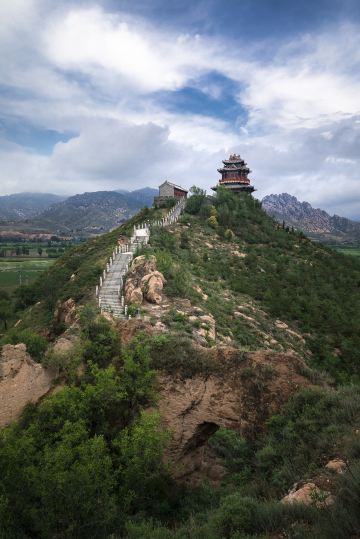
Tianya Mountain Scenic Area northwest foot, there is a wondrous peak, shaped like a lotus, calledLotus Mountain. To the southeast ofLotus Mountainis a unique rock, called the Stone Drum. At the foot ofLotus Mountainlies Shigu Temple, a famous ancient temple in Yuanping City. Shigu Temple faces south, is rectangular in shape, and contains over 20 buildings, all of which are relics from the Ming and Qing dynasties. 100m in front of the cave stands a wooden archway with four pillars and three eaves. In front of the mountain gate are two flagpoles, a pair of stone lions, and bell and drum towers on the left and right. The first courtyard features a passage hall to the north, a stage to the south, and meditation rooms on the left and right. The second courtyard contains the main hall, which has three bays and displays the "Jingzhong Chunxiao" plaque; it is the temple's main structure. Inside the hall are statues of Jie Zitui and his mother. There are four side halls each on the east and west sides. Around Shigu Temple, there are also views such as the Stone Man Waterfall, Hutuo Swallowing, Early Planting and Late Harvesting, and Tianya Snow Sweeping.Yuanping · 8 km from downtown

Huiji Temple
The existing Wenshu Hall at Huiji Temple is a Ming Dynasty building that retains its early architectural style. It also features nine painted sculptures from the Song and Jin dynasties. The main hall of Huiji Temple, a five-bay, single-eaved hip roof building from the Ming Dynasty, features the reduced-column design common to Jin Dynasty wooden structures, creating a vast interior.Yuanping · 10.6 km from downtown


Xinzhou Ancient City
Xinzhou was called Xiurong in ancient times. It is located between Taiyuan and Mount Wutai. It is the seat of Xinzhou Administrative Office and Prefectural Committee. In the Spring and Autumn Period, Xinzhou belonged to Jin State. In the Warring States Period, it belonged to Zhao State. In the Qin and Han Dynasties, it belonged to Taiyuan County, Yanmen County, and Taiping County. In the Sui Dynasty, it was Xinxingdu and Yanmen. During the Tang, Five Dynasties and Song dynasties, it was called Dingxiang Prefecture of Xinzhou. During the Jin, Yuan, Ming and Qing dynasties, it was called Xinzhou, Daizhou and Baodezhou. During the Anti-Japanese War and the War of Liberation, most of the area belonged to Jinchaji, and the area to the west belonged to Jinsui. In 1949, Xinzhou Prefecture was established. The cultural relics and historical sites in Xinzhou City include: Xinzhou North Gate Tower. Located in Xinzhou City, on the Gongchen Gate of the old north city wall. The North Gate Tower was built in the 24th year of Wanli in the Ming Dynasty. The tower is located on the 12-meter-high city wall, which makes it more majestic and magnificent. The city wall stands tall and is painted red on the outside. There is a Voucher doorway below, with a very high top and a bottom width of more than 3 meters.Xinzhou · 37 km from Yuanping

Yanmenguan
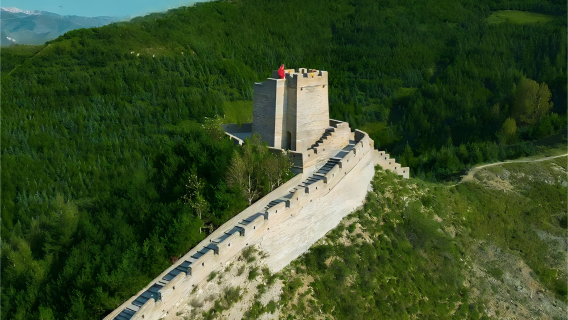
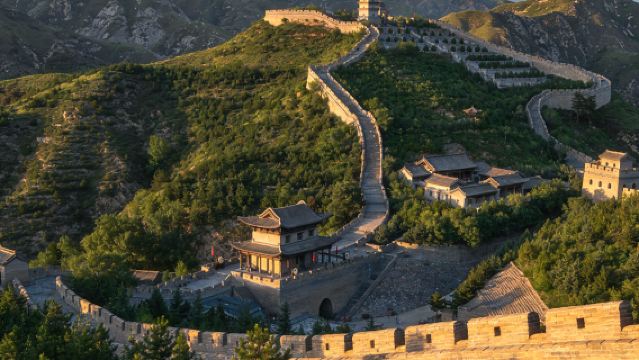
Yanmenguan, located approx. 30 km northwest of Dai County in Xinzhou, is a pass on the inner Great Wall of the Ming Dynasty, andNingwu Pass, together with Pianguan, they are known as the "three outer passes". There is no public transportation from Dai County town to the attraction, so you can only get there by private charter. Inside the attraction, you have to rely entirely on walking.YanmenguanSince ancient times, it has been a crucial pass for the Central Plains dynasties to defend against invasions from northern nomadic tribes. Its earliest history can be traced back to the Warring States period when King Wuling of Zhao fought against the Xiongnu here. Han Dynasty generals Li Guang, Wei Qing, and Huo Qubing once led troops to battle the Xiongnu in this area. During the Northern Song Dynasty,YanmenguanIt became the main battlefield between the Song and Liao dynasties, and the prototype of the well-known story of the Yang family generals took place here. A statue of Yang Liulang stands in the attraction. ExistingYanmenguanIt was built in the seventh year of the Hongwu era of the Ming Dynasty (1374) (with multiple reconstructions in recent years). Currently, there are three gates (east gate, west gate, and small north gate). A wild goose tower stands atop the east gate, and the lintel of the small north gate (i.e., the barbican gate) is inscribed with "Yanmenguan"Three large characters flanked by brick-carved couplets: 'Foremost strategic pass in three frontiers, most revered fortress among nine passes,' both inscribed by the great calligrapher Fu Shan of the late Ming and early Qing dynasties. You can visit the ruins of Ming and Qing military barracks on the hill north of the fortress. To the right outside the west gate areGuan Yu templeOutside the east gate stands the Jingbian Temple, dedicated to Li Mu, a renowned general of the Zhao state during the Warring States period. If you are a fan of the Great Wall, when you visit Yanmenguan, you can walk along the ancient pass trail here. The ancient pass trail in the attraction is built along the local mountain terrain, winding through the peaks. Climbing this section of the trail may be slightly tiring for those who usually work in offices, but when you ascend a peak along the ancient path and gaze at the vast expanse of withered grass outside the pass, quietly feeling the weight of history, you'll find the physical effort well worth it. There are some farmhouse inns near Yanmenguan that can provide food and stay, but most visitors return to Dai County or go to other counties or cities for accommodation. Walking the ancient pass consumes a lot of energy, so you can bring some dry food and drinking water.Dai County · 52.2 km from Yuanping

Yungang Grottoes
Yungang Grottoes Scenic Area is divided into a landscape zone and the grottoes. It is one of the three largest grottoes in China. The sculpture combines Chinese and Western art. Here you can experience the artistic charms of Northern Wei Dynasty. Yungang Grottoes not only embodies traditional Chinese art style but also integrates art styles of ethnic groups from ancient India, countries west of China and China's central plains. It is a famous historical site in Datong City.China · Datong

Jinci Temple Museum
Jinci Temple is located on the banks of the Jin River at the foot of Xuanweng Mountain, 25 km southwest of Taiyuan. It was built by later generations to commemorate Tang Shuyu, the founding feudal lord of the Jin State, and served as the ancestral temple of the Jin State. It is often said that "a visit to Taiyuan is incomplete without seeingJinci Templethe saying "a wasted trip to Taiyuan". After getting off at Jinci Temple, the first place you'll reach isJinci MuseumThis is a free park with a pleasant environment, perfect for casual strolling. After about a 10-minute walk through the park, you'll reach the main area of Jinci. Inside Jinci Museum,Jinci TempleThe "Three Treasures" (Xian Hall, Flying Bridge Across Fish Pond, and Shengmu Hall) and "Three Wonders" (Zhou-bai, Nanlao Spring Pavilion, and painted clay sculptures) are must-sees for every visitor toJinci Templeview that everyone must see. Jinci TempleThe "Three Treasures" are connected and located atJinci Templeon the central axis, allowing for a combined visit. Xian Hall is a place for offering sacrifices, with fence-like walls on all four sides, providing good ventilation and coolness. Notably, not a single iron nail was used in the beams and pillars throughout the hall. The Flying Bridge Across Fish Pond is located in front of Xian Hall and was built during the Song Dynasty. The entire view resembles a modern overpass, making it the only existing example among ancient bridges in China. One end of the "Flying Bridge" connects to Shengmu Hall, which is the earliest existing main building in Jinci Museum. The main hall is spacious, and a major highlight is its beam-and-pillar structure without internal columns. Eight wooden carved coiled dragons, appearing ready to fly, are carved on the eight corridor pillars in front of the hall, which, together with the "Flying Bridge Across Fish Pond," present a magnificent sight. Centered around the Hall of the Holy Mother, it's easy to find the "Three Wonders." The painted clay figurines are located inside the Hall of the Holy Mother, with the main statue of the Holy Mother seated majestically in a wooden shrine, dignified and resplendent, while the other 42 attendant statues stand on either side. These figurines are dressed in vibrant colors with varied expressions, including one maidservant dressed as a flower-dan (young female role in Chinese opera), her face half joyful and half sorrowful, evoking complex emotions in viewers. Master Mei Lanfang once stood before this maidservant statue for a long time, carefully studying her posture and inner emotions, and praised it highly. The Zhou Cypress, located north of the Hall of the Holy Mother, was planted during the Western Zhou Dynasty and is over 3,000 years old. The Pavilion of the Never-Aging Spring stands south of the Hall of the Holy Mother, where the source of the Jin River flows continuously year-round. In addition,Jinci TempleInside, there is also the extremely precious "Jinci Inscription" stele, personally composed and handwritten by Emperor Taizong of Tang, Li Shimin. At the southernmost part, you can find the Shifang Fengsheng Zen Temple, which is said to have originally been the villa of Yuchi Gong, a founding general of the Tang Dynasty. In the northern part of the temple complex, the Futu Courtyard houses the Sheli Shengsheng Pagoda. Climbing the pagoda offers a panoramic view.Jinci TempleThe panoramic view is clearly visible.China · Taiyuan
Yingxian Wooden Pagoda
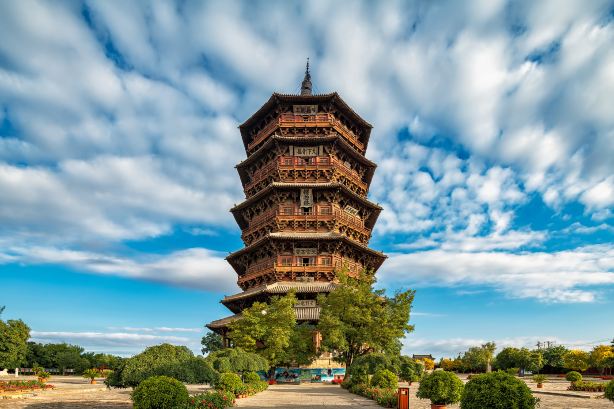
The full name of Yingxian Wooden Tower is Sakyamuni Pagoda of Fogong Temple. It is in the Fogong Temple in the northwest of Yingxian County. The octagonal wooden pagoda has five stories. Except for the high-end stone foundation of the first floor, the rest of the pagoda is made of wood using the traditional craftsmanship of Sunmao. Each layer of the wooden tower is equipped with wind chimes for a pleasant sound when the wind blows.China · Ying County

Xuankong Temple
Xuankong Temple is located between the cliffs of Cuiping Peak in Jinlong Gorge, Hengshan. It was built in the Northern Wei Dynasty and has a history stretching longer than 1,500 years. It is a well-preserved high-altitude wooden cliff building in China. At the foot of Hengshan, from a distance, you can see the Hanging Temple suspended over the mountainside. The entire temple is hung on the steep cliff, skillfully utilizing and building into the concave and convex portions of the cliff, making it exceptionally staggered and yet rhythmic. Visitors walk along the wooden plank road suspended within the temple to feel the magical architectural charm of the Hanging Temple.China · Hunyuan

Pingyao Ancient City
Pingyao Ancient City is approx. 85 km from Taiyuan. The streets, shops, and residences within the ancient city still maintain their traditional layout and appearance, making it one of the best-preserved ancient cities in China. It is also the only ancient county town in China that has successfully been listed as a UNESCO World Heritage Site as an entire city. Pingyao was once the financial center of China during the late Qing Dynasty. Walking through this once-prosperous ancient city, you can feel the essence of Shanxi merchant culture everywhere. The ancient city has six gates in total, with the north gate near Pingyao bus station and the west gate nearPingyao train stationThe south gate and west gate are places with many travelers. Entering the ancient town does not require an admission ticket, but if you want to climb the city wall or visit attractions like the ticket number, you need to purchase a pass for the ancient town. The ancient town is not very large, and walking is enough to explore it all. If you prefer not to walk, you can also take electric bikes. The streets of the entire ancient city are laid out in the shape of the Chinese character "土" (earth). When visiting, you usually enter the city from the West Gate and walk along West Street to Rishengchang Draft Bank, known as the "ancestor of modern Chinese banking". Here you can not only learn about the development history of ancient banking, but also have the old manager in a long robe and mandarin jacket write a draft for you using the early draft method, which is particularly historical. Moving forward is the north-south spanningSouth street, it is the central axis of the ancient city. During the Ming and Qing dynasties,South streetControlling over half of the nation's financial institutions, it was hailed as the "Wall Street of China" in its heyday. Today, it remains a bustling area of the ancient city, known as the Ming-Qing Ancient Street. Most attractions in Pingyao Ancient City are concentrated here, centered around the landmark structure, the Ancient City Tower. Surrounding it are attractions like Xie Tong Qing ticket number (China Banking Museum) and Wei Tai Hou (Ticket number museumAttractions such as Baichuantong, China Escort Museum, Tongxinggong Escort, Weishengchang, China Rare Newspaper Exhibition Hall, and Tianjixiang are available, along with restaurants, musical instrument stores, cafes, and bars. After strolling along the street, you can dine here, buy some souvenirs, and then continue south for more sightseeing. At the Pingyao Ancient City's county government office on the south side of the ancient city, you can see a large number of ancient documents and torture instruments, with daily performances of court sessions; near the Shangdong Gate are the Pingyao Ancient City's Chenghuang Temple andConfucian templeIt is quite grand and meticulously built, with thriving incense offerings where you can burn joss sticks. The Pingyao Ancient City wall is also one of the highlights of the ancient city, being not only majestic but also remarkably well-preserved. Climbing the wall offers a panoramic view of the entire ancient city. Among the gates, the tower of the south gate (Yingxun Gate of Pingyao Ancient City wall) is exquisitely crafted, and this area is close to residential buildings, allowing visitors to observe the daily life of the locals. If time permits, you can walk around the ancient city along the wall to fully appreciate its charm, which takes about an hour. Watching the sunset from the wall in the evening presents a beautiful scene. Besides the ancient town itself, Pingyao has two other major attractions: Zhenguo Temple and Shuanglin Temple. Zhenguo Temple was built without a single nail, with all structures joined by interlocking wooden components. Shuanglin Temple houses over 10 halls containing exquisitely crafted painted sculptures dating from the Yuan to Ming dynasties. It is highly recommended to stay overnight in the ancient town to enjoy its night view. You can also rent a bicycle to explore the small alleys and experience the authentic Pingyao, where the local culture and customs or photography make excellent subjects. Especially during the Chinese New Year, Pingyao is full of festive atmosphere. The town features old courtyards converted into inns, which are usually affordable, with clean and tidy accommodations available for just a few dozen yuan. Additionally, Pingyao is renowned for its beef. In the late Qing Dynasty, Empress Dowager Cixi passed through Pingyao and was so fond of the local beef after tasting it that she designated it as a royal tribute. Shops bearing the name "Guanyun beef" can be seen everywhere in the ancient town, making it hard to distinguish authenticity, and prices are generally high. You may consider buying some outside the town to try or give as gifts to friends and relatives.China · Pingyao County

Dazhao Temple
Ih Juu Temple in downtown Hohhot was built in the 8th year of the Ming Emperor Wanli (1580) by Altan Khan, the leader of the Mongolian Tümed. The temple belongs to the Gelug (or Yellow) School of Tibetan Buddhism. Priceless cultural relics not to be missed on a visit to Ih Juu Temple include a silver statue of the Buddha Sakyamuni, the dragon columns and the colorful wall murals. The pure silver statue of the Buddha Sakyamuni in the temple's main hall weighs 1,500kg. Immediately in front of the Buddha Sakyamuni are two golden dragons entwined around the columns, aptly named the Dragon Columns. Because the murals were painted with mineral-based colors, the colors remain bright and vibrant even today. The murals' content is mostly classical stories from Buddhist scripture.China · Hohhot
Experiences you can't miss in Yuanping
Featured Cultural experiences in Yuanping
View all Cultural experiences
5.0/5
· 1 reviewFree cancellation
Book now for tomorrow
FromINR 565.78

Free cancellation
Book now for today
FromINR 7,072.14
Featured Day tours in Yuanping
View all Day tours
5.0/5
· 1 reviewInstant confirmation
Book now for tomorrow
FromINR 4,902.28

5.0/5
· 1 reviewFree cancellation
Instant confirmation
Book now for tomorrow
FromINR 4,821.92
Free cancellation
Instant confirmation
FromINR 4,821.92
Free cancellation
Instant confirmation
Book now for tomorrow
FromINR 6,364.93

Free cancellation
Instant confirmation
FromINR 11,251.13
Free cancellation
Instant confirmation
FromINR 25,459.69
Free cancellation
Instant confirmation
FromINR 8,372.45
Free things to do in Yuanping
Tianya Mountain Scenic Area
Yuanping · 8 km from downtownHuiji Temple
Yuanping · 10.6 km from downtownXinzhou Ancient City
Xinzhou · 37 km from YuanpingYanmenguan
Dai County · 52.2 km from YuanpingImmediate access, Book now for today, Cancel anytimeYungang Grottoes
China · DatongBook now for tomorrow, Cancel anytimeJinci Temple Museum
China · TaiyuanImmediate access, Book now for today, Cancel anytimeYingxian Wooden Pagoda
China · Ying CountyImmediate access, Book now for today, Cancel anytimeXuankong Temple
China · HunyuanImmediate access, Book now for todayPingyao Ancient City
China · Pingyao CountyImmediate access, Book now for today, Cancel anytimeDazhao Temple
China · HohhotImmediate access, Book now for today, Cancel anytime
What travelers say about Yuanping

一颗柠檬白巧September 2, 2025
5.0
This is my beautiful hometown, not far from the highway exit and a little distance from the city center. Here are my beautiful memories, Lotus Mountain, Bread Mountain, and Wind-blown Stone Drum. When I was a child, it was not as easy to travel as it is now. Tianya Mountain is the tourist destination in our hearts. It can be reached in half an hour by bike from the city. It takes half a day to climb the mountain. After going down the mountain, we can go to Tianya Mountain Hotel to have fried noodles with fried pork or river fish for a night. It is simply delicious.
Tianya Mountain Scenic Area

FjfvOctober 11, 2024
5.0
Huiji Temple was founded in the Tang Dynasty. It has been repaired and expanded in the Song, Jin, Yuan, Ming and Qing dynasties. It has a profound historical heritage. With the filming of the game "Black Myth: Wukong", the popularity of Huiji Temple has been further enhanced. It also has its unique historical culture, architectural art and cultural relics.
In particular, the flesh-and-blood statue of "Aunt Cao" enshrined in the temple adds a mysterious color and unique cultural connotation to Huiji Temple.
It is said that Aunt Cao was kind since childhood. She was overworked to draw water for the construction of the temple and sat down. The monks in the temple built a flesh-and-blood statue for her and worshipped it day and night. This legend reflects people's admiration and gratitude for Aunt Cao, which is actually one of the important factors that attracted me.
Huiji Temple

Anonymous userSeptember 17, 2026
5.0
This is the most spectacular iron flower display I've ever seen! The program was diverse and engaging, the host was witty, the audience interaction was lively, the iron flower workers were incredibly skilled, and the iron flowers were dazzling and colorful – the effect was absolutely stunning! Thumbs up! 👍👍👍
Xinzhou Ancient City

M25***57October 20, 2026
5.0
My favorite attraction—Yanmen Pass—I highly recommend hiring a local guide. Many of the defensive fortifications are difficult to understand on your own, especially the distinctive barbican of Yanmen Pass. Its layout differs from ordinary passes; after a guide explains the defensive logic of "catching a turtle in a jar," the experience of walking inside is completely different.
The most striking impression is how the pass separates two climates. Standing in the fortress and looking towards the inside and outside, the difference in the state of the trees is very obvious. Inside the pass is relatively warm and humid with more lush vegetation; outside, it's windy, cold, and the vegetation is withered. Seeing it with your own eyes, you truly understand why the ancients said Yanmen Pass divides north and south—it wasn't an exaggeration.
The entire scenic area stretches along the mountain ridge. Just looking at the stone tablets can be overwhelming. A guide will connect the historical battles and the changes in the ancient road, explaining the function of each point. To truly understand this first pass of China, a guided tour is essential; I recommend allowing ample time to explore at your own pace.
Yanmenguan

118***82October 21, 2026
5.0
I went with my parents to visit the site. We booked a two-hour guided tour, and our guide, Mr. Bai, was witty and humorous, narrating a thousand-year history in a captivating way. We also encountered the first heavy snowfall of the year, with snowflakes blanketing the ground – the scenery was breathtaking. Of course, the temperature dropped significantly, but Mr. Bai was very professional, never complaining, and continued to lead us on a lively tour. Highly recommended.
Yungang Grottoes

M15***37October 22, 2026
5.0
🏮Jinci Temple Highlights|Three Wonders + Three Treasures + Three Plaques
🔥【Jinci Temple Three Wonders】
1. Song Dynasty Painted Sculptures: The Holy Mother Hall contains 43 sculptures, with the Holy Mother Yi Jiang at the center and 33 attendant statues on either side being the most striking! Each attendant has a different expression, vividly portraying joy, anger, sorrow, and happiness. These are the pinnacle of Song Dynasty sculpture, with most being original Northern Song Dynasty sculptures.
2. Three-Thousand-Year-Old Zhou Cypress: Approximately 3000 years old, this ancient cypress from the Western Zhou Dynasty leans and leans, bearing the weight of a thousand years of wind and rain, exuding a profound sense of history.
3. Nanlao Spring: The source of the Jin River, named after the phrase "May you be blessed with longevity" from the Book of Songs. The spring water flows at a constant temperature year-round, never drying up, and is the soul of Jinci Temple.
🏛️【The Three Treasures of Jinci Temple】
✅Holy Mother Hall: The main hall of Jinci Temple, a classic Song Dynasty wooden structure, ingeniously reducing columns; the hall is constructed entirely of mortise and tenon joints without a single iron nail.
✅Fish Pond Flying Bridge: The only existing cross-shaped ancient bridge in China, spanning a spring, with a unique design.
✅Offering Hall: An ancient Jin Dynasty building, combining pavilion and hall, with openwork lattice walls, used in ancient times to display sacrificial offerings.
✍️【The Three Plaques of Jinci Temple】
The "Nanlao" Plaque (inscribed by Fu Shan), the "Water Mirror Terrace" Plaque, and the "Duiyue" Plaque.
Jinci Temple Museum

小牧无忧October 20, 2026
5.0
⭐⭐⭐⭐⭐ Five-star review! The Yingxian Wooden Pagoda is breathtaking. This thousand-year-old pure wooden mortise and tenon structure from the Liao Dynasty was built without a single iron nail. The brackets are exquisite. It has stood majestically for a thousand years and is a gem of ancient architecture. It is a must-see for any road trip in Shanxi and is well worth a special trip!
Yingxian Wooden Pagoda
Anonymous userOctober 19, 2026
5.0
Every snapshot is a beautiful scene! The park is very well maintained, with picturesque views at every turn and a wonderful atmosphere. The scenery is captivating, offering a high success rate for photos. You don't need to specifically find the right angle; every shot is a beautiful picture, making it a perfect blend of sightseeing and photography.
Xuankong Temple

M65***99October 19, 2026
5.0
It's said that you can enter all 22 attractions. Many of the smaller attractions are quite similar, so if you have time, visit them all; if not, just focus on a few key ones. These include the Prefectural Government Office, Xie Tong Qing, Ri Sheng Chang, Ma Family Courtyard, and the City Gate Tower.
Pingyao Ancient City
_We***68October 19, 2026
5.0
Dazhao Temple and Xilitu Temple have many similarities. You can see some people taking commercial photos, and there are many exquisite Tibetan Buddhist statues and halls. There are also some halls on both sides. For those who are not familiar with it, it is good to learn about Tibetan Buddhism. But don't have too high expectations.
Dazhao Temple


