
Things to do in Yiliang
Explore top experiences
Top 10 attractions in Yiliang


Yangzonghai Tourist Resort
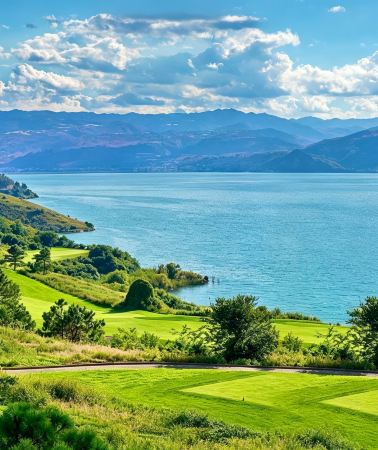
Yangzonghai Tourist Resort is a provincial-level tourist resort, located 35 kilometers away from Kunming-Shilin high-grade highway. Located between Yiliang County, Chenggong County and Chengjiang County, the lake is 1770 meters above sea level. Yangzonghai is the third deep-water freshwater lake in Yunnan. The water quality is clear and transparent. The average water depth is 22 meters, the water area is 31 square kilometers, and the hot spring water temperature is as high as 70 °C. Yangzonghai Resort has a golf course with more than 40 sports events, such as Water World, Water Traction Skydiving, Beach Bathing Beach, Jet Skis, High Speed Boats, Live Ammunition, etc. It is the largest water entertainment facility in Southwest China at present. , The water entertainment resort with rich content.Yiliang · 11.9 km from downtown

Dianchi Lake
Dianchi Lake is also called Kunming Lake. It is the sixth largest freshwater lake in China. It has the nickname of "Sparkling Pearl Embedded in a Highland". The lake is wide and spectacular. Every winter, a large flock of red-billed gulls migrate here from Siberia, making it a good place for bird watching and bird feeding. There are different ways to explore Dianchi lake. You can stroll around the lake, cycle, or ride a boat. You can also climb up to the Dragon Gate overlooking Dianchi Lake to get a better view of the entire lake.Kunming · 47 km from Yiliang

Yunnan Provincial Museum
The Yunnan Provincial Museum is a comprehensive museum showcasing Yunnan's history and ethnic culture, housing over 200,000 cultural relics (sets), with strengths in ancient Dian Kingdom bronzeware, Nanzhao and Dali Kingdom Buddhist statues, and historical calligraphy and paintings. The building itself is distinctive: its reddish-brown exterior is composed of irregular stone prism shapes, resembling a stone forest rising from the ground, making it memorable even before entering the exhibition halls. The permanent exhibition follows a chronological sequence, with six themed halls—"Ancient Yunnan," "Dawn of civilization," "Dominance in southern China," "Land of fragrant Buddhism," "Frontier expansion and defense," and "A century of upheaval"—taking visitors from prehistoric times to the modern era, offering a condensed overview of Yunnan's history. Located in a multi-ethnic border region, the artifacts here differ markedly from those in inland museums: bronzeware depicts vivid scenes of animal combat, rituals, and warfare, while the Dian Kingdom's unique shell containers resemble lidded bronze "piggy banks." The Buddhist statues bear the distinct regional style of the Nanzhao and Dali Kingdoms, warranting closer attention. The museum's crown jewels deserve dedicated viewing time: the Warring States period bronze ox-tiger table, unearthed from the Lijiashan tombs in Jiangchuan, features a small ox hidden beneath a large ox and a fierce tiger biting the ox's tail, earning the saying "In the north, there's the galloping horse treading on a flying swallow; in the south, there's the ox-tiger bronze table." The Dali Kingdom gilded Avalokitesvara statue with silver halo from the Qianxun Pagoda of Chongsheng Temple in Dali has a unique golden form. Other treasures include Song Dynasty Guo Xi's "Travelers among mountains and streams," Yuan Dynasty Huang Gongwang's "Visiting Dai in Shanxi," and the Ming Dynasty gem-inlaid golden crown. After the visit, you can stop by the nearby Guandu ancient town, making it possible to explore both sites in a day.Kunming · 39.2 km from Yiliang

Yiliang 68 Bends
Yiliang · 2.9 km from downtown

Kunming Dounan Flower Market
Dounan Flower Market is located in Chenggong District, Kunming City, where the tide of flowers is like a sea and the fragrance is overflowing. Yunnan is known as the kingdom of animals and plants. It is like spring all year round and has a pleasant climate. It supplies 70-80% of the country's flowers. Everyone who travels to Yunnan hopes to experience the Dounan Flower Market at 25 degrees north latitude. The fragrance of China's flower capital. The first floor of Dounan Flower Market is dried fresh flowers, and the second floor is succulents. The flowers here can be called the price of cabbage. There are ping-pong chrysanthemums, lilies, sunflowers, emperor flowers, violets, baby's breath and other varieties.Kunming · 35.7 km from Yiliang

Guandu Ancient Town
Guandu Ancient Town is an ancient town with a history of over a thousand years and is one of the birthplaces of Dian culture. It is not particularly large in scale, but its historical relics are relatively concentrated. Within its relatively compact neighborhood, you can see architecture and cultural relics left from different periods, including the Tang, Song, Yuan, Ming, and Qing dynasties. The landmark here is the Vajra Pagoda in front of Miaozhan Temple. This sandstone pagoda, built during the Ming Dynasty, along with the surrounding traditional streets and alleys, forms the main view of the ancient town. It also retains many traditional "Yi Ke Yin" style residences. The architecture, temples, streets, and residential living spaces are intertwined, making it not just a place with ancient buildings for tourists to visit, but a place that retains a strong sense of local life.Kunming · 39.1 km from Yiliang

Colorful Yunnan Ancient Dian Resort
The Colorful Yunnan Ancient City is found in Jincheng Town, Jinning County, Kunming City. It faces Dianchi Lake with Liangwang Mountain at back to demonstrate Yunnan's multi-ethnic culture and ancient history and culture. With a clear blue sky and vibrant greenery, you can taste the fresh air and enjoy the beautiful view. You can also take a boat trip down the river, which is a great place for recreation.Kunming · 42.4 km from Yiliang

Kunming Old Street
If there are Kuanzhai Alleys in Chengdu and Xintiandi in Shanghai, then there is Kunming Old Street in Kunming. Kunming Old Street is a rare block project in China that takes the entire block as a unified place name. Among the buildings in Kunming Old Street, the older ones have a history of nearly 900 years. These buildings carry too many memories and stories of the city, and at the same time carry too many childhood joys and current life interests of contemporary people. Guanghua Street, Kunming Old Street, starts from Zhengyi Road in the east and ends at Wuyi Road in the west, with a total length of 435 meters. In today's Guanghua Street, you can eat authentic rice noodles in a small pot, you can find bizarre Yunnan antiques, and you can find a hundred-year-old pharmacy. Guanghua Street embraces the past and present of Kunming with his mottled and simple mind. As early as 1983, Yongdao Street, Kunming Old Street, had an earlier flower and bird market in Kunming. With the passage of time, the iron sheds were built on Yongdao Street, and after the merchants selling flowers, birds, fish and insects made a lot of money, they expanded one after another, and successively formed the Jingxing Jewelry Flower and Bird Market. In addition, these small businesses that represent the characteristics of the urban market even extend to Guanghua Street and Wenming Street.Kunming · 45.6 km from Yiliang

Laoyuhe Wetland Park
Kunming Laoyuhe Wetland Park is located on Huanhu East Road, Dianchi National Tourism Resort, covering a total area of 734.31 hectares. In recent years, with the continuous advancement of the Dianchi Lake ecological restoration project, the Laoyuhe Wetland has become a green barrier for the Dianchi lakeside ecology and a good place for citizens to relax on weekends.Kunming · 39 km from Yiliang

Chengjiang Fossil Site Natural Museum
The Chengjiang Fossil Land Natural Museum is a natural science museum themed around the Cambrian Explosion. Built upon the UNESCO World Heritage Site "Chengjiang Fossil Site," it combines geological relics with scientific research to present visitors with brilliant chapters from Earth's evolutionary history. The Chengjiang Fossil Land Natural Museum showcases the 530-million-year-old Chengjiang biota fossils as its centerpiece. The museum features multiple themed exhibition halls that progressively explore geological formations, fossil specimens, and the evolution of life. Visitors can observe well-preserved ancient fossils like trilobites and Anomalocaris up close, enhanced by dynamic projections and scene reconstructions that bring these ancient marine creatures to life. A specially designed interactive "Tree of Life" installation visually demonstrates species differentiation, making it perfect for families to explore together. Beyond static exhibits, the museum has designed immersive experiences: visitors can transform into "paleontologists" and enjoy simulated fossil excavation with professional tools in the dig zone, or observe intricate details of microfossils through microscopes to experience the rigor and fun of scientific research. The museum building itself also features clever design—its facade draws inspiration from rock strata textures, creating harmony with the surrounding karst landscape. Leaving the exhibition hall, visitors can follow the trail to the fossil site preservation area to discover traces of time in authentic geological formations. The museum is located near Fuxian Lake, where a post-visit lakeside stroll blends the story of ancient life with the breathtaking scenery of blue waters and skies, adding a harmonious blend of nature and culture to your journey. This place is not just a treasure trove of knowledge for science enthusiasts, but also a key for all visitors to unlock the mysteries of Earth's life.Chengjiang · 36.5 km from Yiliang
Experiences you can't miss in Yiliang
Featured Food & drink in Yiliang
View all Food & drink
Free cancellation
Instant confirmation
From€73.77
4.7/5
· 6 reviews· 55 bookedInstant confirmation
Book now for tomorrow
Save €0.64
From€63.25€63.89
5.0/5
· 1 reviewFree cancellation
Instant confirmation
Book now for tomorrow
From€26.42
5.0/5
· 1 reviewInstant confirmation
Book now for tomorrow
Save €0.64
From€63.25€63.89

Free cancellation
Instant confirmation
From€66.44

5.0/5
· 1 reviewFree cancellation
Instant confirmation
Book now for tomorrow
From€14.68


From€16.68
Featured Cultural experiences in Yiliang
View all Cultural experiences
From€189.43
![Mile Dongfengyun Scenic Area + Keyi Town And Ancient Village + Jinping Mountain day tour [Private chartered car + admission ticket]](https://ak-d.tripcdn.com/images/0351p12000ts25vc9B584_C_568_320.jpg?_fr=wc)
Free cancellation
Instant confirmation
Book now for tomorrow
From€58.67
Free cancellation
Instant confirmation
Book now for tomorrow
From€75.35

5.0/5
· 6 reviews· 174 bookedFree cancellation
Instant confirmation
Book now for tomorrow
From€39.42
Free cancellation
Instant confirmation
8% off
Limited-time sale
From€295.80€321.53
![One-day private chartered car tour to Kunming Yunnan Safari Park and Kunming Old Street [Team favorite]](https://ak-d.tripcdn.com/images/0354n12000tt76g6x270D_C_568_320.png?_fr=wc)
Free cancellation
Instant confirmation
Book now for tomorrow
From€96.35
Featured Day tours in Yiliang
View all Day tours
4.9/5
· 697 reviews· 1.9k bookedFree cancellation
Instant confirmation
Book now for tomorrow
97.3% of travelers recommend
From€49.76
4.4/5
· 22 reviews· 223 bookedFree cancellation
Instant confirmation
Book now for tomorrow
69 travelers saved
From€56.43
![[Pure Fun] One-Day Tour to Kunming Stone Forest Scenic Area + Jiuxiang | Optional Private Car with Professional Transfer](https://ak-d.tripcdn.com/images/0353u12000saemqdr8C9B_C_568_320.jpg?_fr=wc)
4.7/5
· 115 reviews· 563 bookedFree cancellation
Instant confirmation
Book now for tomorrow
93.9% of travelers recommend
10% off
Limited-time sale
From€90.04€100.05
5.0/5
· 10 reviews· 39 bookedFree cancellation
Instant confirmation
Book now for tomorrow
11% off
Limited-time sale
From€37.57€42.69
5.0/5
· 4 reviews· 77 bookedFree cancellation
Instant confirmation
Book now for tomorrow
Save €1.32
From€25.21€26.53
![Explore Shilin Stone Forest Scenic Area and Jiuxiang Scenic Area in Kunming, Yunnan, China for one day [Private charter option available]](https://ak-d.tripcdn.com/images/0355w12000sodal1hA875_C_568_320.jpg?_fr=wc)
4.9/5
· 55 reviews· 513 bookedFree cancellation
Instant confirmation
Book now for tomorrow
55 consecutive positive reviews
11% off
Limited-time sale
From€41.09€46.69

4.5/5
· 21 reviews· 143 bookedFree cancellation
Instant confirmation
Book now for tomorrow
Save €0.58
From€57.03€57.61
5.0/5
· 1 reviewFree cancellation
Instant confirmation
From€23.73
Free things to do in Yiliang
Yangzonghai Tourist Resort
Yiliang · 11.9 km from downtownDianchi Lake
Kunming · 47 km from YiliangYunnan Provincial Museum
Kunming · 39.2 km from YiliangYiliang 68 Bends
Yiliang · 2.9 km from downtownKunming Dounan Flower Market
Kunming · 35.7 km from YiliangGuandu Ancient Town
Kunming · 39.1 km from YiliangColorful Yunnan Ancient Dian Resort
Kunming · 42.4 km from YiliangKunming Old Street
Kunming · 45.6 km from YiliangLaoyuhe Wetland Park
Kunming · 39 km from YiliangChengjiang Fossil Site Natural Museum
Chengjiang · 36.5 km from Yiliang
More ways to travel from Yiliang
Private Tours in Yiliang
View More Private Tours in Yiliang




What travelers say about Yiliang

M44***22December 16, 2024
5.0
The trip to Yangzonghai Lake is a great experience. This is a treasured tourist destination. The lake is clear and sparkling under the sun, like a shining plateau pearl. The scenery here is beautiful, accompanied by lakes and mountains, which makes people feel relaxed and happy.
Yangzonghai Tourist Resort

Anonymous userOctober 14, 2026
5.0
Location: Haigeng Park/No. 16 Hubin Road ↔ Xishan Longmen (West Mountain Dragon Gate), not near the old street, you have to go to the Dianchi Lake area.
Experience: Crossing the lake + climbing the mountain, about 20 minutes one way, views of Dianchi Lake, Sleeping Beauty Mountain, and city scenery, great for taking photos.
Ticket Price: One way about 59-60 RMB, round trip about 98-100 RMB.
Advantages: Easy for lazy people to climb West Mountain, no climbing required, unique views; seagulls in winter.
Disadvantages: Stops during strong winds/thunderstorms; long queues during peak season; separate ticket/walking required for Longmen after climbing the mountain; don't confuse with the "Xishan Longmen Cableway".
Conclusion: First time in Kunming, taking the Dianchi-Xishan route → worth it; if just exploring the old street → not worth a special trip.
Dianchi Lake
Anonymous userOctober 15, 2026
5.0
During my visit to the Yunnan Provincial Museum, I was deeply impressed by the rich and diverse history and culture of Yunnan. The museum exhibits a large number of representative historical artifacts, giving me a deeper understanding of the history and culture of this land.
From pottery and stone tools from the early times, to the clothing and utensils of ethnic minorities such as the Mongolians, Yi, and Tibetans, and then to calligraphy, paintings, and ceramics from the Ming and Qing dynasties, each exhibit exudes a profound cultural heritage, making me marvel at the vastness and depth of Chinese culture.
Besides the exhibits, the guide, Ms. Cui, was extremely professional. Highly recommended!
Yunnan Provincial Museum

老老倪August 20, 2021
5.0
Yiliang 68 Turns is located in Xiaopojiao Village, west of Yiliang County, Kunming City, Yunnan Province. It is a winding mountain road from the west of the city to Jing'anshao Village. It was built in 1995. The road is built along the mountain ridge and is winding. There are 68 turns in a short distance of 6.8 kilometers.
}An average of one turn every 93 meters, an average rise and fall of 7 meters per turn, and an average slope of about 8 degrees.
It is the shortest and most winding road in the world and a miracle in the history of world roads. From the air, it looks like 68 continuous Ss. From the foot of the mountain or the top of the mountain, it looks like a winding earthworm. Driving on the 68 Turns Road is like a maze. At present, this place has also become a popular check-in spot for photography and experience.
Yiliang 68 Bends

陌染MMJune 10, 2026
4.0
During a business trip to Kunming, I took a stroll through the city and visited the Dounan Flower Market. This market is very famous, known as "China's No. 1 Flower Town." Located in Chenggong District, the new urban area—essentially a suburban area—on the eastern shore of Dianchi Lake, it has now become Asia's largest cut flower trading market and a renowned flower capital. Over 80% of Yunnan Province's cut flowers, as well as flowers from neighboring provinces and countries, are traded here. It holds a 70% market share in over 80 large and medium-sized cities across China and exports to 46 countries and regions. There's a saying that 7 out of 10 fresh flowers in China originate from Yunnan.
Kunming Dounan Flower Market

M43***18June 5, 2026
5.0
Guandu Ancient Town, nestled southeast of Kunming's main urban area and on the northern shore of Dianchi Lake, is a thousand-year-old town that unfolds like a slowly unfurling historical scroll. It perfectly blends the profound heritage of ancient Dian culture with the vibrant life of its residents, offering every visitor an immersive cultural experience that transcends time.
Strolling through the ancient town, the first thing that catches the eye is the weathered bluestone path, winding and twisting, each stone seemingly etched with the echoes of a thousand years, telling tales of past prosperity and vicissitudes. Along the streets are well-preserved traditional courtyard houses and residences, with their blue tiles, white walls, and flying eaves, retaining the grandeur and order of Central Plains architecture while cleverly incorporating the dynamic elements of the Dian ethnic groups. The exquisite wood carvings and window lattice decorations silently bear witness to the millennia-long convergence and fusion of ancient Dian culture and Central Plains civilization.
As the soul of the ancient town, the Vajra Throne Pagoda (commonly known as the Vajra Pagoda), a national key cultural relic protection unit, is undoubtedly the most eye-catching feature. The Vajra Pagoda, the oldest existing pagoda in my country, is awe-inspiring with its unique architectural style and profound cultural connotations. At each of the four corners of the base stands a small square pagoda, guarding a tall, conical main pagoda in the center. These five pagodas together symbolize the Five Buddhas of the Five Directions in Buddhism. Even more remarkable is that it is not built on solid ground, but ingeniously perched atop a mound of shells several meters thick—a testament to the wisdom of ancient craftsmen, a true "miracle of civilization on a mound of shells." As the sun sets, the silhouette of the pagoda blends with the afterglow, as if one can hear the whispers of history.
Echoing the Vajra Pagoda is the Miaozhan Temple, originally built in the Yuan Dynasty. Within the temple, incense smoke curls, ancient trees reach for the sky, and the East and West Pagodas stand quietly, their Buddhist sculptures combining the solemnity of the Central Plains with the simplicity of Yunnan. Here, you can experience a sense of tranquility and serenity after the hustle and bustle of modern life. The piety of believers, the visits of tourists, and the playful antics of children create a harmonious and symbiotic scene.
Besides the magnificent ancient architecture, the streets and alleys of Guandu Ancient Town are also home to a wealth of intangible cultural heritage and authentic local flavors. Stepping into the Yunzi Chess Academy, you can witness firsthand the craftsmanship of Yunzi Go stones, originating in the Tang Dynasty and hailed as the "gentleman of chess," and touch the warm, jade-like stones, feeling the inheritance of a thousand-year-old art. In the Wutong Zouyin Heritage Hall, artisans' exquisite engraving techniques transform cold copperware into beautiful works of art; the sparks flying are a testament to their craftsmanship.
Of course, a trip to Guandu wouldn't be complete without a culinary feast. The fragrant Guandu Baba is a must-try intangible cultural heritage delicacy. Whether it's the savory sesame filling or the sweet rose bean paste filling, the soft outer layer encases a piping hot filling—one bite is a burst of authentic ancient Yunnan flavor. Another bowl of spicy and tangy rice noodles, or smooth and appetizing pea noodles, paired with a bowl of sweet papaya juice, instantly evokes the simplest and most satisfying happiness of old Kunming residents. These street food stalls are not only a treat for the taste buds, but also the most direct embodiment of the vibrant local life in Guandu.
As night falls, the ancient town transforms. Shops lining the main street are brightly lit, and the lights of the bar street stand out vividly against the night sky, complementing the ancient architecture.
Guandu Ancient Town

M64***81January 11, 2026
5.0
Arriving at this scenic spot, I was awestruck by the magnificent natural scenery before me. Green mountains and clear waters, blue skies and white clouds—it felt like stepping into a beautiful painting. The air was filled with the refreshing fragrance of flowers and grass, invigorating the mind and spirit. Here, you can leave your worries behind and experience the beauty and mystery of nature!
Colorful Yunnan Ancient Dian Resort

135***16September 15, 2026
4.0
Kunming Old Street is a historical and cultural area comprised of over a dozen streets and alleys, including Guanghua Street, Wenming Street, Jingxing Street, and Qianwang Street. Located in the heart of Kunming, it is one of the few remaining century-old streets in the "Spring City." Here, cobblestone streets, Republican-era Western-style buildings, and traditional residences intertwine, carrying nearly 900 years of urban life and atmosphere, making it a perfect spot for a leisurely stroll and photography.
Kunming Old Street
M51***94November 15, 2025
5.0
I came specifically to ride the transparent boats, and after comparing it with Haihong Wetland Park, I chose Laoyuhe Wetland Park. Due to time constraints, I only managed to ride one transparent boat, but the experience was still quite good. Next time, I'd like to allocate more time to explore the park.
Laoyuhe Wetland Park

最美不过蓝天August 2, 2026
4.0
Located in Chengjiang City, Yunnan Province, the museum is a state-owned museum under the cultural relics system. It covers an area of 126,763 square meters, with a building area of 41,999.84 square meters and an exhibition area of 12,000 square meters. The Chengjiang Fossil Site is China's first and Asia's only fossil-related World Heritage Site, and is the core area preserving the Chengjiang biota fossils.
Chengjiang Fossil Site Natural Museum


