
Things to do in Shucheng
Explore top experiences
Top 10 attractions in Shucheng


Sanhe Ancient Town
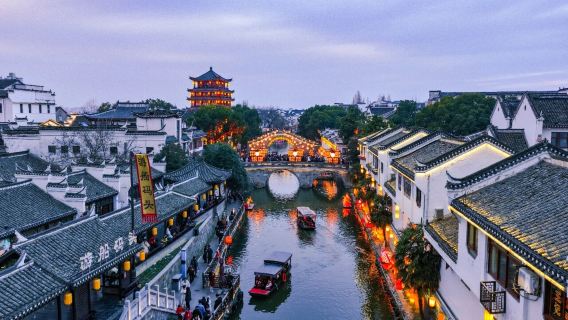
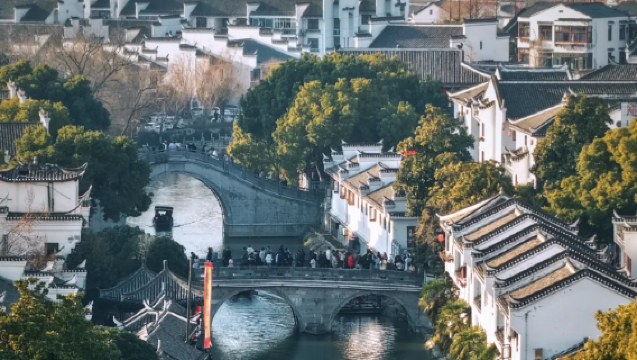
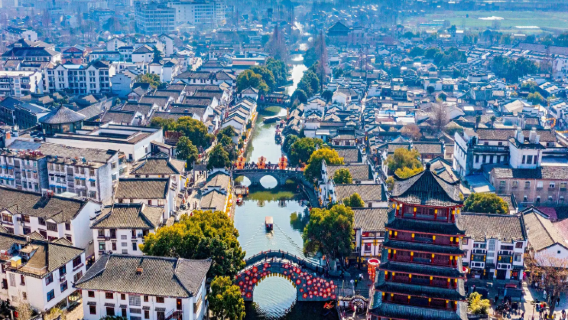
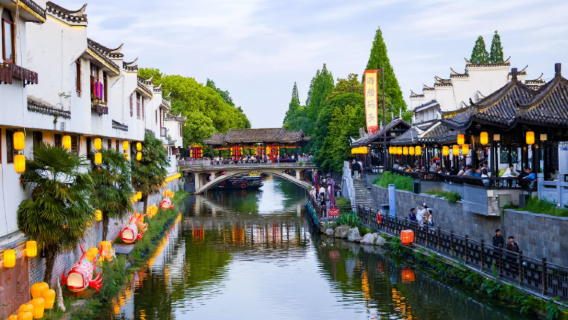
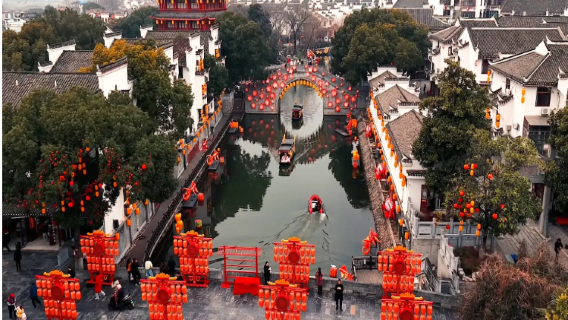
Sanhe Ancient Town is situated at the southern tip of Feixi County in Hefei, where the Fengle River, Hangbu River, and Xiaonan River converge. The town derives its name from these three waterways, with the name "Sanhe" appearing as early as the Ming Dynasty and officially becoming Sanhe Town during the Qing Dynasty. In 1858, Taiping Rebellion generals Chen Yucheng and Li Xiucheng achieved a decisive victory over the Xiang Army here, historically known as the "Great Victory of Sanhe." The triumphal arch at the town entrance, Yingwang Mansion, and ancient city walls still bear witness to this turbulent period. The old bluestone-paved streets stretch along the river, lined with contiguous Huizhou-style residences featuring gray brick walls and soaring horse-head gables, blending water-town alleys with Huizhou-style markets seamlessly. Most tours begin at Sanxian Bridge in the town center. To its northwest stands the seven-story Guocui Tower, offering panoramic views of the town and displaying Huizhou artifacts like sedan chairs, inscribed tablets, carved beds, and stone carvings. Nearby, the Dafu Mansion (Sanhe Folk Museum) recreates an official residence's hall with exquisite wood carvings, including an oversized abacus over one meter long. Northeast of the bridge, Xiangu Tower is a Huizhou-style temple funded by merchants including the owner of the time-honored pastry shop "Zhonghexiang." Heading north along the east bank of Xiaonan River leads to ancient West Street, paved with bluestones and once bustling with shops—Liutongxinglongzhuang still maintains its original commercial layout. South along the west bank brings you to Quezhu Covered Bridge, named after Sanhe's ancient moniker "Quezhu," featuring a two-tiered eaves corridor with "beauty's seat" railings perfect for resting and enjoying the waterfront. The southern area around Old South Street and Wannian Street clusters notable former residences, including those of physicist Chen-Ning Yang, general Sun Liren, and Helu. During the Anti-Japanese War, young Chen-Ning Yang sheltered here with his family. Nearby, the famous "One-Person Alley" narrows to barely accommodate a single visitor, making it a popular photo spot. Further south stand Wannian Temple, Chenghuang Temple, and the historic Wannian Stage—Sanhe being the birthplace of Lu Opera, whose authentic melodies often grace the stage during festivals. Local snacks concentrate near Sanxian Bridge: freshly fried Sanhe rice dumplings with crispy shells, shrimp paste, crispy duck, and various river delicacies represent regional cuisine, while tea-flavored dried tofu makes for perfect street-side nibbling. Rice wine and feather fans serve as portable souvenirs. In 2026, Sanhe became a key filming location for CCTV's Spring Festival Gala Hefei segment, with its night scenes of a thousand fish lanterns captivating nationwide audiences.Feixi · 28.6 km from Shucheng

Anhui Museum (New Building)
The Anhui Provincial Museum (new building), located in Hefei, opened in 2011 and is the main museum area. The building itself is a highlight: its architectural design draws inspiration from the traditional Hui-style residences, featuring interconnected buildings with white walls and black tiles that enclose a central courtyard, covering an area of over 40,000 square meters. The museum houses over 200,000 artifacts, with Shang and Zhou bronzes, Han dynasty stone carvings, Song and Yuan dynasty gold and silver wares, the Four Treasures of the Study (writing brush, ink stick, inkstone, and paper), and Hui-style carvings being its most distinctive features. The permanent exhibition, "Anhui Civilization History Exhibition," traces the history from prehistoric jade artifacts of Lingjiatan to the Ming and Qing dynasties, with its popularity concentrated on several important bronze artifacts: the Zhuke Ding (also known as the Chu Ding), unearthed from the tomb of King You of Chu in Shouxian County, is astonishing in size, with a twelve-character inscription engraved on its rim, named after the first two characters "Zhuke" (铸客). The characters "Anbang" (安邦) are also cast on its front legs and underside. The Ejun Qijin Jie (鄂君启金节), a tax-free confirmation voucher for vehicle and ship transportation issued by the King of Chu, resembles a split bamboo section. The five round pillars of the Western Zhou cloud-patterned bronze five-column vessel stand equidistantly on a square base; their purpose remains undetermined, but their resemblance to a router often brings a knowing smile to visitors' faces. The special exhibitions are also worth spending time on. The "Ancient Architecture of Huizhou" exhibition hall showcases the beauty of Huizhou architecture through water features, ancestral halls, memorial archways, and wood, stone, and brick carvings. At its heart is the Feng Renjing Residence, a Qing Dynasty house relocated from Shexian County and rebuilt exactly as it was. With a central courtyard and a "回" (hui) shaped floor plan, visitors can walk into the courtyard and look up to see how the water from the four slopes flows into it. The "Four Treasures of the Study" exhibition brings together Xuan paper, Huizhou ink, Xuan brushes, and She inkstones. The "Treasures of Jianghuai" exhibition is small yet exquisite; a Southern Song Dynasty gold-rimmed agate bowl with a warm, translucent luster, and a Yuan Dynasty lacquer box with carved cloud patterns bearing an inscription on the bottom, demonstrate the exquisite craftsmanship even to those unfamiliar with antiques. The adjacent Anhui Provincial Geological Museum is a good option to visit on the same day. It is recommended to set aside half a day: first see the bronze artifacts in the "Anhui Civilization History Exhibition", and then visit the "Ancient Architecture of Huizhou", "Anhui Stationery", and "Treasures of Jianghuai" in that order; if time is limited, prioritize the first two exhibition halls. Don't just take photos at the entrance of Feng Renjing's residence; you can only truly appreciate it by walking into the courtyard.Hefei · 45.8 km from Shucheng

Xiaoyaojin Park
Xiaoyaojin Park is located in the northeast corner of Hefei's old city. In ancient times, it was a ferry crossing on the Feishui River, from which the park derived its name. During the Three Kingdoms period, Wei general Zhang Liao achieved a famous victory against overwhelming odds here, defeating Sun Quan's army. The historic event "Zhang Liao's awe-inspiring reputation at Xiaoyaojin" occurred in these waters, making it one of the few remaining Three Kingdoms battlefield sites in Hefei's old city. During the Ming and Qing dynasties, the site served as private gardens for the Dou, Wang, and Gong families. The Quzhuang villa built in the late Qing Dynasty was commonly known as "Gong family garden." After being converted into a public park in 1952, it has carried the urban memories of generations of Hefei residents. The park is naturally divided into east and west gardens by its water system, with eight signature scenic spots like Xiaoyao ancient ferry, awe-inspiring east of the Yangtze, pavilion lake fall moon, and Wei-Wu historical relics after comprehensive upgrades. Entering through the south gate archway, visitors see the plaque "Xiaoyaojin Park" inscribed by Lu Runxiang, a Qing dynasty top scholar. Walking along the bluestone-paved Xiaoyao avenue, the statue of Zhang Liao on horseback wielding a sword stands prominently. Feiqi bridge is said to be where Sun Quan leapt to safety on horseback, while a replica Eastern Wu warship docks by Xiaoyao lake. The east garden excels with water features—islets dot the lake, with Xiaoyao villa and Zhang Liao's cenotaph hidden among island trees. Ascending Xiaoyao pavilion offers panoramic views, and painted pleasure boats at the cruise dock provide lake tours. Quzhuang's open-air stage regularly hosts traditional opera performances like Huangmei, Luzhou, and Peking opera, where tea-sipping audiences enjoy nostalgic charm. Play facilities including the elephant slide and ferris wheel cluster in the southeast corner, ideal for family half-day outings. The west garden features botanical landscapes, with plum blossom hill, peony garden, and azalea garden taking turns to shine through the seasons. The secluded Zangyou garden displays exquisite bonsai cultivated by generations of gardeners, while the adjacent tropical rainforest hall thrives with lush greenery. The Wei-Wu historical relics area—including Zhang Liao's tomb complex, the Three Kingdoms Hefei history and culture museum, and Jian'an culture museum—appeals to travelers interested in Three Kingdoms history. The ancient-style scenery around Feiqi bridge, Xiaoyao pavilion, and classical corridors offers perfect hanfu photography backdrops.Hefei · 55.9 km from Shucheng

Hubei Provincial Museum
The Hubei Museum is composed of three antique buildings, including a comprehensive exhibition hall, a Chu Culture Hall, and a bell museum. The layout reflects the ancient Chu architectural concept of "One Hall" and "Multiple Stations". The Hubei Museum boasts four treasures: the Zeng Houyi Chime Bells unearthed in the Tomb of Marquis Yi of Zeng; the exquisite workmanship of the cold weapon era, the King of Yue's Sword of Goujian, the 1 million year-old Xunxian Man Skull Fossil, and the White and Blue Porcelain Plum Vase.China · Wuhan

Qingchuan Pavilion
Qingchuan Pavilion is located on Hanyang's Tortoise Mountain and faces the Yangtze River, across the river from the Yellow Crane Tower. Qingchuan Pavilion was built in the Ming Dynasty and was named after the Tang Dynasty poet Cui Wei. The pavilion as it exists today was rebuilt in the 1980s according to historical photos. The scenic area consists of three main buildings: Qingchuan Pavilion, Wuhan Dayu's Palace, and Tiemenguan. There are also a number of other attractions such as various stone tablets and monuments, decorated archways, and cloisters, all rich in classical Chinese charm. It is very pleasant to climb up to the pavilion, feel the wind from the river, and enjoy the view of the river. The classical architecture and the greenery here complement each other perfectly, and the beautiful scenery has caused this to become a popular spot for wedding pictures in Wuhan.China · Wuhan

Former Residence of Li Hongzhang
Li Hongzhang Memorial Residence is located in the middle of the bustling Huaihe Pedestrian Street in Hefei City. It was a typical residential building in the Jianghuai area during the late Qing Dynasty. Li Hongzhang was born in Hefei. He served as a high ranking official in the late Qing army and was the leader of the Self-Strengthening Movement. His five brothers also served in high positions. Although at that time Li's residence occupied half the street, only a few rooms are left now. However, you can still enjoy the exquisite wood carvings, visit the exhibition hall about Li Hongzhang, and learn about his controversial life.Hefei · 55.3 km from Shucheng

Jingdezhen China Ceramics Museum
The Jingdezhen Ceramics Museum is a large-scale ceramics special art museum. The contents of the exhibition are divided into “history department”, “new China department” and special exhibition hall. The Jingdezhen Ceramics Museum exhibits five generations of celadon, the Qing Dynasty white porcelain of the Song Dynasty, and the blue and white porcelain of the Ming Dynasty. Not only can you appreciate the fine porcelain, but you can also learn about porcelain. It is a good place for a relaxing holiday.China · Jingdezhen

Nanjing Museum
Nanjing Museum is located at the southern foot of Purple Mountain and north of Zhongshan Gate. The museum is one of the earliest to be established in China. Here, you can see ancient artifacts like gold-threaded robes such as those depicted in “Grave Robbers' Chronicles” and you can enjoy exquisite painting and calligraphy and Ming treasures such as a gold-plated stupa. You can take a trip through time and even walk along the streets of the Warlord Era.China · Nanjing

Huizhou Ancient City
The ancient city of Huizhou is located in Shexian County.LianjiangNorth Bank, originally built in the Qin Dynasty, became the seat of the ancient Huizhou Prefecture after the Tang Dynasty. Tang Xianzu's line, "My life's most cherished dream, yet I never dreamt of Huizhou," has captivated countless hearts. The city gates, archways, and the unique prefectural government offices still allow visitors to experience the ancient charm.Huizhou PrefectureThe legacy of the past. There are several roads leading into the ancient city, and it doesn't really matter which road you choose. The ancient city isn't very big; you can visit all the main attractions by walking around. It's near Renhe Tower in the north.Huiyuan GardenTicket offices are available at both the Nanqiao Tower and the Duojingyuan visitors Center outside the southern barbican. Among the several city gates of Huizhou Ancient City, the Nanqiao Tower is quite unique, with 13 pairs of pillars forming the gate frame, arranged in a row inside the gate opening to support the tower. It is said that this "row of pillars" is the authentic city gate style of the Northern Song Dynasty. The Xu Guo Stone Archway, located inside the East Watchtower (Yanghe Gate), is the essence of the entire ancient city, built in the twelfth year of the Wanli reign of the Ming Dynasty (1584 AD). The archway has eight pillars, with a cross-section shaped like the Chinese character "口" (kou), creating a three-dimensional structure. Both the four exterior and four interior sides can be viewed. Twelve stone lions guard the base of the pillars, and the upper part features exquisite stone carvings. Currently, this is the only ancient archway of its kind, highlighting the distinguished status of its owner, Xu Guo, a veteran of three reigns. Many attractions in the ancient city radiate from the Xu Guo Stone Archway. To the west, you can visit the Huizhou Prefectural Government Office, a modern reconstruction modeled after the Ming Dynasty government office; to the east, you can visit the memorial hall of Tao Xingzhi, a native of Shexian County; and to the north, you can visit...Huiyuan Garden,butHuiyuan GardenThe area is filled with antique-style buildings. Doushan Street, located in the northeast of the ancient city, brings together Hui-style ancient residences, archways, and ancient wells. Strolling along the ancient street paved with bluestone slabs and cobblestones is a truly delightful experience. Leaving the ancient city from the barbican, cross the "Taiping Bridge," a stone bridge built during the Hongzhi era of the Ming Dynasty, and you will arrive at...LianjiangSouth bank, here isTaibai TowerHe Xin'an Stele Garden.Taibai TowerBuilt to commemorate Li Bai, the Xin'an Stele Garden houses the Ming Dynasty calligraphic works *Yu Qingzhai Tie* and *Qingjiantang Tie*, which are worth visiting for calligraphy visitors. Along...LianjiangHeading east, the Changqing Temple Pagoda, built in the second year of the Xuanhe era of the Northern Song Dynasty (1119 AD), is rarely visited. However, it offers a truly unexpected surprise to visitors who get close: each layer of the outer pagoda has colorful murals, which have become blurred over the years and cannot be seen from a distance. The last attraction, Yuliang Scenic attraction, is located 2 kilometers east of the ancient city. The entrance is at...LianjiangThe north bank is the only way to get back to the north bank after visiting Changqing Temple Pagoda; if you're coming from the south bank, you'll need to cross Taiping Bridge again.Yuliang DamYou have to go around to Ziyang Bridge to cross the river. The main attractions of Yuliang attraction areLianjiangMing DynastyYuliang DamWhether or not you can walk up to the dam depends on...LianjiangThe water level is high; if it floods the ancient dam, it becomes impossible to climb it. When you reach the dam, remember to look for the small stone slabs, called "ingot locks," embedded horizontally between the long stone slabs; these help stabilize the dam. Also, look for the sluice gate in the center of the dam for drainage. If you'd like to take a ride on one of the locals' small boats along the shore...LianjiangThe price is negotiable. Residents still live on Yuliang Old Street on the north bank, and as always, they hang their bedsheets to dry in front of the ancient buildings; time seems to stand still here. The ancient city is lit up at night, offering stunning night views. (The text abruptly shifts to a description of the ancient city.)Tao Xingzhi Memorial HallThe nearby Shexian Jiuyue Huizhou Inn (Huizhou Ancient City Branch) offers accommodation, and there are more options outside the ancient city. Restaurants are concentrated in...Huiyuan GardenIn addition, local specialties include Huizhou Yipin Guo (a type of hot pot), a large pot layered with chicken, duck, meat, and fried tofu, garnished with egg dumplings, which is very tempting. Other dishes worth trying include hairy tofu and stinky mandarin fish. If you come across a vendor selling preserved vegetable pancakes, you can buy some to eat while you stroll around; they are very delicious.China · She County

Nanjing Confucius Temple
The Confucius Temple was originally built in the Song Dynasty to commemorate Confucius. It is located beside Gongyuan Street on the north bank of Qinhuai River. However the temple was destroyed and rebuilt several times. The current temple was rebuilt in 1987 after it was destroyed by Japanese Aggressors during WWII. Currently, the temple is the main scenic spot of the Qinhuai River Scenery. It also includes the China Imperial Examination Museum and Xue Gong (The Imperial Academy). At the Confucius Temple, you can admire a 6 meter high huge portrait of Confucius and 38 mural paintings reflecting the life story of Confucius.China · Nanjing
Experiences you can't miss in Shucheng
Featured Day tours in Shucheng
View all Day tours
Free cancellation
Book now for tomorrow
FromPLN 348.71
Featured Cultural experiences in Shucheng
View all Cultural experiences![[Jin Gao's Guide Services] Lu'an City Guide for urgent bookings, in-depth live guide services around Jinzhai, Huoshan, Dabie Mountains, and Tian Tang Zhai areas](https://ak-d.tripcdn.com/images/0352312000kwz9uhz0DF6_C_568_320.jpg?_fr=wc)
FromPLN 860.15
FromPLN 990.65
FromPLN 924.61
FromPLN 990.65
Free things to do in Shucheng
Sanhe Ancient Town
Feixi · 28.6 km from ShuchengAnhui Museum (New Building)
Hefei · 45.8 km from ShuchengXiaoyaojin Park
Hefei · 55.9 km from ShuchengHubei Provincial Museum
China · WuhanImmediate access, Book now for today, Cancel anytimeQingchuan Pavilion
China · WuhanImmediate access, Book now for today, Cancel anytimeFormer Residence of Li Hongzhang
Hefei · 55.3 km from ShuchengPre-sellingJingdezhen China Ceramics Museum
China · JingdezhenNanjing Museum
China · NanjingHuizhou Ancient City
China · She CountyNanjing Confucius Temple
China · NanjingImmediate access, Book now for today, Cancel anytime
What travelers say about Shucheng

爱旅行的溪姐October 7, 2026
5.0
Sanhe Ancient Town is a free ancient town near Hefei that's well worth visiting. With its charming canals, ancient streets, and alleys, it exudes a captivating atmosphere. You can stroll along the cobblestone paths, visit historical residences, and sample local delicacies such as rice dumplings, rice wine, and dried tea. It's not overly commercialized, making for a relaxed and enjoyable experience. Overall, it offers great value for money and is perfect for a short trip to experience the charm of a Jianghuai water town.
Sanhe Ancient Town

娜娜家小公主September 13, 2026
5.0
The new Anhui Provincial Museum features a Hui-style "four waters returning to the hall" design, exuding grandeur and tranquility. Admission is free, but remember to make a reservation in advance. The exhibition halls unfold along a historical timeline, from the Lingjiatan Jade Pig and the Zhuke Ding (a large bronze vessel), to the Wu King Guangjian (a bronze mirror) and Hui-style brick carvings, each artifact connecting five thousand years of civilization in the Jianghuai region. The Chu Ding (a large bronze vessel) is particularly impressive. The guide, Liu Ruya, provides a patient and humorous explanation, enhancing the visit.
Anhui Museum (New Building)

iAndyChinaApril 6, 2026
4.0
Very nice place at day and at night nice park and entertainment quite places and tea houses for families and singles
Xiaoyaojin Park

大土豆一颗October 4, 2026
5.0
The exhibited artifacts were quite good; I've also been to joint exhibitions organized by museums like the Hunan Provincial Museum. The Kremlin artifacts here are well-prepared and thoughtfully designed. However, the souvenir and merchandise section was rather boring. I was thinking of buying a pendant or something, but that saved me some money.
Hubei Provincial Museum

沅大王September 30, 2026
5.0
The scenic area is filled with the fragrance of osmanthus blossoms. From the top, you can enjoy panoramic views of the Yangtze River Bridge and the Yellow Crane Tower. At the very top, watching the ships on the Yangtze and the cars and trains on the bridge, with the breeze blowing, is very pleasant, and it's not too crowded. The scenic area isn't large; a leisurely hour is about right to appreciate the scenery.
Qingchuan Pavilion and Guishan Scenic Area are directly connected by the Iron Gate Pass, which leads to the West Gate of Guishan. Climbing the mountain and enjoying the breeze and osmanthus fragrance is a wonderful experience.
Qingchuan Pavilion

M34***87October 6, 2026
5.0
The attraction is small, mainly introducing Li Hongzhang's life: his early studies, his business ventures in middle age, and his later involvement in Westernization. The main building is the Li family residence, which features many photo exhibitions, offering insights into the life of this prominent figure in the late Qing Dynasty. Located on Huaihe Road Pedestrian Street, it's a great place to stroll along the street. Nearby attractions include Xiaoyaojin Park and Bao Gong Temple.
Former Residence of Li Hongzhang

Dina娜儿October 3, 2026
5.0
Taking kids to a museum definitely requires a guided tour! Luckily, we met a great guide – Ms. Yuan! Her explanations were very detailed, and we listened attentively. We bought many souvenirs. The chicken cup is a must-buy! The museum architecture is also stunning – highly recommended!
Jingdezhen China Ceramics Museum

Anonymous userOctober 16, 2026
5.0
We were very fortunate that our top guide today was Ms. Dong Ling. Her professional expertise was solid; she didn't just recite from memory. She eloquently explained the stories and archaeological backgrounds behind each of the museum's treasures, making dry history vivid and easy to understand. My son and I deeply experienced the thousand-year history of Nanjing. Highly recommended!
Nanjing Museum

田园生香菜August 14, 2026
5.0
The Huizhou Prefectural Government Office truly lives up to its reputation as the core government office of ancient Huizhou. Restored to its original site according to Ming Dynasty regulations, its central axis layout is orderly and solemn, with the ceremonial gate, main hall, and second hall unfolding in sequence, showcasing the grandeur of an ancient government office. The exquisite Hui-style wooden structure and intricate carvings add to its charm. Visitors can also watch live court performances, gaining a direct experience of the ancient government office system. The office exudes a rich historical atmosphere, making it more than just a place for taking photos; it's a perfect opportunity to quietly appreciate the cultural heritage of Huizhou and a must-see cultural highlight in the ancient city of Huizhou.
Huizhou Ancient City

青水月September 19, 2026
4.0
The Confucius Temple and Jiangnan Examination Hall along the Qinhuai River in Nanjing offer stunning nighttime views. A stroll through them in the gentle autumn breeze is incredibly pleasant. There are free performances and some attractions that charge admission, so you can choose what to do. In short, anyone visiting Nanjing should definitely check them out.
Nanjing Confucius Temple


