Things to do in Qingxu
Explore top experiences
Top 10 attractions in Qingxu


Taiyuan Ancient County
The ancient county seat of Taiyuan is located in Jinyuan District, covering an area of about 0.8 square kilometers. There are many relics of historical buildings in the city, the pattern of cross streets is clear, and the texture of streets and alleys is perfect. It follows the ancient architectural pattern of Jinyang ancient city "Phoenix Flying in the City", just like a phoenix with its head north and tail south. It has the reputation of "Phoenix City" since ancient times. It is the continuation of the 2500-year-old Jinyang ancient city. There are 79 existing cultural relics buildings in the city, and 49 historical buildings listed for protection by the Taiyuan Municipal Government. Among them, the Confucian Temple is listed as a national key cultural relics protection unit.Taiyuan · 17.4 km from Qingxu

Jinci Scenic
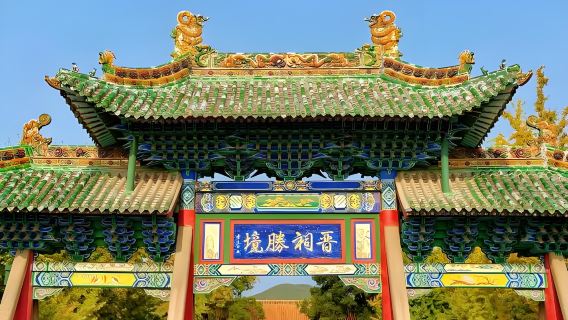
Jinci Scenic is a comprehensive tourist attraction that blends history, culture, and natural beauty, located in Jinyuan District, Taiyuan City, Shanxi Province, at the source of the Jin River, originally namedJinci Templeis an outstanding representative of ancient Chinese garden architecture. Jinci Scenic is not only the earliest existing imperial sacrificial garden in China, but also tangible evidence of Jin culture's lineage tracing back to the Western Zhou Dynasty's establishment of the Tang State and Jin State, continuing through the cultural heritage of the Tang Dynasty's golden age. As a comprehensive embodiment of Shanxi's historical legacy, Jinci Scenic attracts numerous visitors with its exquisite architecture, rich cultural heritage, and beautiful natural surroundings. Jinci ScenicThe site boasts abundant cultural relics, featuring over 100 structures from the Song, Yuan, Ming, and Qing dynasties including halls, pavilions, towers, bridges, and terraces. Among these, the Xian Hall, Flying Bridge Across Fish Pond, and Shengmu Hall are revered as Jinci's "Three National Treasure Buildings," while Nanlao Spring, the colored sculptures of maidservants, and Zhou-bai cypress are celebrated as the "Three Wonders of Jinci." The Shengmu Hall is...Jinci ScenicOne of the core structures, renowned for its unique architecture and exquisite carvings. The hall enshrines a statue of Zhou Bai, surrounded by intricate murals and carvings that showcase the masterful craftsmanship of ancient art. The Flying Bridge over Fish Pond isJinci ScenicAnother iconic structure, the bridge is ingeniously designed to appear as if floating on water, showcasing the wisdom of ancient architects. Jinci Scenic is renowned not only for its architecture but also for its abundant natural views. The attraction boasts 96 ancient and famous trees, including 30 that are over a thousand years old. Towering ancient trees and murmuring springs create a tranquil natural environment. Visitors can stroll along shaded paths, admire the ever-changing seasonal beauty, and experience nature's harmony. Additionally, Jinci Scenic offers a variety of cultural experiences, such as traditional etiquette demonstrations and ancient music performances, allowing visitors to immerse themselves in the profound history and cultural charm during their visit. Whether you're a history enthusiast, cultural explorer, or a traveler seeking tranquility, Jinci Scenic provides a peaceful retreat for every visitor.Taiyuan · 13.4 km from Qingxu

Shanxi Museum
"Five thousand years of history can be seen in Shanxi." Located on Binhe West Road in Taiyuan, the Shanxi Museum showcases the essence of Shanxi's cultural relics. The museum consists of a main building and four corner annexes, with the main building resembling both a dipper and a ding vessel, serving as the primary venue for travelers to view the collection. The main building has four floors. The first-floor lobby features a general service desk, while the second and third floors host thematic exhibitions on history and culture. The fourth floor showcases art-themed exhibitions, which together form the permanent displays of the Shanxi Museum. After entering the first-floor lobby, proceed to the second floor via the stairs to begin the historical journey themed "Soul of Jin." The cultural and historical thematic exhibition showcases the highlights of Shanxi's five-thousand-year civilization through numerous precious artifacts, ranging from ancient human relics to the rise and fall of Shanxi merchants during the Ming and Qing dynasties over five centuries. During your visit, several exquisite artifacts are not to be missed. The bird zun, a bronze ritual vessel from the Western Zhou period, was used in the ancestral temple sacrifices of the Jin marquis. The bird zun features an exquisitely crafted design with a phoenix as its main form. On the phoenix's back rests a small bird, serving as the handle for the vessel's lid. At the tail of the phoenix, an elephant is depicted, with its long trunk perfectly balancing the phoenix's two legs to form a stable tripod base. This artifact is a representative piece among the bronze collections in the museum. In addition, you can also admire: the Houma covenant texts, which are oath documents from the Spring and Autumn period used by the ministers of the Jin state; the lacquered wooden panel paintings, a painted screen from the Northern Wei dynasty depicting colorful stories from the "Biographies of Exemplary Women"; the white marble sarcophagus, a relic from the Sui dynasty, belonging to a tomb occupant who was a member of the Central Asian Yu people, with intricate carvings both inside and outside the sarcophagus, featuring figures with deep-set eyes, high noses, and black hair, characteristic of the Mediterranean Caucasian race. In the cultural thematic exhibition, you can also learn about the origins and development of Buddhism and traditional opera in Shanxi. The fourth floor of the main hall features an art thematic exhibition area. Among them, the "Timber and earth splendor" - ancient architectural art thematic exhibition showcases Shanxi's status as a province rich in cultural relics and ancient structures. "For above-ground relics, look to Shanxi" - Shanxi is renowned as the "treasure trove of ancient Chinese architecture," boasting over half of China's above-ground ancient structures with comprehensive categories, especially in the quantity of religious buildings. If you're a fan of ancient architecture, this is a must-visit. The Shanxi Museum also hosts temporary exhibitions periodically. At the first-floor lobby service desk, services such as hiring on-site guides (Chinese and English) and renting audio guides are available. The main building also houses a restaurant and a tea house for visitors.Taiyuan · 32.5 km from Qingxu

Donghu Vinegar Garden
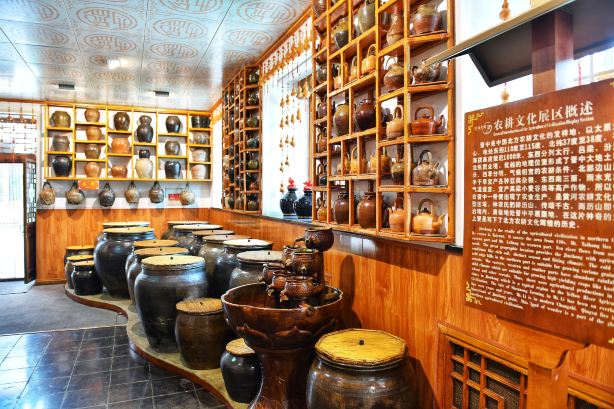
Explore Donghu Vinegar Garden and discover the history of vinegar brewing in Shanxi. As a national AAAA-level tourist attraction, a national industrial tourism demonstration base, and a provincial research and practice education demonstration base for primary and secondary schools, Donghu Vinegar Garden covers a total construction area of approximately 16,667 square meters. Rooted in Shanxi's long-standing Yellow River farming culture, it preserves and innovates the history of the "Meiheju" vinegar workshop founded during the Hongwu period of the Ming Dynasty, the national intangible cultural heritage "Meiheju" aged vinegar brewing technique, and Shanxi's vinegar history and culture. Based on the ancient brewing process of "steaming, fermenting, smoking, filtering, and aging," it truly embodies "inheriting traditional craftsmanship and realizing a health-oriented philosophy." Since its opening in 2000, Donghu Vinegar Garden has launched distinctive "intangible cultural heritage" vinegar culture study tours, offered Shanxi aged vinegar DIY courses, added "intangible cultural heritage" vinegar-making experience programs, and developed traditional Shanxi vinegar-themed banquets. It has welcomed over 5 million visitors from home and abroad, with annual visits by minors exceeding 30,000, making it a highlight for promoting traditional Chinese agricultural culture and vinegar culture in China's condiment industry. The garden features twelve specialized exhibition halls including "Donghu Meiheju Development History Museum," "Vinegar Therapy Garden," "Vinegar Museum," "Vinegar Cellar," and "Craft Brewing Workshop," each displaying agricultural tools and vinegar-making equipment from different historical periods. Donghu Vinegar Garden showcases the unique charm of "National Intangible Cultural Heritage - Traditional Vinegar Brewing Techniques" to visitors from around the world through displays of ancient and modern utensils, vinegar product exhibitions, and hands-on experiences of intangible cultural heritage vinegar-making techniques. It opens a time tunnel for people to understand Shanxi's vinegar culture, deeply experience the intangible heritage vinegar-making process, and recognize the health benefits of Shanxi aged vinegar. Visitors can not only explore the profound history of Shanxi vinegar culture, breathe in the rich aroma of Donghu vinegar, enjoy a "Donghu vinegar sauna," and taste authentic Donghu aged vinegar, but also deeply engage with the national intangible cultural heritage of traditional vinegar brewing techniques. Visitors can also sample various vinegar-infused specialties like vinegar-soaked beans and vinegar snacks, as well as traditional Shanxi vinegar banquets, gaining a deeper understanding of Shanxi aged vinegar. Over its 20+ years of operation, Donghu Vinegar Garden has earned honors such as the "Certificate of Origin Registration," "National Silver Quality Award," and inclusion in China's "Intangible Cultural Heritage" protection list. It is highly revered by domestic and international biology experts as the "Living Fossil of Chinese Grain Vinegar Brewing" and the "Finest Vinegar in China." Praised by Europeans and Americans as the "Secret of China" and by Japanese merchants as the "Chinese Mystique," it has evolved into an immersive vinegar experience center integrating production, tourism, dining, and research, becoming a cultural landmark of Shanxi with distinct ethnic charm.Taiyuan · 36.7 km from Qingxu

Shuijing Stage
Upon entering theJincigate, the first building you encounter is the Shuijing Stage, an ancient opera stage dating back to the Ming and Qing dynasties. Shuijing Stage combines four architectural styles: tower, stage, hall, and pavilion. The front section features a single-eave rolled-shed roof, while the rear section has a double-eave hip-and-gable roof, surrounded by open corridors. The stage has a majestic design, with exquisite carvings and paintings.Taiyuan · 13.5 km from Qingxu

Zhonglou Street
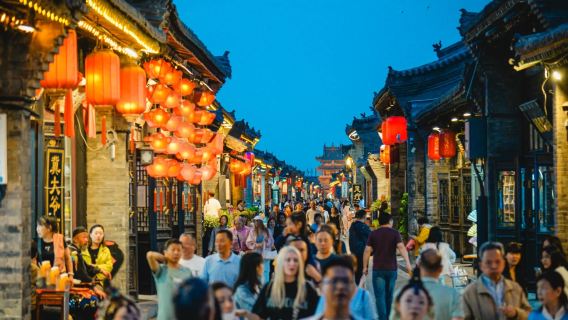
Zhonglou Street is an old street in Taiyuan's old town named after its bell tower. Dating back to the Song and Yuan dynasties and flourishing during the Ming and Qing dynasties, it is known as a "millennium-old street with a century of commercial legacy." In the past, Zhonglou Street was combined with the adjacent Ansi Street and Dongyang Market into a single street, with its east entrance connecting to Liuxiang Street, once known as the "Little Wangfujing." The reconstructed bell tower has been re-erected, becoming the street's landmark. The Ancha Si Archway and two old shopping centers—Dazhong Market and Kaihua Market, which evolved from former temple fairs—have returned, along with traditional businesses such asQianhexiang, Daningtang, and Kaiming Photo Studio. The secondary streets and small alleys interspersed throughout retain the texture of old courtyards and lanes. When the lights come on in the evening, the old-style building facades and the naked-eye 3D screens on the street appear in the same frame, presenting a visual interest where the old and new intertwine.Taiyuan · 34.2 km from Qingxu

Shanxi Bronze Museum
Shanxi Bronze Museum is a branch of Shanxi Museum, located on the scenic Changfeng Cultural Business District Cultural Island. It shares five connected and independent red oval inverted cone buildings with Taiyuan Museum, and is one of the landmark buildings in Taiyuan. The museum is a provincial bronze museum in China, exhibiting more than 2,000 cultural relics, mainly from archaeological excavations over the years and precious cultural relics recovered by public security organs in recent years to combat cultural relic crimes, gathering the essence of Jin bronze cultural relics. The Shanxi Bronze Museum has an exhibition area of 11,000 square meters. The basic display is themed "Jijin Guanghua" and is divided into three parts: "Huaxia Imprint", "Ritual Music Spring and Autumn", and "Technology Model". It shows the development process and brilliant achievements of China's Bronze Age. "Huaxia Imprint" tells the special status of Jin culture in the inheritance and development of Chinese civilization; "Ritual Music Spring and Autumn" explains the distinctive characteristics of Chinese bronzes as ritual vessels and the spiritual connotation of ritual and music civilization; "Technology Model" shows the wisdom of the ancients in casting bronze. In addition, the "Digital Bronze" and "Exploring the Mysterious" exhibition areas deeply experience the mysteries behind the bronze culture through digital display and educational interaction. Telling the Chinese bronze civilization with Shanxi cultural relics, through the multi-dimensional perspectives of cultural relics, the country, the system and the skills, reflects the important role of bronze civilization in the Chinese civilization system.Taiyuan · 26.8 km from Qingxu

zhong guo qing xu guan di cheng
Qingxu · 2.1 km from downtown

Paddy Field Park
The Rice Field Attraction is located in Jinyuan District, Taiyuan City.It is an "agricultural park" that integrates ecological agriculture, science education, sightseeing, tourism, leisure and entertainment.While maintaining the original ecology and production model, the park integrates park elements into the rice fields. It is not only a comprehensive display of agricultural projects, but also a tourist destination for sightseeing and leisure, attracting a large number of tourists and traffic.Taiyuan · 14.9 km from Qingxu

Jinci Museum - Zhou Cypress
Zhou Bai and Tang Huai are both representatives of Jinci's thousand-year-old trees. Zhou Bai is located on the north side of Notre Dame Hall. Originally there were two trees named Qi Nian Gu Bai, but now there is only one left. Zhou Bai has a history of more than 2,800 years, and the trunk is so thick that it takes several people to encircle it. In the eyes of the locals, this ancient cypress is a symbol of immortality. Tang Huai is located in front of Shuijingtai. Although it is not the oldest in Jinci Ancient Huai, it is a more prosperous one. Every spring and summer, the trees are shaded.Taiyuan · 13.6 km from Qingxu
Experiences you can't miss in Qingxu
Featured Cultural experiences in Qingxu
View all Cultural experiences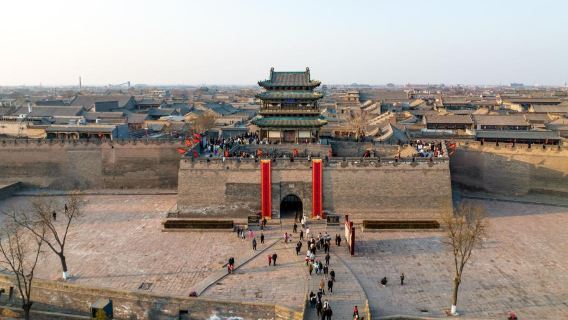
Free cancellation
Instant confirmation
FromBRL 206.35

Free cancellation
Instant confirmation
FromBRL 83.23

5.0/5
· 1 reviewFree cancellation
FromBRL 30.27
Free cancellation
Book now for tomorrow
FromBRL 203.53
Free cancellation
Instant confirmation
FromBRL 386.63
Free cancellation
Instant confirmation
FromBRL 798.64
FromBRL 83.23
Featured Day tours in Qingxu
View all Day tours
Free cancellation
Instant confirmation
FromBRL 276.85
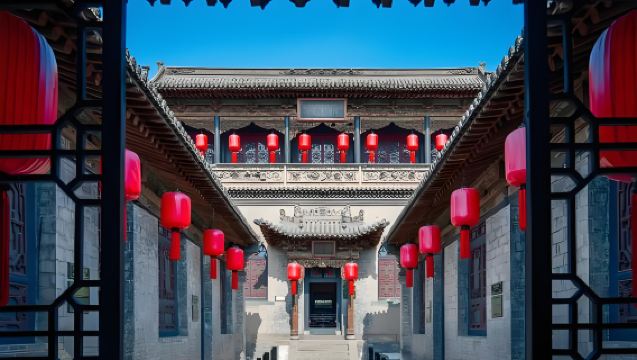
Free cancellation
Instant confirmation
FromBRL 276.85
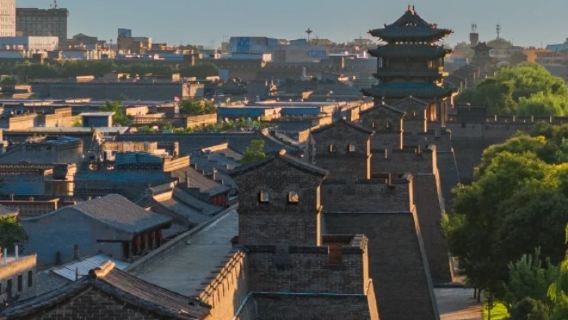
5.0/5
· 1 reviewFree cancellation
Instant confirmation
FromBRL 353.37
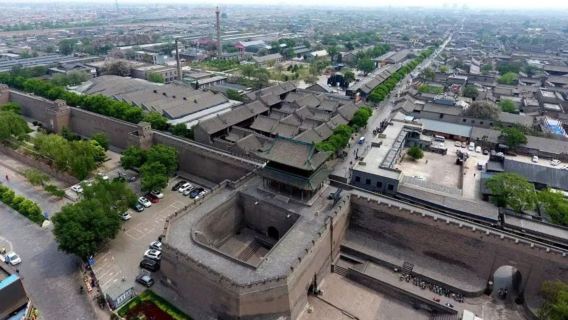
Free cancellation
Instant confirmation
Book now for tomorrow
FromBRL 687.82
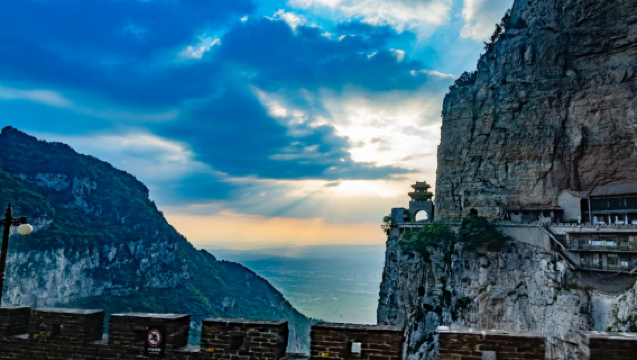
Free cancellation
Instant confirmation
FromBRL 773.80

Free things to do in Qingxu
Taiyuan Ancient County
Taiyuan · 17.4 km from QingxuJinci Scenic
Taiyuan · 13.4 km from QingxuShanxi Museum
Taiyuan · 32.5 km from QingxuDonghu Vinegar Garden
Taiyuan · 36.7 km from QingxuShuijing Stage
Taiyuan · 13.5 km from QingxuZhonglou Street
Taiyuan · 34.2 km from QingxuShanxi Bronze Museum
Taiyuan · 26.8 km from Qingxuzhong guo qing xu guan di cheng
Qingxu · 2.1 km from downtownPaddy Field Park
Taiyuan · 14.9 km from QingxuJinci Museum - Zhou Cypress
Taiyuan · 13.6 km from Qingxu
What travelers say about Qingxu

楚云霁月August 21, 2026
4.0
The old town was rather deserted. The art exhibition was quite nice, though a bit over the top. But the park at the exit was absolutely gorgeous. Winding paths led to secluded spots, and unexpected beauty unfolded.
Taiyuan Ancient County

弃鄂从汕February 28, 2026
5.0
I learned about Jinci Temple in junior high and high school Chinese classes, and 30 years later I finally got to visit it. I should have taken my time and spent the whole day exploring it, but unfortunately I only had half a day, and I had to rush to Pingyao the next morning.
Jinci Scenic

Anonymous userOctober 7, 2026
5.0
The tour guide was attentive and incredibly friendly, covering everything he needed to, and explaining things in considerable detail. With so many people during the National Day holiday, his experience helped us squeeze in every possible moment, and surprisingly, the trip wasn't crowded at all. The Yungang Buddha and the VR tour of Wutai Mountain were definitely worthwhile, and the Yanmen Pass Great Wall and Wang Family Courtyard were also very enjoyable. The driver was fantastic, incredibly experienced, and knew many shortcuts to Xiaoxitian, taking us directly to the scenic area entrance and saving us a lot of walking. The small group size meant it wasn't crowded, and the hotel arrangements were quite reasonable. The Yingxian Wooden Pagoda, the Yanmen Sunset, and the Wang Family Brick Carvings were all breathtakingly beautiful. The local tour guide was completely transparent and honest. I highly recommend this Shanxi tour; if you want to see ancient architecture but are afraid of doing research, book this tour without hesitation.
Shanxi Museum

酷姐驾到September 28, 2026
4.0
The vinegar-making experience presented so far is too simplistic and crude. I hope it can be further optimized to include more scientific knowledge and engaging elements. Could you explain how the fumigation method was discovered, the detailed principles behind each process, the corresponding chemical reactions, and the role of microorganisms? And how does this compare to industrial vinegar-making processes?
Donghu Vinegar Garden

开心天涯客November 24, 2021
5.0
Shuijingtai is located in Jin Temple, a famous cultural attraction in Taiyuan, not far from the famous Notre Dame Hall. It is an ancient stage built in the middle of the Ming Dynasty with exquisite shape. It has been well preserved after five hundred years of wind and rain.
Shuijing Stage

jns02August 3, 2026
4.0
Endless shopping spree. You'll need at leas half a day to get through the whole street, that is if you actually wish to shop at least. Didn't get to take much photos. Was too busy window shopping
Zhonglou Street

谁家陌上少年May 15, 2026
5.0
It's connected to the Taiyuan City Museum; you can enter directly by swiping your ID card. It has four floors, with a huge number of exhibition halls. The layout is very reasonable, clean, and beautiful. Each artifact has its own space, so it's not crowded. The text descriptions are detailed, and you can also scan a QR code for a free guided tour. Following the signs, you won't get lost or backtrack. It's not crowded, making for an excellent viewing experience. There's also a reading and rest area on the first floor. Across the street from the museum is MixC shopping mall, which has a wide variety of affordable food and drinks. I visited twice to see everything; it's a very beautiful and atmospheric museum.
Shanxi Bronze Museum

Shin罗小黑黑June 9, 2025
5.0
At the entrance of the Rice Field Park, a golden rice field came into view. The breeze blew, and the rice ears swayed gently, as if welcoming our arrival. Walking along the path in the field, the fragrance of the rice field came to your nose, making you feel relaxed and happy. In the rice field, the busy figures of the farmers were looming in the rice waves. They were diligently harvesting the mature rice, and their faces were filled with the joy of the harvest.
The Rice Field Park not only has rice fields, but also many interesting projects. We came to the "Rice Field Maze", which was surrounded by rice fields. The winding paths made people feel like they were in a huge natural maze. We walked and looked for the exit, and found many interesting scarecrows on the way. They were standing or sitting, in different shapes, adding a bit of fun to the maze.
After walking out of the maze, we came to the "Rice Field Train" station. Boarding the train, with the "woohoo" whistle, the train slowly started and shuttled between the rice fields. Looking out of the car window, the rice fields are like a golden ocean, sparkling, and the mountains in the distance are particularly magnificent against the blue sky.
There are also many parent-child interactive projects in the rice field park. Children play in the sand pit beside the rice fields, and their laughter echoes in the fields. We tasted fresh farm dishes in the farmhouse beside the rice fields. The rice is sweet and the vegetables are fresh, which makes people have endless aftertaste.
Taiyuan Rice Field Park is not only a harvest field, but also a place full of joy and natural beauty. Here, I feel the charm of nature and the profound heritage of farming culture.
Paddy Field Park

LHCYAugust 16, 2021
5.0
Zhou cypress and Tang locust are both representatives of the thousand-year-old trees in Jin Temple. One is Zhou cypress and Tang locust. Zhou cypress is a cypress planted in the Western Zhou Dynasty, and Tang locust is a locust tree planted in the Tang Dynasty. They are still lush and green today. Zhou cypress is located on the north side of the Holy Mother Hall. There were originally two trees, named Qinian ancient cypress, but now there is only one left. Zhou cypress is more than 2,800 years old, and its trunk is so thick that it takes several people to surround it. In the eyes of local people, this ancient cypress is a symbol of immortality. Tang locust is located in front of the water mirror platform. Although it is not the oldest among the ancient locust trees in Jin Temple, it is the most luxuriant one. In spring and summer, the tree is green and shady.
Jinci Museum - Zhou Cypress


