
Things to do in Ning'an
Explore top experiences
Top 10 attractions in Ning'an


Jingpo Lake Scenic Spot
Jingpo Lake Scenic Area, the beautiful lake of Mudanjiang, known as the West Lake in the north, is a well-known summer resort. The main scenic spot of Jingbo Lake includes two parts: Hangshuilou Waterfall and Bailichang Lake. The Hangshuilou Waterfall is a famous landscape of Jingbo Lake. Every summer, especially after the rain, the water is roaring and magnificent; Baili Changhu It refers to the Jingbo Lake District, where you can take a boat trip to the lake at Jingbo Mountain Villa.Ning'an · 56.8 km from downtown

Crater National Forest Park
Ning'an Crater National Forest Park is located in Xiaobeihu Forest Farm.There are many scenic spots, unique landscapes, and rich flora and fauna resources.It is a rare tourist destination.Ning'an · 72.8 km from downtown

Diaoshuilou Waterfall
If there is one must-see in Jingpo Lake Scenic Spot, it is the Diaoshuilou Waterfall. This Diaoshuilou Waterfall is in no way inferior to Niagara Falls in its charm and grandeur. It is majestic and awe-inspiring, like a dragon emerging from the sea. The waterfall is over 300m wide, with a drop of over 20m. The roaring water plunges into Heilong Pool, creating a sound like thunder. Visitors can enjoy this spectacular view from the waterfall viewing platform on the east side. Spring and summer are the best seasons to visit, as the waterfall has a high volume of water, and the rising mist forms dreamy rainbows, making it feel like a fairyland. The powerful, rushing water contrasts sharply with the nearby Jingpo Lake. While the lake is quiet and elegant, the waterfall is bold and passionate. Visiting this place allows you to experience a variety of unique charms.Ning'an · 53 km from downtown

Bohai Guoshangjing Longquan Fugongcheng Relic Site
In the north, a thousand years ago, there was such a country that once flourished and flourished. It was the Bohai Kingdom established by the Mohe people. It was known as the "prosperous country in the east of the sea" and belonged to the Tang Dynasty. Thousands of years of wind and sand have almost wiped out this place, leaving only broken walls and ruins, and the glory of the past can be vaguely seen. This is a capital built to imitate the prosperous Chang'an City. The area is rectangular, with an outer city, an inner city and a palace. What you can see are the relics of the city walls at that time. The Bohai Kingdom pays attention to religious culture. Archaeologists have found several relic letters here, which add a lot of solemnity to this relic. What is worth seeing in the site are two buildings that reflect the culture and technology of that time, one is the stone lighthouse, and the other is the eight treasures glazed well. The stone lighthouse is 6 meters high, with exquisite craftsmanship and ingenious design. It has a complete lighthouse structure. Lotus flower holder, falling flower seat, phase wheel, etc. are all available. The shape is elegant and vigorous, showing the cultural characteristics of Bohai. The Eight Treasures Glazed Well is an ancient octagonal well, which was only used by the royal family at that time.Ning'an · 35 km from downtown

Xinglong Temple
Xinglong Temple, located in Mudanjiang City, Heilong Province, is a temple with a thousand-year history. It was the largest temple in Shangjing City of Bohai Kingdom during the Tang Dynasty. Its original name was Stone Buddha Temple, which was famous for the large stone Buddha carvings in the Bohai Sea in the temple. Later, with the demise of the Bohai Kingdom, Xinglong Temple has undergone the historical baptism of several dynasties and has a different style. Therefore, in this quaint courtyard, you can Admire the ancient architectural style of the Tang Dynasty, and you can also see many traces of the reconstruction of the Qing Dynasty. Xinglong Temple is unpretentious and elegant. At that time, the meditation hall and the bell and drum towers have been destroyed. There are only a few main halls, but they vaguely have a majestic and inviolable sacred charm.Ning'an · 36.4 km from downtown

Jingpo Lake Cruise
The Jingpo Lake cruise departs from the villa pier, sailing across China's grand volcanic lava-dammed lake. The crystal-clear waters mirror the surrounding lush green mountains as the journey passes iconic sights like White Cliff, Chairman Mao Mountain, Big and Small Lonely Hills, and Pearl Gate - where peculiar rocks meet the water and peaks rise in picturesque disorder.Trip.comGlide across the hundred-mile lake with the breeze, marveling at the unique volcanic landscapes formed millions of years ago, listening to the folk tales of the Red Luo maiden, and immersing yourself in the poetic northern scenery where "the boat floats on emerald waves, and passengers wander through a painting.".Ning'an · 55.6 km from downtown

Shanzhuang Pier
Ning'an · 54.8 km from downtown

Harbin Ice-Snow World
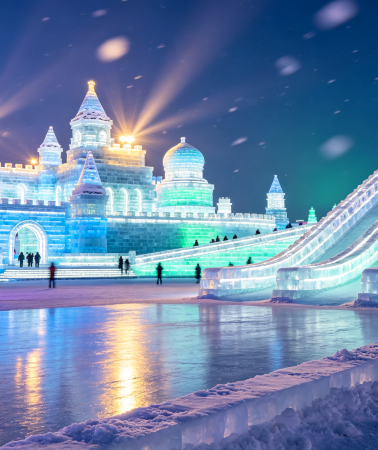
Harbin Ice-Snow World: A year-round winter wonderland Who says ice and snow can only be enjoyed in winter? China Harbin Ice And Snow World breaks seasonal barriers, offering immersive ice and snow experiences from the frosty depths of winter to the vibrant blooms of spring, summer, and fall. Unlock diverse joyful adventures all year round. Winter: Snow and ice carnival (December–February or March) Winter activities are in full swing, with the towering ice peak main tower and dazzling ice lantern nightscape forming a breathtaking snow kingdom. Experience thrilling attractions like the 521m super-long ice slide, snow tube drifting, and snowmobiling. The snowflake Ferris wheel ascends to great heights, offering panoramic views of the ice city's nightscape. Enjoy various ice and snow performances, New Year's Eve parties, and intangible cultural heritage markets in rotation, while the sweet aroma of ice cream bars proves irresistible in the chilly breeze. Spring Awakening: Ice-Breaking Adventures (March–May) While snow lingers outdoors, our indoor venues offer a perfect blend of warmth and icy thrills. The Dream Ice World maintains a constant temperature of –8°C to –12°C, with complimentary down jackets and insulated boots provided. The ever-refreshing ice sculpture exhibition dazzles alongside AI light shows and enchanting ice music performances. At the Four Seasons Playland, over 20 family-friendly attractions including carousels and an indoor Ferris wheel create delightful post-outing entertainment for all ages. Summer: A refreshing mix of ice and fire (June–August) Beat the summer heat with a 20+°F temperature drop in our dreamy ice world, offering frosty fun all day. The concurrent international beer festival features over 1,000 global brews paired with gourmet bites to light up your nights. Enjoy eco camping by day and starry sports fields by night for round-the-clock excitement. Fall romance: colorful forests and snowy landscapes (September–November) The park is surrounded by fall foliage in vibrant reds and yellows, creating a striking contrast with the pure white ice sculptures. The Dream Ice Palace dazzles with interwoven lights and colorful ice, while the Snowflake Ferris wheel offers photo-perfect moments—capturing both the autumn scenery and Harbin's skyline in one frame. The themes and activities of seasonal events may be adjusted by the attraction, with timing subject to actual weather conditions.China · Harbin

Harbin Drug Group Pharmaceutical Factory 6
Harbin Drug Group Pharmaceutical Factory 6 is an old factory complex in Harbin, now a popular check-in spot dubbed the "Louvre of Northeast China." The main building, completed in 2004 with construction and decoration costs nearing CNY 100 million, bears a striking resemblance to France's Louvre, blending classical, Baroque, and Rococo European styles. Its exterior features intricate three-dimensional carvings and reliefs, with columns, doors, and windows each showcasing unique designs, creating a majestic vista from afar. Inside, the scene shifts dramatically: layers of golden ornaments adorn the space, and a massive crystal chandelier cascades from the upper floors to the second-floor hall. The corridors display European oil paintings and sculptures, earning it the playful nickname "Versailles of the Northeast." The building also houses a printmaking museum, with multiple exhibition halls showcasing works by printmakers from Heilongjiang and across China, worth lingering over. Founded in 1977, this historic pharmaceutical factory was once famous for products like Gaizhonggai, Yandi, and Hutong. After relocating entirely in 2021, the old site lay idle until reopening to the public in 2024. Its "palace-like" complex quickly went viral, attracting over a million visitors to date, making it a flagship destination for industrial tourism in Harbin. For the best experience, enter through the northeast gate, explore from the upper floors downward, and don't miss the printmaking exhibits, corridor paintings, or the grand chandelier. The main building's frontal view is partially obscured by an overpass and heavy traffic, making full shots challenging, but the exterior carvings, ground-floor hall, and colonnades offer excellent photo opportunities for a leisurely stroll.China · Harbin

Changbai Mountain
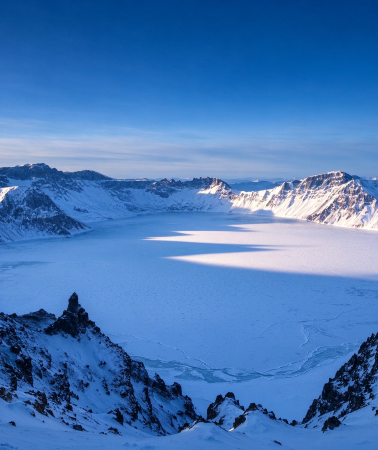
Changbai Mountain is divided into three major scenic areas: North Slope, West Slope, and South slope. The whole area is full of natural splendor, and the crowning view is of the beautiful Heaven Lake in the caldera of the main volcanic cone, considered a holy place of prayer for many visitors. Heaven Lake offers different views depending on your vantage point. Many other beauties of nature await you here, such as the Changbai Waterfall, the high mountain garden, Jinjiang Canyon, the valley forest, and high mountain hot springs.China · Antu
Free things to do in Ning'an
Jingpo Lake Scenic Spot
Ning'an · 56.8 km from downtownImmediate access, Book now for today, Cancel anytimeCrater National Forest Park
Ning'an · 72.8 km from downtownImmediate access, Book now for today, Cancel anytimeDiaoshuilou Waterfall
Ning'an · 53 km from downtownBohai Guoshangjing Longquan Fugongcheng Relic Site
Ning'an · 35 km from downtownXinglong Temple
Ning'an · 36.4 km from downtownJingpo Lake Cruise
Ning'an · 55.6 km from downtownShanzhuang Pier
Ning'an · 54.8 km from downtownHarbin Ice-Snow World
China · HarbinImmediate access, Book now for today, Cancel anytimeHarbin Drug Group Pharmaceutical Factory 6
China · HarbinChangbai Mountain
China · Antu
More ways to travel from Ning'an
Private Tours in Ning'an
View More Private Tours in Ning'an





Group Tours in Ning'an
View More Group Tours in Ning'an


What travelers say about Ning'an

M58***17October 16, 2026
5.0
I've visited many 5A scenic spots, and this one was a great experience, mainly due to the staff. The bus ticket inspectors were very welcoming, greeting me warmly. Because it was the off-season, there weren't many people, and the driver, worried about missing my waterfall viewing, took the entire shuttle bus just for me – I was very touched. When I travel alone, I ask someone to take my picture, and if it happens, the staff will say "Welcome back next time" afterward – very thoughtful. With the recent popularity of Qing Dynasty dramas, this place recreates some scenes from Ningguta, which is quite interesting. Jingpo Lake itself is also very scenic, with a large body of water. The boat tour takes over an hour and is very comfortable!
Jingpo Lake Scenic Spot

Anonymous userOctober 10, 2026
5.0
It's more fun than Jingpo Lake. The sightseeing bus ride into the mountains alone takes half an hour. There are three attractions, and it's best to allow two hours for the last one, the crater forest, otherwise it will be too rushed, and my knees will be sore from walking.
Crater National Forest Park

M53***65May 31, 2023
5.0
China's most beautiful alpine barrier lake is majestic, pleasant, and has a typical geological structure. It is very spectacular. I have been there many times to appreciate the beautiful scenery, and each time I have new discoveries and new feelings, which makes people linger.
Diaoshuilou Waterfall
Anonymous userAugust 17, 2026
4.0
As the capital of the Bohai Kingdom during the Tang Dynasty, Shangjing Longquan Prefecture was renowned as a "prosperous kingdom in the East," a precious testament to the integration of ethnic groups in Northeast China. Built in imitation of the Tang Dynasty's Chang'an, the city bears witness to the fusion of Central Plains culture and northern frontier civilization, possessing immense historical and archaeological value.
A thousand years have passed, fading its former glory. The wooden structures above ground have long since vanished. Today, only layers of rammed earth foundations and ruins remain scattered among the grass, offering a vast and desolate view. Only stone lanterns and the Eight-Treasure Glazed Well remain, silently telling the story of the ancient city's past.
Walking among the ruins, there are no carved beams or painted rafters, only the palace foundations and street outlines on the land. Standing on the empty foundations, one can still imagine the grandeur of the former royal city, imbued with a profound sense of history.
This is not merely an ancient site, but a window into understanding the history of Northeast China during the Tang Dynasty. Located next to Jingpo Lake, it's easily accessible on a trip, perfect for quiet contemplation. If you want to understand the long-forgotten history of northern Xinjiang, this major site is worth a special trip.
Bohai Guoshangjing Longquan Fugongcheng Relic Site
Anonymous userAugust 3, 2025
5.0
After visiting the Bohai Shangjing Ruins Museum, we came here. It was also called Huguo Temple during the Bohai Kingdom period. The most precious things inside are the stone pagodas, tortoise bases, ancient trees, ancient Buddhas, and ancient temple ruins with a history of more than a thousand years. These five thousand years alone are worth seeing.
Xinglong Temple

M82***96June 28, 2026
5.0
Enjoying the beautiful scenery of Jingpo Lake by boat is a unique experience.
Jingpo Lake Cruise

山在穷游October 23, 2019
5.0
Shanzhuang Pier is another major tourist attraction in Jingbo Lake Scenic Area. This attraction is located on the edge of Jingbo Lake. We spent 12 yuan to take the scenic area's transportation bus and quickly reached the pier from Diaoshuilou Waterfall. Of course, if you choose to walk, it will take more than an hour, but the scenery along the way is really beautiful. When you come to the pier, you can take a walk by the pier to feel the beauty of Jingbo Lake, or take a cruise to the depths to feel the unique beauty of Jingbo Lake.
Shanzhuang Pier

M50***55October 17, 2026
5.0
Finally checked out Harbin Ice and Snow World! Seeing it in person is the true meaning of a real-life ice and snow fairytale kingdom. The enormous ice castles and towers are all sculpted from ice blocks, crystal clear during the day, and transform into a breathtaking spectacle when the lights come on at night, bathing the entire park in vibrant colors. The popular giant ice slide is thrilling and fun, and there's also a Ferris wheel, ice and snow performances, and interactive stage activities—a wealth of attractions. The ingenuity of the craftsmen has transformed ice blocks into magnificent structures; every step reveals a new vista, making it impossible to stop taking photos. Despite the cold weather, the atmosphere was vibrant, and the service was attentive—a truly worthwhile trip. You absolutely must come back this winter wonderland!
Harbin Ice-Snow World

澄潭觀月June 14, 2026
5.0
The famous Harbin Pharmaceutical Group No. 6 Factory produces many brand-name drugs.
The historic European-style buildings are beautiful and photogenic!
The print exhibition is also quite artistic. The free restaurant offers excellent value for money!
Harbin Drug Group Pharmaceutical Factory 6

风沙渡_October 12, 2026
5.0
Changbai Mountain, true to its name, is incredibly clean! The restrooms in all areas were spotless, with sensor-activated flushes and hot water for handwashing – a truly touching experience for an autumn/winter trip. The restrooms had different themes, such as sables and black bears, adding a touch of vibrancy. We arrived a little late; most of the leaves had fallen, and it was the dry season, so the waterfalls weren't at their most beautiful. The small Tianchi Lake wasn't worth visiting yet; it's small, the water quality is so-so, and the surrounding forests are bare. Overall, the autumn air was crisp and clear. The 50-kilometer stretch from the distribution center to the transfer center was beautiful, vibrant with color, and Tianchi Lake was stunning. I especially loved the forest at the bottom of the valley; the pine scent was wonderful! I highly recommend walking to the end; there are vast, fairytale-like forests there, and we were lucky enough to encounter foxes and quite a few chipmunks along the way!
Changbai Mountain


