Lixin

Things to do in Lixin

Search attractions or local attractions & tours
Search

Explore top experiences

Top 10 attractions in Lixin

View all Attractions
Millennium City Park
2026 Asia 100 - Night Attractions

Millennium City Park

8.8
4.6/5
29.2k reviews

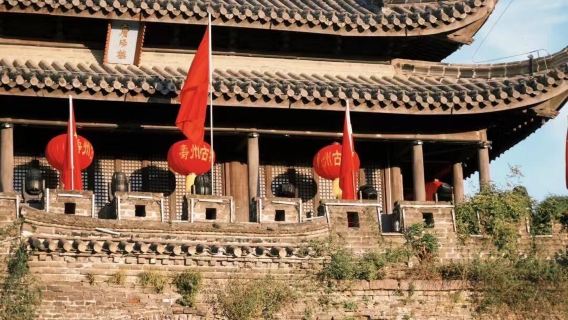
Millennium City Park is located by the shores of Longting Lake in Kaifeng. It is a large-scale historical and cultural theme park of the Song Dynasty, recreated one-to-one based on the famous painting Along the River During the Qingming Festival by Song Dynasty painter Zhang Zeduan. The park is divided into two sections by the Shuangting Bridge: the South Garden recreates the bustling street life of the Bianjing city, with taverns, eateries, teahouses, and pharmacies lined up along the streets; the North Garden is an imperial garden, with waterside halls, the Sifang Courtyard, and other palace buildings standing by the lake. Performers and street vendors in the park mostly wear Song Dynasty costumes, with ancient music lingering and bells and drums sounding, so that after a few steps visitors can easily fall under the illusion of "stepping into a painting in one morning, dreaming back a thousand years in one day." Architecture is the intuitive and tangible highlight here: the Rainbow Bridge spanning the Bian River is a replica of the famous bridge in the painting, shaped like a long rainbow, and standing on the bridge watching the grain boats pass by feels much like being inside the painting; the Fuyun Pavilion towers above all the other pavilions in the garden, with its tiered red towers and golden tiles on all four eaves, inviting one to climb from afar; the Shangshan Gate is rebuilt after the Northern Song dynasty Dongjing city gate, tall and majestic with brilliant painted decorations, making it the most imposing gate tower in the garden; and the Shuixin Xie, Shuangting Bridge, Jiulong Bridge, and other pavilions and waterside structures are scattered among the blue waves. The main attraction of the day is the immersive performances staged throughout the park: "Bao Zheng Inspects the Bian River Grain Transport" unfolds on the water on both sides of the Rainbow Bridge; "Squire Wang Seeks a Son-in-Law" features a decorated tower erected in front of Squire Wang's house where a silk ball is tossed to choose a groom; "Yue Fei Challenges Prince Xiao Liang" raises dust on the Song dynasty parade ground as horses gallop; and folk performances such as cockfighting, stilt walking, and pan drumming are interspersed throughout. To step into the action yourself, head to the Four Directions Courtyard to don traditional costumes and enter the examination cells for a hands-on Song dynasty imperial exam experience; families with children can enjoy carousel rides, roller coasters, and other amusement facilities wrapped in Song dynasty storytelling at the Song Dynasty·Royal Pleasure Ground; and in the entertainment quarters, face-changing, qigong fire-breathing, ancient magic, and other Song dynasty variety acts take turns on stage, with intangible cultural heritage feats ready to break out at any moment right beside you. After nightfall, the park takes on a different face: red lanterns light up one after another, the market streets are brightly illuminated, and it feels like a completely different park from the daytime. The large-scale water-based live performance "The Great Song Dynasty's Eastern Capital: A Dream of Splendor" is staged on the surface of Jinglong Lake. The entire show is woven together from eight classic Song ci poems and the painting Along the River During the Qingming Festival, drawing the audience back to the Northern Song dynasty's Eastern Capital a thousand years ago. The performance runs about 70 minutes, and many visitors deliberately plan their itinerary to stay until the evening to catch this show. Dining in the park is also convenient: the snack street at Dongjing Food Court brings together Kaifeng snacks such as fried liangfen, tongzi chicken, and almond tea, perfect for eating while strolling; if you want to sit down for a proper meal, you can visit the reconstructed Sun Yang Zheng Dian in the park, which was originally one of the seventy-two official restaurants of Bianjing in the Northern Song Dynasty, where you can taste traditional Henan dishes such as soup dumplings and carp with baked noodles.

China · Kaifeng
Song Du Huangcheng Cultural Tourism Resort

Song Du Huangcheng Cultural Tourism Resort

8.6
4.6/5
181 reviews

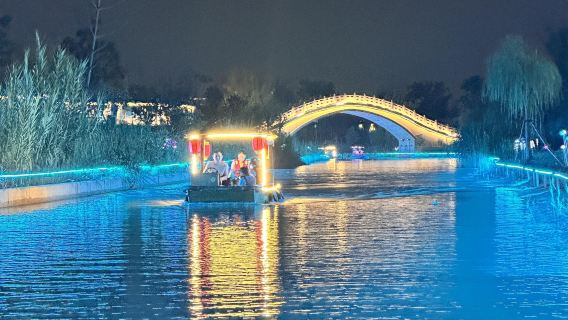
Song Du Huangcheng Cultural Tourism Resort is located in the northern part of the old city of Kaifeng, precisely on the site of the imperial palace of the Northern Song Dynasty's Dongjing city. The millennium-old central axis of Kaifeng runs through this area, making it the core zone of the royal culture of the Song Dynasty. Here, you can find the Song-style imperial architecture of the Longting attraction, the tales of the Yang Family Generals at Tianbo Yang's residence, and the calligraphic steles of Han Yuan Stele Forest. The Shuanglong Lane historical and cultural block, 960 Cultural and Creative Park, and Qisheng Corner have transformed old streets and courtyards into Song-style blocks perfect for leisurely exploration. The resort also connects a series of Song culture attractions: Wansui Mountain Great Song Martial Arts City stages year-round martial arts live shows and intangible cultural heritage iron fireworks, while historic sites like the Iron Pagoda, Kaifeng city wall, Zhouqiao and Bian River ruins, Shanshangan Guild Hall, Yanqing Taoist Temple, and Fan Pagoda are scattered across the old city, along with niche spots like the underground wartime grain storage. These places are hard to cover in one day, so we recommend focusing on two or three key sites. After dark, a different experience awaits as the attractions light up in unison. Boarding a painted pleasure boat on the Great Song Imperial River to watch the illuminated pavilions and towers sway with the rippling water is a popular nightlife option here.

China · Kaifeng
Wansuishan Martial Arts City
No. 1 of Family-friendly Attractions in Henan

Wansuishan Martial Arts City

8.6
4.6/5
16.7k reviews

Wansuishan Martial Arts City is located in the northwest of Kaifeng's urban areaWansuishan Martial Arts City, it is a large-scale attraction built with Song Dynasty culture and wuxia culture as its backdrop. Within the attraction, there are quaint and charming Song Dynasty garden streets and alleys, year-round exciting wuxia and period costume performances, as well as a wealth of entertainment facilities, making it a great place for relaxation and entertainment in Kaifeng, Zhengzhou, and surrounding areas. When visiting Wansuishan Martial Arts City, the first thing you will notice is the beautiful scenery of the attraction. Wansuishan Martial Arts City as a whole creates an atmosphere of the Song Dynasty, among which many views are very eye-catching, such as Wansui Temple, which recreates the splendor of a thousand-year-old ancient temple from the Song Dynasty, the Dragon Altar, which embodies the spirit of Buddhism, Confucianism, and Taoism, the relatively well-preserved ancient city wall of Kaifeng in China, and the "Nine Dragons Waterfall," one of the large man-made stream and waterfall groups in China. What is rare is that the attraction also has a very large area of forest and green space, with a quiet environment, and flowers bloom in season, making it very suitable for photography. Afterward, visitors will notice the unique wuxia features within the attraction. Year-round, multiple wuxia-themed performances are staged here, with several themed shows such as "Cross Slope," "Wu Song Drunkenly Beats Jiang the Gatekeeper," and "Wild Boar Forest" being quite spectacular—definitely not to be missed when visiting. Interactive performances like the "Wuxia Film and Television Experience Hall," "Martial Arts Champion," and "Li Kui Judges a Case" also allow visitors to participate in wuxia stories, offering plenty of fun. In the architectural design of the attraction, there are also many wuxia elements: the Wuxia Road built with large-scale weapons such as the "Heaven-Reliant Sword" and "Overlord Blade," the "Gallant Heroes Portrait" at the Great Song Martial Arts Hall, the "Sword Altar" at Cross Slope, Juxian Manor, and the Martial Arts Arena—all are uniquely distinctive. Additionally, every year during the Spring Festival periodWansuishanLarge-scale temple fairs are held, featuring grand performances, a rich variety of specialty snacks, a dazzling array of handicrafts, and highly distinctive entertainment activities, creating a lively atmosphere. It has now become one of the most popular temple fairs in the Central Plains region.

China · Kaifeng
Niushou Mountain Cultural Tourism Zone
No. 2 of Best Things to Do in Jiangsu

Niushou Mountain Cultural Tourism Zone

8.6
4.7/5
35.5k reviews

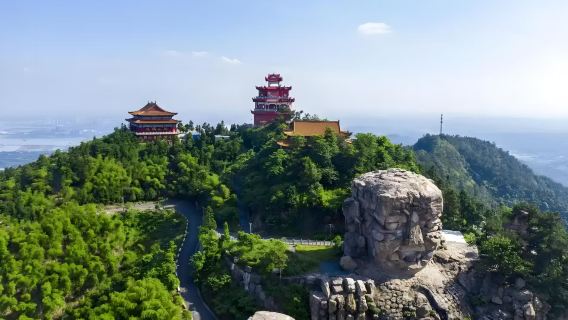
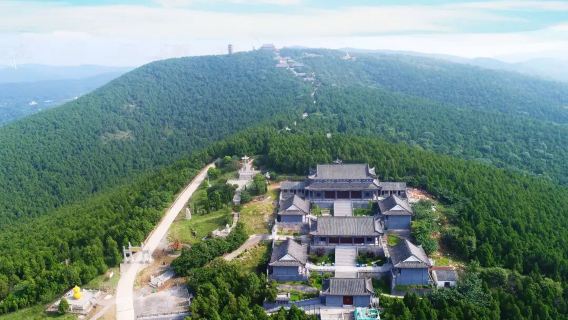
Niushou Mountain Cultural Tourism Zone, also known asNiushou Mountain Cultural Tourism Zone, it is named for its two peaks, one in the east and one in the west, which resemble the two horns of an ox's head. Niushou Mountain Cultural Tourism Zone boasts beautiful scenery and has long enjoyed the reputation of "Spring Niushou." In ancient times, it featured such Jinling scenic spots as Niushou Smoke and Mist and Zutang Temple's Resounding Tin Staff, and it also preserves many historical sites, such as the Jiangning section of the ancient fortifications where Yue Fei fought against the Jin, and the Zheng He Cultural Park. Usnisa Palace The Usnisa Palace is themed around the enshrinement of the Buddha's parietal bone relic and is divided into two parts: the large dome and the small dome, symbolizing outer offerings and inner offerings. The Usnisa Palace utilizes the original mine pit to build an underground palace, with six levels below ground and three levels above ground, appearing very solemn and magnificent. The parietal bone relic of Shakyamuni Buddha was enshrined at the Niushou Mountain Cultural Tourism Zone in October 2015. Visitors may go to the Usnisa Palace to pay homage on special Buddhist festivals. For specific times to view the relic, please call the attraction for inquiries. A thousand years of history Niushou Mountain Cultural Tourism Zone is a Buddhist sacred site. The Buddha Cave Temple, built by Sikong Xu Du in the second year of the Tianjian era of the Liang Dynasty (503 AD), was the first temple on Niushou Mountain, and Li Yu, the last ruler of the Southern Tang, renamed it Hongjue Temple. During the Tang Dynasty, Chan Master Farong, hailed as the "Bodhidharma of East China," founded the Niutou Chan School on Niushou Mountain, known in ancient times as "Jiangbiao Niutou." The founding of the Niutou Chan School served as an important bridge in the true transformation of Indian Chan into Chinese Chan! Niushou Mountain Cultural Tourism Zone - Taohua Stream Niushou Mountain Cultural Tourism Zone - Taohua Stream is located at the east entrance of Niushou Mountain Cultural Tourism Zone, with a total area of 14.87 hectares, approximately 220 mu. The peach blossoms selected are 26 varieties suitable for growing in the Nanjing area, making it a new view created by the Niushou Mountain attraction. A small stream winds down from Yinlong Lake, its water babbling, with peach trees planted on both sides. In spring, the buds gradually bloom, and a sea of flowers is intoxicating.

China · Nanjing
Nanjing Hongshan Forest Zoo
2026 Global 100 - Family-friendly Attractions

Nanjing Hongshan Forest Zoo

8.3
4.7/5
25.1k reviews

Nanjing Hongshan Forest Zoo is located in the north of Nanjing, built along three hills: Dahongshan, Fangniushan, and Xiaohongshan. With a green coverage rate of over 85%, the rolling hills form a unique forest view. The zoo brings together rare wild animals from around the world and adopts an immersive multi-species mixed-housing model, allowing animals to naturally express their instincts in environments that simulate their native habitats. The nearly 30 venues in the park are divided into three major zones by hill. The Dàhóngshān zone is mainly home to fierce beasts and native species, including the Tiger Area, Bear Area, Chinese Felid House, Felid Planet, Wolf Area, Native Species Conservation Area, Meerkat House, Monkey Hill, and Giraffe House; the Fàngniúshān zone brings together the Koala House, Gaoligong Exhibition Area, Gondwana Exhibition Area, Asian Primate Area, Orangutan House, and Hippo House; the Xiǎohóngshān zone is mainly composed of bird exhibition areas, including the Tropical Bird House, Hornbill Garden, Muntjac and Reeve's Muntjac Slope, Parrot House, Pheasant Garden, and Rare Bird Garden. Among them, the Gondwana Exhibition Area is themed on the ancient continent of Gondwana, presenting the ecological landscape of species from the Southern Hemisphere; the Gaoligong Exhibition Area focuses on the biodiversity of Gaoligong Mountain in Yunnan; and the Native Species Conservation Area is dedicated to the conservation and wild release of China's native wildlife, making it one of the park's signature exhibition areas. Both the Koala House and the Giant Panda House are popular venues in the park. Nanjing Hongshan Forest Zoo was among the first domestic zoos to cancel animal performances and stop visitor feeding activities. With the core philosophy of "everything for the animals," it focuses on ecological renovation of venues and improvement of animal welfare. The park also undertakes the rescue and rehabilitation of wildlife in the Jiangsu region, rescuing a large number of injured and stray wild animals every year.

China · Nanjing
Nanjing Museum
No. 2 of Family-friendly Attractions in Jiangsu

Nanjing Museum

8.2
4.7/5
4.2k reviews

The Nanjing Museum is located at the southern foot of Purple Mountain, on the north side of Zhongshan Gate. Here, you can see ancient artifacts such as the jade burial suit sewn with silver thread, appreciate painting and calligraphy art, and even take a stroll down old streets for a journey through time. Museum historyThe museum was established in 1933 and completed in 1948, with its main hall modeled after the mountain gate of Dule Temple in Tianjin. After expansion in 2009 and opening to the public on November 6, 2013, it became the second largest museum in China after the National Museum of China, featuring six halls: the History Hall, Special Exhibition Hall, Digital Hall, Art Hall, Republican Era Hall, and Intangible Cultural Heritage Hall. Museum layoutThe museum's main buildings are divided into two sections, left and right. After walking a short distance on the right side, you will reach the museum's old main hall, modeled after the Dule Temple. Behind the "Dule Temple" is the History Gallery, while the other five galleries are all on the left side. You can either tour from the five galleries on the left to the History Gallery on the right, or from the History Gallery to the five galleries on the left. It is recommended to visit the History Gallery first, because the special exhibition hall housing the "treasure of the museum" is located to the left of the History Gallery. You can follow the order of History Gallery - Special Exhibition Hall - Digital Gallery - Republican Era Gallery - Art Gallery - Intangible Cultural Heritage Gallery to tour the entire museum. History exhibition hallThe history museum displays cultural relics arranged in chronological order from ancient times to the Ming and Qing dynasties. Walking through it feels like strolling through five thousand years of Jiangsu's civilization. Highlights include: the jade burial suit sewn with silver thread, a wall built brick by brick during the Southern and Northern Dynasties with brick carvings faintly depicting the "Seven Sages of the Bamboo Grove" upon closer inspection, and more. Special exhibition hallThe "Splendors of the Prosperous Age" area of the special exhibition hall displays official kiln porcelain from the Qing Dynasty, the "Fine Clocks and Watches Exhibition" displays ancient Chinese timekeeping devices and Western clocks and watches, and "Approaching Buddhist Statues" features resplendent, exquisitely crafted Buddhist statues. As for the "treasure of the museum," the gilt Tibetan-style stupa from the early years of the Zhengtong reign of the Ming Dynasty (1436–1439 CE), a single exhibit occupies an entire room, and its sheer grandeur alone is stunning enough. This museum treasure was unearthed from the underground palace of the Hongjue Temple Pagoda on Niushou Mountain in Nanjing. On a square red sandstone base, four blue-and-white porcelain vases surround a golden stupa in the center, and in front of the stupa is a small gold coffin and silver outer coffin, upon which lies a golden reclining statue of Shakyamuni. Digital galleryThe digital pavilion uses modern technology to present ancient themes, with exhibits such as the animation "Picture Scroll of Scenes in the Southern Capital" (similar to the Along the River During the Qingming Festival in the China Pavilion at the World Expo). What is quite interesting is that there are many interactive games here, and you can touch the screen to play games set in ancient times. Art venueThe art museum displays sculptures, calligraphy, and paintings. The exhibited paintings by Fu Baoshi, which use Chinese ink painting techniques to depict Eastern European red-roofed buildings, squares, and sculptures, are quite distinctive. Republic of China galleryThe Republic of China Gallery has transformed the entire indoor space into a street scene from the Republic of China period. Trams are displayed on the street, and shops with Republic-era style line both sides, open for business and selling items that evoke nostalgia. At a general store, you can buy "mouse droppings" (also known as kumquat pills), a snack from childhood. The post office offers Nanjing Museum postmarks, and at the Librairie Avant-Garde upstairs, the staff wear period clothing; if you want to mail a postcard, the bookstore also sells stamps. Intangible cultural heritage museumThe intangible cultural heritage museum displays folk handicrafts such as woodblock prints, paper cuttings, gold foil, and festive lanterns. Here you can enjoy performances such as Kunqu opera, Baiju, and Pingtan. Reference performance times: 14:00-16:00.In the small theater, you can watch 3D films for free, and the film is about 20 minutes long.The small theater in the intangible cultural heritage museum will also be open to the public on weekends and public holidays at 19:00 if there are traditional Chinese opera performances, and tickets are required.

China · Nanjing
Henan Museum
No. 2 of Family-friendly Attractions in Henan

Henan Museum

8.1
4.8/5
10k reviews

[Henan MuseumIntroduction Founded in 1927, it is one of the earlier-established museums in China. The museum covers an area of 126 mu, with a building area of 55,000 square m. The museum currently has a collection of approximately 250,000 artifacts (sets), with particular strengths in prehistoric artifacts, Shang and Zhou bronzes, ceramics from successive dynasties, jade objects, and stone carvings. The fine artifacts are numerous in quantity, comprehensive in variety, high in quality, and great in value, making this a cultural and artistic treasury that bears witness to the trajectory of Chinese civilization and showcases the course of China's historical development. Currently open are the permanent exhibition "Great China: Building the Capital at the Center" and the thematic exhibitions "Henan in the Ming and Qing Dynasties," "Ancient Stone Carving Art of the Central Plains," "Auspicious Bronzes from Dan and Xi: Chu Bronze Art of the Central Plains," "Treasures of Craftsmanship: Ming and Qing Treasures from the Museum Collection," and "Special Exhibition of National Treasures," among others. The "Social Education Experience Hall" and the "Hall of Ancient Chinese Music," which complement the exhibitions, are also open for use. With the mission of "carrying forward inherent culture, promoting academic research, enhancing public knowledge, and advancing social civilization," it meticulously builds a public welfare cultural service brand, serving as an important window to appreciate Central Plains culture, Yellow River culture, and the Chinese cultural lineage, an important front for promoting core values, and an important platform for enhancing cultural exchange and cooperation. [Existing exhibition guide] Permanent exhibition "The Great Chinese Civilization: Choosing the Center to Build the Capital" The permanent exhibition "The Great Chinese Civilization: Choosing the Center to Build the Capital" takes the history of capital establishment in the Central Plains as its main thread, the development history of Central Plains civilization as its outline, and the backdrop of world civilizations as its reference. It integrates the cultural relic advantages of the Henan region, captures the highlights of ancient development in the Central Plains, showcases the trajectory of the Chinese nation's civilizational development, and recreates the long-standing splendor of Central Plains culture as well as its influence and radiating power. At the same time, from a global perspective, it presents the similarities and differences between Central Plains culture and cultures of other regions, and initiates a dialogue between this civilization and other civilizations. The permanent exhibition is located on floors 1, 2, and 3 of the main exhibition hall and is divided into 10 galleries, consisting of seven sections: the Neolithic Age, Xia and Shang, Western Zhou, Eastern Zhou, Qin, Han, Wei, Jin, and Northern and Southern Dynasties, Sui and Tang, and Song, Jin, and Yuan. It interprets the capital culture of the Central Plains and the cultural life within the capitals across various historical periods. [Henan MuseumHuaxia Ancient Music Orchestra] Henan is located in the Central Plains and has been a land of rites and music since ancient times, enjoying exceptional advantages for the development of musical culture. From the bone flutes of eight thousand years ago, to the bells, drums, chimes, and zithers, as well as the pipes, flutes, and mouth organs of the Xia, Shang, and Zhou dynasties, and to the music and dance, hundred entertainments, and banquet music and grand suites of the Han and Tang dynasties, the ancient music of the Central Plains is like a long river of history, surging endlessly and magnificent. Since its establishment in 2000, it has conducted restoration research on Central Plains musical artifacts, restored and reconstructed ancient musical scores, costumes, and performance scenes, and launched concerts with different themes, which have been highly praised by audiences at home and abroad. Millennia-old music, passed down through generations, the Huaxia Ancient Music Orchestra is resounding with the ceaseless spiritual voice of the Chinese nation... [Henan MuseumCultural and creative area] "Yubo Cultural Creativity" actively cooperates with enterprises both within and outside the province. By absorbing the creative concepts, design styles, and product characteristics of various enterprises, it has sorted out more than 300 cultural relic elements (sets) suitable for development. Adhering to the development principle of "highlighting originality," it has cumulatively produced nearly 800 cultural and creative products, covering categories such as stationery, toys, daily necessities, apparel, and food. Among them, a series of cultural and creative products developed with the museum's treasured artifacts and star relics as themes have achieved excellent results in various cultural and creative competitions across the country and have represented our province on the exhibition stages of major cultural and creative themes on multiple occasions. Currently, Yubo Cultural Creativity has focused on building physical product brands such as "Zhuozhen Cultural Relic Coffee," "Lost Treasures — Archaeological Blind Box," and "Cup of Light," as well as event brands such as "Museum Elegance Hall" and "Cultural Creativity Competition." At the same time, it is actively exploring the deep integration of cultural creativity and scientific research, collaborating with multiple universities to establish cultural creativity talent training and practice bases, and accelerating the training of cultural creativity talent. "The movement of the great Peng bird does not rely on the lightness of a single feather; the speed of a fine steed does not depend on the strength of a single foot." In the future, Yubo Cultural and Creative will continue to draw on more social forces to jointly explore the charm of history and culture, create more cultural and creative works, and make due contributions to the high-quality development of our province's cultural and creative industry. Location: Boutique on the west side of the first-floor lobby, book café on the third floor, pop-up store at the west exit [Henan MuseumSocial education experience hall] When visiting the Henan Museum, besides seeing exhibitions, listening to ancient music, and shopping for cultural creative products, there is one more place you must experience. Located on the first floor of the East Annex Building, it is a brand-new comprehensive practice experience area of over 1,400 square meters that can accommodate up to 500 people participating in activities at the same time. This place endows museum education with new dimensions of development; it is a national research and study education base for primary and secondary schools; it is a family-friendly museum classroom where education meets fun; and it also offers an immersive way to perceive the profoundness of culture. It features seven distinct zones, including an ancient technology experience area, a field archaeology experience area, a cultural relic restoration and conservation observation area, a visitor self-directed learning area, a research and study practice education area, a 3D national treasure magic wall experience area, and a 5G + 360° real-time panoramic experience area, all offering excellent experiences and visual effects. The social education experience hall of the Henan Museum adopts a "demographic-specific, menu-based" service model to target service groups. In educating underage visitors, it focuses on creating educational projects such as "special guided tours," develops thematic learning courses, and optimizes popular educational courses including the series on the nine treasures of the museum, "How Much Do You Know About Archaeology," "Guardians of National Treasures," and idioms and allusions, thereby enriching the education system and sharing educational projects. The newly opened museum comprehensive practice experience center showcases the new dimensions of museum education development with a high starting point, three-dimensional approach, and immersive presentation.

China · Zhengzhou
Kaifeng Fu (Kaifeng Palace)
No. 6 of Best Things to Do in Henan

Kaifeng Fu (Kaifeng Palace)

7.9
4.5/5
16.5k reviews

Kaifeng Fu (Kaifeng Palace) was first built during the Later Liang period of the Five Dynasties. During the Northern Song Dynasty, it was grand in scale and served as an important institution for managing the capital and the surrounding metropolitan region. Famous officials such as Bao Zheng, Ouyang Xiu, Fan Zhongyan, and Su Shi all once held posts here. The Kaifeng Fu of the Song Dynasty, having endured wars and floods, no longer exists. What visitors see today is a reconstructed imitation ancient attraction built according to the Northern Song architectural treatise "Yingzao Fashi." The gate of the palace faces south. The attraction is centered on an axis formed by the main hall (grand hall), the council hall, and the Plum Blossom Hall, with various halls of different sizes distributed on both sides, including Tianqing Temple, Mingli Courtyard, Hidden Dragon Palace, Qingxin Tower, the prison, Yingwu Tower, and Yinbin Guesthouse. The main hall on the central axis replicates the appearance of the case-hearing venue of the Kaifeng Fu (Kaifeng Palace) magistrate in the Northern Song Dynasty. In front of the hall are displayed three bronze guillotines with dragon, tiger, and dog heads, which are widely known furnishings of Lord Bao culture. The council hall restores the office scene of the Northern Song Dynasty government office. The Plum Blossom Hall in the northern part of the attraction features a wax figure scene of Lord Bao hearing cases while "sitting facing south" at the southern government office. In the Hidden Dragon Palace east of the central axis, the Hidden Dragon Hall enshrines statues of three emperors — Emperor Taizong, Emperor Zhenzong, and Emperor Qinzong of Song — all of whom served in Kaifeng Fu before ascending the throne. The adjacent Qingxin Tower is a high-rise building within the attraction, with a large bronze statue of Lord Bao on the ground floor and exhibitions of the life stories of successive Kaifeng Fu magistrates of the Northern Song Dynasty inside. The West Prison of the Fu Office on the southwest side of the palace gate includes a warden's room, a prison god temple, death cells, and male and female prison cells, furnished with sculptures, torture instruments, and scenes reflecting the prison administration of the Northern Song period. The attraction also stages ancient-style live performances such as "The Opening Ceremony of the Government Office" and "Lord Bao Judges Cases," offering an immersive visiting experience.

China · Kaifeng

Experiences you can't miss in Lixin

Lixin Today's weatherFoggy 10-15℃
Lixin weather for the next 2 days11/17: 8-13℃, 11/18: 0-12℃

Free things to do in Lixin

What travelers say about Lixin
user-avatar
美梦成真123!!September 29, 2020
5.0
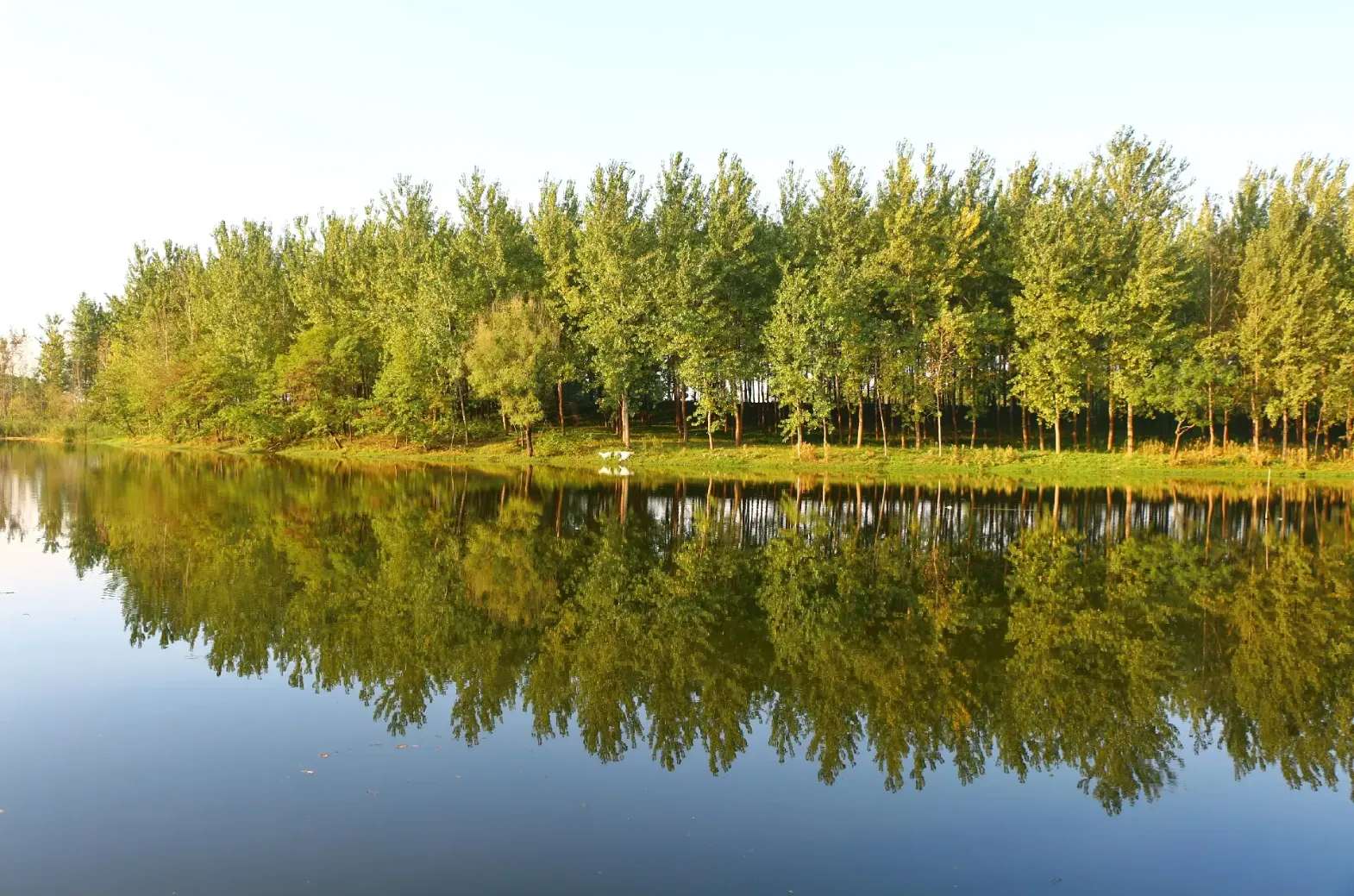
The park is very large and popular. The park is beautiful and the air is fresh. You can also go hiking and keep fit.

Longting Park

user-avatar
_su***07November 14, 2026
5.0
It was a lot of fun! The NPCs were very friendly, the game was very interesting, and everyone in my family had a great time. The scenery was beautiful, and the song and dance parade was excellent with beautiful performers. It was definitely worth the trip and I highly recommend it. It also made for great photos.

Millennium City Park

user-avatar
M55***20August 18, 2026
5.0
It's very worthwhile, but it's also very crowded, which might slightly detract from the overall experience. However, the people are incredibly welcoming, and there are many beautiful spots for taking photos. The food is also affordable and inexpensive, which kids enjoy. I'll definitely go back when it's less crowded.

Song Du Huangcheng Cultural Tourism Resort

user-avatar
Anonymous userNovember 15, 2026
5.0
It's incredibly fun and highly recommended! The park has a beautiful environment, and visitors can interact with NPCs; the games and activities are also very enjoyable. Silver tickets are easy to obtain. These tickets, earned by completing tasks, can be exchanged for commemorative gifts. The park offers a variety of performances, though some popular attractions can be a bit crowded. In the evening, the Magic Plaza offers Kongming lantern distribution, and the scene of everyone releasing lanterns together is particularly spectacular. Children linger here, completely immersed in the experience. On your birthday, you can visit the visitor center to receive a personalized birthday standee and ask all the NPCs for silver tickets as a special birthday reward. Wansui Mountain seems tailor-made for the most daring; the bolder you are, the more silver tickets you'll get. Taking photos at the Fairy Plaza at night is also a great idea. The female NPCs are especially beautiful, and the male NPCs are incredibly handsome. There are also tumbler dolls where you can use your phone to film transition videos—they're really cool!

Wansuishan Martial Arts City

user-avatar
Anonymous userNovember 15, 2026
5.0
The Buddha Palace is the absolute highlight, with its magnificent underground palace, the Thousand Buddha Hall, and the stupa considered a visual feast. Many people mention that "every snapshot is a masterpiece," with the pool's reflection, the European-style corridors, and the underground palace passageways being popular photo spots. As for natural scenery, the saying "Spring at Niushou" is frequently mentioned, highlighting the beautiful scenery when the peach blossoms are in full bloom.

Niushou Mountain Cultural Tourism Zone

user-avatar
Anonymous userNovember 15, 2026
4.0
My child came during autumn break, and it was incredibly crowded! Luckily, the weather was perfect – not too hot, not too cold – and every leaf I photographed was beautiful. We visited every exhibit, entering from the south gate. Since I prefer walking, we didn't take the sightseeing bus; it seemed okay, no need to buy a ticket. The ups and downs weren't as dramatic as I expected. The food inside was quite good, with a wide variety of options.

Nanjing Hongshan Forest Zoo

user-avatar
E04***87November 13, 2026
5.0
Teacher Dong's professional skills are truly amazing! The content and teaching methods are very suitable for children. Although the number of people was indeed very large this time, the arrangements were handled very well. We would definitely work with her again.

Nanjing Museum

user-avatar
123晴晴123November 9, 2026
5.0
The tour guide spoke clearly and fluently. The museum was packed with people, and with a group of 30, the young woman, being small and wearing a black coat, easily lost her way. I suggested she wear brighter colors next time, to which she replied: "Does work require specific clothing? Didn't she see the guides in the museum wearing bright red?"

Henan Museum

user-avatar
lubaizhengyangNovember 6, 2026
4.0
The Dacheng Hall of the Confucius Temple is the core main hall of the Confucius Temple, a tranquil haven of Confucian elegance amidst the bustling Qinhuai River. With its double-eaved roofs, bracket sets, and ancient red walls, the hall houses a dignified bronze statue of Confucius, flanked by stone statues of sages. Inside, a giant portrait of Confucius hangs, flanked by four stone statues. The "Illustrations of Confucius' Sacred Traces," inlaid with jade, vividly depicts the life of the sage. There are also replicas of ancient chime bells and chime stones, and if you're lucky, you might catch a performance of traditional music. The side corridors display calligraphy and inscriptions by renowned calligraphers, showcasing the rich cultural heritage of Confucius. Outside, the Confucius Temple is bustling with crowds; stepping inside brings instant peace, perfect for quiet contemplation of Confucian culture, ideal for reading or seeking blessings. It's a perfect place to combine a visit to the Qinhuai River with a day trip.

Nanjing Confucius Temple

user-avatar
若南浩南November 15, 2026
5.0
This is a very distinctive Song Dynasty cultural scenic area, with its live performances being the biggest highlight, and the architectural layout is well-preserved. Although the number of visitors is large during holidays, it is much less than that of Qingming Riverside Park, so there is no need to suffer from the crowds. For popular performances, you need to arrive early to secure a spot. The scenic area consists of reconstructed ancient-style buildings, so visitors with high expectations for the original historical site may need to adjust their expectations. Overall, it is still recommended to visit.

Kaifeng Fu (Kaifeng Palace)

Popular cities near Lixin

Frequently asked questions

What are the recommended tours and excursions in Lixin?

When choosing a tour, start with how much time you have and the kind of experience you're looking for. Trending options right now include 1-day tour to You's Family Garden + Balihe + Qinghe Song Street in Fuyang, Anhui with Chinese and English services available, Hefei Shouxian Ancient City + Bagong Mountain Scenic Area / Door-to-door pickup and drop-off - Itinerary customizable M, and Bozhou, Anhui Caocao Underground Military Transport Road Scenic Area + Flower Peking Opera Theater + Huazu Temple Day Tour with Chinese and English Services. Check the real-time availability and itinerary before you book.

As of November 17, 2026, the reference price for day tours and activities in Lixin is around GBP 145.12 – GBP 329.81. Rates vary by duration, group size, transportation, tickets, meals, and any special admission requirements. Before you book, please confirm the billing currency and whether the price is quoted per person or per group.

Get help anytime, anywhere within 30 secondsContact customer support

Change and cancellation policies vary by attractions and tours. Please check the product details page for more information.

Ticket prices may vary between weekdays and weekends, as well as during peak and off-peak seasons. When booking with Trip.com, you can also use Trip Coins to get extra savings. For more tips on booking discounted tickets, please visit Trip.com for the latest information.