Things to do in Lin County
Explore top experiences
Top 10 attractions in Lin County

Yiju Temple
Lin County · 22.9 km from downtown


WANG JIA DA YUAN
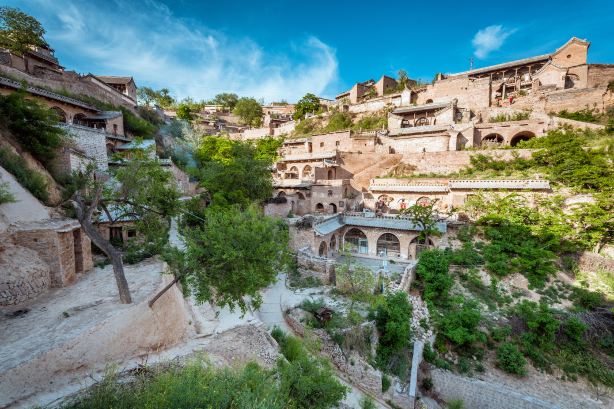
The Wang Family Courtyard is 35 kilometers away from the ancient city of Pingyao. Built by the Jingsheng Wang family during the Ming and Qing Dynasties, its construction took over 300 years to complete. Among Shanxi's courtyards, Its scale and grandeur are absolutely second to none. People who have been to the Wang Family Courtyard would exclaim that it is virtually a city! It is precisely because of its majestic grandeur, as well as its architectural and cultural achievements, it has always had the reputation "the Wang family does not return to see courtyards".China · Lingshi

Wu Tai Shan
Mount Wutai is one of China's famous Buddhist scenic spots and even contains the bodhimanda (place of enlightenment) of the bodhisattva Manjushri. Taihuai Town is at the geographical center of the Mount Wutai scenic area and serves as the lodging and dining center for the area. Most of the temples are also clustered here, so it is a must-visit for travelers here. Visitors typically stay in Taihuai for 2-3 days, which allows plenty of time to visit the main temples.China · Wutai County

The Qiao's Family Compound
The Qiao's Family Compound is located in the center of Qiaojiapu village, Qi county, also known as "The Qiao Family CourtyardIt was the residence of Qiao Zhiyong, a renowned commercial and financial capitalist in the Qing Dynasty, and has served as a filming location for over 30 movies and TV series, including "The Qiao Family Courtyard" and "Raise the Red Lantern." If you've seen these films, you'll surely recognize the scenes here: rows of red lanterns hanging high, towering brick walls, exquisite carvings, beautiful bracket sets and upturned eaves, and deep alleys. This is the famous The Qiao Family Courtyard. This is a residential complex from the Ming and Qing dynasties, its architecture resembling a castle, imposing and grand, typical of the living style of a large northern family during the Ming and Qing periods. Viewed from above, the entire courtyard layout resembles the Chinese character "囍" (double happiness), symbolizing good fortune. The complex is meticulously laid out yet also varied; even the more than 140 chimneys on the rooftops are unique. It is said to have been built by the imperial family.The Forbidden CityThere's a saying that "for residential architecture, visit the Qiao family courtyard". Upon entering the Qiao family courtyard, a straight stone-paved path approx. 80 m long divides the six courtyards into two rows, north and south. According to traditional naming, the three courtyards on the north side of the Qiao family courtyard are called the old courtyard, northwest courtyard, and study courtyard from east to west. The three courtyards on the south side are called the southeast courtyard, southwest courtyard, and new courtyard, reflecting the construction sequence of each courtyard. The brick carvings, painted decorations, and inscribed plaques in each courtyard are exquisitely crafted. The standout is the "hundred longevity characters" screen wall at the main entrance, featuring 100 uniquely styled seal-script "longevity" characters, where art and culture blend seamlessly. The brick carvings at the land god shrine are also noteworthy. Under the eaves of every room in the Qiao family courtyard, you'll find genuine gold-painted decorations, notably created using the raised paste technique with meticulous layering and final gold application. Among the many inscribed plaques at the Qiao family courtyard, the one personally calligraphed by Fu Shan in the fourth courtyard is particularly remarkable.Danfeng pavilion“Plaque”, when visiting here, be sure to learn about the story behind this plaque. Additionally, there are three treasures in the Qiao Family Courtyard: the ten-thousand-people ball, the rhinoceros gazing at the moon mirror, and the nine-dragon lantern. The rhinoceros gazing at the moon mirror was the treasure that brought wealth to the Qiao family, while the nine-dragon lantern was a gift from Empress Dowager Cixi, located in the courtyard at the southern center. Today, the Qiao family courtyard also serves as a folk museum, with its six courtyards respectively displaying agricultural life through the seasons, life rituals, inner gardens, commercial customs, luxurious furnishings, and the history of the Qiao family. Visitors can explore while learning about the Qiao family's philosophy of life, household management, and business.China · Qi County

Taiyuan Botanical Garden
Taiyuan Botanical Garden is located at the foot of Taishan Mountain in Jinyuan District and collects more than 3,000 species of plants. Visitors can stand on the cantilever at the main entrance and overlook the whole botanical garden.China · Taiyuan

Taiyuan Ancient County
The ancient county seat of Taiyuan is located in Jinyuan District, covering an area of about 0.8 square kilometers. There are many relics of historical buildings in the city, the pattern of cross streets is clear, and the texture of streets and alleys is perfect. It follows the ancient architectural pattern of Jinyang ancient city "Phoenix Flying in the City", just like a phoenix with its head north and tail south. It has the reputation of "Phoenix City" since ancient times. It is the continuation of the 2500-year-old Jinyang ancient city. There are 79 existing cultural relics buildings in the city, and 49 historical buildings listed for protection by the Taiyuan Municipal Government. Among them, the Confucian Temple is listed as a national key cultural relics protection unit.China · Taiyuan

The Wave Valley Scenic Area
Wavy Valley is also known as Jingbian Red Sand Rock Canyon. It is part of the Jingbian Longzhou Danxia Landform and is located in Yanjiazhaizi in Longzhou Township, southeast of Jingbian County. The Wavy Valley is a red sandstone landform with a magical appearance and high scientific research value. The spectacular landscape naturally formed over hundreds of millions of years. It is rare in China and can compete with the Danxia landform in the United States!China · Jingbian County

Guangsheng Temple
Guangsheng Temple is located at the southern foot of Huo Mountain in Hongtong County, Linfen, Shanxi. It is said to have been initially built during the Eastern Han Dynasty and renamed to its current name in the Tang Dynasty. Despite being repeatedly destroyed by wars, fires, and earthquakes over the centuries, the surviving halls are primarily structures from the Yuan and Ming Dynasties. The attraction consists of the upper temple on the mountain peak, the lower temple at the foot of the mountain, and the Water God Temple, forming a high-low connection that creates a natural upward visiting route. The Feihong Pagoda in the upper temple is the visual center of the entire complex. This octagonal thirteen-story brick pagoda, standing over forty meters tall, is adorned with glazed tiles in yellow, green, blue, white, and other colors from the second floor upwards. Figures of Buddhas, bodhisattvas, celestial beings, coiled dragons, and lion-like beasts protrude from the brick surfaces layer by layer. When sunlight hits it on clear days, the entire structure refracts rainbow-like brilliance, which is said to be the origin of its name "Feihong" (Flying Rainbow). The 1986 TV adaptation of *Journey to the West* filmed the episode where Tang Monk sweeps the pagoda to uncover an injustice here. In the 1930s, Liang Sicheng and Lin Huiyin also highly praised the quality and craftsmanship of the pagoda's glazed decorations during their survey. Behind the pagoda, a row of dark red sutra cabinets still stands in the Amitabha Hall, where the Buddhist canon "Zhaocheng Golden Tripitaka" was once stored. This engraved Tripitaka from the Jin Dynasty lay forgotten for centuries until its rediscovery in 1933. During the Anti-Japanese War, to prevent it from falling into Japanese hands, local soldiers and civilians risked their lives to transport it overnight. Now housed in the National Library of China, it is regarded as one of the library's most treasured collections. The sutra cabinets remain in the hall, and this legendary tale is worth pausing to hear. The Water God Temple at the foot of the mountain, the Mingying Wang Hall, is adjacent to the Huo Spring outlet. Its walls are adorned with over ten Yuan Dynasty murals centered around themes of praying for rain, rainfall, and giving thanks to deities. These murals depict water god worship and urban life rather than the typical Buddhist or Taoist subjects found in ordinary temples. The eastern section of the southern wall features "The grand performance troupe Zhongduxiu performing here," showcasing over ten actors and musicians representing various role types (sheng, dan, jing, mo, chou) on the same stage. This is a precious image for studying Yuan Dynasty zaju performances and, along with "The ball-hitting game," has been included in history textbooks. The adjacent Great Buddha Hall of the Lower Temple is a Yuan Dynasty wooden structure. Its original large-scale murals were stripped and sold overseas in the late 1920s, with the famous "Illustration of the Bhaisajyaguru Sutra" now housed at the Metropolitan Museum of Art in New York. To appreciate Yuan Dynasty murals, focus your attention on the Water God Temple. A bottom-up route is recommended: first visit the water god temple and lower monastery, then ascend via stone steps or the mountain road to see the Feihong pagoda at the summit. The glazed colors appear especially vibrant on sunny days, making it easier to capture great photos.China · Hongtong

Baota Mountain
Baota Mountain is located in the center of Yan'an city, by the side of the Yan River, and is named after the pagoda on the mountain. The pagoda was first built in the Tang Dynasty, and the existing structure is a pavilion-style brick pagoda rebuilt in the Ming Dynasty. The pagoda, together with the mountain, the Yan River, and the bridge, forms the city skyline of Yan'an and is also a symbol of the revolutionary holy land in people's hearts. The poet He Jingzhi wrote in "Returning to Yan'an" the famous line, "How many times in my dreams have I returned to Yan'an, embracing Baota Mountain with both hands," adding emotional weight to this mountain. The mountain is densely scattered with historical sites, including Song dynasty cliff carvings, Fan Gong Well, beacon towers, Star-gazing Tower, Jialing Academy, ancient city walls, and the former site of the Japanese Workers' and Peasants' School. Among them, the inscriptions "Jialing Mountain" in clerical script and "My chest harbors tens of thousands of armored soldiers" by Fan Zhongyan of the Northern Song dynasty have long been renowned. An iron bell cast in the Ming dynasty still hangs beside the pagoda, which was used for timekeeping and alarms during the CPC Central Committee's Yan'an period. Ascending the mountain path to Star-gazing Tower and beacon tower areas offers panoramic views of Yan'an city and the Yan River. After nightfall, the mountain and pagoda illuminate, and gazing back at the lit pagoda from near Yan River Bridge remains a favorite photo spot for many travelers.China · Yan'an

Shuanglin Temple
Shuanglin Temple is an old temple listed on the World Heritage List along with Pingyao Ancient City Wall and Zhenguo Temple. The sculptures made completely of wood-tire clay in the temple are valuable, integrating the essence of Song, Yuan, Ming and Qing Dynasties colorful lay sculptures. The Avalokitesvara of the Bodhisattva Temple is of high quality. She sat in front of the green background, and she was graceful and elegant, with a gentle and calm appearance. Each arm is rounded and plump, and the ratio to the body is just perfect. There is no feel of stiff, reaching the harmonious and perfect realm of sculptural art.China · Pingyao County
Experiences you can't miss in Lin County
Featured Travel photography in Lin County
View all Travel photography
From€14.88


From€297.47


From€14.88

From€148.74


Free things to do in Lin County

What travelers say about Lin County

159***80October 21, 2026
5.0
The most outstanding feature of the Wang Family Compound is its three types of carving: brick carving, wood carving, and stone carving. These three art forms are visible everywhere, from the eaves and brackets to the door and window bases. The themes cover flowers, historical allusions, filial piety, and auspicious meanings, and the techniques blend northern and southern styles. In the four characters "规圆矩方" (gui yuan ju fang) on the Hongmenbao plaque, the character "矩" (ju) has an extra dot, implying "more rules and regulations," reflecting the Wang family's emphasis on rules and their benevolent family tradition.
WANG JIA DA YUAN

LIOctober 6, 2026
5.0
It was excellent and breathtaking, especially Daxiantong Temple and Guanghua Temple, which were the most beautiful among the representative temples. It's said there are over 120 temples in the area; two days wasn't enough, so we could only visit some of the famous ones. Thankfully, we climbed 1080 steps to reach the top of Dailuo Peak, making the trip quite fulfilling.
Wu Tai Shan

M84***58October 19, 2026
5.0
Every snapshot is a beautiful scene! The park is very well maintained, with picturesque views at every turn and a wonderful atmosphere. The scenery is captivating, offering a high success rate for photos. You don't need to specifically find the right angle; every shot is a beautiful picture, making it a perfect blend of sightseeing and photography.
The Qiao's Family Compound

AA爱吃香菜王总October 22, 2026
5.0
It's quite nice. The botanical garden is large, with a well-organized plant classification and display, and a complete range of species. There are some water birds on the central island. Overall, it's similar to other botanical gardens. The location isn't too far from the city center; it's about a 30-minute taxi ride. There's also an ancient county town nearby, which is free to visit, so you can check it out as well.
Taiyuan Botanical Garden

楚云霁月August 21, 2026
4.0
The old town was rather deserted. The art exhibition was quite nice, though a bit over the top. But the park at the exit was absolutely gorgeous. Winding paths led to secluded spots, and unexpected beauty unfolded.
Taiyuan Ancient County

Anonymous userOctober 15, 2026
5.0
Wave Valley in Jingbian, Shaanxi, is truly an underrated scenic spot. The scenery is very unique, the facilities are complete, and the large loop is not difficult, making it accessible to most people.
The Wave Valley Scenic Area

皮皮泡泡哦哦哦October 20, 2026
5.0
The ancient pagoda was particularly impressive, and the glazed sculptures shimmered brilliantly in the sunlight. Their forms were incredibly lifelike. The only downside was the long wait for the shuttle bus; we got on the bus five minutes ago, but waited for another 40 minutes.
Guangsheng Temple

夜阑月色溶溶October 7, 2026
5.0
Because we had children with us, we opted to take the sightseeing bus up and down, which was very relaxing. We got a close look at the pagoda, took photos, and learned about its history, especially the plaques at the north and south gates: "Soaring high above the heavens, overlooking the mortal world"—for over 1000 years, the pagoda has achieved this.
Baota Mountain

sunshine_1130October 21, 2026
5.0
Red walls and ancient courtyards, a tranquil Buddhist sanctuary. Free from the hustle and bustle of commerce, only vibrant colorful sculptures remain, depicting the spirited Weituo and the serene Guanyin. This is a treasure trove of ancient temples in Shanxi that you shouldn't miss.
Shuanglin Temple


