Package A:
08:45 In front of Nagoya Station (Mini Stop Meieki Tsubakicho Store (meet in front of the entrance)) Meet-up
09:00 on-time departure to start a beautiful day
Package B:
08:30~09:00 Hotels/homestays within 2 km of Nagoya Sakae subway station (hotel pick-up package)
※ Between 17:00 and 21:00 the day before departure, we will contact you via the contact info you provided. If you do not receive a message, please check your email. Emails may sometimes end up in the spam folder. During peak season, email delivery may be slightly delayed.
※ If needed, you may leave your contact info and a specific time for us to reach you, and we will contact you as soon as possible.
※ If you need to bring luggage, or if traveling with an infant or child, please inform us in advance.


[Ise Jingu] is a shrine that represents Japan, divided into the "Naiku" (Inner Shrine) and the "Geku" (Outer Shrine). It mainly consists of two locations: the "Kotaijingu (Naiku)," which enshrines Amaterasu Omikami, the deity representing the sun, and the "Toyouke Daijingu (Geku)," which enshrines Toyouke Omikami, the guardian deity representing food, clothing, and shelter.
Ise Jingu visiting notes:
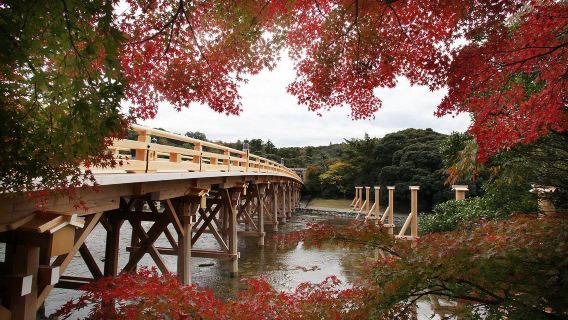
* When entering the divine realm, one must cross a bridge. The bridge of the Inner Shrine is the Uji Bridge, which symbolizes the entrance to the divine realm. The approach to the Inner Shrine is on the right side, and note that the very center of the bridge is the path through which the deities pass, so visitors cannot pass through the middle.
* Isuzu River Mitarashi-za: A purification area for cleansing oneself before worship, where you can wash your hands and rinse your mouth.
※ Photography of the main sanctuary and clergy is prohibited within the inner shrine; please respect the shrine's rules.
※You may receive a goshuin (for a fee) at the "Kagura-den" as a commemorative proof of your visit.


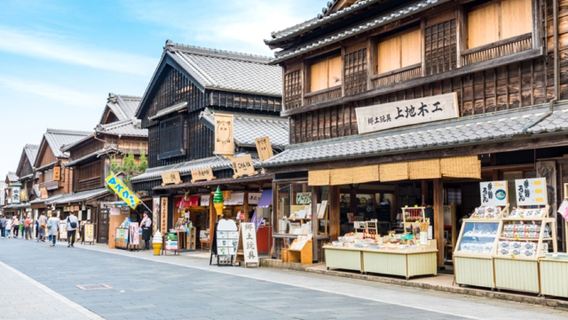
[Okage Yokocho Ancient Street]: Located in front of the torii gate of the Inner Shrine of Ise Jingu, this is a traditional commercial district featuring architectural styles from the Edo to Meiji periods. It is named after the "Okage Mairi" (a mass pilgrimage to Ise Jingu that flourished during the Edo period), carrying the meaning of gratitude for the blessings of the deities.
You can enjoy lunch freely here. Food recommendations: 1. "Akafuku Main Store" - Founded in the 4th year of Hoei (1707), this dessert shop has a history of over 300 years. The freshly made Akafuku mochi (Akafuku mochi - an Ise specialty that represents the flowing waters of the Isuzu River in the sacred grounds of Ise Jingu) is a representative Ise dessert. 2. Fukusuke Ise Udon (ふくすけうどん): A century-old shop serving handmade udon with Ise-style sauce, chewy and rich in flavor.


[Mikimoto Pearl Island] is the island where Kokichi Mikimoto, known as the "father of pearls," successfully cultivated the world's first cultured pearl in 1893. It is now a themed island combining cultural exhibitions, experiences, and shopping. On the island, you can visit the Pearl Museum and the Kokichi Mikimoto Memorial Hall, as well as watch a demonstration performance of ama divers diving to harvest pearls live.
Reference admission ticket fee: Adult 1,650 yen, child 820 yen (this fee includes the ama diver performance fee)


[Toba Aquarium] Located in Toba, Mie Prefecture, Japan, it is the aquarium in Asia where visitors can see dugongs. It is renowned for its displays of rare species and interactive experiences, attracting visitors especially with star animals such as the dugong (the "model for the mermaid"), sea otters, and Commerson's dolphins. An 8-meter-wide artificial coral tank simulates a tropical environment, displaying colorful fish and the spectacular sight of coral spawning, while the living fossil area exhibits ancient species such as the nautilus and the coelacanth.
Reference performance time: 14:00 walrus show (comedy show, approx. 20 min)
15:00 Sea Beast Kingdom feeding time
Reference admission ticket price: Adult: 2,800 yen/person, child aged 6-15: 1,600 yen/person, child aged 3-5: 800 yen/person, infant aged 0-2: free

[Futami Okitama Shrine] Known for its iconic Meoto Iwa (Wedded Rocks) and unique Futami frog culture, it enshrines "Sarutahiko Okami" and is visited to pray for marital harmony, traffic safety, and more.
The Meoto Iwa (Wedded Rocks) within the area is a very famous romantic sightseeing attraction. They are a pair of rocks, one large and one small, located at Futamigaura. Legend has it that these are the sacred rock of Sarutahiko Okami and the torii of Amaterasu Okami. The male rock is 9 meters tall, and the female rock is 4 meters tall. They are connected by a large shimenawa (sacred rope) with a total length of 35 meters, which is replaced three times a year to pray for marital harmony, traffic safety, warding off evil, and more. Every year on May 5, September 5, and a weekend in December, Meoto Iwa holds three sacred ceremonies to replace the large shimenawa.
Within the shrine grounds, you can see many Futami frogs, messengers of the great deity Sarutahiko. In Japan, frogs carry the meaning of "returning safely and repaying what is borrowed." Additionally, it is said that if you put a frog charm (engimono) in your wallet, the money you spend will come back, making it a very popular souvenir.