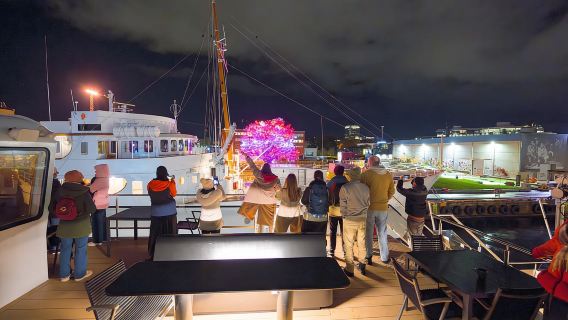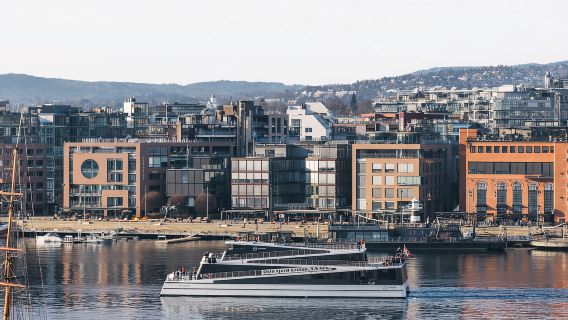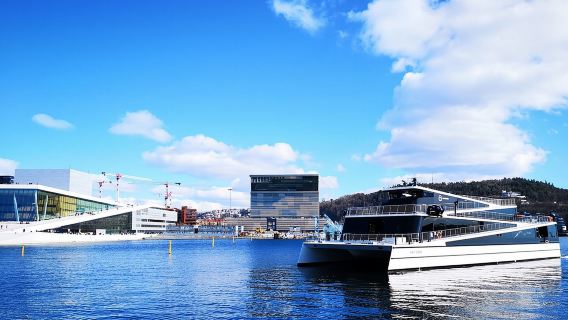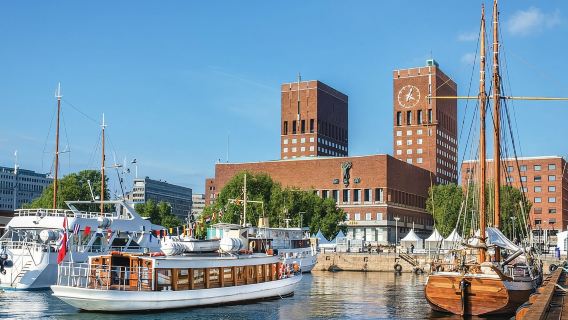

▲ Oslo's Aker Brygge is a waterfront landmark on the northern shore of the Oslo Fjord, originally a 19th-century shipyard industrial area that was transformed in the 1980s into a mixed-use district combining commerce, culture, and leisure. Its architecture blends industrial heritage with modern design, featuring open-air plazas, walkways, and over 600 yacht berths. The pier is renowned for its shopping center converted from red-brick warehouses, waterside restaurants, and sculptural views, frequently hosting cultural events like photography exhibitions and music festivals. Visitors can take fjord cruises from here or walk to attractions such as City Hall, with free admission every Wednesday after 18:00.

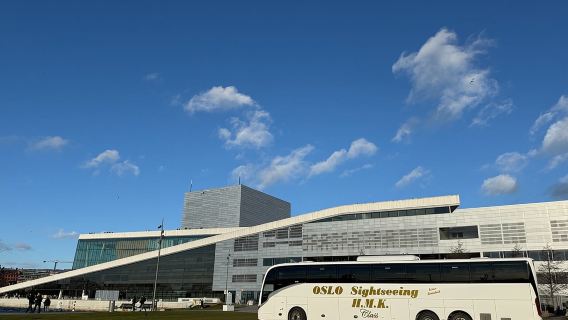
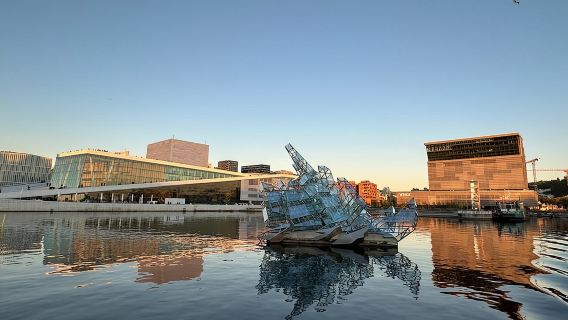
▲ The Oslo Opera House is one of Norway's cultural landmarks, designed by Snøhetta and completed in 2008. Its exterior, crafted from white marble and granite, resembles an iceberg emerging from the sea, with a sloping roof that visitors can walk on to enjoy panoramic views of the Oslo Fjord and the city. The interior features a 1,350-seat main theater with a horseshoe layout, equipped with individual screens displaying subtitles in eight languages, while part of the stage area is submerged 16 meters underwater. The building incorporates eco-friendly concepts, with solar panels on its facade making it one of Norway's largest solar-powered structures. It is open daily for free visits, with paid guided tour services available during specific hours. Free open-air concerts are often held on the rooftop in the evenings. The structure has won the World Architecture Festival Award in the culture category and is hailed as a "21st-century masterpiece."

▲ Oslo Cathedral (Oslo Domkirke) is the cathedral of the Church of Norway, constructed in 1694 and opened in 1697. It now stands as a Dutch Baroque-style cruciform building. The church is landmarked by its 63-meter-high bell tower and houses Norway's oldest church bell (1718) along with a 6,000-pipe organ made in Germany. Its bronze doors were designed by sculptor Dagfin Werenskiold. As a national religious site, it has hosted events like the wedding of Prince Haakon (2001) and the memorial service for the 2011 bombing. Admission is free, and it opens daily at 10 AM except on Fridays. Visitors can reach it with a 10-min walk from the train station.

▲ The National Museum of Norway is the largest art and cultural institution in Northern Europe, officially opened in June 2022. The museum was formed by merging four top Norwegian art institutions, with a total floor area of 54,600 square meters and 13,000 square meters of exhibition space, showcasing over 6,500 collections spanning 3,000 years of art treasures, including medieval tapestries, ancient Chinese porcelain, and Munch's "The Scream." The building is clad in gray Norwegian slate, with a 2,400-square-meter "Hall of Light" at the top, featuring 9,000 LED lights to create a translucent glowing effect, making it a city landmark. The museum houses a café, an open-air restaurant, and the largest art library in Northern Europe. Opening hours are from Tuesday to Sunday, 10:00 AM to 9:00 PM, with adult admission tickets priced at 180 NOK.

▲ The Royal Palace in Oslo is the official residence of the Norwegian royal family and a national symbol. Designed by Danish architect Hans Ditlev Franciscus Linstow, its foundation was laid in 1825 and it was inaugurated in 1849. The building covers an area of 3,320 square meters with 173 rooms, featuring luxurious interior decorations. Outside the main building are the Royal Garden and Norway's grand Celebration Square. Every year on May 17th, Norway's Constitution Day, the royal family greets the public from the balcony. The palace is open to visitors during summer (guided tours required), with admission tickets priced at 95 NOK for adults, and discounts available for Oslo Pass holders. The Changing of the Guard ceremony takes place daily at 13:00 in the square, which visitors can watch for free.

▲ Oslo's Munch is one of the world's largest single-artist museums, housing approximately 28,000 works by Edvard Munch, including three of the four versions of "The Scream." The new building, designed by Spanish architecture firm Estudio Herreros, stands 13 stories tall and features a panoramic viewing platform along with permanent exhibitions titled "Unlimited" and "Immortal," exploring life and monumental art. The museum showcases oil paintings, sketches, prints, and Munch's personal letters, offering a comprehensive view of his creative career and psychological journey. Opening hours are Wednesday to Saturday from 10:00 AM to 9:00 PM, with free admission after 6:00 PM on Wednesdays. The admission ticket costs 180 NOK, and entry is free with an Oslo Pass.