
Things to do in Shijiazhuang
Explore top experiences
Top 10 attractions in Shijiazhuang


Zhengding Ancient City
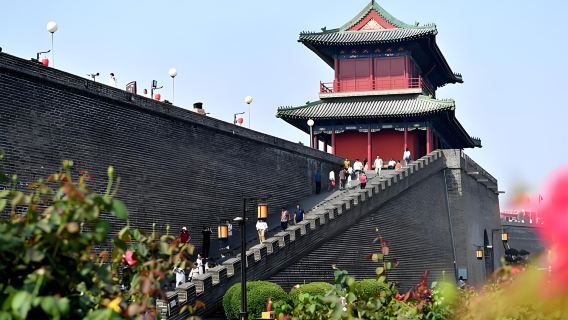
Zhengding Ancient City is located 15 km north of Shijiazhuang, the capital of Hebei Province. Built according to traditional Chinese planning concepts and architectural styles, it embodies China's historical and cultural characteristics from the 5th to 19th centuries, showcasing the wisdom and perseverance of ancient laborers. Historically known as one of the "Three Northern Strongholds" alongside Baoding and Beijing, its southern gate still bears a stone inscription reading "Stronghold of Three Passes." Zhengding is also the hometown of Zhao Zilong, a renowned general from the Three Kingdoms period. The long and rich history has endowed Zhengding Ancient City with magnificent and uniquely styled cultural relics and historic sites, renowned for its "Three Invisible Mountains, Nine Non-Flowing Bridges, Nine Towers, Four Pagodas, and Eight Great Temples, along with Twenty-Four Exquisite Memorial Archways." "Three Invisible Mountains" refers to the fact that Zhengding was historically the administrative center of the Zhongshan State, Hengshan Commandery, and Changshan Commandery, yet the area itself has no mountains. "Nine Non-Flowing Bridges" describes a single-arched three-path stone bridge in front of the Longxing Temple, as well as the pan bridges (ancient pan bridges typically featured three parallel bridges) in front of the Prefectural Confucian Temple and the Zhengding County Confucian Temple—none of which have flowing water. "Nine Towers, Four Pagodas, and Eight Great Temples" refers to the original four gate towers, four corner towers, and the Yanghe Tower within the city; the four pagodas are the Tianning Temple Pagoda, Huata Pagoda of Guanghui Temple, Xumi Pagoda, and Chengling Pagoda of Linji Temple; the eight great temples include Longxing Temple, Guanghui Temple, Linji Temple, Kaiyuan Temple in Zhengding Ancient City, Tianning Temple, Hongji Temple, Sheli Temple, and Chongyin Temple—the latter three of which have been destroyed. Zhengding once boasted 24 magnificent memorial archways, including the Xu Family Archway, Liang Family Archway, Ancient Changshan County, Supreme Virtue Reaching Heaven, Virtue Matching Heaven and Earth, and Wooden Bell for All Affairs. However, due to historical changes, weathering, and especially the destruction during the decade-long Cultural Revolution, many precious cultural relics were damaged. Yet with 9 nationally protected relics, 6 provincially protected relics, and over 10 county-level protected relics, Zhengding still retains the grandeur of a renowned historical and cultural city. The ancient city of Zhengding was designated as a provincial-level historical and cultural city in 1990 and recognized as a national historical and cultural city in 1994. Zhengding's tourism features a unique blend of "modern and ancient," "elegant and folk" characteristics. Among its historical sites, the Longxing Temple, originally built in 586 AD during the Sui Dynasty and expanded under the decree of Emperor Zhao Kuangyin, the founding emperor of the Song Dynasty, stands majestic and well-preserved. It enjoys high acclaim both domestically and internationally, praised by renowned architect Liang Sicheng as "the foremost temple beyond the capital." The temple's "Reclining Guanyin" mural sculpture was hailed by Lu Xun as "the Goddess of Eastern Beauty."Revolving Sutra LibraryDubbed by physicists as a prime example of Newton's laws in action, along with China's scripture cabinets. The Sui Dynasty Longzang Temple Stele is one of the country's renowned ancient stone inscriptions, showcasing the evolution from Han clerical script to Tang regular script, praised by Kang Youwei as "the finest Sui stele." Standing 22 meters tall, the grand Buddha statue is among China's earliest and tallest surviving bronze standing Buddhas. The cross-shaped Mani Hall exemplifies classic Song Dynasty architectural techniques. Zhengding's vicinity also boasts four famous pagodas, including Huagong Pagoda at Guanghui Temple—a brilliant fusion of diamond throne and floral pagoda styles. Tianning Temple's...Lingxiao PagodaIt is the foremost wooden pavilion tower in China. The symmetrical arrangement of the Tang Dynasty bell tower and ancient pagoda at Kaiyuan Temple in Zhengding Ancient City exemplifies the transition in Chinese Buddhist temple architecture from pagoda-centered to hall-centered layouts. The Chengling Pagoda at Linji Temple serves as the reliquary pagoda for Master Yixuan, founder of the Linji school of Buddhism, and has become a symbol of Sino-Japanese friendship. Located within Zhengding, the Zhengding Rongguo Mansion was meticulously designed and constructed according to descriptions in Cao Xueqin's literary masterpiece "Dream of the Red Chamber" while strictly adhering to China's "Great Qing Code", making it the country's first architectural complex replicating Ming-Qing architectural styles. Most scenes from the TV series adaptation of "Dream of the Red Chamber" were filmed here. The Qing Dynasty-style Ningrong Street by Rongguo Mansion's west gate stretches over 200 meters, where pivotal scenes like "Imperial Consort Yuan's Homecoming" and "Qin Keqing's Funeral" were shot. With over 1,600 years of history, Zhengding Ancient City's walls were originally earthen fortifications during the Eastern Jin Dynasty, rebuilt in stone during the Northern Zhou Dynasty, expanded into earthen walls during the Tang Dynasty, and finally reconstructed as 24-li (approximately 12 km) brick walls during the Ming Dynasty. The surviving 8,106-meter Ming-era walls feature four magnificent gates: Yingxu (later renamed Huancui) to the east, Changle to the south, Zhenyuan to the west, and Yong'an to the north. While time has eroded the western and northern gates, the eastern gate was entirely buried under 1960s military fortifications. In 2001, the southern gate tower and 50-meter flanking walls were restored through public donations of original bricks and a CNY 3.99 million investment.Zhengding · 414m from downtown

Longxing Temple
Longxing Temple, also known as the Great Buddha Temple, is one of China's most historically significant Buddhist monasteries with extensive architectural scale and remarkable preservation. This ancient architectural complex holds outstanding historical and cultural value as a monumental religious site. Longxing Temple traces its origins back to 586 AD during the Sui Dynasty, initially named Longcang Temple before being renamed during the Tang Dynasty. In 971 AD under Emperor Taizu of the Northern Song Dynasty, an imperial decree commissioned the casting of a magnificent 42-arm bronze statue of the Thousand-Hand Guanyin Bodhisattva within the temple, accompanied by the construction of the Great Mercy Pavilion. Subsequent expansions formed a Song Dynasty architectural complex centered around this pavilion. The temple underwent repairs and additions during the Jin, Yuan, and Ming Dynasties. Major renovations ordered during the reigns of Kangxi and Qianlong in the Qing Dynasty established its final layout: monastic living quarters in the east, Buddhist ceremonial spaces in the center, and imperial lodging in the west. In 1710, Emperor Kangxi personally inscribed the "Longxing Temple" plaque as a mark of reverence. From the late Qing through the Republic era, social upheaval and warfare led to the temple's decline. After the founding of New China, systematic restoration and preservation efforts by the government gradually restored the temple to its former grandeur. Longxing Temple boasts an expansive scale and diverse architectural styles, stretching approximately 600 meters from north to south and 200 meters from east to west. Its main structures are symmetrically arranged along a central axis, featuring key buildings such as the Heavenly King Hall, Mani Hall, Ordination Platform, Great Mercy Pavilion, Amitabha Hall, Vairocana Hall, and Dragon Soaring Garden from south to north. Visitors can explore along the central axis, with a complete tour typically taking 2–3 hrs. The temple is also known as the "Great Buddha Temple," a name derived from its enshrined 21.3-meter-tall Thousand-Armed and Thousand-Eyed Guanyin statue in the Great Mercy Pavilion. This majestic bronze statue, commissioned by Emperor Zhao Kuangyin during the Northern Song Dynasty, stands as one of China's most monumental ancient copper-cast Buddhist sculptures, earning the temple its nickname and making it a must-see attraction. The Mani Hall is another must-see highlight, featuring a vividly colored seated Avalokitesvara statue on its northern wall. This unique statue combines lifelike realism with divine beauty in its posture and vibrant hues. Lu Xun once praised it as "personifying divinity," earning it the title "Goddess of Eastern Beauty." The hall itself boasts distinct Song Dynasty architecture, with its original structure preserved. Its particularly special bracket set design was hailed by renowned architect Liang Sicheng as a "singular example" of Song-era construction, making it an architectural masterpiece of immense artistic and research value. Beyond these two main attractions, the temple houses other equally precious artifacts and structures. These include the Longxing Temple Ordination Platform in the Ordination Hall, the Northern Song Dynasty revolving sutra cabinet in the Revolving Sutra Cabinet Hall, the 7.4-meter-tall Northern Song wooden Maitreya statue in the Cishi Pavilion, imperial stele inscriptions by Emperors Kangxi and Qianlong in the Imperial Stele Pavilion, and the Sui Dynasty Longcang Temple Stele revered as the "origin of regular script"—all rare historical treasures worth admiring in detail. Additionally, the Dajue Liushi Hall ruins and Longteng Garden offer unique experiences, making them highly recommended stops for visitors.Zhengding · 1 km from downtown

Rong Mansion Scenic Spot
Rong Mansion Scenic Spot in Zhengding was China's first film and television shooting base, built for the 1987 TV series "Dream of the Red Chamber." This ancient-style architectural complex features Ming and Qing dynasty designs, consisting of a mansion and street section. Construction began in December 1984 and opened to the public in July 1986. In 1983, China Central Television (CCTV) planned to produce the grand TV series "Dream of the Red Chamber" and sought local government cooperation to build a temporary outdoor set for Rongguo Mansion. The then Party Secretary of Zhengding County keenly recognized the business opportunity, contacted CCTV, and quickly reached an agreement where Zhengding would provide the land free of charge to construct the full-scale Rongguo Mansion set. In July 1986, after 1 year and 8 months of construction, the Rongguo Mansion attraction was completed, covering 55 acres with an investment exceeding CNY 3.5 million. The completion of Rongguo Mansion significantly boosted Zhengding's tourism industry, pioneering a national model that became known as "China's tourism, the Zhengding model." The Rongguo Mansion is designed and constructed based on the "Rongguo Mansion" depicted in the Chinese classical masterpiece "Dream of the Red Chamber." The main attractions include the Rongguo Mansion scenic area, Ningrong Street scenic area, and the Cao Xueqin Memorial Hall. Covering an area of 37,000 square meters with a building area of 6,400 square meters, the mansion features 212 rooms and 102 corridors. The entire estate is divided into eastern, central, and western sections, each designed as a five-courtyard quadrangle in Ming and Qing architectural styles. The central section serves as Jia Zheng's official courtyard, adorned with solemn imperial-style paintings, while the eastern and western sections are inner residential courtyards featuring vibrant Suzhou-style paintings. The interiors boast elegant floor-standing floral partitions and exquisite Ming and Qing-style furniture. With 23 scenes, 88 character figures, and over 1,600 antiques and calligraphy pieces, the mansion vividly recreates the grandeur of a "household of lavish feasts and a family steeped in poetry and literature." After Rongguo Mansion was completed, the 36-episode TV series "Dream of the Red Chamber" was filmed here for nearly two months, capturing over 2,000 scenes. Key sequences like "Yuanchun's Home Visit" and "Qin Keqing's Funeral" were shot on location. Since then, it has served as the filming site for 200 productions including "The Kangxi Dynasty," "Who Will Dominate," "Hai Tang Yi Jiu," and the child actor version of "Dream of the Red Chamber." Today, it has evolved into a premier attraction integrating film production, tourism, and the promotion of Red Chamber culture.Zhengding · 718m from downtown

Longquan Ancient Town · Drama Illusion City
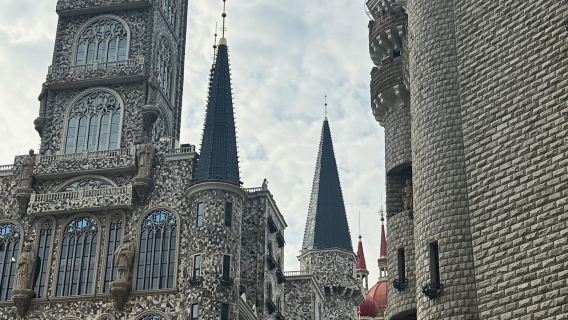
Longquan Ancient Town · Drama Illusion City is located in Luquan District, Shijiazhuang City, Hebei Province, in the heart of the North China Plain. Recognized as one of Hebei Province's "Top 10 Cultural Industry Projects of 2020," this attraction spans 948 acres. The ancient town's architecture consists of a large-scale cluster of Ming-Qing and Republic-era buildings, meticulously reconstructed using authentic historical components collected over 30+ years from across China—including century-old houses, gates, bridges, and stone carvings. This architectural treasure offers exceptional social value for studying Ming-Qing to Republic-era construction techniques, folk customs, and wedding traditions, while actively contributing to cultural preservation and heritage promotion.Shijiazhuang · 15.4 km from downtown

Zhaozhou Bridge
Zhaozhou Bridge, also known as Anji Bridge, is locally called the Great Stone Bridge. Built between the late Kaihuang period and early Daye period of the Sui Dynasty (595–605 AD), it has a history of over 1,400 years. Designed and constructed by Sui Dynasty craftsman Li Chun, it was bestowed the name "Anji" by Emperor Zhezong during his northern inspection tour in the Northern Song Dynasty. The Zhaozhou Bridge is a large single-span open-spandrel stone arch bridge with a segmental arch. The main arch consists of 28 parallel arch rings arranged longitudinally. The bridge has a total length of 64.4m, a deck width of 9m, and a width of 9.6m at the springing lines on both sides. The main arch, constructed with 28 parallel arch rings, has a clear span of 37.02m and a rise (vertical distance from the crown to the springing line) of 7.23m. The two smaller arches near the abutments at each end of the main arch have clear spans of 3.81m, while the two smaller arches closer to the center of the bridge have spans of 2.85m. Zhaozhou Bridge is an ancient stone arch bridge renowned for its exceptional scientific sophistication and artistic beauty. It holds a significant position in the history of world architecture and has been celebrated since ancient times as a "marvel of the world." In 1961, it was designated by the State Council as one of China's first batch of major national cultural heritage sites. In September 1991, the American Society of Civil Engineers selected it as the 12th "International Historic Civil Engineering Landmark," commemorating the honor with a plaque and monument.Zhao County · 3.8 km from downtown

Baodu Scenic Spot
Baozhai is not a village but a mountain. (Zhai means village in Chinese) Baozhai is located to the west of Shijiazhuang City. Mountain slopes are very steep, so the ancients built military villages there. This is a nice destination for hiking and visiting cultural and historical sites.Shijiazhuang · 21.7 km from downtown

Mt Cangyan Scenic Area
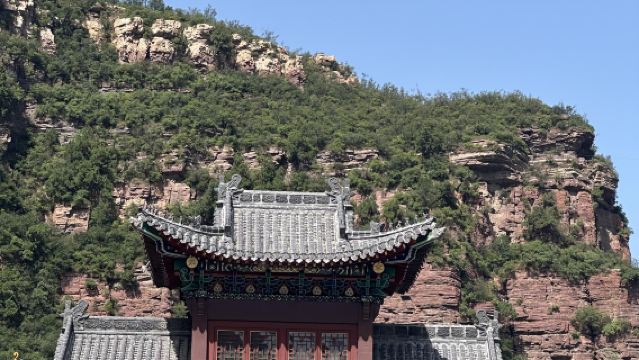
Mt Cangyan Scenic Area covers a total area of 63 km², with a height of 1,039.6m and an elevation of over 1,000m. As a branch of the Taihang Mountains, it boasts breathtaking scenery with lush vegetation. Every step reveals stunning views, each with unique wonders and historical significance. Since ancient times, it has been celebrated as "the epitome of the Five Great Mountains' splendor and the crown jewel of the Taihang range." The area features ancient towering trees, layered verdant peaks, and extraordinary natural landscapes, including its famous "Sixteen Scenic Wonders" such as Emerald Stream Sacred Sandalwoods, Cliffside Stone Milk, Precipice-Embedded Pearls, Sunset Glow on Furnace Peak, Waist-Hugging Cypress, and Cave-Revealing New Perspectives. Among these peaks are scattered numerous meditation halls, ancient temples, pavilions, and stone tablets, mostly relics from the Ming and Qing dynasties. These structures, either perched on steep cliffs or nestled beneath sheer precipices, feature intricately carved beams and painted rafters, exuding an antique charm. The main attractions include Fuqing Temple, the Academy, Wanxian Hall, Yuhuang Peak, Princess Shrine, Qiaolou Hall, Fenghui Pavilion, and the Scripture Depository. The Bridge Tower Hall is a famous architectural marvel in Cangyan Mountain. Perched between two sheer cliffs, three single-arch stone bridges span the chasm, crowned with pavilions. Viewed from below, the suspended bridge and tower appear to soar through the clouds, creating an illusion of flight. This hall ranks among China's top three cliffside temples and stands as a masterpiece of ancient Chinese architecture.Jingxing County · 22.1 km from downtown

Manshanhua Valley Scenic Area
Manshanhuaxi Valley Scenic Area in Lingshou County, Shijiazhuang City features forests, grasslands and mountain springs. Entering the scenic area, visitors can see lush forests, a clear stream running through the entire valley, and plenty of small waterfalls. From April to November, there are hundred kinds of flowers blooming in the scenic area. If you are an adrenaline junkie, please try the aerial glass rafting here. It is quite unique of its kind.Lingshou · 62.4 km from downtown

Shijiazhuang Pilu Temple Museum
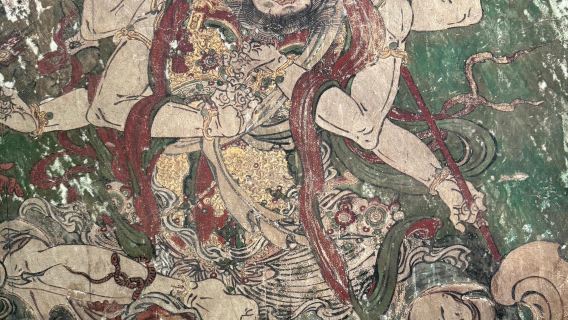
Pilu Temple is located in the northwest of Shijiazhuang City, Hebei Province, east of Shangjing Village, Xinhua District, 10 kilometers from the city center. It was first built during the Tianbao period of the Tang Dynasty and is a famous Buddhist temple with a long history in the city. Pilu Temple covers an area of 28 acres. It is famous for its exquisite religious murals from the Ming Dynasty, and also preserves a number of precious historical relics such as stone carvings and statues from the Western Han Dynasty. It is a national key cultural relic protection unit. The murals of Pilu Temple are a treasure house of traditional Chinese culture and a pearl in mural art. Compared with other murals in China, the murals of Pilu Temple have three unique characteristics: First, the content of the murals is very rich and all-encompassing. In addition to the gods of Buddhism, Taoism and Confucianism, there are also some paintings reflecting the social customs of the time and ancient figures. Second, the painting skills are exquisite, the styles are rich, and the line types are complete. Various characters are painted with different lines, such as fluttering ribbons, folds in the wind, and colorful clouds flowing around them, with rich and vivid expressions and distinct and different personalities. Third, the characters in the picture use the technique of gilding on a large area, with exquisite workmanship, and the characters have a strong three-dimensional sense, achieving an artistic effect of both spirit and form, vividness and lifelikeness.Shijiazhuang · 12.2 km from downtown

White Deer Hot Spring
Bailu (White Deer) Hot Springs are located in Pingshan Town near to Shijiazhuang City—the capital of Hebei. They are perhaps one of the most famous hot springs resort complexes in the vicinity of Shijiazhuang. In addition to a variety of indoor and outdoor hot springs, there is also a special children's play area and a spa. Visitors can come for a spa treatment or simply to enjoy the hot springs experience. Children will enjoy the numerous age-appropriate water sports entertainment facilities. It is eminently suitable for the whole family. Visitors to Bailu Hot Springs need not limit themselves to only visiting the springs on their trip. Many other scenic areas and famous revolutionary sites are located nearby, including Xibaipo, Tiangui Mountain, and Tuoliang Mountain.Pingshan · 19 km from downtown
Experiences you can't miss in Shijiazhuang
Featured Day tours in Shijiazhuang
View all Day tours
Free cancellation
Instant confirmation
Book now for tomorrow
From£28.93

From£66.95
Free cancellation
Instant confirmation
Book now for tomorrow
Save £0.53
From£52.92£53.45
Free things to do in Shijiazhuang
Zhengding Ancient City
Zhengding · 414m from downtownLongxing Temple
Zhengding · 1 km from downtownBook now for tomorrow, Cancel anytimeRong Mansion Scenic Spot
Zhengding · 718m from downtownBook now for tomorrow, Cancel anytimeLongquan Ancient Town · Drama Illusion City
Shijiazhuang · 15.4 km from downtownBook now for tomorrowZhaozhou Bridge
Zhao County · 3.8 km from downtownBaodu Scenic Spot
Shijiazhuang · 21.7 km from downtownBook now for tomorrow, Cancel anytimeMt Cangyan Scenic Area
Jingxing County · 22.1 km from downtownManshanhua Valley Scenic Area
Lingshou · 62.4 km from downtownShijiazhuang Pilu Temple Museum
Shijiazhuang · 12.2 km from downtownCancel anytimeWhite Deer Hot Spring
Pingshan · 19 km from downtownBook now for tomorrow, Cancel anytime
More ways to travel from Shijiazhuang
What travelers say about Shijiazhuang

Anonymous userOctober 5, 2026
5.0
This is a Buddhist holy site well worth visiting. The Thousand-Handed and Thousand-Eyed Buddha and the mural of the Reclining Guanyin are historical and artistic treasures that have been preserved intact for future generations to appreciate and understand history! An even greater gain was visiting the memorial hall of Mr. Liang Sicheng, where I learned about the contributions he and Lin Huiyin made to the preservation of historical sites in my country and their transmission in education, so that we, the later generations, can appreciate these historical sites!
Zhengding Ancient City
Anonymous userOctober 12, 2026
5.0
Let me first check the treasures of Longxing Temple to make sure they're accurate before adding more words.
Longxing Temple in Zhengding boasts six unique features, each considered the best in the country. First, the Mani Hall from the Song Dynasty, constructed without a single nail, is praised by Liang Sicheng as a unique example of ancient architecture in the world. Second, the Guanyin statue inside, seated backwards, with a beautiful face overlooking all beings, was praised by Lu Xun as an oriental goddess of beauty. Third, the Song Dynasty revolving sutra repository, the oldest existing one, can hold two tons of scriptures and can be turned by one person. Fourth, the Longzang Temple Stele from the Sui Dynasty, the ancestor of regular script and the first Sui Dynasty stele. Fifth, the over 20-meter-tall bronze Thousand-Hand Guanyin, the tallest ancient bronze statue. Sixth, the Ming Dynasty bronze Vairocana Buddha. With all six wonders combined, it's well worth a special trip.
Longxing Temple
Anonymous userOctober 9, 2026
4.0
📍Zhengding·Rongguo Mansion|A Dream of Red Mansions Through the Ages, Cao Xueqin Forever
I first read *Dream of the Red Chamber* when I was probably only seven or eight years old.
My family had a 1972 edition, which my father kept on top of the bookshelf. Kids, the more you forbid them from seeing it, the more curious they become, so I climbed up to the top of the bookshelf and secretly peeked through it, hiding behind piano sheet music. I couldn't recognize all the characters, let alone understand the poems, but I just couldn't put it down. I was obsessed for many years afterward, reading it countless times and devouring many works on *Dream of the Red Chamber* studies. Later, my reading became more diverse, and I gradually put it down.
But some things are hard to let go of. For our generation, who wasn't raised on CCTV's *Journey to the West* and *Dream of the Red Chamber*? When I think of Bao and Dai, only Ouyang Fenqiang and Chen Xiaoxu's images come to mind; any other portrayal just doesn't feel right.
I've been to the Grand View Garden in Beijing a few times. This time in Zhengding, naturally, I wanted to see Rongguo Mansion at night.
This is one of China's earliest film and television shooting bases. In 1983, during the location scouting for the filming of *Dream of the Red Chamber*, Xi Jinping, then Secretary of the Zhengding County Party Committee, strongly advocated for the production team to choose Zhengding as the filming location, transforming what was originally planned as a temporary outdoor set into a permanent building. In 1986, the Rongguo Mansion was completed, and *Dream of the Red Chamber* was filmed there for nearly two months, with approximately 4,000 shots completed there, including key scenes such as "Imperial Concubine's Visit to Her Family" and "Qin Keqing's Funeral."
On May 2, 1987, the 36-episode television series *Dream of the Red Chamber* premiered on CCTV.
This year, 2026, marks the 40th anniversary of the completion and opening of the Rongguo Mansion. Next year will be the 40th anniversary of the broadcast of the 1987 television series *Dream of the Red Chamber*. Standing here tonight feels like keeping a 40-year promise.
Cao Xueqin lived less than fifty years, *Dream of the Red Chamber* was written approximately 270 years ago, the 1987 television series aired nearly 40 years ago, and the Rongguo Mansion was completed 40 years ago.
The numbers keep changing. But some things remain the same.
Standing before Rongxi Hall, I suddenly recalled the image of myself at eight years old, perched atop the bookshelf, flipping through books. Back then, I couldn't understand the lines, "Full of absurd words, a handful of bitter tears"... Cao Xueqin left posterity a story that will never end.
Dream of the Red Chamber will always be read, and there will always be those who push open their doors at night to experience this dream that has lasted for over two hundred years.
Rong Mansion Scenic Spot
Anonymous userSeptember 6, 2026
4.0
Longquan Ancient Town is one of the most interesting ancient towns I've ever visited. Its charm rivals that of Wansui Mountain Martial Arts City in Hebei.
However, the only downside is the sheer number of people. Definitely avoid visiting during holidays. It's not fun at all; the overwhelming crowds halve the enjoyment. Even the NPCs (players) are exhausted.
But visiting during the off-season will definitely be much more enjoyable. Watch the classic shows and sample some local snacks. It will make your trip to Shijiazhuang even more magical.
Longquan Ancient Town · Drama Illusion City

难 得糊 涂September 19, 2026
5.0
The Zhaozhou Bridge Scenic Area, also known as Anji Bridge, was built over 1400 years ago under the supervision of the Sui Dynasty craftsman Li Chun. It is the world's oldest and best-preserved open-spandrel stone arch bridge, often referred to as the "Number One Bridge Under Heaven." It is a 4A-level scenic area and a national key cultural relics protection unit.
The Zhaozhou Bridge itself spans the Xiao River, featuring a single-arch design with four smaller arches added to the shoulders—a groundbreaking innovation in bridge construction. This not only reduced the bridge's weight but also helped divert floodwaters during the rainy season. The bridge's bluestone railings are carved with lifelike dragons and mythical beasts. Currently, climbing the bridge is prohibited, but visitors can admire and photograph it up close from the banks.
The Ancient Bridge Exhibition Hall introduces the bridge's construction principles and historical evolution, showcasing old photographs and models to help visitors understand the engineering wisdom of the ancients.
The Li Chun Statue stands at the entrance of the scenic area, commemorating the designer of this famous bridge.
The riverside gardens along the Xiao River offer excellent views of the bridge's reflection in the water.
Zhaozhou Bridge

_WB***59August 11, 2026
5.0
The cable car ride up and down was quite easy; walking around the top wasn't tiring at all. From the cable car station, I noticed the stairs looked incredibly long if you wanted to climb up yourself. Also, the middle station (the entrance to the slide) and the end station are on two different mountain peaks, requiring you to go up and down the stairs. The scenery at the summit was fantastic, with cliffs and precipices typical of the Taihang Mountains.
To get to Wanfo Cave, you need to climb a short, rather steep staircase. The descent isn't far, but the drop is significant; some steps are as high as my calf. Wanfo Cave was cool and shrouded in mist.
There are some shops on and at the foot of the mountain; bottled water is 2 yuan, very affordable. However, the KFC at the foot of the mountain wasn't open.
Baodu Scenic Spot

等待热的茶July 6, 2026
5.0
Worth it!
My son and I went up the mountain from Qiaoloudian and down from Dongtianmen, taking less than two and a half hours in total. The natural scenery and ancient relics along the way were aesthetically pleasing.
I recommend taking the Dongtianmen route down; there are several excellent spots for photographing Qiaoloudian.
I deducted one point for the aesthetics at the summit—those guesthouses were so ugly it made me want to curse. The scenic area is great from the foot of the mountain to the middle, but it gets incredibly noisy at the top. When it comes to attractions, quality over quantity is key!
Finally, let me talk about the night view. I arrived at night and went for a stroll after dinner at the hotel. I was amazed to find that the scenic area had a night view; the aesthetics were quite good, probably designed by professionals. A small suggestion: the lighting on the mountain was poorly chosen. The green light was completely invisible, and the red light was okay but a bit eerie. Could you try using blue light instead?
Mt Cangyan Scenic Area

冰咖啡彩虹糖August 22, 2026
5.0
Stepping into Manshan Huaxi Valley, nestled deep in the Taihang Mountains of Shijiazhuang, the city's heat and hustle and bustle are instantly shut out. As a national AAAA-level tourist attraction, its 98% forest coverage blankets the entire valley in lush greenery, with an average summer temperature of only 19.1℃, making it a recognized summer resort and health retreat in the Taihang Mountains. A clear stream flows through the entire area, terraced fields of flowers cascade down the slopes, and waterfalls, tranquil lakes, unique peaks, and fairytale villages are scattered throughout, offering both the majestic tranquility of pristine landscapes and the vibrant fun of trendy attractions.
Manshanhua Valley Scenic Area

akira10121111October 17, 2026
5.0
Take subway line 1, transfer to line 3, and get off at Gaozhuxia Station. Exit D (there's a long staircase to climb after exiting). You can either take bus 115 or a taxi.
A taxi costs 10-13 yuan and takes about 12 minutes. Take bus 115 to Shangjing Pilu Temple Station. After getting off, walk forward for about half a minute. There's a white bridge on your right. Cross the bridge and you'll see Houshe North Residential Area. Don't enter the residential area. There's a white Pilu Temple sign on your left (Figure 1). Turn left and walk to the end of the road for about 1 minute. To return, you can take bus 115 across the street (Figure 2 was taken from the bridge). The bus stop is on the right-hand side of the opposite side, marked with a circle. The bus journey is estimated to take 30 minutes, but the waiting time is long.
Shijiazhuang Pilu Temple Museum
Anonymous userFebruary 17, 2026
5.0
The pool water was kept at a comfortable, constant temperature; after soaking, I felt completely relaxed, all fatigue gone. The privacy was excellent, and the experience was top-notch. Choosing such a wonderful place for my first relaxation of the Year of the Horse was perfect; I'll definitely come back!
A healing paradise in winter! The steaming hot spring water is incredibly soothing, creating a fantastic atmosphere. It's perfect for taking photos or relaxing and unwinding—the pictures turn out amazing! Having fun and soaking comfortably—this is the right way to celebrate the New Year!
White Deer Hot Spring


