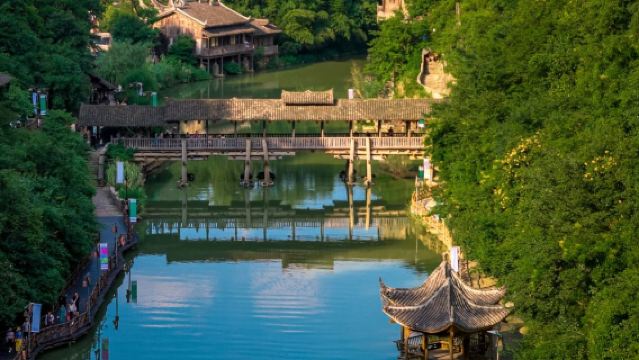
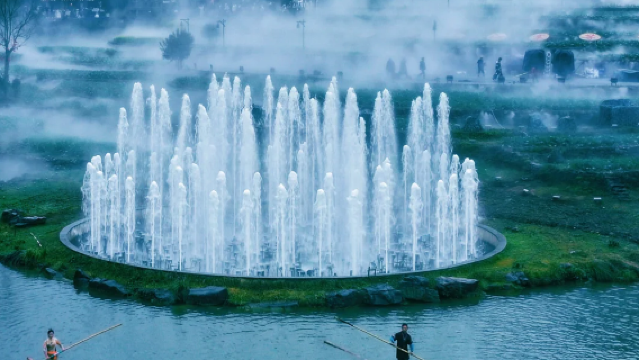
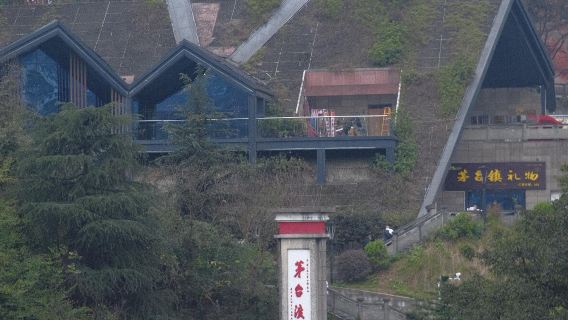
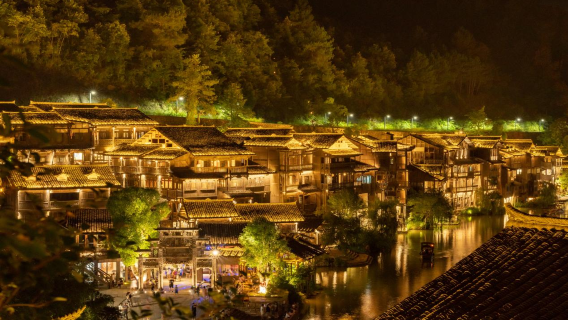
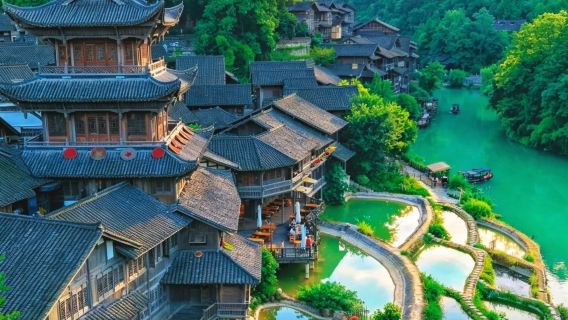
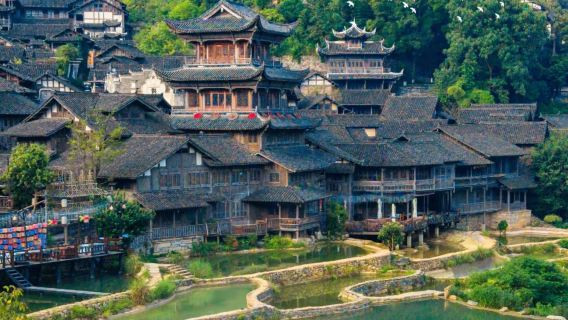
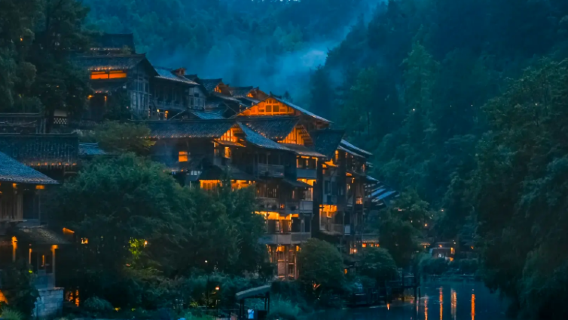
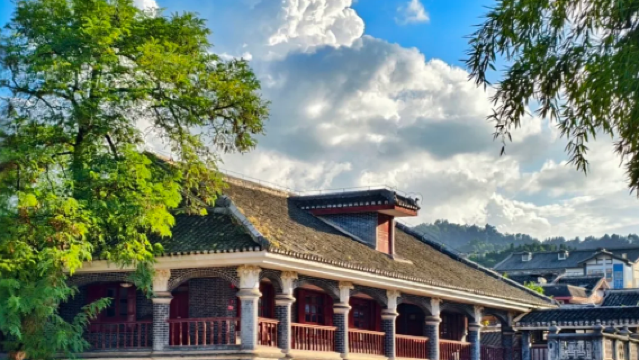
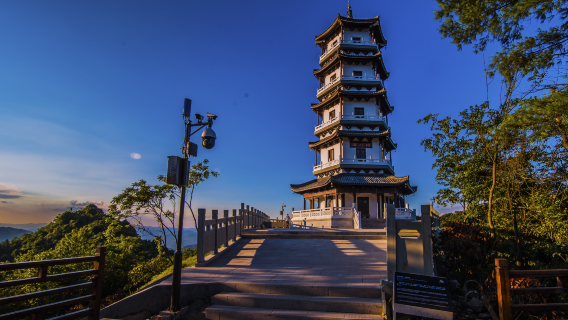
Nestled among the mountains, Wujiang Village exudes rustic elegance and picturesque charm. Inside the attraction, neat flagstone paths wind forward, while stilt houses towering over the rocky cliffs create a majestic sight. Courtyards adorned with couplets stand in harmony, and the river flowing through the village sparkles like emeralds, transporting visitors to a serene retreat.
Wujiang Village not only preserves and restores clusters of northern Guizhou folk dwellings but also establishes vibrant folk exhibition halls and traditional craft workshops, reviving the production of ceramics, flue-cured tobacco, fermented sauces, eagle tea, and other traditional crafts and foods. It has rediscovered nearly lost skills like cloth dyeing, lantern making, bamboo weaving, and ancient papermaking while inviting folk artists to showcase performances such as knife-ladder climbing, lantern dances, Nuo opera, single-bamboo drifting, and the Miao bamboo pole dance. Additionally, the attraction has revived the historic "Tea Horse Road" trading market—a vital commercial route connecting ancient Han, Tibetan, and other ethnic groups in southwestern China—as well as the lively "Riverside Fish Market," where residents along the Wujiang River once sold their catches. Northern Guizhou culture, intangible heritage performances, and daily life scenes intertwine along alleyways and waterways, blending seamlessly with the village's unique terrain to radiate the distinctive charm of northern Guizhou's folk traditions.