


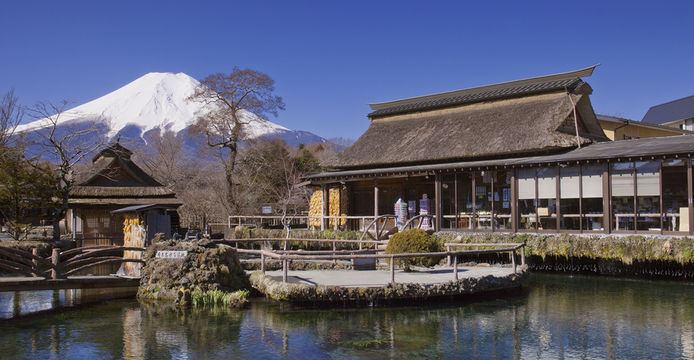

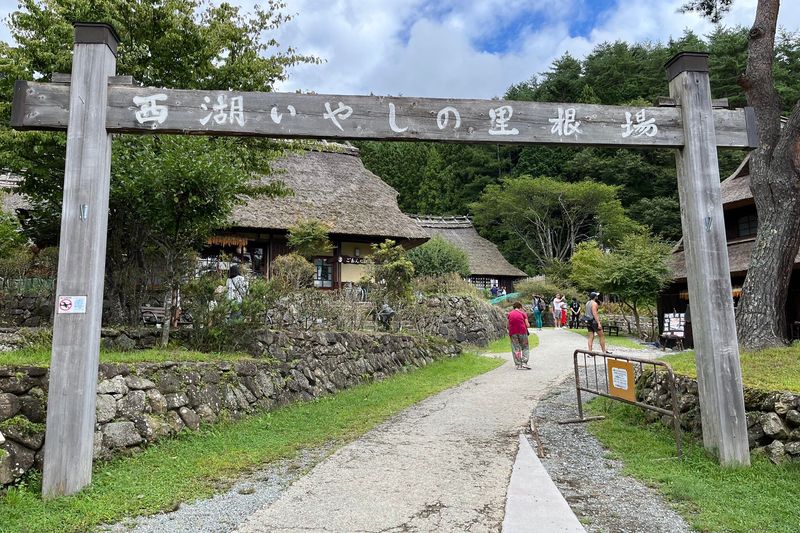
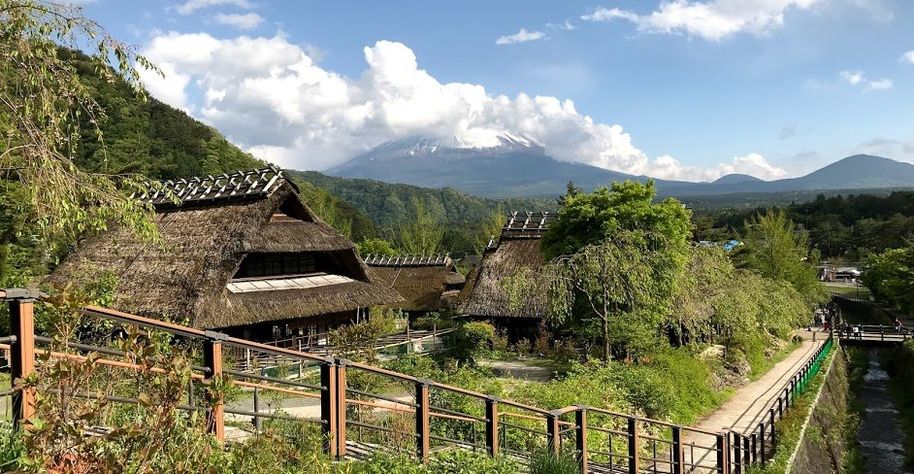
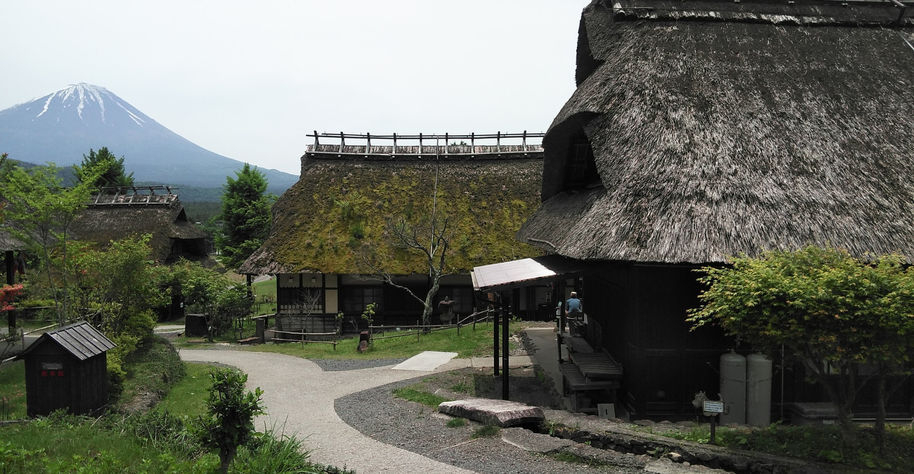

▲ Saiko Iyashi-no-Sato Nenba (Traditional Japanese Village) is located at the foot of Mount Fuji in the Saiko area, which was once a settlement for ancient Japanese residents. Due to rapid urban development, residents moved to the city, leaving the land deserted. Developers then conceived the idea of restoring the village's former appearance, resulting in the current Saiko Iyashi-no-Sato Nenba. From here, Mount Fuji appears within reach in the distance. The village features multiple houses with unique thatched roofs layered in a special straw-weaving technique. The distinctive triangular roofs on both sides resemble an open book, designed to reduce wind resistance and regulate daily sunlight exposure. This architectural design keeps the interiors warm in winter and cool in summer, making them more livable. Inside each building, visitors can experience traditional crafts, as well as explore museums and food halls showcasing local culture and cuisine.

▲ Shimoyoshida people's park is famous for its mid-slope Mount Fuji observation deck, featured in many Japanese brochures and postcards, and named one of "21 places every photographer must visit before they die". Climbing the 397 steps near the main hall allows you to capture "pagoda & Mount Fuji & townscape" in a single frame, attracting photographers and visitors worldwide. Beyond spring cherry blossoms, the summer greenery, fall foliage, and winter snowscapes are equally stunning. Besides the breathtaking Fuji views, you can also overlook the charming streets of Fujiyoshida.

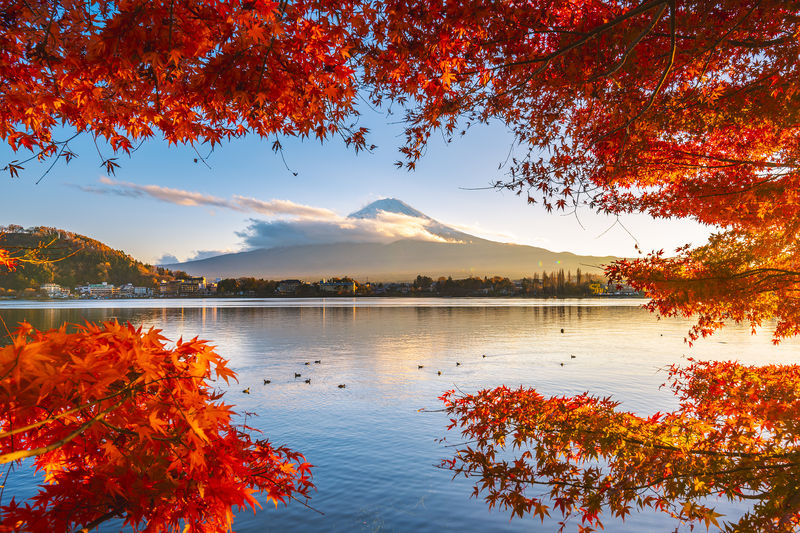
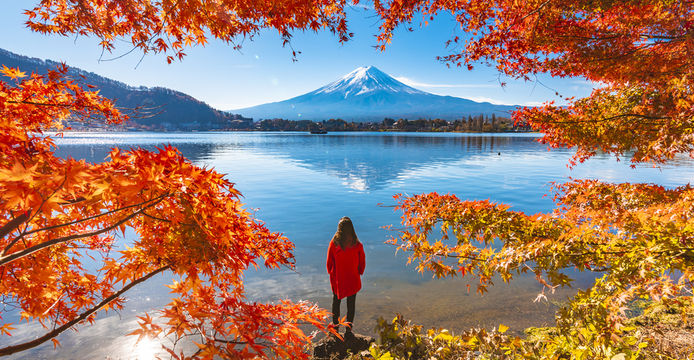
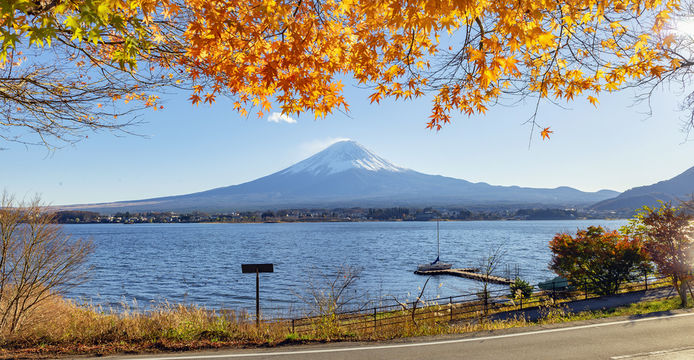
▲ Lake Kawaguchi is famous as a photography spot for Mount Fuji, where you can see the mountain's clear reflection in the lake. The area offers relaxing hot springs, excellent fishing spots, museums, and numerous attractions with stunning scenery. In spring, cherry blossoms bloom abundantly around Lake Kawaguchi. From mid-April to May, approximately 800,000 moss phlox flowers create a "rainbow on the ground" along the lakeshore. Summer brings the Kawaguchiko Herb Festival from late June to mid-July, painting the lakeside in vibrant purple hues with lavender fields. Autumn showcases the traditional beauty of Mount Fuji surrounded by colorful maple leaves. Winter is the best season for clear views of Mount Fuji.

▲ Lake Kawaguchi Oishi Park is a lakeside park featuring vast lavender fields with breathtaking views of Lake Kawaguchi and the majestic Mount Fuji.

▲ Lake Kawaguchi Oishi Park is renowned for its vast flower fields and magnificent views of Mount Fuji. The park blooms with seasonal flowers year-round, particularly lavender in early summer and kochia in fall, attracting numerous travelers to admire the scenery.

▲ The Maple Corridor at Lake Kawaguchi is located at the foot of Mount Fuji, transforming into a golden-red ocean every fall. Sixty giant maple trees line the lakeshore, forming a 150m-long tunnel of autumn leaves. At sunset, the maple leaves shimmer in golden-red hues under the lights, creating a picturesque scene. Strolling through the corridor feels like stepping into a fairyland, making it a top recommendation for fall foliage viewing and photography.

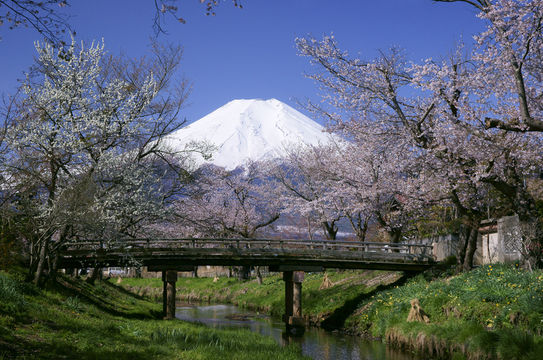
▲ Oshino Hakkai (the Eight Seas of Oshino) is a collection of eight pristine springs formed by snowmelt from Mount Fuji filtering through the bedrock. In 1985, Japan's Ministry of the Environment designated it as one of the nation's finest natural springs. Renowned for its breathtaking scenery, Oshino Hakkai features crystal-clear pools that shimmer under the sunlight, perfectly framing the majestic Mount Fuji. This picturesque setting attracts photographers from around the world. With its traditional thatched-roof houses, slowly turning waterwheels, and stunning views of Mount Fuji, visitors feel as if they've stepped into another era.