



▲ The Shanghai Natural History Museum's exhibits revolve around the theme of "Nature·Humanity·Harmony," with "Evolution" as the central thread. Starting from "Processes," "Phenomena," "Mechanisms," and "Culture," the museum features three major thematic sections—"The Symphony of Evolution," "The Canvas of Life," and "The Epic of Civilization"—comprising ten permanent exhibition zones that illustrate the intricate and interdependent relationships in the natural world.

▲ "All things in the world are born from existence, and existence arises from nothingness." The universe originated from the "Big Bang" approx. 13.8 billion years ago. Subsequently, various celestial bodies formed successively, and our home—Earth—was born 4.6 billion years ago. Where does the universe come from? How vast is the universe? What is the future of the cosmos? Where did the seeds of life originate? When did the earliest life emerge? Does extraterrestrial life exist? Humanity persistently pursues clues about the origins of the universe and life, continually proposing various theories and hypotheses—some confirmed, others overturned. Heaven and Earth possess great beauty yet remain silent; all things follow established principles yet speak not. The "Mysteries of Origins" exhibition area guides us along the footsteps of scientists to collectively seek all the answers.


▲ Did creatures we've never encountered exist in the distant geological past? How did species evolve into their current forms? What differences exist between ancient humans and modern humans? How can we unravel the mysteries of evolution? Let's travel along the "Timeline of Life" to explore the process of biological evolution and understand its patterns! The "Cambrian Explosion" created the "first bloom" in the history of life's evolution; "From Water to Land" saw life gradually colonizing terrestrial environments; the "Age of Dinosaurs" witnessed reptiles dominating land, sea, and sky; "Ancient Mammalian Habitats" marked mammals taking center stage in evolution; and "From Ape to Human" reveals the increasingly clear footprints of human evolution.


▲ Life—the greatest miracle in Earth's history—has endured cycles of birth, mutation, prosperity, and decline, repeating endlessly in an unbroken chain. Some groups flourished briefly only to face extinction, preserved as fossils; others, though inconspicuous, have weathered the ages and thrive to this day. Whether vanished or vibrant, minuscule or massive, all are witnesses to the river of life. The once-glorious transients and today's biological "stars" converge in the "River of Life" exhibition. Here, let us gaze upon the ripples of history, encounter lifeforms vastly different from our own, and grasp the essence of nature.


▲ Treasures of the Museum: Giant Mamenchisaurus fossils, mammoth skeletons, and other paleontological specimens, complemented by sound and light technology to recreate ancient ecological scenes.

▲ Think about it: What different types of dinosaurs can be found in the museum? Why were dinosaurs so gigantic? Why did they eventually go extinct? Are mammoths the ancestors of elephants? Why is ivory trade illegal? What distinguishes humans from animals? Are humans still evolving? What are models and fossil specimens? Search for real specimens.


▲ Why is it said that life originated from the ocean, and what is the evidence?
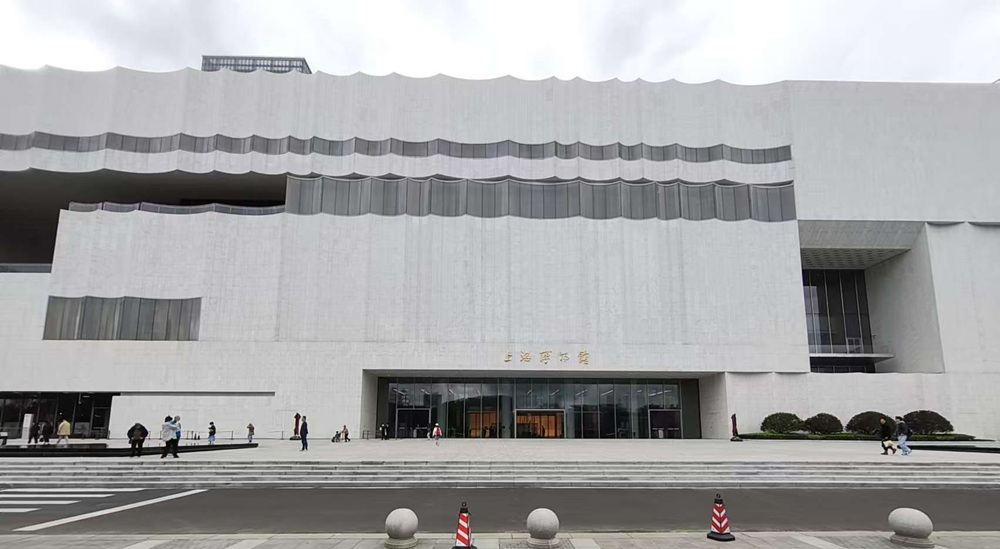
▲ Shanghai Museum East Hall: Time Span: Features 500+ carefully selected exhibits covering 3,600 years of bronze history from the Xia Dynasty to the late Qing Dynasty, including nearly 100 newly displayed artifacts. Technology Integration: X-ray CT scans reveal bronze casting techniques, with dynamic demonstrations of the "lost-wax method" restoration process. Comprehensive System: The bronze exhibition hall is systematically arranged across six periods - Emergence (Xia), Golden Age (Shang-Zhou), Renewal (Qin-Han), etc. Inscription Treasury: 40% of exhibits bear inscriptions, such as the 290-character Da Ke Ding and 111-character Guo Ji Zi Bai Pan, providing evidence of ancient rituals and social evolution.


▲ The Xi Zun From its structure, this is a wine warmer shaped like a water buffalo. The hollow belly of the buffalo features three openings on its neck and spine. The central opening holds a removable pot-shaped vessel for storing wine, while the two side openings are empty cavities (their lids are now missing). Hot water could be poured into this vessel, confirming its use as a wine warmer. • Animal-shaped wine vessels like this Zun are a distinctive feature of Chinese bronze ware. This piece exhibits a stable form—though its four legs are short, the dynamic horns and wide-eyed expression of the buffalo head retain a lifelike quality, harmoniously blending artistry with functionality. • A ring pierced through the buffalo's nose indicates that nose-ringing was already practiced to tame cattle during the Spring and Autumn period. This artifact provides valuable material evidence for studying the history of livestock domestication in China.

▲ Zizhong Jiang Pan (Spring and Autumn Period) Mechanical Marvel: The pan features three-dimensional waterfowl and frogs that rotate 360° inside, crafted using the lost-wax hollow casting technique, which allows them to spin when water flows through.

▲ Shang Yang's Standard Measure (Warring States Period) The Sole Evidence of Reform: The inscription on the bottom, "In the 18th year, the officials of Qi came to visit in large numbers," confirms the historical fact of Shang Yang's standardization of weights and measures, making it the earliest surviving standard measuring vessel.


▲ Ceramics Pavilion Follow the chronological route from "Neolithic - Han - Tang - Song - Yuan - Ming - Qing" dynasties, with special focus on the Five Great Kilns and the Imperial Kiln sections of Ming and Qing dynasties.


