





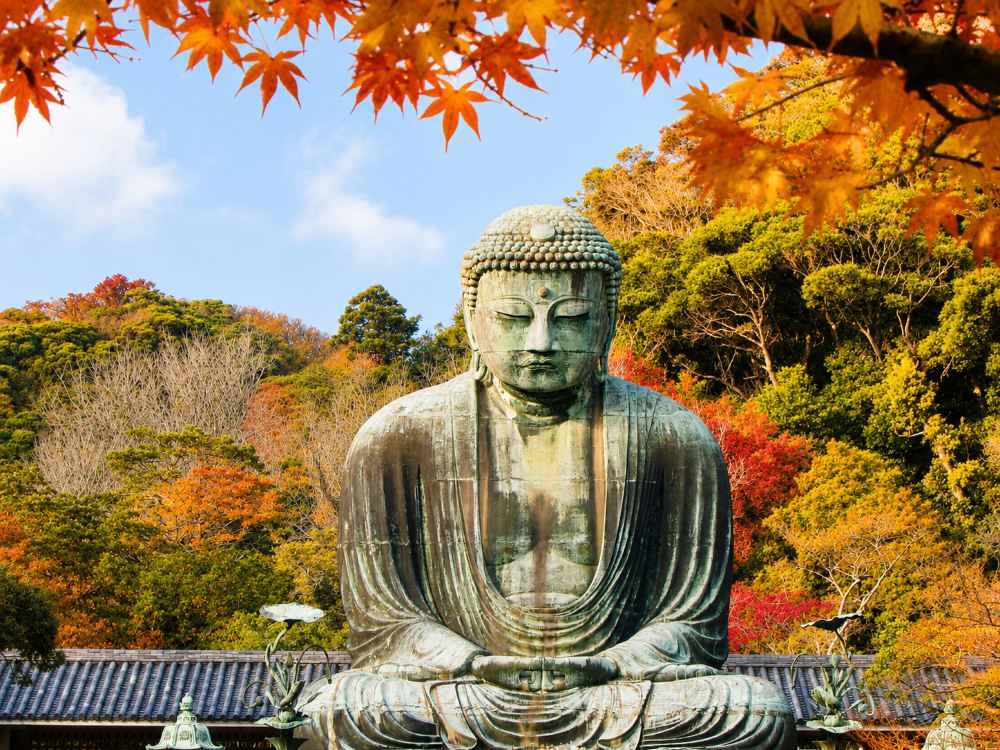
▲ [Kotoku-in] Kotoku-in is located in Kamakura City, Kanagawa Prefecture, Japan. It is a Buddhist temple primarily of the Soto school and one of the three great Kotoku-in temples in Japan. The Kamakura Daibutsu is a 14.98-meter-tall bronze Buddha statue located next to Kotoku-in, regarded as one of Japan's national treasures. The Great Buddha of Kamakura was built in 1252 as an artwork of the Kamakura period and is traditionally regarded as one of the representative symbols of Kamakura's rich culture.

▲ [Hasedera] Hasedera is a Buddhist temple located in Kamakura City, Kanagawa Prefecture, Japan, established in 1252 during the Kamakura period. It is primarily a Rinzai Zen temple and one of Japan's ancient temples, known as one of the "Five Great Zen Temples of Kamakura." The main structure is the magnificent "Amida Hall," which enshrines statues of the Thousand-Armed Kannon and Amida Nyorai. A notable feature of Hasedera is a thousand-year-old ginkgo tree called the "Great Ginkgo of Kamakura," standing over 20 meters tall.
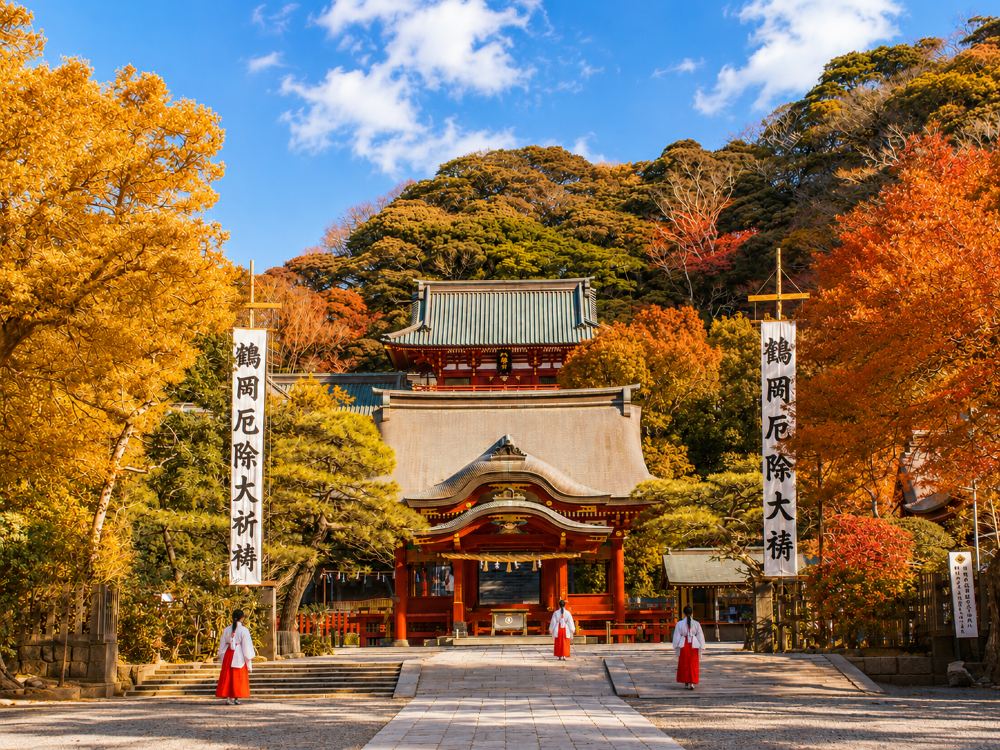
▲ [Tsurugaoka Hachimangu] Tsurugaoka Hachimangu is one of the important shrines in Japanese Shinto, located in Kamakura City, Kanagawa Prefecture, Japan, built between the late 11th and early 12th centuries. It is one of the representative attractions of Kamakura, a famous ancient capital of Japan, and also one of the five great Zen temples of Kamakura. The main enshrined deities are Emperor Ōjin and Hachiman Daibosatsu, with the shrine's architecture and artifacts brimming with ancient history and cultural value.
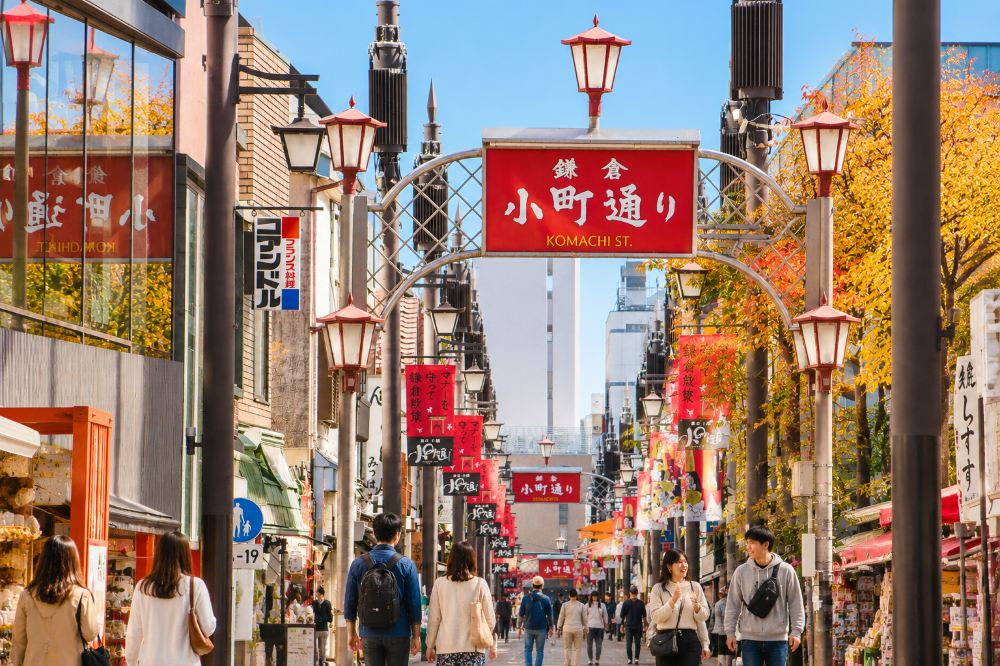
▲ [Komachi St] Komachi Street is a famous pedestrian street in Kamakura City, Kanagawa Prefecture, Japan, located in the central area of Kamakura. This street is lined with many exquisite ancient buildings and traditional handicraft shops, making it a great place for travelers to experience traditional Japanese culture and charm. The history of Komachi Street dates back to the Kamakura period, when this street was the commercial center of Kamakura City, with many taverns and inns. It still retains the style of the Kamakura period, with many historic buildings and temples such as Tsurugaoka Hachimangu and Myohonji.
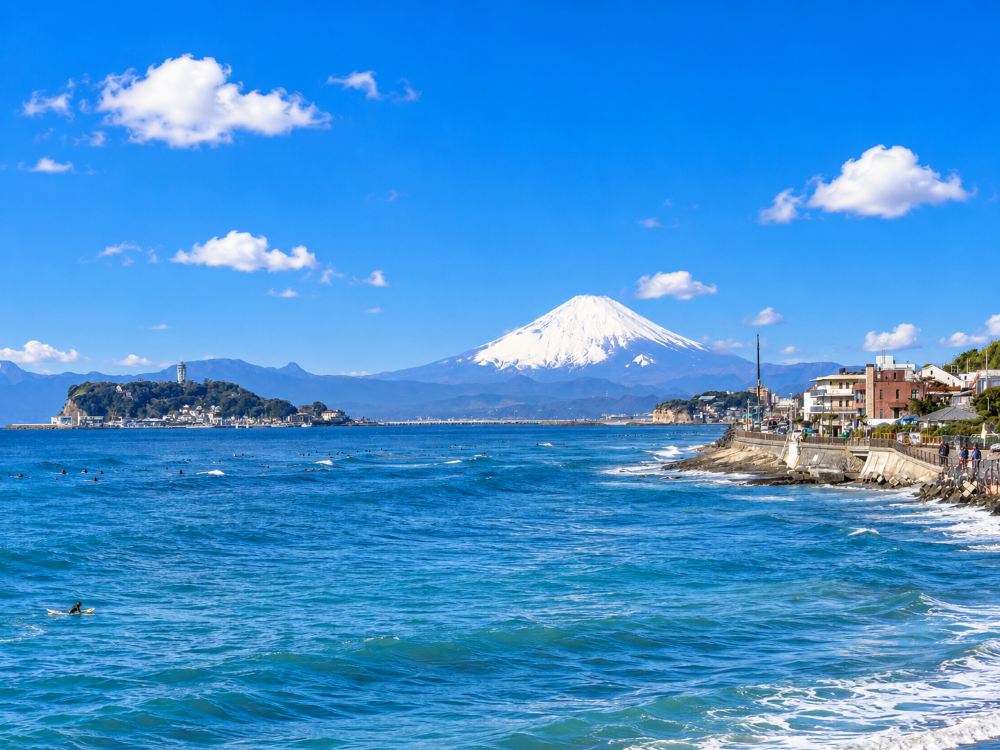
▲ [Enoshima] Enoshima is a small island off the coast of Kamakura City, Kanagawa Prefecture, Japan, and is world-renowned for its beautiful coastline and famous attractions. One of Enoshima's famous attractions, Enoshima Shrine, is a historic shrine dedicated to local deities. There is also a famous white tower on the island called "Shirahata Shrine," which enshrines a sea deity and is a very popular spot for New Year visits and prayers. ※ When riding, large baggage (such as Boston bags or suitcases) will be stored in the bus's luggage compartment. Please note that the baggage compartment has the following restrictions on storable baggage: Each passenger can only carry one piece of baggage. The total dimensions of baggage (length + width + height) must not exceed 155 cm. Baggage weight must be within the range that the passenger can carry by themselves. Baggage exceeding these limits cannot fit in the bus luggage compartment. Thank you for your understanding and cooperation. **| Special itinerary arrangements for Kamakura on January 1, 2, and 3, 2027** Due to traffic restrictions implemented in Kamakura during the New Year period in Japan, buses will not be able to enter the Kamakura city area. Therefore, the itinerary for the above dates will be adjusted to the following transportation method: - The bus will stop near Zushi Station, after which the guide and guests will take the train to Kamakura. - After arriving in Kamakura, you will travel to each sightseeing attraction in the city on foot. - The itinerary requires walking multiple times and moving between attractions; you cannot remain on the bus throughout. **Note:** During the New Year period in Japan, Kamakura experiences a large number of visitors, and severe congestion may occur at stations, attractions, and surrounding roads, with walking and travel times potentially taking longer than usual. Please carefully consider your own physical condition and mobility, as well as that of your companions, before booking—especially seniors, those with limited mobility, families with young children, and travelers who are not suited to long periods of walking. Please carefully assess whether this itinerary is suitable for you. Thank you for your understanding and cooperation. We hope everyone has a safe and pleasant journey!