



▲ Shibao Mountain blends unique danxia rock formations, lush forests, and ancient temple grottoes into one, where natural wonders coexist with cultural treasures. The attractions are scattered across the mountain with considerable distances between them, but shuttle buses connect all sections, eliminating the need for long hikes. Strolling through the mountain, you'll be accompanied by towering red peaks and serene pine valleys, with picturesque views at every turn. Here, you can admire the mountain scenery while appreciating millennia-old stone carvings, immersing yourself in the profound heritage of the Nanzhao kingdom.

▲ Baoxiang temple, also known as Shibao temple, is renowned as the hanging temple of Yunnan. Perched on the danxia cliffs of Foding Mountain in Shibao Mountain, it was first built in the Yuan dynasty and is a unique ancient temple blending Buddhism and Taoism in western Yunnan. The temple is built on natural cliff caves with stone foundations, and its halls are stacked layer by layer along the precipice. The Maitreya hall and the Jade Emperor pavilion are embedded in the rock face, with buildings hanging mid-air, creating a spectacular and breathtaking sight. Ascending the mountain step by step, you are accompanied by dense forests and secluded valleys, with wild macaques often appearing along the mountain trails. Inside the temple, halls and pavilions rise along the mountain slope, adorned with ancient trees and hanging vines, alongside cascading waterfalls and flowing springs, forming the "eight scenic views of the treasure appearance," with a serene and ethereal landscape. This is also the core venue for the intangible cultural heritage Shibao Mountain song festival. Every July in the lunar calendar, Bai ethnic people gather here to play string instruments and sing in antiphonal style, creating a strong folk cultural atmosphere. The temple blends natural wonders with religious culture, where red rocks, ancient pines, and hanging pavilions complement each other, making it photogenic. To visit, follow the stone steps uphill for approx. 15 mins to reach the core hall. Friendly reminder: Do not feed the macaques, keep your food secure, and watch your step when climbing the mountain.

▲ Shibao Mountain grottoes, also known as Shibao Mountain grottoes, are hailed as the Dunhuang of southwest China and a treasure of the southern sky. They were among the first batch of national key cultural relics protection units, carved during the Nanzhao and Dali kingdoms of the Tang and Song dynasties, dating back a thousand years. The grottoes are distributed across three main areas: Shizhong Temple, Shizi Pass, and Shadengqing, totaling 17 caves with over 200 statues carved into the red sandstone cliffs of Danxia. The statue themes are unique, featuring not only buddhas, bodhisattvas, and wrathful deities but also scenes of the Nanzhao royal family discussing state affairs and traveling, with imperial figures carved into the grottoes, making it a Nanzhao history book etched in stone. The classic Guanyin of sweet dew bears the charming "Jianchuan smile," with flowing drapery and gentle expression. The Acuoye Guanyin and Persian statues bear witness to the multicultural fusion along the ancient southwestern Silk Road. The stone carvings blend the Tang style of central China with Bai ethnic aesthetics, featuring delicate craftsmanship and vivid figures, where Buddhist esotericism converges with Bai Benzhu culture. Take the attraction sightseeing bus to Shizhong Temple station, then follow the mountain trail to visit each grotto in sequence. Friendly reminder: The grottoes are precious cultural relics. Touching the stone carvings is prohibited. Please refrain from using flash photography to help preserve these millennia-old historical sites.
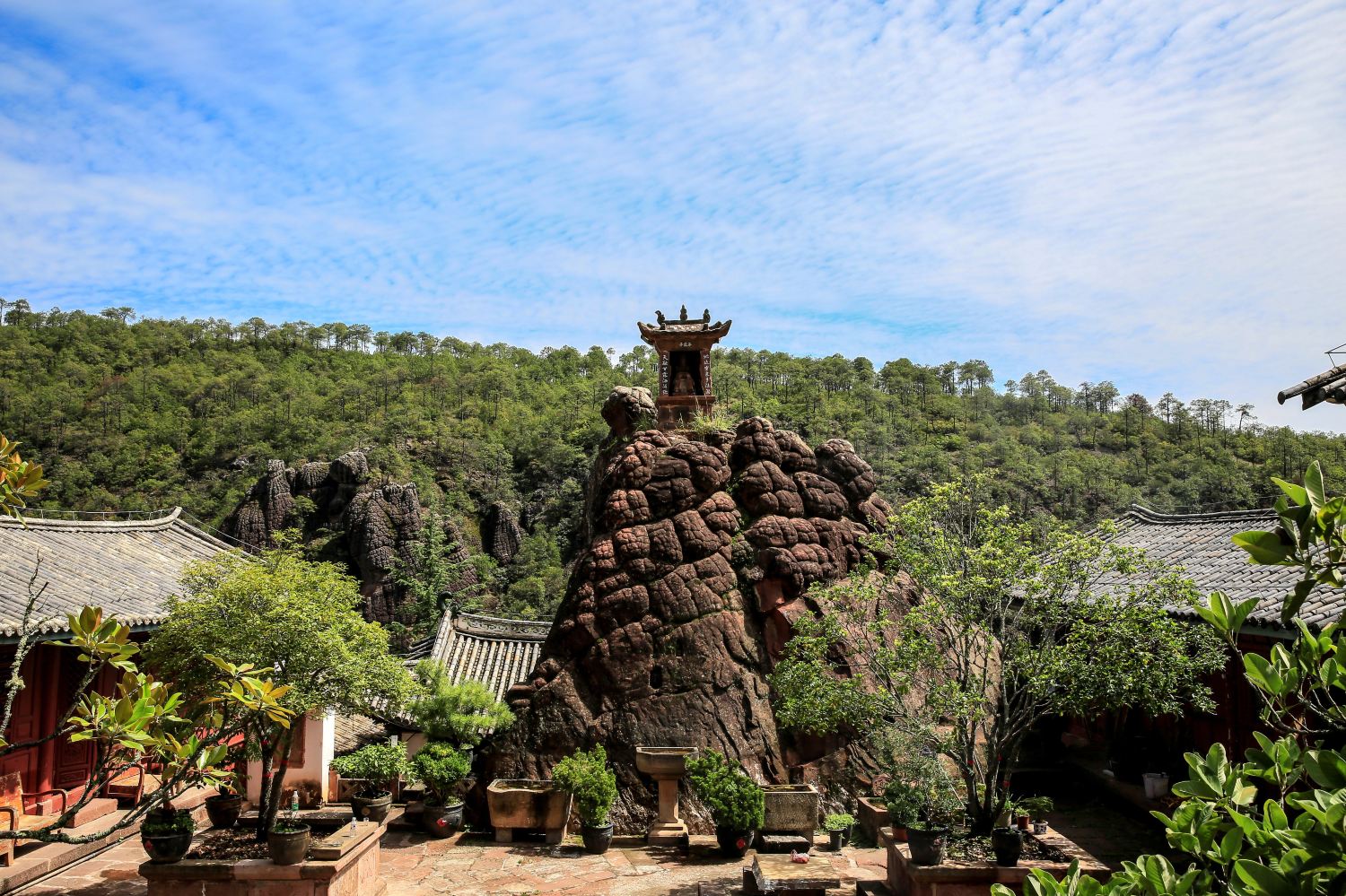
▲ Shibao Mountain gets its name from the unique Danxia landform in the area. The red sandstone, eroded by wind and rain over millions of years, forms various strange rock views. From a distance, it looks like stones blooming with flowers, hence the name "Shibao" (meaning "stone treasure"). The entire mountain area features exposed red rocks, contrasting vividly with the green pines and cypresses. The danxia rock formations here are mostly distributed along the cliffs, with natural shapes untouched by carving, featuring peaks, cliffs, caves, and stones. Giant red rock cliffs embrace the Baoxiang Temple, with natural caves serving as the foundation of the monastery, creating the wonder of an ancient hanging temple. Near Shizhong Mountain, the rocks resemble giant overturned bells, and the grottoes are carved into these red cliffs. Stroll through the mountains, where bizarre rocks stand like crouching beasts or stretch like barriers, with clear folds and textures on the cliffs, showcasing nature's craftsmanship. The red Danxia rock formations contrast with vast pine forests, offering ever-changing views and open vistas, perfect for photography. The danxia rock formations are not only stunning scenery but also natural carriers for grotto statues. Ancient people carved stone sculptures by leveraging the texture of red sandstone, blending natural wonders with millennia of cultural heritage, creating the unique landscape of Shibao Mountain. Note: The Danxia rock formations are relatively soft. Please do not climb the rocks or carve on the cliff walls. The mountain trails have many stone steps, so it is recommended to wear anti-slip sports shoes for the visit.
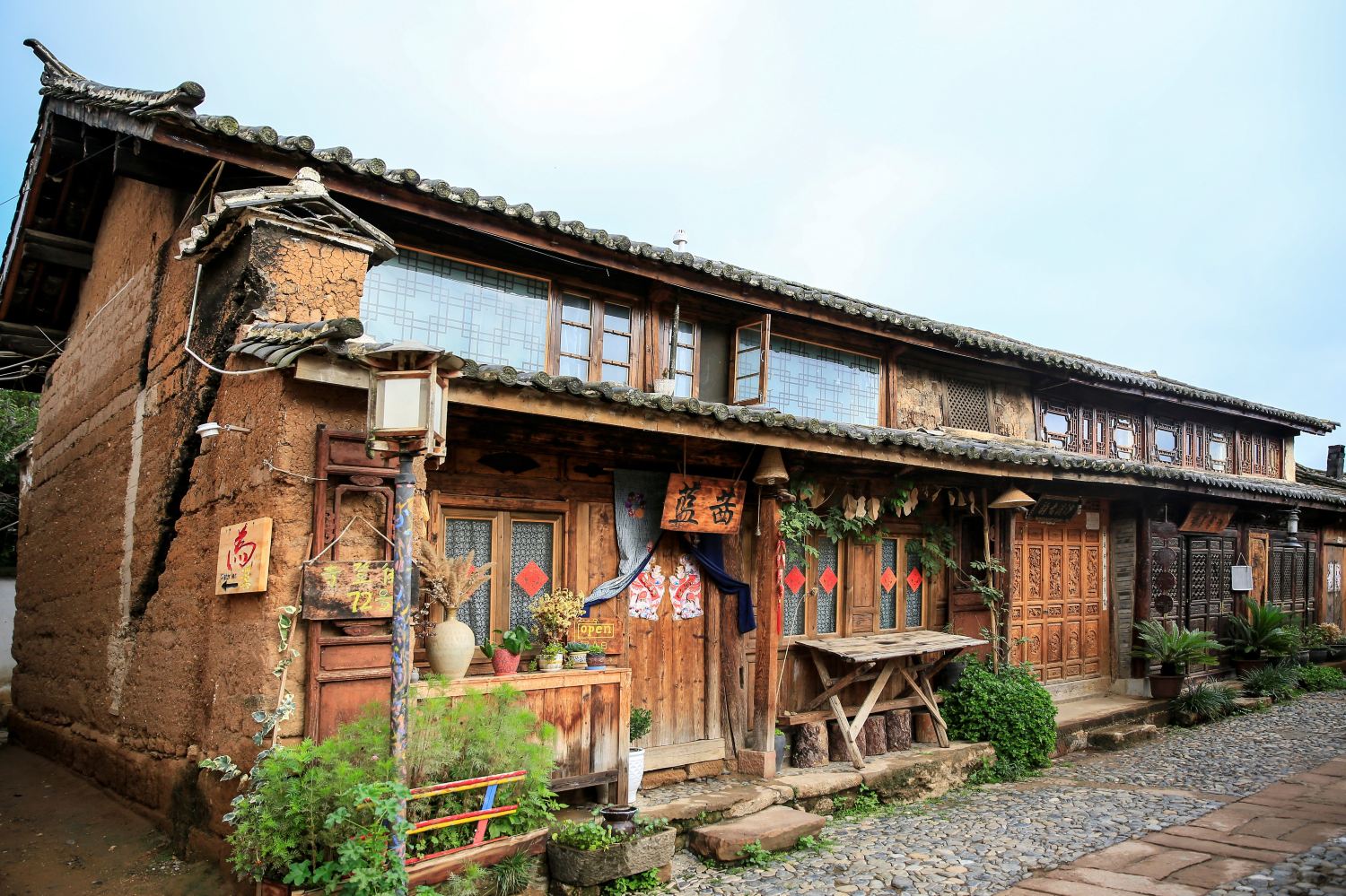
▲ Sideng Street is the core of Shaxi Ancient Town and a well-preserved ancient market on the Tea Horse Road. It was listed in the World Monuments Watch in 2001 and is hailed as the living fossil of the Tea Horse Road. The entire ancient street centers around Sifang square, where the red sandstone and bluestone slabs, polished smooth by centuries of horse hooves, exude a warm luster. Traditional Bai-style wooden houses line the street, mostly in the "shop in front, stable in back" layout, where caravan traders once conducted business and rested. To the east of Sifang square stands the ancient Kuixing pavilion stage with its exquisite upturned eaves and delicate wood carvings, while opposite lies Xingjiao temple—a well-preserved Ming-era Bai-style Esoteric Buddhist monastery housing precious murals from that period. The ancient alley connects to the east gate, leading to a walkable path to Yujin bridge, where the Heihui river flows gently. With minimal commercialization, it preserves the daily life of locals, where ancient lanes, old houses, and age-old trees complement each other in a tranquil and leisurely atmosphere. Strolling through, one can sense the lingering legacy of millennium-old caravan trade and savor the authentic folk culture of the Bai people.
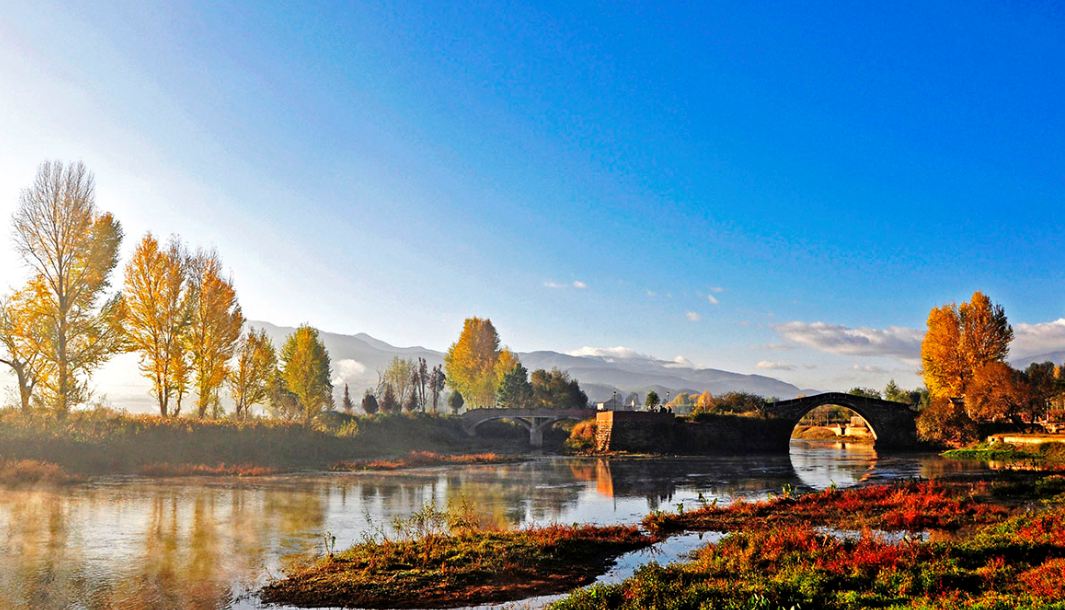
▲ The Heihui River (also known as the Heihui River) is a tributary of the Lancang River, hailed as the mother river of the Shaxi Valley. It meanders through the Shaxi Basin, nourishing the farmlands and villages along its banks, and bearing witness to the rise and fall of the ancient Tea Horse Road over millennia. The river's clear and gentle waters flow past continuous stretches of fertile fields and ancient trees, offering distinct seasonal landscapes. The iconic riverside structure is the Yujin bridge, spanning the Heihui river. It served as the vital passage for ancient horse caravans entering and exiting Shaxi Sideng street. The existing single-arch stone bridge retains deep and shallow hoof prints on its flagstone surface, with an archaic turtle-head carving on the arch. Mornings often see mist floating on the river, framing the ancient bridge, emerald waters, and pastoral scenery together - making it a popular photography spot in Shaxi. In ancient times, horse caravans carried tea and salt across the river here, with the sound of bells echoing through the valley. The river separates the ancient town from the pastoral fields. Standing on the Yujin Bridge and gazing into the distance, one can see the harmonious blend of distant mountains, villages, rice paddies, and the river, creating a quintessential rural atmosphere. Strolling along the riverside path, you can immerse yourself in the tranquil countryside scenery and the lingering charm of the caravan era.
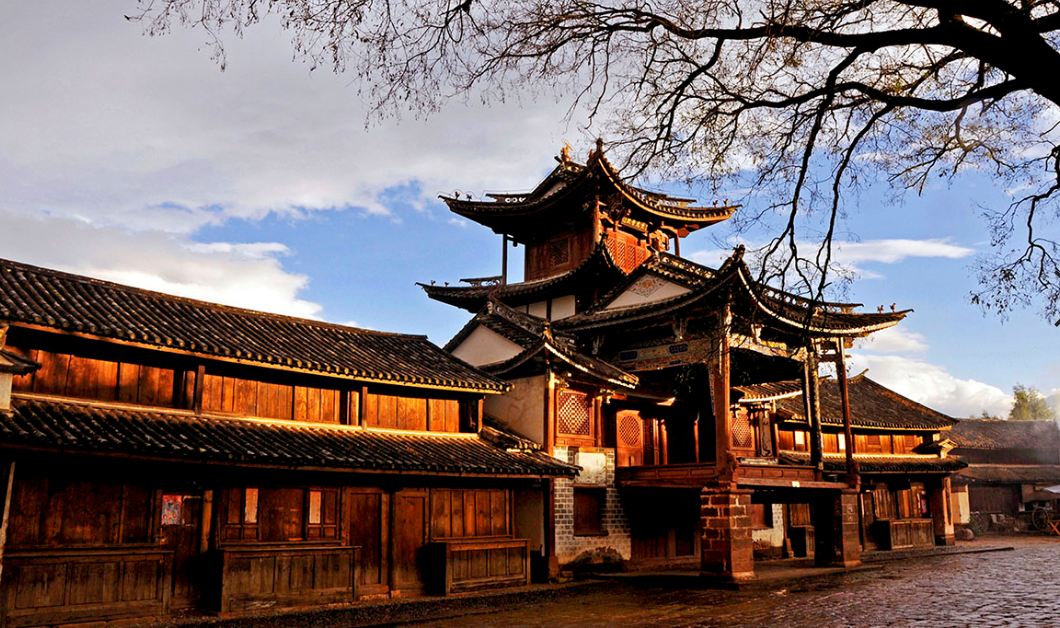
▲ The ancient stage is located on the east side of Sifang Street in Shaxi Sideng Street. Built during the Qing Dynasty, it was the core structure of the ancient Tea Horse Road marketplace and a landmark heritage site of Shaxi. The stage is integrated with the Kuixing Pavilion, featuring upturned eaves, intricate wood carvings, and serving both as a performance venue and a place for worshiping Kuixing. In ancient times during festivals, Bai ethnic artists would perform on stage, with horse caravans from all directions and villagers from surrounding areas gathering around Sifang Street to watch, making it a bustling marketplace in those days. The stage faces west, directly opposite Xingjiao Temple, forming a unique layout of "performing on stage while listening to music in the ancient temple." The wooden components, weathered by time, exude rustic charm and retain the traditional architectural features of the Bai people. Today, the ancient stage still stands quietly on Sifang street, no longer hosting frequent performances yet retaining the bustling atmosphere of the caravan era. Looking back from Sifang street, the ancient stage, old locust tree, and Bai-style houses form a picturesque scene—a must-visit photo spot in Shaxi Ancient Town.
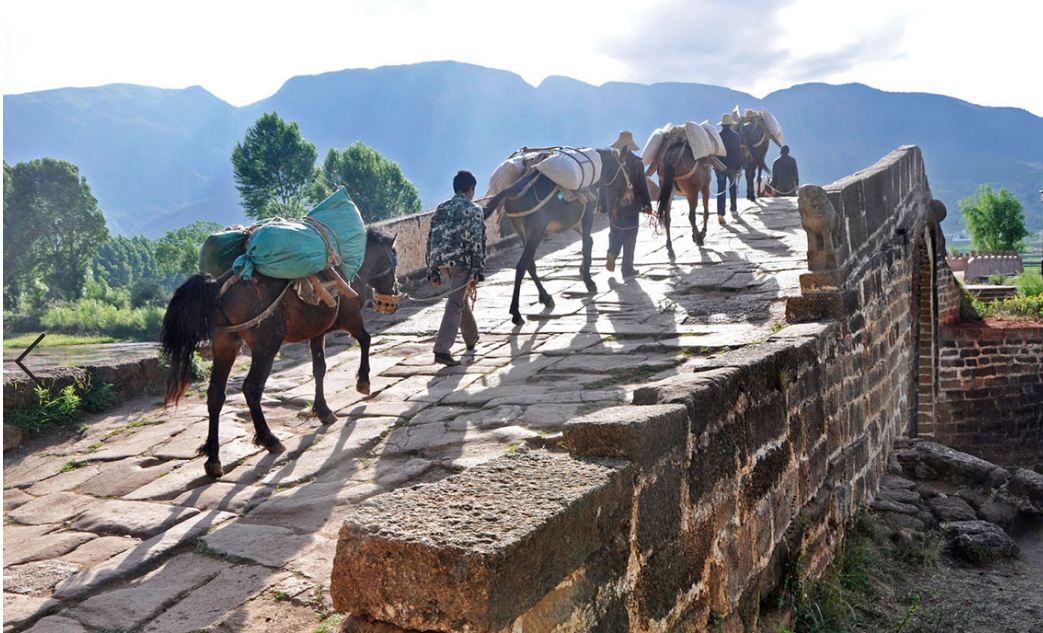
▲ The Yujin Bridge spans the Heihui River and is a landmark ancient stone bridge in Shaxi. It served as the essential passage for horse caravans entering and exiting Sideng Street along the ancient Tea Horse Road. The existing stone arch bridge was rebuilt during the Kangxi era of the Qing Dynasty, featuring a single-arched bluestone structure that exudes rustic charm and solidity. The bluestone bridge surface bears uneven hoof prints from centuries of horse caravan traffic, while the arch features an intricately carved turtle head. This ancient bridge connects the old town with pastoral fields across the river, flanked by aged trees and gentle flowing waters. Morning mist often shrouds the river, framing distant mountains, the historic bridge, and rice fields in a therapeutic composition - making it one of Shaxi's most photogenic spots. In ancient times, horse caravans passed through this area, stopping here to cross the river. The lingering sound of horse bells echoed through the valley, bearing witness to a millennium of commercial exchanges. Standing on the bridge and gazing into the distance, one can see the Shaxi Basin's pastoral landscape unfold, with villages scattered across the terrain and panoramic views of the mountainous scenery. Today, travelers no longer need to endure the hardships of long journeys by horse or carriage. Instead, they stroll leisurely across the bridge, quietly savoring the lingering charm of the ancient caravan route.