Luoyang (Rakuyō)
Capital of nine dynasties!
Nine dynasties established their capitals in Luoyang.
It began with the Eastern Zhou, followed by the Later Han, Wei of the Three Kingdoms, Western Jin, Northern Wei, Sui, Wu Zetian's Zhou, Later Liang of the Five Dynasties and Ten Kingdoms, and Later Tang—nine in total.
In China, the north side of a river is called yang and the south side is called yin.
It is said to have been named Luoyang because it is a city located north of the Luo River, but perhaps the reason nine dynasties established their capitals here was the excellent feng shui, with Mount Mang at its back and the Luo River in front.
From the Zhou dynasty in the 11th century BCE through to the Tang dynasty, it long shared the role of political center with Chang'an.
As such, it gave rise to phrases like "it raises the price of paper in Luoyang," and it was also home to China's first Buddhist temple.
Now, with the opening of the high-speed railway, you can easily arrive from Xi'an in just about 1.5 hours, making a day trip possible.
Longmen Grottoes
14 kilometers south of the city.
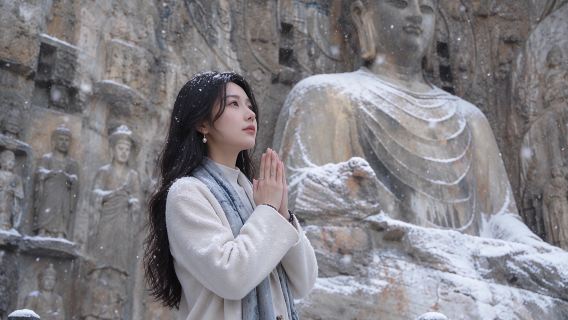
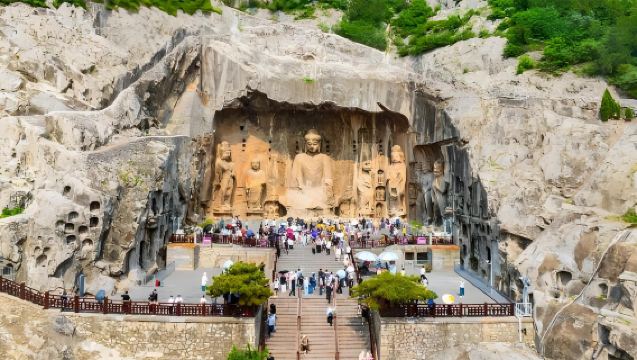
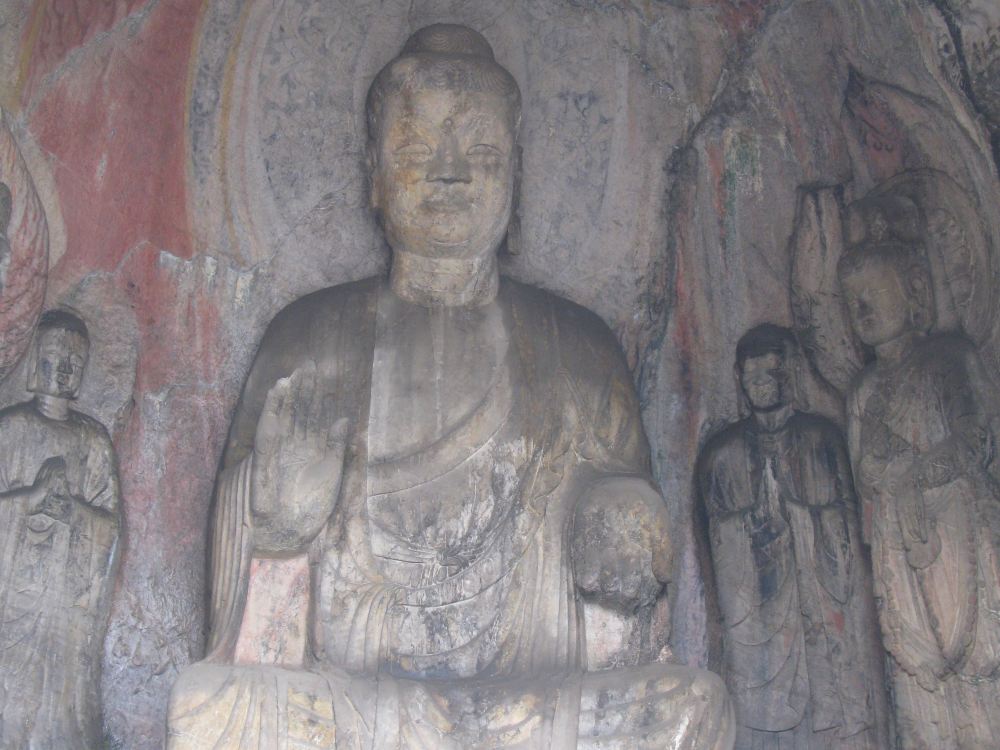
This is a cave temple carved into the rocky mountainside along the banks of the Yi River.
Along with the Mogao Caves in Dunhuang and the Yungang Grottoes in Datong, it is called one of China's three great grottoes.
In 493 AD, Emperor Xiaowen of Northern Wei moved the capital from Datong to Luoyang. From that time, excavation began in a form that inherited the Yungang grottoes.
It is said that the caves were continuously excavated for approximately 400 years until the Tang dynasty, leaving behind 1,352 caves, 750 niches, 97,000 Buddhist statues, and over 3,600 inscriptions.
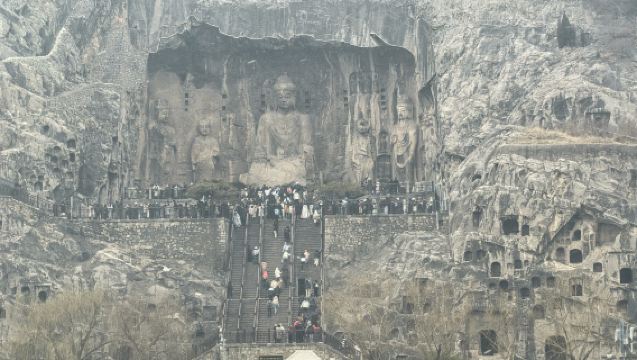
Among them, the one that deserves special attention is the Fengxian Temple Grotto—the largest grotto at the Longmen Grottoes, which took 3 years and 9 months to complete and was finished in 675.
A space 33.5 m wide, 38.7 m deep, and 40 m high was carved out of a mountainside at a height of 20 m or more, and a 17.14 m high Vairocana Buddha statue is carved in its center.
It was said that the face was modeled after Empress Wu Zetian.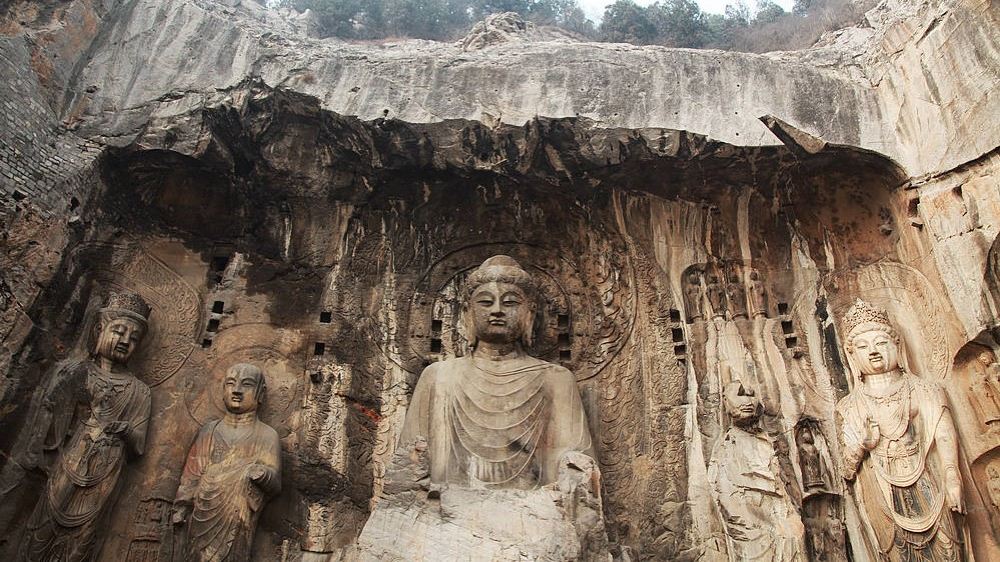
White Horse Temple (Hakubaji)
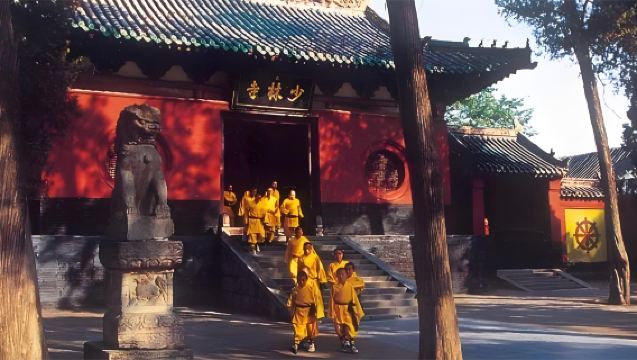
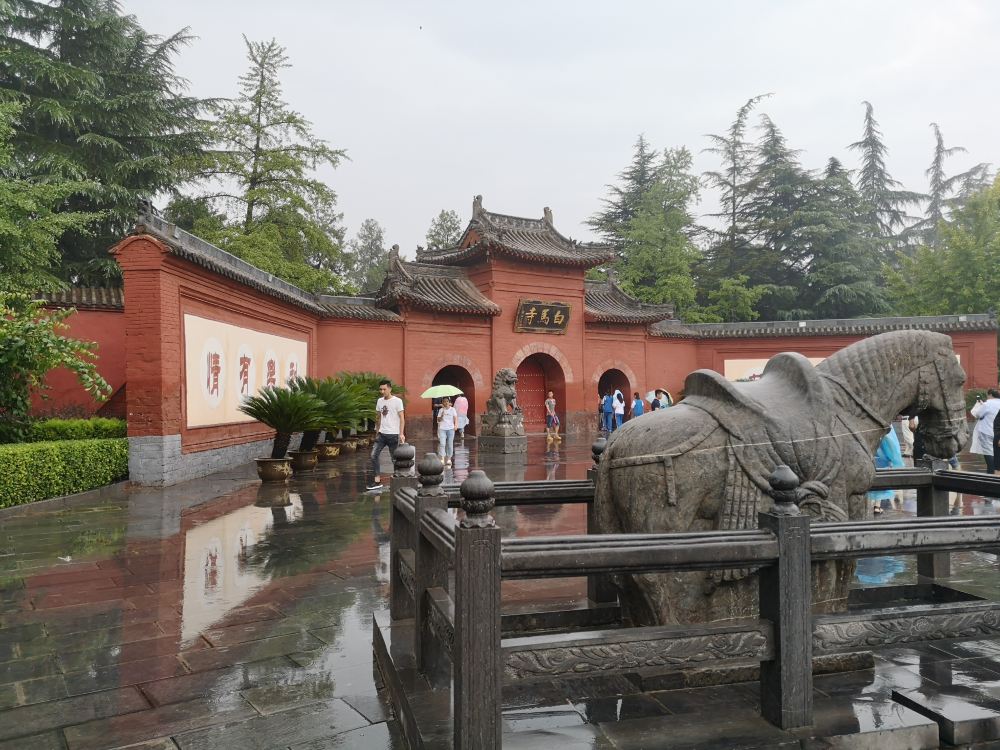
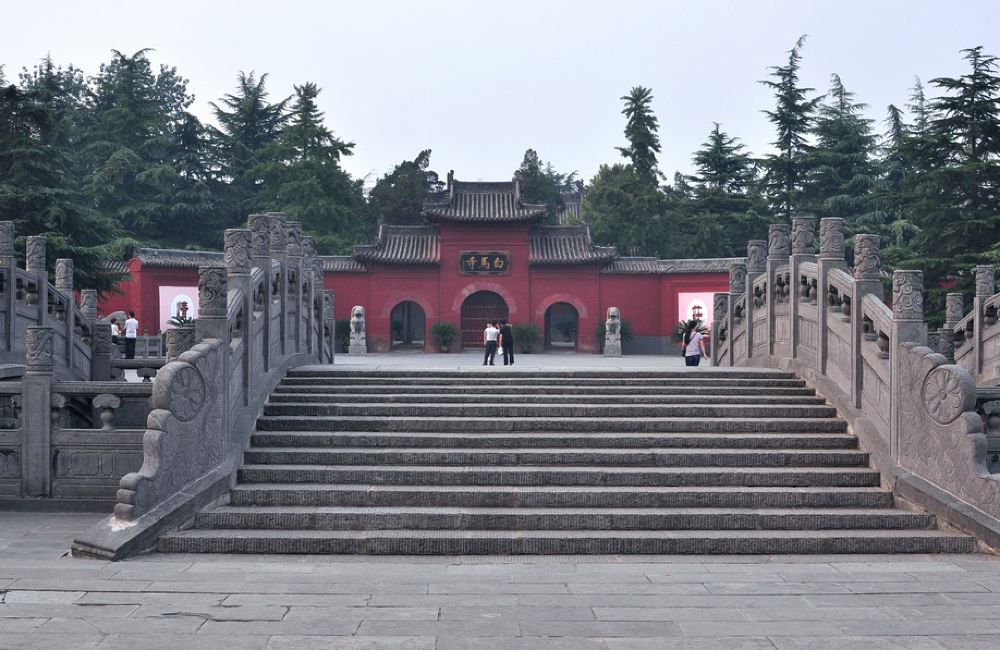
Ten kilometers east of Luoyang, it is said to be China's first Buddhist temple.
It is said to be the land where Buddhism was first introduced to China.
It is said that the construction of a residence for a high-ranking monk marked the beginning of White Horse Temple.
There is also a high priest's grave just inside the temple gate.
Sekirindo (Kanrindō)
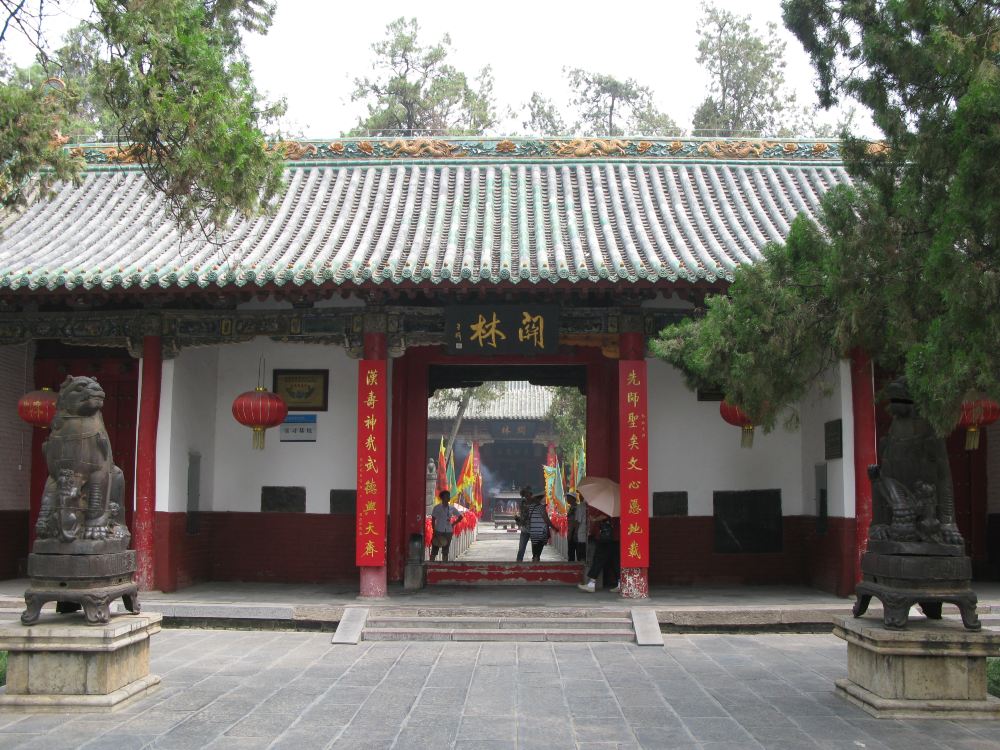
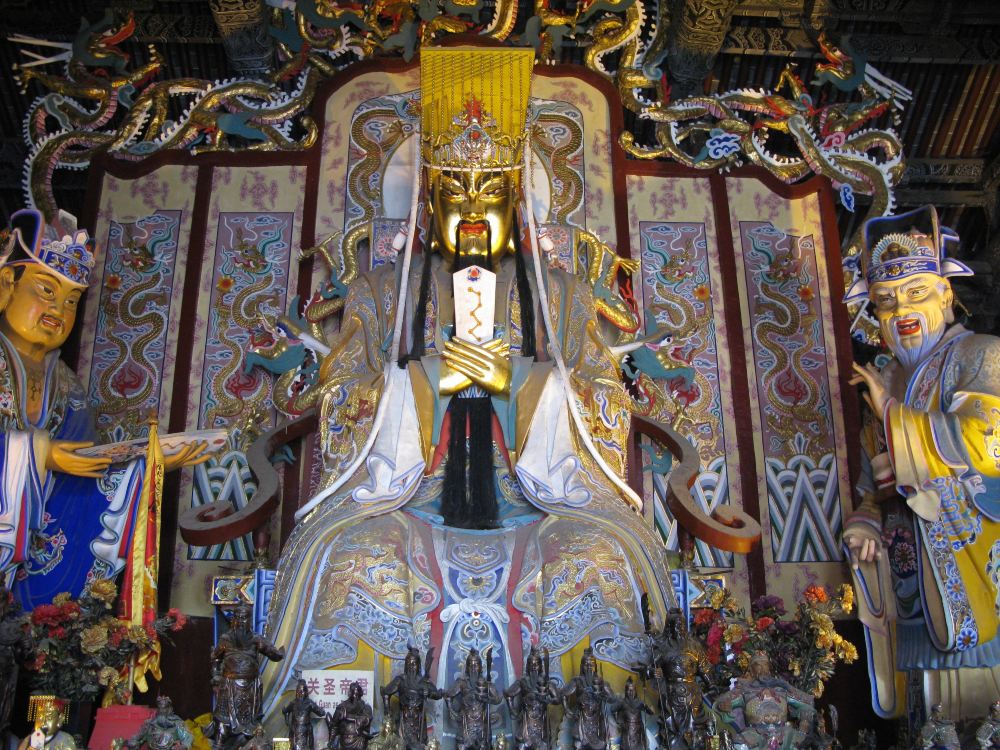
This is a Guandi temple dedicated to Guan Yu from the Romance of the Three Kingdoms.
In China, the tombs of emperors are called "ling," and the only family permitted to have their burial ground named "lin" is the Confucius clan; the tomb of the Confucius clan in Qufu, Shandong Province, is called "Konglin."
The way of calling "Kanrin" indicates a high degree of respect.
In chapter 77 of Romance of the Three Kingdoms, in 219, he was defending the castle of Jingzhou under Liu Bei's orders. Caught in a pincer attack by Wei and Wu, he was advised to surrender by Wu's Sun Quan, but refused and was beheaded.
Fearing the consequences of having cut off the head, Sun Quan placed it in a wooden box and, traveling day and night, delivered it to Cao Cao in Luoyang.
Cao Cao was overjoyed, opened the box, and with a laugh said, "Lord Yunchang, have you been well since we last parted?" At this, Guan Yu's eyebrows twitched, and his beard and hair stood on end.
Cao Cao was so shocked that he fainted, and in a fluster he buried him with great honor outside the south gate of Luoyang.