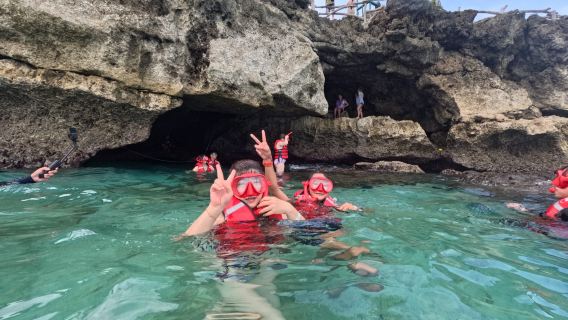
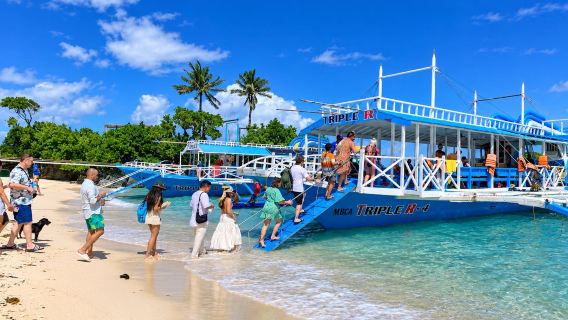
▲ Stop 1: Crocodile Island A narrow rocky islet off the southeast coast of Boracay, its silhouette from afar resembles a crocodile lying on the surface of the sea, hence the name. You don't actually land on the island—all the action is in the water. The boat departs from White Beach and arrives in about 15–20 minutes. The reef slopes gently outward from 1–2m below the surface, so snorkelers can float on the water and take in the whole show: orange anthias hover in clusters above the coral, yellowtail fusiliers sweep past in formation, and butterflyfish, bannerfish, and clownfish peek out from anemones in turn. With luck, you might even spot a hawksbill sea turtle nibbling on coral below. From November to May during the northeast monsoon, the sea is calm with visibility often at 20–30m and water temperatures of 27–29°C—a single rash guard is enough. The reef is home to masters of disguise like scorpionfish and lionfish—beautiful but venomous. Remember: "look, don't touch, and keep your fins off the coral." Depart in the early morning for calmer water and better light for fish-watching, and avoid the midday boat traffic. A narrow rocky islet off Boracay's southeastern tip, Crocodile Island takes its name from the ridge that looks like a crocodile basking at the surface—there are no crocodiles, and no real landing either; the whole attraction sits underwater. Boats reach it in about 15–20 minutes from White Beach. The reef starts a meter or two below the surface and slopes gently outward, so snorkelers can float face-down and watch the entire show without diving: clouds of orange anthias hovering over coral, yellowtail fusiliers sweeping past, butterflyfish, bannerfish, and clownfish tucked into anemones—and, on lucky days, a hawksbill turtle grazing the reef. From November to May the northeast monsoon keeps the water calm, visibility commonly 20–30 meters, and the temperature at a comfortable 27–29°C; a rash guard is usually enough. Scorpionfish and the occasional lionfish hide in plain sight—beautiful but venomous, so look, don't touch, and keep your fins clear of the coral. Morning departures bring the flattest water and the clearest light for spotting fish, ahead of the midday boat traffic.

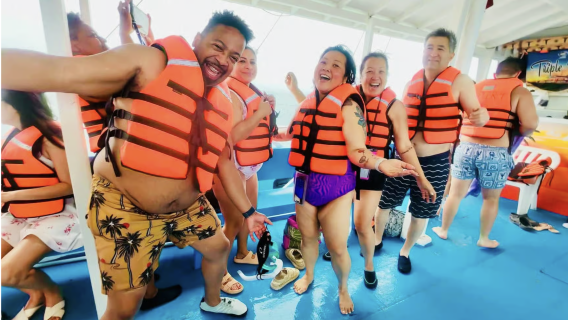
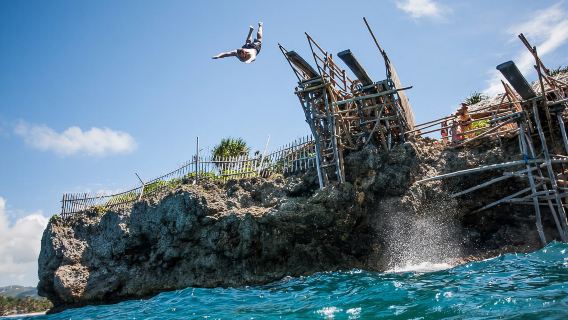
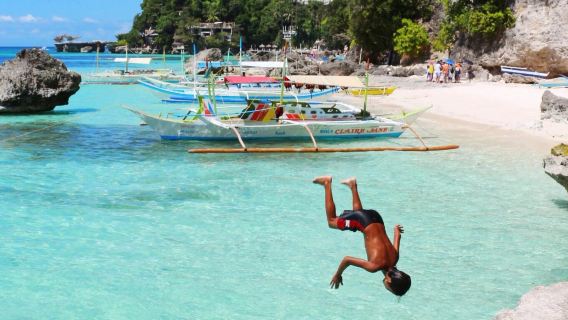
▲ Stop 2: Magic Island Boracay Magic Island A tiny rocky island off the coast of Boracay with no resorts, no restaurants, and no beach—the entire island exists for one thing: cliff jumping. After the boat docks, the crew hands out life jackets, and you climb up from the landing point along stone steps and bare rock. Several wooden jump platforms hang above the deep blue sea. The low platform is just a step above the water, suitable for kids and first-timers; the high platform is reserved for the brave, with the specific open height determined by the day's tide. The crew clears the landing zone and releases jumpers one at a time, blowing a whistle to halt when boats pass by. After landing in the water, swim away to the side immediately—don't linger below. If you'd rather not jump, watch from the boat; the fast pace and lively atmosphere are a highlight of this stop in their own right. The rocks are slippery and there's ocean swell offshore, so those with old back, neck, or shoulder injuries or who aren't strong swimmers are advised to watch from below the platform only. Leave glasses, hats, and phones on the boat. The stop is short, making it a great lively interlude in the middle of an island-hopping itinerary. A pocket-sized rock islet off Boracay with no resort, no restaurant, and no beach—Magic Island exists for one reason: cliff jumping. Boats moor alongside, crew hand out life jackets, and a short climb of steps and bare rock leads up to wooden platforms cantilevered over deep blue water. The lowest board sits a single stride above the surface for children and first-timers; the higher ones are left to confident jumpers, and the exact range open on the day depends on the tide. The landing zone is kept clear by crew who send jumpers one at a time, whistling a halt whenever another boat passes through; once you surface, swim sideways immediately rather than treading water under the platform. Not jumping is a perfectly good choice—watching from the boat is loud, fast, and part of the fun here. Wet rock is slippery and the drop is open sea with swell, so anyone with back, neck or shoulder trouble—or who isn't a steady swimmer—should stay on the deck. Glasses, hats and phones stay on the boat. The stop is short by design: a bright, rowdy interval in the middle of a longer island-hopping day.