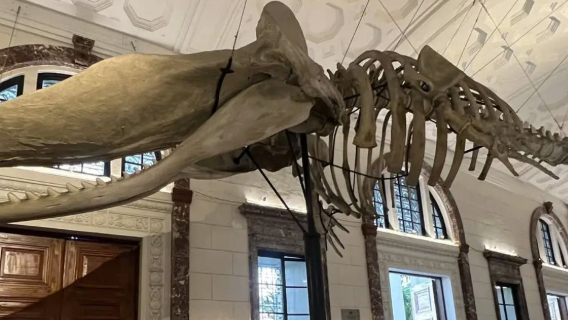
▲ First stop: National Museum of Fine Arts National Museum of Fine Arts A repository of Philippine art and national memory, the museum's permanent exhibitions trace the archipelago's centuries-long aesthetic lineage through prehistoric artifacts, ethnographic objects, and colonial-era paintings from Luzon, the Visayas, and Mindanao. Visitors can see Spanish oil paintings, American-period landscape sketches, and representative works of Philippine modernism up close; the canvases are large in scale and intense in color, perfect for standing slowly and taking in the details. The gallery route is clearly laid out and the air conditioning is ample, making it an ideal buffer stop for a sweltering Manila afternoon; step outside afterward into the cobblestone streets of Intramuros, and the sense of history extends from the canvas to the ground beneath your feet. Allow 1.5–2 hours; art lovers can add another layer with the anthropology galleries. The National Museum of Fine Arts is where the Philippines keeps its visual memory. Permanent galleries trace the archipelago's artistic lineage through prehistoric artifacts, ethnographic objects, and colonial-era canvases from Luzon, the Visayas, and Mindanao. Visitors can stand close to Spanish oil paintings, American-period landscapes, and modern Filipino masterworks—large in scale, rich in color, and rewarding when viewed slowly. The layout is intuitive and the air-conditioning generous, making it a welcome pause in the Manila heat. Step back out onto the cobblestones of Intramuros afterward and the history you just saw on canvas continues underfoot. Allow roughly 90 minutes to two hours; art lovers may want to add the anthropology wing.
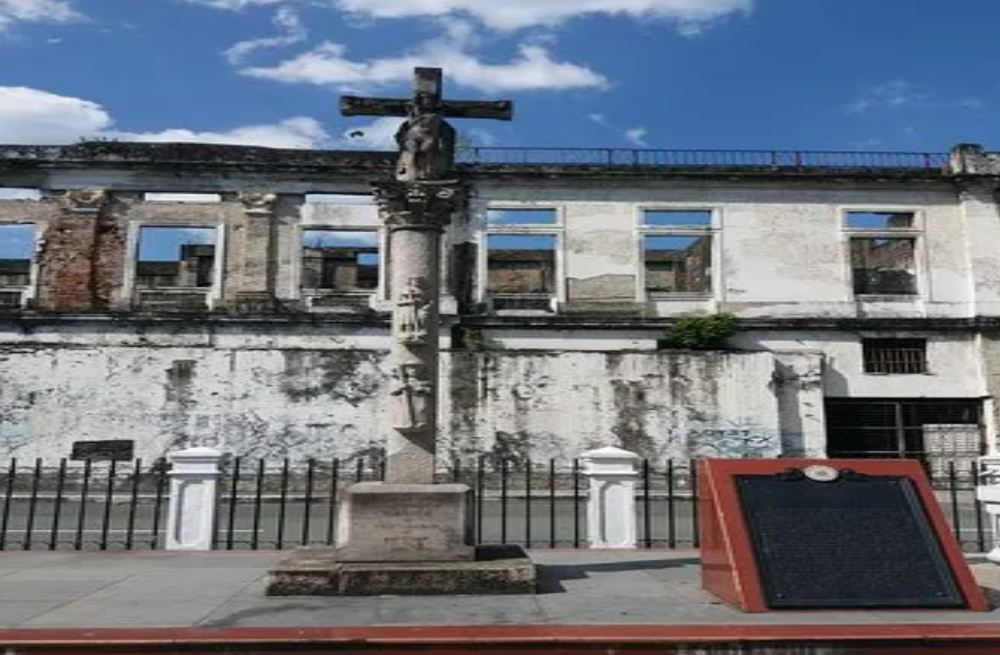
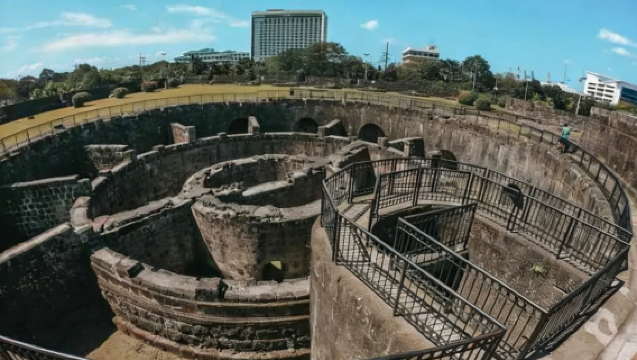
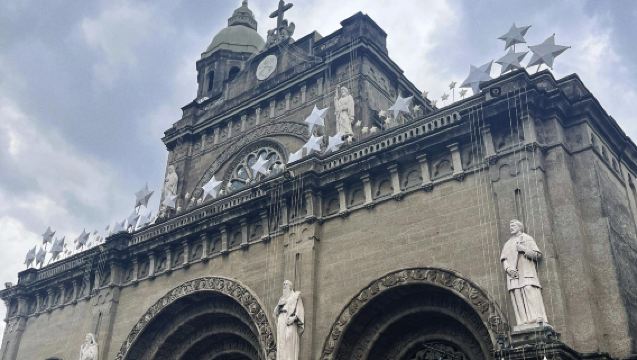
▲ Stop 2: Intramuros, the walled city of Spain The heart of old Manila, where stone walls on all sides enclose a gently sloping neighborhood. The Spanish colonial-era governor's palace, churches, monasteries, and courtyard houses are densely preserved here, and walking through feels like opening a three-dimensional history book. The streets are wide with dense tree shade, and the occasional clip-clop of horse-drawn carriages and guitar music drifts by. At dusk, the walls are dyed honey-colored by the setting sun, making this one of the most photogenic areas in the entire city. Compared to the high-rises and traffic of the city center, the pace here is noticeably slower—perfect for strolling with children or elders from San Agustin Church all the way to Manila Cathedral, with a coffee break along the way. It's recommended to come in the early morning or at dusk, when the light is soft, the temperature pleasant, and it's easier to photograph empty cobblestone alleys. The walled heart of Manila, Intramuros preserves a compact hillside district ringed by Spanish stone ramparts—former governor's palaces, churches, convents, and courtyard houses still standing shoulder to shoulder. Walking its streets feels like turning the pages of a pop-up history book. Broad avenues, heavy tree shade, the occasional carriage bell or guitar drifting past; at dusk the walls turn honey-gold, making it one of the city's most photogenic quarters. Compared with the towers and traffic downtown, the pace here drops noticeably—ideal for strolling from St. Augustine Church to Manila Cathedral with children or elders in tow, pausing at a café along the way. Come early morning or late afternoon for soft light, cooler air, and empty cobblestone lanes.
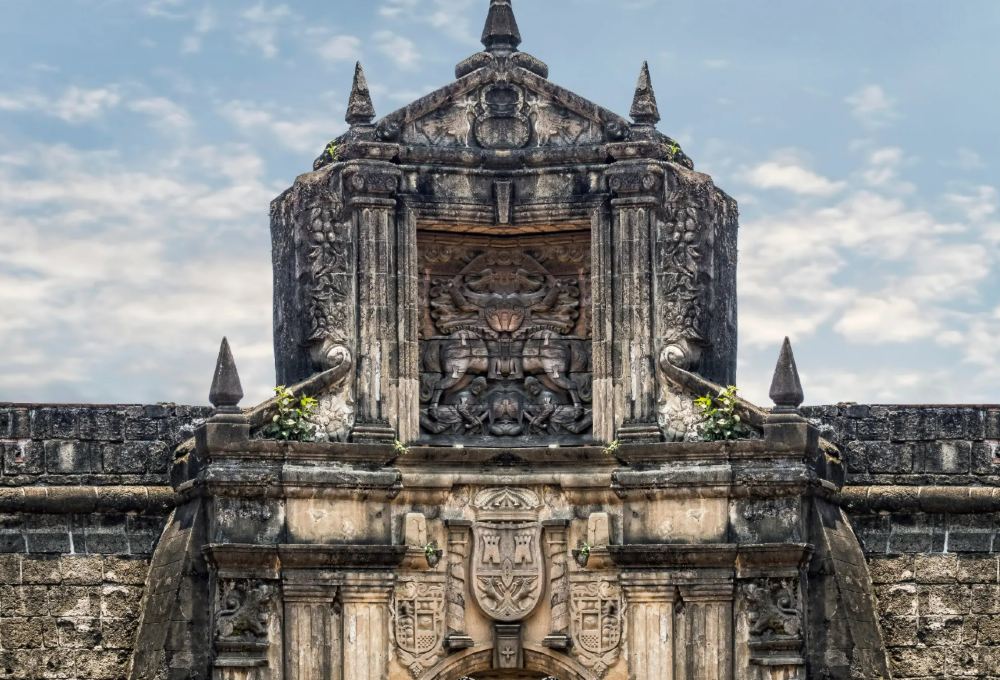
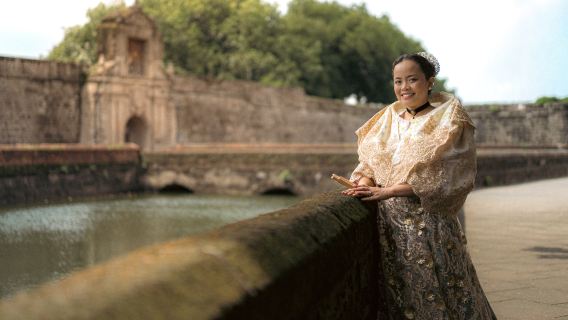
▲ Stop 3: Fort Santiago The stone fortress in the northwest corner of Intramuros was the first military structure the Spanish built after landing in Manila in 1571. It later became the final residence of national hero Rizal, where he was imprisoned before his execution. The entrance drawbridge, moat, double-layered stone gate, and inner courtyard well all retain their original appearance. On the inner side of the wall is a bronze plaque inscribed with the farewell poem Rizal wrote before his execution, and you'll find yourself instinctively softening your footsteps as you walk past. Inside the fortress is a cloister-style museum displaying manuscripts, a restored prison cell, and colonial weapons, which takes about half an hour to see the main highlights. In the evening, looking out through the gap in the wall, you face the Pasig River and the sunset directly—a rare "history + water view" double-feature vantage point in old Manila. It's recommended to visit together with Intramuros for a smooth, no-backtracking route. At the northwest corner of Intramuros stands Fort Santiago, the stone citadel the Spanish raised in 1571 after landing in Manila—and later the final cell of national hero José Rizal. The drawbridge, moat, twin stone gates, and inner courtyard well survive intact; bronze plaques inside the ramparts carry the verses Rizal wrote on the eve of his execution, and visitors tend to lower their voices without being asked. A cloistered museum rings the fort with manuscripts, a reconstructed cell, and colonial weaponry—the main thread takes about half an hour. At sunset, the breach in the wall frames the Pasig River and the dying light, one of the few spots in old Manila where history and waterfront meet in a single frame. Pair it with an Intramuros walk; the route flows straight through with no backtracking.
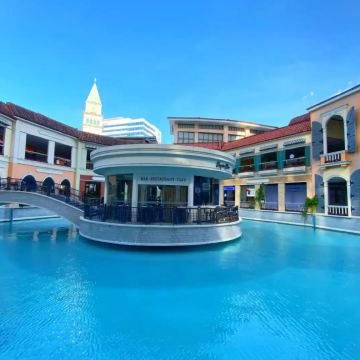

▲ Stop 4: Venice Grand Canal Mall An Italian-style complex by Manila Bay, where an artificial canal runs through the entire building cluster. Colorful facades, arcade balconies, stone bridges, and gondola-style boats together recreate the outline of Venice's waterfront. During the day, it's ideal for coffee under the arcades and photos of the colorful walls; after the lights come on at dusk, the canal reflections glow and the atmosphere shifts quickly. Seats on the waterside of restaurants are in high demand, and you can enjoy pasta, seafood rice, and Filipino roast suckling pig. It's not far from Intramuros and is often arranged as a "relaxing finale stop" after the old city history route—the first half is stone walls and ancient forts, the second half is sitting by the water eating and drinking, a rhythm of tension and ease. It's especially suitable for itineraries with children or elders, with flat ground throughout, air-conditioned corridors, and well-equipped restrooms and parent & baby facilities. On the Manila Bay waterfront, this Italian-styled complex threads an artificial canal through arcaded façades, pastel townhouses, stone bridges, and gondola-style boats that echo Venice's waterline. By day the arcades are made for coffee and colored-wall photos; after lamps come on at dusk the canal mirrors switch the mood entirely. Waterside restaurant seats go fast—expect pasta, paella, and Filipino lechon side by side. It sits a short distance from Intramuros, which is why itineraries often use it as the wind-down after the old-city history block: stone ramparts and forts first, then a flat walk by the water with food in hand. Families appreciate it—level ground, air-conditioned corridors, clean restrooms, and baby facilities throughout.
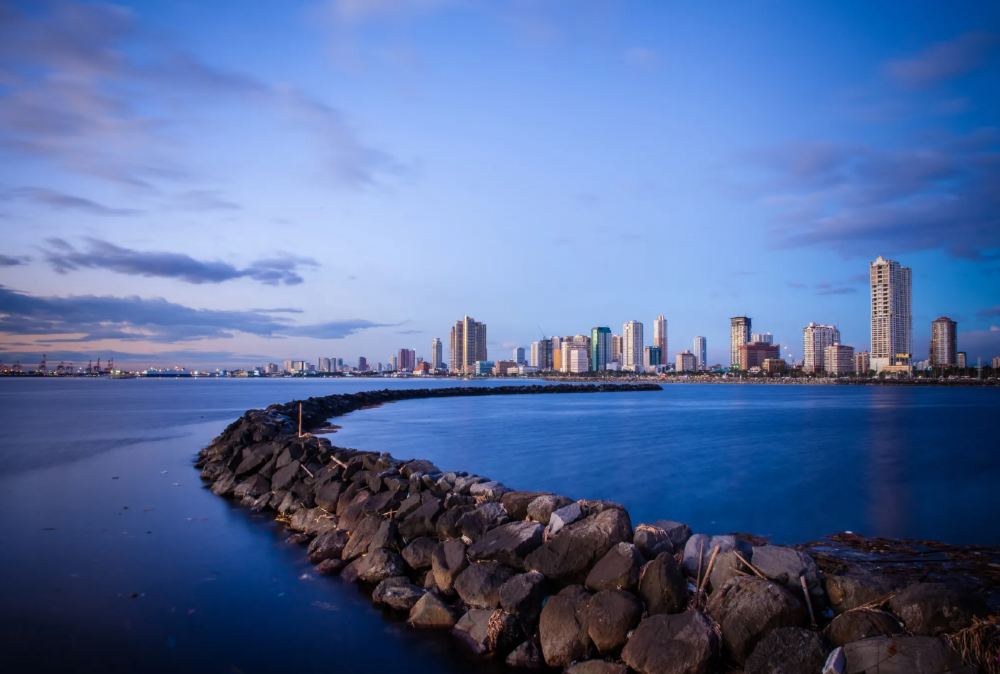
▲ Stop 5: Manila Bay Manila Bay Manila's living room, where a curved coastline strings together the old city, Intramuros, the peninsula, and the silhouette of distant volcanoes. Sunset is the signature here—the sea shifts from golden orange to rose gray, clouds are pressed into horizontal lines, and the sun lingers on the horizon longer than you'd expect. Locals call this light "Manila sunset." A long pedestrian boardwalk runs along the coast, lined with coconut trees, barbecue stalls, and street guitarists. You can walk barefoot on the sand or sit on the breakwater. It's usually the finale of a 1-day tour: museum in the morning, Intramuros in the afternoon, then here at dusk to wait for nightfall. The route doesn't double back, and the mood shifts perfectly from historical calm to sea-breeze ease. On rainy days, head to SM Mall of Asia to view the same sea indoors—still worth it. Manila's living room is a single curved shoreline stitching together the old city, Intramuros, the peninsula, and distant volcano silhouettes. Sunset is its signature act—the water slides from amber to rose-grey, clouds flatten into horizontal bands, and the sun lingers on the horizon longer than you expect; locals simply call it "the Manila sunset." A long promenade runs the length of the bay, lined with palms, grills, and street guitarists—barefoot on the sand or perched on the breakwater both work. It usually closes the day: museums in the morning, Intramuros in the afternoon, here by dusk. The route never doubles back, and the mood shifts cleanly from historical hush to sea-breeze ease. On overcast days, duck into the SM by the Bay mall and watch the same water through glass—still worth it.