


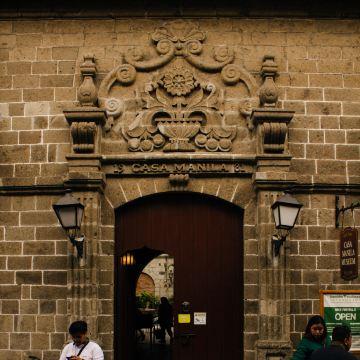

▲ Casa Manila fully restores the residence of a 19th-century upper-class Manila family, featuring tall wooden shutters, carved balconies, and tropical-style courtyards designed for Manila's humid climate. The visit focuses on external guided tours without interior access. Admission tickets are required for interior visits at your own expense.
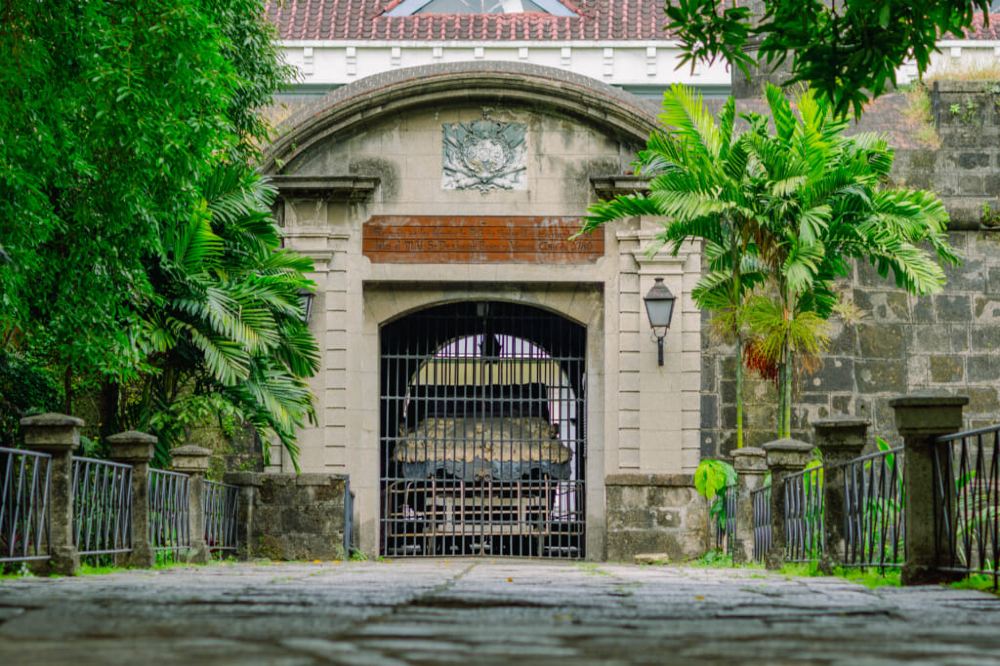
▲ Puerta Real is an ancient stone arch gate in the southern part of the walled city. During the Spanish colonial era, governors, merchant caravans, and envoys entered and exited the walled city through this gate. The garden beside the gate is lush with vegetation, offering a peaceful retreat amidst the bustle. You can briefly stop here to take photos among the stone arches and greenery, listen to stories about the walled city's defense system, and feel the centuries of comings and goings and changes witnessed by this gate.
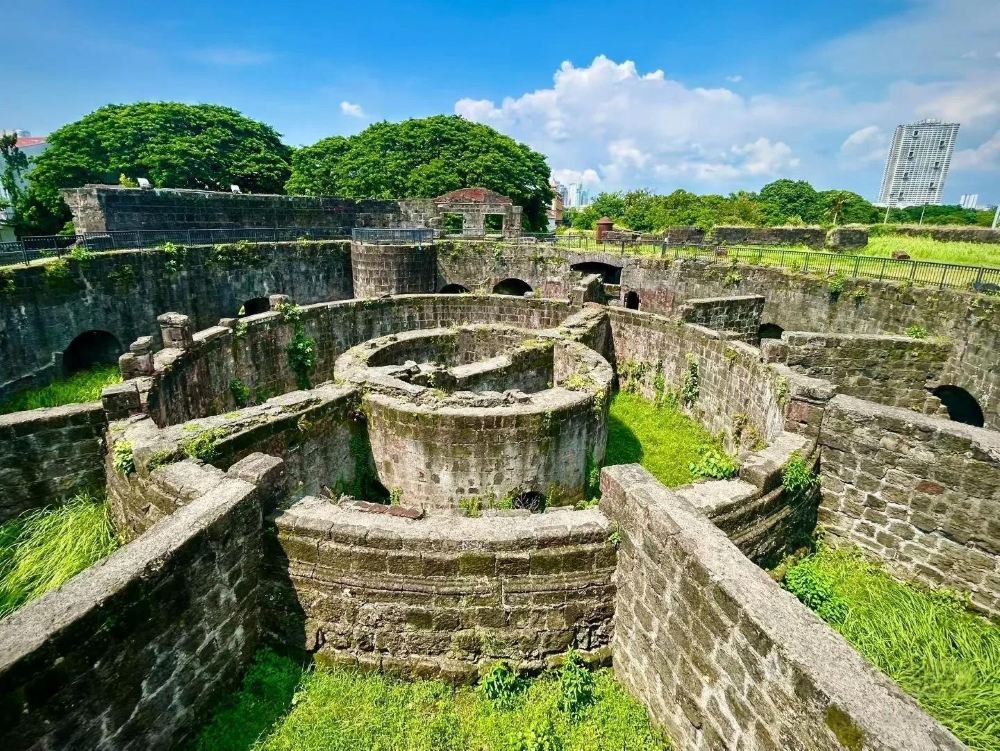
▲ Baluarte de San Diego is an iconic fortification in Intramuros, with its curved stone walls specifically designed to withstand enemy naval artillery. After centuries of weathering, the ancient stone walls are now covered with greenery, exuding both a sense of history and aesthetic charm. The guide explains the coastal defense layout of the citadel and ancient city defense strategies, making this spot one of the most atmospheric historical sites for photography within Intramuros. Visitors mainly explore and take photos in the free courtyard area.
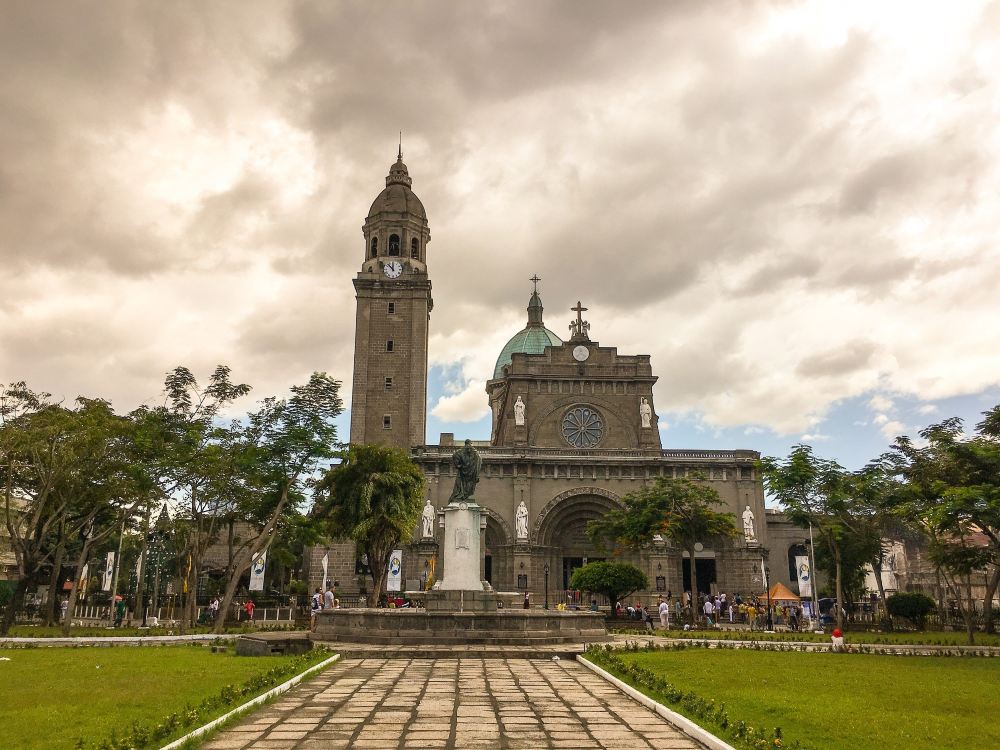
▲ Plaza de Roma is the central heartland of the old walled city, where religious celebrations, public gatherings, and major historical events have unfolded for centuries. The plaza features historic statues and faces the magnificent Manila Cathedral. Here, one can understand how the Spanish church and colonial government jointly governed the city, and feel the aura of Intramuros' former center of power and faith.
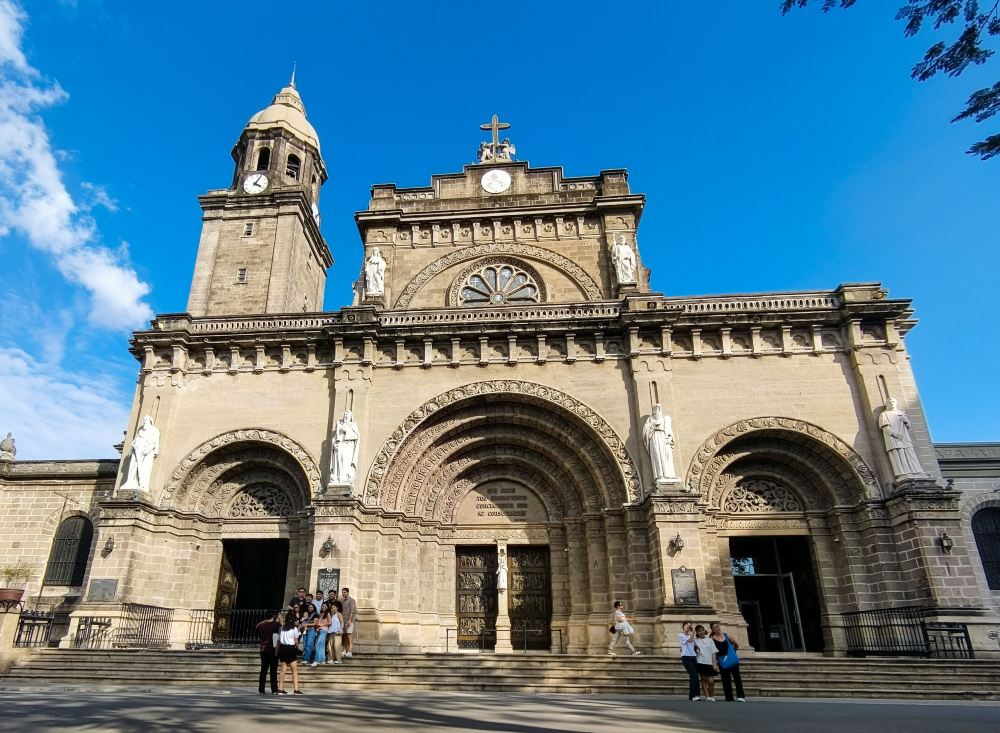
▲ Manila Cathedral has had a tumultuous fate, destroyed multiple times by earthquakes and WWII bombings, only to be rebuilt after each devastation. The magnificent Romanesque facade stands solemn and majestic. Travelers can enter the cathedral hall to admire the exquisite stone carvings and painted decorations. The guide recounts the cathedral's turbulent history of repeated reconstructions, allowing visitors to feel the enduring power of faith amidst disasters.
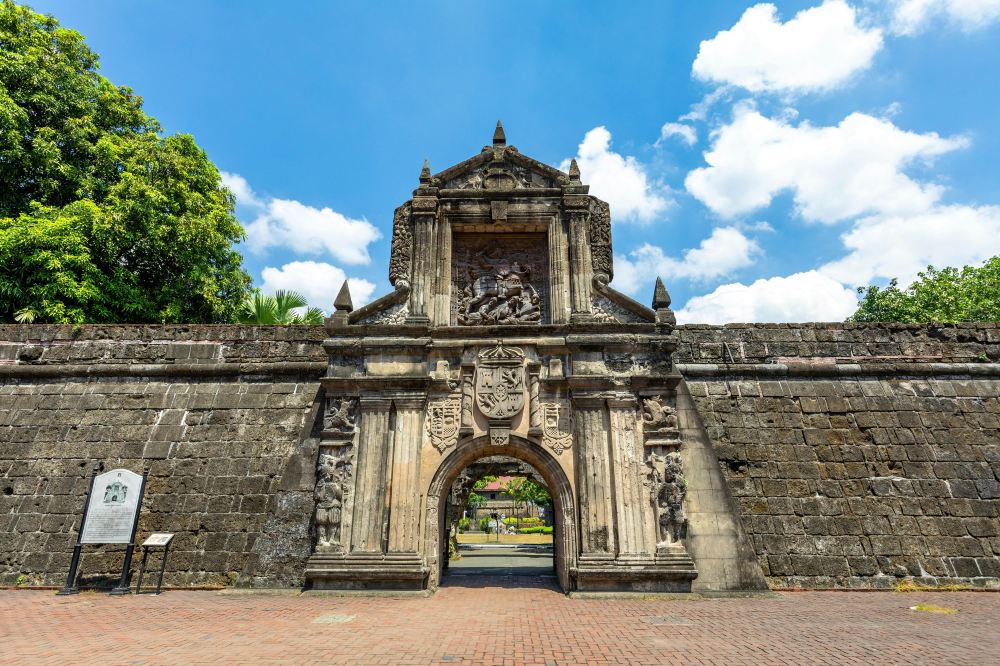
▲ Fort Santiago is the most significant landmark in Philippine national history. This ancient stone fortress once served as a prison where José Rizal, the national hero of the Philippines, was detained before his execution.
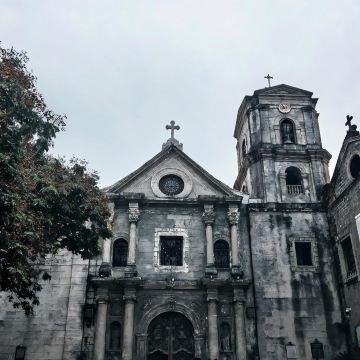

▲ San Agustin Church is a miracle of Intramuros. While most structures in the citadel were destroyed during the Battle of Manila, this stone church's main structure has survived to this day. Its massive stone walls and rustic interior vaults bear witness to over four centuries of history. Visitors can admire the ancient architecture while listening to stories of its construction, earthquake-resistant design, and legendary survival during WWII. If open, free entry is available for the main church (excluding paid museum access).
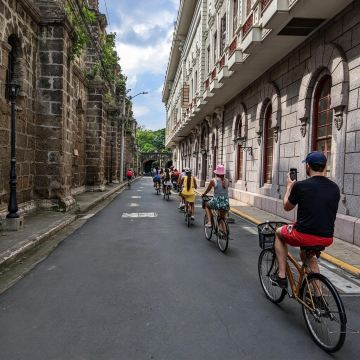
▲ After the heritage tour, the cycling team returned to the Bambike starting point. Everyone could share their experiences and photos along the way, reminiscing about the colonial history, war stories, and national past of the royal city.