


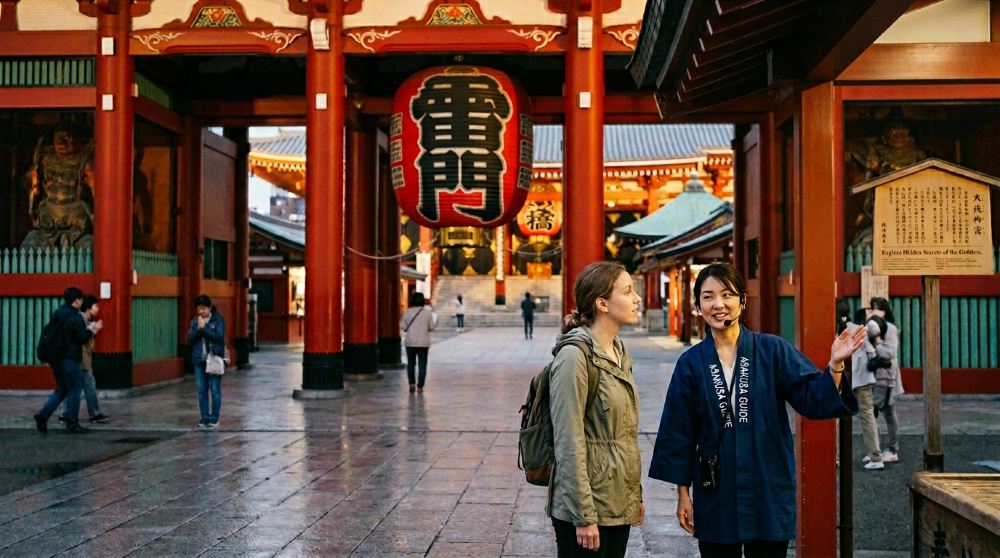
▲ Our Asakusa tour today is not a superficial sightseeing trip, but an in-depth exploration of 1,400 years of Japanese grassroots culture. The entire route follows a single path with no backtracking. I will guide you through three ultimate mysteries that other guides won't explain, helping you fully understand the unique essence of Sensō-ji.
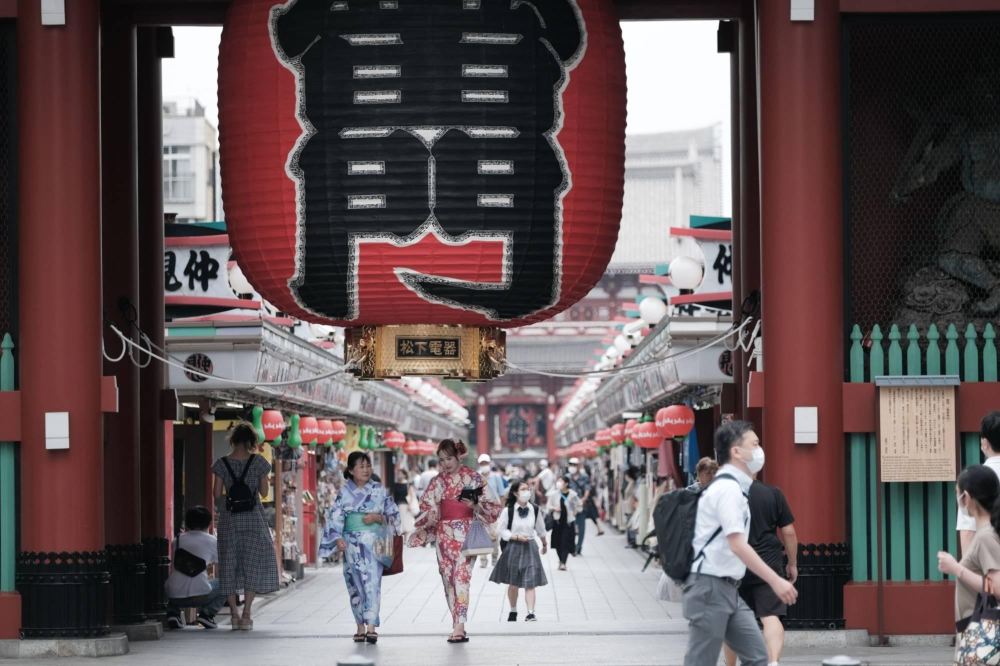
▲ Kaminari-mon Gate: The iconic entrance to Asakusa. The underlying logic of Shinto-Buddhist syncretism. Observe the gods of wind and thunder on either side of the gate—these are not Buddhist deities but protective kami from Japan's native Shinto tradition. During the Edo period, Tokyo was plagued by frequent fires and hardships, with its people suffering from constant disasters. To protect the entire city and ensure the well-being of its residents, the populace voluntarily enshrined the gods of wind and thunder at the mountain gates, praying for peace year after year.
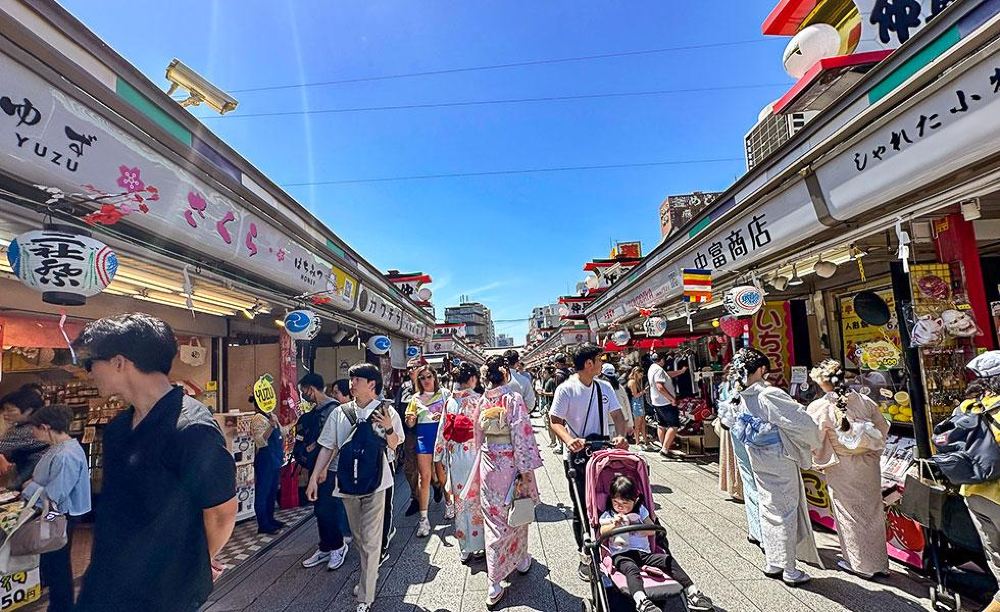
▲ Japan's ancient shopping street along the approach to a shrine, with a millennium-old official historical origin. During the Edo period, there were no dedicated temple cleaning and maintenance staff. Local residents voluntarily took on the responsibility of cleaning the temples and maintaining the dojo. To commend this devotion and perseverance, the Tokugawa shogunate specially granted these shops along the approach path the privilege of being operated by local residents with tax-exempt status.
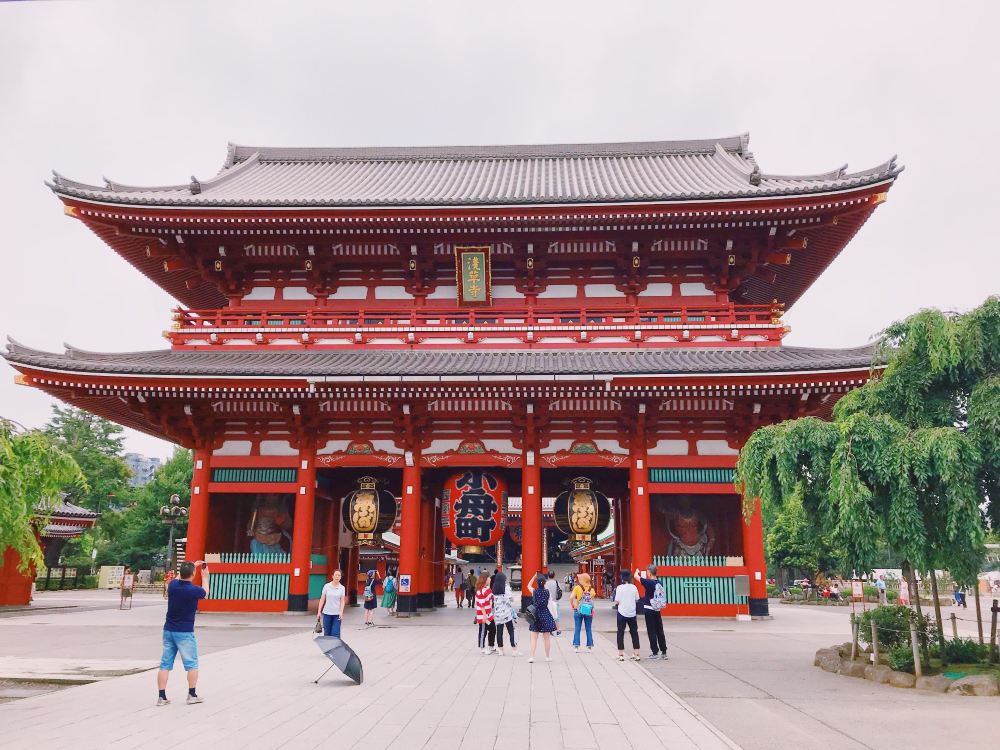
▲ If the thunder gate marks the boundary between the secular and divine realms, the treasure gate serves as the first barrier of orthodox Buddhist teachings. The majestic Nio statues at the entrance are pure Buddhist guardians, protecting the sacred grounds and warding off evil spirits.
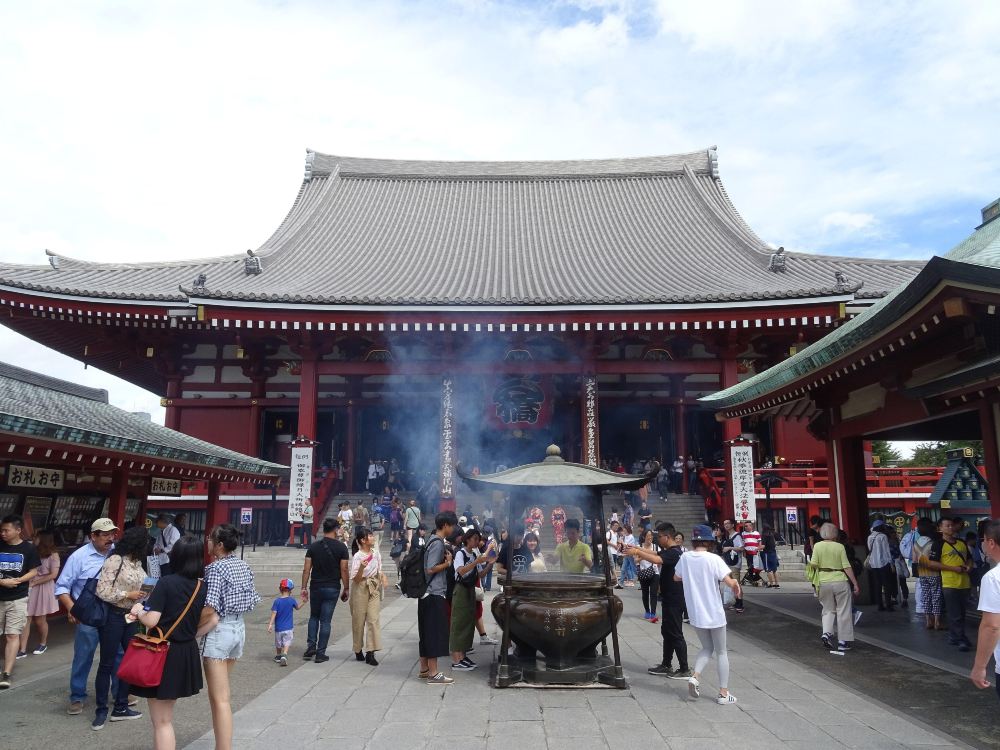
▲ The Kannon Hall in this temple: All the Buddha statues in the main hall and the displayed images of Kannon seen today are later replicas. The true original deity has never been publicly revealed in 1,400 years, remaining sealed away. This is not mysticism but a Japanese-style belief and reverence: True deities need not be shown to others; they exist only in the heart.