


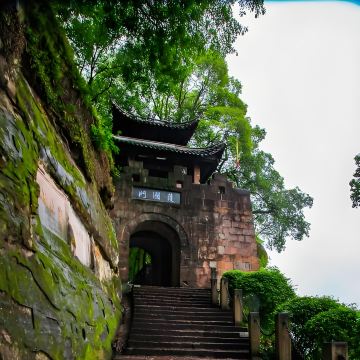

▲ Diaoyucheng Fortress covers a total area of 2.5 km². The entire mountaintop stretches 1,596 m from east to west and spans 960 m from north to south, featuring three towering mountains and the confluence of three rivers embraced by landscapes. Its main views include remnants of city gates, walls, imperial palaces, martial arts offices, infantry camps, and naval docks, as well as scenic spots like the Diaoyu Terrace, Huguo Temple, Xuanfo Temple, Thousand-Buddha Grottoes, Imperial Cave, Tianquan Cave, and Feiyan Cave. Additionally, it preserves numerous poetic inscriptions, relief carvings, and stone tablets from the Yuan, Ming, and Qing dynasties.
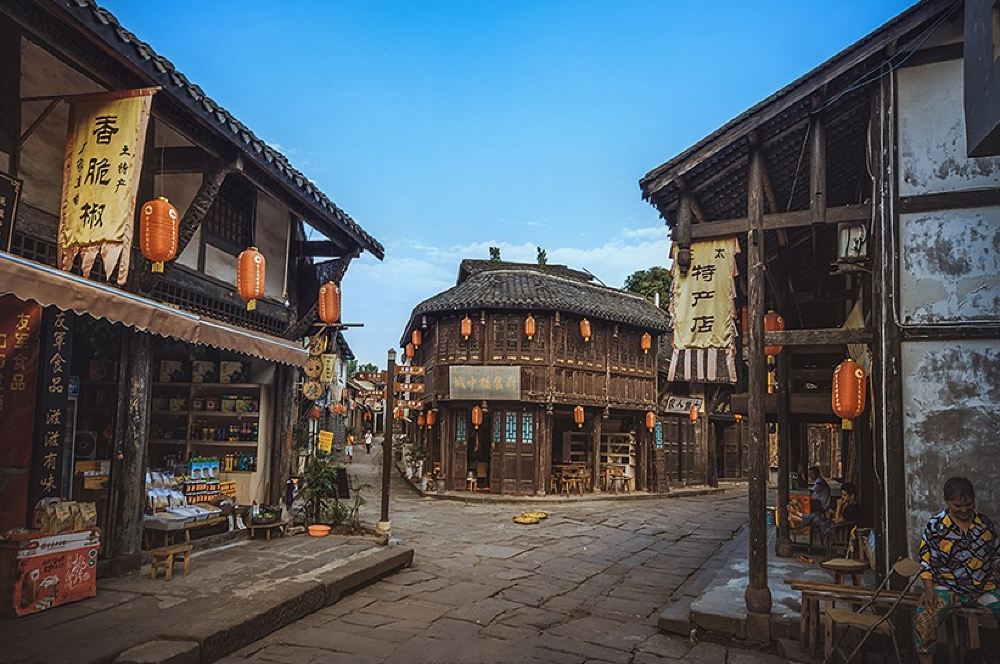
▲ Laitan Ancient Town: A national 4A-level attraction and one of the first batch of China's famous historical and cultural towns, located on the west bank of Qujiang River at Jiufeng Mountain, 32 km northeast of Hechuan. Established in the late Tang Dynasty and flourished in the Song Dynasty, it covers an area of only 0.25 square km. The well-preserved Qing Dynasty barbican in the southwest (built in 1862): Eight city gates, four troop-housing vaults, with a complete defensive system.
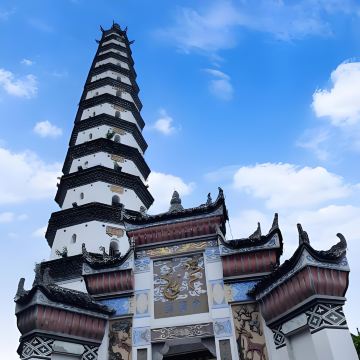

▲ Wenfeng Old Street is located along the riverbank between Fujiang No. 1 Bridge and Jialingjiang Nanping Bridge, connected to Hechuan North City commercial center and Diaoyucheng Fortress scenic area, with Hechuan administrative center and South City upscale residential area behind it. The old street covers approx. 500 mu with a total construction area of approx. 250,000 m², and is a national AAA-level scenic area.