





▲ Shirakawa-go is a historic village located in the mountainous region of northwestern Gifu Prefecture, representing Japan's cultural heritage. In 1995, along with Gokayama in Toyama Prefecture, it was registered as a UNESCO World Cultural Heritage site under the name "Historic villages of Shirakawa-go and Gokayama." The village preserves over 100 gassho-style houses of various sizes, and as residents still live there today, it is known as a "living world heritage site." It is a place reminiscent of "Japan's hometown," where visitors can deeply experience the rural culture, lifestyle, and scenery that embody Japan's traditional landscape. View of Shirakawa-go from the Ogimachi observation deck (image) [Photographer: Our staff]
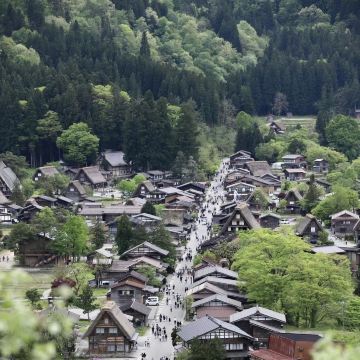

▲ ※For those interested, our tour guide will accompany you to the Ogimachi observation deck which offers a panoramic view of Shirakawa-go (approximately 20 minutes walk one way). ※Shuttle bus service requires no prior reservation. Please board the shuttle bus on your own (additional fee: 300 yen one way). Please note that due to congestion, you may not be able to board the shuttle bus within your stay time. Shirakawa-go as seen from Ogimachi observation deck (image) [Photographer: Our staff]
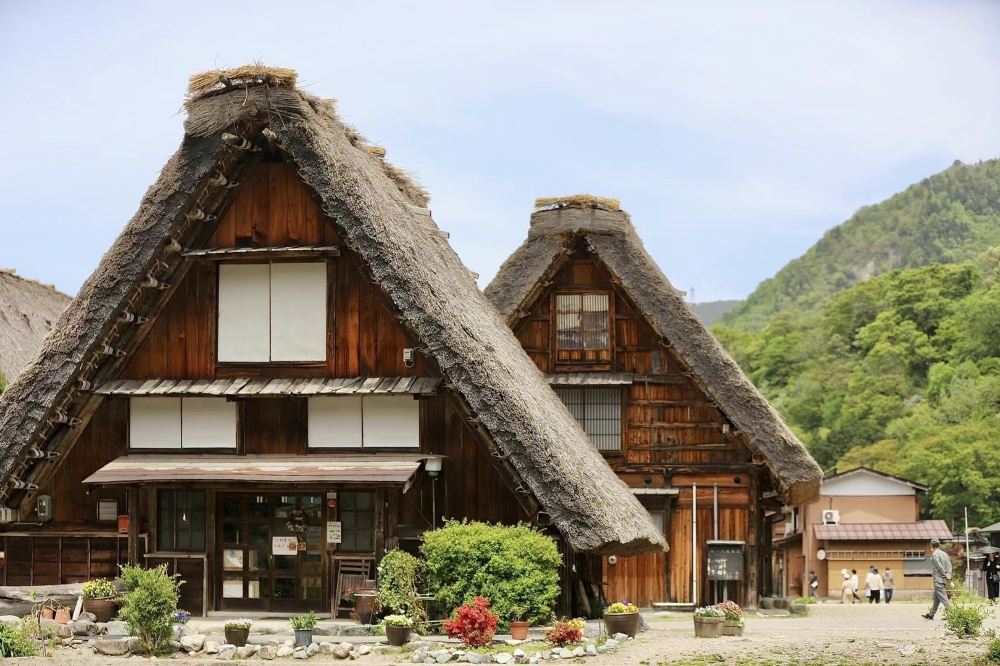
▲ - The most distinctive feature of Shirakawa-go is its traditional architecture called "gassho-zukuri." 1) The name comes from the roof's resemblance to hands pressed together in prayer ("gassho"). 2) The roof has an extremely steep slope of about 60 degrees, designed to allow heavy snowfall to slide off naturally. 3) The houses are built using traditional construction methods that join wood without nails. 4) The thatched roofs require rethatching every 20-30 years. The village's mutual assistance culture called "yui," where residents cooperate to rethatch roofs, is an important tradition of Shirakawa-go. Shirakawa-go (summer image) [Photographer: Our staff]

▲ - Why these houses were built: Shirakawa-go is a heavy snowfall area where snow can accumulate over 2-3 meters in winter. Therefore, these features became necessary: 1) A sturdy structure to withstand heavy snow 2) A steeply pitched roof to shed snow naturally 3) A large attic space This led to the development of this unique architectural style. In the past, the attics were actively used for sericulture, with raw silk production being an important local industry. Smoke from the irori (sunken hearth) would rise to the attic, helping to dry the thatch and prevent insects and rot. Shirakawa-go (autumn image) [Customer work: Photographer: PN: Einosuke (residing in Osaka)] ※The best time to see autumn leaves is usually from mid-October to early November.

▲ Shirakawa-go (summer image) [Customer work: Photographer: PN: Eitaro (resident of Aichi Prefecture)]

▲ The old townscape of Hida Takayama is a historic district that flourished as a castle town and merchant town during the Edo period. The three streets of Kamimachi and Shimomachi are designated as important preservation districts for groups of traditional buildings, making this a popular tourist area that retains strong remnants of the Edo era. The area features beautiful streets lined with distinctive latticework, clear waterways flowing beneath the eaves, and sake breweries adorned with "sakabayashi" (balls made of cedar leaves), creating a picturesque landscape. Visitors can immerse themselves in a nostalgic atmosphere, as if they've time-traveled back to the Edo period. The area also offers abundant street food options like Hida beef sushi skewers and mitarashi dango. Hida Takayama (image) [Guest photo by Michiyuki Haga (resident of Tokyo)]

▲ Includes Takayama specialty "mitarashi dango" Mitarashi dango (image)