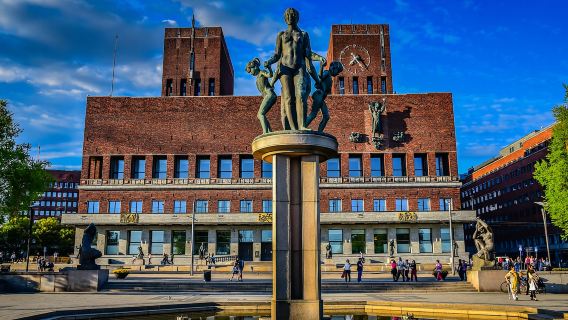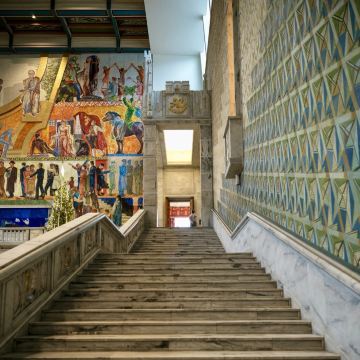

▲ Don't be fooled by its modest brick-red twin-tower exterior - this place houses Norway's most prestigious landmark! Built in 1950 to commemorate Oslo's 900th anniversary, Norwegian artists spent 50 years meticulously crafting it, showcasing works by 323 artists. It's essentially Norway's modern history and culture painted directly on the walls. The most famous feature is the Nobel Peace Prize ceremony hall, where world leaders gather every December 10th. The scene with massive murals and sunlight streaming through stained glass windows is both solemn and sacred.
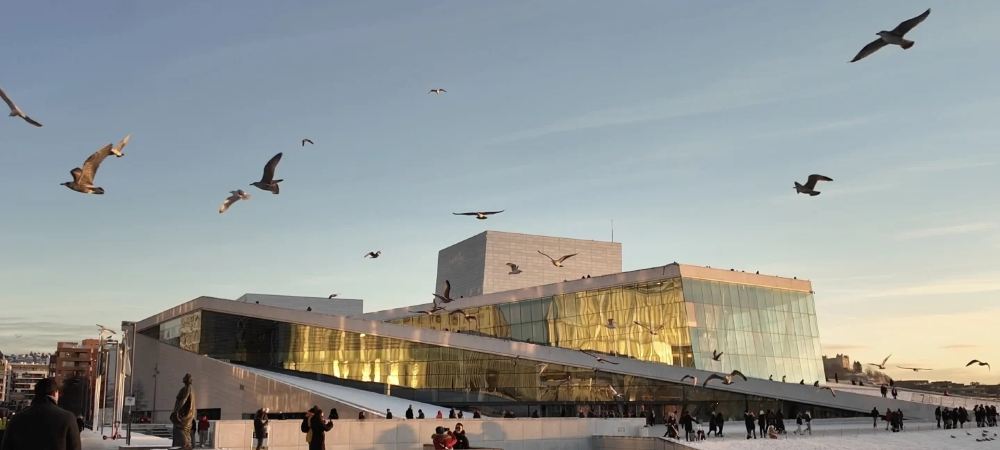
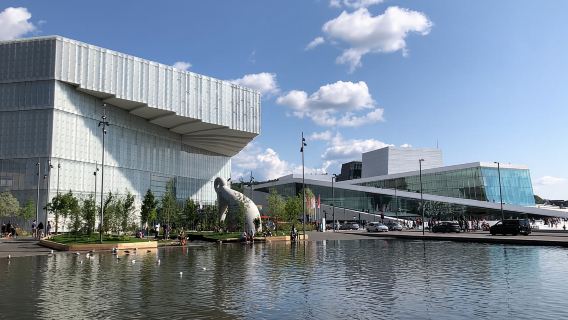
▲ This is probably one of the most "down-to-earth" opera houses in the world. Inspired by Norwegian glaciers, the entire building resembles a pure white marble "iceberg" floating directly on the waters of Oslo fjord. What's even more remarkable is that it doesn't have a traditional "main entrance"—you can simply walk up the sloped plaza to reach the roof! As you climb the textured white anti-slip marble surface, you'll enjoy panoramic views of fjord boats and distant forests. When you reach the top and feel the sea breeze, it's like stepping into a live-action version of Frozen.
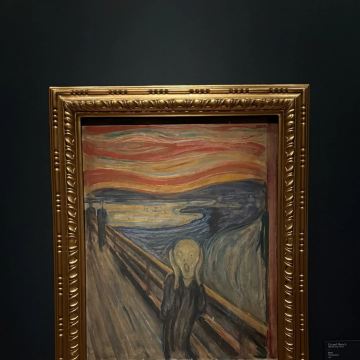

▲ The newly opened Munch in 2021 is undoubtedly Oslo's current architectural masterpiece. The 13-story tilted tower resembles a massive glass monolith from afar, emitting warm light at night like a glowing artistic Rubik's cube. The museum houses nearly 28,000 treasures by Edvard Munch, notably preserving two of the four versions of "The Scream" (with one original on rotating display from different periods). Beyond "The Scream," the 50-square-meter monumental "The Sun" and "Madonna" leave visitors speechless with their grandeur.
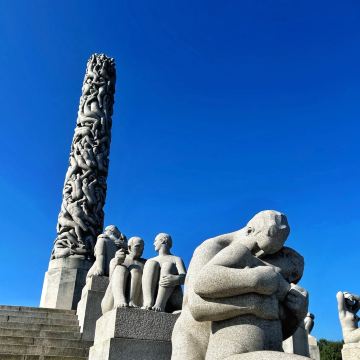

▲ This is the world's largest sculpture park and the masterpiece of sculptor Gustav Vigeland, who devoted his life's work to it. Upon entering the park, you are immediately struck by the overwhelming vitality. The entire park features over 600 sculptures, all made of bronze or granite. The most famous is undoubtedly the 17m-tall "Monolith," with 121 intertwined human figures spiraling up the column, symbolizing the cycle of human life from birth to death. Additionally, there are countless vivid scenes: running children, embracing couples, contemplative seniors... Each statue seems to tell our own story.
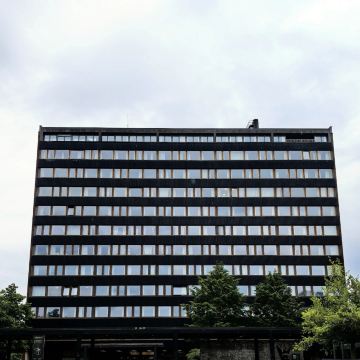

▲ It is Norway's first university and remained the country's only one until 1946. Its alumni roster is truly elite, featuring playwright Henrik Ibsen, modern mathematics pioneer Niels Henrik Abel, first UN Secretary-General Trygve Lie, and multiple Nobel Prize and Turing Award winners.