

View all 20 photos
Footsteps of Apostle Paul from Athens to Corinth, Private Day Tour
5.0/5
Excellent(27 reviews)
Join-in tour
Free cancellation by 12:00 AM, 1 day before the date of use
From
PHP 17,197.93
per person
Select package
Package and price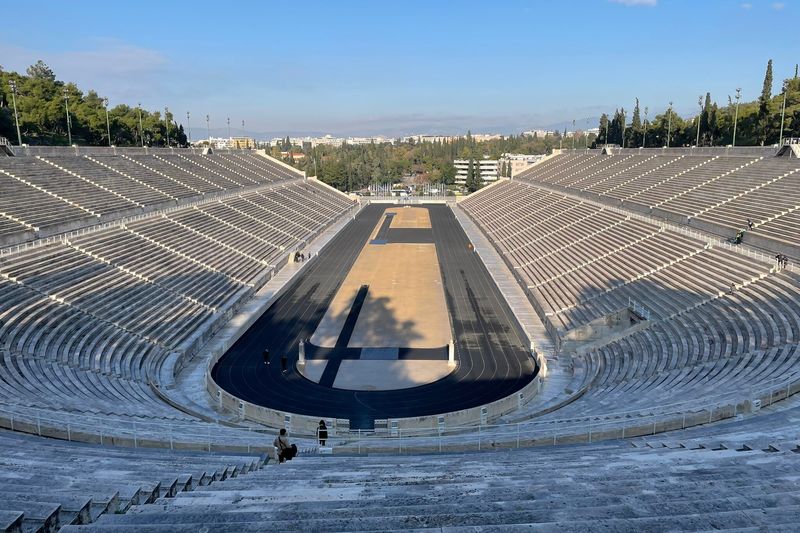


Date of use
2026-10-28
2026-10-29
2026-10-30
All
Local timeCurrency: USDPrices shown are the lowest prices for the current date
Package
Footsteps of Apostle Paul from Athens to Corinth, Private Day Tour|09:00 (09:00)
FromUS$17,197.93
Footsteps of Apostle Paul from Athens to Corinth, Private Day Tour|09:30 (09:30)
FromUS$17,197.93
Footsteps of Apostle Paul from Athens to Corinth, Private Day Tour|08:00 (08:00)
FromUS$17,197.93
Footsteps of Apostle Paul from Athens to Corinth, Private Day Tour|10:00 (10:00)
FromUS$17,197.93
Footsteps of Apostle Paul from Athens to Corinth, Private Day Tour|08:30 (08:30)
FromUS$17,197.93
Booking information
FromUS$17,197.93
per person
Book now
Overview
Details
Areopagus Hill Details
Enter attraction
Enter attraction
Entry tickets not included
Areopagus is a prominent rock outcropping located northwest of the Acropolis in Athens, Greece. In pre-classical times (before the 5th century BC), the Areopagus was used as the council of elders of the city. In classical times, it functioned as the court system.
In Roman times, it was from this location, drawing from the potential significance of the Athenian altar to the Unknown God, that the Apostle Paul is said to have delivered the famous speech.
The term “Areopagus” also refers to the judicial body that subsequently formed the higher court of modern Greece.
20 minutes
阿高拉 Details
Enter attraction
Enter attraction
Entry tickets not included
The Agora was the heart of ancient Athens, the focus of political, commercial, administrative and social activity, the religious and cultural centre, and the seat of justice.
The site was occupied without interruption in all periods of the city's history. It was used as a residential and burial area as early as the Late Neolithic period (3000 B.C.). Early in the 6th century, in the time of Solon, the Agora became a public area.
Here, Apostle Paul preached Christianity for the first time to Greeks in 51 A.D.
1 hour30 minutes
奥林匹亚宙斯神庙 Details
View from outside
View from outside
Entry tickets not included
The temple of Olympian Zeus (124-132 AD) had three rows of eight columns (tripteral octastyle) on the two narrow sides and two rows of twenty columns (dipteral eikosastyle) on the long sides. It once housed the chryselephantine (gold and ivory) statue of Zeus and the statue of the emperor. Sixteen of the temple's columns survive today, thirteen of them, on the east side, intact. Of the remaining three on the west side, one collapsed in 1852.
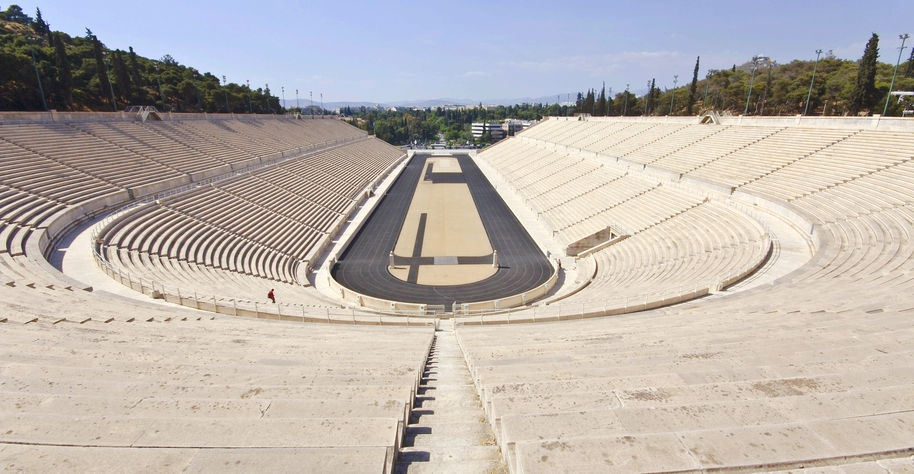
Panathenaic Stadium Details
Enter attraction
Enter attraction
Paid attraction
Entry tickets not included
It was originally a natural hollow part of the ground between the two hills of Agra and Ardettos, over Ilissos river. It was transformed into a stadium by Lykourgos in 330-329 BC for the athletic competitions of the Great Panathinaea Festivities. Between 140 and 144 AD, Herodes Atticus restored the Stadium, giving it the form that was found at the 1870 excavation: the horseshoe construction with a track 204,07 meters long and 33,35 meters wide. It is believed that the Stadium had a seating capacity of 50.000 people. Separating scales were built between the tiers and on the base of the sphendone there was a portico with Doric-style columns; another portico was placed in the stadium's facade. At the Roman times, the Stadium was used as an arena, with the addition of a semi-circular wall on the north that was corresponding to the sphendone of the southern side.
15 minutes
Arch of Hadrian (Pili tou Adrianou) Details
View from outside
View from outside
Entry tickets not included
The triumphal arch lies on an ancient street that led from the old city of Athens to the new, Roman section, built by Hadrian. It was constructed by the Athenians in A.D. 131, in honor of their benefactor emperor. Two inscriptions are carved on the architrave, one on each side: the first, on the side towards the Acropolis reads "This is Athens, the ancient city of Theseus"; the second, on the other side, facing the new city reads "This is the city of Hadrian and not of Theseus".
Syntagma Square Details
View from outside
View from outside
Free attraction
Entry tickets not included
Also known as Constitution Square, Syntagma Square (Plateia Syntagmatos) is a huge public plaza stretching out in front of Athens' parliament building. Gleaming with white marble and beautiful statues, it's a great place for people watching. Many of the city's most important streets begin here, including Ermou Street and Vassilissis Sofias Avenue.
Monument to the Unknown Soldier Details
Enter attraction
Enter attraction
Free attraction
Entry tickets not included
The Tomb of the Unknown Soldier is a war memorial located in Syntagma Square in Athens, in front of the House of the Greek Parliament. It is a cenotaph dedicated to the Greek soldiers killed during war. It was sculpted between 1930 and 1932 by sculptor Fokion Rok. The tomb is guarded 24-7 by the Evzones (Presidential Guards).
15 minutes
Церемония смены караула Details
Enter attraction
Enter attraction
Entry tickets not included
Changing of the Guard ceremonies take place at the Presidential Mansion and at the Tomb of the Unknown Soldier, which is off Syntagma Square below the Hellenic Parliament.
The Changing the Guard at the Tomb of the Unknown Soldier in particular has become a popular tourist attraction in Athens.
15 minutes
Academy of Athens Details
View from outside
View from outside
Entry tickets not included
The Academy of Athens is Greece's national academy, and the highest research establishment in the country. It was established in 1926, and operates under the supervision of the Ministry of Education. The Academy's main building is one of the major landmarks of Athens.
National and Kapodistrian University of Athens Details
View from outside
View from outside
Entry tickets not included
The National and Kapodistrian University of Athens, usually referred to simply as the University of Athens, is a public university in Athens, Greece
National Library of Greece Details
View from outside
View from outside
Free attraction
Entry tickets not included
The National Library of Greece is situated near the center of city of Athens. It was designed by the Danish architect Theophil Freiherr von Hansen, as part of his famous Trilogy of neo-classical buildings including the Academy of Athens and the original building of the Athens University.
Corinth Canal Details
Enter attraction
Enter attraction
Entry tickets not included
The Corinth Canal is one of the oldest man-made canals in the world and a very important navigational route in the Greek archipelago connecting the Gulf of Corinth with the Saronic Gulf.
The canal's position, thereby also separates the peninsula of Peloponnese – conveniently converting it into an island – with the Greek mainland. And, while the Greece canal is quite narrow, it is a fact that the canal is a vital lifeline for ships wanting to enter the Aegean Sea.
Spanning a distance of 6.3 kilometres, the Corinth Canal has a depth of 26 feet and its width alters between a minimum of 69 feet and a maximum of 82 feet at the bottom and at the surface respectively. Surrounded by walls standing at a height of 170 feet, the canal helps a ship to save a journey of 185 nautical miles.
30 minutes
Ancient Corinth Details
Enter attraction
Enter attraction
Paid attraction
Entry tickets not included
The apostle Paul first visited the city in AD 49 or 50, when Gallio, the brother of Seneca, was proconsul of Achaia.[57] Paul resided here for eighteen months (see Acts 18:11). Here he first became acquainted with Priscilla and Aquila with whom he later traveled. They worked here together as tentmakers (from which is derived the modern Christian concept of tentmaking), and regularly attended the synagogue. In AD 51/52, Gallio presided over the trial of the Apostle Paul in Corinth. This event provides a secure date for the book of the Acts of the Apostles within the Bible. Silas and Timothy rejoined Paul here, having last seen him in Berea (Acts 18:5).
1 hour30 minutes
Kechries
Enter attraction
Free entry
In ancient times, Kechries was one of the two ports of Corinth. This is the port from where St. Paul sailed to Ephessus.
15 minutes
All times are in local time and may change due to weather, road conditions, or other factors. Thank you for your understanding.
What's included
Trip.com picks
Popular Destinations
Popular activities
Unique experience
Popular Athens Tours
Best Athens Experiences
Things to do in ShanghaiThings to do in BeijingThings to do in Hong KongThings to do in OsakaThings to do in ZhangjiajieThings to do in SingaporeThings to do in ChongqingThings to do in TokyoThings to do in GuangzhouThings to do in Xi'anThings to do in ChinaThings to do in JapanThings to do in ThailandThings to do in VietnamThings to do in South Korea
Gulong Gorge Private Day Tour – Transportation & TicketsParagliding at Timbis Bali with photography for 10/15 minBeijing Private Airport Transfer: From PEK/PKX Airport to Downtown Hotels and Vice VersaBeijing Mutianyu Great Wall Day Trip | Daily 7:30-11:45 | Round Trip + Entrance TicketShanghai Future Tech Discovery – AI & Robotics Half-Day TourMutianyu Great Wall Private Self-Guide Trip With English Speaking Driver 99 Show Pattaya Ticket,Big EyeFrom Guangzhou: Cave Wonderland & Jungle ATV Day TripDesert Safari with Pick & Drop, Dune Bashing, Sand Boarding & Sunset Photo Stop Terracotta warriors day tour Bangkok Travel ServicesShanghai ActivitiesBeijing Connectivity SolutionsShenzhen ActivitiesKuala Lumpur TransportationChongqing ActivitiesBeijing Day ToursHong Kong ActivitiesHong Kong TransportationZhuhai ActivitiesFrom Athens: Small-Group Delphi, Museum & Arachova Day TripMercedes Private Tour of the Apostle Paul in Athens and CorinthHistorical Delphi One Day Tour with Arachova Stop & Expert GuideAthens: Meteora Day Trip at 9 AM, Caves, Seaside Stops & LunchAthens: Guided Food TourBeat the Heat Acropolis Mythology Tour - Small groupHighlights & Hidden Gems With Locals: Best of Athens Private TourMeteora: Half-Day Guided Morning Tour + TransfersAthens Greek Food Tour Small-Group ExperienceCorinth Canal, Ancient Corinth, Nafplio and Epidaurus Private Tour from AthensAthens Morning Walking Tour: Acropolis + Acropolis Museum Aegina: Guided Tour from Athens + Optional Ferry TicketHalf-day tour of the Acropolis of Athens | Includes reserved admission ticket + licensed guideNational Archaeological Museum Private Tour with Licensed Expert GuideAthens: Guided Night Bus TourAthens Travel ServicesAthens ActivitiesAthens Day ToursAthens Cultural ExperienceAthens SIM CardWater Activities in AthensAthens JR PassAthens City PassAthens Restaurant DiscountsWellness & Spa in AthensAthens Group ToursAthens TransportationAthens Connectivity SolutionsAthens Bus Tickets