

View all 20 photos
Tour Tuk Tuk Lisbon-Belem 4 H Free Pick-up
Join-in tour
Free cancellation by 12:00 AM, 1 day before the date of use
From
PHP 6,489.44
per person
Select package
Package and price


Date of use
2026-10-20
2026-10-21
2026-10-22
All
Local timeCurrency: USDPrices shown are the lowest prices for the current date
Package
Tuk Tuk Tour Lisbon-Belém 4 H|15:00 (15:00)
FromUS$6,489.44
Tuk Tuk Tour Lisbon-Belém 4 H|14:00 (14:00)
FromUS$6,489.44
Tuk Tuk Tour Lisbon-Belém 4 H|10:00 (10:00)
FromUS$6,489.44
Tuk Tuk Tour Lisbon-Belém 4 H|12:00 (12:00)
FromUS$6,489.44
Tuk Tuk Tour Lisbon-Belém 4 H|13:00 (13:00)
FromUS$6,489.44
Tuk Tuk Tour Lisbon-Belém 4 H|11:00 (11:00)
FromUS$6,489.44
Tuk Tuk Tour Lisbon-Belém 4 H|09:00 (09:00)
FromUS$6,489.44
Booking information
FromUS$6,489.44
per person
Book now
Overview
Details
Lisbon Cathedral Details
Enter attraction
Enter attraction
Paid attraction
Entry tickets not included
Visit to the Lisbon Cathedral, Built during the reign of D. Afonso Henriques, after the capture of Lisbon from the Moors, the Lisbon Cathedral began to be built in 1147, and is therefore considered the oldest church in the current Portuguese capital.
15 minutes
Miradouro de Santa Luzia Details
View from outside
View from outside
Free attraction
Entry tickets not included
One of Lisbon's viewpoints overlooking the Tagus River
Miradouro das Portas do Sol Details
Enter attraction
Enter attraction
Entry tickets not included
Its name derives from the old Porta do Sol, integrated into the Moorish fence of Lisbon, which existed in this location, ruined in the 1755 earthquake. You can see a section of the wall at Cerca Velha
10 minutes
Alfama Details
View from outside
View from outside
Free attraction
Entry tickets not included
Face of Amália Rodrigues on Portuguese pavement is a work made by urban artist Vhils and the Escola de Calceteiros de Lisboa
Miradouro da Senhora do Monte Details
Enter attraction
Enter attraction
Entry tickets not included
From this viewpoint you can see, to the south, the Palha Sea, São Jorge Castle, part of Baixa de Lisboa and the estuary of the Tagus River, to the west, from Bairro Alto to the Parque Florestal de Monsanto and, to north, the valley of Avenida Almirante Reis. Next to this viewpoint is the small and ancient Hermitage of Nossa Senhora do Monte, founded in 1147 and consecrated to Saint Gens, a bishop who, according to tradition, was martyred here. It was on this ancient Monte de São Gens that D. Afonso Henriques set up camp to conquer the city.
The Augustine friars, who took charge of the hermitage, placed inside the stone chair that had belonged to the saint. A legend arose around this chair according to which pregnant women who sat there had uncomplicated births. D. Maria Ana de Austria, wife of D. João V, went to sit there when she was pregnant with the heir to the throne. .
10 minutes
Igreja da Sao Vicente de Fora Details
Enter attraction
Enter attraction
Entry tickets not included
We will visit the Church of ão Vicente de Fora, its construction began in 1582 where D.Afonso Henriques had previously ordered the construction of a temple also under the invocation of S. Vicente proclaimed patron saint of Lisbon in 1173. in its architecture it is possible to observe traces of Mannerism in Portugal as well as the Gothic and Baroque styles in its church. Also here is the Pantheon of the Dukes of Bragança where several Portuguese kings belonging to the Bragança Dynasty are buried.
10 minutes
National Pantheon Details
Enter attraction
Enter attraction
Entry tickets not included
The National Pantheon is intended to honor citizens for services provided to the country, here are the graves of Amália, the Fado Diva and the Football Player Eusébio.
The Pantheon is located in the Church of Santa Engrácia, its construction began in 1682 and its work would only end in 1966, 284 years later, there are several stories associated with this church
20 minutes
Alfama Details
Enter attraction
Enter attraction
Free attraction
Entry tickets not included
Let's discover Alfama, which is the oldest neighborhood and one of the most typical in Lisbon. Its name derives from the Arabic al-hamma which means fountain or hot water baths, since Alfama was a thermal area where people went to baths to take care of themselves. of diseases, The waters that flowed from the springs at a minimum temperature of 20ºc and a highest temperature of 34ºc.
10 minutes
Praca do Comercio (Terreiro do Paco) Details
View from outside
View from outside
Entry tickets not included
Praça do Comércio was the site of the palace of the kings of Portugal for around two centuries, it is one of the largest squares in Europe.
In one of the buildings in the square we find the famous Martinho da Arcada café, the oldest in Lisbon, and one of Fernando Pessoa's favorites.
On the North side of the Square is the Rua Augusta Triumphal Arch.
It was for a long time the noble entrance to Lisbon and, on the marble steps of Cais das Colunas, coming from the river, heads of state and other prominent figures such as Isabel II of England or Gungunhana, the last emperor of Gaza in the territory that is now Mozambique
The Pink Street
View from outside
Free entry
Rua Cor-de-Rosa is today one of the centers of Lisbon's nightlife.
The New York Times placed Pink Street on the list of its twelve favorite streets in Europe. This is a street that invites Lisbon residents and tourists to stay, staying until the early hours of the morning drinking in the street or dancing in one of the clubs.
Museu do Chiado Details
View from outside
View from outside
Entry tickets not included
The Chiado neighborhood is one of the most emblematic neighborhoods in Lisbon and the most Bohemian.
A place where gatherings were held in various locations, it was an obligatory place for anyone who wanted to be known at the time, it was an area traditionally known for its intellectual connections, many of our great writers and artists passed through here, it was also here that several artistic currents emerged .
Chiado is also known for its chic cafes such as Brasileira where there is a statue of Fernando Pessoa.
We find several theaters, Baroque churches such as the Church of Loreto (Italian) and the Church of Our Lady of the Incarnation.
We have Largo Luis de Camões, Portuguese poet who wrote the Lusiadas
Church of Sao Roque Details
Enter attraction
Enter attraction
Entry tickets not included
The Church of São Roque was built at the end of the 16th century. It belonged to the Society of Jesus, being its first church in Portugal, and one of the first Jesuit churches in the world, it was one of the churches that survived the 1755 earthquake unscathed. .
In the current Largo da Misericórdia there would be a cemetery for those who died from the plague. The place was outside the walls and was sparsely populated. It was the people who built the hermitage in 1506, and it quickly became a place of pilgrimage and worship. The saint became widely accepted and the Brotherhood of São Roque was even created.
It has several chapels, mainly in the Baroque style of the early 17th century, the most notable of which is Saint John the Baptist, from the 17th century, a masterpiece of Italian art, unique in the world.
10 minutes
San Pedro Alcantara Observation Deck Details
Enter attraction
Enter attraction
Free attraction
Entry tickets not included
One of the most beautiful viewpoints in the city with views over the east of Lisbon, overlooking part of the Baixa area of Lisbon
10 minutes
Bairro Alto Details
View from outside
View from outside
Entry tickets not included
Bairro Alto is an old and picturesque neighborhood in the center of Lisbon, with narrow, cobbled streets, centuries-old houses,
Since the 80s, it has been Lisbon's best-known nightlife area, with countless bars and restaurants, as well as fado clubs. Until the 70s and 80s of the 20th century, numerous press organizations were also located there.
It is currently known as one of the best nightlife districts in Europe
Palacio de Belem Details
View from outside
View from outside
Entry tickets not included
Belém National Palace is the official residence of the President of the Republic.
The Palace was built in 1559 by the nobleman D. Manuel de Portugal, son of D. Francisco de Portugal, 1st Count of Vimioso.
In the 18th century, D. João V bought it from the Count of Aveiras
During the 1755 Earthquake, the monarch D. José I and his family were spending the day in the Belém area. Fearing another earthquake, the royal family settled in tents on the palace grounds, the interior of which was used as a hospital . The Palace thus became part of the heritage of the Royal House, having been the residence of queens and kings as well as serving as accommodation for foreign guests.
After the proclamation of the Republic in 1912, it was designated the official residence of the President of the Republic.
São Bento Palace Details
View from outside
View from outside
Entry tickets not included
Neoclassical in style, the São Bento Palace was built at the end of the 16th century, as the Benedito Monastery, with a Mannerist and Baroque design.
After the implementation of the liberal regime, in 1834 after the civil war in Portugal, it became the Royal Courts of the Nation and became known as the Palácio da Cortes until 1911, when it became known as the Palácio do Congresso until 1933 and since this time Palace of the National Assembly
Basilica of Estrela Details
Enter attraction
Enter attraction
Free attraction
Entry tickets not included
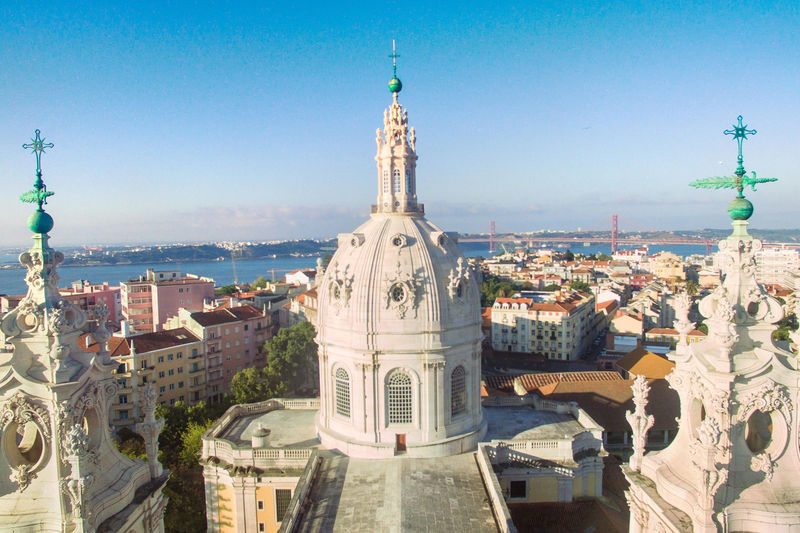
The Basilica da Estrela, also known as the Royal Basilica and Convent of the Santíssimo Coração de Jesus, Monastery of the Santíssimo Coração de Jesus, Basilica and Convent of Estrela, Parish Church of Lapa or Church of Nossa Senhora da Lapa, is a Catholic temple and former convent of Carmelite nuns.
In the second half of the 18th century, D.Pedro III and D.Maria I made a vow that they would build a church if they had a son to inherit the throne.
In 1799 construction began, but two years before finishing the construction of the church the boy died of smallpox.
we can see characteristics of Baroque in a final phase and Neoclassical style, with statues of Saints and illustrative figures that represent Faith, Devotion, Gratitude, and Liberality.
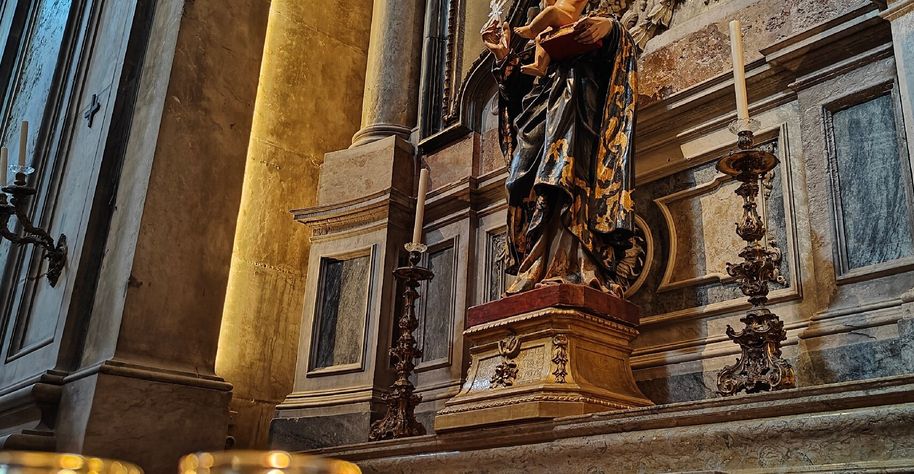
Its interior is made of Marble, Grey, Pink and yellow.
Queen D. Maria I is the only Portuguese monarch of the Bragança dynasty who is not found in the Pantheon of the Bragança Dynasty, but in the Basilica of Estrela, which she herself ordered to be built
10 minutes
Pastéis de Belém
Enter attraction
Enter attraction
Entry tickets not included
In 1837, the clerics of the Jerónimos Monastery put some pasteis de nata on sale to survive.
At that time Lisbon and Belém were connected by steamboats.
The Monastery attracted many visitors, which ended up making Pasteis de nata known.
In 1834 the Monastery closed following the Liberal revolution of 1820.
The convent's pastry chef decided to sell the recipe to Portuguese businessman Domingos Rafael Alves from Brazil, and it remains in the possession of his descendants to this day.
Traditionally, pastries are eaten while still warm, sprinkled with powdered sugar and/or cinnamon.
15 minutes
Mosteiro dos Jeronimos Details
View from outside
View from outside
Entry tickets not included
Mosteiro dos Jerónimos or Monastery of Santa Maria de Belém, was built by King D. Manuel I, at the end of the 15th century it belonged to the order of São Jerónimo.
In 1452, Infante D. Henrique ordered the construction of the Hermitage of Santa Maria de Belém, it was here that great navigators such as Pedro Álvares Cabral, Vasco da Gama and others, held vigils before leaving for their great sea voyages.
in 1496 D. Manuel I made a request to the Holy See to build a large monastery in place of the hermitage.
2 years later, the king donated the place to the Jerónimos friars to build the monastery, which over time went through several construction phases until the beginning of the 20th century.
Cardinal-King D. Henrique and the sons of D. Manuel I, D. Sebastião, the descendants of D. João III, the tombs of Camões and Vasco da Gama, among others, are buried in the chapel.
The Monastery also serves as a Pantheon.
Centro Cultural de Belem - CCB Details
View from outside
View from outside
Entry tickets not included
Cultural Center
Torre de Belem Details
Enter attraction
Enter attraction
Free attraction
Entry tickets not included
Torre de Belém was formerly known as Torre de São Vicente a Par de Belém.
Its function was to defend the Tagus riverbank.
The Tower of São Vicente (1514) belongs to a defense formation composed of the tower of São Sebastião da Caparica to the south (1481) and the tower of Santo António de Cascais to the west (1488).
5 minutes
Padrao dos Descobrimentos Details
Enter attraction
Enter attraction
Entry tickets not included
Padrão dos Descobrimentos (or Monument to the Discoveries; or Monument to the Navigators) was built in 1940 on the occasion of the Portuguese World Exhibition to honor the historical figures involved in the Portuguese Discoveries.
The current replica, in concrete and stone, is later, having been inaugurated in 1960
5 minutes
All times are in local time and may change due to weather, road conditions, or other factors. Thank you for your understanding.
What's included
Trip.com picks
Popular Lisbon Tours
Best Lisbon Experiences
Popular Destinations
Lisbon: Tapas & Drinks with Fado Live PerformanceLisbon: New Year's party on sailboat tour 2026 to 2027Lisbon: New Year's Eve Onboard w/drinks, music & fireworksLisbon: Kayaking and Snorkeling AdventureLisbon: Alfama and São Jorge Castle Quarters Walking TourCity Sightseeing Lisbon: 48-Hr Hop-on Hop-off Bus Tour + Zoo Entry TicketLisbon: Fado Show and Portuguese DinnerLisbon: Porto Nazaré & Capela do Senhor da Pedra day tripLisbon: Premium Port Wine Tasting & TapasLisbon: Dolphin Watching with Marine Biologist - Small GroupLisbon: Sunset Cruise on a Classic Wooden Yacht with DrinksLisbon: New Year's Eve Fireworks Boat TourFrom Lisbon: Coimbra, Aveiro, and Costa NovaLisbon Sunset Catamaran Cruise on the Tagus RiverLisbon: Portuguese Cocktail Experience
Lisbon Travel ServicesLisbon Spa & MassageLisbon City PassLisbon ActivitiesLisbon Local Tour GuidesLisbon Yacht CharterLisbon Cultural ExperienceLisbon Day ToursLisbon Sports & AdventureLisbon SIM CardLisbon Restaurant DiscountsLisbon Connectivity SolutionsLisbon Group ToursLisbon Transport CardThings to do in ShanghaiThings to do in BeijingThings to do in Hong KongThings to do in OsakaThings to do in ZhangjiajieThings to do in SingaporeThings to do in ChongqingThings to do in TokyoThings to do in GuangzhouThings to do in Xi'anThings to do in ChinaThings to do in JapanThings to do in ThailandThings to do in VietnamThings to do in South Korea