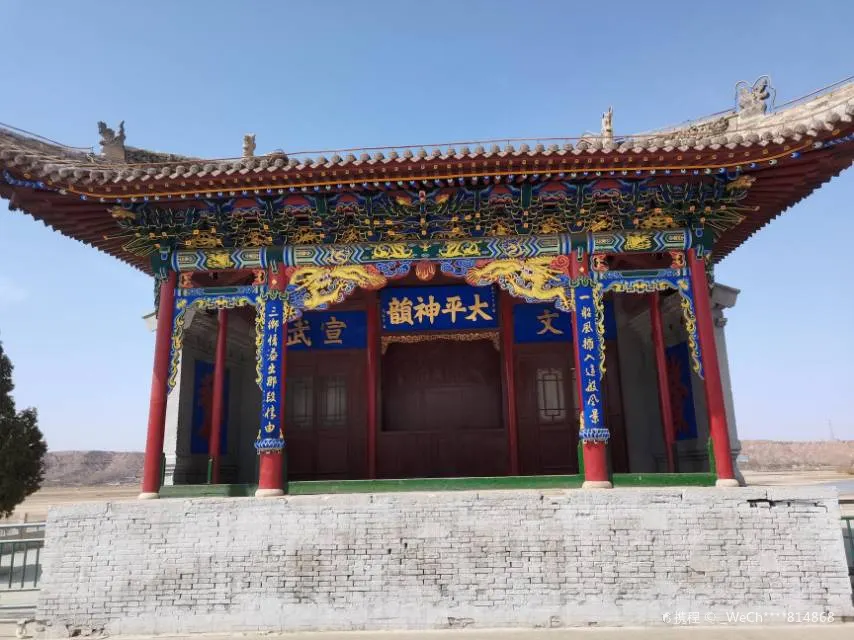
Hequ

Things to do in Hequ

Search attractions or local attractions & tours
Search

Explore top experiences

Top 10 attractions in Hequ

View all Attractions
Laoniuwan Yellow River Grand Canyon Tourist Area
No. 13 of Best Things to Do in Inner Mongolia

Laoniuwan Yellow River Grand Canyon Tourist Area

6.7
4.3/5
491 reviews

The Laoniuwan Yellow River Grand Canyon Tourist Area is located in the southwest of Qingshuihe County, covering an area of ​​9.5 square kilometers. It is located in the core area of ​​the Shanxi-Mongolian Yellow River Grand Canyon and the hinterland of the Yellow River "J" bend. It was rated as a national 4A-level tourist Attraction in 2016 and is currently actively creating a national 5A-level tourist Attraction. It is the place where the Yellow River and the Great Wall "shake hands" and is known as "the first bay of the Yellow River in the world", "one of the ten most beautiful canyons in China", and "the Little Three Gorges in the North". The Laoniuwan Village, where the Attraction is located, was rated as a traditional Chinese ancient village in 2015. There are many cultural relics and historical sites in the Laoniuwan Yellow River Grand Canyon tourist area, with beautiful natural and cultural landscapes and profound historical and cultural heritage. The canyon section of more than 30 kilometers has strange peaks and cliffs on both sides, with various postures. It has the unique wonder of the place where the Great Wall and the Yellow River shake hands, the ruins of the ancient city of Ningbianzhou, the Laoniuwan ancient village, the natural Shiping Square - Shenniu Square, the Nine Bends of the Yellow River with the symbolic significance of the 99 bends of the Yellow River, the quiet and profound Yangjiachuan Small Canyon, the 270-degree Taiji Bay, the walking trail winding through the canyon, the Wanghe Tower with a panoramic view of the canyon scenery, the parent-child paradise on the bank of the Yellow River - Shenniu Paradise, the VR Experience Hall, the historical memory of the beach crawling - the relief wall of the Yellow River trackers, and more than 30 scenic spots along the Yellow River waterway tour line, such as the Dahe Zisai, the Shenshi water-protecting stone, the water-controlling stone pillar, the Xicha Temple ruins, the Taiji Peak, the Ruyi Island, and the Wanli Jiangshan rock wall, which are of great scientific and ornamental value.

Qingshuihe · 41.8 km from Hequ
Jinci Temple Museum
2026 Asia 100 - Family-friendly Attractions

Jinci Temple Museum

8.7
4.8/5
21k reviews

Jinci Temple Museum is located at the foot of Xuanweng Mountain by the banks of the Jin River. It is an ancestral temple built to commemorate Tang Shuyu, the founding feudal lord of the State of Jin, and is also one of the earlier surviving royal sacrificial gardens in China. There is a saying that "you have not truly visited Taiyuan until you have visited Jinci." The ancient buildings in the museum are arranged in sequence along the central axis, among which the Xian Hall, the Flying Bridge over the Fish Pond, and the Hall of the Holy Mother are known as the "three treasures," while the Zhou Cypress, the Never-Aging Spring, and the Song dynasty attendant statues are known as the "three wonders"—these are the core highlights of any visit. The "Three Treasures" are located on the central axis and can be visited together. Xian Hall is the place where sacrificial offerings are placed. The hall is surrounded by railings instead of walls, making it well-ventilated and bright, and its beam structure is simple and lightweight. The Flying Bridge Across Fish Pond is on the west side of Xian Hall. It is a cross-shaped ancient bridge built over a square pond, resembling a modern overpass in form, and this type of bridge structure is extremely rare among surviving ancient buildings. The west end of the bridge connects to Shengmu Hall, the oldest surviving building in the museum. Wooden carved dragons coil around the porch columns in front of the hall, making them relatively early surviving examples of wooden coiled dragons. The hall interior was built using the reduced-column method, creating a rather spacious interior. It houses dozens of Song Dynasty colored sculptures, with the main statue of Shengmu seated in the shrine and the remaining attendants arranged on both sides with varied expressions. One attendant statue is half joyful and half sorrowful, vividly lifelike and moving. With Shengmu Hall as the center, you can also seek out the "Three Wonders." The Zhou Cypress is located on the north side of Shengmu Hall. It is said to have been planted in the Western Zhou Dynasty, and its trunk leans south like a reclining dragon, full of ancient majesty. The Never-Aging Spring is located on the south side of Shengmu Hall and is the main source of the Jin River. The museum also houses the Stele of the Inscription and Preface to Jinci, composed and handwritten by Emperor Taizong of Tang, Li Shimin, whose running-script calligraphy is vigorous and forceful. In the southern part is the Shifang Fengsheng Zen Temple, said to have originally been the villa of the Tang Dynasty general Yuchi Gong. In the Futu Courtyard, the Sarira ShengSheng Pagoda can be climbed for a distant view. The Jinci temple fair has been passed down to the present day and has been included in the national-level intangible cultural heritage list. The Water Mirror Stage, an ancient theater stage in the museum, is an important venue for activities during the temple fair.

China · Taiyuan
Yingxian Wooden Pagoda
No. 3 of Best Things to Do in Shanxi

Yingxian Wooden Pagoda

8.6
4.8/5
25.8k reviews

Yingxian Wooden Pagoda is centered on the Sakyamuni Pagoda of Fogong Temple. This pure wooden pavilion-style pagoda was first built in the second year of Qingning of the Liao Dynasty (1056) and later expanded and completed during the Mingchang period of the Jin Dynasty. It is the oldest surviving wooden pagoda in China. The pagoda has five visible stories, with concealed stories inserted between them, making nine stories in total, and stands about 67 m tall. Apart from the stone platform base on the first story, the main body of the pagoda is built entirely of wood, connected using traditional mortise-and-tenon craftsmanship, and the whole pagoda uses more than 50 types of bracket sets, demonstrating exquisite structural design. For more than nine hundred years, the pagoda has withstood many major earthquakes and modern artillery bombardment and still stands today. Due to the need for cultural relic protection, visitors may only visit the first floor inside the pagoda. There is a door on each of the north and south sides of the first floor. In the center of the inner chamber is a seated statue of Shakyamuni about 10 m tall, with a dignified face and a solemn expression. Looking up, you can see the exquisite coffered ceiling at the top. On the walls of the inner chamber are painted six Buddha images of Tathagata, and on the walls on both sides of the doorway are painted Liao Dynasty-style murals featuring Vajra, disciples, and offering figures, with bright colors and lifelike figures. Multiple plaques from various dynasties hang under the eaves of each story of the wooden pagoda, two of which were written by Ming emperors and are particularly striking. Under the south eaves of the fifth story hangs the plaque "Supreme Divine Craftsmanship," written by Zhu Di, Emperor Chengzu of Ming, when he climbed the pagoda during a northern military campaign in the Yongle era; under the south eaves of the fourth story hangs the plaque "Wonder of the World," written by Zhu Houzhao, Emperor Wuzong of Ming, when he ascended the pagoda to feast and reward his ministers after the Yingzhou victory in the Zhengde era. These plaques are not only calligraphic treasures but also record the intersection of the wooden pagoda with historical figures, together with the architecture itself forming a distinctive cultural view of the attraction.

China · Ying County
Pingyao Ancient City
2026 Asia 100 - Night Attractions

Pingyao Ancient City

8.4
4.6/5
27.3k reviews

Pingyao Ancient City is one of the best-preserved ancient cities in China and, along with Lijiang Ancient City, is one of the two ancient cities in China to have successfully been designated as a World Cultural Heritage site in its entirety. Pingyao was once the financial center of China during the late Qing dynasty. Walking into this once-prosperous ancient city, you can feel the atmosphere of Shanxi merchant culture everywhere. The streets, shops, and residences within the ancient city still maintain their traditional layout and appearance. The overall street pattern is in the shape of the Chinese character 'tu', consisting of four main streets, eight small streets, and seventy-two lanes. The ancient city has six city gates in total, and the areas around the south gate and west gate are where visitors are concentrated. When touring, you usually enter the city through the lower west gate and walk along West Street to Rishengchang Exchange Shop, where you can learn about the development history of ancient banking and experience the legend of Shanxi merchants conducting business across the world. South Street, which runs north-south through the city, is the central axis of the ancient city. During the Ming and Qing dynasties, South Street gathered more than half of the country's financial institutions and was known as the "Wall Street of China" at the time. Today this street is called the Ming and Qing Ancient Street, and most of the ancient city's attractions are concentrated here. Centered on the landmark Market Tower, attractions such as Xietongqing Exchange Shop, Weitaihou Exchange Shop Museum, and the Chinese Escort Agency Museum are distributed around it, and a large number of shop buildings from the Ming and Qing periods are preserved along the street. At the Pingyao County Government Office in the south of the ancient city, you can see a large number of ancient documents and instruments of torture, and there is a daily performance of the county magistrate holding court; the City God Temple and the Confucian Temple in the east of the city have grand and refined architecture. The ancient city wall is very well preserved, and climbing the wall offers a panoramic view of the ancient city. The gate tower of Yingxun Gate at the south gate is especially exquisite, and watching the sunset from the city wall in the evening is a magnificent sight. In addition to the ancient city itself, the Zhenguo Temple and Shuanglin Temple outside the city are also part of the World Cultural Heritage. The Ten Thousand Buddha Hall of Zhenguo Temple is entirely made of wood, assembled with mortise and tenon joints without a single nail; Shuanglin Temple preserves painted sculptures from the Yuan to Ming dynasties, which are exquisite in form and renowned as a "treasure house of Eastern painted sculpture art."

China · Pingyao County
Hequ Today's weatherClear 0-12℃
Hequ weather for the next 2 days11/14: -2-13℃, 11/15: -1-8℃

Free things to do in Hequ

What travelers say about Hequ
user-avatar
M30***79September 12, 2025
5.0
It is worth visiting the Qin, Jin, Meng and Jimingwen Three Provinces Scenic Area, which is a famous ancient place in Hequ County, Xinzhou City, Shanxi Province. It has traditional Chinese culture, as well as Hequ County Wantuo, the Yellow River Niangniang Beach, Xikou Ancient Ferry, Errentai, the River God Temple, and Mifo Cave.

Qin-Jin-Meng Three Provinces Cockcrow Scenic Area

user-avatar
老鹰在飞翔September 16, 2020
5.0
In Fugu County, the northernmost part of Shaanxi Province, and Jungar Banner of Inner Mongolia Autonomous Region, across the river from Hequ County in Shanxi Province, there is a famous scenic spot - "The crowing of cocks can be heard in three provinces". In fact, this is the first bend of the Yellow River as it enters Shaanxi.

Yellow River's Shanxi-Shaanxi Grand Canyon

user-avatar
118***26October 22, 2026
5.0
Laoniu Bay is a place where the Yellow River and the Great Wall embrace each other on the Loess Plateau. The emerald green river meanders gently through the canyon, drawing a near-perfect Taiji Bay; the Ming Great Wall winds down the mountain ridge, quietly meeting the Yellow River at the cliff top. Stone castles, cave dwellings, and knife-cut cliffs intertwine with the gentle shimmering water, creating a scene that is both desolate and beautiful, majestic yet tranquil, like a landscape painting unfolding for thousands of years.

Laoniuwan Yellow River Grand Canyon Tourist Area
user-avatar
还不曾去过倒悬山!July 17, 2022
4.0
Due to the complex terrain and constant wars throughout the ages, Shanxi's population is not very large. In the 41st year of Emperor Qianlong's reign in the Qing Dynasty (1776 AD), the population of Shanxi Province was about 12 million, and by 1953, the population of Shanxi Province was 16 million. Over the past 160 years, the growth rate of Shanxi's population has not been large. This is related to the wars since the late Qing Dynasty, which caused a large number of Shanxi people to migrate out, such as the famous Zou Xikou.

Xikou Ancient Ferry

user-avatar
喝了红牛有力量November 11, 2026
5.0
It's worth going. I'm not qualified to comment, but I feel it's a must-visit in this lifetime. You could go multiple times. Datong has a much stronger historical charm than Beijing and Luoyang, which I've been to, and there's even more delicious food.

Yungang Grottoes

user-avatar
Ye735November 10, 2026
5.0
Having visited Jinci Temple twice, I personally believe it's absolutely the most worthwhile tourist attraction in Taiyuan. Hiring a professional guide is essential for a better understanding of this historically significant royal sacrificial garden. The exquisite carvings of dragons on the pillars of the Holy Mother Hall and the intricate details of the statues inspire genuine admiration for the wisdom and craftsmanship of the ancients. The 3,000-year-old Zhou Cypress is truly awe-inspiring up close! Every fold in its trunk tells a story spanning the Shang and Zhou dynasties. In the Zhenguan Baohan Pavilion, Li Shimin's self-written and inscribed "Inscription and Preface of Jinci" stands silently. The bluestone is silent, yet the ink flows, the spirit of a thousand years ago still vividly present.

Jinci Temple Museum

user-avatar
320***57November 11, 2026
5.0
I came specifically to keep a thousand-year-old promise: the Yingxian Wooden Pagoda, the Sakyamuni Pagoda of Fogong Temple. Without a single iron nail, thousands of wooden components, joined together by mortise and tenon joints, have stood silently on the land of northern Shanxi for nearly a millennium. Looking up at the layers of gracefully unfolding brackets, the wind chimes on the eaves tinkle gently in the breeze, and swallows circle around the pagoda. It turns out that the romance and wisdom of the ancients are hidden in the cracks of the wood. It has waited for me for over nine hundred years; I finally stand at its foot, gazing upon the time of the Liao Dynasty.

Yingxian Wooden Pagoda

user-avatar
Jimothy BaldcockNovember 11, 2026
5.0
The driver was exceptional. Careful, smooth and relaxing drive. At every stop he explained everything and accompanied us to help buy tickets etc which is particularly helpful to non-Chinese speakers. He was friendly, patient and kind. The smaller temples and pagodas were especially nice, quiet and in some interesting surroundings. Hanging Temple was impressive but may be hard going at busy periods (we arrived early morning in winter, -2 degrees so particularly quiet. Not for those with a fear of heights, or claustrophobia!

Xuankong Temple

user-avatar
小宝1979November 9, 2026
5.0
Pingyao Ancient City is truly worth the trip! As the best-preserved ancient county town from the Ming and Qing dynasties, walking on the city walls and overlooking the panoramic view, one is overwhelmed by the weight of history. The underground vaults of Rishengchang Exchange House and Xietongqing Exchange House are eye-opening, allowing one to deeply appreciate the wisdom of Shanxi merchants in "connecting the world through finance." The courtroom performance at the county government office is very interesting and highly interactive. Although commercialization is inevitable, the core cultural charm remains rich. The atmosphere is even better when the lights come on at night, and the local delicacies, such as Pingyao beef and bowl-shaped rice cakes, are also very authentic. It is well worth spending two days slowly exploring and savoring this "living ancient city."

Pingyao Ancient City

Trip Moments in Hequ

Popular cities near Hequ

Frequently asked questions

How can I contact Trip.com customer support?

Get help anytime, anywhere within 30 secondsContact customer support

Change and cancellation policies vary by attractions and tours. Please check the product details page for more information.

Ticket prices may vary between weekdays and weekends, as well as during peak and off-peak seasons. When booking with Trip.com, you can also use Trip Coins to get extra savings. For more tips on booking discounted tickets, please visit Trip.com for the latest information.