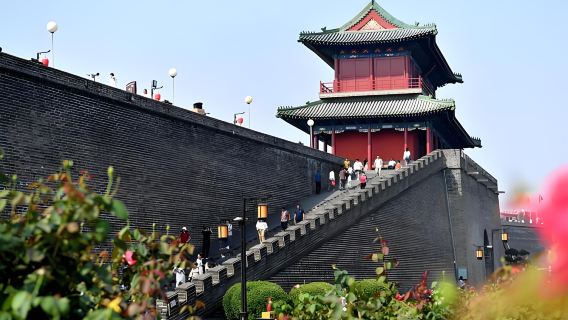
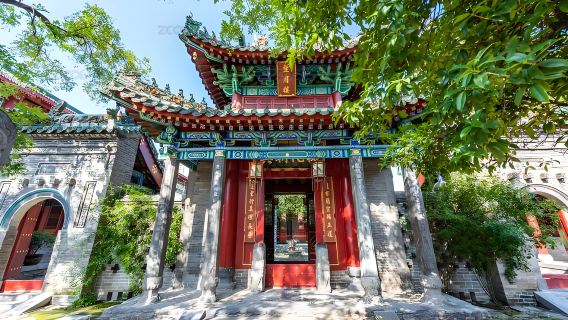
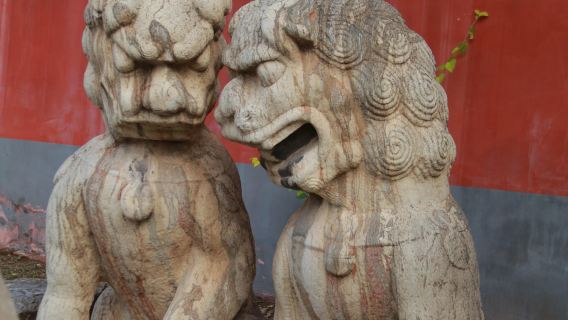
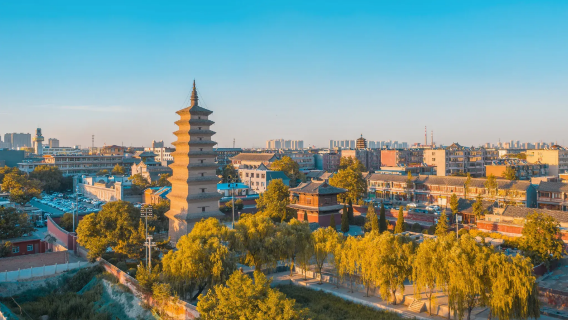
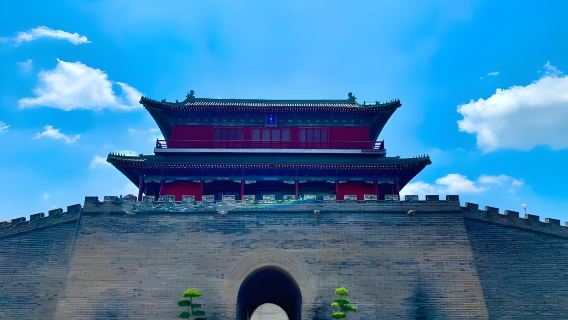
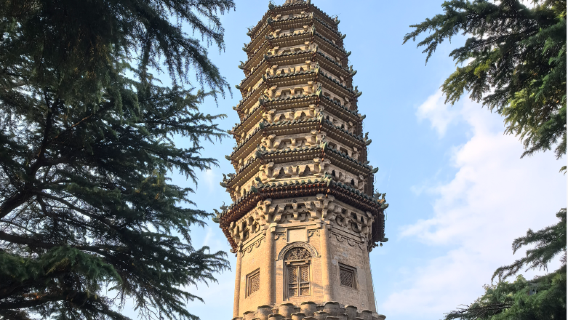
▲ The Heavenly King Hall is the first main hall of Longxing Temple, originally built during the Northern Song Dynasty and renovated during the Qianlong era of the Qing Dynasty. The two inscribed plaques were personally written by Emperor Kangxi, demonstrating Longxing Temple's status as an imperial monastery.


▲ This wooden archway gate is exquisitely elegant with an antique charm, featuring a single-bay width and a hipped roof covered with gray tiles and green glazed tile edges. "Miao Zhuang Yan Yu" praises the Buddhist realm as a supremely wonderful and virtuous domain.


▲ The charm of Longxing Temple's Song Dynasty architecture extends far beyond its ancient form and exquisite craftsmanship. Its true allure lies in the pervasive spirit of Song Dynasty civilization—rational yet romantic. Stepping into Longxing Temple is like entering a three-dimensional epic of the Song Dynasty, where every footstep may echo with the whispers of history.


▲ This 3.4-meter-tall statue of Guanyin Bodhisattva wears a jeweled crown and beaded necklaces, with bare arms and feet. Her delicate features include willow-leaf eyebrows and slightly opened phoenix eyes gazing down with a gentle smile upon all beings. As a national treasure-level cultural relic, this Reclining Guanyin statue attracts countless visitors.


▲ Cultural relics are never mere objects; they are living carriers of culture that allow us to traverse time and glimpse the production and daily lives of ancient people. As years pass, their artistic brilliance will only grow more vibrant and dazzling.


▲ The "Tongjin Treasure Raft" on the north side of the Pailou Gate symbolizes the Dharma as a precious vessel that ferries sentient beings across the sea of suffering.


▲ This is a still gesture, yet an eternal movement. It is the Medicine Buddha's ceaseless, tender gaze upon countless sentient beings.


▲ "People pass by the Great Buddha Temple, where the temple's Buddha is greater than the people." Hence, Longxing Temple is commonly referred to as the "Great Buddha Temple." This Thousand-Hand and Thousand-Eye Guanyin statue stands 21.3 meters tall. It was commissioned by Emperor Taizu of Song, Zhao Kuangyin, who employed 3,000 craftsmen and took four years to complete. It is one of the tallest ancient bronze standing Buddha statues still existing in China.


▲ The Pilu Buddha Hall enshrines a bronze-cast statue of Pilu Buddha, considered a national treasure. It features a total of 1,072 Buddha statues, each with well-proportioned figures and exquisite craftsmanship, representing a precious artistic relic from the Ming Dynasty.

▲ The Mani Hall is symmetrically designed, exuding a sense of solidity, stability, and solemnity. It features a seven-bay width and depth, with a double-eaved, nine-ridged hip-and-gable roof. The hall has protruding side halls on all four sides, forming a cross-shaped layout in plan. It is the only surviving example of Song Dynasty architecture in China.