Gulang

Things to do in Gulang

Search attractions or local attractions & tours
Search

Explore top experiences

Top 10 attractions in Gulang

View all Attractions
Tiantishan Grottoes
No. 1 of Best Things to Do in Wuwei

Tiantishan Grottoes

6.8
4.6/5
515 reviews
Tiantishan Grottoes, also known as the Great Buddha Temple, is located in Dengshan Village, Zhonglu Township, approx. 50 km south of the city. Established during the Northern Liang period of the Sixteen Kingdoms in the Eastern Jin Dynasty, it has a history of about 1,600 years. Tiantishan Mountain stands majestic and steep, towering into the clouds. With stone steps carved into the mountain, the rugged path winds upward like a suspended ladder, hence its name "Heavenly Ladder Mountain." Now the Tiantishan Grottoes only have 3 remaining tiers with 17 caves of varying sizes. The larger caves stand 30 m in residual height, 19 m in width, and 6 m in depth. Inside the caves, there is a 15 m tall and 10 m wide statue of Sakyamuni, flanked by six other statues including Manjusri, Samantabhadra, Virupaksha, Vaisravana, Kasyapa, and Ananda. These sculptures are vividly shaped, exuding solemn expressions and distinct appearances. The north and south walls of the cave are adorned with large murals. The south wall features a cloud-patterned azure dragon, with an elephant and sika deer in the middle section—the elephant carries glowing scriptures on its back—while the lower section depicts fierce tigers amid trees and flowers. The north wall's upper part shows another azure dragon, its middle section portrays a white horse and black tiger (with shining scriptures on the horse's back), and the lower part displays peony blossoms. The entire mural exhibits fresh brushwork, vibrant colors, majestic momentum, and lifelike imagery. The Tiantishan Grottoes are representative of China's early cave-temple complexes. In 2001, the Tiantishan Grottoes were designated as a fifth-batch national cultural heritage site. The attraction features the Tiantishan Villa and a grotto cultural relics exhibition hall.Wuwei · 17.1 km from Gulang
Gulang Battle Memorial Hall

Gulang Battle Memorial Hall

3.2
4.3/5
5 reviews
The Red Army West Route Army Gulang Battle Memorial Hall is located in the southwest corner of Gulang County, covering an area of ​​more than 150,000 square meters. It was the battlefield site of the Gulang Battle of the 9th Army of the Red Army West Route Army in 1936. The exhibition hall consists of the sculpture in the prologue hall, 8 parts, 33 units and the tail hall. The whole hall is themed "Strong West Wind, Red Battle Flag", and displays the battle history of the 9th Red Army in Gulang and the tragic journey of the West Route Army in Hexi. In order to commemorate the martyrs, inspire future generations, and better publicize and display the battle history of the Red Army West Route Army in Gulang, two exhibition halls, a double support exhibition hall, a military pavilion and a hero memorial square were newly built in 2002, and auxiliary facilities such as a dedicated lane for the memorial hall were built, which are open to the public free of charge. In July 21, the Gulang Battle Memorial Hall was expanded and opened to the public, and red study tours and commemorative education were carried out. The Initial Heart Square covers an area of ​​69,400 square meters, with Qilian Snow Peak, Nanhu Red Boat, Revolutionary Torch, Central Sculpture, Garden Trail, etc., supporting red small scenes and landscape corridors, forming a red landscape route. It has now become an important base for receiving revolutionary traditional education, promoting the spirit of the Red Army, and strengthening ideals and beliefs.Gulang · 1.7 km from downtown
Zhangye Colorful Danxia Scenic Spot
No. 7 of Best Things to Do in Northwestern District of China

Zhangye Colorful Danxia Scenic Spot

8.7
4.7/5
36.2k reviews
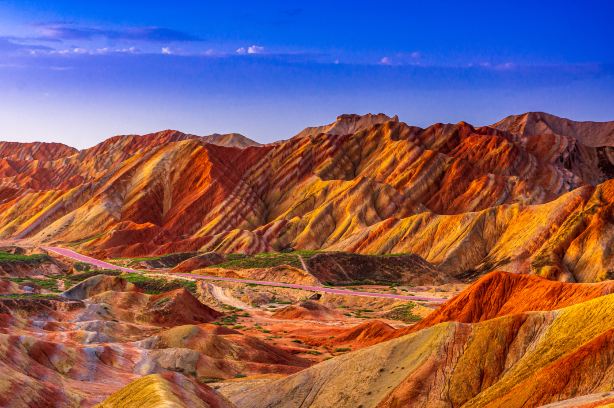
Zhangye Colorful Danxia Scenic Spot is located in Linze and Sunan counties at the northern foot of Qilian Mountain. The attraction is 40 km east of Zhangye city and 20 km north of Linze county. Covering a total area of 50 sq km with 4 sq km accessible to visitors, it's currently recognized as a UNESCO Global Geopark and a national 5A-level tourist attraction. The attraction features seven viewing spots, including Colorful Cloud Sea, Colorful Fairyland, Colorful Splendor, Colorful Rainbow Glow, Crouching Tiger Gorge, Colorful Ao River, and Wanxiang Earth Forest Valley, along with over 30 scenic views such as Dragon Playing with Fire (colorful hills), Monkey Gazing at the Sea, Turtle Asking the Sky, Golden Toad Seeking the Way, Giant Scallop, Colorful Screen, Sleeping Beauty, and Crouching Tiger. It is a highly integrated area of colorful hills and Danxia landforms. The colorful hills amaze visitors with their vibrant hues, intricate layered patterns, majestic scale, and breathtaking vistas. The Danxia landform area of Wanxiang Earth Forest Valley features towering peaks resembling a forest, with a harmonious yet dramatic arrangement of sparse and dense formations. These extraordinary shapes, carved by nature's artistry, combine grandeur, peril, wonder, elegance, and serenity in one spectacular landscape. After being promoted to a national 5A-level attraction and global geopark, Zhangye Colorful Danxia Scenic Spot aims to become an international travel destination. By deeply exploring and optimizing regional cultural resources, the scenic spot will leverage its unique tourism assets and cultural heritage to transform into a western China-based international resort with scientific research appeal. Centered around colorful hills and Danxia landforms, it highlights the aesthetic and scientific value of geological resources while prioritizing their protection and development. The composite attraction primarily offers geological sightseeing and recreation, complemented by cultural experiences, folk customs, and leisure vacations.China · Zhangye
Qilian Mountains Binggou River Scenic Area

Qilian Mountains Binggou River Scenic Area

7.3
4.8/5
1.5k reviews
Chairlong lake, at an altitude of 4,008 m, is a sacred natural alpine lake in the Qilian mountains with high elevation and vast area. The lake water, formed by melting snow from the mountains, displays emerald, azure and other colors as the light changes. Backed by the majestic Anigangar snow mountain, the landscape resembles a heavenly pool on earth. The round-trip hiking route is approximately 20 km, featuring wooden walkways and the Hero's slope viewing platform along the way. Successful summiters can receive a dedicated climbing certificate. The entire trail remains pristine with well-preserved natural features, accompanied by meadows, unique rocks and wild flowers, free from excessive commercial development. It's ideal for outdoor hiking enthusiasts and travelers seeking unspoiled natural scenery, offering pure and healing alpine views. The vast native alpine meadow bursts into bloom with purple iris flowers around the Dragon Boat Festival each year, creating a stunning visual spectacle across the wilderness. Gentle wooden boardwalks extend deep into the floral expanse, where cattle and sheep graze leisurely while wild marmots occasionally appear, all framed by distant rolling green mountains under expansive skies. During non-blooming seasons, the lush grassy fields serve as ideal spots for leisurely walks, picnics and aerial photography. With its flat terrain requiring no strenuous climbing, the attraction is easily accessible for seniors and children alike. At sunset when golden light blankets the grassland, the atmosphere becomes magical, making it a prime location for travel photography and camping throughout the year, with each season offering distinct pastoral landscapes. Vast stretches of pristine spruce and juniper forests form alpine woodlands, with wooden boardwalks winding along mountain streams. The area boasts exceptionally high negative oxygen ion levels, earning its reputation as a natural wellness oxygen bar. In spring and summer, lush greenery shades the paths accompanied by babbling brooks and constant birdsong. Come fall, the mountains transform into a breathtaking tapestry of red and gold hues. The interconnected canyons and forest sea provide continuous shade, shielding visitors from summer heat while offering soothing walks. The thriving ecosystem frequently rewards travelers with squirrel sightings and encounters with mountain birds. With gentle slopes suitable for all ages, it's an ideal destination for leisure, relaxation and rejuvenation. Nimela Grand Canyon, meaning "valley of the sun" in Tibetan, boasts unique wonders like "June glaciers with flowers blooming on ice." Glacial streams surge endlessly through the canyon, flanked by rugged rock formations where primitive spruce trees and alpine rhododendrons grow in harmony. A gentle wooden walkway runs the entire length, making for effortless exploration. Legend says this was the habitat of the three-legged golden crow, with dense forest vegetation and abundant negative oxygen ions. With an average summer temperature of just 18°C, it's a natural cool retreat. Afternoon mist often creates rainbows arching across the canyon, offering picturesque views at every step. Combining refreshing air, wilderness charm, and unique glacial landscapes, it's a hidden gem for light hiking. Princess Honghua ranch is the historical site where Princess Honghua of the Tang dynasty once herded livestock. On the vast and gentle alpine meadows, prayer flags flutter in the wind amidst scattered Tibetan tents and herds of yaks, immersing visitors in the rich Huari Tibetan culture. The location offers expansive views with a complete panorama of the Ani Gangkar snow mountain, complemented by cultural activities like Tibetan costume photography and butter-making workshops. Adjacent to the Malanhua grassland and the starting point of Tianchi hiking trails, it serves as an ideal resting spot during travels. At dusk, the setting sun bathes the entire meadow in warm golden hues, while the night sky remains unpolluted by light, providing excellent stargazing conditions. Blending millennia of history, grassland scenery and Tibetan folk customs, the site harmoniously combines cultural heritage with natural beauty. The Aniganggar snow mountain is the main peak of the eastern Qilian Mountains, standing at 4,874 m with perennial snow and crisscrossing glaciers, serving as the source of the entire Binggou River water system. The majestic mountain features alternating ice cliffs and bare rocks, shrouded in year-round mist, exuding a sacred and grand plateau aura. The hiking trail to Chairlonghai Tianchi offers a panoramic view of the snow-capped mountain, with golden sunlight covering the summit during sunrise and sunset, creating a breathtaking spectacle. Meltwater from the mountain flows down the valleys, forming streams that nourish grasslands, forests, and lakes, completing the ecological network of the attraction. As the iconic landmark of this hidden paradise, it presents unique charm in every season and is a must-visit destination for photography enthusiasts. The sea of azaleas is located on the mountainside of the Nimela Gorge, serving as a seasonal attraction in spring and summer. Every June, while remnants of ice still linger in the mountains, vast stretches of alpine azaleas bloom in competition, with clusters of pink-purple and white flowers dotting the evergreen pines and glacial rivers, creating a unique scene where ice and blossoms coexist. The gentle trail is easy to walk, allowing close-up appreciation of the floral branches and distant views of the gorge streams and faraway mountains. With few visitors, the area offers a tranquil escape from crowded hotspots. The floral sea, framed by glaciers and forests, provides rich compositional layers, making it ideal for capturing mountain portraits and stunning landscape shots. This hidden gem is a niche viewing spot, only accessible during the blooming season, making it highly time-sensitive. The great khan's camp is a 1:1 restoration of the Tuyuhun royal camp, faithfully replicating ancient nomadic tents, living utensils, and nomadic scenes to recreate the grassland lifestyle during Princess Honghua's marriage alliance period. The camp displays nomadic artifacts and historical exhibition panels, detailing the millennium-old stories of the Hexi Tuyuhun tribe and Princess Honghua, combining educational value with visual appeal. Located near Princess Honghua's ranch, it offers a convenient stop after exploring the grasslands, providing an immersive experience of ancient nomadic civilization. Unlike purely natural views, it adds profound cultural depth to your itinerary, making it ideal for family-friendly educational trips and history enthusiasts. The Shili gallery is a gentle mountain trail connecting Honghua ranch and Nimeila canyon, featuring minimal elevation changes. Along the way, it unfolds meadows, streams, and pristine pine forests, presenting ever-changing views like a flowing landscape painting. Multiple viewing platforms along the route unlock panoramic vistas of snow-capped mountains, flower fields, and forests with unobstructed sightlines. The entire trail is easy to walk with minimal physical exertion, perfect for leisurely strolls and spontaneous photo stops. Linking two core scenic areas, it serves both as a transit route and an independent attraction, offering richly layered landscapes and exceptional touring comfort throughout. Hidden deep in the Qilian forest lies Banmu Fangtang, a tranquil pond with a mirror-like surface that perfectly reflects the surrounding spruce trees, wildflowers, and distant mountains, blending the landscape and its reflection into a serene, healing scene. Encircled by dense woods that block out the outside noise, this secluded spot remains peaceful with few visitors, making it a hidden gem to escape the crowds. The forest trail passes by here, offering a brief stop to capture atmospheric photos of the water reflections, with soft and elegant lighting. Free from bustling crowds, it's ideal for solitary relaxation and quiet photography, allowing you to fully appreciate the quiet beauty of the forest. This underrated waterside spot is a must-visit highlight along the forest route.Tianzhu · 57 km from Gulang
Shapotou Scenic Area
No. 1 of Best Things to Do in Ningxia

Shapotou Scenic Area

8.3
4.8/5
39k reviews
The scenic spot is located 16 kilometers west of Zhongwei City, Ningxia, on the southeastern edge of the Tengger Desert. The scenic spot has successively won honors such as "the first batch of national 5A-level tourist attractions", "the top 500 global environmental protection units", and "the first batch of national tourism standardization demonstration units". The three major cultural elements of the scenic area include the "Yellow River Culture" based on the intangible cultural heritage sheepskin rafts, the "Desert Culture" based on straw grids and Desert Legend Park, and the "Starry Sky Culture" based on the Desert Star Hotel. The tourism resources of these three elements have created a unique and magnificent landscape of "sunset over the long river and starry sky in the desert". The "six major ways to play" are highly praised and loved by tourists. Among them, the Yellow River projects include sheepskin rafting, Huangtengda, Yellow River speedboat, drift boat, passionate sandboarding and high-altitude bungee jumping, etc. The desert projects include Desert Camel, Desert Flying (Stepping into the Blue Clouds), and Sand Sea. Surfing, etc., starry sky projects include stargazing lectures, meteor feasts, sand therapy experiences, star cakes and other special products. In addition, there are also privately customized products for hiking, desert expansion, and educational and entertaining study experiences. The scenic area not only has diverse cultural elements and fun project experiences, but also multi-level accommodation experiences waiting for you: the butler-style Diamond Hotel, the quiet Desert Star Hotel for stargazing, the quiet Yellow River Courtyard in the bustling city, and finally the economical and affordable business-style Tourist Service Center Hotel and other differentiated tourist accommodations for you to choose from.China · Zhongwei
Qinghai Tibetan Culture Museum
No. 2 of Best Things to Do in Qinghai

Qinghai Tibetan Culture Museum

8.2
4.8/5
10.2k reviews
Qinghai Tibetan Culture MuseumIt is a comprehensive museum themed on Tibetan medicine culture and featuring Tibetan culture.Qinghai Tibetan Culture Museum(also known as Qinghai Tibetan Culture Museum) is located in Xining, the capital of Qinghai Province in the eastern part of the Qinghai-Tibet Plateau. It officially opened in September 2006. The museum has basically formed a "one museum with two halls" layout, featuring 16 exhibition halls including the Silk Road and Tibetan civilization, the grand view of Chinese Tibetan art painting, and the history of Tibetan medicine.Qinghai Tibetan Culture MuseumThe collection is rich, historic, and diverse, possessing high historical, scientific, and artistic value. The museum houses the Guinness World Record-holding thangka masterpiece, "The Grand Thangka of Tibetan Culture and Art," which is 618 m long. It was planned by renowned thangka master Zongzhe Lajie and completed by 400 painters over four years. Its content encompasses the Tibetan understanding of the universe, the formation of the Qinghai-Tibet Plateau, history, religion, medicine, culture, art, and folklore. With its intricate details and brilliant colors, it is a magnificent sight and can be called an encyclopedia of Tibetan culture, hailed as a "contemporary national treasure." Through four major series—ancient books and documents, Tibetan medical thangkas, ancient Tibetan medical instruments, and Tibetan material specimens—the museum comprehensively displays the long history, profound theoretical system, clinical practice, and unique preparation techniques of Tibetan medicine, with four ancient books included in the National Catalogue of Precious Ancient Books. The Silk Road and Qinghai-Tibet Civilization exhibition hall uses history as its temporal dimension and the vast plateau landscape as its geographical dimension. Through thousands of precious cultural relics such as silk, gold and silver ware, and coffin paintings, it highlights Tibetan cultural elements and showcases the origin, inheritance, rise, and prosperity of the Qinghai-Tibet Plateau civilization throughout the long river of history. The Tibetan carpet exhibition hall is one of the largest exhibitions of ancient carpets in China, displaying more than 400 Tibetan carpet artifacts from different periods and eras, featuring magnificent patterns, intense colors, and unique ethnic styles and local characteristics. At the same time, there are also Tibetan-style architectural exhibition halls, Tibetan calligraphy art exhibition halls, as well as temporary exhibition halls, multimedia screening rooms, academic lecture halls, and cultural relic storage rooms, providing strong capabilities for inheritance, protection, and research, as well as conditions for cultural exchange.Qinghai Tibetan Culture MuseumIt will continuously improve the level of cultural relic preservation, exhibition design, scientific research, and management operations, becoming a platform for promoting ethnic unity and social development, a broad stage for cultural dissemination and academic exchange, a research center for cultural relic protection and Tibetan studies, and an exhibition center for treasured literature and collections, showcasing the splendid civilization and culture of the Tibetan Plateau to the world.China · Xining
Kumbum Monastery
No. 3 of Best Things to Do in Qinghai

Kumbum Monastery

8.2
4.7/5
18.7k reviews
Kumbum Monastery is one of the important monasteries of the Gelug (Yellow Hat) sect of Tibetan Buddhism and the birthplace of Tsongkhapa, the founder of the Yellow Hat sect. The monastery features magnificent architecture, abundant treasures, and a strong religious atmosphere, making it one of the more popular travel destinations in Xining. Overview of the visit It has distinct differences in architectural layout compared to Han Chinese Buddhist temples in inland China: the complex here is not symmetrically arranged along a central axis. The monastery is an ancient architectural complex composed of numerous halls, scripture halls, stupas, and colleges, with each sutra hall, main hall, and stupa irregularly distributed on a small hill. Travelers can explore the site in a relatively free manner rather than following a straight path along a central axis. The Great Golden Roof Hall of Kumbum Monastery is the center of the entire architectural complex. It is said that Master Tsongkhapa was born here, and when he was born, his umbilical cord blood dripped on this spot, from which a bodhi tree grew. Later, a stupa was built around the tree, and a monastery was constructed, hence the name. Believers hold that this tree and stupa are the embodiment of the master. The three unique features of the attraction: butter sculptures, murals, and appliqué embroidery. Butter sculptures are made by mixing butter with various pigments to mold and carve into figures of Buddhas, people, flowers, birds, animals, and pavilions. Travelers can admire exquisite butter sculptures at the butter sculpture hall inside the temple (located far from the main gate). Vibrant centuries-old murals can be appreciated in the main halls, corridors, and front galleries of the temple. Appliqué embroidery involves cutting colored satin into desired shapes, such as Buddha figures or animals, stuffing them with wool or cotton, and embroidering them onto cloth hangings. In the temple's great sutra hall, two rare large appliqué embroidery pieces—"Sixteen Arhats Displaying Divine Powers" and "Eight Immortals Crossing the Sea"—hang on either side. The four major religious festivals (based on the lunar calendar): 1. Cham dance (14th day of the first month) and butter sculpture exhibition (15th day of the first month); 2. Cham dance (14th day of the fourth month), Buddha unveiling, and Cham dance (15th day of the fourth month); 3. Buddha unveiling, Cham dance (6th day of the sixth month), and golden Buddha procession (8th day of the sixth month); 4. Full-day Buddha unveiling (22nd day of the ninth month) and Cham dance (23rd day of the ninth month). During these festivals, activities like Buddha unveiling and ritual dances take place, attracting large crowds of devotees and travelers, creating a lively atmosphere.China · Xining
Gulang Today's weatherOvercast -3-11℃
Gulang weather for the next 2 days11/4: -2-11℃, 11/5: -2-12℃

Free things to do in Gulang

What travelers say about Gulang

user-avatar
Anonymous userOctober 31, 2026
5.0
Tianti Mountain, carved by Juqu Mengxun of the Northern Liang Dynasty, is the crown of the progenitor of grottoes and the prototype of the Liangzhou model. It nurtures the bones of Yungang and nourishes the veins of Longmen. One cave opened, and ten thousand Buddhas were born.

Tiantishan Grottoes

user-avatar
D78***88July 31, 2020
3.0
I went there on July 31, 2020. The navigation was correct. Coming from Lanzhou, I had to walk a bad road after getting off the highway, but it was not too long. The road to Gulang County was very good. Here is the key point. Due to the epidemic, the memorial hall was closed, so I could only look at it from the outside. Twenty minutes was enough.

Gulang Battle Memorial Hall

user-avatar
JeanwestranJune 29, 2026
4.0
I stopped here while driving by. The hike was fairly easy, with wooden boardwalks throughout. The last platform had a sign indicating it was where three plateaus met. However, the snow on the opposite mountain had already melted at this time of year. The scenic area is great because it's free, so stopping by was no problem at all; you can finish in about an hour if you're quick. Later, while driving, I also saw several sections of the Great Wall, supposedly ruins of the Ming Dynasty Great Wall. Those interested can check them out.

Wushao Mountain Range

user-avatar
飞奔的旅行员1213May 18, 2025
5.0
借着假期过来打卡📍,果然没有让我失望,首先很喜欢这里的环境,其次服务也很到位,总之就是很满意啦

xi liang nv guo

user-avatar
歪YfOctober 20, 2026
5.0
This is a good place to learn about the history of the Liangzhou Alliance, where Sakya Pandita and Godan made contributions to the sovereignty of Tibet. The park is very large and clearly well-designed, creating a peaceful atmosphere. Be sure to visit the ancient pagoda at the very back to experience the historical charm. The memorial hall, which recreates historical events, is also worth a visit. The withered lotus flowers in the lotus pond also complement the scene. The cultural and creative products are a bit lacking.

Liangzhou Baita Temple

user-avatar
梓衿长不高November 1, 2026
5.0
I highly recommend it! If you're going to see the sunrise, be sure to enter from the West Gate; if you're going to see the sunset, enter from the North Gate. The landscape is truly amazing and there's a lot to explore. I didn't have enough time this time, so I only had a brief look around. If you want to take pictures of textbook covers, you have to do it at sunset; if you go in the morning, the glare will greatly reduce the quality.

Zhangye Colorful Danxia Scenic Spot

user-avatar
姚思圆October 7, 2026
5.0
I went during the National Day Golden Week holiday and stepped into the autumn of the Qilian Mountains. The golden grasslands, the melting snow from the glaciers, and the dense forests were breathtaking. I took photos every step of the way. The only regret was not being able to climb to Tianchi Lake. I will definitely come back next time.

Qilian Mountains Binggou River Scenic Area

user-avatar
M25***92November 2, 2026
5.0
Absolutely fantastic! Every activity was so much fun. Shapotou Scenic Area truly lives up to its 5A rating. All the staff were incredibly welcoming and provided excellent service. The vending machines inside the scenic area had the same prices as outside, the noodle shops were inexpensive, and all the activities were reasonably priced. It was highly worthwhile and incredibly fun!

Shapotou Scenic Area

user-avatar
梦蜜雪November 1, 2026
5.0
The Qinghai Tibetan Culture Museum is well worth a visit, with its South and North wings each having their own focus. Its crown jewel is the Guinness World Record-holding 618-meter-long painted Thangka, created with natural mineral pigments and breathtaking detail. Other exhibits include Tibetan medicine mandalas, traditional costumes, ancient books and ritual implements, comprehensively showcasing the history, medicine, and customs of the Tibetan Plateau. Renting a guided tour is highly recommended to allow for a leisurely appreciation of Tibetan civilization; it's an excellent place in Xining to gain a deeper understanding of Tibetan culture.

Qinghai Tibetan Culture Museum

user-avatar
M26***77November 2, 2026
5.0
I hadn't originally planned to go, but I spent an extra day in Xining. Aside from being far from the city center, it was quite nice. I took bus 909 directly from Xining Station. At the entrance, I shared a guided tour with other tourists; there were quite a few unlicensed guides in the square. Their explanations were alright. At the butter sculpture museum, I encountered a little white cat and learned how to identify Master Tsongkhapa.

Kumbum Monastery

Trip Moments in Gulang

Popular cities near Gulang

Frequently asked questions

How can I contact Trip.com customer support?

Get help anytime, anywhere within 30 secondsContact customer support

Change and cancellation policies vary by attractions and tours. Please check the product details page for more information.

Ticket prices may vary between weekdays and weekends, as well as during peak and off-peak seasons. When booking with Trip.com, you can also use Trip Coins to get extra savings. For more tips on booking discounted tickets, please visit Trip.com for the latest information.