

▲ The tri-colored glazed pottery matrix figurines serve as a microcosmic footnote to the prosperity of water transport during the Sui and Tang dynasties. With solemn civil officials and upright warriors, the glaze colors blending on their robes recreate the vibrant market life nurtured by canal commerce. Once accompanying grain-transport ships traveling between north and south, these figurines now stand in formation, bringing the daily scenes of ancient water transport to life within exhibition cases.

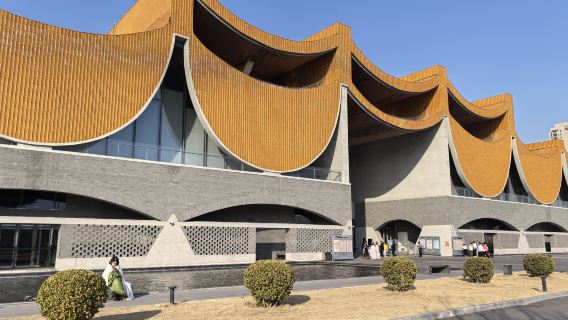
▲ The new landmark of Luoyang — the entrance of the Sui-Tang Dynasties Grand Canal Cultural Museum. The undulating "Tang Dynasty eaves tile" roof resembles canal waves, while the improved tri-colored ceramic cladding panels conceal Luoyang's vibrant local life. The modern arch structure subtly echoes the imagery of "canal bridges," where ancient and contemporary architectural languages engage in a dialogue about water transport civilization.

▲ The 1,000-square-meter giant sandstone relief "The Lifeline of the Nation" serves as the visual centerpiece of the museum. A herringbone-shaped canal is embedded into three towering walls, with blue light strips simulating ancient water transport routes. Animated projections of "a hundred boats racing" play across dynamic lighting effects, capturing the grandeur of the Sui-Tang Grand Canal—which "connected the north and south, opening routes across the land"—within the textured sandstone patterns on the walls.

▲ The remains of the "Luoyang Canal No.1 Ancient Shipwreck" stand as silent witnesses to the history of water transport. The surviving 20-meter hull fragments, with their mortise-and-tenon joints and timber grain patterns, hold the construction secrets of Sui and Tang dynasty grain barges. Once moored along the ancient canal route, these archaeological remnants are now displayed in an excavation-site exhibition, providing tangible evidence of the scene where "a grain-laden barge passed through Luoyang" a millennium ago.

▲ In the "Journey of a Grain of Rice: The Grand Canal Transport" exhibition hall, the scene of Xintan Wharf is vividly depicted through light and shadow. Dynamic projections of ship masts and piers bring to life the details of "rice being unloaded from Jiangnan barges into Luoyang's granary cellars." Visitors feel as though they are stepping on the ancient cobblestones of the wharf, experiencing the bustling market atmosphere at the terminus of the canal transport.